
EGYPT · NATURAL RESOURCES
Key Facts
- —The basics Egypt’s main natural resources are natural gas, oil, gold, the Nile and a thin belt of irrigated farmland, but gas output has fallen so far that Egypt imports LNG, more than 90% of it from the United States in 2025.
- —Why it matters Falling gas output has turned Egypt from an LNG exporter into a large importer, raising its fuel bill, while the Nile supplies about 97% of the water for more than 100 million people as of October 2026.
- —The numbers Gas output fell from about 59 billion cubic metres in 2023 to about 42 billion in 2025, while the Sukari gold mine earned about US$1.04 billion in gold income in the first half of 2026 alone.
- —Who is who Petroleum Minister Karim Badawi oversees the state firms EGPC and EGAS, Italy’s Eni operates the Zohr gas field, NYSE-listed AngloGold Ashanti runs the Sukari gold mine and Hani Sewilam is water minister.
- —What to watch The petroleum ministry wants Zohr and the West Mina field to add about 250 million cubic feet of gas a day before the end of 2026, while no binding Nile dam deal with Ethiopia exists.
- —What it means for you US LNG exporters and investors in Eni, APA, Chevron, Shell, BP and AngloGold Ashanti all have money riding on Egypt’s gas purchases, oil and gas fields and Sukari gold mine as of October 2026.
Egypt sits on Mediterranean gas, Eastern Desert gold and the lower Nile, yet it imports fuel and food. This guide explains who extracts the country’s resources, who profits and what they cost, as of October 2026.
Egypt resources start with gas, oil and gold, but its most precious asset is the Nile and the farmland along it. Farmland covers only about 4.2% of the territory, World Bank data for 2024 show, so life crowds into a narrow green corridor.
For US readers, Egypt matters because it buys American liquefied natural gas and hosts US oil firms such as Chevron and APA. Its main gold mine, Sukari, is run by AngloGold Ashanti, a company listed on the New York Stock Exchange.
Figures come from the petroleum and water ministries, company filings with US regulators, FAO and CAPMAS, the national statistics agency. Conversions use the open.er-api.com rate of 15 October 2026, EGP 53.10 per US$.
Daily news is in the Rio Times Egypt section, and the guide to who runs Egypt’s economy covers business. For the bigger picture, see the foreign powers active in Egypt and Egypt history explained.
Egypt Resources at a Glance
Egypt has more than 100 million people but almost no rain, so nearly all farms and towns hug the Nile. The World Bank puts renewable freshwater generated inside Egypt at only about 9 cubic metres per person in 2022.
Gas lies offshore and in the Delta, oil in the Western Desert and Gulf of Suez, and gold in the Eastern Desert. Eni, the Italian energy group, names the Gulf of Suez, the Nile Delta and the Western Desert as its operating areas.
The resource story of the 2020s is a squeeze: gas output is falling, water demand is rising and the population keeps growing. Gold is the bright spot, helped by high prices that lifted Sukari’s average sale price to US$4,683 an ounce in early 2026.
The sections below take each resource in turn, from offshore gas to the farms of the delta. Each has different owners, different winners and a different environmental bill.
Natural Gas, From the Zohr Boom to LNG Imports
Zohr, about 190 kilometres north of Port Said, is the largest gas field ever found in the Mediterranean, Eni says. Eni discovered it in August 2015 and started production in December 2017, less than two and a half years later.
Eni reported Zohr output of 2.7 billion cubic feet a day in August 2019. Output has since declined, and no current official field figure was published as of October 2026.
Zohr is owned by Eni with 50%, Russia’s Rosneft with 30%, BP with 10% and Abu Dhabi’s Mubadala Energy with 10%. It is run by Petrobel, a joint venture of Eni and the state-owned Egyptian General Petroleum Corporation (EGPC).
National output has fallen with it, from about 59 billion cubic metres in 2023 to about 42 billion in 2025. Those figures come from the Joint Organisations Data Initiative (JODI), an official database fed by national governments.
In the first quarter of 2026, Egypt produced 9.85 billion cubic metres, or roughly 3.9 billion cubic feet a day. Imports covered about 38% of supply in that quarter, and liquefied natural gas made up 72% of those imports.
JODI data show Egypt imported a record 13.1 billion cubic metres of LNG in 2025, up from 4.4 billion in 2024. US government data show American LNG shipments to Egypt more than tripled in 2025, supplying most cargoes.
Pipeline gas also comes from Israel’s Leviathan field, which US major Chevron operates with Israeli partners NewMed Energy and Ratio. Israel approved their export deal with Egypt on Wednesday, 17 December 2025, valued at up to US$35 billion.
NewMed says the contract covers about 130 billion cubic metres of gas through 2040. Israeli flows have been cut at times during regional conflicts, and Egypt had four floating LNG import terminals deployed by mid-2026.
JODI data show LNG exports shrank to about 0.7 billion cubic metres in 2025, from 11.3 billion in 2022. Eni is a partner in the Damietta liquefaction plant, which can produce 5.2 million tonnes of LNG a year.
The government says it is reversing the slide after paying overdue bills to foreign partners by June 2026. Petroleum Minister Karim Badawi wants Zohr and the West Mina field to add about 250 million cubic feet a day by end-2026.
He also targeted 80 million cubic feet a day from the Western Desert’s Meleiha fields by the end of September 2026. Whether those targets were met had not been confirmed by the ministry as of 15 October 2026.
In August 2026, the ministry launched a bid round for 14 oil and gas exploration blocks, the state gas company EGAS said. Shell was drilling the Velox-1X exploration well offshore in July 2026, and Chevron signed for the deepwater Lotus block in October.
Oil Fields and the Companies That Run Them
Egypt pumps oil mainly from the Western Desert and the Gulf of Suez, on the western side of the Sinai Peninsula. Badawi said in June 2026 that crude output had risen back above 540,000 barrels a day after a period of decline.
That is a small fraction of Saudi Arabia’s output, and Egypt still imports crude to keep its refineries busy. CAPMAS recorded a 141% year-on-year jump in the value of crude oil imports in June 2026.
Khalda Petroleum, a joint venture of EGPC and Apache, is a major Western Desert producer. Apache belongs to Houston-based APA Corporation, which is listed on Nasdaq under the ticker APA.
The cabinet said Khalda raised output from 113,300 barrels a day on 26 May 2026 to 123,500 on 8 June. State-owned General Petroleum Company reached 74,500 barrels of oil equivalent a day, its highest since October 2024.
The ministry said refineries were running at about 80% of capacity in 2026, which should cut fuel imports. Piped gas reached 804,000 more homes in the 2025/26 fiscal year, replacing about 14 million bottled-gas cylinders.
Gold at Sukari and the Eastern Desert
Egypt’s gold lies in the Eastern Desert, between the Nile and the Red Sea, where pharaohs mined it thousands of years ago. The main modern mine is Sukari, about 25 kilometres southwest of the resort town of Marsa Alam.
Sukari poured its first gold in June 2009 under Centamin, the miner that developed it. AngloGold Ashanti, listed in New York under the ticker AU, bought Centamin and took over Sukari on Friday, 22 November 2024.
The mine produced 500,000 ounces in 2025 and 232,000 ounces in the first half of 2026, AngloGold’s US filings show. Gold income from Sukari reached US$1.04 billion in those six months, at an average US$4,683 an ounce.
Sukari Gold Mining Company is owned 50-50 by AngloGold’s Pharaoh Gold and the state’s Egyptian Mineral Resources Authority (EMRA). After the operator recovers its costs, profits are split equally, and Egypt also takes a 3% royalty on gold sales.
The arrangement rests on Law No. 222 of 1994, which ratified the Sukari concession. The mine pipes seawater from the Red Sea and runs its own thermal power station and a solar plant.
Informal gold digging also goes on in the desert near the Sudanese border. In October 2026, the army said it was pressing on with its campaign against illegal gold digging.
Egypt also produces phosphate rock, iron ore, salt and ornamental stone such as granite and marble. National output figures for those minerals could not be confirmed from a primary source on 15 October 2026.

The Nile, the Ethiopian Dam and Scarce Water
The Nile is Egypt’s lifeline, supplying about 97% of its water, Egypt Independent reported in January 2026. Under agreements from 1929 and 1959, Egypt counts on a share of 55.5 billion cubic metres a year.
Water Minister Hani Sewilam told the Senate on Sunday, 18 January 2026, that demand had reached 88.5 billion cubic metres. Egypt closes much of the gap by reusing 23.2 billion cubic metres a year, he said.
He put water per person at about 500 cubic metres a year, half the 1,000-cubic-metre line hydrologists use to define scarcity. His ministry says three big plants treating farm drainage water can supply 4.8 billion cubic metres a year.
The Grand Ethiopian Renaissance Dam (GERD) on the Blue Nile, Africa’s largest hydropower project, was inaugurated in September 2025. Its reservoir can hold 74 billion cubic metres, more than Egypt’s entire annual share.
Egypt fears the dam lets Ethiopia cut flows in dry years, while Ethiopia says the water passes its turbines and flows on. In January 2026, Sewilam went further and demanded compensation for damage he said the dam had caused.
No binding agreement among Egypt, Ethiopia and Sudan on filling and running the dam had been announced as of 15 October 2026. US President Donald Trump raised the dispute again at a rally in Syracuse, New York, on 9 October.
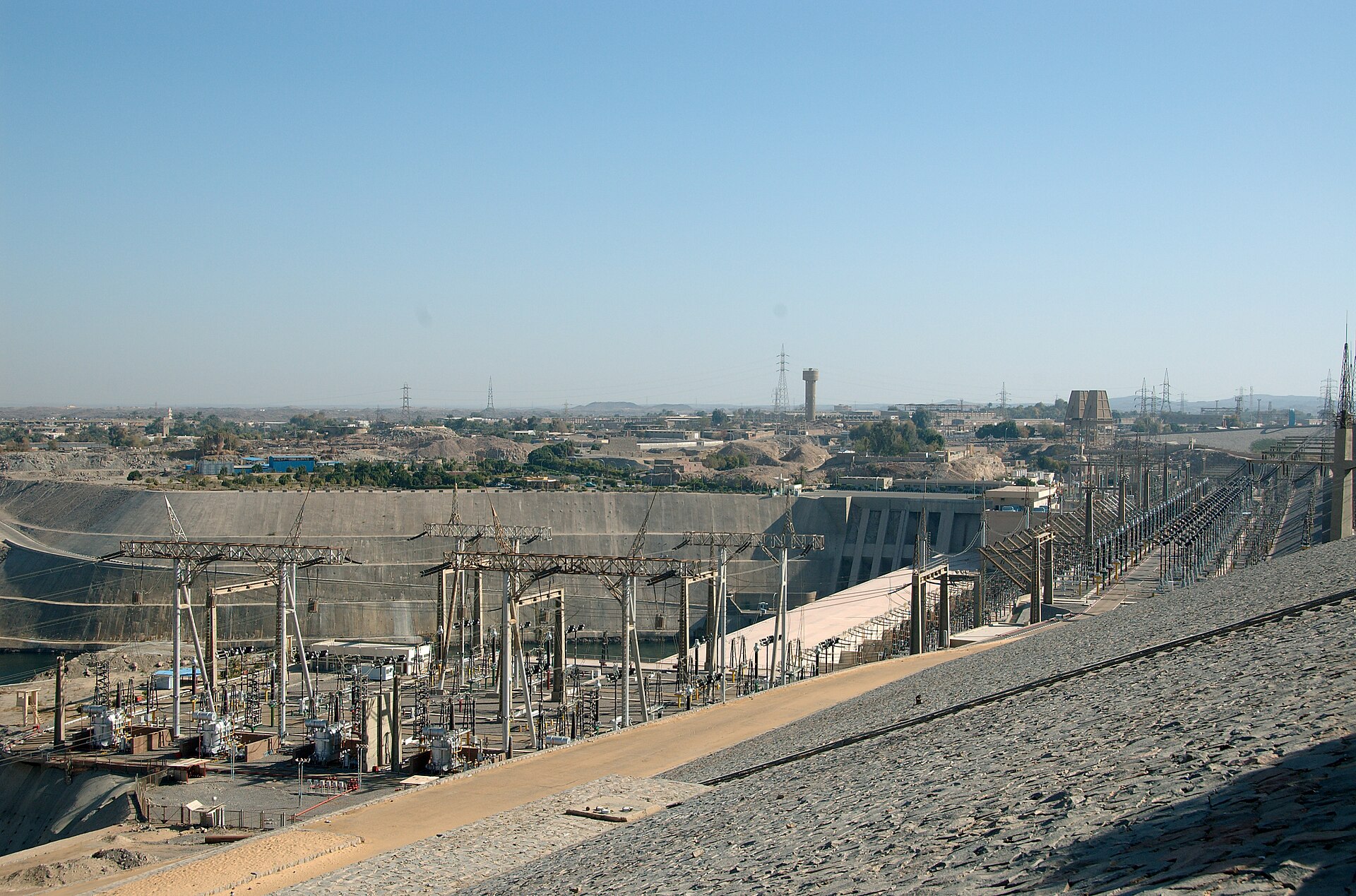
The Aswan High Dam, finished in 1970, stores the river in Lake Nasser and generates hydropower for the grid. It also traps the silt that once fertilised the delta, one of the environmental costs covered below.
Farmland, Wheat and Fish Farms
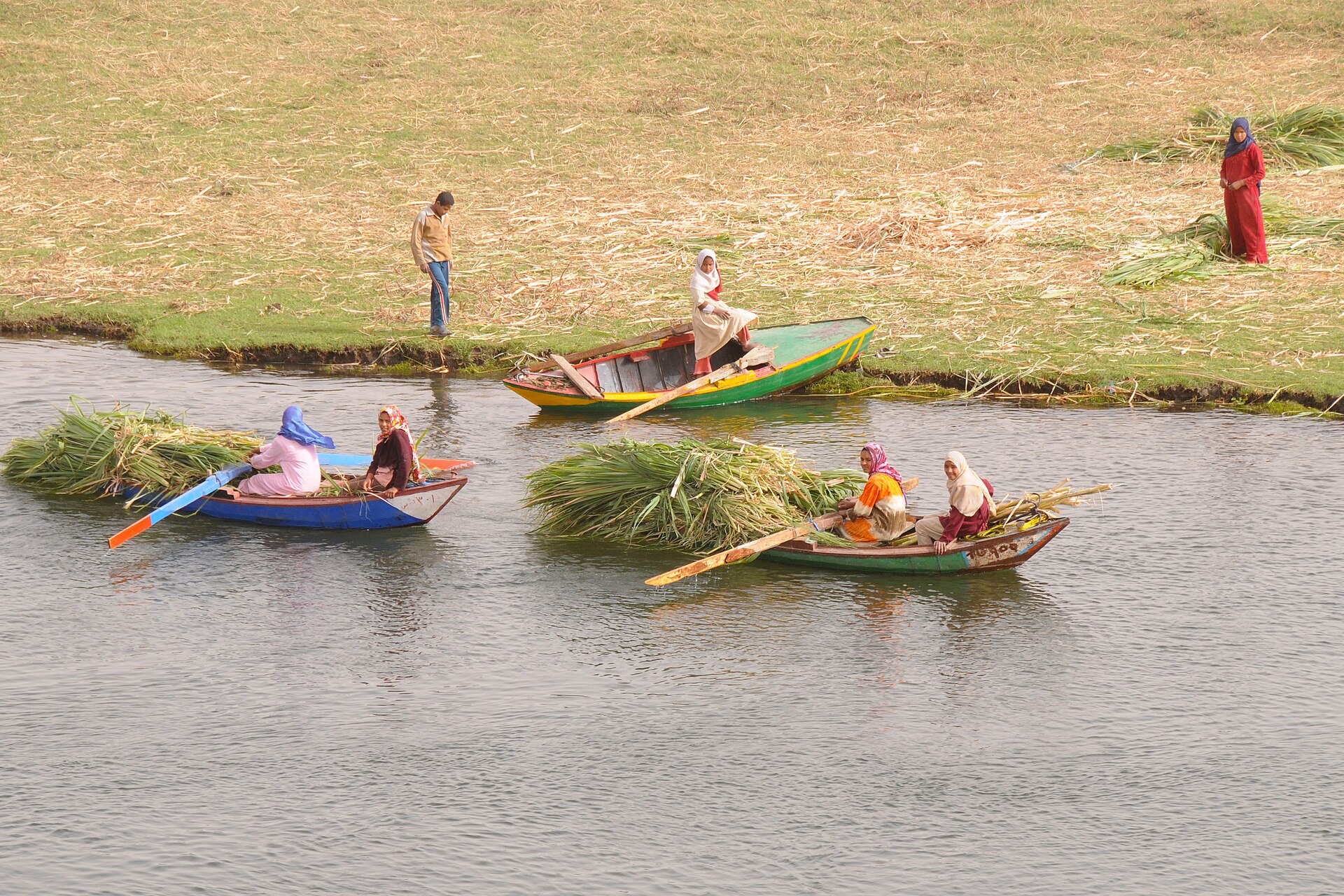
Farmland is scarce: arable land made up only about 3.3% of Egypt’s area in 2024, World Bank data show. Almost all of it lies in the Nile Valley and Delta, irrigated by canals rather than rain.
FAO, the UN food agency, forecast Egypt’s 2026 wheat harvest at about 10 million tonnes, nearly 7% above average. In April 2026, the government raised its purchase price to EGP 2,500 (about US$47) per ardeb, a unit of about 150 kilograms.
Egypt must still import wheat, and FAO forecasts 13.5 million tonnes of imports in 2026/27, mostly from the Black Sea region. It also expects maize imports of 15.5 million tonnes, driven by poultry, livestock and fish farming.
CAPMAS recorded a 77.1% rise in fresh fruit exports in June 2026 compared with June 2025. Total exports that month reached US$5 billion, up 37.4%, helped by a 128% jump in petroleum product exports.
Most fish now come from farms rather than from the sea, the lakes or the river. FAO data via the World Bank show 1.60 million tonnes of farmed fish in 2024, against 425,501 tonnes caught wild.
That puts fish farming at about four-fifths of Egypt’s fish output. Forests barely exist, covering less than 0.1% of the land in 2024, according to the same data.
Who Profits From Egypt’s Resources
The state profits through EGPC, EGAS and EMRA, which partner with foreign companies and collect royalties, taxes and profit shares. At Sukari, for example, EMRA holds half the operating company and Egypt takes a 3% royalty.
Foreign partners take their cut through production-sharing contracts, which let them recover costs before profits are split. Paying those partners on time matters, which is why Badawi stressed that arrears were cleared by June 2026.
The listed and state-owned companies with stakes in Egypt’s gas, oil and gold include the following. Tickers are those registered with the US Securities and Exchange Commission.
- Eni (NYSE: E), Italy: operator and 50% owner of Zohr, with other fields and a stake in the Damietta LNG plant.
- BP (NYSE: BP), Britain: 10% of Zohr.
- Rosneft, Russia: 30% of Zohr, under full US Treasury blocking sanctions since 22 October 2025.
- Mubadala Energy, Abu Dhabi: 10% of Zohr.
- APA Corporation (Nasdaq: APA), United States: partner with EGPC in Khalda Petroleum in the Western Desert.
- Shell (NYSE: SHEL), Britain: offshore explorer, drilling the Velox-1X well in 2026.
- Chevron (NYSE: CVX), United States: operator of Israel’s Leviathan field, which supplies Egypt, and an offshore explorer in Egypt.
- AngloGold Ashanti (NYSE: AU): 50% of Sukari through its subsidiary Pharaoh Gold.
For households, the payoff is mainly piped gas, electricity and subsidised bread made from local and imported wheat. Smallholder farmers depend on canal water, which makes them the first to feel any shortage upstream.
The Environmental Cost
Water is the biggest environmental pressure: the Nile is fully used, and farms reuse drainage water that can carry salt and chemicals. The water ministry runs a climate adaptation project for the Nile Delta and north coast, where the sea threatens low-lying land.
The Aswan High Dam ended the yearly floods but holds back the silt that once fed the delta’s soils. Farmers now rely more on fertiliser, and the coast no longer receives the sediment that used to rebuild it.
Oil and gas production brings gas flaring, spill risks and offshore disturbance along the Mediterranean and the Gulf of Suez. Eni says its Meleiha project in the Western Desert has ended routine flaring, earlier than first planned.
Gold mining moves huge volumes of rock, and Sukari’s open pit moved 48.5 million tonnes in the first half of 2026. Most of it, about 44 million tonnes, was waste rock rather than ore.
Falling gas output has its own cost, because Egypt now ships in LNG across the Atlantic, mostly from the United States. That leaves Egyptian energy costs exposed to US gas prices and to shipping rates across the Atlantic.
What It Means for US Readers
For US energy firms, Egypt is a customer and a partner, and American cargoes supplied over 90% of its LNG in 2025. APA and Chevron are invested in Egyptian and Israeli oil and gas, so payments from Cairo matter to them.
Investors in AngloGold Ashanti own a slice of Sukari, which produced about 16% of the company’s 3.09 million ounces in 2025. Holders of Eni, BP and Shell shares have exposure to Egypt’s offshore gas, where Zohr output has fallen since 2019.
Rosneft’s 30% stake in Zohr puts a US-sanctioned company inside Egypt’s largest gas discovery. Travellers meet these resources on Nile cruises, at the Aswan High Dam and at Red Sea resorts near Marsa Alam.
Anyone moving to the capital can start with the Rio Times Cairo city guide for expats and visitors. The weaker pound, which passed 53 per US$ in October 2026, makes trips cheaper but raises Egypt’s fuel import bill.
What Is Not Known
It is not confirmed whether the ministry met its Meleiha target for September 2026. Nor is it known whether Zohr and West Mina will deliver their extra gas by December.
Official national gas output and LNG import figures for the third quarter of 2026 were not found. CAPMAS data on cultivated area and fish catch could not be read on 15 October 2026.
World Bank and FAO figures are therefore used for land and fisheries. National output of phosphate, iron ore and other minerals, and the scale of informal gold mining, could not be confirmed.
The terms of any future agreement on the Ethiopian dam are unknown. So is how much water Egypt lost while the reservoir filled, and Ethiopia rejects Egypt’s claims of harm.
Frequently Asked Questions
What are Egypt’s main natural resources?
Egypt’s main natural resources are natural gas, oil, gold, the Nile River and a narrow belt of irrigated farmland. It also mines phosphate, iron ore, salt and building stone, and farms most of its fish.
Does Egypt import or export natural gas?
Egypt is a net importer and bought a record 13.1 billion cubic metres of LNG in 2025, mostly from the United States. Its LNG exports shrank to small volumes, and it also imports pipeline gas from Israel.
What is the Zohr gas field?
Zohr, discovered by Eni in 2015 about 190 kilometres north of Port Said, is the largest gas field found in the Mediterranean. Eni owns 50%, Rosneft 30%, BP 10% and Mubadala Energy 10%.
Who owns the Sukari gold mine?
Sukari is owned 50-50 by AngloGold Ashanti’s subsidiary Pharaoh Gold and the state’s Egyptian Mineral Resources Authority. It produced 500,000 ounces in 2025, and Egypt also takes a 3% royalty on sales.
How much Nile water does Egypt get?
Under agreements from 1929 and 1959, Egypt counts on 55.5 billion cubic metres of Nile water a year. Demand reached 88.5 billion cubic metres by January 2026, so Egypt reuses drainage and treated water to fill the gap.
Why is Egypt worried about Ethiopia’s dam?
Egypt fears Ethiopia’s dam could reduce Nile flows in dry years, and the river supplies about 97% of Egypt’s water. No binding agreement on running the dam had been announced as of October 2026.
Does Egypt grow enough wheat?
No, FAO forecast a 2026 harvest of about 10 million tonnes but imports of 13.5 million tonnes in 2026/27. Most of the imported wheat comes from the Black Sea region.
Sources: Eni, Egypt activities; Eni, Zohr; EGAS news (bid round, Velox-1X); Ministry of Water Resources and Irrigation; AngloGold Ashanti, Q2 2026 operating statistics (SEC); AngloGold Ashanti, Q4 2025 operating statistics (SEC); Sukari technical report summary (SEC, 26 March 2026); US Treasury, Rosneft and Lukoil sanctions; FAO GIEWS Egypt brief; World Bank, aquaculture, fisheries, land and water data; Egypt Oil & Gas, 17 September 2026; Arab Finance via Zawya, crude output; Arab Finance via Zawya, refineries and household gas; AGBI, 15 June 2026; Enterprise, 1 June 2026; S&P Global, 14 January 2026; Gas Processing News, 19 December 2025; Daily News Egypt, 5 October 2026; Egypt Independent, 19 January 2026; Business Today Egypt on CAPMAS trade data, 7 September 2026; JODI Gas World Database (Egypt series); US EIA, natural gas exports by country; Globes, 18 December 2025; Egyptian Streets, 18 December 2025; open.er-api.com exchange rates (all accessed 15 October 2026).
This article was produced by The Rio Times’ automated newsroom system. How we use AI · Report an error · Editorial responsibility: Matthias Camenzind, Editor-in-Chief
Part of our ongoing coverage
Africa: The New Scramble — the great-power contest over the continent.
Expat Guide to Egypt
What The Rio Times publishes for foreigners who live in or move to Egypt.
Start here
- Retire in Egypt: No Retirement Visa, Ministry Lists US$100,000 Property for One-Year Permit
- How Foreigners Open a Bank Account in Egypt in 2026
- Taxes in Egypt for Expats 2026 — Residence, Income and Property
- Egypt Residence Visa Rules 2026, Entry From US$30
City guides
Coming up in Egypt
- El Gouna Film Festival 2026: 15-23 October, First 10 Films 15 Oct
- Tul8te Fills Cairo's Al Manara Arena on 16 October, Tickets From US$17.50 16 Oct
- Arab Music Festival Honours Hany Shaker in Egypt From 20 to 30 October 20 Oct
- Abu Simbel Sun Festival on 22 October: Sunrise Hits the Sanctuary 63 Metres Inside the Temple 22 Oct
Understand Egypt