Dominican Republic Media Landscape Explained
DOMINICAN REPUBLIC · MEDIA
Key Facts
- —The country The Dominican Republic is a Caribbean nation that shares the island of Hispaniola with Haiti and has more active mobile lines than residents.
- —Main newspapers Listín Diario, Hoy, El Nacional and El Día belong to one family group, the Corripios, while Diario Libre belongs to the tourism group Grupo Puntacana.
- —Television and radio Telesistema 11, Teleantillas and Coral 39 sit in the Corripio group. Telemicro, Color Visión and CDN 37 are the other big names, and the state runs RTVD Canal 4.
- —Press freedom Reporters Without Borders ranked the country 44th of 180 in its 2026 index, with a score of 69.73.
- —New law A new Penal Code took effect in August 2026. Defamation now carries one to two years in prison, down from a draft penalty of two to five years.
- —Online reach About 11 million mobile lines were active at the end of 2025, and 56.2 percent of households had home internet in 2025.
- —Still open A separate freedom of expression bill, which would create a media regulator, lapsed in the Senate in January 2026.
Dominican Republic media matters to US readers because a handful of owners decide what a popular US travel and migration partner reads and watches. A new Penal Code has also put journalists’ legal risks back in the news.
This guide to Dominican Republic media explains who owns the outlets, how the law treats journalists and how Dominicans get their news.

Dominican Republic Media at a Glance
Dominican Republic media include daily newspapers, free-to-air television channels, many radio stations and a growing number of online outlets, as our country hub shows. Reporters regularly expose scandals involving current and former politicians, says Reporters Without Borders (RSF), a press freedom group.
Ownership is the central feature of the system, and it ties into the country’s power structure. RSF’s 2026 country profile says one very large private consortium controls the main outlets and names Grupo Corripio as a dominant advertising force.
The picture is not uniform, since other owners run key outlets. Diario Libre belongs to Grupo Puntacana, and elCaribe and the CDN 37 news channel belong to Multimedios del Caribe; see also who runs the economy.
A Short History of the Dominican Press
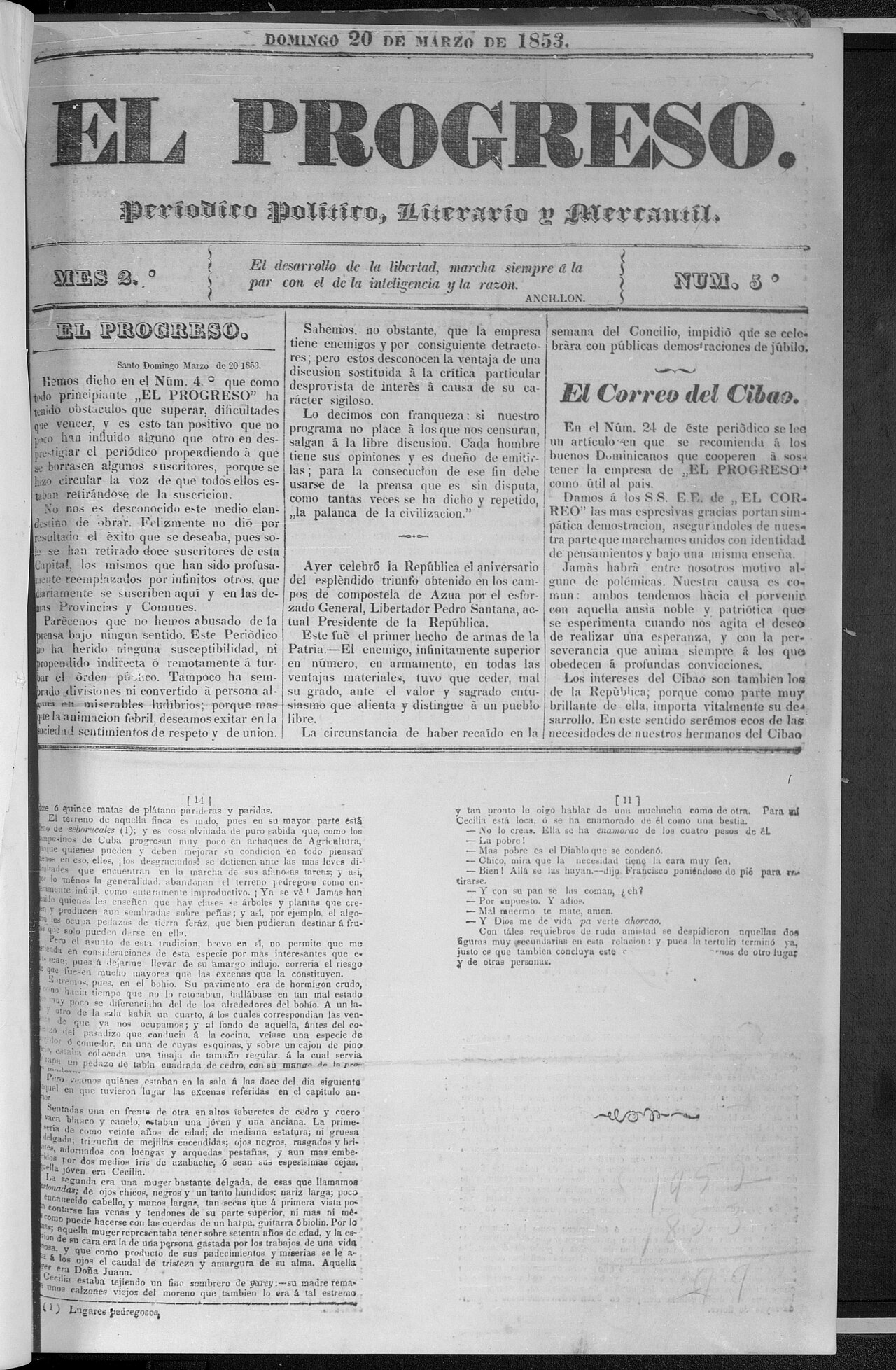
Newspapers in Santo Domingo go back to the nineteenth century, as the history of the Dominican Republic shows. A copy of El Progreso, a political, literary and commercial paper, survives from 20 March 1853.
Listín Diario, founded in 1889, is called the dean of the national press by its owner, Grupo Corripio. Hoy was founded in 1981, El Nacional in 1966 as the first evening paper, and El Día in 2002 as a free daily.
Newspapers and Who Owns Them
Grupo Corripio, which its own website calls the property of the Corripio family, was founded by Manuel Corripio García in 1921. Don Pepín Corripio, a later family leader, founded the newspaper Hoy in 1981.
The group says it acquired a majority stake in Listín Diario in 2009. It also lists Hoy, El Nacional and El Día among its newspapers.
Diario Libre and Grupo Puntacana
Diario Libre began on 10 May 2001 as the country’s first free newspaper, founded by businessman Arturo Pellerano. Its website opened in 2002, and a compact edition called Diario Libre Metro followed in 2009.
On 24 July 2023, the paper announced that Grupo Puntacana had bought all shares of Grupo Diario Libre. The buyer, a tourism group led by Frank Rainieri, named co-founder Aníbal de Castro as president and pledged a free and independent press.
elCaribe and Multimedios del Caribe
The elCaribe newspaper is published by Editora del Caribe and describes itself as a product of Multimedios del Caribe. The same group runs the CDN 37 news channel, CDN Radio, CDN Deportes and the magazine Pandora.
These outlets give the market a second large news group beside the Corripio titles. Together with Diario Libre, they form the main non-Corripio news voices.
- Listín Diario, Hoy, El Nacional and El Día: Grupo Corripio.
- Diario Libre: Grupo Puntacana since July 2023.
- elCaribe: Editora del Caribe, part of Multimedios del Caribe.
Television and Radio
Grupo Corripio owns three free-to-air channels: Telesistema 11, Teleantillas (on air since 1979) and Coral 39 (launched in 1999). Its radio stations include La Nota 95.7 FM and HIJB 830 AM, which began in 1969.
Grupo Telemicro runs Telemicro Canal 5, Telecentro Canal 13 and Digital 15, and its newscast is Noticias Telemicro. Its owner, Juan Ramón Gómez Díaz, took over Telecentro in May 2016, according to elDinero.
Color Visión, on Canal 9, carries the Noticias SIN news programmes, including El Despertador and El Informe.
State Broadcasting
The Corporación Estatal de Radio y Televisión (CERTV) is the state broadcaster, created by Law 134 of 2003. It runs RTVD Canal 4, RTVD 17, Dominicana FM, Quisqueya FM and Radio Santo Domingo.
The Constitution promises all social and political groups equal and plural access to state-owned media. How far that promise is met in practice is a matter of political debate.
Digital Outlets and Social Media
Online news sits beside the websites of the big papers. Acento and elDinero are established Dominican news sites, and the Alofoke platform of Santiago Matías mixes entertainment, opinion and street reporting on social networks.
In July 2026, Matías announced his own political party for the 2028 elections, after proposals from more than 15 existing political organisations. Law 33-18 requires signed support from 2 percent of the last presidential vote, which Acento calculated at 87,303 signatures.
How Dominicans Get Online
The telecom regulator Indotel reported 11,003,354 active mobile lines at the end of 2025, according to elDinero, which is more than the number of residents. Mobile internet subscriptions reached 10,148,778, up 3.5 percent on 2024.
The national statistics office’s ENHOGAR-MICS survey for 2025 found that 92.7 percent of households had a mobile phone and 89.4 percent a smartphone. Only 56.2 percent had internet at home, with 60.2 percent in cities and 45.5 percent in rural areas, according to elCaribe.
Journalists and Politics
RSF says more and more journalists are linked to political parties. Smear campaigns against the press are rare and mostly happen on social media, it adds.
RSF says the economic crisis of the pandemic led major newspapers to cut print and reduce their page numbers. Pay television and the internet have produced dozens of programmes and small online outlets, it adds.
Press Freedom and the Law
RSF placed the Dominican Republic 44th out of 180 countries in its 2026 World Press Freedom Index, with a score of 69.73. In 2025 the country ranked 43rd with 69.87, so the position is broadly stable.
Article 49 of the Constitution guarantees free expression without prior censorship and protects journalists’ professional secrecy and the right of reply. It also requires respect for honour, privacy and dignity.
The New Penal Code and Defamation
Law 74-25, the new Penal Code that governs Dominican Republic media in practice, replaces the 1884 code. Congress amended about 40 of its articles in July 2026, and the Senate approved the changes on 22 July by 25 votes to 3.
President Luis Abinader promulgated the reform on 27 July 2026 by decree 507-26, according to Diario Libre. The code took effect in August.
What Changed for Journalists
Article 208 on defamation now carries one to two years in prison, instead of the two to five years in the earlier text. Article 211 now excludes from criminal liability criticism of corruption or public policy that rests on reasonable verification of the facts.
Public officials may sue for defamation only when a statement touches their private or intimate life. Article 310 on contempt now applies only to attacks on judges, prosecutors and court staff meant to disturb a trial.
Critics and Pending Challenges
Critics say any prison term for speech is too much. Somos Pueblo Media, a Dominican news outlet, filed a challenge at the Constitutional Court against six articles, including 208 and 310.
Article 310, on contempt of officials, is the most challenged provision, according to El Nuevo Diario. Article 192, on false or altered images and audio, keeps a penalty of two to five years.
At a forum of the journalists’ association Colegio Dominicano de Periodistas, jurists warned that the code could become a threat to journalism.
The Freedom of Expression Bill
President Abinader’s government sent a Law on Freedom of Expression and Audiovisual Media to the Senate in May 2025. It would create a National Institute of Communication, known as Inacom, to regulate the exercise of these rights across press, radio, television and social networks.
The bill lapsed in the Senate on 12 January 2026, and as of April 2026 no legislator had brought it back, according to elCaribe. Supporters saw Inacom as necessary, while critics feared it as a tool of control.
Surveillance and Safety
RSF notes that Law 1-24, in force since January 2024, allows surveillance that could compromise the confidentiality of journalists’ sources. It reports widespread fear of wiretapping and some self-censorship linked to owners’ interests.
The same RSF profile calls working conditions generally safe and shows no journalists killed in 2026 so far. Reporters who receive death threats can get state protection.
What It Means for US Readers
Readers of Dominican Republic media meet the same few owners again and again, so one story in many outlets may share one culture. Reading Diario Libre beside elCaribe or an online outlet gives a fuller picture.
The new defamation rules in Dominican Republic media also matter to Dominicans in the United States, because the code covers social networks and live streams. Our guides to Dominican politics and culture show who the outlets cover.
What Is Not Known
The Constitutional Court had 15 challenges to the Penal Code and no rulings when it took effect on 3 August 2026, says El Nuevo Diario. Whether the freedom of expression bill returns to Congress is also open.
Audience and circulation figures for Dominican Republic media are not published in a form that allows a clean ranking. The shareholders of several media groups, and the exact reach of online personalities such as Alofoke, are not documented in public sources.
Frequently Asked Questions
Who owns the main newspapers in the Dominican Republic?
In Dominican Republic media, Grupo Corripio, a family business founded in 1921, owns Listín Diario, Hoy, El Nacional and El Día. Diario Libre belongs to Grupo Puntacana, and elCaribe belongs to Multimedios del Caribe.
What are the main television channels?
In Dominican Republic media, Telesistema 11, Teleantillas and Coral 39 belong to Grupo Corripio, and Telemicro Canal 5, Telecentro Canal 13 and CDN 37 belong to other groups. The state runs RTVD Canal 4 through CERTV.
How free is the press in the Dominican Republic?
RSF ranked Dominican Republic media 44th of 180 countries in 2026, with a score of 69.73. The Constitution bans prior censorship, but defamation can still bring prison time.
What does the new Penal Code say about defamation?
Article 208 of the code that took effect in August 2026 sets one to two years in prison for defamation. Article 211 excludes criticism of corruption and public policy that rests on verified facts.
Who is Alofoke?
Santiago Matías, known as Alofoke, runs a popular platform in Dominican Republic media. In July 2026 he announced plans to form a political party for the 2028 elections.
How many Dominicans are online?
Dominican Republic media now reach mostly mobile audiences. Indotel counted 11,003,354 active mobile lines at the end of 2025. The 2025 national household survey found that 56.2 percent of households had home internet.
Sources: Reporters Without Borders: Dominican Republic country profile and 2026 index, 2026-10-22; Grupo Corripio: Sector Comunicación, 2026-10-22; Constitution of the Dominican Republic (2015), Article 49, Constitute Project, 2026-10-22; Diario Libre: Código Penal mantiene cárcel por montajes digitales, 2026-07-28; Diario Libre: Senado aprueba con modificaciones el Código Penal, 2026-07-22; Diario Libre: Sobre Diario Libre, 2026-10-22; Acento: Código Penal entra en cuenta regresiva, 2026-06-30; Acento: Grupo Puntacana es el nuevo propietario de Diario Libre, 2023-07-24; Acento: Alofoke va en serio, qué necesita para crear su partido, 2026-07-24; elCaribe: Libertad de expresión no tiene quien le escriba en Congreso, 2026-04-21; elCaribe: Muchos celulares, poco internet (ENHOGAR-MICS 2025), 2026-07-08; elDinero: República Dominicana supera las 11 millones de líneas móviles (Indotel), 2026-06-18; CERTV: Corporación Estatal de Radio y Televisión, 2026-10-22; Grupo Telemicro, 2026-10-22; CDN and Multimedios del Caribe, 2026-10-22; El Nuevo Diario: Nueva era judicial, entra en vigor el nuevo Código Penal en medio de 15 impugnaciones ante el TC, 2026-08-03; elDinero: Gómez Díaz asume la planta televisora Telecentro, 2016-05-17.
This article was produced by The Rio Times’ automated newsroom system. How we use AI · Report an error · Editorial responsibility: Matthias Camenzind, Editor-in-Chief
Expat Guide to Dominican Republic
What The Rio Times publishes for foreigners who live in or move to Dominican Republic.
Start here
- Dominican Republic Security and Crime Explained 2026
- Best Places to Live in the Dominican Republic 2026
- Cost of Living Santo Domingo 2026 — Rent and the Power Question
- Healthcare in the Dominican Republic 2026: What Foreigners Can Actually Get
City guides
Coming up in Dominican Republic
- Soy Luna Plays Santo Domingo on 31 October 2026 31 Oct
- Eladio Carrion in Santiago, Dominican Republic, 31 October 31 Oct
- Keinemusik's &ME Plays Santo Domingo on 31 October 31 Oct
- Afro Fest Punta Cana 2026 in the Dominican Republic: Afro Nation's Afrobeats Weekender on November 6–8 6 Nov
Understand Dominican Republic
Rotate for Best Experience
This report is optimized for landscape viewing. Rotate your phone for the full experience.
You've reached your free article limit
Subscribe to The Rio Times for unlimited access to our news, expat and nomad guides and market intelligence on Latin America and Africa.
Expat Guide to Dominican Republic
What The Rio Times publishes for foreigners who live in or move to Dominican Republic.
Start here
- Dominican Republic Security and Crime Explained 2026
- Best Places to Live in the Dominican Republic 2026
- Cost of Living Santo Domingo 2026 — Rent and the Power Question
- Healthcare in the Dominican Republic 2026: What Foreigners Can Actually Get
City guides
Coming up in Dominican Republic
- Soy Luna Plays Santo Domingo on 31 October 2026 31 Oct
- Eladio Carrion in Santiago, Dominican Republic, 31 October 31 Oct
- Keinemusik's &ME Plays Santo Domingo on 31 October 31 Oct
- Afro Fest Punta Cana 2026 in the Dominican Republic: Afro Nation's Afrobeats Weekender on November 6–8 6 Nov
Understand Dominican Republic