Dominican Republic Tourism Economy 2026: 11.7 Million Visitors, Punta Cana and the Risks

GUIDES · DOMINICAN REPUBLIC
Key Facts
- —The country The Dominican Republic shares the island of Hispaniola with Haiti and is the Caribbean’s leading destination for air arrivals. It is one of the fastest-growing economies in Latin America.
- —What it is An industry built on all-inclusive beach resorts, above all in Punta Cana, plus a fast-growing cruise business on the north coast around Puerto Plata.
- —The numbers 11.68 million visitors in 2025 and 8.56 million from January to August 2026. Tourism brought in US$11.3 billion of foreign currency in 2025, according to the central bank.
- —Why it matters Counting indirect effects, tourism is about 16 percent of the economy. It supports roughly 880,000 jobs, according to the hotel association Asonahores.
- —The catch Heavy reliance on one market and one coast. Americans supplied 44 percent of August 2026 arrivals, and Punta Cana airport took about half of all air arrivals.
- —What to watch Monthly arrival data from the Ministry of Tourism, the central bank’s US$12.5 billion receipts forecast for 2026, sargassum and east-coast water works.
How Dominican Republic tourism became the engine of a Caribbean economy: the resorts, the cruise ports, the money it earns and the risks that could slow it.
Few countries depend on holidaymakers as much as the Dominican Republic, and few have grown tourism as steadily. For American and European travellers, investors and hotel groups, the numbers explain why Punta Cana keeps getting new rooms, new flights and new money.
How big Dominican Republic tourism has become
As of 21 September 2026, the Dominican Republic is on course for another record year. The Ministry of Tourism counted 8,556,415 visitors from January to August 2026. That was 6.9 percent more than in the same months of 2025 and 58.9 percent more than in 2019.
The total splits into two very different groups. Some 6,610,258 people arrived by air and usually stayed in hotels. Another 1,946,151 came on cruise ships, most of them for a single day in port.
The full year 2025 set the previous record. Tourism Minister David Collado reported 11,676,901 visitors, up 4.3 percent on 2024. Air arrivals reached 8,861,169 and cruise passengers 2,815,732.
No other Caribbean country receives as many overnight visitors by air. The pandemic slump of 2020 is long gone, and each month now tends to beat the same month a year earlier.
How the model works: resorts, one coast and long stays
The Dominican model is built on the all-inclusive resort. Guests pay one price for room, food and drink, often booked as a package with the flight. That makes the country easy to sell to tour operators in North America and Europe.
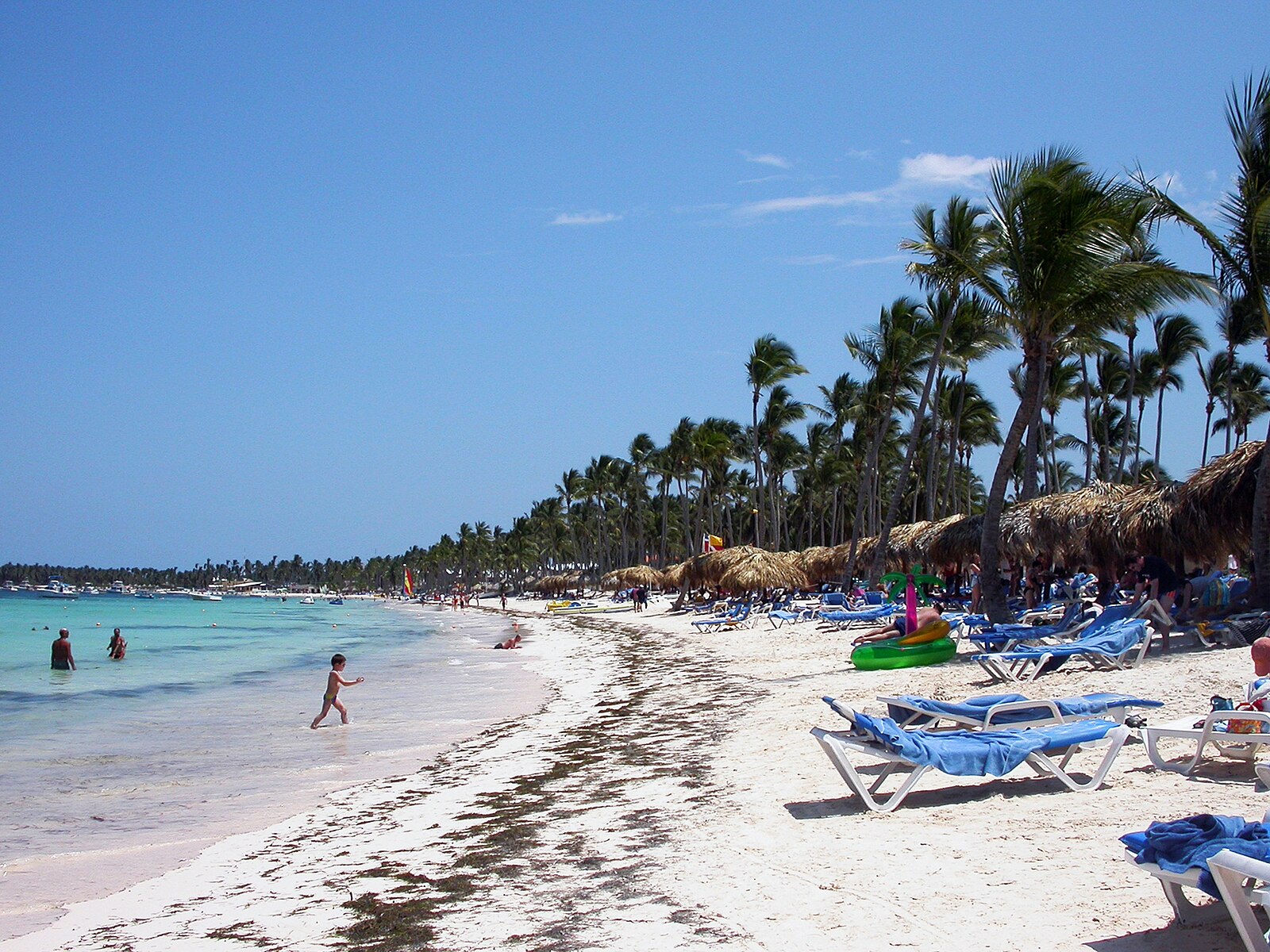
The resorts cluster on the east coast. La Altagracia province, home to Punta Cana and Bávaro, held 54,418 hotel rooms in 2025, or 57.7 percent of the national total. The country as a whole had 94,309 rooms in 1,030 establishments, up from 70,060 rooms in 2015.
Air traffic follows the rooms. Punta Cana airport received 51 percent of air arrivals in 2025. Las Américas, near Santo Domingo, took 28 percent and the Cibao airport in Santiago 12 percent. Puerto Plata, La Romana and El Higüero shared the rest.
Visitors stay long by Caribbean standards. In the first quarter of 2026 the average stay was 8.27 nights, according to the central bank. Spending averaged US$187.29 per person per night, up from US$176.67 a year earlier.
The numbers: foreign currency, GDP and jobs
Tourism is one of the country’s biggest sources of foreign currency, alongside remittances from Dominicans abroad and exports. The Banco Central de la República Dominicana put tourism receipts at US$11,318.5 million in 2025, up 3.2 percent on 2024.
Growth picked up in 2026. Receipts in the first quarter reached US$3,909.7 million, 20.2 percent more than a year earlier. In May the central bank said it expected tourism income above US$12.5 billion for the full year.
The contribution to the economy depends on what is counted. Hotels, bars and restaurants alone produced 8.3 percent of GDP in 2025, according to the hotel association Asonahores. Adding suppliers, construction and the spending of tourism workers raises the share to 15.9 percent, or US$21.62 billion.
The World Travel & Tourism Council, which uses a similar method, reached almost the same answer. It put travel and tourism at 16.1 percent of the economy in 2024, worth US$20.5 billion. It forecast 15.8 percent for 2025.
Jobs tell the same story. Asonahores counted 882,419 jobs linked to tourism in 2025, of which 301,800 were direct. The WTTC estimated 876,000 jobs in 2024, or 17.6 percent of all employment, and forecast 980,000 by 2035.
The state also collects more. Asonahores put taxes collected from hotels, bars and restaurants at RD$45.2 billion (about US$773 million) in 2025, against RD$15.6 billion (about US$267 million) in 2015. Those figures use an exchange rate of about RD$58.5 to the US dollar in late September 2026.
Cruise tourism: the Puerto Plata boom
Cruise traffic is the fastest-changing part of the picture. The country received 2.8 million cruise passengers in 2025, most of them on the north coast rather than in Punta Cana.
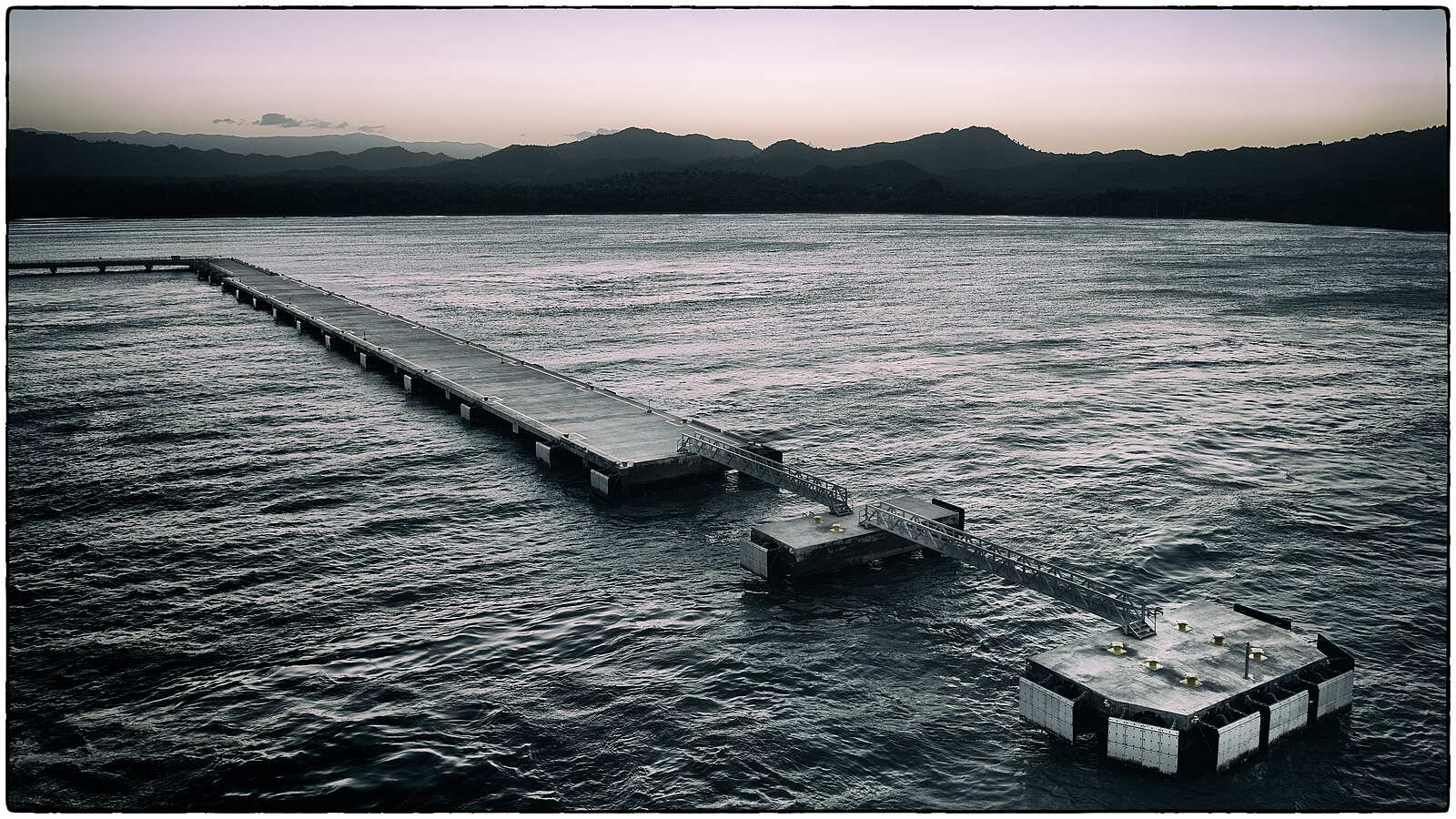
Two private ports in Puerto Plata dominate. Amber Cove and Taíno Bay handled about 2.2 million passengers in 2025, or 78 percent of the national total. The figures come from the Ministry of Tourism, as reported by Bloomberg Línea.
Cruise visitors spend far less than hotel guests. The Florida-Caribbean Cruise Association estimated direct cruise spending in the country at US$251.4 million in 2025. That works out at under US$100 per passenger, against well over US$1,000 for a typical week-long hotel stay.
Even so, cruise calls matter for towns such as Puerto Plata and Samaná, which do not have Punta Cana’s resort density. Day visitors fill excursions, taxis and craft markets. Cruise lines also bring passengers who may later return for a longer stay.
Who invests: hotel chains, banks and foreign capital
Tourism is the largest single destination of foreign direct investment. The central bank recorded total inflows of US$5,032.3 million in 2025. Tourism took 26.3 percent, about US$1.32 billion, ahead of energy at 23.8 percent.
Spanish hotel groups have long led the resort business, alongside American brands. At the FITUR trade fair in Madrid in January 2026, the government announced about US$13.4 billion in financing agreements. The lenders were three local banks: Banco Popular, Banreservas and BHD.
Officials said the pipeline included around 10,000 new hotel rooms over three years. Projects named included Miches on the east coast, Punta Bergantín near Puerto Plata and Pedernales in the far south-west. The ministry expected 4,411 rooms under the Confotur incentive regime to be finished by the end of 2026.
Financing pledges are not the same as buildings. Many announced projects take years, and some change or stall. The useful test is the room count, which grew 4.7 percent in 2025.
Winners and losers
The clearest winners are the east coast and the companies that own its resorts. Workers gain too. Asonahores reported that the average insurable wage in the sector has risen.
The distribution is uneven, however. Most rooms, flights and investment sit in one province. Santo Domingo draws business travellers and Dominicans living abroad, but far fewer resort guests. Much of the south-west and the interior sees little tourist spending.
The all-inclusive model also limits how much money leaves the resort gates. Guests who eat and drink inside spend less in local restaurants and shops. That is one reason officials promote new destinations beyond the east coast.
The risks: sargassum, water and American demand
Sargassum is the most visible threat. This brown seaweed now arrives on Caribbean beaches in huge seasonal waves. Researchers at the University of South Florida measured a record 38 million tonnes across the Atlantic belt in May 2025. The previous peak was 22 million tonnes in June 2022. The 2026 season was again heavy: in August, amounts in most regions were still above the 75th percentile of historical levels.
Resorts clear their own beaches regularly, at considerable cost. Public beaches have fewer resources. Heavy seasons can push hotels to cut prices and can shape where travellers choose to book.
Water is the quieter risk. Punta Cana and Bávaro draw on an aquifer that the rapid growth of hotels and housing must share. On 3 June 2026 the Senate approved a US$400 million Inter-American Development Bank loan for the third phase of a sanitation and wastewater-reuse programme there, meant partly to protect that aquifer. It sat alongside a separate US$200 million climate loan from CAF.
Then there is concentration. The United States supplied 44 percent of air arrivals in August 2026, with Canada at 9 percent and Colombia at 8 percent. A US recession, higher airfares or a change in American travel habits would hit the country quickly.
The government’s answer is to diversify. European arrivals rose 17.5 percent in the first quarter of 2026. In March alone, Germany was up 36 percent and France and Britain 17 percent, according to the central bank. New air links to South America also widen the base.
What to watch
Monthly arrival figures. The Ministry of Tourism publishes them in the middle of the following month. The September numbers should show whether growth holds through the quiet autumn before the winter peak.
Central bank receipts. The key question is whether 2026 income clears the US$12.5 billion forecast. That figure also matters for the peso and the country’s foreign reserves.
Room openings in Miches and Pedernales, and the room total at year-end. Also watch hotel occupancy, which averaged 71 percent in 2025 and stood at 68 percent in August 2026.
Sargassum forecasts from the University of South Florida each month, and the progress of the Punta Cana–Bávaro water works. Both will decide how sustainable the east coast’s growth is.
Connected Coverage
Dominican Republic Explained 2026: The Country, Its Economy, Its Politics and What to Watch
Dominican Republic Welcomes Record 7.7 Million Visitors as 2026 Economy Outpaces Rivals
Dominican Republic Tourism Push: Fitpar Honor and Luxury Hotels
Dominican Republic Expands Tourism with New Punta Cana Routes and Samaná Port
Cost of Living Santo Domingo 2026 — Rent and the Power Question
What Is Not Known
Whether the 2026 receipts forecast will be met. Arrivals are rising, but the central bank’s full-year figure depends on spending per visitor in the final quarter, which has not yet been reported.
How much of the announced hotel financing turns into rooms. The US$13.4 billion in FITUR agreements is a pledge, and there is no public tracker of which projects have drawn the money.
How large the 2026 sargassum season was for Dominican beaches specifically, and what it cost hotels. There is no official national figure for cleanup spending or lost bookings.
Sources: Arrivals from the Ministry of Tourism (MITUR). Tourism receipts and foreign direct investment from the Banco Central de la República Dominicana. Economic impact from the World Travel & Tourism Council and Asonahores, sargassum data from the University of South Florida. All accessed 21 September 2026.
- Presidency of the Dominican Republic — Ministry of Tourism arrivals, January–August 2026
- Ministry of Tourism 2025 arrivals, via elDinero
- Banco Central — FDI and tourism receipts 2025, via elDinero
- Banco Central — tourism receipts, first quarter 2026, via El Día
- Banco Central — 2026 tourism receipts forecast, via Diario Libre
- World Travel & Tourism Council — Dominican Republic economic impact, via Dominican Today
- Asonahores — tourism contribution to GDP 2025, via Dominican Today
- Hotel room inventory 2025 (Asonahores, ONE, MITUR), via Acento
- Presidency — FITUR 2026 financing agreements
- Cruise passengers and spending 2025 (MITUR, FCCA), via Bloomberg Línea
- University of South Florida sargassum record, via Associated Press
- Senate approval of IDB and CAF loans, via Dominican Today
Frequently Asked Questions
How many tourists visit the Dominican Republic each year?
The country received 11,676,901 visitors in 2025, a record, of whom 8,861,169 arrived by air and 2,815,732 on cruise ships. From January to August 2026 it received 8,556,415 visitors, 6.9 percent more than a year earlier.
How much does tourism contribute to the Dominican economy?
Directly, hotels, bars and restaurants produced 8.3 percent of GDP in 2025, according to Asonahores. Including indirect and induced effects the share rises to 15.9 percent. The World Travel & Tourism Council put it at 16.1 percent in 2024.
How much money does tourism bring into the Dominican Republic?
The central bank recorded tourism receipts of US$11,318.5 million in 2025. It expects more than US$12.5 billion in 2026, after a first quarter in which receipts rose 20.2 percent.
Why is Punta Cana so important?
La Altagracia province, which includes Punta Cana and Bávaro, holds 57.7 percent of the country’s hotel rooms. Punta Cana airport received 51 percent of air arrivals in 2025, making it the centre of the all-inclusive resort model.
Where do most visitors to the Dominican Republic come from?
The United States is by far the largest market, with 44 percent of air arrivals in August 2026. Canada, Colombia, Argentina, Spain and the United Kingdom follow.
What are the main risks to Dominican tourism?
Seasonal sargassum seaweed on beaches, pressure on water supplies in the fast-growing Punta Cana area, and heavy dependence on American travellers. The government is courting European and South American markets to spread the risk.
This article was produced by The Rio Times’ automated newsroom system. How we use AI · Report an error · Editorial responsibility: Matthias Camenzind, Editor-in-Chief