CUBA · FOREIGN POWERS
Key Facts
- The island Cuba has 10.9 million people (2025). Net foreign direct investment was US$79 million that year, after two years of small outflows.
- Biggest pressure The United States declared a national emergency on Cuba on 29 January 2026 and widened sanctions on 1 May and 30 September 2026.
- Foreign business Canada’s Sherritt suspended its direct role in its Cuban nickel venture on 7 May 2026 and warns of going-concern doubt.
- Aid The UN hurricane plan for 2026 asks US$82 million and had US$39 million by 29 October 2026, led by the European Commission and Japan.
- Diaspora The 2024 US Census survey counts 2.95 million people of Cuban origin in the United States, 1.8 million of them in Florida.
- Prediction markets Polymarket gives a 7.5% chance that Miguel Díaz-Canel is out as leader of Cuba by 31 December 2026 (29 October, 9:26 a.m. ET).
- Power Index Cuba ranks 14th of 14 in The Rio Times Latin America Power Index, with 22.5 points (October 2026 edition).
Cuba foreign powers and investors matter to Americans because Washington is tightening its embargo on the island. China, Canada, Spain and the European Union keep ties there, and a Canadian miner paused its Cuban work in May 2026.

Cuba Foreign Players at a Glance
Cuba is a one-party Communist state of about 10.9 million people, according to World Bank data for 2025. This guide explains the foreign governments, companies, lenders, donors and Cubans abroad who matter there in October 2026.
Each actor is explained in a line the first time it appears, and every figure carries its date. All money is in US dollars.
For the wider picture see the Cuba hub, the Cuba geopolitics guide and the guide to who runs the Cuban economy. The Rio Times Latin America Power Index scores each country on power, and the Power Map shows where Cuba stands.
- United States: the strongest outside force, through sanctions, trade rules and the embassy in Havana.
- China: the largest named supplier of goods to Cuba in the latest trade data.
- Russia and Iran: named by Washington as Cuban partners, with few public details.
- Canada, Spain and the European Union: a Canadian miner, a large trade partner and top aid donors.
- Diaspora: Cubans abroad, above all in Florida, whose family ties and money matter at home.
The United States, Pressure Above All
On 29 January 2026 the United States declared a national emergency over threats from the Cuban government in Executive Order 14380. On 1 May 2026 Executive Order 14404 allowed sanctions on foreign persons active in Cuba’s energy, defence, mining, financial or security sectors.
The May order also lets the Treasury punish foreign banks that handle significant deals for blocked parties. Such banks can lose their US correspondent accounts or have their US assets blocked.
On 30 September 2026 the State Department said new rules would “significantly broaden and sharpen sanctions and economic pressure on Communist Cuba”. It said Treasury had also amended older rules to “close loopholes the Cuban regime has long exploited”.
On 15 October 2026 Secretary of State Marco Rubio sanctioned Banco Internacional de Comercio, a Cuban state bank. The State Department said it had provided services to Iran’s Karafarin Bank since at least 2022.
What Washington Wants
The State Department says its sanctions aim to counter repression by the Cuban government. On 19 October 2026 US ambassador to the UN Mike Waltz called Cuba’s overseas doctor programmes “modern-day slavery and forced labor”.
Waltz also said President Trump had just released US$100 million in humanitarian aid. He said the aid would go through the Catholic Church and others, and that the Cuban government was trying to control it.
Trade and the Embassy
At the UN on 27 October 2026 the US delegate said “there is no blockade”. He pointed to more than US$876 million of US exports to Cuba in the first eight months of 2026.
The US Embassy in Havana is led by Chief of Mission Mike Hammer, who started on 14 November 2024. Its travel advisory is Level 2, exercise increased caution, because of crime and unreliable electrical power.
China, Russia and Iran
China is the largest named supplier of goods to Cuba. The latest World Bank trade data, for 2022, show about US$1.13 billion of Chinese goods in US$9.83 billion of imports.
China took about US$175 million of Cuban exports that year, less than Spain. On 24 September 2026 the Chinese embassy said Ambassador Hua Xin attended a gathering for the Mid-Autumn Festival and China’s National Day.
Russia appears in this picture mainly through US statements. On 19 October 2026 Waltz said “the last thing we need is a collaboration between the Cuban regime and Russia”.
Washington also links Cuba to Iran. The 15 October 2026 sanctions on Cuba’s state bank rest on the finding that it served Iran’s Karafarin Bank.
Canada, Spain and the European Union
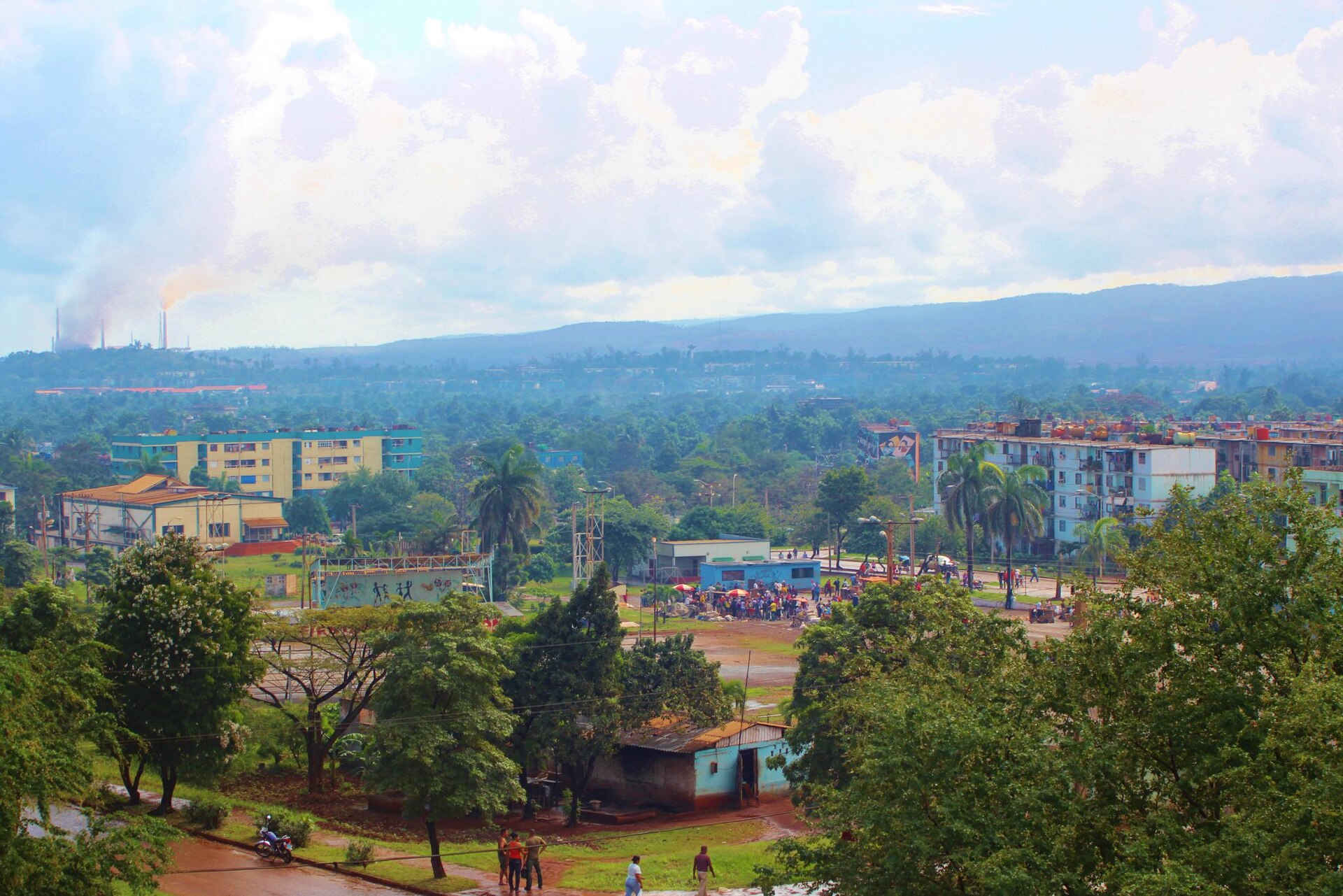
Canada’s Sherritt International, a Toronto-based mining company, has its Moa Nickel operations in Cuba inside the Moa Joint Venture. Citing the new US order, it suspended its direct role in Cuban joint venture activities on 7 May 2026.
On 22 June 2026 it also stopped refining metals at its Fort Saskatchewan plant in Alberta. In a release of 20 October 2026 it warned of a material uncertainty over its ability to continue as a going concern.
It received a US Treasury licence for fuel and sulphur deliveries to Moa Nickel, the first of several it needs. It also signed an interim consent deal on 23 September 2026 with Moa Bay Mining Co., which holds a certified Helms-Burton claim.
Helms-Burton is a 1996 US law that lets Americans whose property Cuba seized sue those who profit from it. A possible sale of control to a US investment fund, Gillon Capital, has been put to the Treasury for consideration.
In 2022 Cuba sold about US$347 million of goods to Spain, its biggest single buyer. It bought about US$996 million from Spain, a major European partner.
The European Commission’s humanitarian department is the largest donor to the 2026 UN hurricane plan for Cuba, at US$14.5 million. Spain, Sweden, Luxembourg, Austria and Greece also gave.
Lenders and Aid Donors
The United Nations runs a 2026 plan of action for the response to Hurricane Melissa in Cuba. By 29 October 2026 the UN tracking service showed US$39.1 million received against US$81.8 million asked, about 48%.
The European Commission’s humanitarian department gave the most, at US$14.5 million. Japan gave US$7.7 million, the Qatar Fund for Development US$4.5 million and Swiss aid US$2.8 million.
Canada gave US$1.5 million, South Korea US$1.1 million and Spain US$0.9 million. The UN Development Programme, the children’s fund and the World Health Organization each added between US$0.7 million and US$1 million.
World Bank data show net official development aid to Cuba was US$167 million in 2023, down from about US$750 million in 2018. That is a small flow for a country of nearly 11 million people.
Foreign Investment in Numbers
World Bank figures show net foreign direct investment into Cuba of US$79.5 million in 2025. In 2024 and 2023 the flows were slightly negative, at minus US$7.8 million and minus US$9.9 million.
In 2021 the inflow was US$165 million and in 2022 US$134 million. The 2023 and 2024 figures mean more money left than came in, on balance.
The US order of 1 May 2026 names energy, mining and financial services among the sanctionable sectors. Sherritt gave that order as the reason it suspended its direct role in its Cuban ventures.
Foreign investors in Cuba now carry the risk of US sanctions on top of normal business risk. Sherritt shows the cost, with going-concern doubt and a restart that depends on US licences.
The Cuban Diaspora and Its Money
The US Census Bureau’s 2024 American Community Survey counts 2,948,426 people of Cuban origin in the United States. About 1,688,798 of them were born in Cuba.
Florida holds 1,800,279 of them, about 61% of the national total. Miami-Dade County alone has 1,015,446.
The World Bank data portal carries no remittance figure for Cuba. The size of money sent home is therefore not officially measured.
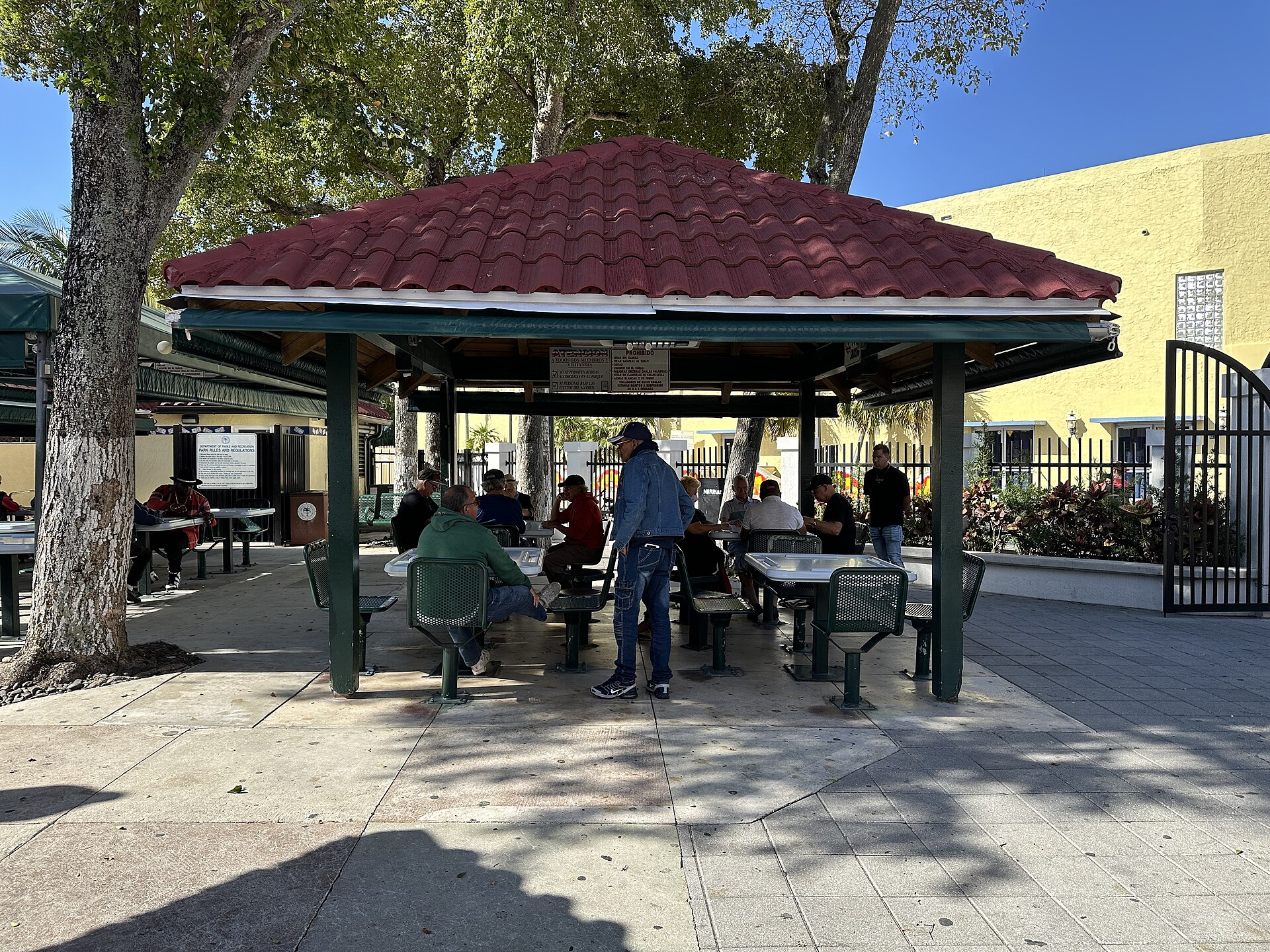
Little Havana in Miami is a well-known neighbourhood of this community. US rules on sending money and goods to Cuba matter directly to these families.

What Prediction Markets Say
Cuba’s foreign ministry statement at the United Nations on 28 October 2026 names Miguel Díaz-Canel Bermúdez as President. The prices below are bets on whether he leaves by the end of the year.
Polymarket, a US betting exchange, lists a market called “Miguel Díaz-Canel out as leader of Cuba by…?”. On 29 October 2026, at 9:26 a.m. ET, traders gave 7.5% to a departure by 31 December 2026.
That market has traded about US$2.3 million in total, and about US$782,000 on the December contract. A separate market worded around the title of President gave 9.5% but has traded only about US$5,000 on that contract.
Related Polymarket markets gave 11.5% to a US and Cuba economic deal by 31 December 2026. They gave 9.5% to US military action against Cuba by that date.
Kalshi, a US-regulated exchange, priced a US trade deal with Cuba before 1 January 2027 at 14%, with 69,447 contracts traded. These are bets, not forecasts by officials.
Why we show this: prediction markets turn real-money bets into a live probability that moves within minutes of the news, which is why investors, campaigns and newsrooms in the United States now follow them closely. We show them next to polls and official results, never instead of them.
What It Means for US Readers
US sanctions on Cuba apply to US persons and now reach foreign firms and banks. Companies that hold Cuban business partners should check them against the State Department and Treasury lists before any deal.
Investors in Sherritt or in Spanish and Canadian hotel and mining groups carry the sanctions risk directly. Sherritt itself says it faces going-concern doubt.
Travellers should read the State Department advice for Cuba before any trip. It is Level 2, exercise increased caution, because of crime and unreliable electrical power.
Cuban Americans who send money or goods should check current Treasury rules first, because the May order bans donations to blocked persons. For the wider US angle, read the Cuba and United States tensions guide and the Cuba politics guide.
What Is Not Known
The size of any Chinese or Russian loan, oil delivery or military presence in Cuba in 2026 is not published. US officials link Cuba to Russia and Iran, but details of those ties are not public.
Which foreign hotel groups still manage Cuban hotels in October 2026 is not documented. Whether Cuba services its debts to foreign lenders, or has any programme with the IMF or World Bank, is also not documented.
The size of remittances is not published. How Cuba, China or Russia will answer the new US sanctions is also open.
The size of Cuban state profits from foreign ventures is not published either. For the island’s own story see the Cuba explainer.
Frequently Asked Questions
Who are the main foreign players in Cuba?
The United States is the strongest outside force through sanctions. China, Russia, Canada, Spain, the EU, UN donors and Cubans abroad also matter in trade, aid and money.
Does China invest in Cuba?
China is Cuba’s largest named supplier, at about US$1.13 billion of goods in 2022. The size of any new Chinese loan in 2026 is not published.
Why did Sherritt suspend its Cuban business?
Sherritt said it suspended its direct role on 7 May 2026 after US Executive Order 14404 widened sanctions. It is seeking more US licences to restart Moa Nickel.
How much foreign investment does Cuba get?
World Bank data show net foreign direct investment of US$79.5 million in 2025. In 2024 and 2023 the flows were slightly negative.
Who gives aid to Cuba?
For the 2026 UN hurricane plan, the European Commission gave US$14.5 million and Japan US$7.7 million. Qatar, Switzerland, Canada, South Korea and Spain also gave.
How many Cubans live in the United States?
The 2024 Census survey counts 2,948,426 people of Cuban origin, and 1,800,279 live in Florida. About 1,688,798 were born in Cuba.
Sources: White House, Executive Order 14404 on Cuba, 1 May 2026; US State Department, sanctioning Banco Internacional de Comercio, 15 October 2026; US State Department, tightening of Cuba sanctions, 30 September 2026; US State Department, briefing on the Cuban government and human rights, 19 October 2026; US Embassy in Havana, 29 October 2026; UN General Assembly, debate on the embargo (GA/12800), 27 October 2026; Sherritt International, operations and financial update, 20 October 2026; UN Financial Tracking Service, Cuba 2026 plan, 29 October 2026; World Bank data, Cuba (population, investment, aid), 8 October 2026; World Bank WITS, Cuba trade by partner, 2022, 29 October 2026; US Census Bureau, American Community Survey 2024 1-year, tables B03001 and B05006, 29 October 2026; Embassy of China in Cuba, 24 September 2026; Cuban Ministry of Foreign Affairs, statement at the UN General Assembly, 28 October 2026.
This article was produced by The Rio Times’ automated newsroom system. How we use AI · Report an error · Editorial responsibility: Matthias Camenzind, Editor-in-Chief
Expat Guide to Cuba
What The Rio Times publishes for foreigners who live in or move to Cuba.
Start here
- Moving to Cuba 2026, Step by Step
- Panama Visa Appointment System Launches for Havana Applicants
- Spain and Portugal Close Their Golden Visa Doors, Forcing LATAM Investors to Reroute
Understand Cuba
Cuba and the United States
- What Is Going On Between Cuba and the United States?
- What Is Going On Between Cuba and the United States?
- Can Americans Still Travel to Cuba in 2026?
- Who Runs Cuba in 2026? Raúl Castro and the US Murder Charge
Brazil runoff date: Sunday, October 25, poll closing times and when results start · Brazil runoff polls: Flávio 51%, Lula 49% · Kalshi and Polymarket odds
Rotate for Best Experience
This report is optimized for landscape viewing. Rotate your phone for the full experience.
You've reached your free article limit
Subscribe to The Rio Times for unlimited access to our news, expat and nomad guides and market intelligence on Latin America and Africa.
Keep reading for free
Your first article was on us. Register with your email address to read 6 free articles every month. You will also receive The LatAm Brief: what moved in Latin American markets, politics and expat life, every weekday morning.
Expat Guide to Cuba
What The Rio Times publishes for foreigners who live in or move to Cuba.
Start here
- Moving to Cuba 2026, Step by Step
- Panama Visa Appointment System Launches for Havana Applicants
- Spain and Portugal Close Their Golden Visa Doors, Forcing LATAM Investors to Reroute
Understand Cuba