
CUBA · ECONOMY
Key Facts
- —What is happening Cuba, a one party island of 9.4 million people, faces a projected 10.3% economic fall in 2026 while a military holding company, GAESA, and a few foreign partners hold its key sectors.
- —Why it matters US sanctions in force since 1 May 2026 can hit any firm in Cuba’s energy, mining or finance sectors, and GAESA, Moa Nickel and the bank BICSA are now blocked.
- —The numbers Annual inflation was 28.44% in September 2026, the average state wage was 7,354 pesos (US$9.19) a month in August, and the informal rate reached 800 pesos per US$.
- —Who is who GAESA is the military holding company led by Ania Guillermina Lastres Morera, Manuel Marrero Cruz is prime minister, and Miguel Díaz-Canel is president and Communist Party leader.
- —What to watch Watch whether foreign firms bid under the oil and gas law in force since 19 October 2026, and the end of the BICSA wind-down period on 14 November 2026.
- —Prediction markets Polymarket: 6.5% chance Díaz-Canel is out as Cuba’s leader by 31 December (23 October, 11:37 a.m. ET).
- —Power Index Cuba ranks 14th of 14 in The Rio Times Latin America Power Index, with 22.5 points (October 2026 edition).
- —What it means for you US citizens cannot visit Cuba as tourists, and any US company or bank dealing with GAESA, BICSA or Moa Nickel faces US blocked property rules.
This guide names who controls Cuba’s money, mines, hotels and power as of October 2026. US sanctions now shape what each of them can do.
The Cuba economy is run by the state, and its biggest piece sits inside GAESA. That military controlled holding company is estimated by US officials to hold 40 percent or more of it, as of May 2026.
Around it sit nickel, oil, cigars, hotels and a small private sector, much of it now squeezed by US sanctions. For US readers, the key players matter because American rules now reach foreign firms that deal with them.
How the Cuba Economy Is Organised
Cuba is a one party state of about 9.4 million people, and the government owns most large enterprises. Its statistics office, ONEI, counted 9,434,593 residents at the end of 2025, down 313,414 in a year.
ECLAC, the UN regional commission for Latin America and the Caribbean, estimates that Cuba’s output fell 3.8% in 2025. It projects a further fall of 10.3% in 2026, in its Economic Survey of 20 August 2026.
That is the weakest forecast in the region, where ECLAC expects 2.2% growth in 2026. Cuba’s government set a 1% growth target for 2026 in April, Cubanet reported, so the gap is more than 11 points.
President Miguel Díaz-Canel also leads the Communist Party, and Manuel Marrero Cruz is prime minister. Marrero told the National Assembly on Wednesday, 29 July 2026 that 73% of hotels were shut.
The sections below follow the money by sector, starting with the military holding company. For a wider country profile, see Cuba Explained 2026.
GAESA, the Military Holding at the Centre
GAESA, short for Grupo de Administración Empresarial S.A., was set up in the 1990s under military control. WLRN, a Miami public radio station, called it the armed forces’ answer to lost Soviet aid and tighter sanctions.
The US State Department said on 7 May 2026 that GAESA controls an estimated 40 percent or more of the island’s economy. It added that, on public estimates, GAESA’s revenues are likely more than three times the state budget.
The same statement says GAESA likely controls up to US$20 billion in illicit assets, much of it held abroad. Those are US government estimates, and WLRN, the Miami public radio station, reported that GAESA’s accounts are exempt from state audit.
GAESA’s executive president is Ania Guillermina Lastres Morera, whom the State Department designated on 7 May 2026. It acted under Executive Order 14404 of 1 May 2026, which lets Washington block property of firms in Cuba’s key sectors.
A designation also blocks any entity that one or more blocked persons own by 50 percent or more, the State Department said. US persons may not deal with those parties without a licence from the Treasury’s Office of Foreign Assets Control (OFAC).
GAESA is not alone, since foreign partners sit beside it in hotels, nickel and power. Grupo Gaviota, the Cuban hotel group whose hotels the Spanish chains managed, appears in the tourism section below.
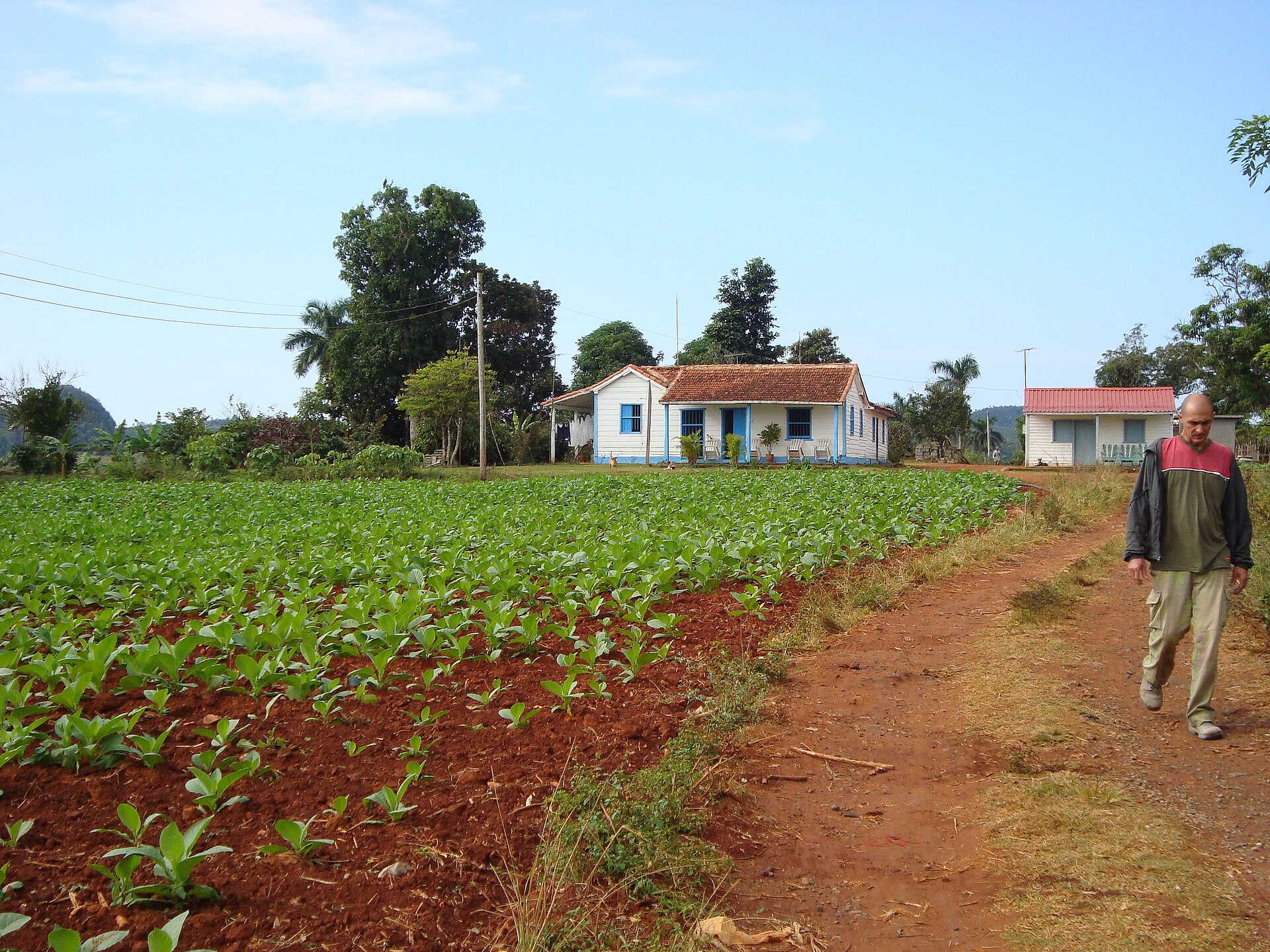
Tobacco and Sugar, the Old Export Lines
Habanos S.A. sells Cuban premium cigars worldwide, and it reported record revenue of US$827 million for 2024. That was 14.7% more than in 2023, and China, Spain, Switzerland, Britain and Germany were the top markets.
Habanos is a joint venture with Cuba’s state tobacco monopoly. Cigar trade press reported that Imperial Brands sold its 50% stake in 2020 to a group of undisclosed Asian investors.

Sugar, once the island’s main export, has shrunk to a remnant. EFE, the Spanish news agency, calculated from state media that the 2025 harvest stayed below 150,000 tonnes of sugar.
That was less than half of the previous season, and EFE said Cuba had not produced so little since the 19th century. AZCUBA, the state sugar company, gave no harvest total, according to EFE.
Nickel, Oil and Power, the Energy and Mining Players
Moa Nickel S.A. is a joint venture between Canada’s Sherritt International and the Cuban state firm La Compañía General de Níquel. The US designated it on 7 May 2026 for operating in Cuba’s metals and mining sector.
Sherritt, listed on the Toronto Stock Exchange, suspended its direct role in the Moa and Energas ventures on 7 May 2026. Energas is its power venture with Cuba, and it generates electricity from domestically sourced natural gas.
In the second quarter of 2026, Sherritt’s share of Moa output was 1,319 tonnes of finished nickel and 135 tonnes of cobalt. Mining and processing at the mine ceased near the end of June, its results of 12 August 2026 said.
Energas still produced 207 gigawatt hours of electricity in that quarter, because its gas is Cuban rather than imported. Sherritt reported a net loss from continuing operations of US$51 million (71.1 million Canadian dollars at the rate of 23 October 2026).
Sherritt says it is seeking US government approval to restart its critical minerals operations, and it gives no date. Its report links the halt of mining to fuel supply disruptions in Cuba and shortages of other inputs.
Fuel is the other weak point: a US fuel blockade imposed in January 2026 caused Cuba’s worst energy crisis in decades. That is how Swissinfo described it on 30 July 2026, citing the prime minister’s speech.
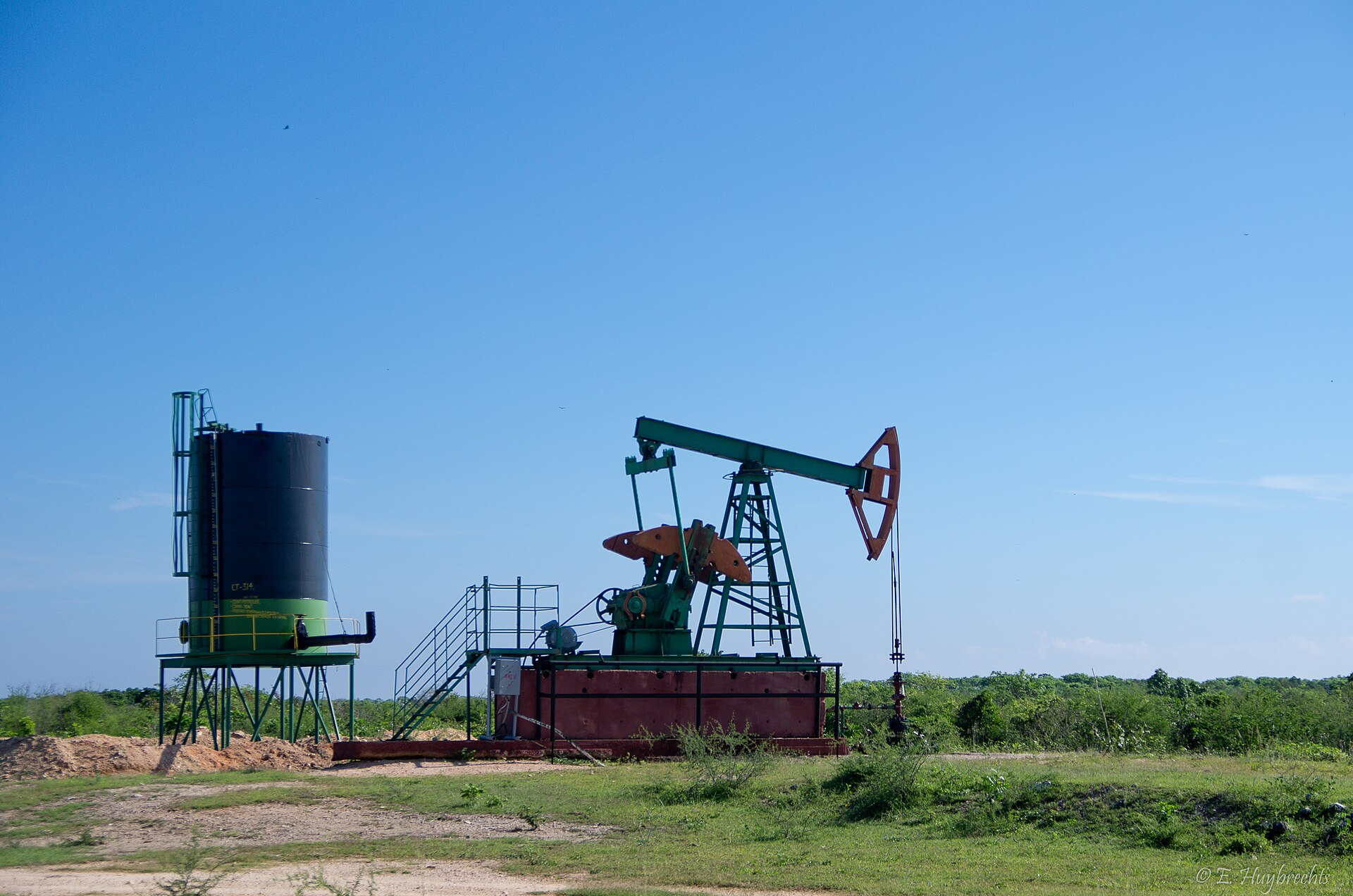
Decree-Law 135, the new oil and gas law, appeared in the Gaceta Oficial on Monday, 12 October 2026. It took effect on 19 October.
The law allows production sharing contracts of up to 40 years and concessions of up to 30 years. Cuban and foreign firms can apply, and the Rio Times report is Cuba Oil Law Takes Effect 19 October for Foreign Firms.
Tourism and the Foreign Hotel Chains
Cuba received 1,810,663 international visitors in 2025, the lowest figure since 2002 outside the pandemic years, Cubanet reported from ONEI data. Tourism then fell 58% in January to June 2026 against the same months of 2025, Swissinfo reported from official data.
Marrero told the National Assembly on Wednesday, 29 July 2026 that seven chains, managing 46% of the rooms, had left. He said 73% of hotel facilities were closed.
Meliá, the Spanish chain, ended management of 15 Cuban hotels with immediate effect, Hosteltur reported on Wednesday, 3 June 2026. Iberostar had earlier left 12 of its 18 Cuban hotels, and Blue Diamond also confirmed its withdrawal.
Meliá had more than 30 properties and 13,800 rooms in Cuba before the cuts. Its Cuban revenue in 2025 was about EUR 11 million (US$12.3 million at the rate of 23 October 2026), Forbes España reported.
Marrero said about 25,000 workers were left vulnerable after the chains left. Swissinfo added that tourism is the second-largest source of foreign currency and employed more than 300,000 people until January.
Banks, Money and the Peso
Banco Internacional de Comercio S.A. (BICSA) is a Cuban state-owned bank that the State Department designated on Thursday, 15 October 2026. OFAC said it would not target foreign firms for wind-down dealings until 14 November 2026.
The Rio Times report on the designation is US Sanctions Cuban Bank Over Iran Ties. The central bank, Banco Central de Cuba, issues the peso and sets the official rate.
The official rate was 24 pesos per US$ on open.er-api.com on 23 October 2026. The informal market, tracked by elTOQUE, put the dollar at 800 pesos on 16 October, which 14ymedio called a record.
ONEI data show an average state wage of 7,354 pesos (US$9.19 at 800) a month for August 2026. Annual inflation reached 28.44% in September 2026, and food prices rose 42.66% over twelve months, EFE reported.
Read the details in Cuba Inflation Rises to 28.44% in September and Cuba Dollar Rate Hits Record 800 Pesos. Daily life under these prices is described in Cuba People Daily Life Under the Embargo.
Private Business Under Pressure
Cuba has allowed private micro, small and medium enterprises, called mipymes, since September 2021. They sell food, services and goods that state shops often cannot supply.
ONEI counted 9,236 private mipymes at the end of December 2024, down 2.35% from 9,458 in September 2024, Cubanet reported. It was the first quarterly fall since the sector took off.
The Ministry of Economy and Planning stopped publishing its weekly approval reports in early 2025, so newer counts are harder to find. This guide therefore gives no current figure.
Executive Order 14404 names the energy, defence, metals and mining, financial services and security sectors. Retail shops and restaurants are not named, but officials may add other sectors.
What It Means for US Readers
US citizens cannot travel to Cuba as tourists, because OFAC allows travel only in 12 licensed categories. Anyone planning a trip should check the current OFAC guidance before booking.
US persons may not deal with GAESA, Lastres Morera, Moa Nickel or BICSA. Foreign firms in the five named sectors risk sanctions themselves, and banks and exporters should screen counterparties against the OFAC list.
Investors in listed firms with Cuban exposure, such as Sherritt in Toronto and Meliá in Madrid, should watch sanctions news. Sherritt says its restart depends on US approval.
The new oil and gas law invites foreign investors into the same energy sector that US sanctions now cover. For daily news, see The Rio Times Cuba page and Cuba Geopolitics 2026: Who Backs Havana, Who Presses It.
What Prediction Markets Say
Polymarket, where users bet real money, asks whether Miguel Díaz-Canel will be out as leader of Cuba by 31 December 2026. It showed 6.5% on 23 October at 11:37 a.m. ET, between a bid of 6 cents and an ask of 7 cents.
About US$758,000 has traded on that contract. The earlier contracts for 31 March and 30 June 2026 both ended with Díaz-Canel still in office.
The market asks about the leader of Cuba, not about the economy. It is a bet on political change, which would affect who controls GAESA and the sanctions picture.
Why we show this: prediction markets turn real-money bets into a live probability that moves within minutes of the news, which is why investors, campaigns and newsrooms in the United States now follow them closely. We show them next to polls and official results, never instead of them.
What Is Not Known
GAESA’s accounts are not public, so the US estimates of 40 percent of the economy and US$20 billion abroad cannot be checked. WLRN quoted unnamed US officials on 21 May 2026 as saying 70 percent.
The sites of ONEI, the central bank and the Gaceta Oficial could not be opened from here. Cuban data therefore rest on the Gaceta Oficial copy, EFE, Cubanet, 14ymedio and other outlets that cite them.
No 2025 results for Habanos, no current count of private mipymes, and no total for remittances were confirmed. Nor were the current heads of the Ministry of Economy and Planning, the central bank or the Energy and Mines Ministry.
No reliable current figure for output of CUPET, the state oil company, was found. Whether Sherritt wins US approval to restart Moa, and what happens when the BICSA wind-down window ends, is open.
Frequently Asked Questions
Who controls the Cuba economy?
The state owns most large enterprises, and US officials estimate that GAESA controls 40 percent or more of the economy. Foreign partners such as Sherritt hold stakes in nickel and power.
What is GAESA?
GAESA is a holding company controlled by Cuba’s armed forces, set up in the 1990s. The US sanctioned it and its executive president, Ania Guillermina Lastres Morera, on 7 May 2026.
Is the Cuban economy shrinking?
ECLAC estimates that output fell 3.8% in 2025 and projects a fall of 10.3% in 2026. That is the weakest forecast in Latin America and the Caribbean, as of its survey of 20 August 2026.
What is the Cuban peso exchange rate?
The official rate was 24 pesos per US$ on 23 October 2026, while the informal market reached 800 on 16 October. Prices and wages follow the informal rate, so a state wage of 7,354 pesos is about US$9.
Can US companies do business in Cuba?
Not freely, because the US embargo and Executive Order 14404 bar most dealings with blocked parties such as GAESA and BICSA. A licence from OFAC is needed for any exception.
Which foreign companies operate in Cuba?
Canada’s Sherritt has a nickel venture and a power venture there, though it suspended its direct role on 7 May 2026. Spanish chains Meliá and Iberostar have cut back their hotel management.
Which sectors earn foreign currency?
Swissinfo calls tourism the second-largest source, though it fell 58% in the first half of 2026. Nickel, cigars and a shrunken sugar harvest are the other named export lines.
Sources: US State Department, press statement on GAESA, 7 May 2026; OFAC, FAQ 1276 on BICSA, October 2026; Sherritt International, second quarter 2026 results, 12 August 2026; Gaceta Oficial No. 85, 12 October 2026 (copy hosted by CiberCuba); ECLAC, GDP growth table 2025 to 2027, 20 August 2026; open.er-api.com exchange rates, 23 October 2026; Prensa Latina, ONEI population release, 21 July 2026; Cubanet, ONEI visitor arrivals 2025; Cubanet, ONEI count of private mipymes; Swissinfo, Marrero on hotels, 30 July 2026; EFE via Swissinfo, 2025 sugar harvest; Hosteltur, Meliá and Gaviota, 3 June 2026; Forbes España, Meliá Cuba revenue, 26 February 2026; halfwheel, Habanos 2024 revenue; WLRN, 21 May 2026; Polymarket, 23 October 2026 (all accessed 23 October 2026).
Editorial responsibility: Matthias Camenzind, Editor-in-Chief · Editorial standards · Report an error
Expat Guide to Cuba
What The Rio Times publishes for foreigners who live in or move to Cuba.
Start here
- Moving to Cuba 2026, Step by Step
- Panama Visa Appointment System Launches for Havana Applicants
- Spain and Portugal Close Their Golden Visa Doors, Forcing LATAM Investors to Reroute
Coming up in Cuba
Understand Cuba
Cuba and the United States
- What Is Going On Between Cuba and the United States?
- What Is Going On Between Cuba and the United States?
- Can Americans Still Travel to Cuba in 2026?
- Who Runs Cuba in 2026? Raúl Castro and the US Murder Charge