CUBA · POLITICS
Key Facts
- —The system Cuba is a one-party state in which the Communist Party is the only legal party, and the National Assembly elects the president for five years.
- —Head of state Miguel Díaz-Canel is president and First Secretary of the Communist Party, and as of October 2026 he is still in office.
- —Head of government Manuel Marrero Cruz is prime minister, as of 2 October 2026, and leads the Council of Ministers.
- —Security Gen. Álvaro López Miera runs the armed forces and Gen. Lázaro Alberto Álvarez Casas the Interior Ministry, as of September 2026.
- —Behind the scenes Raúl Castro, 95, gave up his posts in 2018 and 2021 but still appears at security events, as of 7 October 2026.
- —Prediction markets Polymarket gives a 10.0% chance that Díaz-Canel is out as president by 31 December 2026 (24 October, 9:14 a.m. ET).
- —Power Index Cuba ranks 14th of 14 in The Rio Times Latin America Power Index, with 22.5 points (October 2026 edition).
Cuba politics in 2026 means one party, one army and one family, with President Miguel Díaz-Canel in front and Raúl Castro, 95, behind him. For US readers it matters because Washington is pressing Havana on sanctions, energy and leadership while the economy shrinks.
This guide names who holds power as of October 2026, from the party and ministers to the generals, courts and the Castro family.

Cuba Politics Starts With One Party and One Family
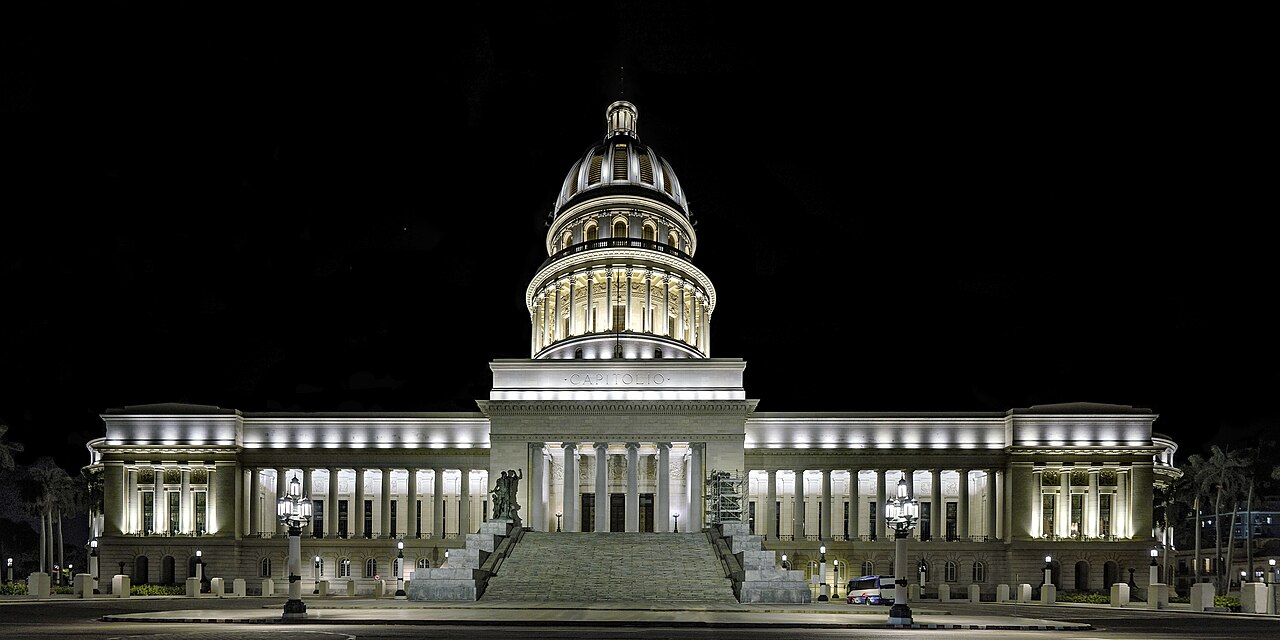
Cuba is a one-party state, and the Constitution calls the Communist Party “the organized vanguard of the Cuban nation” in its Article 5. The party sits above the government, the courts and the army.
The National Assembly elects the president from among its own members for five years, with a limit of two consecutive terms, according to Article 126. In practice, Cuba politics lets the party decide who is put forward.
Power in 2026 is shared between three circles. The first is the state under President Miguel Díaz-Canel, the second is the party, and the third is the army, police and Castro family.
Raúl Castro, now 95, gave up the presidency in 2018 and the party leadership in 2021. He still appears at security events.
The Rio Times Latin America Power Index covers 14 countries, including Cuba. Its power map shows the current score and rank.
Díaz-Canel, Marrero and the Government
Miguel Díaz-Canel is president of the Republic and First Secretary of the Communist Party, a post he has held since April 2021. As of September 2026 he also chairs the National Defence Council, which runs the country’s civil defence drills.
In September and October 2026 he visited neighbourhood defence zones in Havana. On 11 September 2026 he told residents that the threat of aggression persists and that defence remains the first priority.
The Prime Minister and the Council of Ministers
Manuel Marrero Cruz is prime minister, the head of government. The office was created in 2019, and Marrero was the first person to hold it since 1976.
On 2 October 2026 Marrero said the government had drafted 160 implementation proposals and 197 legal norms for its reform package. He also said the effects on daily life should become visible in 2027.
Salvador Valdés Mesa is vice president and a Political Bureau member, as of 22 October 2026.
The Economy Minister
Joaquín Alonso Vázquez is minister of Economy and Planning, as of 25 September 2026. He is the official who sets the targets for the reform programme.
Cuba’s economy is the government’s weakest point.
The Communist Party and Its Political Bureau
The Communist Party of Cuba (PCC) is the only legal party. Its Central Committee meets in plenary sessions, and an extraordinary plenum was convened in June 2026.
Roberto Morales Ojeda is secretary of Organization of the Central Committee and a member of the Political Bureau, as of October 2026. He runs the party machine, from provincial first secretaries to the appointment of cadres.
The party also runs the provinces, where the first secretary of each provincial committee is the top local figure.
Other parties and organisations exist only as mass organisations tied to the state, such as the unions and the women’s federation. Independent unions and opposition parties are not legal.
The National Assembly and the Council of State
The National Assembly of People’s Power is Cuba’s parliament. Its mandate is five years under Article 105, and it normally meets in two ordinary sessions a year.
Esteban Lazo Hernández is president of the Assembly and of the Council of State, the body that acts between sessions. As of late September 2026 he was still issuing guidance to Assembly committees.
The Assembly held a third extraordinary session in June 2026 and debated 176 proposed economic and social changes. It held its seventh ordinary session on 29 and 30 July 2026, where deputies approved a new housing law.
The Council of State approved two more decree-laws on 14 October 2026 and reviewed progress on the reforms. Votes in the Assembly are almost always unanimous.
The Military, the Interior Ministry and Security
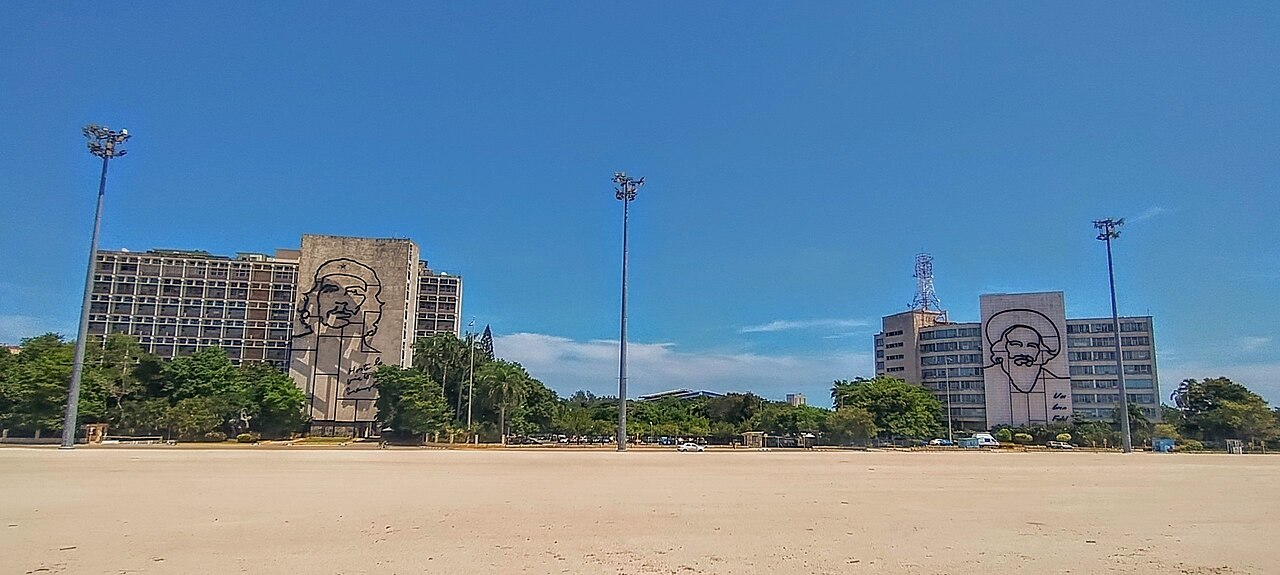
General Álvaro López Miera is minister of the Revolutionary Armed Forces (FAR), the army, navy and air force. He attended the National Defence Council event on 11 September 2026.
On 6 August 2026 the US State Department sanctioned him under Executive Order 14404, citing arms purchases from Russia and China. It was his third US designation in five years, according to Cuban press reports.
General Lázaro Alberto Álvarez Casas is minister of the Interior, which runs State Security and the National Revolutionary Police. He was appointed in November 2020, and the US sanctioned him and his ministry in January 2021.
The armed forces also sit at the centre of the economy through the conglomerate GAESA. Our guide to who runs Cuba’s economy covers that side.
Courts, Prosecutors and Local Government
Oscar Manuel Silvera Martínez became president of the People’s Supreme Court on 3 February 2026. He replaced Rubén Remigio Ferro, who had led the court for 27 years and signed the life sentence of former Economy Minister Alejandro Gil.
Silvera was minister of Justice from 2018 until about six weeks before his appointment. Courts and the Attorney General’s Office answer to the National Assembly, not to an independent judiciary.
Cuba has provincial governors and municipal assemblies. The Assembly’s Commission on Local Bodies visited Las Tunas in late September 2026 to check how the reforms work locally.
Officials there said the current model is “not the socialism we had imagined, but the one we can build,” according to the official newspaper 26. The reforms now let municipal officials approve new private businesses.
The Castro Family and the Rising Figures
Raúl Guillermo Rodríguez Castro, known as “El Cangrejo” (the Crab), is Raúl Castro’s grandson and former bodyguard. US press reports say he has served as a back channel to Washington.
He was present at a ceremony on 5 September 2026 for the unit that protects Cuba’s leaders. Cuban officials have not described his role in public.
According to US press reports from August 2026, he and Álvarez Casas met CIA Director John Ratcliffe in Havana on 14 May 2026. Cuba’s official note called the meeting one requested by Washington.
US officials have not said whether they see either man as a future leader. No Cuban official has confirmed that any succession plan exists.
See also our reports on the Florida warrant for Raúl Castro and Rubio’s call to work with the CIA.
Reforms, Opposition and Pressure From Washington
Cuba politics in 2026 turns on one project, a package of 176 economic and social measures approved in June 2026. Marrero said on 2 October 2026 that small private firms number 16,100 and that over 385,000 Cubans are self-employed.
Pressure from the United States has grown. On 16 October 2026 a Florida judge signed an arrest warrant for Raúl Castro over the 1996 downing of two Brothers to the Rescue planes.
A separate federal indictment from May charges Castro and five other former Cuban military officers over the same incident. Díaz-Canel called the warrant legally and practically meaningless.
Vice President Valdés Mesa said on 22 October 2026 that Cuba will press its call to end the US embargo at the UN General Assembly. Foreign Minister Bruno Rodríguez Parrilla accused Washington on 21 October 2026 of pressuring other countries over their votes.
What Prediction Markets Say
On Polymarket, bettors gave a 10.0% chance that Díaz-Canel is out as president by 31 December 2026 (24 October, 9:14 a.m. ET). The event has drawn about US$376,000 in total trading, though the 31 December contract itself has seen only about US$4,900.
A separate Polymarket event on Díaz-Canel leaving the leadership of Cuba has drawn more than US$2.2 million in trading. These are bets, not polls, and they can move quickly on news.
Why we show this: prediction markets turn real-money bets into a live probability that moves within minutes of the news, which is why investors, campaigns and newsrooms in the United States now follow them closely. We show them next to polls and official results, never instead of them.
What It Means for US Readers
Cuba politics matters in the United States because Washington is pressing it on sanctions, energy and a possible leadership change. Any deal would have to go through the same few men and women named above.
For travellers and families, the main effects are blackouts, shortages and visa and sanctions rules that change often. Cuban Americans and exporters should watch the UN vote on the embargo and further US sanctions designations.
For the wider picture, read our explainers on Cuba and the United States and Cuba geopolitics, and see the Cuba hub.
What Is Not Known
In Cuba politics, it is not known who would succeed Díaz-Canel, because no succession plan has been made public. It is also unknown whether the informal contacts between Havana and Washington will resume.
The state of Raúl Castro’s health is not public, although he appeared at events on 5 September and 7 October 2026. The exact role of the Castro family in day-to-day decisions is also not documented.
Frequently Asked Questions
Who is the president of Cuba in 2026?
Miguel Díaz-Canel is president and First Secretary of the Communist Party. He has led the party since April 2021.
Who is the prime minister of Cuba?
Manuel Marrero Cruz is prime minister, as of October 2026. The post was created in 2019.
Is Raúl Castro still in power?
Raúl Castro, 95, left the presidency in 2018 and the party leadership in 2021. He still appears at security events, and a Florida judge signed an arrest warrant for him on 16 October 2026.
Does Cuba have free elections?
No. The Communist Party is the only legal party, and the National Assembly elects the president for a five-year term. Opposition parties are not legal.
Who commands Cuba’s military and police?
Gen. Álvaro López Miera is minister of the armed forces. Gen. Lázaro Alberto Álvarez Casas is minister of the Interior, which runs State Security and the police.
What are the odds that Díaz-Canel leaves office?
On Polymarket, bettors gave 10.0% for his exit by 31 December 2026 as of 24 October 2026, 9:14 a.m. ET. These are bets, not polls.
Sources: Constitution of Cuba (2019), Articles 5, 105 and 126, 2019 text; CiberCuba, Marrero on the reform package, 2 October 2026; CiberCuba, Díaz-Canel at National Defence Council event, 11 September 2026; CiberCuba, Morales Ojeda, 5 October 2026; CiberCuba, Assembly delegation in Las Tunas, 25 September 2026; CiberCuba, Economy Minister Joaquín Alonso, 25 September 2026; CiberCuba, López Miera sanctions, 6 August 2026; CiberCuba, Álvarez Casas and El Cangrejo, 9 August 2026; Diario Las Américas, US sanctions on Cuba’s armed forces minister, 6 August 2026; CiberCuba, arrest warrant for Raúl Castro, 19 October 2026; CiberCuba, Raúl Castro letter to the FAR medical university, 7 October 2026; Infobae, Raúl Castro public appearance, 5 September 2026; 14ymedio, new Supreme Court president, February 2026.
This article was produced by The Rio Times’ automated newsroom system. How we use AI · Report an error · Editorial responsibility: Matthias Camenzind, Editor-in-Chief
Expat Guide to Cuba
What The Rio Times publishes for foreigners who live in or move to Cuba.
Start here
- Moving to Cuba 2026, Step by Step
- Panama Visa Appointment System Launches for Havana Applicants
- Spain and Portugal Close Their Golden Visa Doors, Forcing LATAM Investors to Reroute
Coming up in Cuba
Understand Cuba
Cuba and the United States
- What Is Going On Between Cuba and the United States?
- What Is Going On Between Cuba and the United States?
- Can Americans Still Travel to Cuba in 2026?
- Who Runs Cuba in 2026? Raúl Castro and the US Murder Charge
Rotate for Best Experience
This report is optimized for landscape viewing. Rotate your phone for the full experience.
You've reached your free article limit
Subscribe to The Rio Times for unlimited access to our news, expat and nomad guides and market intelligence on Latin America and Africa.
Expat Guide to Cuba
What The Rio Times publishes for foreigners who live in or move to Cuba.
Start here
- Moving to Cuba 2026, Step by Step
- Panama Visa Appointment System Launches for Havana Applicants
- Spain and Portugal Close Their Golden Visa Doors, Forcing LATAM Investors to Reroute
Coming up in Cuba
Understand Cuba