Cameroon Explained 2026: Biya’s Long Rule, Two Crises, the Economy and What to Watch

GUIDES · COUNTRY
Key Facts
- Capital Yaoundé is the political capital. Douala, on the coast, is the largest city, the main port and the business centre.
- Population About 29.9 million in 2025, on World Bank estimates. The last full census was taken in 2005, so every figure is a projection.
- Currency The Central African CFA franc, fixed at 655.957 to the euro. That puts it at about CFA576 to the US dollar on 28 September 2026.
- Languages French and English are both official. Eight of the ten regions are French-speaking; the North-West and South-West are English-speaking.
- Economy About US$58.9 billion in 2025, the largest in the six-nation Central African monetary union. Growth was 3.5 percent in 2025.
- Government A presidential republic. Paul Biya, 93, has been president since 6 November 1982 and began an eighth term in 2025.
Cameroon explained for newcomers: who holds power in Yaoundé and why two regions are at war with the state. Also what the country sells, and what to watch next.
Cameroon explained properly starts with one man. Paul Biya has ruled for almost 44 years and is the world’s oldest serving head of state.
Almost every question about the country, from investment to security, comes back to what happens when he goes.
What kind of country is this?
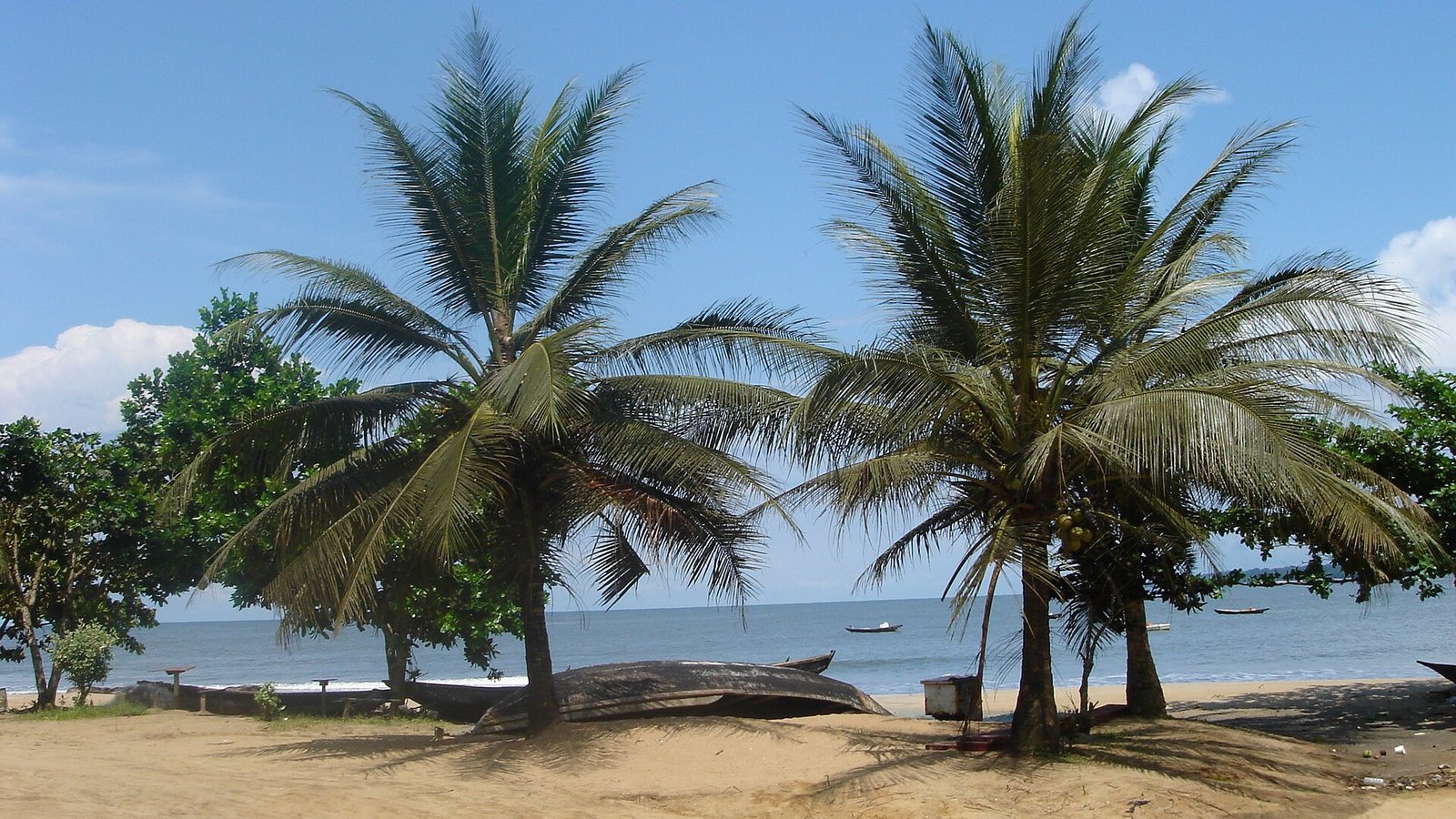
Cameroon sits where West Africa meets Central Africa, on the Gulf of Guinea. It covers about 475,000 square kilometres, a little more than California.
It borders Nigeria, Chad, the Central African Republic, the Republic of Congo, Gabon and Equatorial Guinea. The country is often called “Africa in miniature”.
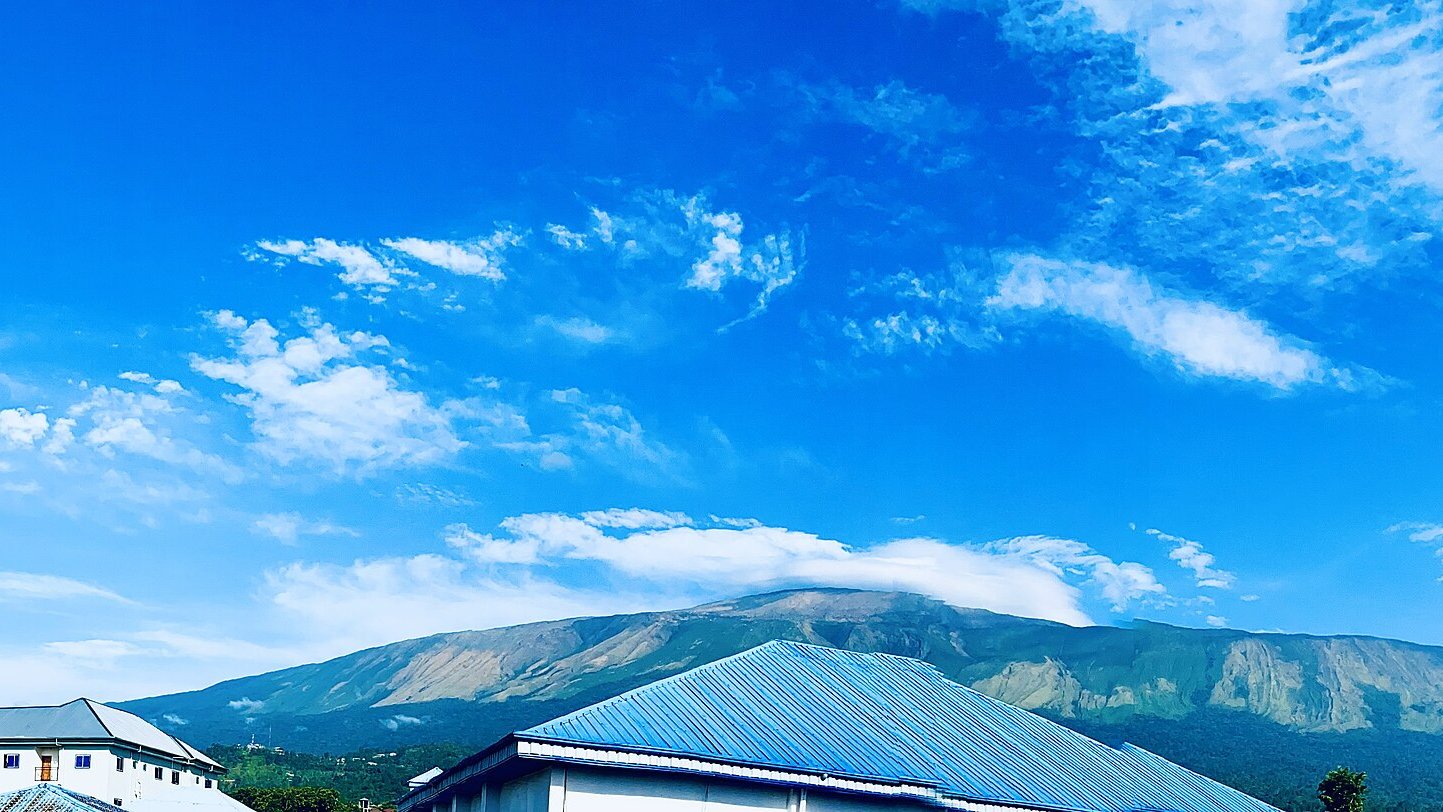
The south is rainforest and coast. The west is volcanic highland, topped by Mount Cameroon at just over 4,000 metres.
The north turns to savannah and then the dry Sahel around Lake Chad. Its history explains its politics.
Germany colonised the territory in 1884. After the First World War it was split between France and Britain.
French Cameroun became independent on 1 January 1960. In 1961 the southern part of British Cameroons voted to join it, and a federation was formed.
The northern part joined Nigeria instead. A 1972 referendum ended the federation and created a unitary state run from Yaoundé.
That merger left a lasting divide. The English-speaking North-West and South-West kept their own courts, based on English common law, and their own school system.
Many people there feel the French-speaking majority has steadily eroded both. That grievance sits behind the war described below.
Population figures should be read with care. The World Bank estimates 29.9 million people for 2025.
The last census, in 2005, counted 17.5 million. No census has been held since, so the regional breakdown in particular is uncertain.
Who runs Cameroon and how
The president holds almost all real power. He is elected for seven years in a single round, so a plurality is enough to win.
A 2008 constitutional change removed the limit on terms. He appoints the prime minister, the government, senior judges and the heads of the security forces.
Paul Biya, born on 13 February 1933, became president on 6 November 1982. He had been prime minister under Ahmadou Ahidjo, the first president, who resigned.
His party, the Cameroon People’s Democratic Movement (CPDM), has governed ever since. In the election of 12 October 2025, the Constitutional Council declared Biya the winner with 53.66 percent.
Issa Tchiroma Bakary, a former government minister, was given 35.19 percent. Turnout was 57.76 percent.
Tchiroma claimed he had won and has refused to recognise the result. Protests followed.
The government later put the death toll at 16. Human Rights Watch cited higher estimates from UN and opposition sources.
Tchiroma left the country and has lived in The Gambia since. The best-known opposition leader, Maurice Kamto, had been barred from standing.
The prime minister is Joseph Dion Ngute, in office since January 2019. He coordinates the government but does not set its direction.
Real decisions run through the presidency, where the secretary-general, Ferdinand Ngoh Ngoh, manages daily business. Parliament has two chambers.
The National Assembly has 180 elected deputies, most of them from the CPDM. The Senate has 100 members: 70 chosen by regional and municipal councillors and 30 appointed by the president.
In March 2026 both chambers replaced long-serving leaders. Théodore Datouo now leads the National Assembly, replacing Cavaye Yéguié Djibril, speaker since 1992.
Aboubakary Abdoulaye, a traditional ruler from the north, leads the Senate. His predecessor, Marcel Niat Njifenji, stepped down in March and died on 11 April 2026.
The biggest change is a new vice-presidency. Parliament created it on 4 April 2026, by 200 votes to 18, and Biya signed it into law on 14 April.
The president appoints and can dismiss the vice-president. The holder would complete the presidential term if the office fell vacant.
As of late September 2026, nobody has been appointed.
How the economy works
Cameroon produced about US$58.9 billion of goods and services in 2025, on World Bank figures. That is about US$1,970 per person, or roughly US$5.40 a day.
It is a lower-middle-income country, and about as large an economy as Tunisia’s. Cameroon uses the Central African CFA franc, shared with five neighbours in a monetary union called CEMAC.
The regional central bank, the Bank of Central African States (BEAC), sits in Yaoundé. The franc is pegged to the euro, which keeps inflation low but means Cameroon cannot devalue to cushion a shock.
Growth reached 3.5 percent in 2025, according to the economy ministry’s annual report. That is modest for a population growing fast.
The International Monetary Fund (IMF) expects 3.3 percent in 2026. Consumer prices rose 3.4 percent in 2025, just above the regional ceiling of 3 percent.
Exports are commodities. In 2025 cocoa beans overtook crude oil as the top export for the first time, according to the national statistics institute (INS).
Cocoa beans earned CFA810.2 billion (about US$1.4 billion), or 26.3 percent of export revenue. Crude oil earned CFA705.6 billion (about US$1.2 billion), or 22.9 percent.
That shift was mostly about prices, not volumes. Oil revenue fell by 29.6 percent while cocoa earnings rose by 18.7 percent.
Timber, cotton, bananas and liquefied natural gas make up much of the rest. When world prices for these goods fall, Cameroon’s income falls with them.
The country imports far more than it sells. In 2025 imports were CFA5.24 trillion (about US$9.1 billion) against exports of CFA3.14 trillion (about US$5.5 billion).
The goods trade deficit was CFA2.1 trillion (about US$3.6 billion). Cameroon is also a transit economy.
The port of Douala handles most trade for landlocked Chad and the Central African Republic. Chad’s crude reaches the sea through a pipeline to Kribi, on Cameroon’s coast, where a newer deep-water port also operates.
Electricity is the main constraint for business. The 420-megawatt Nachtigal hydropower dam, fully commissioned in March 2025, covers nearly 30 percent of national needs, according to its co-owner EDF.
Yet in September 2026 the employers’ federation said 65 percent of its members run generators to cope with chronic power cuts.Public finances depend on borrowing.
In January 2026 Cameroon sold a US$750 million five-year eurobond at a yield of 10.12 percent. A yield above 10 percent signals that investors see real risk.
The IMF-supported programme that ran from 2021 to 2025 has ended, and talks on a new one continued in September 2026. Money is getting slightly cheaper.
The BEAC cut its main policy rate from 4.75 to 4.50 percent in June 2026. That does not mean easy credit.
Banks still lend mainly to large firms and to the state.
What is happening right now
As of September 2026, Cameroon is dominated by the succession question. Biya left Yaoundé on 7 June for what his office called a short private stay in Europe.
He returned on 20 August after about ten weeks without a public appearance. The presidency said he was in “perfect health”.
The vice-presidency stayed empty throughout. The opposition is in flux.
In early September 2026, Maurice Kamto resigned as leader of the Cameroon Renaissance Movement (MRC), the party he founded in 2012. He named no successor.
Tchiroma still claims the presidency from exile. Elections for parliament and local councils are overdue.
They were due in early 2025 and have been postponed twice. Deputies’ mandates now run to 20 December 2026.
As of late September 2026 no polling date has been set, and parties are preparing for a possible vote in early 2027. The war in the English-speaking regions continues.
It began in 2016 as peaceful protests by lawyers and teachers. After a harsh crackdown, separatists declared a state they call “Ambazonia” in October 2017.
The International Crisis Group estimates some 6,500 people have been killed and more than a million displaced since 2017. Schools remain a target.
In early September 2026 attackers raided a teacher training centre in Wum, in the North-West. They killed a police officer and kidnapped five teachers.
Separatist groups had called a lockdown to disrupt the new school year. The second crisis is in the Far North, near Lake Chad.
Boko Haram and its offshoot, Islamic State West Africa Province, raid villages from bases around the lake. On 17 September 2026 suspected Islamist fighters killed at least 15 people in Madegoua, a village near Makary, Reuters reported.
Civic space is narrow. On 21 September 2026 a Douala court convicted rights lawyer Alice Nkom, 81, of breaking official seals.
She received a suspended one-year sentence and a fine of 500,000 CFA francs (about US$870). She has said she will appeal.
Outside investors are still looking. The first US-Cameroon economic dialogue met in August 2026.
The US Embassy said American firms were pursuing nearly US$7 billion in projects. That figure is a pipeline of possible deals, not money committed.
What to watch
Whether Biya names a vice-president. The appointment would effectively choose a successor.
Names circulate in the Cameroonian press, but none is confirmed. Until someone is named, the succession path rests on an untested reading of the amended constitution.
The election calendar. The president must convene voters by decree.
A decree in the final quarter of 2026 would point to a vote in early 2027. Another postponement would require a further extension of mandates beyond 20 December 2026.
A new IMF deal. A fresh programme would unlock cheaper loans from other lenders and tie the budget to targets.
Its absence would push Cameroon towards more expensive market borrowing. Cocoa prices.
They lifted export earnings in 2025. A fall would hit revenue quickly, because oil earnings are already declining.
Security in the North-West, South-West and Far North. Watch for attacks on schools, roads and humanitarian workers.
They show whether either conflict is easing or spreading.
What this means for foreigners
Visitors from most Western countries need a visa before travelling. It can be requested through an embassy or Cameroon’s official e-visa portal.
Proof of yellow fever vaccination is required at entry, and passports must be valid for at least six months. The US State Department rates Cameroon at Level 2, “exercise increased caution”, in an advisory dated 15 May 2026.
It says do not travel to the North-West, South-West and Far North regions. It also warns against going within 20 kilometres of the borders with the Central African Republic, Chad and Nigeria.
Most foreign business happens in Douala and Yaoundé. French is the main working language in both.
English goes further in the two western regions and among younger professionals, but a French speaker has a clear advantage. The euro peg matters for planning.
A contract priced in CFA francs holds its value against the euro. It does not hold against the dollar, so dollar-based investors carry the euro’s swings.
Expect power cuts, slow payments from the state and paperwork that moves at the pace of the presidency. Plan for a generator and for delays.
Be cautious with public political comment, particularly on the president’s health, which the authorities treat as highly sensitive. Same-sex relations are a criminal offence in Cameroon.
Foreign visitors are not exempt from that law.
Connected Coverage
Nigeria Explained: The Country, Tinubu’s Reforms and What to Watch
Chad’s Economy and the Doba Crude Exports That Run Through Cameroon
Sources: Output and population from the World Bank; growth, trade and inflation from Cameroon’s economy ministry and National Institute of Statistics; the policy rate from the BEAC; election results from the Constitutional Council as reported by international media; conflict figures from the International Crisis Group; travel rules from the US State Department; the exchange rate from market data, consistent with the euro peg. All accessed 28 September 2026.
- World Bank — Cameroon GDP, population and income per person, 2025
- INS Cameroon — inflation in July 2026
- Business in Cameroon — 2025 growth and trade deficit from the economy ministry’s annual report
- Business in Cameroon — INS export data: cocoa overtakes crude oil in 2025
- IMF — Executive Board concludes 2026 Article IV consultation with Cameroon
- BEAC policy rate cut to 4.50 percent, June 2026
- Human Rights Watch — killings and mass arrests after the disputed 2025 election
- DW via AllAfrica — International Crisis Group toll for the Anglophone conflict
- Reuters via MyJoyOnline — militants kill 15 in overnight raid in the Far North, 17 September 2026
- US State Department — Cameroon travel advisory, 15 May 2026
- EDF Cameroun — Nachtigal hydroelectric plant
What Is Not Known
Who would take over. The amended constitution gives the job to a vice-president who does not yet exist.
Cameroonian lawyers disagree on whether the older fallback, under which the Senate president acts, still applies. The procedure has never been tested.
The state of the president’s health. The presidency says he is well, and no independent medical information is published.
Anyone giving a firm prognosis is guessing. When parliament and councils will be elected.
No decree has been issued, and a third postponement has not been ruled out. The true human cost of the conflicts.
Death tolls from the Anglophone war, the Far North and the 2025 post-election unrest rely on estimates. Official, UN and opposition figures differ widely.
How many people live in Cameroon, and where. Without a census since 2005, population figures are projections.
That affects everything from voter rolls to market sizing.
Frequently Asked Questions
Who is the president of Cameroon in 2026?
Paul Biya, 93, who has held the office since 6 November 1982. The Constitutional Council declared him the winner of the October 2025 election with 53.66 percent, giving him an eighth seven-year term. His main challenger, Issa Tchiroma Bakary, rejects the result and lives in exile.
Does Cameroon have a vice-president?
The post exists but is empty. Parliament created it in April 2026, and the holder would complete the president’s term if the office fell vacant. As of late September 2026, Biya had not appointed anyone.
What languages are spoken in Cameroon?
French and English are both official. French dominates in eight of the ten regions and in business in Douala and Yaoundé. English is the main language of the North-West and South-West, and hundreds of local languages are also spoken.
Is Cameroon safe for foreign visitors?
The US State Department rates Cameroon at Level 2, “exercise increased caution”. It advises against any travel to the North-West, South-West and Far North regions and near the borders with Nigeria, Chad and the Central African Republic. Douala and Yaoundé see mainly crime risks.
What currency does Cameroon use?
The Central African CFA franc, fixed at 655.957 to the euro and shared with five neighbouring countries. On 28 September 2026 it traded at about 576 to the US dollar. Cash is widely used, and card acceptance is limited outside large hotels and supermarkets.
Why is there a conflict in Cameroon’s English-speaking regions?
Protests by lawyers and teachers in 2016 against the spread of French-language courts and schools met a harsh crackdown. Armed separatists declared a state called Ambazonia in 2017. The International Crisis Group estimates some 6,500 people have died and over a million have been displaced.
This article was produced by The Rio Times’ automated AI newsroom. Editorial responsibility: Matthias Camenzind, Publisher and Editor-in-Chief. The Rio Times also runs Ask Rio Times, which answers from 100,000+ of our own articles, the daily Latin America Power Map, and prediction-market odds on elections and markets.. How we use AI · Report an error
Expat Guide to Cameroon
What The Rio Times publishes for foreigners who live in or move to Cameroon.
Start here
Understand Cameroon