CAMEROON · POPULATION
Key Facts
- —The country A Central African republic of ten regions where French and English are both official languages. Its people belong to hundreds of ethnic groups, and none is a majority.
- —Population About 29.9 million people in mid-2025, rising to an estimated 30.6 million in 2026. The last full census was held in 2005 and counted 17,463,836 people.
- —Age Very young: the median age is 18, and 41 percent of people are under 15 in 2025. Women have just over four children on average.
- —Cities 55.7 percent of people lived in urban areas in 2025. Douala and Yaoundé each have more than 3 million residents on official projections.
- —Largest groups Bamileke and Bamoun peoples are the largest grouping, at 24.6 percent of women and 23.5 percent of men aged 15 to 49 in a 2018 household survey. Beti, Bassa and Mbam peoples follow at 21.1 and 22.6 percent.
- —Displaced About 1.0 million people were displaced in the North-West, South-West and Far North regions in September 2026, and 415,251 refugees were registered. Almost all of the refugees came from the Central African Republic and Nigeria.
- —US link 98,249 Cameroon-born people lived in the United States in 2024. The US travel advisory is Level 2 overall, with three regions marked Do Not Travel.

Cameroon had about 29.9 million people in mid-2025, a median age of 18 and hundreds of ethnic groups, yet the last census was taken in 2005. A fourth census began on 24 April 2026 and its field count closed on 15 September 2026.
For a US reader the numbers matter in three ways: Cameroon hosts more than 415,000 refugees as of September 2026, about 98,000 Cameroon-born people lived in the United States in 2024, and the State Department tells Americans not to travel to three regions. Official counts are scarce because the last census dates from 2005, so most figures below are dated estimates.
How Many People Live in Cameroon
The last full head count was the third general census of population and housing in 2005, which recorded 17,463,836 people. Its results were published by the Central Bureau of Censuses and Population Studies (BUCREP), and the National Institute of Statistics (INS) based its national and regional projections to 2025 on it.
Earlier censuses counted 7,663,246 people in 1976 and 10,493,655 in 1987. For the years from 1987 to 2005 the INS puts average growth at 2.8 percent a year.
An INS projection published in June 2016 reached 29,442,327 people for 2025. The Population Division of UN DESA, the UN economic and social affairs department, estimates 29.9 million people in mid-2025 and 30.6 million in mid-2026.
The two estimates differ by about 437,000 people, or 1.5 percent. Neither is a head count, since the last published census dates from 2005.
UN DESA puts annual growth at 2.5 percent in 2025, which would double the population in about 27 years. Its medium projection reaches 51.1 million people in 2050 and 88.9 million in 2100.
Population in Numbers
- •2005 census 17,463,836 people counted.
- •INS projection for 2025 29,442,327 people, published in June 2016.
- •UN DESA, mid-2025 29,879,337 people, medium variant of the 2024 revision.
- •UN DESA, mid-2026 30,640,817 people.
- •UN DESA, 2050 51.1 million people.
The Fourth Census, Still Unfinished
Afrik, a pan-African news site, reported in August 2025 that a presidential decree of 15 September 2015 had ordered the fourth census and that the count had been put off until after the presidential election of October 2025. Afrik also reported that the budget was cut from 64 billion to 13.3 billion CFA francs (US$109 million to US$22.7 million at about 585.5 CFA francs per US$ on 23 October 2026).
The daily Cameroon Tribune reported on 17 March 2026 that enumeration would run from 24 April to 29 May and that the count was combined with a census of agriculture and livestock. BUCREP director general Bernadette Françoise Mbarga said at a March meeting with UN agencies that the questionnaire is long because two were combined.
The Prime Minister extended the count twice, first to 31 July and then to 15 September 2026, according to Cameroon Tribune and Cameroun Actuel. Cameroun Actuel reported on 9 October 2026 that enumeration closed on 15 September and that 14,502 field agents had still not been paid.
Press figures on coverage differ: News du Camer reported about 68.6 percent as of 20 August from the census technical committee, and Cameroun Actuel reported about 75 percent on 15 September from unconsolidated, unofficial statistics. Cameroun Actuel added that international standards call for 95 percent coverage and treat 90 percent as the technical tolerance, while Cameroon Tribune wrote the same day that provisional data were tending toward 80 percent without naming the measure in its opening text.
Those reports carried no final coverage rate and no date for publishing results. Until results are out, the 2005 count, UN estimates and household surveys remain the reference points.
Census Timeline
- •15 September 2015 Presidential decree ordering a fourth census, as reported by Afrik.
- •17 March 2026 Cameroon Tribune reports enumeration planned for 24 April to 29 May.
- •24 April 2026 Field count begins, combined with the agriculture and livestock census.
- •31 July 2026 First extension ends, and an order sets a new deadline of 15 September.
- •15 September 2026 Enumeration closes, and unofficial coverage is put at about 75 percent.
- •9 October 2026 Cameroun Actuel reports 14,502 field agents still unpaid.
A Young Country With Large Families
Cameroon is young by any measure, with a median age of 18.0 years in 2025 on UN DESA’s estimate. The World Bank puts 41.1 percent of people under 15 and 2.8 percent aged 65 or older in 2025.
Women have just over four children on average, a total fertility rate of 4.2 in 2025 on UN DESA’s estimate. The INS household survey of 2018 found 4.8 births per woman, with 6.0 in rural areas and 3.8 in cities.
The same 2018 survey found that about 45 percent of household members were under 15 and about 4 percent were 65 or older. The average household had 5.0 members, and 26 percent of households were headed by a woman.
Life expectancy at birth is estimated at 64.2 years in 2025, and UN DESA expects the median age to rise to 23.1 by 2050. It estimates about 981,000 births in 2025, so schools, clinics and jobs must expand every year just to keep pace.
Where Cameroonians Live: Cities, Regions and the Countryside
The World Bank estimates that 55.7 percent of Cameroonians lived in urban areas in 2025, up from 48.8 percent in the 2005 census. That census counted 8,514,938 urban and 8,948,898 rural residents.
In 2005 Douala, the larger of the two big cities, had 1,931,977 residents, and Yaoundé, the political capital, had 1,881,876. Together they held about 22 percent of all Cameroonians.
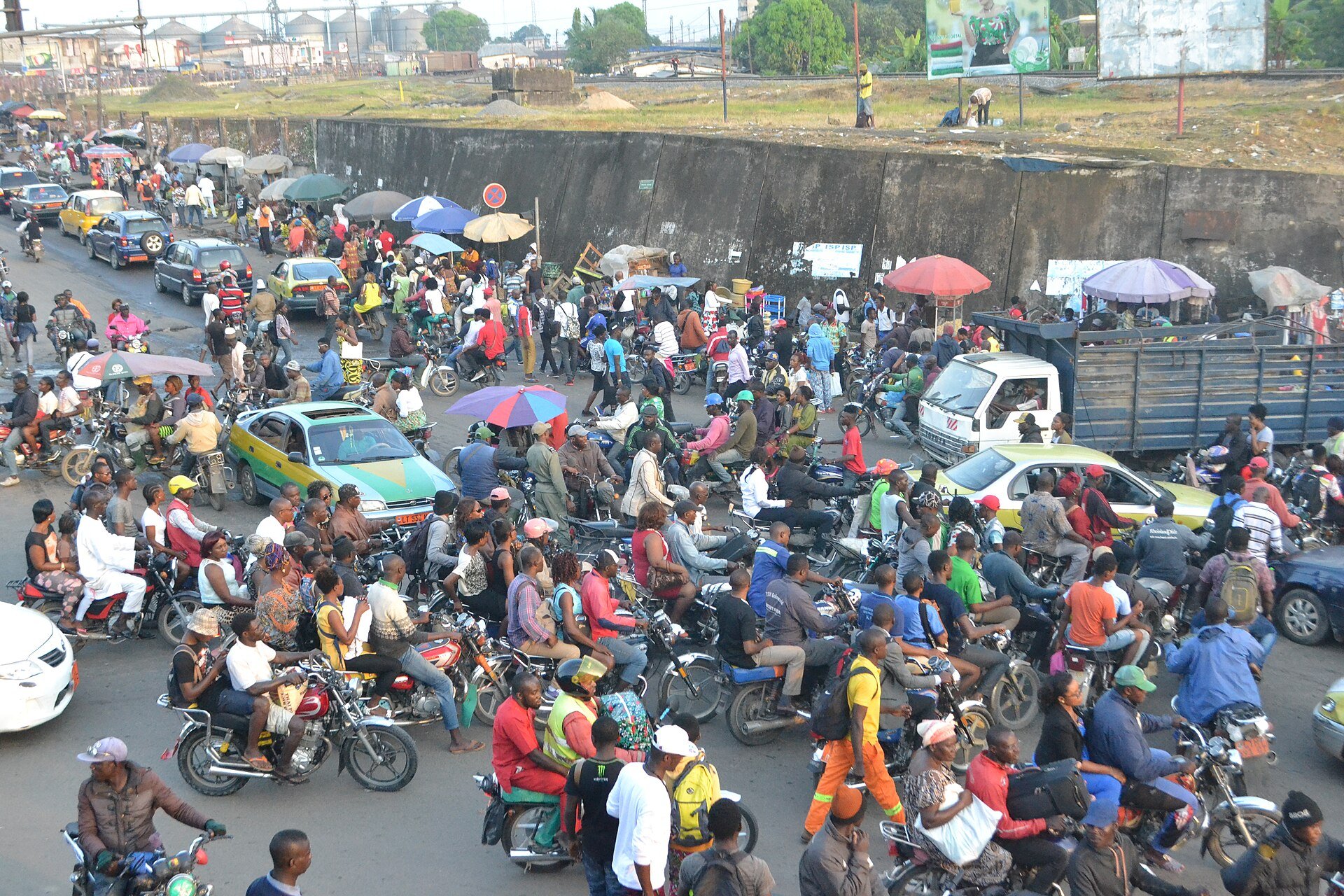
INS projections published in 2016 put Douala at 3,816,533 and Yaoundé at 3,762,929 for 2025. They rest on the 2005 base, and the INS said it would readjust them with data from the fourth census.
The 2005 census shows two very different halves of the country: the Littoral region around Douala was 92.6 percent urban, while the Far North was 22.8 percent urban. The Far North had 3,111,792 people, or 17.8 percent of the total, and the Centre region around Yaoundé had 3,098,044, or 17.7 percent.
The two English-speaking regions, North-West and South-West, held 3,045,032 people in 2005, or 17.4 percent of the total. Those counts predate the armed conflict that began there in 2016, so current regional populations are uncertain.
Ethnic Groups: More Than 250 Peoples
Minority Rights Group (MRG), an international rights organisation, counts more than 250 ethnic groups in Cameroon and notes that some research points to as many as 280. A breakdown published by the INS comes from its 2018 Demographic and Health Survey, which sorted women and men aged 15 to 49 into broad ethnic groupings.
Among women interviewed in 2018, the largest grouping was Bamileke and Bamoun at 24.6 percent, followed by Beti, Bassa and Mbam at 21.1 percent. The shares for women, with the figures for men in brackets, were:
- Bamileke and Bamoun: 24.6 percent (men 23.5).
- Beti, Bassa and Mbam: 21.1 percent (men 22.6).
- Biu-Mandara: 14.6 percent (men 14.6).
- Arab-Choa, Fulani, Hausa and Kanuri: 10.9 percent (men 11.2).
- Adamawa-Ubangi: 10.1 percent (men 9.2).
- Grassfields: 8.1 percent (men 6.8).
- Kako, Meka and forest peoples: 3.3 percent (men 3.2).
- Coastal, Ngoe and Oroko: 2.6 percent (men 3.0).
- South-West Bantoid: 0.6 percent (men 0.7).
- Foreign or other group: 4.2 percent (men 5.1).
These are broad families rather than single peoples, and MRG notes that the Bamiléké alone comprise several ethnic groups. No group is a majority, and the largest reaches only about a quarter of respondents.
In the north, MRG describes the Kirdi, or Montagnards, as the many cultures that inhabit the northern part of the country, and the Fulani as mostly found in the Adamawa, North and Far North regions. It adds that the Mbororo community lives in the borderlands and remains on the “margins of citizenship”.
In the forests of the east and south, MRG says the Baka number around 40,000, the Bakola and Bagyeli around 4,000. It puts forest hunter-gatherers as a whole at up to 0.4 percent of the population.
The coast is home to the Sawa, a collective name MRG gives to Bassa, Duala, Bakweri, Limba and Mungo peoples. The Bamoun are a Tikar-related group, and MRG describes the Grassfields as a region of western Cameroon covering the West and North-West regions and parts of the South-West.
Faith and Languages: Churches, Mosques, French and English
The INS survey of 2018 asked about religion: 38.0 percent of women aged 15 to 49 were Catholic, 26.2 percent Protestant and 7.4 percent other Christian. Muslims were 24.5 percent, animists 1.7 percent and people with no religion 1.8 percent.
Among men aged 15 to 49, 38.8 percent were Catholic, 24.1 percent Protestant and 24.2 percent Muslim. The survey did not cover children or people over 49, so these are not national shares.
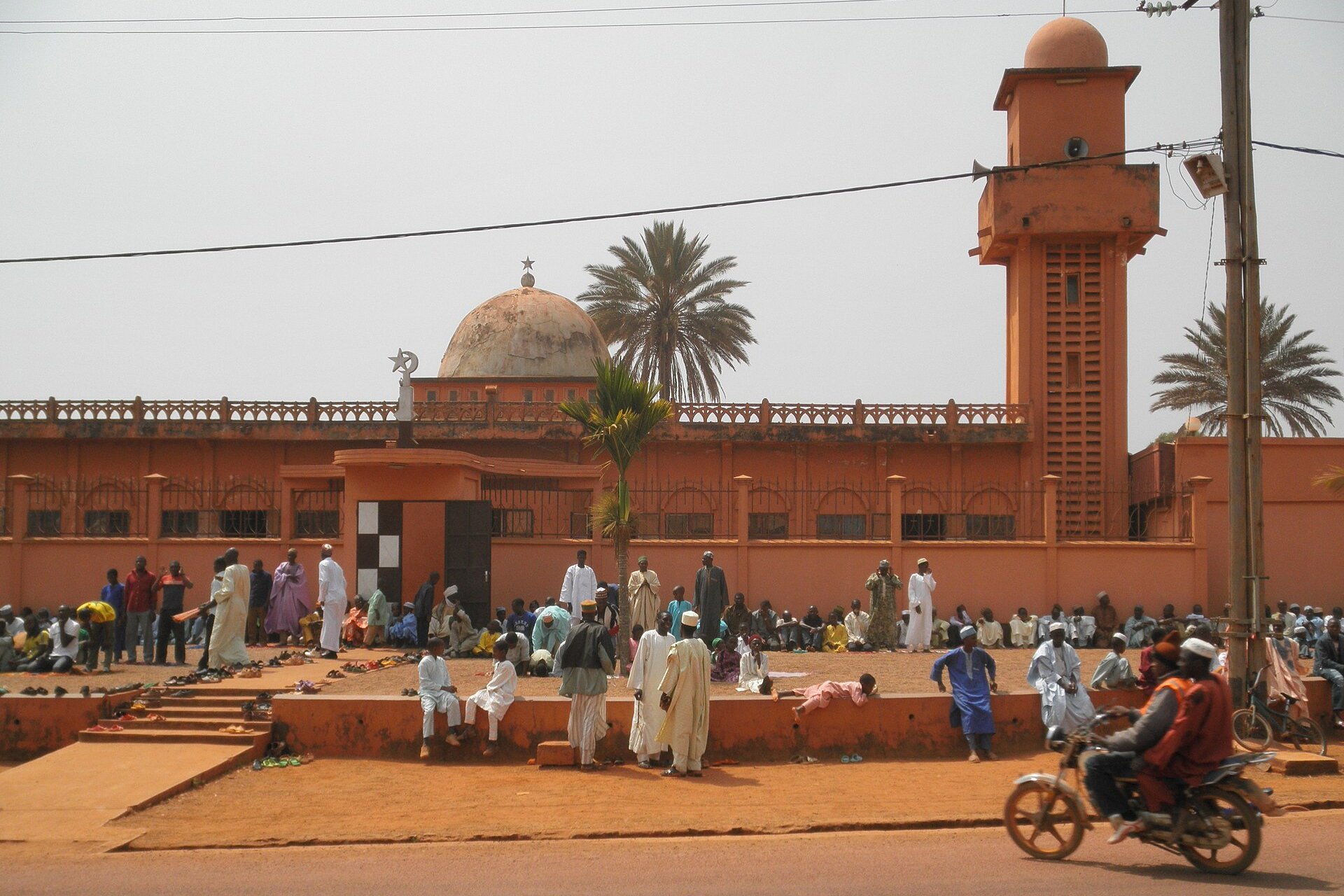
The constitution declares the state secular and guarantees freedom of religion and worship. Pope Leo XIV made an apostolic visit to Cameroon from 15 to 18 April 2026, and the Presidency published his meeting with President Paul Biya at Unity Palace.
Article 1 of the constitution makes English and French the official languages of the republic, both with the same status. It also says the state shall guarantee the promotion of bilingualism throughout the country and shall endeavour to protect and promote national languages.
Ethnologue, a language catalogue, lists 280 living languages for Cameroon. MRG names Basaa, Duala, Beti-Fang, Ghomala’, Medumba, Fulfulde, Mafa and Pidgin English among the main ones.
MRG says French-speaking Cameroonians outnumber English-speaking ones by about four to one. In the 2005 census, 17.4 percent of residents lived in the two English-speaking regions, and no later census has updated that share.
Refugees, Displaced People and the Diaspora
UNHCR, the UN refugee agency, counted 415,251 refugees and 3,371 asylum seekers in Cameroon on 30 September 2026. Central Africans were 283,485 of the refugees, or 68.3 percent, and Nigerians 126,308, or 30.4 percent.
Displacement Snapshot, 30 September 2026
- •Refugees in Cameroon 415,251, of whom 283,485 from the Central African Republic and 126,308 from Nigeria.
- •Asylum seekers 3,371.
- •Displaced, North-West and South-West 493,402.
- •Displaced, Far North 510,855.
- •Returnees 790,842.
Inside the country, OCHA, the UN humanitarian office, estimates 493,402 displaced people in the North-West and South-West regions on the same date. IOM, the UN migration agency, estimates 510,855 displaced people in the Far North and 790,842 IDP returnees, meaning displaced people who have gone home.
OCHA’s humanitarian plan for 2026 counts 2,875,515 people in need of aid and targets 1,880,879 of them. It carries a funding requirement of US$319.0 million.
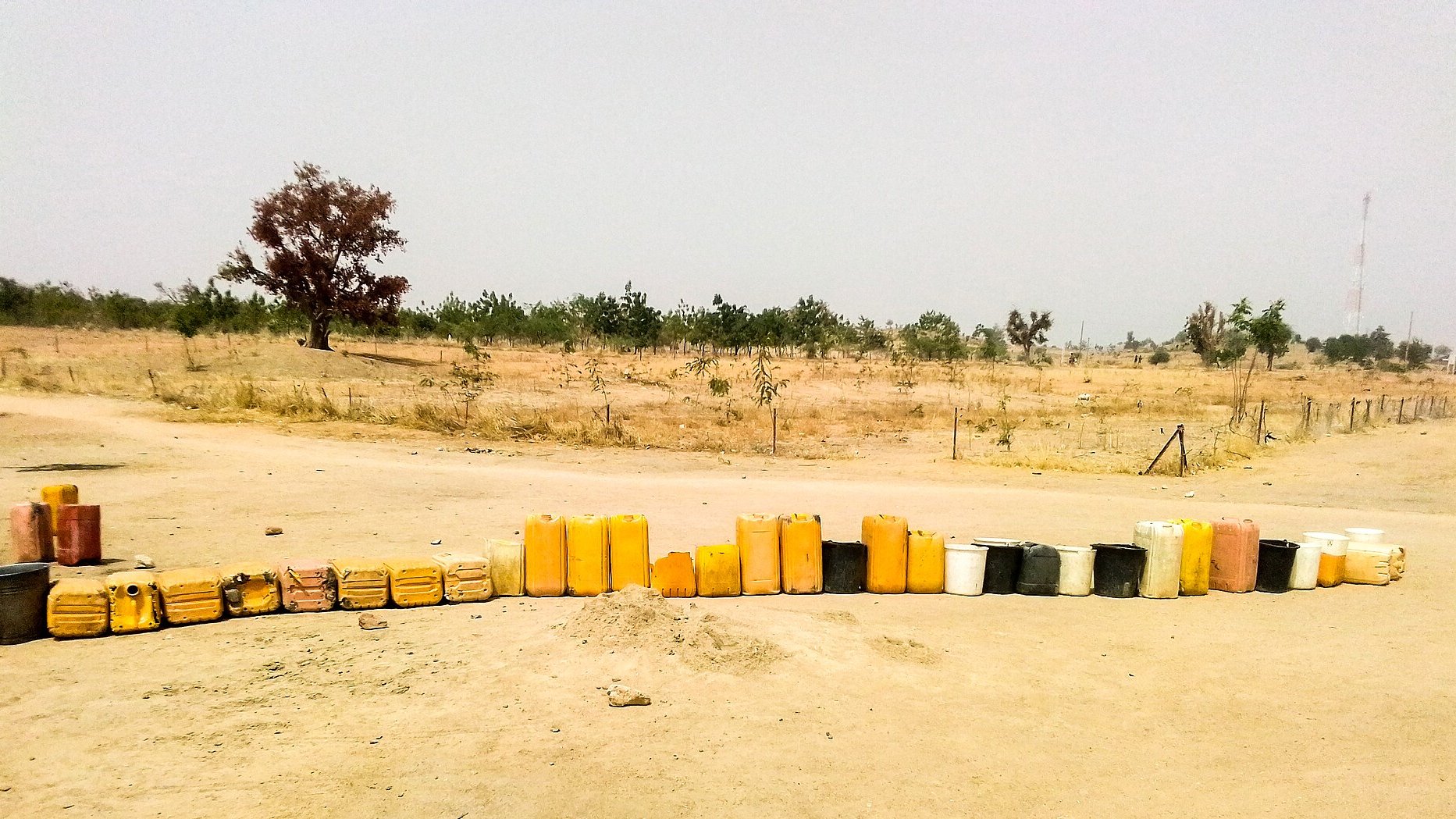
Cameroonians also flee abroad: UNHCR counted 107,701 Cameroonian refugees and 11,820 asylum seekers in Nigeria in 2025. Worldwide it recorded 140,366 Cameroonian refugees and 37,991 asylum seekers that year.
UN DESA counts 409,677 people born in Cameroon living abroad in mid-2024, including 127,995 in France, 56,288 in Nigeria and 54,949 in Gabon. Its table gives no figure for the United States, where the 2024 American Community Survey of the US Census Bureau estimates 98,249 Cameroon-born residents, with a margin of error of 11,402.
The World Bank puts personal remittances received by Cameroon at US$690 million in 2024, down from US$787 million in 2023. Inflows had been US$334 million in 2020, so they roughly doubled in four years.
How the Groups Live Together
The constitution’s preamble says the state shall protect minorities and preserve the rights of indigenous populations in accordance with the law. Its first article describes the republic as a decentralised unitary state, one and indivisible.
A major dividing line runs between the French-speaking majority and the English-speaking North-West and South-West regions, where armed separatist groups have been active since 2016. The 2018 INS survey recorded that security conditions made it difficult, and sometimes impossible, for its teams to reach some survey areas in the North-West and South-West.
In the Far North, Cameroon’s delegation to the UN Human Rights Committee cited terrorist attacks by Boko Haram during the October 2026 review of its report. IOM estimates 510,855 displaced people in the region at 30 September 2026, and Nigerians make up 126,308 of the country’s refugees.
Cameroon voted for president on 12 October 2025, and the UN human rights office said on 30 October 2025 that several people had been killed in protests over the outcome. Paul Biya was sworn in on 6 November 2025 for a seven-year term.
In his swearing-in speech Biya said: “We should end the hate speech flooding the public space, especially social media.” He also said the overall situation in the North-West, South-West and Far North had “markedly improved” and urged traditional rulers and elites to persuade armed fighters to lay down their arms.
A UN meeting summary dated 23 October 2026 records that the Human Rights Committee, the expert body that monitors a global rights treaty, concluded its review of Cameroon’s sixth periodic report and that the delegation said there were no difficulties between the French- and English-speaking populations. Experts asked how many internally displaced people the state had recorded and raised the exclusion and hate speech faced by Indigenous peoples such as the Baka and the Mbororo.
The delegation, led by Cameroon’s permanent representative to the UN office in Geneva, Eheth Salomon, said an entire legal arsenal had been established to protect Indigenous populations. It also said there were no linguistic minorities in Cameroon.
What It Means for US Readers
The State Department rated Cameroon Level 2, exercise increased caution, on 15 May 2026, and it tells Americans not to travel to the Southwest, Northwest and Far North regions for any reason. It gives the same warning for areas within 20 kilometres of the borders with the Central African Republic, Chad and Nigeria.
A population of about 29.9 million, more than half of it urban, is the base for demand in housing, telecoms and food. Per-capita figures used by investors still rest on 2005 counts and UN estimates until the fourth census is published.
About 98,000 Cameroon-born people lived in the United States in 2024, and US rules on visas, asylum and money transfers touch them directly. UNHCR counted 6,156 Cameroonian refugees and 6,057 Cameroonian asylum seekers in the United States in 2025.
Connected Coverage
Cameroon Explained 2026: Biya’s Long Rule, Two Crises, the Economy and What to Watch
Cameroon Politics Explained, Who Holds Power in 2026
Who Runs Cameroon’s Economy, the Key Players in 2026
Foreign Powers and Investors in Cameroon 2026
Cameroon’s 6 Neighbours: Borders, Trade and Regional Role
What Is Not Known
- The true population. The INS projection builds on the 2005 census, the UN figure is a model estimate, and press reports from August and September 2026 gave only unofficial coverage rates for the fourth count, about 68.6 percent and about 75 percent.
- The ethnic and religious shares. The latest breakdown comes from a 2018 household survey of people aged 15 to 49, and its authors note that security conditions kept teams from some survey areas in the North-West and South-West.
- The scale of displacement and of deaths in the conflicts. OCHA and IOM publish estimates, and UN experts asked Cameroon during its October 2026 review how many displaced people the state had recorded.
More country population guides: Kenya population, Egypt population, Colombia population, Mexico population.
Frequently Asked Questions
What is the population of Cameroon?
UN DESA estimates 29.9 million people in mid-2025 and 30.6 million in mid-2026. The last census, in 2005, counted 17,463,836 people.
When was the last census in Cameroon?
The third census was held in 2005 and counted 17,463,836 people. A fourth census began on 24 April 2026, and its field count closed on 15 September 2026 after two extensions.
What are the largest ethnic groups in Cameroon?
In the INS 2018 household survey, Bamileke and Bamoun people were the largest grouping at 24.6 percent of women interviewed. Beti, Bassa and Mbam peoples followed at 21.1 percent, and no group is a majority.
What languages are spoken in Cameroon?
French and English are the official languages, with the same status under the constitution. Ethnologue lists 280 living languages, and Pidgin English is among the main ones.
What religion are most Cameroonians?
Most people aged 15 to 49 in the 2018 survey were Christian: 38.0 percent of women were Catholic and 26.2 percent Protestant. Muslims were 24.5 percent of women.
How many refugees does Cameroon host?
UNHCR counted 415,251 refugees in Cameroon on 30 September 2026, mostly from the Central African Republic and Nigeria. OCHA and IOM estimate about 1.0 million people are also displaced inside the country, in the North-West, South-West and Far North regions.
How many Cameroonians live in the United States?
The US Census Bureau estimated 98,249 Cameroon-born residents in 2024, with a margin of error of 11,402. UN DESA counts 127,995 Cameroon-born people in France, its largest country figure.
Sources: INS Cameroon, Projections démographiques et estimations des cibles prioritaires (June 2016), https://ins-cameroun.cm/statistique/projections-demographiques-et-estimations-des-cibles-prioritaires-des-differents-programmes-et-interventions-de-sante/; INS Cameroon and ICF, Enquête Démographique et de Santé 2018 (February 2020), https://ins-cameroun.cm/statistique/enquete-demographique-et-de-sante-2018/; Presidency of the Republic of Cameroon, Constitution (Law No. 96/06 of 18 January 1996), https://www.prc.cm/en/cameroon/constitution; Presidency, swearing-in speech of 6 November 2025, https://www.prc.cm/en/news/8041; Presidency, apostolic trip of Pope Leo XIV, 15 to 18 April 2026, https://www.prc.cm/en/news/8239-apostolic-trip-to-cameroon-of-pope-leo-xiv-15-18-april-2026; Presidency, meeting of President Biya with Pope Leo XIV at Unity Palace (April 2026), https://www.prc.cm/en/news/8248-president-paul-biya-holds-historic-meeting-with-pope-leo-xiv-at-unity-palace; UN DESA Population Division, World Population Prospects 2024, https://population.un.org/wpp/; UN DESA, International Migrant Stock 2024, https://www.un.org/development/desa/pd/content/international-migrant-stock; UNFPA, Cameroon population data, https://www.unfpa.org/data/world-population/CM; World Bank, Cameroon indicators (population, urban share, age structure, remittances), https://data.worldbank.org/country/cameroon; UNHCR operational data portal, Cameroon (30 September 2026), https://data.unhcr.org/en/country/cmr; UNHCR Refugee Data Finder, Cameroon as country of asylum, 2025, https://api.unhcr.org/population/v1/population/?year=2025&coa=CMR&coo_all=true; UNHCR Refugee Data Finder, Cameroonians abroad, 2025, https://api.unhcr.org/population/v1/population/?year=2025&coo=CMR&coa_all=true; OCHA Financial Tracking Service, Cameroon Humanitarian Needs and Response Plan 2026, https://fts.unocha.org/plans/1498; UN human rights office, press release of 30 October 2025, https://www.ohchr.org/en/press-releases/2025/10/cameroon-alarming-deaths-during-post-election-protests; UN Human Rights Committee, meeting summary of 23 October 2026, https://www.ohchr.org/en/meeting-summaries/2026/10/experts-human-rights-committee-welcome-efforts-cameroon-combat-hate; US Census Bureau, American Community Survey 2024, table B05006, https://data.census.gov/table/ACSDT1Y2024.B05006; US State Department, Cameroon travel advisory (15 May 2026), https://travel.state.gov/en/international-travel/travel-advisories/cameroon.html; Cameroon Tribune, census meeting with UN agencies (17 March 2026), https://www.cameroon-tribune.cm/article.html/75728/fr.html/details_2; Cameroon Tribune, census extended (31 July 2026), https://cameroon-tribune.cm/articles/11575/fr/details_2; Cameroon Tribune, enumeration ends (15 September 2026), https://cameroon-tribune.cm/articles/11825/fr/details_2; Cameroun Actuel, second extension (3 August 2026), https://camerounactuel.com/recensement-au-cameroun-le-gouvernement-prolonge-encore-loperation-jusquau-15-septembre/; Cameroun Actuel, coverage rate (15 September 2026), https://camerounactuel.com/recensement-2026-le-cameroun-sarrete-a-75-loin-des-objectifs/; Cameroun Actuel, unpaid census agents (9 October 2026), https://camerounactuel.com/recensement-au-cameroun-14-502-agents-toujours-impayes-la-banque-mondiale-intervient/; News du Camer, census coverage (24 August 2026), https://www.newsducamer.com/recensement-general-de-la-population-686-de-taux-de-couverture-enregistre-malgre-le-report/; Afrik, fourth census (17 August 2025), https://www.afrik.com/cameroun-2026-le-4e-recensement-general-reporte-apres-l-election-presidentielle-avec-un-budget-divise-par-5; Minority Rights Group, Cameroon (updated February 2026), https://minorityrights.org/country/cameroon/; Ethnologue, Cameroon, https://www.ethnologue.com/country/CM/. All accessed 26 October 2026.
This article was produced by The Rio Times’ automated newsroom system. How we use AI · Report an error · Editorial responsibility: Matthias Camenzind, Editor-in-Chief
Expat Guide to Cameroon
What The Rio Times publishes for foreigners who live in or move to Cameroon.
Understand Cameroon