Cameroon’s Maurice Kamto Quits as Leader of the MRC Opposition Party
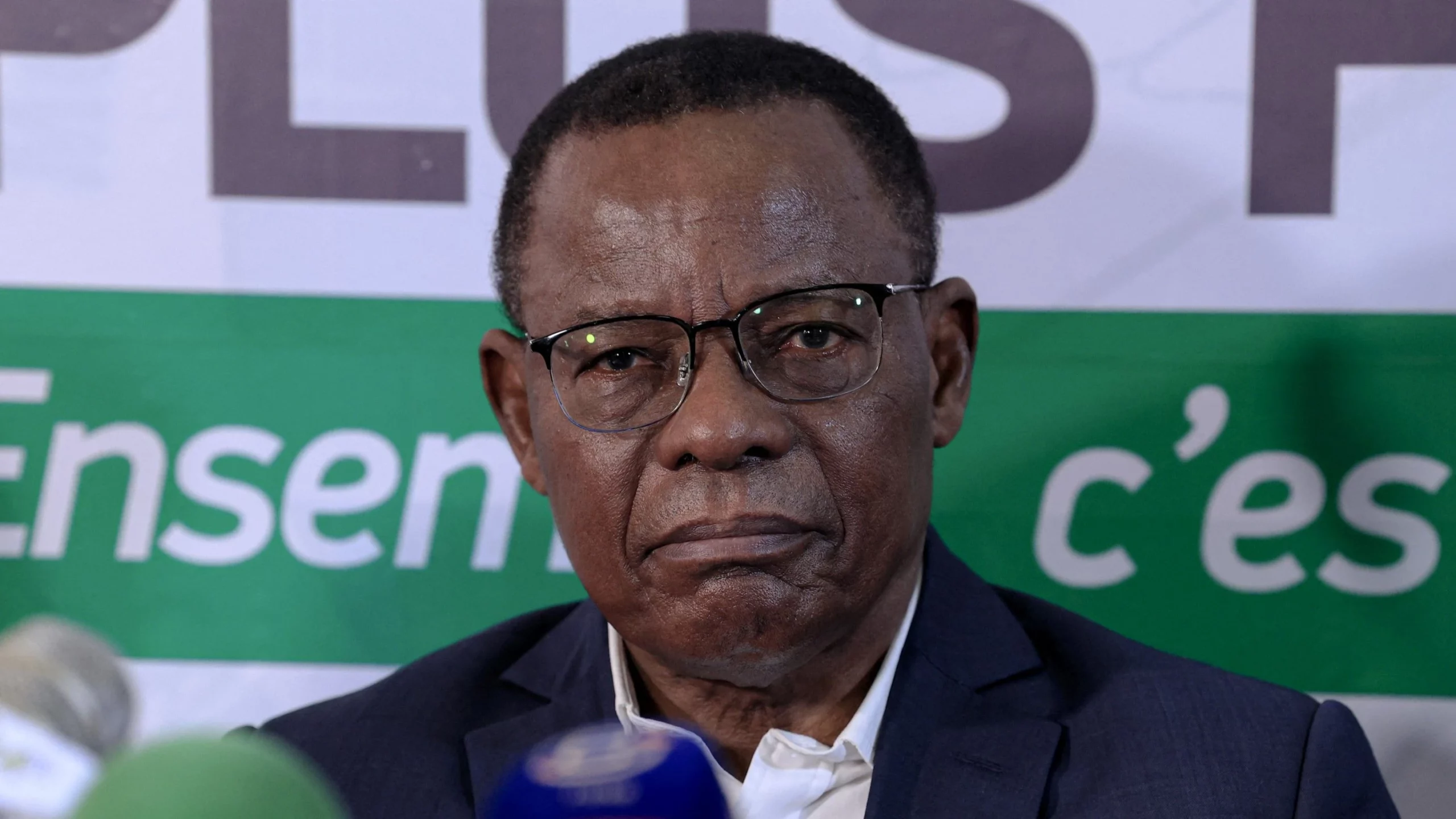
CAMEROON · POLITICS
Key Facts
- —The resignation Maurice Kamto, Cameroon’s best-known opposition figure, resigned on Monday, September 8, as national president of the MRC, the party he founded and has led since 2012.
- —The letter He announced the decision himself on social media — a terse, three-sentence letter to the party’s national directorate citing the “higher interest” of the party amid what Jeune Afrique describes as internal turbulence.
- —Not alone The MRC’s first vice president, Mamadou Yakouba, also resigned with immediate effect the same day, saying hostility directed at him risked becoming a pretext for weakening the party.
- —The backdrop The departure lands in the middle of succession manoeuvring around President Paul Biya, 93, in power since 1982, and a separate scandal over billions of CFA francs allegedly missing from the coffers of the Special Criminal Court.
- —What is unclear Kamto gave no detailed reasons, named no successor and said nothing about whether he is leaving politics or repositioning for what comes after Biya.
Maurice Kamto, the man who has personified opposition to Paul Biya for a decade, has resigned as leader of his own party in a letter of three sentences. In Cameroon’s succession season, a resignation this quiet is a loud event.
A three-sentence letter
The news broke in the early afternoon of Monday, September 8, when Kamto himself published, on his social media accounts, the letter he had sent to the national directorate of the Mouvement pour la renaissance du Cameroun (MRC) — the Cameroon Renaissance Movement.
The letter is laconic: three sentences, according to Jeune Afrique, in which Kamto resigns the party presidency with immediate effect, invoking the “intéret supérieur” — the higher interest — of the MRC, its members and supporters. The magazine describes a party crossing a period of internal turbulence and says the letter hints at that turmoil without explaining it.
Hours later the party’s first vice president, Mamadou Yakouba, announced his own resignation, also with immediate effect. In a letter to the MRC secretary general, Yakouba cited persistent “hostility and opposition” directed at him and said he did not want his presence to become a pretext for weakening the party. He said he remains committed to the MRC’s political cause.
Who Maurice Kamto is
Kamto, 72, is an international lawyer and former government minister who founded the MRC in 2012. He came second in the 2018 presidential election, officially winning 14 percent of the vote, then declared himself the rightful winner — a claim that landed him in prison for most of 2019 on insurrection-related charges before he was released under international pressure.
For the October 2025 presidential election, the electoral commission barred his candidacy, leaving the opposition field to Issa Tchiroma Bakary, a former minister who broke with Biya, ran, and insisted he had won. The Constitutional Council declared Biya the victor of an eighth term with more than 53 percent of the vote, in an election the opposition and civil-society groups denounced as fraudulent.
Succession season in Yaoundé
Biya, 93, is the world’s oldest serving head of state and has ruled Cameroon since November 1982. Open discussion of his health is effectively banned, and the contest to succeed him is conducted by indirection — through court cases, constitutional tweaks and the quiet repositioning of allies and rivals.
In April, parliament created an appointed vice presidency that would automatically assume power if the president dies, resigns or becomes incapacitated. Kamto denounced the amendment as a “constitutional and institutional coup” aimed at creating what he called a republican monarchy, and later filed a complaint with the African Union over an unconstitutional change of government.
Separately, Jeune Afrique reported on September 7 that billions of CFA francs may have gone missing from the coffers of the Special Criminal Court — the tribunal that tries grand-corruption cases — after a burglary, the disappearance of the court’s chief registrar and a safe that auditors could not open. The affair has fed the atmosphere of institutional decay in which Kamto’s resignation landed.
What happens next
The MRC now has to manage a leadership transition at the top of the party and in its first vice presidency at the same time, with no successor named and its internal rules about to be tested in public. Kamto’s letter gives no indication of whether he is retiring from politics or clearing the ground for a different role in the post-Biya contest.
What is certain is that the opposition’s most recognisable figure has just made himself harder to read — in a country where everyone, in every camp, is positioning for the same eventuality.
This report is based on Jeune Afrique’s reporting from Yaoundé, the resignation letters published by Maurice Kamto and Mamadou Yakouba, and coverage by Cameroonian and international outlets including the Human Rights and Legal Research Centre and Observer 237.
Frequently Asked Questions
What did Maurice Kamto resign from?
The national presidency of the MRC (Cameroon Renaissance Movement), the opposition party he founded in 2012. He announced it on September 8 in a three-sentence letter to the party’s national directorate, citing the party’s higher interest.
Did anyone else resign?
Yes. The party’s first vice president, Mamadou Yakouba, also stepped down with immediate effect the same day, citing hostility directed at him.
Who is Maurice Kamto?
A 72-year-old international lawyer and former minister who came second in Cameroon’s 2018 presidential election, declared himself the winner and was jailed for most of 2019. He was barred from the October 2025 ballot.
Why does this matter now?
President Paul Biya is 93 and has ruled since 1982. Kamto’s resignation comes amid intense, unspoken manoeuvring over the succession, and a scandal over billions of CFA francs allegedly missing from the Special Criminal Court.
Who succeeds Kamto at the MRC?
No successor has been named. The party’s internal rules will govern the transition, and the leadership process had not been clarified at the time of publication.
Connected Coverage
Follow developments across the region on our Central Africa hub.
This article was produced by The Rio Times’ automated newsroom system. How we use AI · Report an error · Editorial responsibility: Matthias Camenzind, Editor-in-Chief