
CAMEROON · CULTURE
Key Facts
- —What is happening Cameroon culture is carried abroad by saxophonist Manu Dibango, striker Samuel Eto’o, fighter Francis Ngannou and novelist Imbolo Mbue, while the Ecrans Noirs film festival prepares its first edition without its founder.
- —Why it matters Cameroon had 29.9 million people in 2025, three UNESCO cultural listings from 2023 to 2025, and a diaspora that sells its music, books, film and sport far beyond Central Africa.
- —The numbers The population was 29,879,337 in 2025, the culture ministry asked parliament for 10.4 billion CFA francs for 2026 (about US$17.8 million), and Cameroon has won five Africa Cup of Nations titles.
- —Who is who Pierre Ismaël Bidoung Mkpatt is Minister of Arts and Culture, Samuel Eto’o heads the football federation FECAFOOT, and Bassek Ba Kobhio, who died on 12 May 2026, founded Ecrans Noirs.
- —What to watch Ecrans Noirs holds its 30th edition in Yaoundé from 21 to 28 November 2026 with a tribute to its founder, and the Ngondo water rites close with the sacred canoe departure on the first Sunday of December, 6 December 2026.
- —What it means for you US readers already meet Cameroon through NBA forward Pascal Siakam, UFC title winner Francis Ngannou, the PEN/Faulkner winning novel Behold the Dreamers and the 1972 hit Soul Makossa, all easy entry points.
From Manu Dibango’s Soul Makossa to Eto’o’s football federation, Cameroon exports talent. Here are the figures and festivals that define it in October 2026.
Cameroon culture reaches the world through a few famous voices, from saxophonist Manu Dibango to striker Samuel Eto’o. This guide names the key figures, works and festivals to know in October 2026.
Cameroon had 29,879,337 people in 2025, the World Bank says, and its culture speaks in French, English and many local languages. Its artists work at home, in Europe and in the United States.
More coverage sits on the Rio Times Cameroon page, with the Cameroon politics guide and the guide to Cameroon’s economy. Amounts in CFA francs use 584.82 per US$1, the open.er-api.com rate of 23 October 2026.
Cameroon Culture at a Glance
Cameroon culture is shaped by hundreds of communities, a French and English colonial legacy, and a state that funds the arts modestly. The Ministry of Arts and Culture presented a proposed 2026 budget of 10.4 billion CFA francs (about US$17.8 million) to parliament.
Minister Pierre Ismaël Bidoung Mkpatt told parliament’s finance committee the money would fund cultural infrastructure, creative industries and heritage listings. Cameroon Tribune, the state daily, reported the hearing on 1 December 2025.
UNESCO recognised three Cameroonian cultural listings in three years. The Nguon rituals of the Bamoun joined its intangible heritage list in 2023, then the Ngondo traditions of the Sawa in 2024.
The Diy-Gid-Biy landscape joined the World Heritage List in 2025, with 16 dry-stone structures probably built from the 12th to 17th centuries. The Mafa people still use the ruins for ritual and sacrifice, UNESCO says.
The list below is a quick map of the figures covered in this guide. Each one is dated and checked against an official, institutional or regional source.
- Music: Manu Dibango, Richard Bona, Charlotte Dipanda.
- Books: Mongo Beti, Calixthe Beyala, Léonora Miano, Imbolo Mbue.
- Film: Bassek Ba Kobhio, Jean-Marie Teno, Jean-Pierre Bekolo.
- Art: Pascale Marthine Tayou, Barthélémy Toguo, Marilyn Douala Manga Bell.
- Sport: Roger Milla, Samuel Eto’o, Francis Ngannou, Pascal Siakam.
- Heritage: the Ngondo rites, the Nguon rituals, the Bamoun kings, Diy-Gid-Biy.
Music, From Soul Makossa to Concert Halls
Manu Dibango, the Cameroonian saxophonist, released Soul Makossa in 1972, and New York DJs turned it into a world hit. He died of Covid-19 on 24 March 2020 in the Paris region, aged 86.
The track began as the B-side of a single built around a Cameroon football anthem for the Africa Cup of Nations. Makossa is the Cameroonian dance style behind the title.
Richard Bona was born on 28 October 1967 in Minta, in Haute-Sanaga, and began as an instrumentalist in Paris and New York. His album Tiki was nominated for a Grammy Award in 2005, Music In Africa records.
Bona won a Victoires du jazz award in 2004 and the Sacem Grand prix jazz in 2012. Both honours came from France, where many Cameroonian musicians first found large audiences.
Charlotte Dipanda, who draws on makossa and African soul, was due to sing at Brussels’s Cirque Royal on Saturday, 16 May 2026. The diaspora outlet Camer.be says no Cameroonian artist had been booked in that hall before.

Traditional dance is also part of community celebration, as in this performance in Kob, in the North-West. The dancers’ shirts read Mukonge Dance.
Foreign concert halls therefore matter as much as home stages for many Cameroonian artists. A sold-out room in Brussels or a Grammy nomination counts as proof of reach.
Writers Who Carried Cameroon Abroad
Alexandre Biyidi, who wrote as Mongo Beti, published Ville cruelle in 1954 and The Poor Christ of Bomba in 1956. The pen name means roughly child of the Beti, and he died in 2001, aged 69.
Calixthe Beyala, raised in Douala, took the Académie française’s Grand Prix du roman in 1996 for Les Honneurs perdus. The prize drew controversy because of plagiarism allegations against the book.
Léonora Miano, born in Douala in 1973, has lived in France since 1991. Her novel Contours du jour qui vient won the Prix Goncourt des lycéens in 2006.
Imbolo Mbue was born in Limbe and came to the United States to study, earning degrees at Rutgers and Columbia. Her debut novel Behold the Dreamers won the PEN/Faulkner Award for Fiction, worth US$15,000, in 2017.
Mbue writes in English, which links Cameroon’s literature directly to US readers. Beyala and Miano write in French, and their prizes come from French institutions.
Together the four show the double pull of Cameroon’s literary life. Home audiences read in two languages, while the biggest awards and sales often come from Paris and New York.
Film, Television and the Ecrans Noirs Festival
Bassek Ba Kobhio, the filmmaker who founded the Ecrans Noirs festival in Yaoundé in 1997, died on 12 May 2026 at 69. His films include Sango Malo and Le Silence de la forêt (2003).
Ecrans Noirs held its 29th edition from 20 to 27 September 2025, with Brazil as guest of honour, focusing on Afro-descendant cinema. The theme was how to distribute African films on and beyond the continent.
The 30th edition runs from 21 to 28 November 2026 at Yaoundé’s conference centre, Cameroon Tribune says, honouring Ba Kobhio. It is the first edition without its founder.
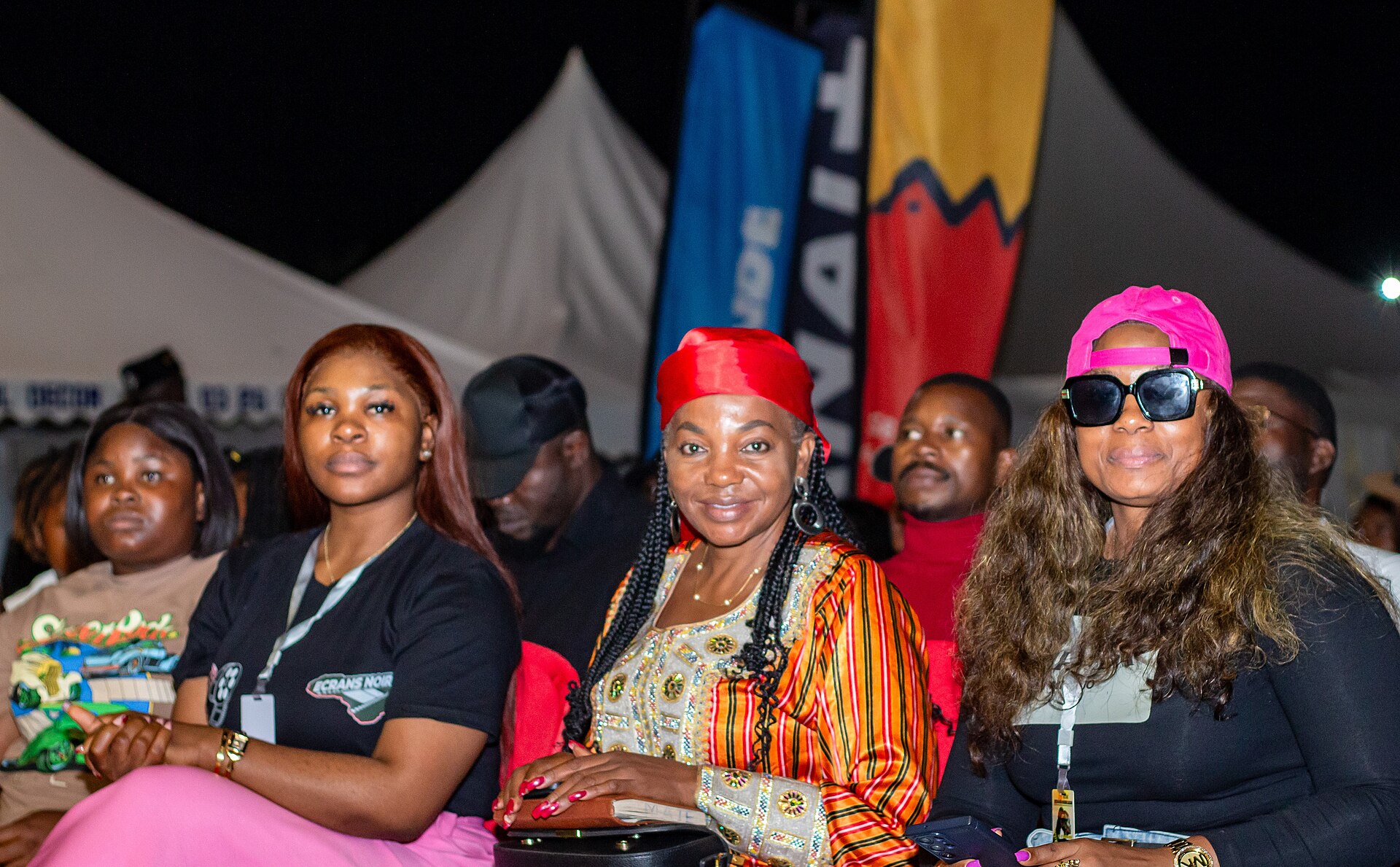
Jean-Marie Teno directed the 1992 documentary Afrique, je te plumerai, which looks at Cameroon thirty years after independence. It links colonial writing to later corruption and protest against one-party rule.
Jean-Pierre Bekolo, born in Yaoundé in 1966, made the 1992 satire Quartier Mozart, which mixes sorcery and city life. It won prizes at festivals in Cannes, Locarno and Montreal.
Bekolo’s Aristotle’s Plot (1996) was Africa’s entry in a British Film Institute series for cinema’s centenary. His later features include Les Saignantes (2005) and Miraculous Weapons (2017).
The state broadcaster CRTV was created by a law of 17 December 1987, is government owned and broadcasts in French and English. On 27 April 2026 the culture minister promised a new method to secure dedicated state funding for the film sector.
Painters, Sculptors and Art Spaces
Pascale Marthine Tayou, born in 1966 in Nkongsamba, lives and works in Ghent and Yaoundé. He showed at Documenta 11 in Kassel in 2002 and at the Venice Biennale in 2005 and 2009.
His solo shows include the Serpentine Sackler Gallery in London in 2015 and the Bass Museum in Miami in 2017. His sculptures and installations often follow a single person moving through a global village.
Barthélémy Toguo, born in 1967, lives between Paris and Bandjoun in western Cameroon. There he founded Bandjoun Station, an art centre with residencies, a permanent collection, a library and coffee plantations.
Bandjoun lies about 3 kilometres from Bafoussam, roughly 300 kilometres from both Douala and Yaoundé. Its residencies last four to eight weeks and take three or four artists a year.
In Douala, doual’art is a contemporary art centre founded in 1991 and led by Princess Marilyn Douala Manga Bell. Its public art triennial, the Salon Urbain de Douala, began in 2007 and has presented more than 80 works and events.
Football, Boxing Rings and Basketball Courts
Cameroon has won the Africa Cup of Nations five times, in 1984, 1988, 2000, 2002 and 2017, the continental body says. At the 2025 tournament the Indomitable Lions lost 2-0 to Morocco in the quarter-final in Rabat on Friday, 9 January 2026.
Cameroon did not play at the 2026 World Cup. DR Congo won the African playoff semi-final 1-0 in November 2025 with a 90th-minute goal by captain Chancel Mbemba.
Roger Milla scored against Russia at the 1994 World Cup aged 42 years and 39 days. The Olympic Channel calls him the oldest goalscorer in men’s World Cup history.
Samuel Eto’o retired as a player in 2019 and won the FECAFOOT presidency on 11 December 2021 with 43 of 74 votes. He was re-elected on 29 November 2025 as the only approved candidate, despite a sports ministry order to suspend the vote.
The federation says Eto’o is Cameroon’s all-time leading scorer and the record scorer at the Africa Cup of Nations. His second term runs four years, so football politics will stay tied to his name until late 2029.
Francis Ngannou, born in Batié, won the UFC heavyweight title on 27 March 2021 at UFC 260 by knocking out Stipe Miocic. He defended it at UFC 270 on 22 January 2022 against Ciryl Gane.
Pascal Siakam won the 2019 NBA championship with the Toronto Raptors and played the 2025 NBA Finals for the Indiana Pacers. He is among the most visible Cameroonian athletes in US sport.
Festivals, Kings and Living Heritage
UNESCO inscribed the Ngondo water oracle traditions of the Sawa people in 2024. The festival runs each year from September to the first Sunday of December.
On that final Sunday a sacred canoe leaves the Wouri River bank, and a priest dives to bring back the oracles’ message. The message is read in a sacred hut and passed to district chiefs.
Cameroon Tribune says the next Ngondo is planned for 5 to 6 December 2026 in Douala, under the theme awakening. UNESCO’s first-Sunday rule puts the canoe departure on Sunday, 6 December, after a caravan with wrestling, a crafts fair and a pageant.
The Bamoun people of Foumban hold the Nguon rituals, also spelled Ngouon, every two years, with consultations in early December, UNESCO says. It inscribed them in 2023, but no organiser has confirmed the 2026 dates.
A museum of the Bamoun kings opened in Foumban in 2024, holding more than 10,000 objects from over 600 years of history. Exhibits include royal headdresses, manuscripts, masks and portraits of the 20 kings.
The second South West Cultural Festival opened in Buea on Friday, 27 February 2026, and ran to 1 March. Minister Bidoung Mkpatt launched it on behalf of Prime Minister Joseph Dion Ngute.
Media and the English-Speaking Regions
Cameroon Tribune is the state’s bilingual daily, and the state broadcaster CRTV runs ten regional radio stations. Both serve readers and listeners in French and English.
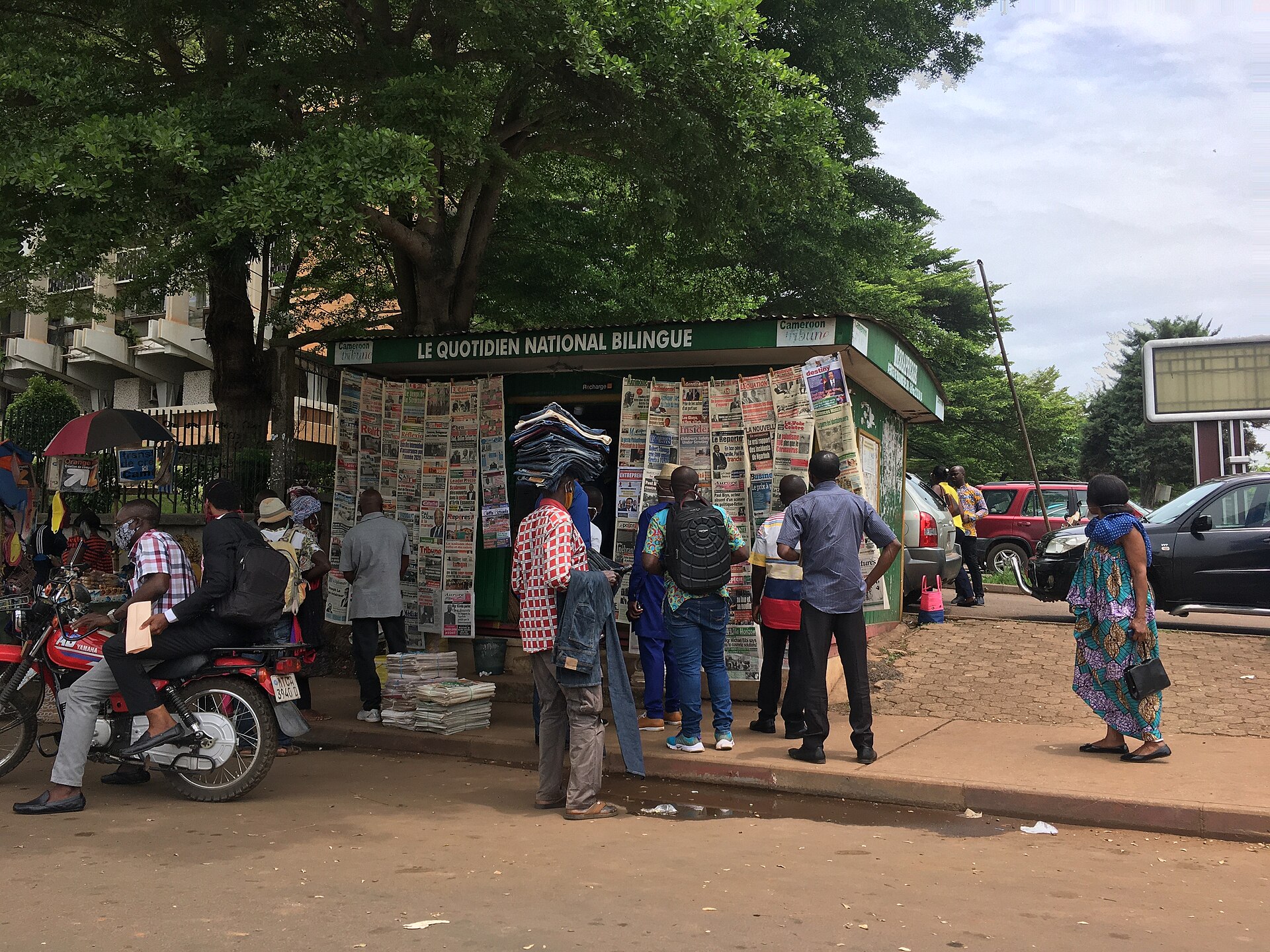
The North-West and South-West regions are English speaking, and the United Nations humanitarian office still records displacement and violence there. Its situation report for January to March 2026 lists more than 1,700 protection violations.
Cultural life in those regions, from schools to festivals, runs under that pressure. The Cameroon politics guide and the Cameroon geopolitics explainer explain the conflict and the politics behind it.
Cultural ties also run across borders into the Congo basin and the Gulf of Guinea. The Cameroon in Central Africa guide and the explainer on Cameroon’s role in Africa map those neighbours and trade routes.
What It Means for US Readers
US audiences already meet Cameroon through the NBA, the UFC and the bookshop. Siakam, Ngannou and Mbue’s PEN/Faulkner winning Behold the Dreamers are the most direct links.
Soul Makossa, released in 1972, remains the musical entry point, and Bona’s Grammy-nominated Tiki is a second. Streaming makes both easy to find from the United States.
Culture is a small line in the state budget, with a 2026 request of about US$17.8 million. Festivals such as Ecrans Noirs in Yaoundé and Ngondo on the Wouri River are the clearest dated entry points for visitors.
Check the US State Department’s current advisory for Cameroon before booking, because conflict affects parts of the country. Film buyers and curators should also note that Brazil was guest of honour at Ecrans Noirs in 2025.
What Is Not Known
The ministry’s 10.4 billion CFA francs (about US$17.8 million) was a proposal, and the final amount after parliament’s vote was not checked. Cameroon Tribune named Bidoung Mkpatt as culture minister on 22 October 2026.
The Ecrans Noirs website shows conflicting dates for the 30th edition, so the November dates rest on Cameroon Tribune and its header. Who will succeed Bassek Ba Kobhio as the festival’s general delegate was not found.
The full programme for Ngondo 2026 and the dates of the next Nguon rituals in Foumban were not confirmed. No official count of Cameroon’s languages or ethnic groups was found.
No verified data exists in the sources checked on the size of Cameroon’s music, film or publishing industries. No prediction market applies to this topic.
Frequently Asked Questions
What is Cameroon known for culturally?
Cameroon is known for makossa music, writers such as Mongo Beti and Léonora Miano, football and festivals such as Ngondo. UNESCO listed Ngondo in 2024 and Diy-Gid-Biy in 2025.
Who are the most famous people from Cameroon?
Well known names include Manu Dibango, Samuel Eto’o, Roger Milla, Francis Ngannou, Pascal Siakam and Imbolo Mbue. Each is dated and sourced in this guide.
What is Soul Makossa?
Soul Makossa is a 1972 recording by Manu Dibango that became a world hit after New York DJs played it. Dibango died on 24 March 2020, aged 86.
Which Cameroonian traditions has UNESCO recognised?
UNESCO inscribed the Bamoun Nguon rituals in 2023, the Sawa Ngondo traditions in 2024 and the Diy-Gid-Biy landscape in 2025. All three are officially listed.
What is the Ecrans Noirs festival?
Ecrans Noirs is a film festival in Yaoundé founded in 1997 by Bassek Ba Kobhio, who died on 12 May 2026. Its 30th edition runs from 21 to 28 November 2026.
Did Cameroon qualify for the 2026 World Cup?
No. DR Congo beat Cameroon 1-0 in the African playoff semi-final in November 2025 with a 90th-minute goal. Cameroon has won the Africa Cup of Nations five times.
Sources: World Bank, Cameroon data (population, 2025); UNESCO World Heritage Centre, Diy-Gid-Biy Cultural Landscape of the Mandara Mountains; UNESCO Intangible Cultural Heritage, Ngondo (2024); Cameroon Tribune, culture ministry budget (1 December 2025); Cameroon Tribune, cinema funding (5 May 2026); Cameroon Tribune, South West Cultural Festival (27 February 2026); Cameroon Tribune, Ecrans Noirs 2026 (10 September 2026); APS via allAfrica, death of Bassek Ba Kobhio (12 May 2026); Ecrans Noirs, 29th edition (2025); allAfrica, Museum of the Bamoun Kings (December 2024); UNESCO Intangible Cultural Heritage, Nguon (2023); Cameroon Tribune, Ngondo 2026 (18 September 2026); Cameroon Tribune, Miss Cameroun (22 October 2026); Africanews, Manu Dibango (24 March 2020); Music In Africa, Richard Bona; Camer.be, Charlotte Dipanda in Brussels (13 May 2026); University of Western Australia, African literature pages: Calixthe Beyala; University of Western Australia, African literature pages: Léonora Miano; EBSCO Research Starters, Mongo Beti; Penguin Random House, Imbolo Mbue PEN/Faulkner Award (6 April 2017); African Film Festival New York, Jean-Pierre Bekolo; Cinéma du réel archive, Afrique, je te plumerai; State Media Monitor, CRTV (June 2025); Braverman Gallery, Pascale Marthine Tayou; C&, Bandjoun Station; Goethe-Institut, Princess Marilyn Douala Manga Bell and doual’art; Confederation of African Football, Cameroon’s five titles; Hespress, Morocco 2-0 Cameroon (9 January 2026); allAfrica, DR Congo 1-0 Cameroon (14 November 2025); Olympics.com, oldest World Cup goalscorer; FECAFOOT, Samuel Eto’o elected president (11 December 2021); Tchadinfos, Eto’o re-elected (29 November 2025); UFC, Francis Ngannou; Andscape, Pascal Siakam (13 June 2025); UN OCHA, North-West and South-West situation report no. 85 (January to March 2026); open.er-api.com (exchange rates, 23 October 2026) (all accessed 22 and 23 October 2026).
This article was produced by The Rio Times’ automated newsroom system. How we use AI · Report an error · Editorial responsibility: Matthias Camenzind, Editor-in-Chief
Part of our ongoing coverage
Africa: The New Scramble — the great-power contest over the continent.
Expat Guide to Cameroon
What The Rio Times publishes for foreigners who live in or move to Cameroon.
Understand Cameroon
Read More from The Rio Times