Mahamat Idriss Déby Rules Chad as Doba Crude Exports Through Cameroon Keep Economy Afloat
Economy · Chad
—The stakes. Chad’s post-election stability and debt path now rest on a narrow oil export corridor and aid-dependent budgeting.
—The date. Mahamat Idriss Déby was confirmed president-elect on 16 May 2024 after the disputed 6 May vote.
—The oil dependence. Oil represented 14.3 percent of GDP, 51.8 percent of government revenues and 65.3 percent of exports in 2024, on World Bank figures.
—The refugee burden. Over one million Sudanese refugees add heavy fiscal and food-security pressure to an already strained state.
—The hunger and debt. Chronic hunger and a public debt stock near 28.7 percent of GDP project for 2026, leaving little room for shock absorption.
Mahamat Idriss Déby’s elected presidency has formalised a military transition but not an economic transformation. Chad enters 2026 still hostage to Doba crude shipped through Cameroon, while refugee costs, hunger and debt absorb the limited fiscal space oil prices provide.
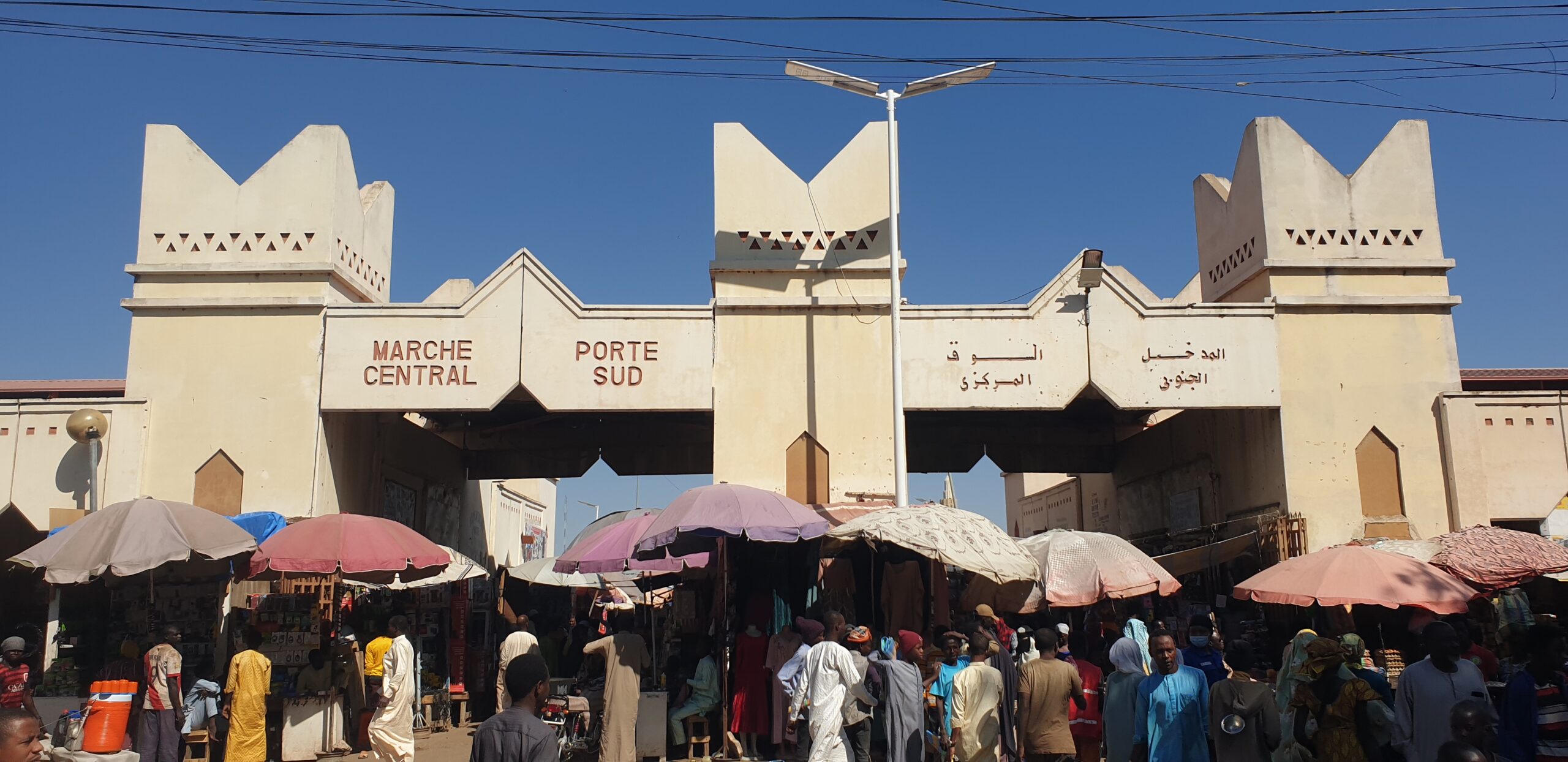
Déby’s disputed mandate now frames investor risk
Chad’s presidential election held on 6 May 2024 returned Mahamat Idriss Déby of the Patriotic Salvation Movement to power.
The National Election Management Agency, known by its French acronym ANGE, announced provisional results on 9 May 2024 giving Déby 61.03 percent of votes.
Succès Masra, the Les Transformateurs leader then serving as prime minister, received 18.53 percent.
Turnout was around 75.78 percent of more than 8.2 million registered voters.
The Constitutional Council confirmed Déby as winner on 16 May 2024, rejecting objections from losing candidates.
Council president Jean-Bernard Padaré declared Déby president-elect of the republic after obtaining an absolute majority of votes cast.
From military council to elected presidency
Déby came to power in April 2021 after his father, President Idriss Déby Itno, was killed on the battlefield fighting rebels.
He initially headed a transitional military council, widely described in press reports as a junta.
Human Rights Watch notes that the political transition ended with Déby’s May 2024 election, formally completing the post-2021 process.
On 3 October 2025, Chad’s Parliament, comprising the National Assembly and Senate, approved constitutional amendments extending the presidential term from five to seven years.
The parliamentary session was boycotted by some opposition parties.
The head of state promulgated the new constitution on 8 October 2025.
Oil dependence still defines the fiscal base
The World Bank describes Chad’s economic performance as marked by volatility and modest growth, driven by heavy reliance on oil.
Oil represents about 15 percent of GDP, 41 percent of government revenues and 76 percent of exports.
In 2024, the oil sector contributed 14.3 percent of GDP, 51.8 percent of fiscal revenues and 65.3 percent of exports.
Agriculture is predominantly rain-fed and accounts for around 40 percent of GDP, making it highly vulnerable to climate shocks and low productivity.
This dual dependence on crude and rain leaves the Chadian treasury exposed to both global price swings and domestic weather failures.
Doba crude and the Cameroon export route
Chad’s oil exports depend on the Doba basin crude system, which moves landlocked production through a pipeline to Cameroon for offshore loading.
That fixed corridor gives Cameroon bargaining power over transit and makes Chadian revenue sensitive to any disruption along the route.
The World Bank’s Macro Poverty Outlook reports that oil-sector expansion of 6.6 percent drove growth in 2025.
Yet for 2025, a separate country context note projected oil GDP falling by 0.7 percent; in the event it expanded by 6.6 percent in 2025.
The contradiction between projections and outcomes shows how quickly field-level decline or export bottlenecks can alter the fiscal picture.
Growth, inflation and extreme poverty in 2026
The World Bank Macro Poverty Outlook for Chad reports GDP growth reached 5.6 percent in 2025, equivalent to 2.1 percent per capita.
Lower food and transport prices produced inflation of negative 2.6 percent in 2025, reducing poverty to 40.7 percent measured at US$3.00 per day in 2021 purchasing power parity.
For 2026, GDP growth is projected at 5.2 percent, or 2.5 percent per capita, supported by non-oil sector expansion of 6.0 percent.
The fiscal deficit is projected to narrow to 0.4 percent of GDP in 2026, with the primary balance turning positive.
Public debt is expected to decline to 28.7 percent of GDP, supported by a rebound in oil prices.
Despite these improvements, poverty is projected to fall only slowly, from 40.7 percent in 2025 to 39.5 percent by 2028, underscoring how little growth reaches the poorest households.
Chinese and Western investment patterns
Chinese capital has concentrated on oil-field infrastructure, roads and state-backed lending, often tied to crude repayment or procurement contracts.
Western investment has focused more on the Doba project legacy, humanitarian financing and multilateral budget support rather than large new private inflows.
The World Bank remains the central multilateral counterpart, publishing regular macro-poverty and economic updates for Chad.
Investors therefore face a bifurcated market: Chinese commercial and infrastructure finance versus Western aid-linked and development-finance exposure.
This split shapes how external partners respond to Chadian fiscal stress and political change.
Refugee burden from Sudan compounds fiscal strain
Chad hosts over one million Sudanese refugees, making it one of the largest per-capita refugee hosts in Africa.
The refugee influx adds direct costs for food, water, health and camp administration at a time when domestic needs are already unmet.
International humanitarian funding covers part of the response, but budget support does not fully offset lost local revenue or strained public services.
The World Bank’s poverty figures do not fully capture the fiscal weight of hosting such a large displaced population.
Refugee costs therefore compete with debt service and oil-revenue management in the annual budget.
Chronic hunger persists despite output gains
Chad remains in a state of chronic food insecurity, with rain-fed agriculture failing to guarantee stable household consumption.
Climate shocks, low productivity and displacement from Sudan all deepen hunger in the Sahelian belt.
Even when inflation turns negative, as in 2025, lower prices do not automatically translate into adequate nutrition for the poor.
Projected extreme poverty of 47.6 percent by 2027 implies food access will remain a core developmental and political challenge.
Foreign investors and creditors cannot separate hunger metrics from social stability risks around oil-producing regions and refugee corridors.
Debt dynamics leave limited fiscal room
The projected public debt of 28.7 percent of GDP in 2026 is relatively low by regional standards but still constrains spending.
The primary balance turning positive means the government can cover current spending before interest costs, but capital investment remains dependent on external finance.
Oil-price rebounds support debt reduction, yet any price drop or export disruption rapidly reopens financing gaps.
Bilateral and multilateral creditors are closely watching the post-election constitutional changes and their effect on governance risk.
Chad’s debt path is therefore less a story of immediate default risk and more one of structural inability to fund resilience.
What the 2026 outlook means for foreign investors
Investors should treat Chadian macro indicators as highly conditional on the Doba-Cameroon export chain remaining uninterrupted.
The nominal deficit narrowing to 0.4 percent of GDP in 2026 depends on oil-price assumptions and non-oil growth that are vulnerable to climate and security shocks.
Political stability under Déby’s extended term may improve predictability, but it does not eliminate the concentration risk inherent in a one-corridor oil economy.
The refugee burden and chronic hunger add long-term social spending needs that will compete with returns on foreign capital.
For any investor or creditor, the key question is whether oil revenues can outpace the combined weight of hunger, displacement and debt service.
The Big Picture
Latest developments
- Africa Intelligence Brief — Thursday, October 1, 2026 — 1 October 2026
- Doing Business in the Republic of Congo — 1 October 2026
- São Tomé Opposition Wins Vote but Needs a Partner — 1 October 2026
- Africa Intelligence Brief — Wednesday, September 30, 2026 — 30 September 2026
This article was produced by The Rio Times’ automated newsroom system. How we use AI · Report an error · Editorial responsibility: Matthias Camenzind, Editor-in-Chief
Expat Guide to Cameroon
What The Rio Times publishes for foreigners who live in or move to Cameroon.
Understand Cameroon