Cameroon Neighbours Explained, Central Africa in 2026

CAMEROON · REGIONAL RELATIONS
Key Facts
- —What it is Cameroon shares land borders with six countries: Nigeria, Chad, the Central African Republic, the Republic of the Congo, Gabon and Equatorial Guinea.
- —Why it matters Cameroon is a major regional transport gateway, with corridors from Douala toward N’Djamena and Bangui serving landlocked Chad and the Central African Republic.
- —The numbers The Cameroon–Nigeria border stretches more than 2,000 km.
- —The catch Border insecurity, weak cross-border infrastructure and non-tariff barriers mean regional integration remains far below its potential despite institutional agreements.
- —What it means for you Foreigners and investors should read Cameroon as a gateway to a fragile but strategically positioned regional market of six CEMAC countries plus Nigeria.
Cameroon neighbours shape every dimension of the country’s economy, security and daily life. Understanding these relationships explains why Cameroon matters far beyond its own borders.
Cameroon sits at the hinge of Central Africa, between the Gulf of Guinea, Lake Chad and the Congo Basin. This guide explains how its six land neighbours, shared rivers and regional institutions define its role as a major regional transport gateway.

The neighbourhood at a glance
Cameroon has an Atlantic maritime border of approximately 420 km, according to the government’s investor guide. Its six land neighbours are not equally important. Nigeria is the largest and most consequential western neighbour. Chad is the most important northern security and transit partner. The Central African Republic is a major trade, refugee and security relationship on the eastern frontier. Gabon, Equatorial Guinea and the Republic of the Congo form the southern neighbourhood within the CEMAC monetary and economic bloc.
The Cameroonian government describes the country as the sub-region’s main contributor to intra-community trade. It estimates that Cameroon accounts for approximately 40% of CEMAC regional GDP, 60% of foreign assets and 55% of the bloc’s population.
What makes Cameroon unusual is that it combines Atlantic ports, a relatively diversified economy and a position between three major ecological and political zones. That gives it structural advantages over its neighbours. But those advantages come with exposure: border insecurity, congestion, non-tariff barriers and dependence on neighbours’ stability all constrain what Cameroon can achieve.
How the regional architecture works
Cameroon belongs to two overlapping regional bodies. The Economic and Monetary Community of Central Africa, known as CEMAC, is the principal economic organisation. It includes a customs union, a common central bank and regional financial-market mechanisms. Its six members are Cameroon, the Central African Republic, Chad, the Republic of the Congo, Equatorial Guinea and Gabon. The Bank of Central African States, known by its French acronym BEAC, serves as the common central bank for all six countries.
The Economic Community of Central African States, or ECCAS, is a broader political and economic grouping that includes countries outside CEMAC. This dual membership means Cameroon operates within a tight monetary union for trade and finance, while also participating in a wider political forum that includes non-CEMAC states.
The practical consequence is that Cameroon’s regional influence runs through two channels. Within CEMAC, it is a major economy and the main contributor to intra-community trade. Within ECCAS, it acts as a bridge between the Gulf of Guinea, the Sahel and the Congo Basin. Neither role is automatic. Both depend on infrastructure, security and political will.
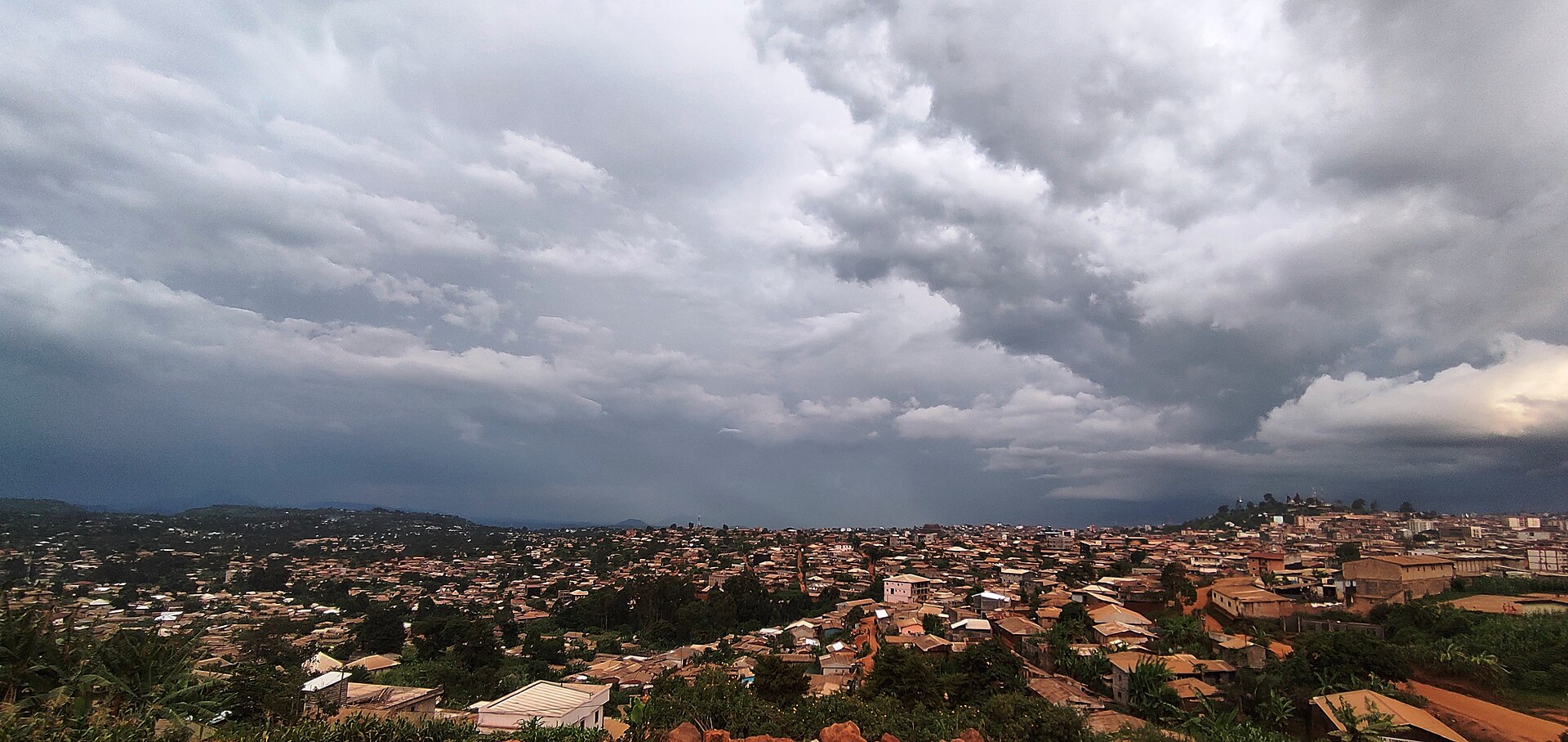
Cameroon and Nigeria: the largest and most complex border
The Cameroon–Nigeria border stretches for more than 2,000 km, from the Gulf of Guinea to the Lake Chad Basin. It is the country’s most commercially important frontier and also its most politically sensitive. People, food, fuel, livestock and manufactured goods move through formal and informal channels. Communities on both sides share ethnic, linguistic and commercial networks that often predate the international boundary.
The relationship has several layers. Cameroon and Nigeria face Boko Haram-related insecurity in the Lake Chad Basin; Islamic State West Africa Province is also active in the wider basin. The Bakassi Peninsula dispute was settled through the International Court of Justice process and subsequent implementation arrangements, but the Gulf of Guinea remains a security and fisheries-management zone. Border closures, customs enforcement, smuggling, fishing rights and security operations can disrupt trade and mobility.
In June 2026, Cameroon and Nigeria signed a defence memorandum of understanding in Yaoundé. It was signed by Cameroon’s Defence Minister Delegate Joseph Beti Assomo and Nigeria’s Defence Minister General Christopher Gwabin Musa. The agreement covers intelligence-sharing, military training, joint operations, border security and action against terrorism and transnational crime. This is a strategic partnership rather than evidence that all disputes have disappeared. Security cooperation is strongest when both states face a common armed threat; commercial and local-border issues remain more difficult because they involve taxation, market competition and competing enforcement priorities.
Cameroon and Chad: security partnership and northern gateway
Cameroon and Chad face common threats, including Boko Haram, arms trafficking, illicit trade and insecurity linked to transhumance. Their relationship is unusually important because Chad is landlocked and relies on Cameroon’s transport corridor to reach the Atlantic. The principal Cameroon-based Atlantic routes from Chad include the Douala–N’Djamena and Kribi–N’Djamena corridors; Kribi is therefore part of the Trans-Cameroon corridor serving N’Djamena.
In practical terms, Cameroon functions as Chad’s principal maritime outlet, while Chad provides a significant transit market for Cameroonian logistics, fuel, food and services. Their discussions covered cross-border insecurity, transhumance, illicit trafficking, arms circulation, intelligence-sharing and joint military coordination.
The two governments’ cooperation is reinforced by their participation in regional efforts around the Lake Chad Basin, including multinational arrangements against Boko Haram. Yet the border remains vulnerable to attacks and banditry, population displacement, competition over pasture and water, arms flows from wider Sahel conflicts, pressure on transport infrastructure and administrative bottlenecks at border crossings. For investors, the Cameroon–Chad corridor offers structural demand but also higher insurance, security and working-capital costs than coastal routes.
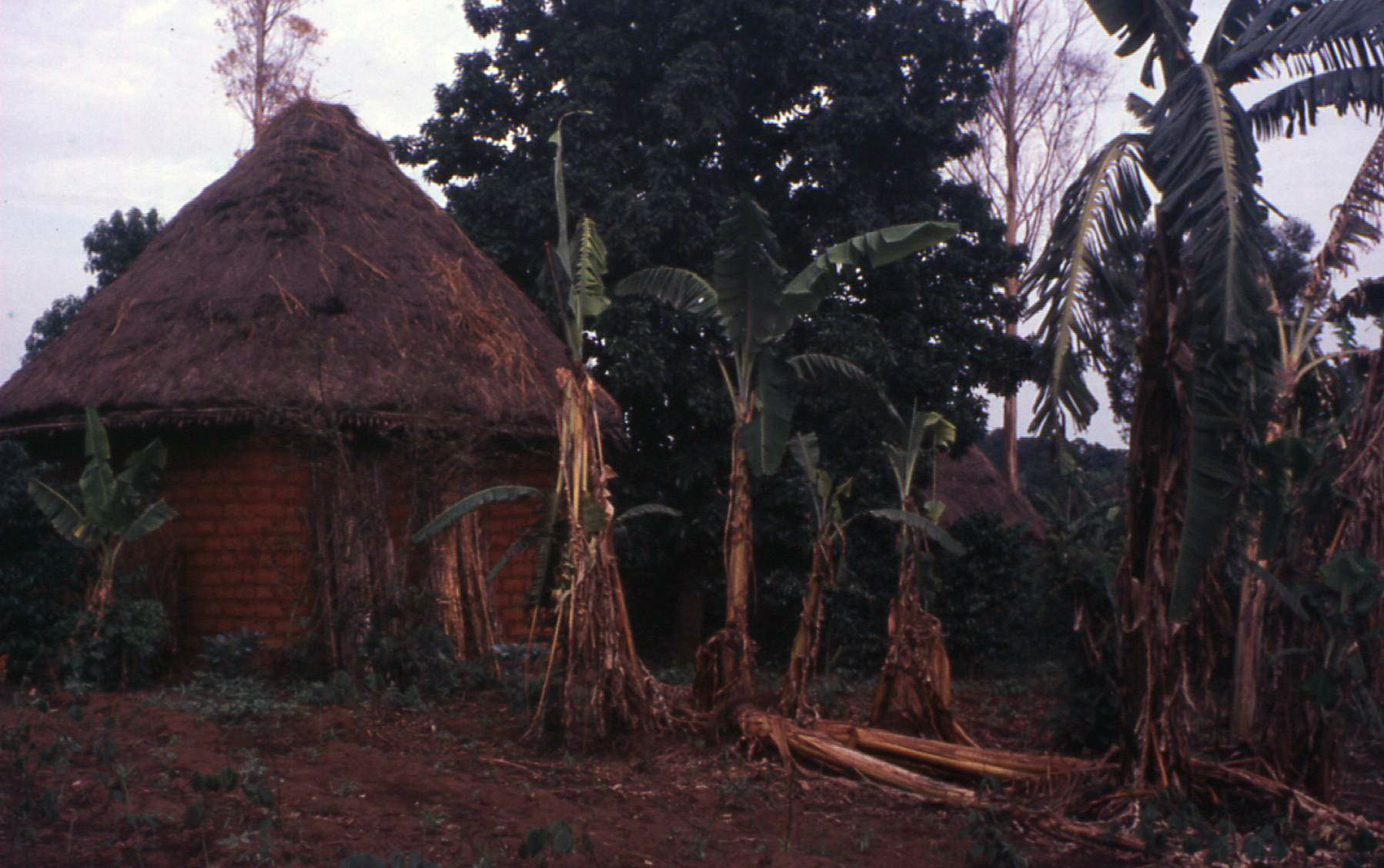
Cameroon and the Central African Republic: the eastern corridor
The eastern border with the Central African Republic is one of Cameroon’s most strategically important frontiers despite its relatively low level of industrialisation. Cameroon provides the CAR with access to the sea and serves as a major corridor for imports, humanitarian supplies and commercial goods. The relationship is shaped by CAR’s landlocked geography, road and border-crossing constraints, armed-group activity and insecurity in CAR, refugee movements into Cameroon, livestock and agricultural trade, and the importance of the Douala–Bangui transport corridor.
Cameroon’s eastern regions have absorbed pressure from conflicts in CAR and neighbouring countries. This creates both a humanitarian burden and a commercial ecosystem around transport, warehousing, food supply, security, communications and financial services. The central problem is that political agreements do not automatically produce reliable transit. Road quality, customs procedures, vehicle queues, informal payments and insecurity can determine whether a shipment reaches Bangui on schedule.
Cameroon therefore leads the corridor institutionally and geographically, but it does not control all of the risks. Some originate in CAR, while others arise from Cameroon’s own administrative and infrastructure constraints.
The southern neighbours: Gabon, Congo and Equatorial Guinea
Cameroon’s southern relationships are more stable militarily than its northern and eastern borders, but they remain economically under-integrated. Gabon and Cameroon are both oil-producing, forested Gulf of Guinea economies and members of CEMAC. They share interests in regional monetary stability, forestry and environmental management, maritime security, food and consumer-goods trade, and transport links along the Atlantic coast. Their economies are more complementary than directly competitive in some sectors, but both compete for logistics, investment and regional influence. Cameroon has the larger domestic market and stronger overland reach into the CEMAC interior; Gabon has significant hydrocarbons, manganese, forestry and a comparatively concentrated coastal economy.
The Cameroon–Congo relationship is important for the development of the Congo Basin and for future road, rail, mining and energy connections. The two countries are linked through CEMAC and share interests in timber and forest governance, regional transport, oil and gas, food supply and cross-border infrastructure. The practical challenge is distance and weak connectivity. Although the countries are neighbours, the absence of dense, reliable transport links limits trade compared with their geographic proximity.
Equatorial Guinea is Cameroon’s closest southern maritime neighbour and a fellow Gulf of Guinea hydrocarbon producer. Relations involve maritime security, fisheries, energy, border and migration management, and CEMAC monetary and economic cooperation. The two countries’ economies are not identical: Cameroon has a larger and more diversified consumer and agricultural base, while Equatorial Guinea’s economy is more concentrated in hydrocarbons and public investment. Cross-border commercial activity is affected by strict migration and security controls, including the management of movement around the island of Bioko and the mainland border area.
Shared rivers, basins and environmental systems
Cameroon’s regional role is also defined by water systems that cross political boundaries. The basin faces water stress and fluctuating lake levels, drought and flooding, pressure from farming, fishing and livestock, displacement, armed-group activity and competition over access to natural resources. Cameroon’s Far North is directly exposed to these pressures. The country is therefore both a security actor and a frontline state in climate adaptation and humanitarian response.
Cameroon’s southern and eastern forests are connected ecologically to a region that is globally important for carbon storage, biodiversity and rainfall regulation. The commercial tension is clear: timber, mining, agriculture and infrastructure create revenue and jobs, while forest loss and weak enforcement create cross-border environmental costs. Cameroon’s regional influence is strongest when it combines forest governance with practical transport and energy development rather than treating conservation and infrastructure as separate agendas.
The Sanaga is not itself a major international boundary river. Cameroon’s cross-border water diplomacy is more directly linked to Lake Chad, the Congo Basin and shared coastal and maritime waters. For investors, water issues matter through hydropower, irrigation, ports, flood control, urban water supply and climate resilience. Projects increasingly require environmental and social assessments that account for downstream and cross-border effects.
Trade: central position, shallow integration
Cameroon’s central economic advantage is that it combines a major consumer market in CEMAC, Atlantic ports, agricultural production, manufacturing and processing capacity, and road corridors to landlocked neighbours. Yet regional trade remains shallow. Non-tariff barriers, customs delays, weak road links and security risks all reduce the volume of formal cross-border commerce. Informal trade often moves faster than formal trade, but it is harder to measure, tax and regulate.
The government’s investor guide presents Cameroon as the sub-region’s main contributor to intra-community trade. That claim is plausible given the country’s size and port access, but it should be read alongside the structural constraints. Cameroon leads the region in potential more than in realised integration. The gap between the two is where most of the investment opportunity and most of the frustration lies.
What this means for foreigners and investors
For a foreigner, Cameroon is best understood as a gateway with conditions. Access to regional markets depends on infrastructure quality, border procedures and security. A business that works well in Douala may face very different conditions in the Far North or on the eastern corridor to Bangui.
Investors should pay attention to three things. First, the port complex around Douala and Kribi creates demand for logistics, warehousing, fuel, food and services. Second, the security environment varies sharply by border. Third, regional institutions like CEMAC and BEAC provide a common currency and monetary framework, but they do not eliminate non-tariff barriers or infrastructure gaps.
The practical implication is that Cameroon rewards patient, well-advised entry. Understanding the neighbourhood is not optional. It is the single most important factor in whether a regional strategy succeeds.
Related reading: Eritrea Explained 2026, a Red Sea Country Guide; DR Congo Neighbours Explained, Central Africa in 2026; Ivory Coast Explained 2026, a Newcomer Guide; more from Africa.
Frequently Asked Questions
Which countries border Cameroon?
Cameroon shares land borders with Nigeria, Chad, the Central African Republic, the Republic of the Congo, Gabon and Equatorial Guinea. It also has an Atlantic coastline and a northern connection to Lake Chad.
What is CEMAC and why does it matter for Cameroon?
CEMAC’s six members are Cameroon, the Central African Republic, Chad, the Republic of the Congo, Equatorial Guinea and Gabon. Cameroon is a major economy and main contributor to intra-community trade.
How long is the border between Cameroon and Nigeria?
The Cameroon–Nigeria border stretches for more than 2,000 km, from the Gulf of Guinea to the Lake Chad Basin. It is Cameroon’s most commercially important and politically sensitive frontier.
Why is Chad important to Cameroon?
Chad is landlocked and relies on Cameroon’s transport corridor to reach the Atlantic. Cameroon functions as Chad’s principal maritime outlet, while Chad provides a significant transit market for Cameroonian logistics, fuel, food and services.
What role does Cameroon play in the Lake Chad Basin?
Cameroon’s Far North is directly exposed to water stress, displacement and armed-group activity, making the country both a security actor and a frontline state in climate adaptation.
Is Cameroon the largest economy in Central Africa?
According to Cameroonian government estimates, Cameroon accounts for approximately 40% of CEMAC regional GDP, 60% of foreign assets and 55% of the bloc’s population.
Sources: beac.int, beac.int, beac.int, beac.int, beac.int, beac.int. Retrieved 4 October 2026.
This article was produced by The Rio Times’ automated newsroom system. How we use AI · Report an error · Editorial responsibility: Matthias Camenzind, Editor-in-Chief
Part of our ongoing coverage
Africa: The New Scramble — the great-power contest over the continent.