Brazil in Latin America, Its Role, Weight and Alliances
BRAZIL · LATIN AMERICA
Key Facts
- —The country Brazil is Latin America’s most populous country, with an estimated 214.2 million people on 1 July 2026, according to IBGE, the national statistics agency.
- —Its weight Brazil produced US$2.28 trillion of goods and services in 2025, about 31% of the total for Latin America and the Caribbean, World Bank data show.
- —Its clubs Brazil co-founded Mercosur, the South American trade bloc, and belongs to CELAC, a 33-nation regional forum, and the Organization of American States.
- —Its customers China bought US$99.9 billion of Brazilian goods in 2025, the United States US$37.7 billion and Argentina US$18.1 billion, trade ministry data show.
- —Its frictions Brazil haggles with Paraguay over the Itaipu dam, draws barbs from Argentina’s President Javier Milei and condemned the January 2026 US strikes on Venezuela.
- —Why now President Lula meets the conservative senator Flávio Bolsonaro in a runoff on 25 October 2026. The winner takes office on 5 January 2027.
- —What it means for you Brazil’s choices on trade deals, tariffs and regional diplomacy shape market access for US exporters and investors across South America.
The Brazil role in Latin America matters to Americans because the country holds about a third of the region’s people and output. It is a big market for US exporters, yet its biggest customer is China.
A presidential runoff on 25 October 2026 will decide who steers that weight from January 2027.

Brazil’s Weight in Population and Economy
Brazil is the giant of Latin America by headcount. IBGE, the national statistics agency, estimated the population at 214.2 million on 1 July 2026, up 0.37% in a year.
For comparisons across the region, the World Bank applies one method to every country. On that basis, Brazil had 212.8 million of the 666.6 million people in Latin America and the Caribbean in 2025.
Almost one person in three in the region is therefore Brazilian. No other country comes close: Mexico, the runner-up, had 131.9 million people in 2025.
The economy is just as dominant. Brazil’s gross domestic product (GDP), the value of all goods and services it produces, reached US$2.28 trillion in 2025.
That is about 31% of the region’s combined output of US$7.4 trillion, World Bank figures show. It is also about 1.9% of the world economy.
The International Monetary Fund (IMF) projects Brazil’s GDP at about US$2.64 trillion in 2026. That projection comes from its World Economic Outlook database.
Size does not mean wealth. Brazil’s output per person was US$10,713 in 2025, slightly below the regional average of US$11,095.
The Rio Times guide Brazil Explained covers the country’s basics. The companies and families behind its output are profiled in Who Runs Brazil’s Economy.
How Brazil Compares With Mexico and Argentina
Mexico is the only country that rivals Brazil as a regional heavyweight. Its GDP was US$1.83 trillion in 2025, according to the World Bank.
Mexico is richer per person, at US$13,889 in 2025, but its economy faces north. It is bound to the United States and Canada by the USMCA, in force since 1 July 2020.
Mexico is neither a member nor an associate of Mercosur, though it sits in CELAC and the OAS.
Argentina, Brazil’s partner in Mercosur, is far smaller. It had 45.9 million people and a GDP of US$683 billion in 2025.
Argentina’s output per person was US$14,898, the highest of the three. Brazil therefore leads on size, while Argentina and Mexico lead on income per head.
Trade follows geography. Brazil sold US$18.1 billion of goods to Argentina in 2025, but only US$7.7 billion to the larger Mexican market.
Any fair reading of the Brazil role in Latin America starts with that contrast. Brazil anchors South America, while Mexico’s weight pulls towards North America.
Mercosur, Brazil’s Home Trade Bloc
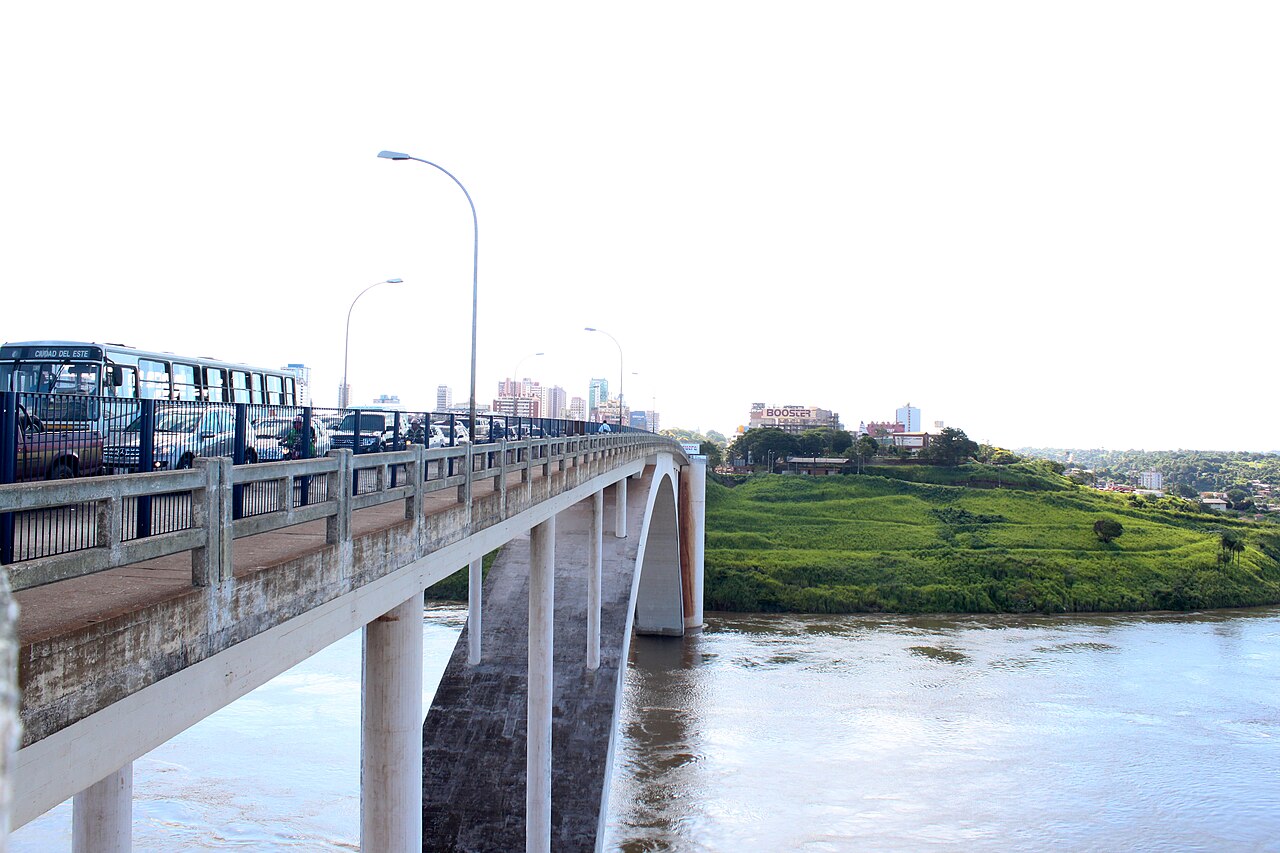
Mercosur, the Southern Common Market, is Brazil’s main regional club. Argentina, Brazil, Paraguay and Uruguay created it with the Treaty of Asunción in 1991.
Bolivia became a full member in July 2024 and has up to four years to adopt the bloc’s rules. Venezuela remains suspended, according to Mercosur.
Chile, Colombia, Ecuador, Guyana, Panama, Peru and Suriname are associated states. They may join meetings of Mercosur bodies on issues of common interest.
Brazil carries most of the bloc’s weight. Mercosur counts about 280 million people, and roughly three in four of them live in Brazil.
The bloc’s presidency rotates every six months in alphabetical order. Uruguay took over from Paraguay at a summit in Asunción on 30 June 2026, for the rest of the year.
Trade with the neighbourhood is real but modest. Brazil sold US$43.2 billion of goods to South America in 2025, according to the trade ministry’s Comex Stat database.
That was about 12% of Brazil’s total exports of US$348.3 billion. Asia, led by China, took a far larger share.
The Deal With the European Union
Mercosur’s biggest outside project is its agreement with the European Union. The two sides signed it on 17 January 2026.
Its trade part has applied provisionally since 1 May 2026, according to the European Commission. Agência Brasil, the state news agency, noted that the talks had lasted 26 years.
In January 2026, the European Parliament asked the EU Court of Justice to examine the deal. That review can take up to two years, Agência Brasil reported.
CELAC, the OAS and the Amazon Forums
Brazil’s Constitution commits the country to regional unity. Article 4 says Brazil will seek the economic, political, social and cultural integration of Latin America’s peoples.
CELAC, the Community of Latin American and Caribbean States, brings together 33 countries of Latin America and the Caribbean. The United States and Canada are not members.
Brazil suspended its participation in January 2020 under former president Jair Bolsonaro. The foreign ministry announced its return on 5 January 2023, Agência Brasil reported.
Uruguay has chaired CELAC since 21 March 2026, when it took over from Colombia in Bogotá. Uruguay therefore chairs both CELAC and Mercosur in the second half of 2026.
The Organization of American States (OAS) is older and wider. Its Charter was signed in Bogotá in 1948.
Brazil and the United States are both members. The OAS rests on four pillars: democracy, human rights, security and development.
Brazil also leads on the Amazon rainforest. The Amazon Cooperation Treaty Organization (ACTO) groups eight countries and keeps its permanent secretariat in Brasília.
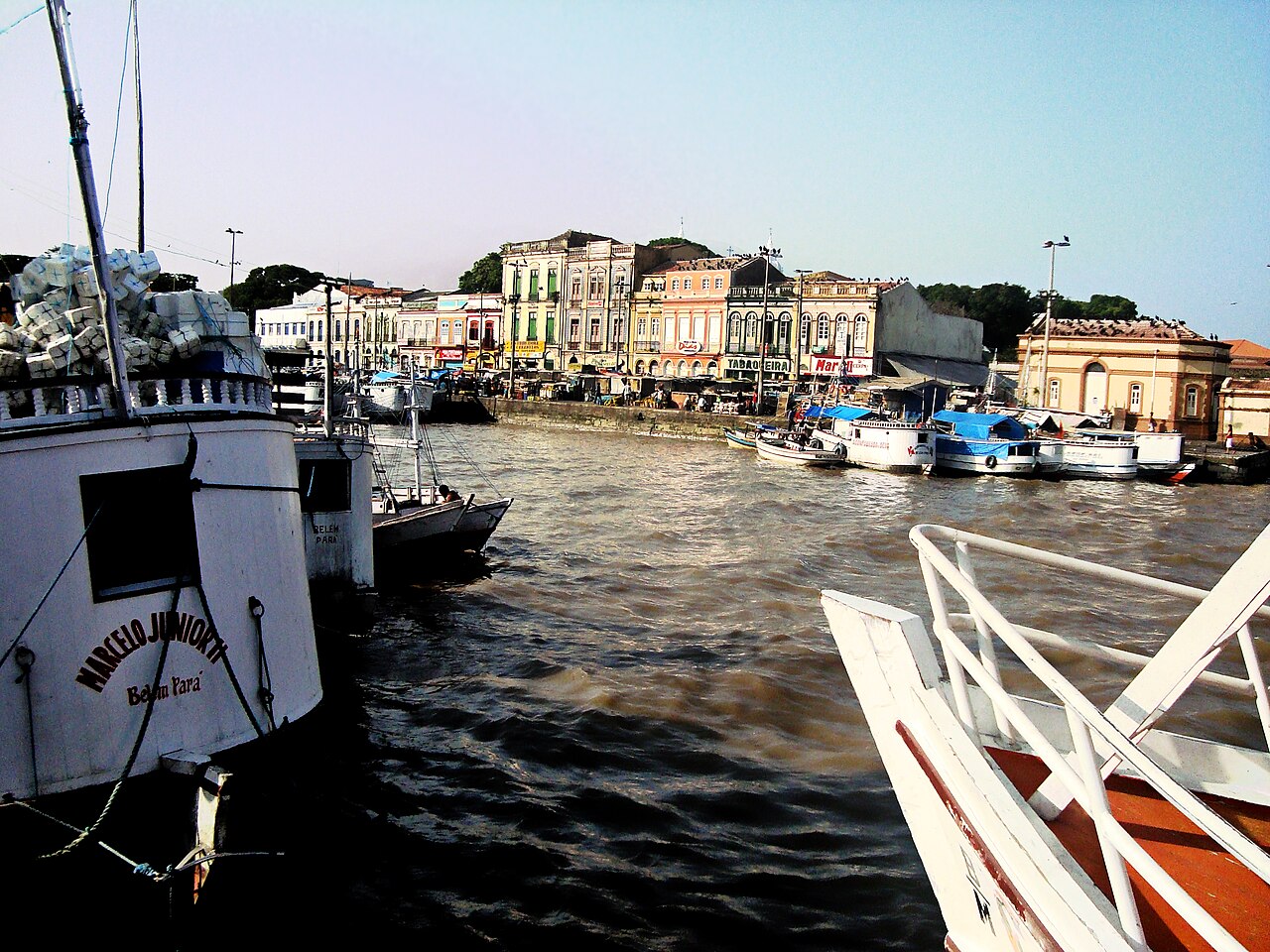
Its members are Bolivia, Brazil, Colombia, Ecuador, Guyana, Peru, Suriname and Venezuela. Brazil also hosted COP30, the United Nations climate summit, in the Amazon city of Belém in November 2025.
Alliances Beyond the Region: BRICS, China and the United States
Brazil is the only Latin American full member of BRICS, a club that also includes Russia, India, China and South Africa.
In 2025, Brazil’s BRICS presidency listed Bolivia and Cuba as partner countries, a looser status. Brazil hosted the group’s leaders in Rio de Janeiro in July 2025.
China is Brazil’s biggest customer by far. It bought US$99.9 billion of Brazilian goods in 2025, more than two and a half times as much as the United States.
The United States is the second-largest buyer, and it sells Brazil even more than it buys. Brazil imported US$45.1 billion of US goods in 2025, a US surplus of about US$7.5 billion by Brazil’s count.
Relations with Washington soured in 2025. On 30 July 2025, President Donald Trump ordered an extra 40% tariff on many Brazilian goods.
His order cited, among other grievances, the prosecution of Jair Bolsonaro. Brazil’s exports to the United States fell to US$24.1 billion from January to August 2026, from US$26.7 billion a year earlier.
In practice, the Brazil role in Latin America now includes balancing its two largest customers, China and the United States.
Disputes With Neighbours and Rivals
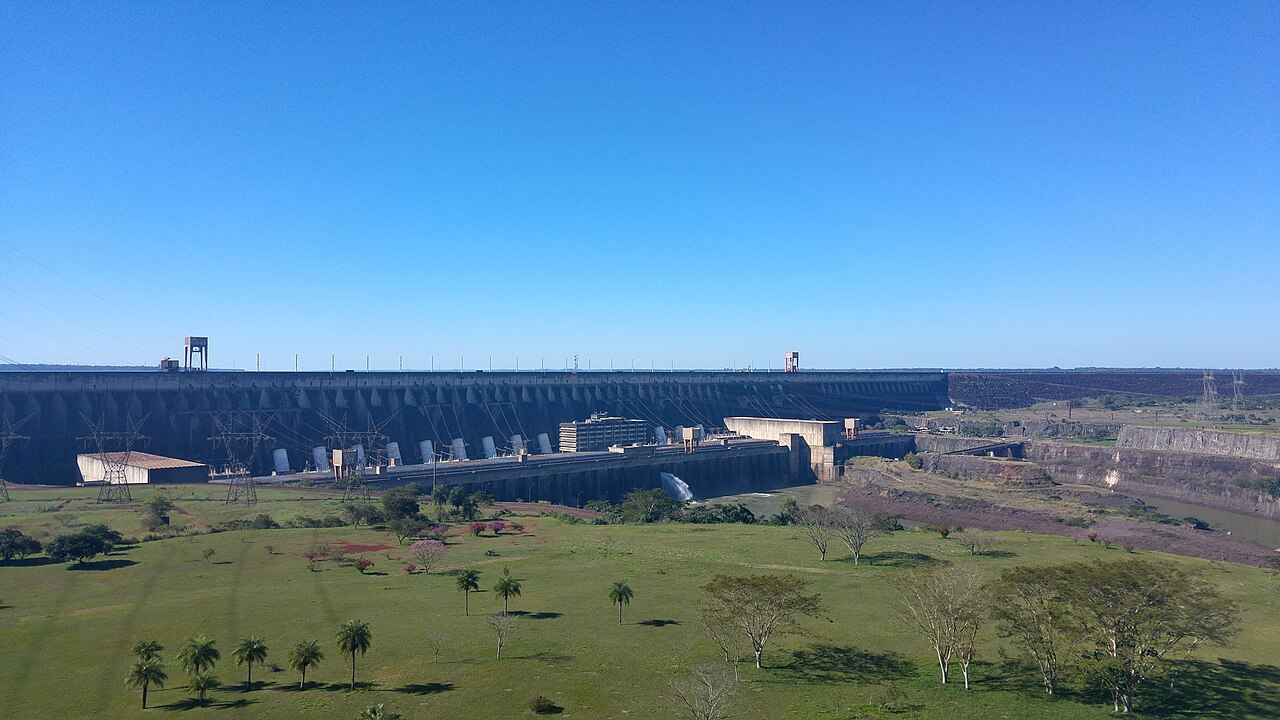
Brazil’s main quarrel with Paraguay concerns Itaipu, the hydroelectric dam the two countries share on the Paraná River. A treaty signed on 26 April 1973 created it.
Itaipu has 20 turbines of 700 megawatts each, according to the company. It supplies about 90% of the electricity used in Paraguay and 10% of that used in Brazil.
The two governments still have no new version of Annex C, the part of the treaty that sets the plant’s financial terms. Paraguay’s President Santiago Peña wants a deal as fast as possible.
He said so on 2 October 2026, two days before Brazil’s first round, ABC Color reported. He added that there was no news on the dam’s tariff.
Venezuela is a more delicate file. On 3 January 2026, Lula wrote on X that the US strikes on Venezuela had crossed an unacceptable line.
Those strikes ended with the capture of Venezuela‘s then president, Nicolás Maduro. Lula called the operation a grave affront to Venezuela’s sovereignty.
Brazil and Uruguay had already refused to sign an Argentina-led statement on Venezuela. That was at the Mercosur summit in Foz do Iguaçu, Brazil, on 20 December 2025.
Agência Brasil reported that Brasília feared the text could be read as backing US military action.
With Argentina, the friction is political rather than commercial. On election night, 4 October 2026, Argentina’s President Javier Milei congratulated his “dear friend” Flávio Bolsonaro on a “historic election”.
In the same post on X, Milei called Lula “the communist”, Noticias Argentinas reported.
Trade has held up despite the words. Argentina bought US$10.2 billion of Brazilian goods from January to August 2026, behind only China and the United States.
The 2026 Election and Brazil’s Regional Course
Brazil votes while the region watches. In the first round on 4 October 2026, Flávio Bolsonaro won 47.03% of valid votes and Lula 45.16%.
Those are the final figures of the TSE, the electoral court, with all polling stations counted.
Lula, of the left-wing Workers’ Party (PT), has been president since 2023. Flávio Bolsonaro is a senator for Rio de Janeiro from the conservative Liberal Party (PL).
He is also the eldest son of former president Jair Bolsonaro. No candidate passed 50%, so the two meet again on 25 October 2026.
The winner takes office on 5 January 2027, under a constitutional amendment passed in 2021. Before that change, the presidential term began on 1 January.
Neighbours are paying open attention. Asked about Itaipu, Peña said all eyes were on Brazil’s election and that he would accept whatever Brazilians decided.
Election-night coverage is in the Rio Times first-round results report. The parties and power brokers are profiled in Brazil Politics Explained.
What It Means for US Readers
For American exporters, the Brazil role in Latin America is mostly about market access. Brazil bought US$45.1 billion of US goods in 2025.
As Mercosur’s largest member, Brazil also weighs heavily on the bloc’s common trade policy. That policy now includes a provisional deal with the European Union.
The EU deal gives European firms a tariff path into Mercosur that US companies do not have. That gap can matter wherever US and European suppliers compete for Brazilian buyers.
For investors, the 25 October runoff is a regional event, not only a Brazilian one. Itaipu talks, Mercosur trade policy and Brazil’s line on Venezuela could all shift with the result.
Ongoing coverage of the country sits on the Rio Times Brazil hub.
What Is Not Known
It is not known whether the next government will keep the Brazil role in Latin America as Lula has shaped it. His line leans on CELAC and Mercosur and rejects US military action in Venezuela.
The timing of a new Itaipu deal with Paraguay is open. So is the outcome of the EU Court of Justice review of the Mercosur agreement.
The IMF figure for 2026 is a projection, not a result. Nor is it clear how US tariffs on Brazilian goods will evolve after the runoff.
Frequently Asked Questions
How big is Brazil compared with the rest of Latin America?
Brazil holds about a third of the region’s people and output. It had 212.8 million of Latin America and the Caribbean’s 666.6 million people in 2025, and US$2.28 trillion of its US$7.4 trillion GDP, World Bank data show.
What is Brazil’s role in Latin America, in short?
In short, the Brazil role in Latin America is that of the largest market and economy, a founding member of Mercosur and a member of CELAC and the OAS. It also hosts the Amazon treaty body in Brasília.
Is Brazil a member of Mercosur?
Yes. Brazil founded Mercosur with Argentina, Paraguay and Uruguay in 1991. Bolivia became a full member in 2024, and Venezuela is suspended.
Does Brazil belong to CELAC and the OAS?
Yes, to both. Brazil suspended its CELAC participation in 2020 under Jair Bolsonaro and announced its return in January 2023. It is also an OAS member, alongside the United States.
Who is Brazil’s biggest trading partner?
China. It bought US$99.9 billion of Brazilian goods in 2025, ahead of the United States at US$37.7 billion and Argentina at US$18.1 billion, according to Brazil’s trade ministry.
What is the dispute between Brazil and Paraguay?
It concerns Itaipu, the hydroelectric dam the two countries share. They have not yet agreed new financial terms under Annex C of the 1973 treaty.
When is Brazil’s presidential runoff?
On 25 October 2026, between Lula and Flávio Bolsonaro. The result will set the tone of the Brazil role in Latin America from 5 January 2027, when the winner takes office.
Sources: IBGE, population estimates 2026, 28 August 2026; World Bank, World Development Indicators (GDP), updated 13 July 2026; World Bank, World Development Indicators (population), updated 13 July 2026; World Bank, GDP per capita, updated 13 July 2026; IMF, World Economic Outlook database (DataMapper), accessed 5 October 2026; Ministry of Development, Industry and Trade, Comex Stat, data to August 2026; Mercosur, member countries, accessed 5 October 2026; Mercosur, end of Paraguay’s presidency (rotation rule), 25 June 2026; Presidency of Uruguay, Mercosur pro tempore presidency, 30 June 2026; European Commission, EU-Mercosur agreement, accessed 5 October 2026; Uruguay Foreign Ministry, CELAC presidency, 21 March 2026; OAS, who we are, accessed 5 October 2026; Amazon Cooperation Treaty Organization, who we are, accessed 5 October 2026; TSE, 2026 presidential results, 5 October 2026; Federal Senate, Senator Flávio Bolsonaro profile, accessed 5 October 2026; Constitutional Amendment 111/2021 (Planalto), 28 September 2021; Constitution of Brazil (Planalto), consolidated text; Itaipu Binacional, accessed 5 October 2026; The White House, Executive Order 14323, 30 July 2025.
This article was produced by The Rio Times’ automated newsroom system. How we use AI · Report an error · Editorial responsibility: Matthias Camenzind, Editor-in-Chief
Rotate for Best Experience
This report is optimized for landscape viewing. Rotate your phone for the full experience.
You've reached your free article limit
Subscribe to The Rio Times for unlimited access to our news, expat and nomad guides and market intelligence on Latin America and Africa.