Brazil Sells US$1 Billion, Real Still Falls
Market reports say Brazil’s central bank sold US$1 billion on 19 November, but the real still weakened, cutting the dollar value of returns for US investors.

Markets: Brazil
Brazilian market reports say the central bank sold US$1 billion of its reserves in a spot auction on Thursday 19 November 2026, yet the real still closed at about 5.93 per US dollar, the highest close since January 2025. We could not find the bank’s own notice of the sale, so this account rests on those reports and on the bank’s published rate data.
The Banco Central do Brasil (BCB), the country’s central bank, has published no reason for the sale that we could find. For US holders of Brazilian bonds and shares, a falling currency matters because it cuts the dollar value of their returns.
Key Facts
- Who. The Banco Central do Brasil, the country’s central bank, reportedly sold the dollars.
- What. On Thursday 19 November 2026 it reportedly sold US$1 billion in a spot auction; the real still weakened.
- Power Index. Brazil ranks 1st of 14 in The Rio Times Latin America Power Index, with 74.2 points (November 2026 edition).
- Prediction markets. Polymarket gives 80% to no December change in Selic, Brazil’s benchmark rate (19 November 2026).
- As of. 19 November 2026, 23:30 GMT.
Market reports say Brazil’s central bank sold US$1 billion on 19 November, but the real still weakened, cutting the dollar value of returns for US investors.
The sale follows a long run of rate cuts. The BCB’s Monetary Policy Committee, known as Copom, lowered the Selic, Brazil’s benchmark interest rate, to 14.25%, 14.00% and 13.75%, with the new rates taking effect on 18 June, 6 August and 17 September, according to the bank’s own rate series.
Copom then held the rate at 13.75% on 4 November. The pause came before this week’s currency move, so the bank entered the auction with its policy rate unchanged.
The BCB’s reference rate for the dollar, called PTAX and built from the day’s dealer quotes, rose from 5.7851 reais per US dollar on 17 November to 5.8102 on 18 November and 5.8889 on 19 November. That is a gain of about 1.8% for the dollar in two sessions, and at 5.8889 each real is worth about US$0.17.
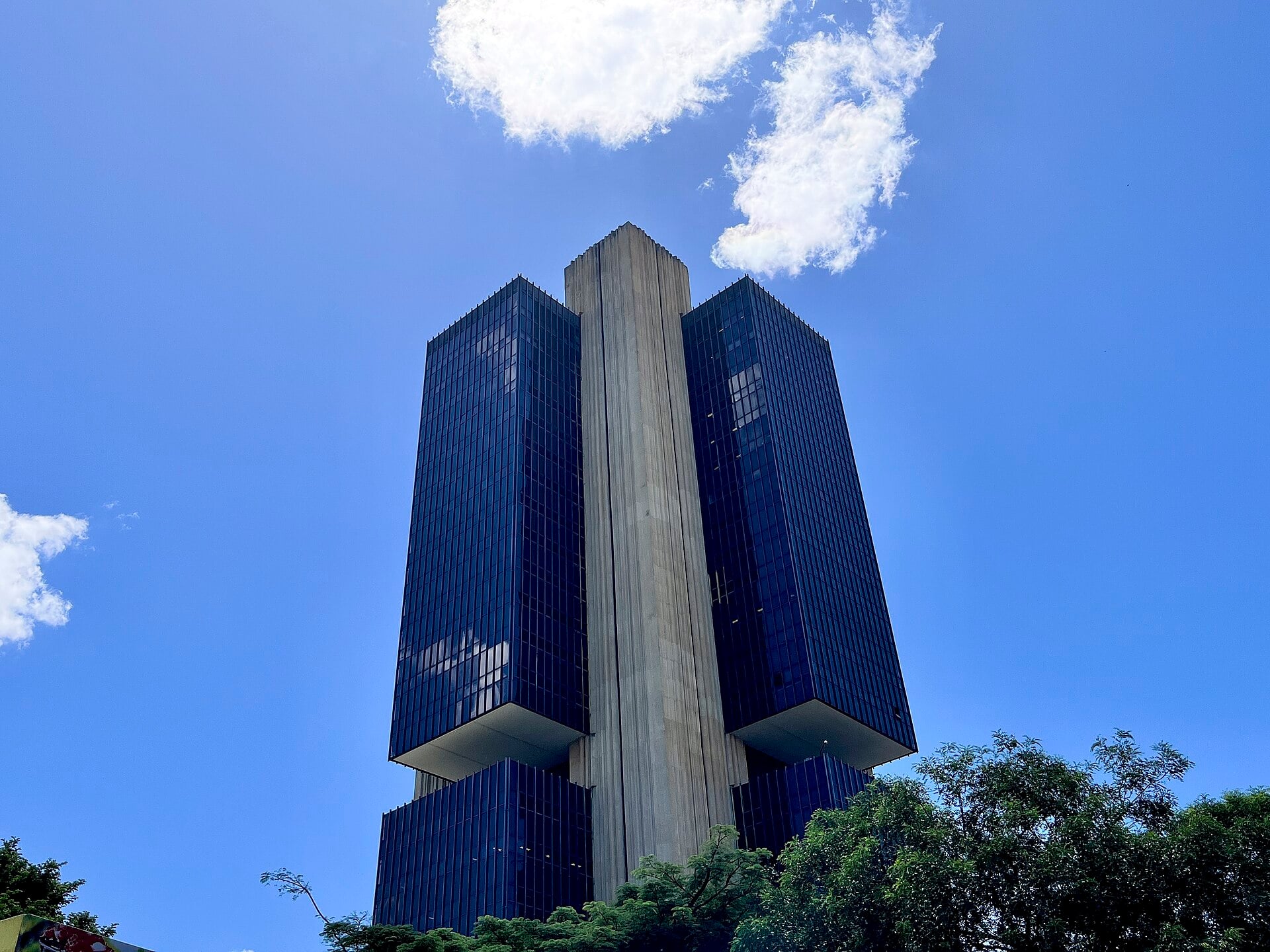
Market quotes ended the day near 5.93, above the PTAX figure because PTAX averages several readings across the session. The reported auction sold dollars from Brazil’s international reserves directly in the spot market, where currency changes hands for immediate delivery.
Brazilian business press reported that the real recovered briefly after the sale and then weakened again into the close, ending about 1.1% lower against the dollar. The central bank has not said whether it will hold more auctions, and we found no announcement of one.
Rate futures, known in Brazil as DI contracts, are agreements on the interbank deposit rate that traders use to bet on the Selic. Because they show where traders expect the Selic to go, they are the first place investors check when rates come under pressure.
Why would a dollar sale matter for rates? We found no explanation from the BCB, so any link is a market reading rather than stated policy, since a weaker real makes imports dearer and can lift inflation expectations, which traders answer by pricing higher interest rates.
Rate-curve stress means that yields on loans over several years rise quickly, which lifts the cost of government debt and of corporate bonds issued in reais. In plain terms, if that happens, Brazil pays more to borrow, and the bill reaches mortgages, company loans and the federal budget.
A single auction is a signal as much as a supply of dollars: it tells traders the bank is willing to act, though one day of selling cannot by itself turn a currency around. The test is whether the dollar keeps climbing once the sale is absorbed.
Live Market IntelligenceBrazil — Live Market Board
Rio Times · Live Market Intelligence
Brazil — Live Market Board
-0.69%
166,376.43
-0.69%
68,891.88
-0.38%
10,333.80
-0.28%
2,848,945
—
2,452.46
—
| Instrument | Last | Change | YoY | Prev. | High | Low | Volume |
|---|---|---|---|---|---|---|---|
| IBOV | 166,376.43 | -0.69% | +7.08% | 167,537.95 | 168,498 | 165,833 | — |
| USD/BRL | 5.93 | +0.90% | +11.37% | 5.88 | 5.93 | 5.93 | — |
| SELIC | 13.75% | — | — | — | — | — | |
| PETR4 | 42.67 | -1.16% | +30.01% | 43.17 | 43.60 | 42.41 | 39,230,200 |
| VALE3 | 58.48 | -0.88% | -9.96% | 59.00 | 59.70 | 58.25 | 23,308,200 |
| ITUB4 | 40.07 | -0.30% | +3.57% | 40.19 | 40.41 | 39.69 | 30,751,700 |
| BBDC4 | 13.83 | -1.78% | -26.83% | 14.08 | 14.19 | 13.77 | 59,937,800 |
| BBAS3 | 14.30 | +1.27% | -33.73% | 14.12 | 14.50 | 14.02 | 65,957,800 |
| B3SA3 | 14.28 | -0.14% | +3.10% | 14.30 | 14.47 | 14.17 | 73,043,000 |
| ABEV3 | 16.08 | +0.06% | +19.91% | 16.07 | 16.08 | 15.85 | 32,924,600 |
| WEGE3 | 51.13 | -0.49% | +17.14% | 51.38 | 52.51 | 50.47 | 10,442,000 |
| PRIO3 | 60.20 | -2.70% | +52.75% | 61.87 | 62.29 | 59.59 | 9,761,900 |
| SUZB3 | 55.32 | -0.50% | +14.46% | 55.60 | 55.67 | 54.03 | 8,250,200 |
| RENT3 | 28.86 | -2.00% | -32.49% | 29.45 | 30.02 | 28.86 | 13,812,400 |
| AZZA3 | 14.63 | -7.29% | -50.79% | 15.78 | 16.09 | 14.62 | 4,647,600 |
| CSNA3 | 3.43 | -6.03% | -57.71% | 3.65 | 3.70 | 3.43 | 27,646,500 |
| GGBR4 | 25.86 | +1.06% | +39.86% | 25.59 | 26.19 | 25.47 | 12,833,300 |
| ENEV3 | 26.22 | +0.34% | +37.93% | 26.13 | 26.46 | 25.96 | 7,640,700 |
We could not confirm the exact closing levels of the DI contracts or the auction’s cut-off price, so we do not quote them. The BCB’s auction page did not return a result when we checked it on the evening of 19 November, so we could not find the bank’s notice of the sale.
US funds that own Brazilian debt are paid in reais, so their return in dollars depends on both the interest rate and the exchange rate. When the two pull against each other, a higher yield can be cancelled out by a weaker currency.
For a US investor holding Brazilian government bonds, higher yields mean lower prices, and a weaker real cuts the dollar value of both interest and principal. Holders of Brazilian shares or US-listed receipts, known as ADRs, face the same currency drag, and higher rates also raise borrowing costs for the companies behind them.
The next test is Copom’s December meeting, where the committee decides whether to move the Selic. We found no signal from the bank about which way it will go.
What Prediction Markets Say
Polymarket, a crypto-based prediction market, gives 80.0% to no change in the Selic at the December decision, against 5.4% for a quarter-point cut and 4.3% for a quarter-point rise. US$126,974 had been traded on that market as of 19 November 2026.
Why we show this: prediction markets turn real-money bets into a live probability that moves within minutes of the news, which is why investors, campaigns and newsrooms in the United States now follow them closely. We show them next to polls and official results, never instead of them.
Frequently Asked Questions
Did the dollar sale work?
The real still weakened that day, so it did not stop the slide. Whether it slowed it is a question the central bank has not answered.
Why do higher rates matter to US investors?
They push down the price of existing Brazilian bonds and raise costs for Brazilian companies. A weaker real also cuts the dollar value of returns.
What is the Selic?
It is Brazil’s benchmark interest rate, set by the central bank’s Copom committee. Loans, bonds and futures across the economy are priced off it.
Sources
Published Thursday 19 November 2026 · Source: Banco Central do Brasil rate and PTAX series; Brazilian market reports on the auction; Copom decisions; Polymarket market data. BCB auctions · BCB open data · Polymarket
Connected Coverage
This article was produced by The Rio Times’ automated AI newsroom. Editorial responsibility: Matthias Camenzind, Publisher and Editor-in-Chief. The Rio Times also runs Ask Rio Times, which answers from 100,000+ of our own articles, the daily Latin America Power Map, and prediction-market odds on elections and markets.. How we use AI · Report an error
LatAm Markets: Live Signals → — real-time movers, turnover leaders and FX across Latin America.
Brazil runoff, Sunday, October 25: When is the Brazil runoff election. Latest: Brazil runoff polls, Flávio 51%, Lula 49%.