Brazil Farm Revenue to Fall US$7 Billion
After a record 2025, Brazilian farm revenue is on course for a fall, with weather hurting coffee, cocoa and oranges while beef and soybeans hold up. The drop follows a 13% jump the year before.

Economy: Brazil
Brazil’s Ministry of Agriculture and Livestock estimates that the country’s farms and ranches will bring in about R$40 billion (Brazilian reais; about US$6.8 billion) less this year than in 2025. The estimate is in the ministry’s October update of the gross production value of farming, known by its Portuguese initials VBP, published this week; all conversions here use the central bank’s reference rate of R$5.89 per US$1 on 19 November 2026.
VBP is the value of everything farms produce, priced at what farmers receive, before costs are deducted. Brazil is a leading supplier of soybeans, coffee and beef to world markets, so the figure shows how much money flows through an industry that American buyers depend on.
Key Facts
- Who. Brazil’s Agriculture Ministry, through its Agricultural Policy Secretariat, which tracks farm output and prices.
- What. Farm revenue (VBP) for 2026 is put at R$1.46 trillion (US$248 billion), down 2.6% from 2025.
- Where. Brazil, led by the soybean and corn state of Mato Grosso.
- Power Index. Brazil ranks 1st of 14 in The Rio Times Latin America Power Index, with 74.2 points (November 2026 edition).
- As of. 19 November 2026, 23:30 GMT.
After a record 2025, Brazilian farm revenue is on course for a fall, with weather hurting coffee, cocoa and oranges while beef and soybeans hold up. The drop follows a 13% jump the year before.
The ministry’s Agricultural Policy Secretariat puts 2026 farm revenue at R$1.46 trillion (about US$248 billion), against a record R$1.504 trillion (about US$255 billion) in 2025. Its September estimate had been R$1.44 trillion with a 3.2% fall, but it has since restated the 2025 base from R$1.49 trillion, so the two comparisons are not like for like.
The ministry points to the weather, with excess rain and dry spells affecting different crops. The ministry does not split the loss between lower prices and smaller harvests.
The series is adjusted for inflation, and it jumped 13% in 2025, from R$1.32 trillion to R$1.49 trillion, in the ministry’s September bulletin. A dip of that size after that surge is a correction rather than a slump, and the ministry expects growth of 2.6% in 2027, taking revenue back above R$1.5 trillion (about US$255 billion).
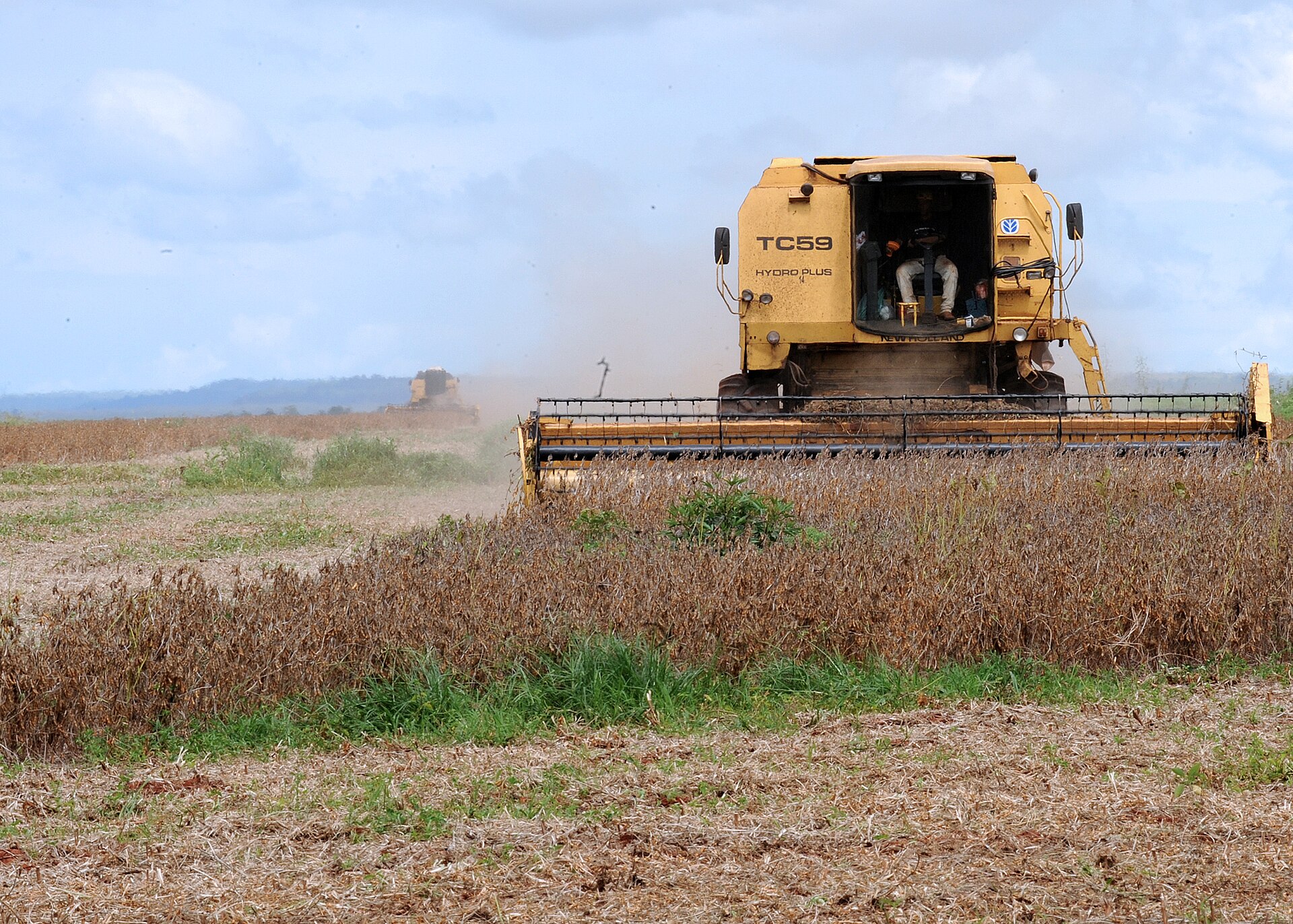
Crops bring in R$938.1 billion (about US$159 billion), down 3.9%, while livestock earns R$527 billion (about US$89.5 billion), down 0.2%. Soybeans, the single biggest product, rose 4.6% to R$361.2 billion (about US$61.3 billion), and beef cattle gained 11.8% to R$258.07 billion (about US$43.8 billion), the main support for the whole sector.
The steepest crop losses were in cocoa, down 55.8%, oranges, down 49.2%, wheat, down 35.3%, and rice, down 22.1%. Coffee fell 10% and corn 4.8%, while potatoes rose 39.9% and beans 19%.
Cocoa shows how steep the fall is: the September bulletin valued the crop at R$5.25 billion (about US$0.9 billion), down from R$11.98 billion (about US$2 billion) a year earlier. Oranges lost even more in value, falling to R$13.15 billion (about US$2.2 billion) from R$25.24 billion (about US$4.3 billion).
Coffee, valued at R$106.5 billion (about US$18.1 billion) in the same bulletin, ranks fourth among Brazilian crops behind soybeans, corn and sugarcane. Its fall from R$118.9 billion (about US$20.2 billion) is the number coffee buyers abroad, including in the United States, will watch most closely.
Among animals, pigs fell 26.1%, eggs 9.6% and chicken 6.5%, so the strength of beef hides weakness elsewhere on the farm. Milk was almost flat at plus 0.4%.
Five states generate almost 58% of the national total: Mato Grosso 15.7%, Minas Gerais 12%, São Paulo 11%, Paraná 10.8% and Goiás 8.2%. The Centre-West region, which includes Mato Grosso and Goiás, leads with R$441.5 billion (about US$75 billion).
For American shoppers, the numbers point to coffee, orange juice, chocolate and beef, but VBP measures revenue at the farm gate, not export prices, volumes or tariffs. A lower figure can reflect a smaller crop, cheaper sales or both, and it does not show farm profit because costs are not deducted.
The ministry’s own page says the estimate is updated monthly, by about the 15th, so the November figures are due by mid-December. The 2026 numbers remain preliminary until then.
Frequently Asked Questions
Does a lower VBP mean Brazil will export less?
Not necessarily, because VBP counts farm-gate revenue and not shipments. Export data are published separately.
Why are beef and soybeans rising while other products fall?
The ministry says beef cattle drove the result, and soybeans were the biggest crop to grow. Weather hit other crops harder.
Is the 2026 figure final?
No, it is a preliminary estimate built on data through October. The ministry revises it every month.
Sources: Ministry of Agriculture and Livestock, VBP page gov.br/agricultura and Agropecuária Brasileira em Números, bulletin dated October 2026 (September data) gov.br/agricultura; Ministry release of 23 October 2026 on the September VBP estimate gov.br/agricultura; Central Bank of Brazil reference rate (PTAX), 19 November 2026 (olinda.bcb.gov.br).
This article was produced by The Rio Times’ automated AI newsroom. Editorial responsibility: Matthias Camenzind, Publisher and Editor-in-Chief. The Rio Times also runs Ask Rio Times, which answers from 100,000+ of our own articles, the daily Latin America Power Map, and prediction-market odds on elections and markets.. How we use AI · Report an error
Brazil runoff, Sunday, October 25: Brazil runoff date. Latest: Brazil runoff polls, Flávio 51%, Lula 49%.