Who Dominates Bolivia, Elites and Regions Explained
BOLIVIA · POWER
Key Facts
- Power Index Bolivia ranks 12th of 14 in The Rio Times Latin America Power Index, with 28.4 points (October 2026 edition).
- Who rules President Rodrigo Paz has led Bolivia since 8 November 2025, and his Minister of the Presidency is Fernando Aramayo, as of 1 November 2026.
- The regions Nine departments have their own governors, and the government is negotiating a tax-sharing plan with them, called Agenda 50/50, as of 29 October 2026.
- The people Bolivia counted 11,365,333 people in its 2024 census, and 69% of them live in cities.
- Inequality Bolivia’s Gini score, which measures inequality, was 40.9 in 2024; 44.7% of people lived below the national poverty line in 2025.
- Faith A 2023 US government estimate puts Catholics at 70% of Bolivians and Evangelical Protestants at 14.5%.
- Travel The US State Department advises increased caution because of unrest, and says do not travel to the Chapare region.
Bolivia power is shared among a president, nine regions, a business class in the east, the army, unions and the churches. This guide explains who holds it in October 2026, who pushes back and who is left out.

Bolivia Power in Plain English
Bolivia is a landlocked Andean country of 11,365,333 people, according to its 2024 census by INE, the national statistics institute. Its constitution names Sucre as the capital, but the government’s own offices are in La Paz.
Five groups matter most when people ask who dominates Bolivia. They are listed below, and each gets its own section.
- The president and the cabinet, who run the state from the Palacio Quemado, the government palace in La Paz.
- The regions, above all Santa Cruz in the lowlands and La Paz in the highlands, which bargain with the capital over money.
- Business owners, led by the chambers of commerce, who lobby on laws and prices.
- The armed forces and the police, who answer to the president under the constitution.
- Unions, Indigenous movements and churches, who can shape the street and public opinion.
The Palace, the Constitution and Congress
The 2009 constitution calls Bolivia a unitary state that is decentralised and has autonomies, so the regions have their own governments. It makes the president commander in chief of the armed forces.
The vice president chairs the Legislative Assembly, Bolivia’s two-chamber congress. It has 130 deputies and 36 senators, four senators for each of the nine departments.
Men and women must take part equally in Assembly elections, and Indigenous nations in proportion. Constitutional Court judges are chosen by popular vote.
President Rodrigo Paz took office on 8 November 2025, according to the presidency’s website. He is the son of former president Jaime Paz Zamora.
He was mayor of Tarija from 2015 to 2020 and a senator from 2020 to 2025. His Minister of the Presidency, Fernando Aramayo, runs the president’s own ministry, as the presidency’s website showed on 1 November 2026.
On 30 October 2026 the presidency said a development plan and a Planning Law were still waiting in the Assembly. The government sent both in September.
The Chamber of Deputies says it closed its 2025-2026 legislature on 30 October 2026 and began a transition to the next one. Its leadership team that year came from three different parties, which shows how power in the chamber is divided.
Our politics guide names the cabinet and the party leaders. Our legislative crisis guide covers the tensions inside the Assembly.
The Supreme Electoral Court has seven members, six elected by the Assembly with a two-thirds majority. The president names the seventh.
Santa Cruz, La Paz and the Struggle for Money
Bolivia has nine departments, the large regions that have governors and send four senators each. The two heavyweights are La Paz, home of the government, and Santa Cruz, the commercial capital of the eastern lowlands.
The regions want more of the tax money that now flows to the capital. On 29 October 2026 the government said it was working with the regions on new tax-sharing proposals under Agenda 50/50.
The current sharing model counts only population, according to the director of the state autonomy service. The new proposals would also weigh poverty, tax effort, efficient management and incentives to protect the Amazon and forests.
The talks matter because they decide how much money regional governments control. Our geopolitics guide shows how the same fight shapes Bolivia’s foreign deals.
On 30 October 2026 President Paz said about 40% of Bolivians lack toilets and safe drinking water. He said the government was working on a US$4.5 billion programme to close the gap, to be carried out in stages.
Business Families, Chambers and the Money Men
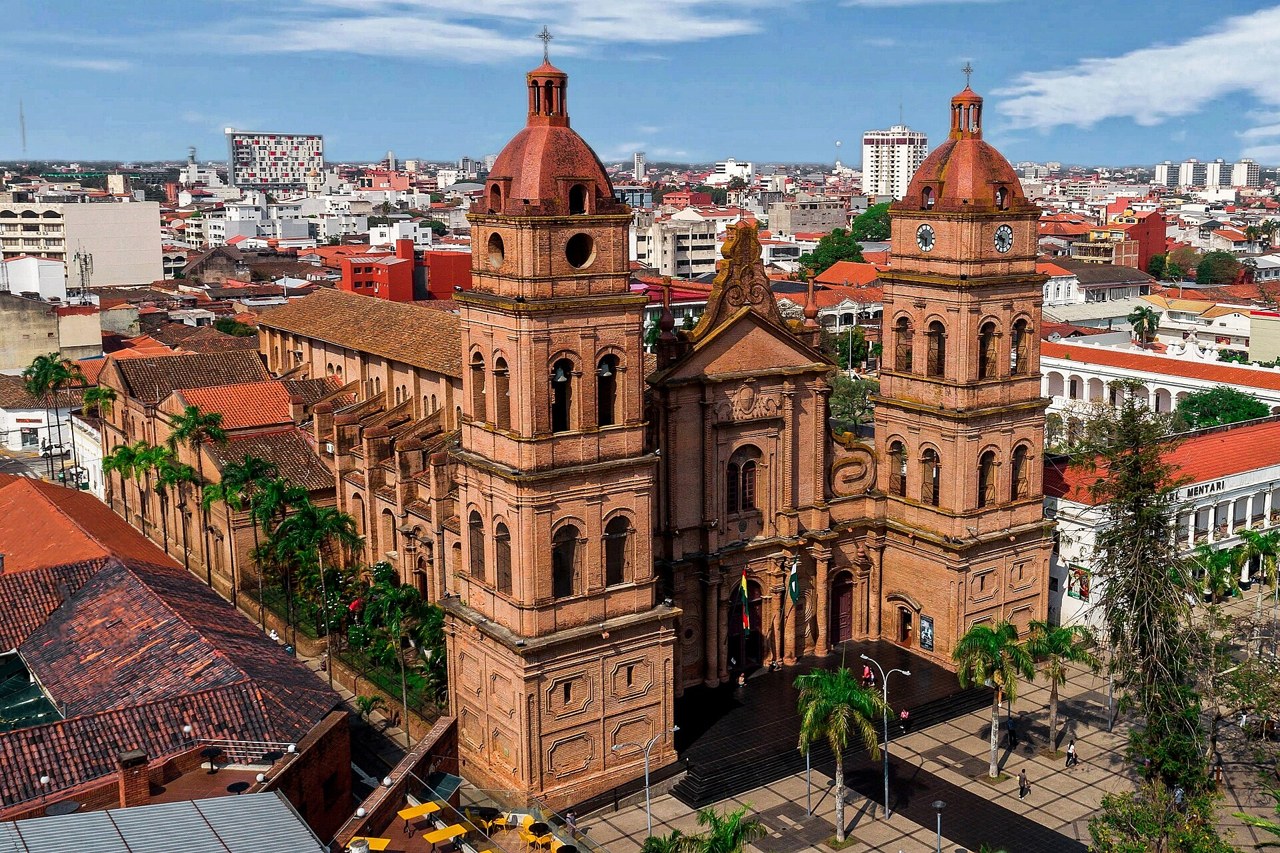
Business power in Bolivia is organised through chambers of commerce, which speak for owners when laws and prices change. The best known is CAINCO, the Santa Cruz chamber of industry, commerce, services and tourism.
On 27 October 2026 CAINCO said it was pushing an Investment Law with lawmakers and the government, after meeting the economy minister. It wants a short law with tax incentives, stable rules, investor guarantees, arbitration and industrial free zones.
CAINCO also asks the Assembly to pass the law before the end of 2026. It says the law should be a base for later reforms in oil and gas, mining and energy.
On 18 September 2026 a decree ended the fixed diesel price of 9.80 bolivianos per litre (US$0.82). The new import-parity price is 17.95 bolivianos (US$1.49), a rise of 83%.
CAINCO published an analysis on 25 September 2026 of what that rise means for prices. It estimates 5.6 extra points of inflation over one year, while the central bank put annual inflation at 5.70% in September 2026.
Our guide to who runs Bolivia’s economy names the biggest companies, banks and owners. This guide focuses on how that money turns into influence over lawmakers and ministers.
The Army, the Police and the Chapare
The constitution lets the president name the armed forces commander in chief and the heads of the army, air force and navy. The Senate ratifies promotions to the top ranks, including General of the Army and General of the Bolivian Police.
In our Power Index, military means is Bolivia’s strongest pillar, with 54.6 points out of 100 in October 2026. Under the constitution, the army and the police answer to the elected president.
The Chapare, a coca-growing lowland in Cochabamba department, is the stronghold of former president Evo Morales. The State Department tells Americans not to travel there, because of a high level of violent crime.
In early October 2026 the presidency’s website announced that the government was activating international support to capture Morales. Its minister said such cooperation is fundamental and that regional collaboration was being switched on.
Unions, Indigenous Movements and the Street
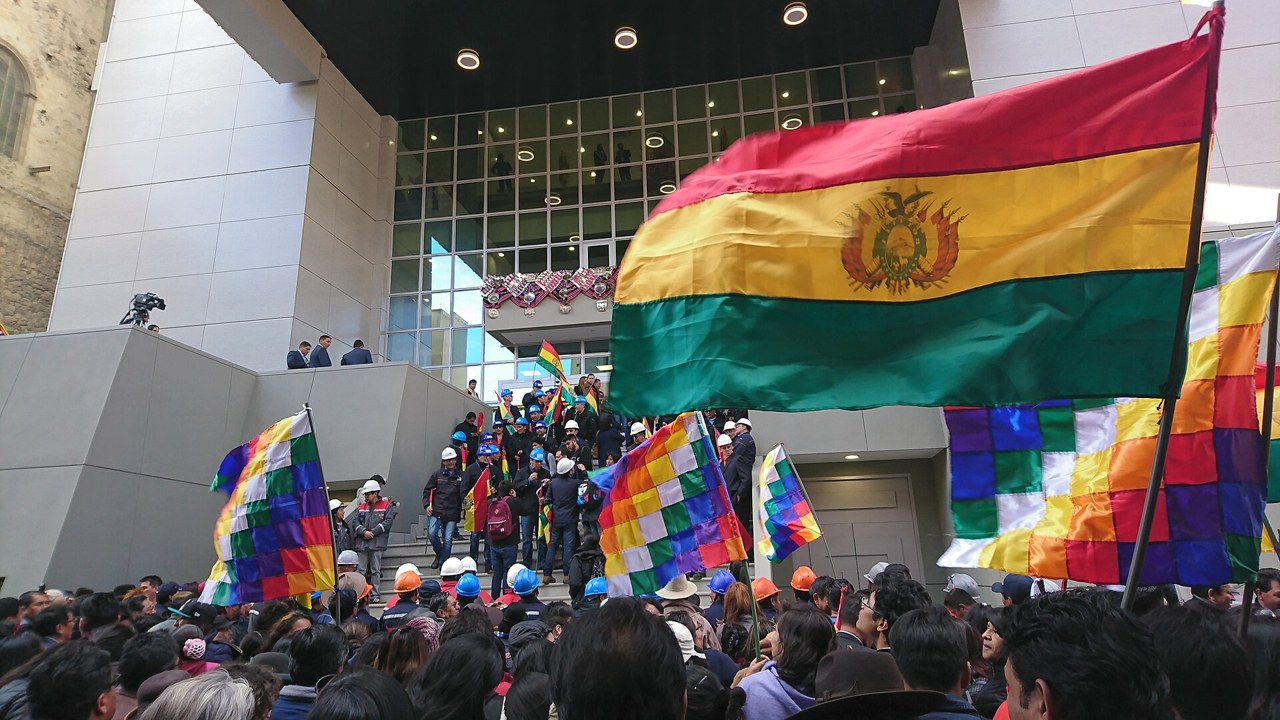
Bolivia’s constitution says all workers have the right to organise unions and guarantees the right to strike. It lists unity, union democracy and solidarity as the principles the state must respect in union life.
The constitution also names 36 Indigenous languages as official, next to Spanish. It recognises Indigenous nations and Afro-Bolivian communities as part of the Bolivian nation.
Blockades are a sharp tool of street politics. The State Department warns that strikes and roadblocks can cut off traffic nationwide and disrupt the movement of goods.
Demonstrations, strikes and roadblocks can occur at any time, according to the same advisory. For daily life in the capital, see our La Paz city page.
Churches and Faith in Public Life
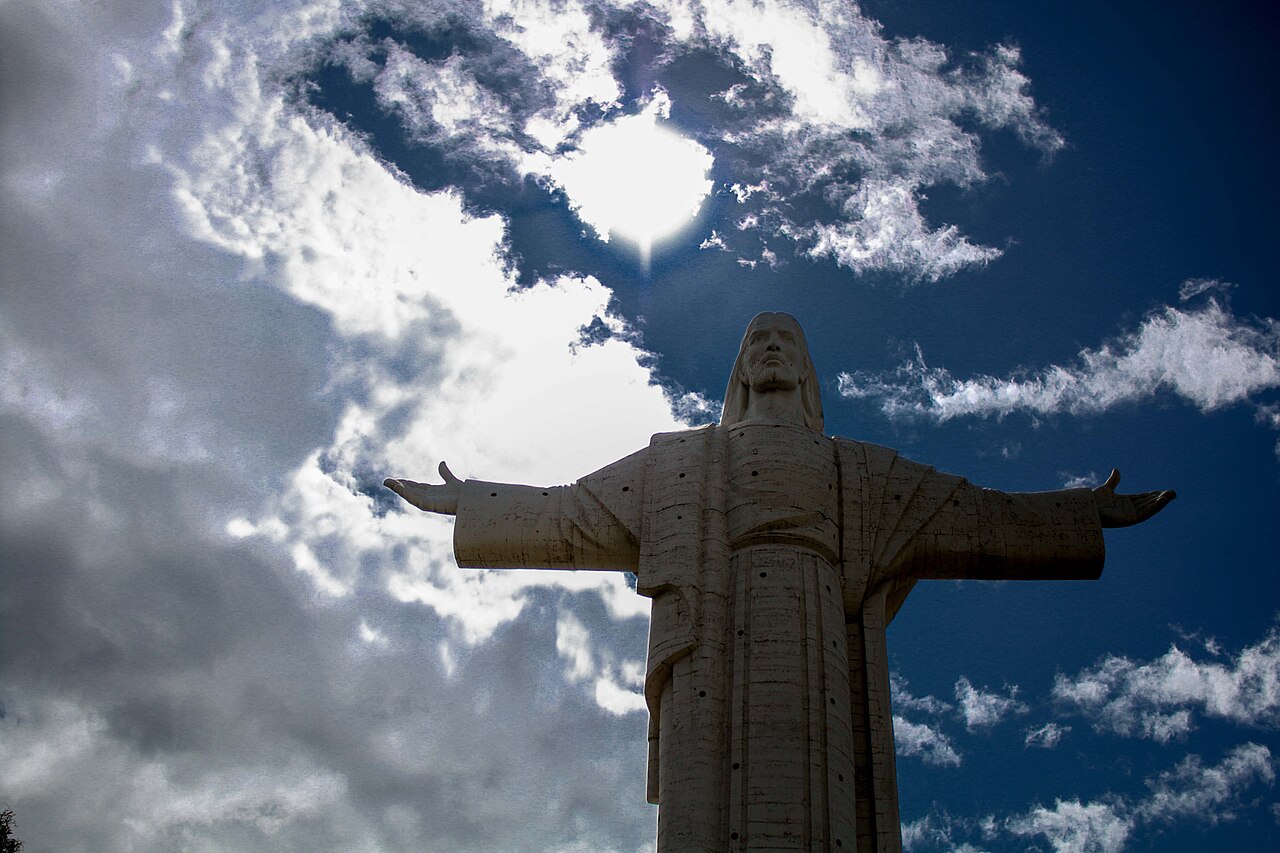
The constitution says the state is independent of religion, yet the Catholic Church keeps a special place. Under an agreement with the Holy See, it does not have to register as a religious group.
A 2023 US government estimate counts 70% of Bolivians as Catholic, 14.5% as Evangelical Protestant and 6.6% as having no religion. The Church runs a temporary shelter for migrants and trafficking victims in Santa Cruz.
The Church also faces pressure on its record, after about 200 people came forward in 2023 with abuse allegations. The claims followed a dead Jesuit priest’s diaries, and the bishops announced two commissions.
Smaller faiths are visible too. Community leaders told the State Department in 2023 that about 70,000 Mennonites, a Christian farming community, live in the Santa Cruz lowlands.
Inequality and Who Is Left Out
World Bank data updated on 8 October 2026 put Bolivia’s Gini score at 40.9 for 2024, where 0 means perfect equality. The score was 42.1 in 2023, so inequality eased slightly.
The same data show 38.1% of Bolivians below the national poverty line in 2024, and 44.7% in 2025. Poverty therefore rose by 6.6 percentage points in one year.
People outside the cities are furthest from the capital, and about 3.5 million Bolivians, 31% of the total, live in rural areas. The 2024 census counted 7,846,708 people in urban areas and 3,518,625 in rural ones.
The same census found that Bolivians had 9.5 years of schooling on average. The president’s own figure of 40% without toilets and safe water shows how many homes still lack basic services.
The constitution promises equal participation for women and a proportional share of seats for Indigenous nations. The poverty figures show how far many families still are from the palace.
What It Means for US Readers
Travellers should read the State Department advisory before booking, because strikes and roadblocks can start with little warning. On 1 November 2026 it advised increased caution across Bolivia and said do not travel to the Chapare region.
The advisory adds that flights can be delayed or cancelled, and that US help in the Chapare is limited. Travellers should keep flexible plans and check local conditions before any road trip.
Investors should watch whether the Investment Law that CAINCO backs can pass the Assembly. They should also watch the diesel price and the 5.70% inflation rate, which raise costs for transport and mining.
The Rio Times Latin America Power Index, our own ranking, puts Bolivia 12th of 14 in October 2026, with 28.4 points out of 100. It sorts Bolivia into the hedging group, and the full table is on our Latin America power map.
What Is Not Known
It is open whether the Agenda 50/50 talks will produce a tax-sharing deal, and what share each region would receive. The government says the work is advancing, but no final formula had been published by 1 November 2026.
It is open whether the Assembly will pass the Investment Law before the end of 2026. The new legislature must also elect its leadership and decide whether to take up the development plan and the Planning Law.
It is open whether Evo Morales will be arrested. The balance of power between Santa Cruz and La Paz will depend on how these talks end.
Frequently Asked Questions
Who holds the most power in Bolivia?
The president holds the most formal power, as head of government and commander in chief. In practice he must bargain with the Assembly, the nine regions, business chambers, unions and the army.
Is Bolivia’s capital La Paz or Sucre?
The constitution names Sucre as the capital. The government’s own offices are in La Paz, which is why many people call it the capital.
What is the Chapare?
The Chapare is a coca-growing lowland in Cochabamba department and the stronghold of former president Evo Morales. The US State Department says do not travel there, because of a high level of violent crime.
How unequal is Bolivia?
The World Bank puts Bolivia’s Gini score at 40.9 for 2024. It also shows 44.7% of people below the national poverty line in 2025, up from 38.1% in 2024.
Do the army and the police rule Bolivia?
No. The constitution lets the elected president name the army commanders, and the Senate ratifies promotions to the top ranks. Their role is to serve the government.
Is Bolivia safe for US travellers?
The State Department advises increased caution because demonstrations, strikes and roadblocks can occur at any time. It says do not travel to the Chapare region.
Sources: Presidency of Bolivia, official website and news, 2026-11-01; Presidency of Bolivia, biography of President Rodrigo Paz, 2026-11-01; Chamber of Deputies of Bolivia, official website, 2026-11-01; INE Bolivia, Censo de Población y Vivienda 2024, 2026-11-01; Constitution of Bolivia 2009, text, 2026-11-01; Banco Central de Bolivia, inflation September 2026, 2026-11-01; World Bank, Gini index and national poverty headcount, Bolivia, 2026-10-08; US Department of State, Bolivia Travel Advisory, 2026-11-01; US Department of State, 2023 Report on International Religious Freedom, Bolivia, 2024-06-26; CAINCO, Investment Law note and diesel-subsidy analysis, 2026-10-27; The Rio Times Latin America Power Index, October 2026 edition, 2026-10-29.
This article was produced by The Rio Times’ automated newsroom system. How we use AI · Report an error · Editorial responsibility: Matthias Camenzind, Editor-in-Chief
Expat Guide to Bolivia
What The Rio Times publishes for foreigners who live in or move to Bolivia.
Start here
- Best Places to Live in Bolivia for Expats in 2026
- Cost of Living La Paz 2026 — Budgets, Rent and Dollar Access
- Opening a Bank Account in Bolivia as a Foreigner
- Taxes in Bolivia for Expats: Territorial Income, Global Assets
Understand Bolivia
Brazil runoff date: Sunday, October 25, poll closing times and when results start · Brazil runoff polls: Flávio 51%, Lula 49% · Kalshi and Polymarket odds
Rotate for Best Experience
This report is optimized for landscape viewing. Rotate your phone for the full experience.
You've reached your free article limit
Subscribe to The Rio Times for unlimited access to our news, expat and nomad guides and market intelligence on Latin America and Africa.
Keep reading for free
Your first article was on us. Register with your email address to read 6 free articles every month. You will also receive The LatAm Brief: what moved in Latin American markets, politics and expat life, every weekday morning.
Expat Guide to Bolivia
What The Rio Times publishes for foreigners who live in or move to Bolivia.
Start here
- Best Places to Live in Bolivia for Expats in 2026
- Cost of Living La Paz 2026 — Budgets, Rent and Dollar Access
- Opening a Bank Account in Bolivia as a Foreigner
- Taxes in Bolivia for Expats: Territorial Income, Global Assets
Understand Bolivia