BOLIVIA · POPULATION
Key Facts
- Population 11,365,333 people at the March 2024 census, up 13% since 2012.
- Age The median age is 27; 27% are under 15 and 7% are 65 or older.
- Where 69% live in cities; Santa Cruz and La Paz departments hold about 3 million people each.
- Indigenous identity 38.7% of people who answered say they belong to an Indigenous people, mainly the Quechua and Aymara of the Andes.
- Languages Spanish was the first language of 77% of people aged 4 and over.
- Power Index Bolivia ranks 12th of 14 in The Rio Times Latin America Power Index, with 28.4 points (October 2026 edition).
The Bolivia population stood at 11,365,333 people at the March 2024 census, the first full count since 2012. About four in ten of those who answered say they are Indigenous, and seven in ten Bolivians now live in cities.

Bolivia Population at a Glance, 11.4 Million People
Bolivia’s National Statistics Institute (INE), the government’s official counting agency, counted 11,365,333 people at its census on Saturday, 23 March 2024. Men numbered 5,682,498 and women 5,682,835, an almost perfect split.
The lowland departments of Beni and Pando, in the north and east, hold just 622,454 people between them. That is only 5.5% of all Bolivians.
Bolivia is divided into nine departments, the large regions INE uses to publish its results. Its official name is the Plurinational State of Bolivia, a title that recognises the country’s many Indigenous nations.
For the wider country story, see the Rio Times Bolivia hub. Every number in this guide comes from INE’s official census tables.
- Population in 2001: 8,274,325
- Population in 2012: 10,059,856
- Population in 2024: 11,365,333
How the Population Grows and Ages
Bolivia added 1,305,477 people between the 2012 and 2024 counts, a rise of 13.0%. The yearly growth rate slowed to 1.08%, down from 1.74% between 2001 and 2012.
The median age, the point where half the people are younger and half older, is now 27 years. It was 20 in 2001 and 23 in 2012.
Children under 15 are 27.0% of the Bolivia population, down from 31.4% in 2012 and 38.7% in 2001. People aged 65 or older are 7.4%, up from 5.9% in 2012.
Adults aged 15 to 64 number 7,460,214, or 65.6% of all Bolivians. The share of children has fallen at every census since 2001, which points to smaller families and a slowly ageing country.
Where Bolivians Live, Cities and Departments
Cities hold 7,846,708 people, or 69.0% of the total, while 3,518,625 people (31.0%) live in the countryside. In 2001 only 62.4% of Bolivians lived in urban areas.
The rural population did not shrink, since it grew by 247,731 people between 2012 and 2024. The urban population grew far faster and added 1,057,746.
Three departments, the large regions of the country that are roughly comparable to US states, hold 71.9% of all Bolivians. Santa Cruz leads with 3,122,605 people, followed by La Paz with 3,030,917 and Cochabamba with 2,016,357.
A Shift From the Highlands to the East
Santa Cruz overtook La Paz as the biggest department at this census, after trailing it in 2012 by 2,657,762 to 2,719,344. Santa Cruz grew by 17.5% in those 12 years, while the highland department of Potosí grew by only 4.0% to 861,292.
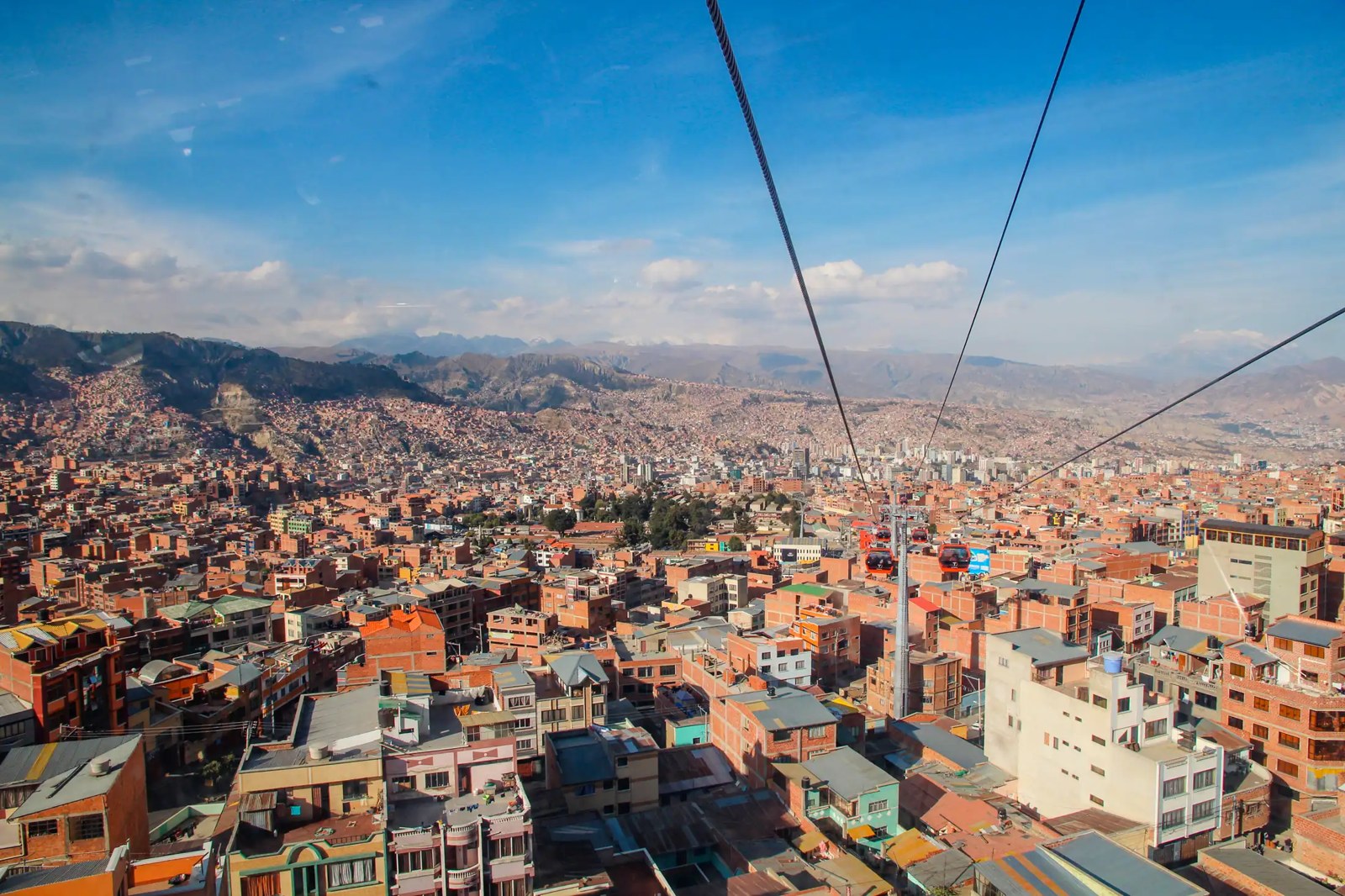
El Alto, a city above La Paz on the high Altiplano plateau, has been larger than La Paz since at least 2012. The two cities together held 1,643,256 people in 2024, and La Paz alone lost 9,037 residents since 2012.
The fastest growth is in towns beside the big cities. Warnes, next to Santa Cruz de la Sierra, grew from 96,406 to 151,248 people, about 4% a year.
- Santa Cruz de la Sierra: 1,610,982 people in 2024 (1,444,425 in 2012)
- El Alto: 885,825 people in 2024 (848,452 in 2012)
- La Paz: 757,431 people in 2024 (766,468 in 2012)
- Cochabamba: 665,505 people in 2024 (632,013 in 2012)
Indigenous Peoples and Ethnic Self-Identification
The census asked people whether they belong to an Indigenous nation or people, or to the Afro-Bolivian community. Of 11,124,437 people who answered, 4,302,484 said yes, or 38.7%.
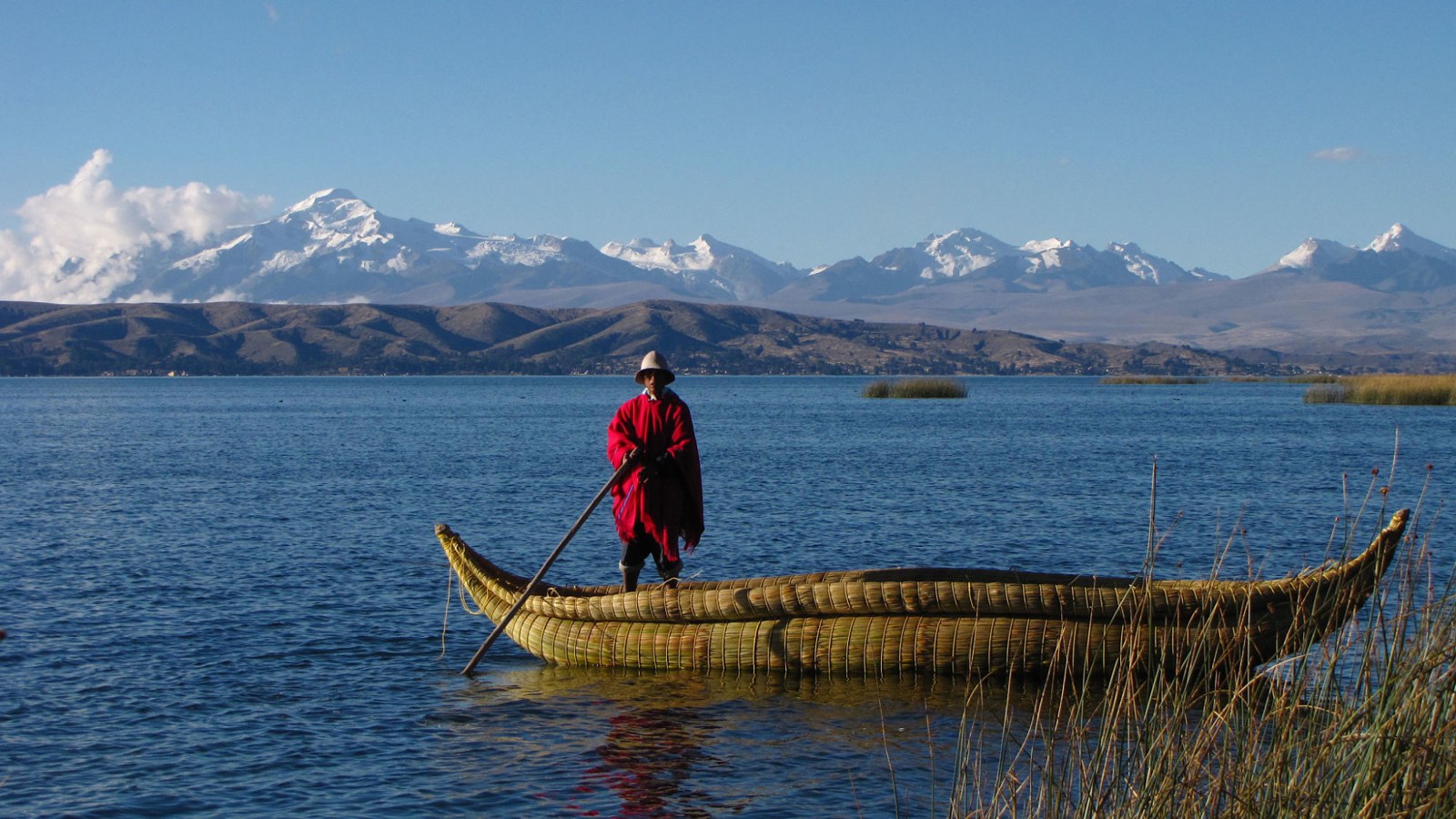
Quechua (1,646,811 people) and Aymara (1,595,045), the two largest Andean peoples, make up three in four of those answers. The Guaraní and the Chiquitano, peoples of the eastern lowlands, number about 103,700 and 99,000.
Afro-Bolivians, descendants of enslaved Africans, number 25,168 in the count. A further 544,984 people gave answers that do not match a named people on INE’s reference list.
Identification is far more common in the countryside, where 68.1% of residents answered yes, against 25.6% in cities. Because cities are so large, 1,970,723 of the 4.3 million, or 45.8%, nevertheless live in urban areas.
What the Numbers Show by Department
The share is highest in the highland departments of Potosí and La Paz and lowest in the south and east. In absolute numbers La Paz has 1,634,410 such residents, and Santa Cruz, with only 16.3%, still counts 495,519.
Identity is a personal answer, not a racial label. INE’s identification table has no mixed-race category.
- Potosí: 61.8% of those who answered
- La Paz: 54.7%
- Oruro: 49.5%
- Cochabamba: 44.2%
- Chuquisaca: 43.2%
- Beni: 29.6%
- Pando: 27.6%
- Santa Cruz: 16.3%
- Tarija: 12.6%
Languages Spoken, Spanish, Quechua and Aymara
Among people aged 4 and older, 8,141,600 (76.8%) learned Spanish first, up from 67.2% in 2012. Quechua was the first language of 1,395,229 people (13.2%) and Aymara of 774,874 (7.3%).
In 2012 Quechua stood at 17.6% and Aymara at 10.9%, so both have lost ground to Spanish. Guaraní, spoken in the south-east, was the first language of 43,870 people, down from 51,991.
Among people aged 6 and older, 37.1% speak at least one Indigenous language, down from 48.0% in 2012. In absolute numbers that is 3,768,617 people, almost the same as the 3,753,471 counted in 2012.
Most Bolivians use one language, since 62.4% are monolingual, 34.8% bilingual and 2.8% speak three. In 2012 only 53.9% were monolingual.
Migration Inside and Outside Bolivia
At the 2024 census, households reported 329,047 relatives living abroad, down from 437,160 in 2012. About 8.4% of households said they had an emigrant, compared with 11.1% in 2012.
The map of destinations has changed. Chile is now first with 109,420 people (33.3%), followed by Argentina with 82,033 (24.9%) and Brazil with 62,424 (19.0%).
Spain fell from 109,889 people (25.1%) in 2012 to 33,106 (10.1%). The United States held steady, with 16,597 (5.0%) in 2024 against 17,534 in 2012.
Bolivia is also a place of arrival, with 175,017 foreign-born residents in 2024, up from 119,033 in 2012. The largest groups were born in Argentina (58,886), Brazil (28,399), Peru (17,541), Spain (12,067) and Chile (9,320).
How the Groups Live Together
The census treats identity and language as separate questions, so the two figures overlap but are not the same. Spanish is the first language of 76.8% of Bolivians, while 38.7% say they belong to an Indigenous people.
Cities are where the Bolivia population mixes most, with nearly 2 million Indigenous residents living in urban areas. Also, 37.6% of Bolivians aged 6 and over speak more than one language.
For how power is shared between the groups, read our guide to Bolivia politics. Our profile of Bolivian culture shows how the traditions of the highlands and lowlands mix.
See where the country ranks in The Rio Times Latin America Power Index. Our guide to foreign powers and investors in Bolivia covers who else shapes the country.
What It Means for US Readers
Households in Bolivia reported 16,597 relatives living in the United States in 2024, or 5.0% of all emigrants. That is a household count, not a count of Bolivians in the US.
Visitors will hear Quechua and Aymara in highland markets, and 37.1% of Bolivians aged 6 and over speak an Indigenous language. Spanish remains the common language for business and travel.
For investors and aid groups, the Bolivia population is concentrated in three departments, with Santa Cruz now the largest. La Paz and El Alto form a second centre of 1.6 million people.
What Is Not Known
INE’s published 2024 results have no religion chapter, so this guide gives no religion shares. The identification table covers Indigenous nations and Afro-Bolivians only, so there is no count of mixed-race or white Bolivians.
The emigration figures come from relatives still living in Bolivia, so households that left together may be missing. We found no official population estimate for any date after the March 2024 census.
Frequently Asked Questions
What is the population of Bolivia?
Bolivia had 11,365,333 people at the census of 23 March 2024, up from 10,059,856 in 2012. The country’s population grew 1.08% a year between the two counts.
What are the biggest cities in Bolivia?
Santa Cruz de la Sierra is the largest, with 1,610,982 people in 2024. El Alto follows with 885,825, then La Paz with 757,431 and Cochabamba with 665,505.
What percentage of Bolivians are Indigenous?
In the 2024 census, 38.7% of people who answered said they belong to an Indigenous nation or people or to the Afro-Bolivian community. This is self-identification, not a racial classification.
What languages are spoken in Bolivia?
Spanish is the first language of 76.8% of people aged 4 and over. Quechua (13.2%) and Aymara (7.3%) follow, and 37.1% of people aged 6 and over speak an Indigenous language.
Where do Bolivian emigrants go?
Households in Bolivia reported most relatives in Chile (33.3%), Argentina (24.9%) and Brazil (19.0%) in 2024. Spain holds 10.1% and the United States 5.0%.
What is the median age in Bolivia?
The median age is 27 years, up from 23 in 2012 and 20 in 2001. Children under 15 are 27.0% of the population and people aged 65 or older are 7.4%.
Sources: Instituto Nacional de Estadística (INE), Censo de Población y Vivienda 2024, results portal, 2026-10-29; INE, Censo 2024 tabulated tables (Excel): Población, Autoidentificación, Idiomas, Migración, Emigración, 2026-10-29; INE, Bolivia: Características de la Población y la Vivienda, Censo 2024, 2026-10-29.
This article was produced by The Rio Times’ automated newsroom system. How we use AI · Report an error · Editorial responsibility: Matthias Camenzind, Editor-in-Chief
Expat Guide to Bolivia
What The Rio Times publishes for foreigners who live in or move to Bolivia.
Start here
- Best Places to Live in Bolivia for Expats in 2026
- Cost of Living La Paz 2026 — Budgets, Rent and Dollar Access
- Opening a Bank Account in Bolivia as a Foreigner
- Taxes in Bolivia for Expats: Territorial Income, Global Assets
Coming up in Bolivia
Understand Bolivia
Brazil runoff date: Sunday, October 25, poll closing times and when results start · Brazil runoff polls: Flávio 51%, Lula 49% · Kalshi and Polymarket odds
Rotate for Best Experience
This report is optimized for landscape viewing. Rotate your phone for the full experience.
You've reached your free article limit
Subscribe to The Rio Times for unlimited access to our news, expat and nomad guides and market intelligence on Latin America and Africa.
Keep reading for free
Your first article was on us. Register with your email address to read 6 free articles every month. You will also receive The LatAm Brief: what moved in Latin American markets, politics and expat life, every weekday morning.
Expat Guide to Bolivia
What The Rio Times publishes for foreigners who live in or move to Bolivia.
Start here
- Best Places to Live in Bolivia for Expats in 2026
- Cost of Living La Paz 2026 — Budgets, Rent and Dollar Access
- Opening a Bank Account in Bolivia as a Foreigner
- Taxes in Bolivia for Expats: Territorial Income, Global Assets
Coming up in Bolivia
Understand Bolivia