The Real Cost of Living in Santa Cruz in 2026
BOLIVIA · COST OF LIVING
Key Facts
- —Single person, modestly About US$600 to US$900 a month on local-market housing.
- —Couple, comfortably About US$900 to US$1,300 a month.
- —The two-tier market Expat rents in Equipetrol are quoted in dollars and run roughly one and a half to two times the boliviano-quoted local market.
- —The currency Bolivia floated the boliviano in June 2026. The old 6.96 peg is dead, and guides still quoting it are wrong by about 40%.
- —Petrol About 6.96 bolivianos a litre, roughly US$0.60 — subsidised, with the subsidy scheduled to end in January 2027.
- —The practical problem Fuel queues. Drivers have waited days to refuel under a state of exception.
Santa Cruz is genuinely cheap and genuinely unstable. Almost every cost figure published about it online is now wrong, and the reason is a currency decision taken in June.

Santa Cruz de la Sierra is Bolivia’s commercial capital and the country’s obvious landing place for foreigners, and the cost of living there changed more in 2026 than in the preceding fifteen years combined.
Start With the Exchange Rate
Bolivia abandoned its fifteen-year peg in late June 2026. The old rate of 6.96 bolivianos to the dollar, unchanged since November 2011, is gone. The rate jumped overnight and the boliviano has since lost roughly 45% of its dollar value.
In mid-September 2026 the central bank rate was about 11.53 and the parallel rate 11.66 to 11.74, a spread of one to two percent. The arbitrage that used to make Bolivia a two-price country has essentially closed.
This matters because most expat guides still online quote 6.96 and describe Bolivia as offering rare cost predictability. Some automated news feeds still print it as the official rate. Any budget built on 6.96 is wrong by about 40%.
The Two-Tier Housing Market
Expat rents in Santa Cruz are overwhelmingly quoted in United States dollars, not bolivianos. That insulated foreigners from the float and also meant they received none of its benefit.
In Equipetrol, the main expatriate district, studios of 32 to 45 square metres advertise at US$300 to US$542, one-bedrooms at US$450 to US$790, a 100-square-metre two-bedroom at about US$934 and three-bedrooms from US$900 to US$1,200.
The boliviano-denominated local market is substantially cheaper: roughly US$287 for a central one-bedroom and US$189 outside the centre on survey data. The gap between the two markets is real and runs about one and a half to two times. Budgeting from local-market figures and then shopping in Equipetrol produces a shock.
Standard terms are one month deposit, one month guarantee and one month agency commission — three months up front.
Where Foreigners Live
Equipetrol is the primary hub, walkable, with the restaurants, bars and business infrastructure, and it is where most people land first. Urubó is a gated satellite about twenty minutes out across the river, with larger houses, strong security and a family orientation, but it is not walkable and costs more.
Las Palmas and the Zona Norte are established residential areas. Plan 3000 has higher crime than the expatriate districts and is not where a newcomer should start.
Utilities, Food and Transport
Basic utilities for an 85-square-metre flat run about 403 bolivianos, roughly US$35 a month. Internet at 60 megabits costs about 227 bolivianos, roughly US$20, with fibre at 100 megabits from US$30 to US$50.
Groceries run US$150 to US$250 a month. A set lunch costs about 25 bolivianos, roughly US$2.17, and a mid-range dinner for two about 200 bolivianos, roughly US$17.35.
Public transport costs three bolivianos, about US$0.26, with a monthly pass at 270 bolivianos, about US$23. A taxi starts at twenty bolivianos, about US$1.73.
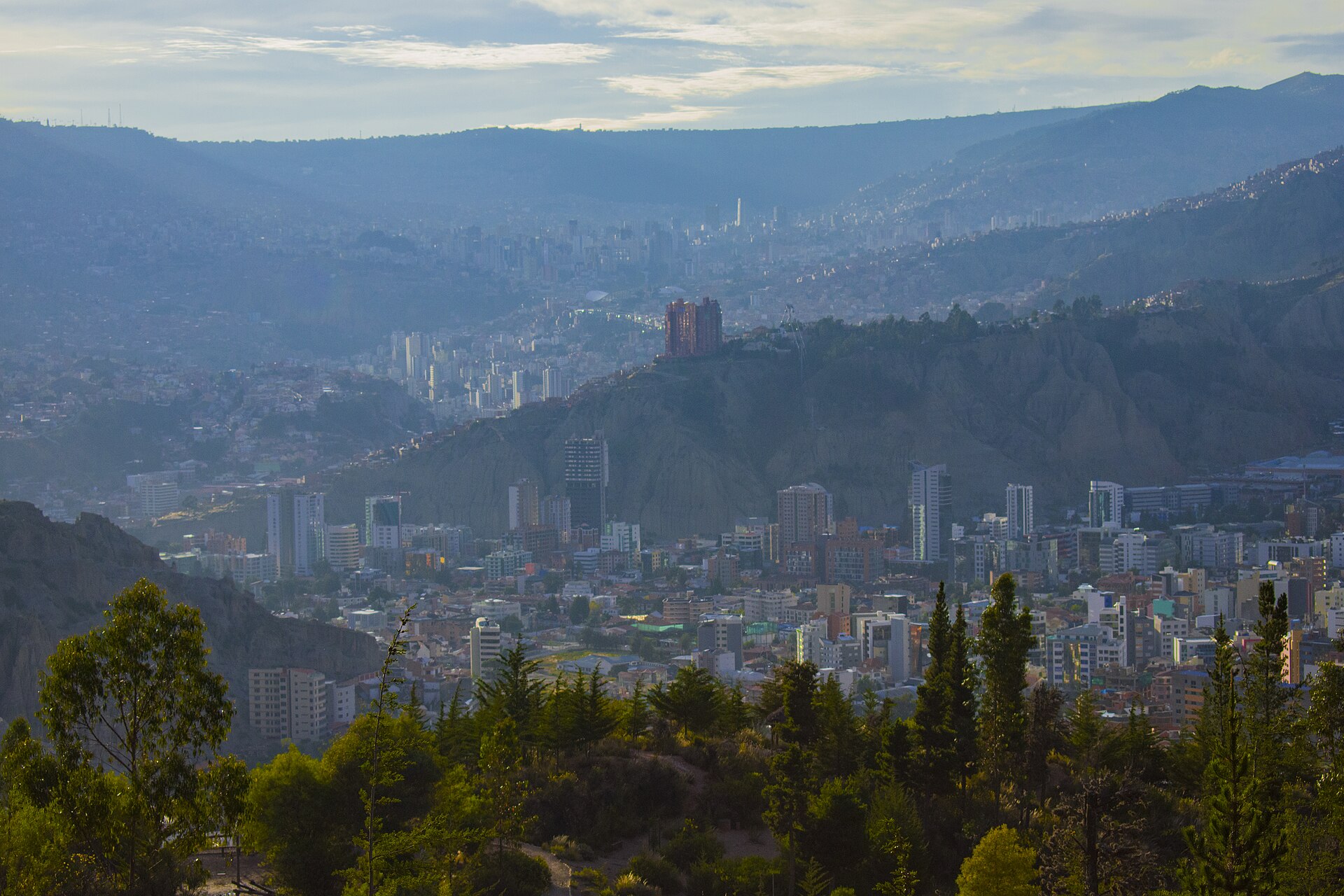
The Fuel Situation
Retail fuel remains subsidised and frozen through December 2026 at 6.96 bolivianos a litre for standard petrol, about US$0.60, and 9.80 for diesel, about US$0.85. Those followed December 2025 adjustments that raised petrol 86% and diesel 162%.
The subsidy has already been removed sectorally for large consumers, who pay eighteen bolivianos a litre for diesel with daily price adjustment. Households, transport operators and small businesses keep the subsidy for now.
Bolivia has committed to the International Monetary Fund, under a thirty-six-month programme worth about US$1.9 billion, to move fuel prices toward cost recovery from January 2027. Petrol at US$0.60 a litre is a policy artefact with a scheduled end date.
The shortages are the more immediate problem. Queues of vehicles waiting multiple days to refuel have run since 2023, a state of exception is in force, and protests over diesel supply continued through early September. Owning a car in Santa Cruz carries a time cost that no price table captures.
Healthcare
A private GP consultation costs US$15 to US$30 and a specialist US$25 to US$50. Clínica Foianini is the leading private facility in the city.
Local private insurance looks startlingly cheap, with basic plans at 100 to 130 bolivianos a month, about US$8.67 to US$11.27, and premium plans at 570 to 720 bolivianos, about US$49 to US$62. The catch is that these are complementary products that supplement the public system rather than replacing it.
Age-banded pricing is not published. A foreigner in their sixties who wants genuine coverage will need an international policy, which is a different product at a different price, and local plans at eleven dollars a month should not be presented as equivalent.
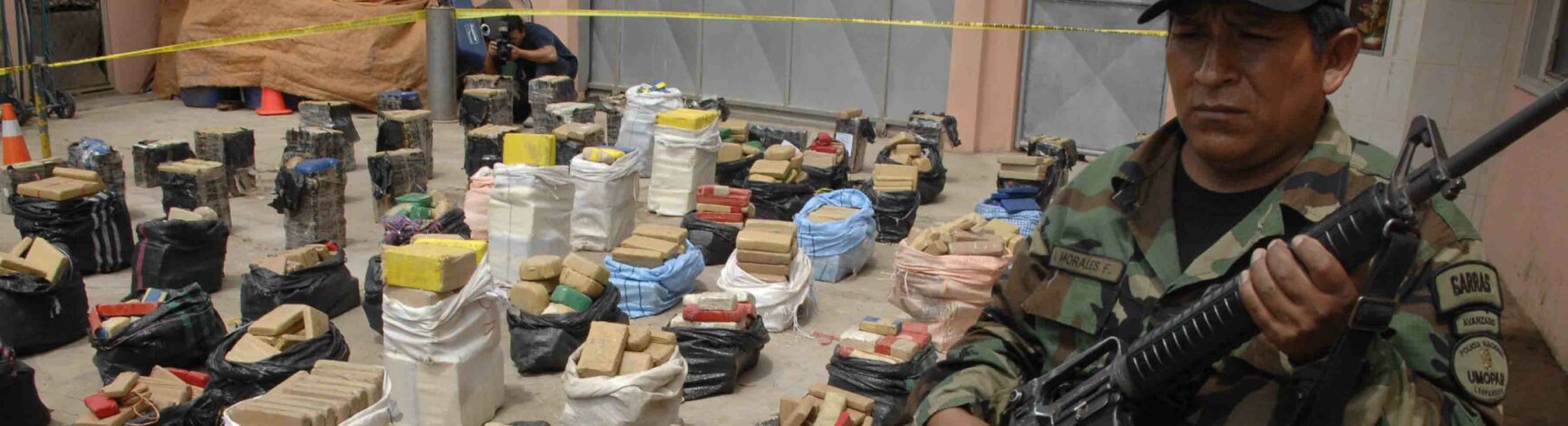
Against La Paz
Altitude is the decisive difference. Santa Cruz sits at 416 metres; La Paz at 3,640. The altitude is felt within an hour of arrival, most people adjust in three to seven days, and it remains a permanent factor in exercise, sleep and cardiovascular load, which matters more with age.
Santa Cruz is warm humid lowland and commercially oriented; La Paz is cold, high and the political and cultural centre. Viru Viru is Bolivia’s principal international gateway, while El Alto sits at 4,061 metres and imposes performance penalties on aircraft.
The pattern long-term residents describe is that people who stay choose Santa Cruz and people who fall in love with Bolivia choose La Paz.
What to Budget
A single person living modestly should plan on US$600 to US$900 a month, which assumes local-market housing rather than Equipetrol. An expatriate paying US$550 to US$790 for an Equipetrol one-bedroom will exceed that band on rent alone.
A couple living comfortably should plan on US$900 to US$1,300, including an Equipetrol flat, utilities, restaurants, taxis and private insurance.
Inflation has collapsed to about 5.02% over twelve months, from more than 18% over the same months of 2025, so relative prices are stable. The exchange rate is not: it moved about 8% in a single week in September and has traded between 11.41 and 12.42 over the year. Quote dollars, state the rate and date, and treat Bolivia as the least forecastable market in the region.
More: Bolivia guides and news, every day from The Rio Times.
Frequently Asked Questions
How much does it cost to live in Santa Cruz?
About US$600 to US$900 a month for a single person on local-market housing, and US$900 to US$1,300 for a couple living comfortably.
Is the boliviano still pegged to the dollar?
No. Bolivia floated in late June 2026. The rate was about 11.53 in mid-September, against the old peg of 6.96.
Why are expat rents higher than the published averages?
Equipetrol rents are quoted in dollars and did not fall with the float, while boliviano-denominated local rents did. The two markets differ by roughly one and a half to two times.
How much is petrol?
About 6.96 bolivianos a litre, roughly US$0.60, still subsidised. Bolivia has committed to move toward cost recovery from January 2027.
Are there fuel shortages?
Yes. Multi-day queues have run since 2023 under a state of exception, with protests over diesel supply continuing into September 2026.
Is local health insurance enough?
Local plans are complementary cover that supplements the public system. A foreigner in their sixties will need an international policy.
Sources: Banco Central de Bolivia, Instituto Nacional de Estadística, InfoCasas, Numbeo, Infobae, Visión 360.
This article was produced by The Rio Times’ automated newsroom system. How we use AI · Report an error
Read More from The Rio Times