BOLIVIA · FOREIGN POWERS
Key Facts
- —The country Bolivia is a landlocked Andean country of 11.4 million people, led by President Rodrigo Paz. Its public external debt was US$14.1 billion on 30 September 2026.
- —The IMF The IMF Executive Board approved a 36-month loan of about US$1.9 billion on 2 October 2026. The IDB, CAF and the World Bank together hold 65.7% of the public external debt.
- —The dollar The BCB official rate is Bs 11.88 per US$1 for 24 to 26 October 2026. The fixed Bs 6.96 ended on 26 June 2026, and the new official rate began at Bs 9.73 on 27 June.
- —Lithium Hong Kong CBC Investment signed a service contract with the state firm YLB on 26 November 2024, and Uranium One Group an association contract on 11 September 2024. Both say they take effect only after approval by the Legislative Assembly.
- —Washington The US State Department has imposed visa restrictions on 40 individuals in Bolivia under a policy announced on 28 September 2026. Secretary of State Marco Rubio met President Paz on 21 September 2026.
- —Trade China took 19.18% of Bolivian exports in 2025 and supplied 24.03% of imports, and Brazil ranked second on both lists. Brazil bought US$1.01 billion of Bolivian natural gas.
- —Power Index Bolivia ranks 12th of 14 in The Rio Times Latin America Power Index, with 28.4 points (October 2026 edition).

Bolivia foreign money is back at the centre of national politics, because the International Monetary Fund (IMF) approved a loan of about US$1.9 billion on 2 October 2026 and the boliviano has floated since late June. The United States, China, Brazil and the European Union each bring something different, from visa pressure and security help to lithium plants and gas purchases.
This guide names the main outside players as of 26 October 2026 and what each says it wants in return. The Central Bank of Bolivia (BCB) official rate is Bs 11.88 per US$1 for 24 to 26 October 2026, against the fixed Bs 6.96 that held until 26 June 2026.
Bolivia Foreign Money in Numbers
Bolivia counted 11,365,333 people in its 2024 census, according to the national statistics institute (INE). Its public external debt stood at US$14.1 billion on 30 September 2026, equal to 26.1% of GDP, the BCB reports.
Net foreign direct investment into Bolivia was US$527 million in 2025 and US$753 million in the first half of 2026, preliminary BCB balance-of-payments figures show. The same tables put net income owed to foreign direct investors at US$1.10 billion in 2025, about twice the net new investment.
The Bolivian Foreign Trade Institute (IBCE) of Santa Cruz, which builds its tables from INE data, counts preliminary exports of US$9.66 billion and imports of US$10.03 billion for 2025. It adds that hydrocarbon exports fell 33.64% that year, a loss of US$563 million.
For the wider picture, see our guides to Bolivia’s geopolitics, Bolivia’s lithium and who runs the Bolivian economy, and our hub for Bolivia news. The dollar shortage is covered in the Bolivia dollar crisis guide, and the country’s regional weight in The Rio Times Latin America Power Index.
- Lenders: the IMF, the Inter-American Development Bank (IDB), CAF, the World Bank and China.
- Companies: Hong Kong CBC Investment and Uranium One Group in lithium, and Brazilian buyers of Bolivian gas.
- Governments: the United States, China, Brazil, France, Germany and the European Union.
- Trade partners: China, Brazil, India, Japan and Peru as buyers; China, Brazil, Argentina, Chile and Peru as sellers.
- People: Bolivians abroad, including 193,275 Bolivia-born residents of Spain.
The IMF Deal and the Big Lenders
The IMF Executive Board approved a 36-month Extended Fund Facility arrangement for Bolivia on 2 October 2026, with access of SDR 1.369 billion, or about US$1.9 billion. Bolivia’s Law 1765 approved the credit in September, and the BCB says the first tranche of SDR 156.1 million (about US$214 million) was paid on 6 October 2026.
The IMF expects its support to catalyze around US$4 billion in additional financing. Its staff said on 29 July 2026 that the wider package could exceed US$5 billion over the programme, with money from the World Bank and the IDB.
The programme calls for phasing out fuel subsidies through an automatic pricing mechanism and for a market-determined exchange rate. The IMF projects gross international reserves of US$3.71 billion in 2025, US$5.73 billion in 2026 and US$7.30 billion in 2027.
Multilateral lenders hold 70.7% of Bolivia’s public external debt, and the IDB, CAF and the World Bank alone account for 65.7%, the BCB’s report for 30 September 2026 shows. CAF is the Latin American development bank, and the IDB is the Inter-American Development Bank.
- IDB: US$4.36 billion, 30.9% of the total.
- CAF: US$3.20 billion, 22.6%.
- Sovereign bonds sold to international investors: US$2.29 billion, 16.2%.
- World Bank: US$1.72 billion, 12.2%.
- China: US$1.00 billion, 7.1%. France: US$638.8 million, 4.5%.
- Total on 30 September 2026: US$14.1 billion.
Nine credits worth US$3.80 billion were contracted from January to September 2026, including the IMF loan at US$1.86 billion and a US$1 billion sovereign bond issued in May. The IDB signed US$562.0 million, the World Bank US$118.5 million, CAF US$65.0 million, Germany US$38.6 million and Italy US$28.4 million.
Loan disbursements of US$279.8 million in those nine months were far below the US$694.5 million repaid on loans. Including bonds, debt service of US$1.74 billion (with a US$563.1 million bond repayment in March) exceeded disbursements of US$1.28 billion, leaving net transfers negative by US$464.3 million before the IMF money arrived.
The World Bank’s Bolivia page describes a portfolio of six investment operations totalling nearly US$1 billion, plus US$14 million in grants for gender, environment and employment. The page describes a marked slowdown in growth and, since 2024, an economic contraction.
The Float and the Dollar
A BCB board resolution of 26 June 2026, RD 88/2026, approved new exchange rules under which the official rate is set daily. The BCB’s table of official rates shows the fixed Bs 6.96 per US$1 through 26 June and a new official rate of Bs 9.73 from 27 June.
Monthly averages then rose to Bs 10.68 in July, Bs 11.75 in August and Bs 11.79 in September, and the rate was Bs 12.00 on 1 October. At Bs 11.88 for 24 to 26 October 2026, the dollar costs about 71% more bolivianos than under the old fixed rate.
Lithium: CBC and Uranium One
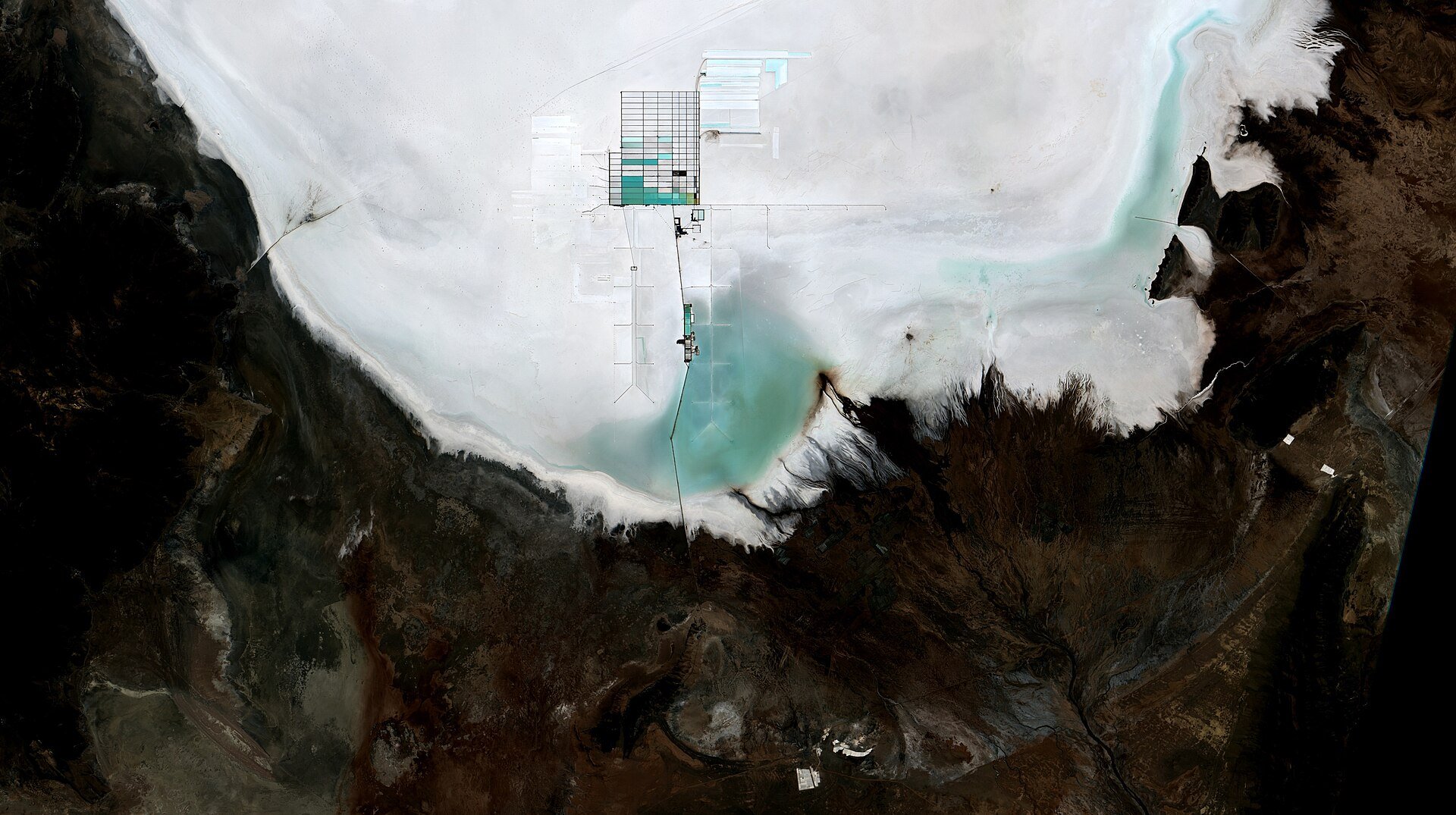
Yacimientos de Litio Bolivianos (YLB), the state lithium company, says the Salar de Uyuni holds 21 million tonnes of certified lithium resources. On 15 May 2026 YLB said it was also pursuing international certification for the Coipasa salt flat in Oruro.
On 26 November 2024 YLB signed a service contract with Hong Kong CBC Investment Limited, which YLB publishes on its website. CBC would build the plants at its own cost and risk, producing 10,000 tonnes a year from residual brine and 25,000 tonnes a year by direct lithium extraction, with later phases adding 15,000 and 25,000 tonnes.
YLB would pay CBC monthly in lithium carbonate, including a technical-service licence fixed at US$1,700 per tonne, and the term is at least 36 years for the first phase alone. The mining news site Mining.com described CBC in July 2025 as a Chinese consortium that includes the battery maker CATL.
Uranium One Group signed an association contract with YLB on 11 September 2024, in which YLB holds 51% and Uranium One 49%. Uranium One builds the plant and hands ownership to YLB at 9,000 tonnes a year and later at up to 14,000, while YLB keeps the marketing and grants Uranium One a preferential right to buy.
Mining.com reported that the two deals carry a potential US$2 billion in investment and that Uranium One is a subsidiary of Russia’s state nuclear company Rosatom. The same report described a chaotic congressional debate on the contracts in early July 2025.
Both contracts say they take legal effect only after the Legislative Assembly approves them by law, and CBC’s initial capital spending also depends on approval by Chinese authorities. President Paz said on 26 January 2026 that his government is drafting a lithium law meant to be transparent and to attract investment, and he criticised earlier contracts that nobody knows.
The Ministry of Hydrocarbons and Energy said, according to YLB, that the lithium law would be one of four sector laws, covering hydrocarbons, electricity, green energy and critical minerals. What the outsiders want is written in the contracts: CBC wants payment in lithium carbonate plus a technology fee, and Uranium One wants 49% and first call on the output.
The United States: Visas, Security and Trade
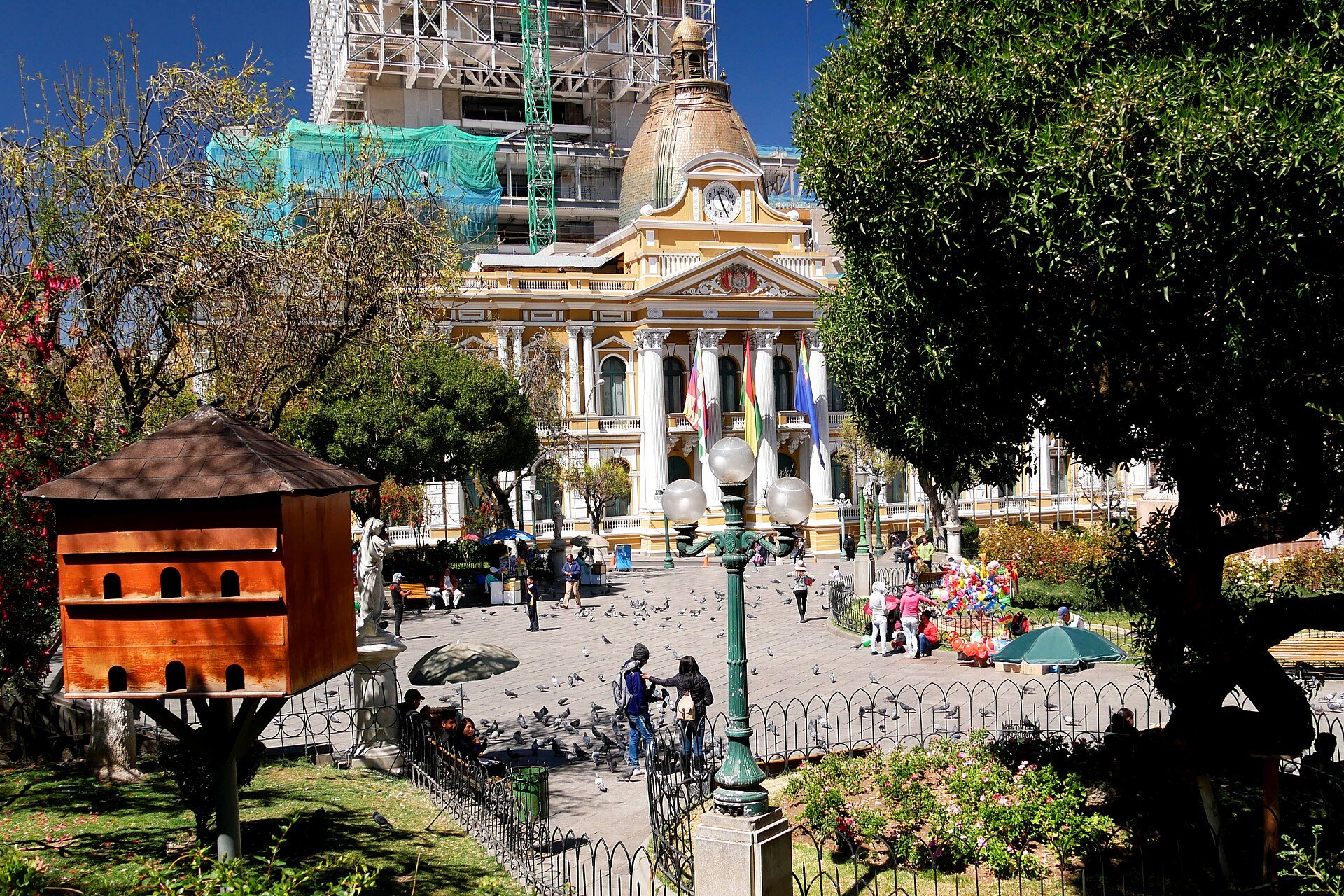
Secretary of State Marco Rubio met President Rodrigo Paz on 21 September 2026 on the sidelines of the United Nations General Assembly and called Bolivia a critically important regional partner, the State Department said. The statement welcomed Paz’s efforts to stabilise the economy through IMF support, more multilateral bank funding, and fuel, mining and energy reforms.
On 28 September 2026 the State Department announced a visa restriction policy under Section 212(a)(3)(C) of the Immigration and Nationality Act for foreign nationals who undermine elected governments through corruption or narcotrafficking. In Bolivia it covered twelve nationals and their families, declared nine more generally ineligible, and publicly designated Roger Mariaca, whom it identified as the attorney general, for significant corruption.
On 22 October 2026 the Department said it was imposing visa restrictions on 40 individuals in Bolivia and named 15, including two national deputies, former Attorney General Juan Lanchipa Ponce, prosecutors, judges and police officials. It said the policy applies “regardless of their political affiliation” and that the Trump Administration “stands with the government of Bolivia” as it works to remove criminal influence.
Presidential spokesman José Luis Gálvez said Bolivia would ask Washington for the “razones de fondo”, or underlying reasons, behind the second list, El Deber reported on 23 October 2026. He also said any Bolivian named should be investigated.
On 1 October 2026 the United States, Bolivia and 13 other governments of the Shield of the Americas issued a joint statement commending Bolivia’s action against narco-trafficking and corruption. The group says its leaders pledged on 22 September to defend elected governments against narco-terrorist networks.
Minister of Government Marco Antonio Oviedo said on 21 October 2026 that on 20 October he had agreed with American cooperation to create two elite units against narco-terrorism, in Santa Cruz and in Beni. The ministry’s note names no US agency and gives no budget.
The US Trade Representative counts an estimated US$1.6 billion of goods and services trade with Bolivia in 2025, up 3.7%. US goods exports were US$348.7 million and imports from Bolivia US$618.2 million.
Mining is the other stated interest. The Mining Ministry said that the US Embassy visited it on 10 February 2026 to strengthen dialogue and promote investment opportunities in the sector.
China and Brazil: The Trade Giants
China took 19.18% of Bolivia’s exports in 2025, worth US$1.85 billion, and supplied 24.03% of its imports, worth US$2.41 billion, the IBCE reports. Silver concentrates made up US$922 million of the sales to China, followed by zinc concentrates at US$340 million and frozen beef at US$181 million.
Lithium carbonate sales to China were only US$20.4 million in 2025, or 1.10% of the total. China is also a creditor with US$1.00 billion owed at a fixed average rate of 2.9%, and the BCB shows US$193.7 million of repayments to China and no new Chinese disbursement in the first nine months of 2026.
Brazil took 12.81% of Bolivian exports in 2025, worth US$1.24 billion, and natural gas was US$1.01 billion of that, or 81.63% of the sales to Brazil, the IBCE data show. Brazil also supplied 14.17% of Bolivia’s imports, second only to China.
Bolivia and Brazil opened the 13th joint commission on drugs in Santa Cruz on 6 May 2026, a body created in 1977, the Ministry of Government said. It added that the talks followed agreements reached at presidential and technical level.
India, at 8.52% of exports, took US$812 million of gold in a total of US$823 million, and Japan, at 7.66%, bought zinc and silver ores worth US$685 million. Peru ranked fifth, mainly as a buyer of soy products.
Fuel, Gas and the Neighbours
Fuels and lubricants were 29.80% of Bolivian imports in 2025, or US$2.99 billion, the IBCE says. Chile sold Bolivia US$620 million of diesel, Argentina US$290 million and Peru US$274 million.
Argentina supplied 8.25% of Bolivian imports in 2025, worth US$828 million, and Chile 7.70%. Argentina does not appear among Bolivia’s five biggest export markets, which were China, Brazil, India, Japan and Peru.
The Brazilian energy news site Eixos reported in December 2022 that Petrobras, Brazil’s state oil company, was the long-term firm buyer of Bolivian gas and that the state company YPFB had also signed interruptible deals with private Brazilian buyers. Official Bolivian sources checked give no current terms for those contracts.
Europe, Aid Donors and the Diaspora
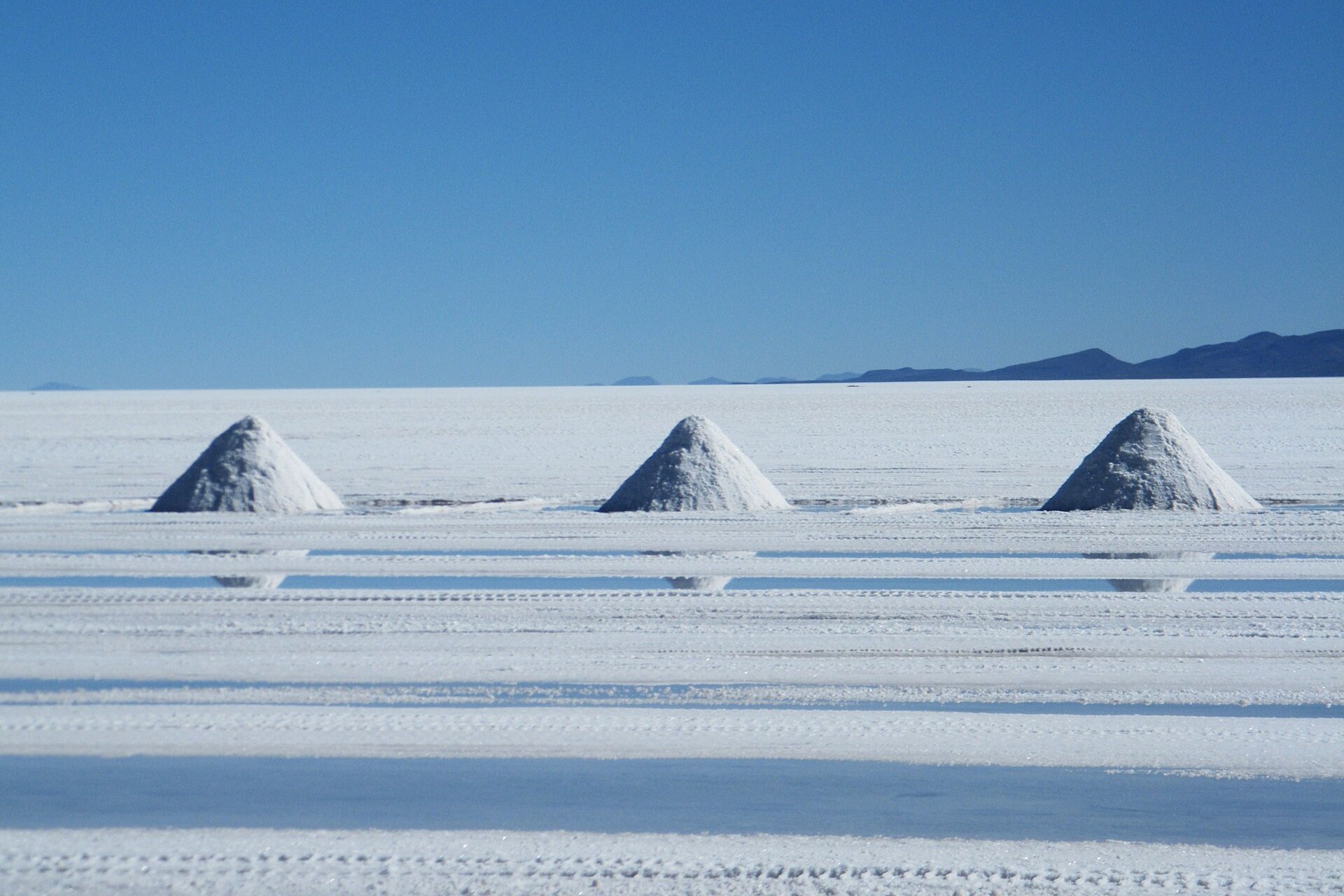
A European Union delegation visited the YLB complex on the Salar de Uyuni in early February 2026, led by Pelayo Castro of the European External Action Service, Félix Fernández Shaw of the European Commission and EU ambassador Jaume Segura, YLB said on 4 February 2026. Companies from France, Germany, Spain and Italy and European banks joined the visit.
Fernández Shaw said the bloc came with companies and banks to see how to help the project as a whole, under its Global Gateway investment strategy, according to YLB. The Spanish-language note gives no sum and names no company.
The Ministry of Government and EU ambassador Jaume Segura chaired the closing session of the BOLEU1 project committee on 19 October 2026, a €1 million (about US$1.1 million at EUR 0.8925 per US$, the 23 October 2026 close) project run by the UN Office on Drugs and Crime (UNODC) against corruption in the anti-narcotics force FELCN. The ministry said 1,128 officers, 90% of 1,300, were trained in ethics and integrity.
The Konrad Adenauer Foundation (KAS), a German political foundation, helped organise a visit by Bolivian deputies to the YLB complex on 17 May 2026, YLB said on 20 May. Germany is also owed US$91.6 million by Bolivia, which contracted a further US$38.6 million loan from it in 2026, the BCB shows.
Bolivians abroad send money home. Personal transfers into Bolivia, the balance-of-payments line that includes worker remittances, totalled US$1.23 billion in 2025 and US$551 million in the first half of 2026, preliminary BCB figures show.
Spain’s national statistics institute counted 193,275 Bolivia-born residents on 1 January 2025, of whom 114,069 were women. The BCB tables used here do not split the transfers by sending country.
What It Means for US Readers
The US Embassy in La Paz displays a Level 2 travel advisory for Bolivia, “exercise increased caution”, citing crime, unrest and health, as of 26 October 2026. The State Department’s advisory page lists the Chapare region as Do Not Travel.
US goods and services trade with Bolivia was an estimated US$1.6 billion in 2025, and US goods exports were US$348.7 million. For investors, the public markers are the BCB’s daily official rate, Bs 11.88 per US$1 for 24 to 26 October 2026, and the pace of IMF and multilateral bank disbursements.
The visa restrictions apply to named individuals and their immediate family members under Section 212(a)(3)(C), not to Bolivia as a state. Washington’s stated aims are to fight corruption and narcotrafficking and to improve Bolivia’s investment climate through IMF-backed reforms.
What Is Not Known
Whether the Legislative Assembly has approved the CBC and Uranium One contracts is not stated on the YLB contracts page, which lists only the two contract texts as of 26 October 2026. The status of the lithium law that Paz announced on 26 January 2026 is not stated in the YLB and ministry notes checked.
The State Department named 15 of the 40 people on its 22 October 2026 list, and the other 25 have not been identified. The cost, size and timetable of the two elite units announced on 21 October 2026 are not public.
The terms of Brazil’s gas purchases after 2025 are not in the official sources checked, although gas sales to Brazil reached US$1.01 billion that year. The number of Bolivians living in Argentina, Brazil and the United States is not given in those sources either.
Frequently Asked Questions
Who are the biggest foreign lenders to Bolivia?
The IDB, CAF and the World Bank hold 65.7% of Bolivia’s public external debt of US$14.1 billion on 30 September 2026, the BCB reports. The IMF approved a further loan of about US$1.9 billion on 2 October 2026.
Which foreign companies hold lithium contracts in Bolivia?
Hong Kong CBC Investment Limited (26 November 2024) and Uranium One Group (11 September 2024) signed contracts with the state firm YLB that take effect only after Legislative Assembly approval. Mining.com describes CBC as including CATL and Uranium One as a Rosatom subsidiary.
What exchange rate does Bolivia use?
The BCB set an official rate of Bs 11.88 per US$1 for 24 to 26 October 2026. The boliviano was fixed at Bs 6.96 until 26 June 2026.
What has the United States done in Bolivia in 2026?
The State Department imposed visa restrictions on 40 individuals in Bolivia under a policy announced on 28 September 2026, and it named 15 of them on 22 October. On 1 October it joined a statement by 15 governments commending Bolivia’s fight against narco-trafficking.
Is China Bolivia’s biggest trading partner?
Yes, in 2025 China took 19.18% of Bolivian exports and supplied 24.03% of imports, the IBCE reports. Brazil ranks second on both lists, and its gas purchases were worth US$1.01 billion.
How much money do Bolivians abroad send home?
Personal transfers into Bolivia totalled US$1.23 billion in 2025 and US$551 million in the first half of 2026, BCB figures show. Spain alone counted 193,275 Bolivia-born residents on 1 January 2025.
Is it safe for Americans to travel to Bolivia?
The US Embassy lists a Level 2 advisory, exercise increased caution, as of 26 October 2026. The State Department’s advisory page names the Chapare region as Do Not Travel.
Sources: IMF, Press Release 26/317, 2026-10-02; IMF, Press Release 26/268, 2026-07-29; BCB, public external debt report, 2026-09-30; BCB, official exchange rates 2026, 2026-10; BCB, resolution RD 88/2026, 2026-06-26; BCB, home page rate notice, 2026-10-26; BCB, balance of payments to Q2 2026, 2026; YLB, lithium contracts, 2024; YLB, European Union mission, 2026-02-04; YLB, resource certification, 2026-05-15; YLB, deputies’ visit, 2026-05-20; YLB, lithium law announcement, 2026-01-26; US State Department, Rubio meeting with Paz, 2026-09-21; US State Department, visa restriction policy, 2026-09-28; US State Department, joint statement, 2026-10-01; US State Department, additional visa restrictions, 2026-10-22; US Trade Representative, Bolivia, 2025; US Embassy in Bolivia, travel advisory notice, 2026-10-26; US State Department, Bolivia travel advisory, 2026; IBCE, Bolivian foreign trade figures 2025, 2026-02; INE Bolivia, 2024 census, 2026; INE Spain, residents by country of birth, 2025-01-01; World Bank, Bolivia overview, 2026-10; Ministry of Government, US cooperation, 2026-10-21; Ministry of Government, BOLEU1 project, 2026-10-19; Ministry of Government, Brazil drugs commission, 2026-05-06; Mining Ministry, US Embassy visit, 2026-02-10; El Deber, government reaction to second visa list, 2026-10-23; Mining.com, lithium contracts in Congress, 2025-07-04; Eixos, Bolivian gas and Brazil, 2022-12-13.
This article was produced by The Rio Times’ automated newsroom system. How we use AI · Report an error · Editorial responsibility: Matthias Camenzind, Editor-in-Chief
Expat Guide to Bolivia
What The Rio Times publishes for foreigners who live in or move to Bolivia.
Start here
- Best Places to Live in Bolivia for Expats in 2026
- Cost of Living La Paz 2026 — Budgets, Rent and Dollar Access
- Opening a Bank Account in Bolivia as a Foreigner
- Taxes in Bolivia for Expats: Territorial Income, Global Assets
Coming up in Bolivia
Understand Bolivia