Retire in Bolivia 2026: Residency, Tax and the Currency Change That Reset Costs
BOLIVIA · EXPAT GUIDE
Key Facts
- —The visa There is no retiree category. Retirees use the ordinary temporary residence route and declare their means.
- —The income test No figure is published. Solvency is a sworn statement backed by bank records or contracts.
- —The wait Three years of temporary residence before permanent residence. Family of Bolivians are exempt.
- —The currency The fixed rate ended on 27 June 2026. One dollar bought 11.53 bolivianos on 12 September.
- —The tax Bolivia taxes local income only. A foreign pension is outside the charge.
- —The catch Widely quoted income thresholds for Bolivia have no basis in any published rule.
For three years Bolivia ran two exchange rates and foreign pensions lived off the gap. That gap closed in June, and it changes every calculation in this guide.
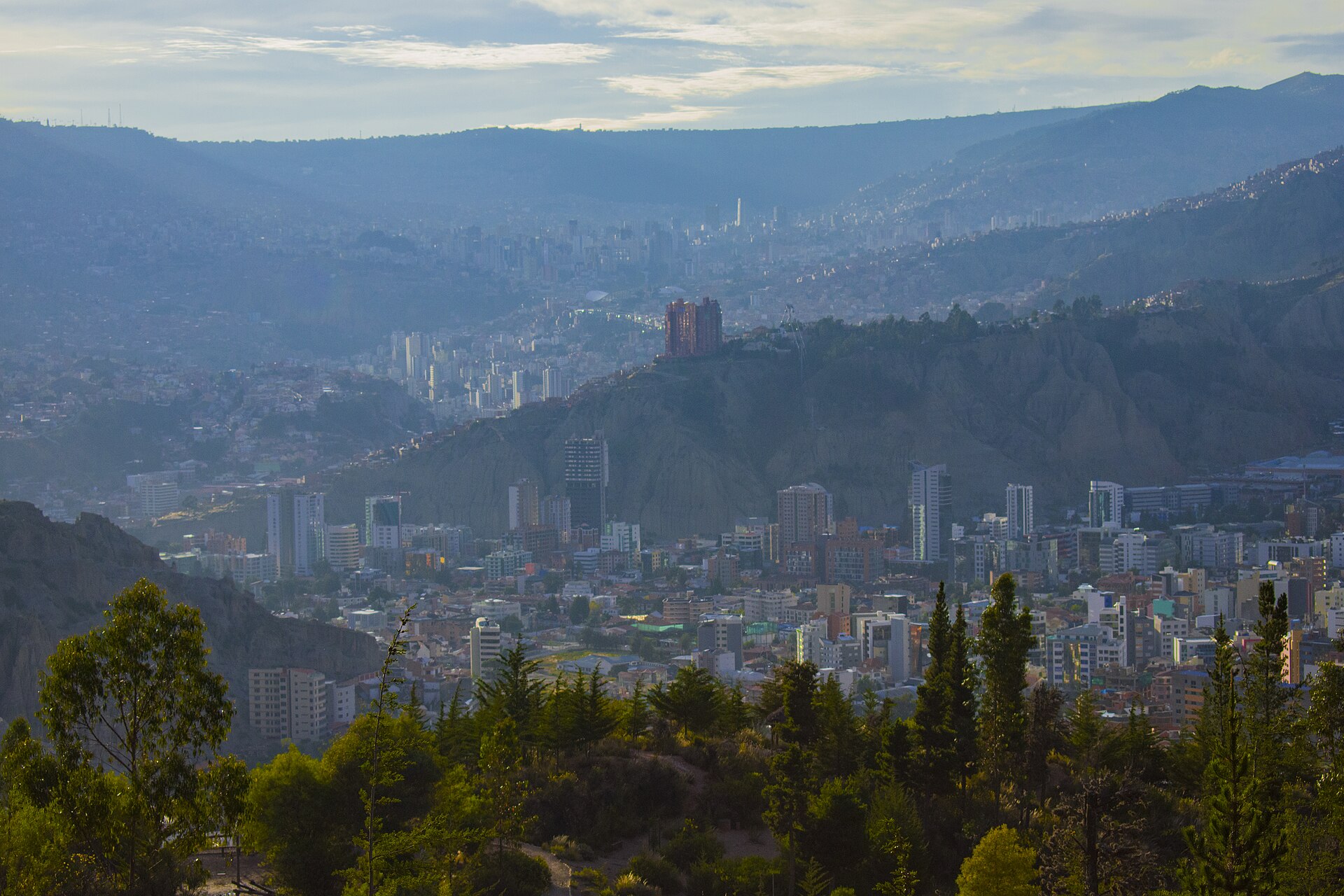
Anyone planning to retire in Bolivia should start with the exchange rate, not the visa. The country ran a fixed rate for years and abandoned it in June 2026.
Until 26 June a dollar officially bought 6.96 bolivianos. The street rate was close to double that.
On 27 June the central bank moved to a managed float. The rate opened at 9.73 bolivianos to the dollar, a devaluation of some 28 percent.
It weakened through the winter and peaked at 12.64 bolivianos to the dollar on 9 September. It then fell sharply to 11.53 on 12 September.
The important part is what happened to the street rate. It now sits within half a percent of the official one.
So the old arbitrage is finished. A foreign pension converts at one rate now, and local prices have been rising since June to catch up.
There Is No Retirement Visa
There is no dedicated way to retire in Bolivia. The words pensioner and rentista do not appear in the migration law or its regulation.
Retirees use ordinary temporary residence, usually the self-employed or independent-work subcategory. The family route is the other option.
Temporary residence runs up to three years in total. It is granted in blocks of one, two or three years.
Permanent residence requires three years of prior residence. Spouses, dependent children and dependent parents of Bolivians are exempt from that wait.
The Income Threshold That Does Not Exist
Many guides state a minimum of US$300 a month. No published instrument supports that figure.
The law asks for a sworn declaration of solvency with documents behind it. Three months of bank statements, a contract, or rental income all qualify.
Assessment is case by case at the migration directorate. Treat any specific dollar figure you read as someone’s estimate, not a rule.
For scale, the Bolivian minimum wage rose 20 percent in January 2026 to 3,300 bolivianos a month, about US$286. Nothing ties the solvency test to it.
What It Costs
Fees are set in an inflation-linked accounting unit rather than in bolivianos. That is why quoted amounts drift.
At September 2026 values, one year of temporary residence costs about 3,210 bolivianos, some US$278. Three years costs around 5,216 bolivianos, roughly US$452.
Permanent residence is about 8,359 bolivianos, near US$725. The foreigner identity card is a separate 600 bolivianos, some US$52.
The published fee sheet is several years old. Confirm the current amounts before you travel.
Tax
Tax is the strongest reason to retire in Bolivia. The country charges income arising in Bolivia and nothing else.
A foreign pension is therefore outside the charge. Becoming resident does not create a worldwide tax liability, because no such regime exists.
Local earnings fall under a 13 percent complementary tax. Two minimum wages are exempt, so 6,600 bolivianos a month or about US$572.
That tax is offset against the sales tax shown on your receipts. Many residents extinguish it entirely by collecting invoices.
Healthcare and Altitude
Emergency care is free regardless of immigration status. Resident foreigners over sixty can register with the public health scheme.
Enforcement of that entitlement is inconsistent and some foreigners report being billed anyway. Do not treat it as a substitute for insurance.
Private premiums are not published by Bolivian insurers. Any monthly figure quoted online should be treated as unsourced until a named insurer confirms it.
The main private clinics in Santa Cruz are Angel Foianini and INCOR. La Paz has Clinica del Sur and CEMES, and Cochabamba has Los Olivos.
On altitude, the common assumption is wrong. United States health guidance for 2026 records that people over fifty have slightly less risk of acute altitude illness, not more.
What matters is existing disease. Coronary artery disease, chronic lung disease, low blood oxygen and obstructive sleep apnoea all warrant medical advice before moving to La Paz.
Severe sleep apnoea is the clearest caution. Santa Cruz, at around 400 metres, removes the issue for anyone who would rather not manage it.
Living Costs in Santa Cruz
A one-bedroom flat in the centre averaged 3,312 bolivianos a month in August, about US$287. Outside the centre it was 2,185 bolivianos, some US$190.
Utilities for a mid-sized flat ran to 403 bolivianos, roughly US$35. Home internet was 227 bolivianos, about US$20.
Those dollar figures are computed at the post-float rate. At the old fixed rate the same rents would have looked almost twice as expensive.
Money, Fuel and Getting Around
International card payments were restored in April 2026 after roughly three years of restrictions. Banks must allow at least US$500 a month on debit cards abroad.
Whether banks and machines reliably hand out dollars is another matter. Assume bolivianos and keep a contingency.
Diesel shortages and the queues they cause continued into September. Fuel prices are frozen until December and rise from January 2027.
That follows a three-year agreement with the International Monetary Fund announced in September, worth some US$1.9 billion. Ending the fuel subsidy is one of its conditions.
Citizenship
Naturalisation needs more than three years of uninterrupted residence. It falls to two years with a Bolivian spouse, Bolivian children or Bolivian adoptive parents.
There is an examination on Bolivian history and culture for applicants aged twelve and over. Tax compliance and a migration record are also required.
Dual nationality is expressly allowed in both directions. Foreigners who naturalise are not obliged to renounce their first nationality.
Security and Practicalities
The United States rates Bolivia at its second of four caution levels, reissued in August 2026. The Chapare region carries the highest warning.
The routine disruption is not crime but roadblocks. Protest in Bolivia means closing roads, and that strands people for days.
Fixed broadband averages about 54 megabits per second. It is workable for video calls and weak by regional standards.
More: Latin America news in English, every day from The Rio Times.
Frequently Asked Questions
Is there a retirement visa for Bolivia?
No. Bolivia has no pensioner or rentista category, so retirees apply for ordinary temporary residence and declare their means.
How much income do I need to retire in Bolivia?
No figure is published. The law requires a sworn declaration of solvency backed by bank statements, a contract or rental income.
Is my foreign pension taxed in Bolivia?
No. Bolivia taxes only income arising in Bolivia, and residency does not create a worldwide tax liability.
What happened to the exchange rate?
The fixed rate ended on 27 June 2026. The rate moved from 6.96 to 9.73 bolivianos to the dollar overnight and reached 11.53 by 12 September.
How long until permanent residence?
Three years of prior residence. Spouses, dependent children and dependent parents of Bolivians do not have to wait.
Sources: Ley 370 de Migracion, Decreto Supremo 1923, Constitucion Politica del Estado, Ley 843, Banco Central de Bolivia, ASFI, AEMP, CDC Yellow Book, Numbeo.
This article was produced by The Rio Times’ automated newsroom system. How we use AI · Report an error
Read More from The Rio Times