Best Places to Live in Bolivia for Expats in 2026
Expats · Bolivia
For most foreigners the best places to live in Bolivia are the temperate valley cities of Cochabamba, Sucre and Tarija, with Santa Cruz for those who want heat and business and La Paz for those who can handle altitude. The country is cheap by US standards but unstable: the boliviano was floated in June 2026 and the political risk is real.
Key Facts
—Who. Americans and other foreigners weighing a move, a long stay or a retirement in Bolivia.
—What. A comparison of Cochabamba, Sucre, Tarija, Santa Cruz and La Paz on altitude, climate, daily life and risk.
—Why it matters. Bolivia ended its fixed exchange rate on 26 June 2026, and the official rate was 11.85 bolivianos per US$ on 8 October, so dollar prices now move from week to week.
—The warning. The US State Department rates Bolivia Level 2, exercise increased caution, and tells Americans not to travel to the Chapare region.
—Prediction markets. Polymarket traders put the chance that President Rodrigo Paz is out of office by 31 October 2026 at 29%, but only about US$223 has traded on that contract, so the signal is weak (Polymarket, 13 October 2026, morning ET).
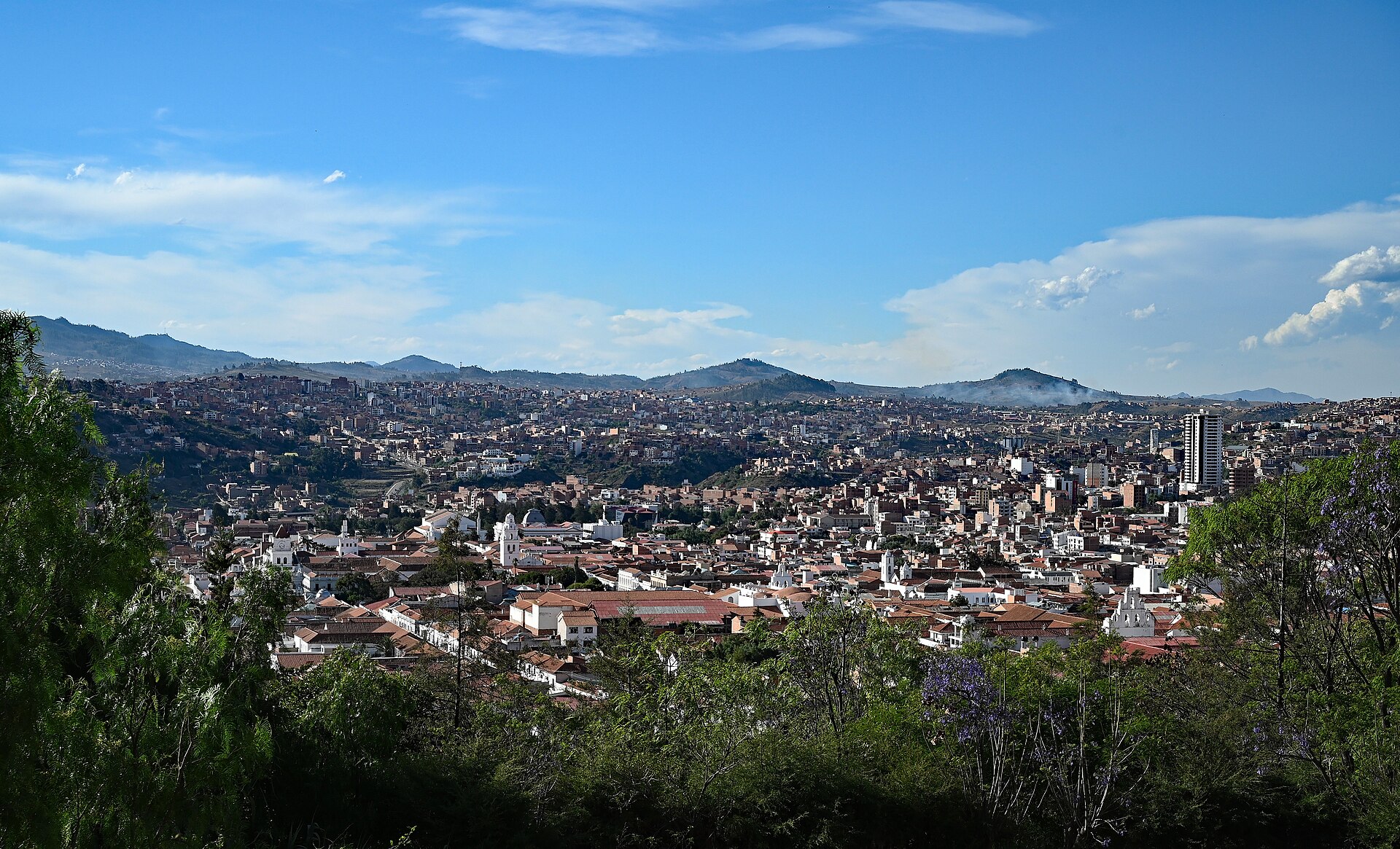
The Short Answer: Where Foreigners Settle in Bolivia
Bolivia has no single expat hub, so the right city depends on how you handle altitude, heat and risk. The valley cities of Cochabamba, Sucre and Tarija sit between about 1,900 and 2,800 metres, which is high enough to be cool but low enough for most newcomers.
Santa Cruz de la Sierra is the hot lowland business city at about 416 metres. La Paz, the seat of government, sits at about 3,650 metres (11,975 feet), where altitude sickness is common among new arrivals.
| City | Altitude (about) | Climate | Best for |
|---|---|---|---|
| Cochabamba | 2,500 m | Temperate, semi-arid | Mild weather and a big-city base |
| Sucre | 2,800 m | Cool highland | Small, historic and calm |
| Tarija | 1,900 m | Semi-arid, mild | Easier on the lungs |
| Santa Cruz | 416 m | Tropical, hot | Business and no altitude |
| La Paz | 3,650 m | Cold highland | Politics and institutions |
Pick the altitude first, because it decides how you feel for the first weeks. Then pick the city for the services you need, such as hospitals, flights and a business community.
Cochabamba: Mild Weather and a Settled Feel
Cochabamba lies at about 2,500 metres and is known as the City of Eternal Spring. It has a temperate, semi-arid climate that many foreigners find easier than La Paz.
It is the choice for people who want moderate weather and a city big enough for hospitals, shops and flights. Its department also includes the Chapare region, which the State Department tells Americans to avoid, although the city itself lies outside it.
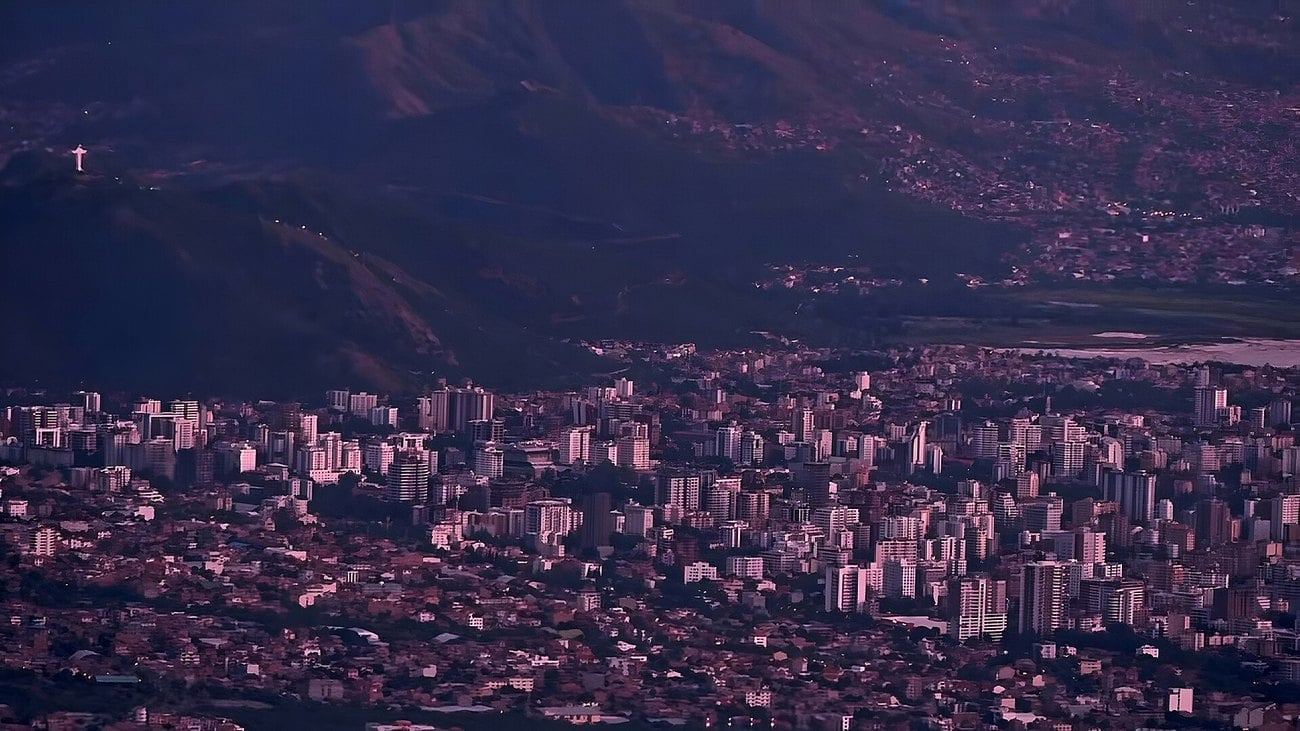
Sucre: Small, Historic and Calm
Sucre, the constitutional capital, stands at about 2,800 metres and is known for its white colonial centre. It is smaller than Cochabamba, Santa Cruz and La Paz, which suits people who value walkable streets over services.
Altitude is the main adjustment, and a smaller city usually has fewer specialists than the largest ones. Anyone with a heart or lung condition should ask a doctor before choosing it.
Tarija: Wine Country at a Lower Altitude
Tarija, in the south, lies at about 1,900 metres and has a semi-arid climate with generally mild temperatures. That makes it the easiest of the valley cities for people who struggle with altitude.
It is far from the capital and from the main business centres. Plan on long journeys or flights when you need a specialist or a government office.
Santa Cruz: Heat, Business and Fewer Altitude Worries
Santa Cruz is Bolivia’s economic powerhouse, at about 416 metres with a tropical climate. Altitude is not an issue there, which is why many newcomers who struggle in the highlands end up in the lowlands.
The risks are heat and supply problems: the city faced a fuel shortage and long queues in late September and early October 2026, and transport workers threatened a strike over the end of the diesel subsidy before suspending it. Check local conditions before you commit to a long lease.
La Paz: Dramatic, Cold and High
La Paz is the seat of government and sits at about 3,650 metres, so the air is thin and nights are cold. It is the city for people who want to be near politics, embassies and the country’s institutions.
It is also where demonstrations happen with little notice, and the State Department says to reconsider travel to La Paz because of unrest. Build a few spare days into any plan that depends on a flight or a government appointment.
The Money: A Floated Currency and Slower Inflation
Bolivia announced a flexible exchange-rate regime on 26 June 2026, ending the long-standing fixed rate. The central bank, the BCB, set the official rate at 11.85 bolivianos per US$ on 8 October.
Annual inflation was 5.70% in September 2026, the national statistics office INE reported, far below the 19.64% of January, though up from 5.02% in August. The central bank expects about 9.2% by the end of 2026, and prices in dollars can still change quickly, so treat any rent or budget figure as a snapshot.
For budgets, see our detailed guides to the cost of living in La Paz and the cost of living in Santa Cruz. Our report on September inflation has the latest price moves.
Visas and Residency
Press reports say Bolivia lifted its visa requirement for US citizens in December 2025, allowing stays of up to 90 days with a passport. Longer stays need a residence permit from the migration agency DIGEMIG.
Temporary residence can be granted for one, two or three years, and the process is document-heavy. Our guide to Bolivia residency for expats lists the permits and steps.
What Prediction Markets Say
Polymarket, a prediction market, showed a 29% chance on 13 October 2026 (07:17 ET) that President Rodrigo Paz would be out of office by 31 October, but only about US$223 has traded on that contract (US$57,044 across the whole series since May), so liquidity is very low and the price is a weak signal. These are real-money bets, not polls.
Why we show this: prediction markets turn real-money bets into a live probability that moves within minutes of the news, which is why investors, campaigns and newsrooms in the United States now follow them closely. We show them next to polls and official results, never instead of them.
What It Means for You
If you want a first stay, rent short term in Cochabamba or Sucre and keep your US bank access working before you arrive. Choose a month-to-month lease until the exchange rate and politics settle.
If altitude worries you, Santa Cruz and Tarija are the lower options. Read the latest Bolivia news before each decision, because conditions have changed quickly this year.
What Is Not Known
We could not confirm up-to-date rent levels for every city or a reliable ranking of healthcare quality by city, so we do not give them. Prices, rules and risk ratings change quickly, so confirm them with the embassy, DIGEMIG and local agents before you move.
Frequently Asked Questions
Where do most expats live in Bolivia?
There is no single hub. Foreigners settle in Cochabamba, Sucre, Tarija, Santa Cruz and La Paz, depending on climate and work.
Which Bolivian city has the mildest climate?
Cochabamba, at about 2,500 metres, is known as the City of Eternal Spring. Tarija, at about 1,900 metres, is also mild and lower.
Is altitude a problem in Bolivia?
It can be. La Paz sits at about 3,650 metres and Sucre at about 2,800 metres, while Santa Cruz is at about 416 metres, so ask a doctor if you have a heart or lung condition.
Is Bolivia safe for Americans?
The US State Department rates Bolivia Level 2, exercise increased caution, and advises against travel to the Chapare region and reconsidering travel to La Paz. Petty crime and large demonstrations are the main risks.
Do Americans need a visa for Bolivia?
Press reports say Bolivia lifted its visa requirement for US citizens in December 2025, allowing stays of up to 90 days with a passport. Longer stays need a residence permit from DIGEMIG.
What is the exchange rate in Bolivia?
The official rate was 11.85 bolivianos per US$ on 8 October 2026, after the currency was floated on 26 June. The rate now moves, so check the central bank before changing money.
Sources
- US State Department, Bolivia travel advisory (Level 2, issued 18 August 2026)
- Banco Central de Bolivia, historical exchange rates 2026
- Instituto Nacional de Estadística (INE), consumer prices, September 2026
- Polymarket, Rodrigo Paz out as President of Bolivia by…?, 13 October 2026
- Eju.tv, official and parallel dollar rates, 8 October 2026
- Bloomberg Línea and Cadena 3, reports on Bolivia lifting the visa requirement for US citizens, December 2025
This article was produced by The Rio Times’ automated newsroom system. How we use AI · Report an error · Editorial responsibility: Matthias Camenzind, Editor-in-Chief
Expat Guide to Bolivia
What The Rio Times publishes for foreigners who live in or move to Bolivia.
Start here
- Cost of Living La Paz 2026 — Budgets, Rent and Dollar Access
- Opening a Bank Account in Bolivia as a Foreigner
- Taxes in Bolivia for Expats: Territorial Income, Global Assets
- Healthcare in Bolivia for Expats: Why Private Cover Is Essential
Understand Bolivia