
GUIDES · BOLIVIA
Key Facts
- —The country Bolivia is a landlocked Andean republic of about 12.6 million people in 2025. It holds some of the largest lithium resources on Earth and was under an IMF programme in October 2026.
- —Who decides Rodrigo Paz has been president since 8 November 2025. Héctor Huanca has been foreign minister since 3 August 2026.
- —United States Washington said on 8 November 2025 that ambassador-level ties would return after 17 years. The two countries signed a critical minerals memorandum on 27 April 2026.
- —China China took 19.2% of Bolivia’s exports and supplied 24.0% of its imports in 2025. It held US$1.0 billion of Bolivia’s public external debt on 30 September 2026.
- —Lithium Two contracts with Chinese and Russian partners, valued at about US$2 billion by the research centre CEDIB, had not been ratified by the legislature in October 2026. Court challenges by Indigenous communities are still open.
- —Power Index Bolivia ranks 12th of 14 in The Rio Times Latin America Power Index, with 28.4 points (October 2026 edition).
Bolivia is small in money but large in minerals, and every major power wants something from it. This guide maps who is courting La Paz, what they offer and what they ask in return, as of October 2026.
Bolivia geopolitics has shifted sharply since President Rodrigo Paz took office on 8 November 2025. He has rebuilt a working relationship with Washington, opened a new chapter with Chile and kept Beijing and Moscow at the table.
For US readers, Bolivia matters for three reasons: lithium, a fragile economy under an IMF programme, and a government that wants American investment. Every figure below carries its date, and where there is little to report the guide says so plainly.
A Landlocked Country in a Crowded Field
The World Bank estimates Bolivia’s population at about 12.6 million in 2025. It has had no coastline since it lost its Pacific territory to Chile in the War of the Pacific of 1879 to 1884.
That loss still shapes foreign policy, because Bolivia’s overseas trade must cross neighbouring territory. It also explains why ports, pipelines and transit rights appear in almost every bilateral deal.
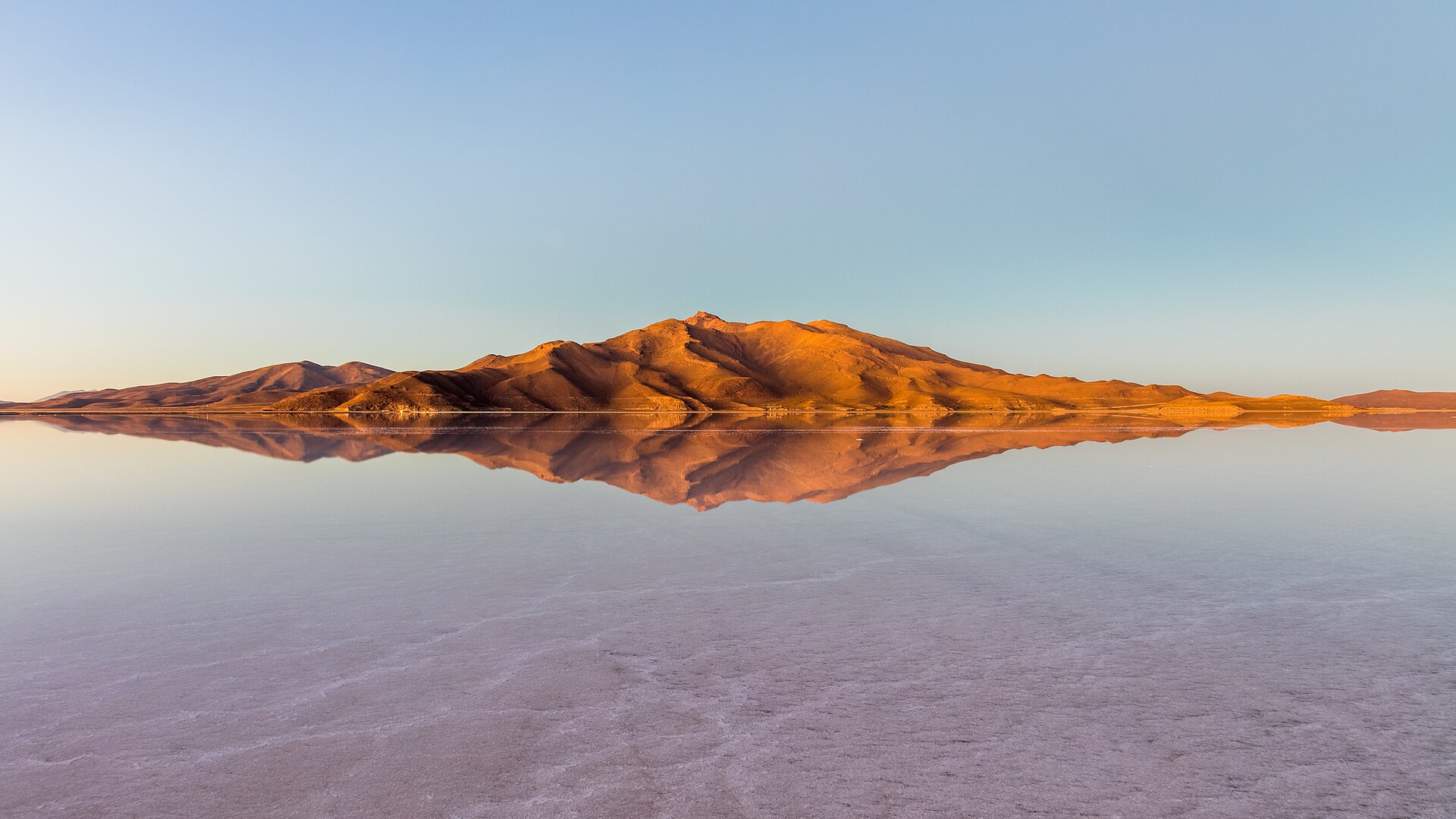
Bolivia’s strength comes from minerals. The US Geological Survey’s February 2026 summary lists about 23 million tonnes of identified lithium resources but no proven reserves.
In 2025 Bolivia exported US$9.7 billion of goods and imported US$10.0 billion, on preliminary figures from the foreign trade institute IBCE. Potosí department led exports at about US$3.6 billion, followed by Santa Cruz at about US$2.3 billion.
Bolivia also needs money. Its public external debt was US$14.1 billion on 30 September 2026, about two thirds of it owed to the Inter-American Development Bank (IDB), the regional lender CAF and the World Bank.
The United States, a Reset After 17 Years
Relations fell to chargé d’affaires level in 2008, when President Evo Morales expelled the US ambassador. On 8 November 2025, at Paz’s inauguration, Deputy Secretary of State Christopher Landau said Washington would restore ambassador-level relations.
A US government directory updated on 4 August 2026 still lists a chargé d’affaires, not an ambassador, at Bolivia’s Washington embassy. Whether and when ambassadors are named remains a question for the coming months.
In February 2026 Government Minister Marco Oviedo said the US Drug Enforcement Administration was back in Bolivia. Foreign Minister Fernando Aramayo said a full agreement was still under negotiation, Al Jazeera reported.
Morales expelled the DEA in 2008 and accused Washington of using drug enforcement as a form of pressure. When Paz floated its return in November 2025, Morales and coca growers’ unions objected.
On 27 April 2026 Mining Minister Marco Antonio Calderón and State Department official Caleb Orr signed a critical minerals memorandum in Washington. A memorandum of understanding sets out intent to attract investment and secure supply chains, not binding terms.
Washington’s economic influence also runs through the IMF, where the United States is the largest shareholder. On 29 July 2026 IMF staff and Bolivia agreed a 36-month programme worth about US$1.9 billion.
The IMF said the programme should help draw a wider package of over US$5 billion from the World Bank, the IDB and other partners. The IMF announced Executive Board approval on 2 October 2026, releasing about US$214 million at once.
Trade between the two countries is small. The United States took 4.3% of Bolivia’s exports, worth about US$415 million, and supplied 4.9% of its imports in 2025.
China, Bolivia’s Largest Trading Partner
China is the biggest single market for Bolivian goods and the biggest supplier. In 2025 it took 19.2% of exports, about US$1.85 billion, and provided 24.0% of imports, on preliminary IBCE figures.
Beijing is also a creditor, but a modest one. China held US$1.0 billion of Bolivia’s public external debt on 30 September 2026, about 7% of the total, while the IDB held 31%.
CAF, the Latin American development bank, held 23% and the World Bank 12%. The regional and multilateral lenders, not China, are Bolivia’s main creditors.
China’s biggest bet is lithium. The CBC consortium, linked to battery maker CATL and miner CMOC, signed a contract on 25 November 2024 for two lithium plants.
A CEDIB analysis puts the investment at about US$1.03 billion for plants of 10,000 and 25,000 tonnes a year. The Assembly’s economic commission approved the contract on 3 July 2025, but the full legislature has not ratified it.
Paz criticised the CBC contract as a senator and promised a review, prior consultation and a new lithium law in his campaign. As of August 2026 the state lithium company YLB said the decision lay with the Assembly.
Russia, Nuclear Ties and a Stalled Lithium Deal
Russia’s footprint is smaller than China’s. It supplied 2.2% of Bolivia’s imports in 2025 and does not appear among the country’s top dozen export markets.
Its flagship project is a nuclear technology centre in El Alto, covered by an intergovernmental agreement of 2016. Rosatom, the Russian state nuclear company, said its first facilities were commissioned in August 2022.
Irradiation centres followed around October 2023, and sanctions after the invasion of Ukraine caused long delays. That account comes from a February 2026 analysis by Sergey Sukhankin for the Jamestown Foundation, a Washington research body.
Russia’s lithium bid is held by Uranium One Group, a Rosatom subsidiary, for a 14,000-tonne carbonate plant. CEDIB puts its cost at about US$975 million, and the Assembly’s economic commission cleared it on 12 August 2025.
The full legislature has not ratified that contract either. In January 2026 Russia delivered 1,400 tonnes of grain, worth about US$2 million, as humanitarian aid.
Lithium, the Prize Behind the Contest
Indigenous communities of Nor Lípez in Potosí sued over both contracts in 2025, citing a lack of prior consultation. On 27 May 2025 a local judge suspended the Assembly’s handling of them, and on 5 June 2025 the same judge reversed that order.
A separate agro-environmental court suspended the Assembly’s handling again on 28 July 2025. By July 2026 the Constitutional Tribunal was reviewing the cases, with the rights group CEJIL arguing that the projects threaten water rights.
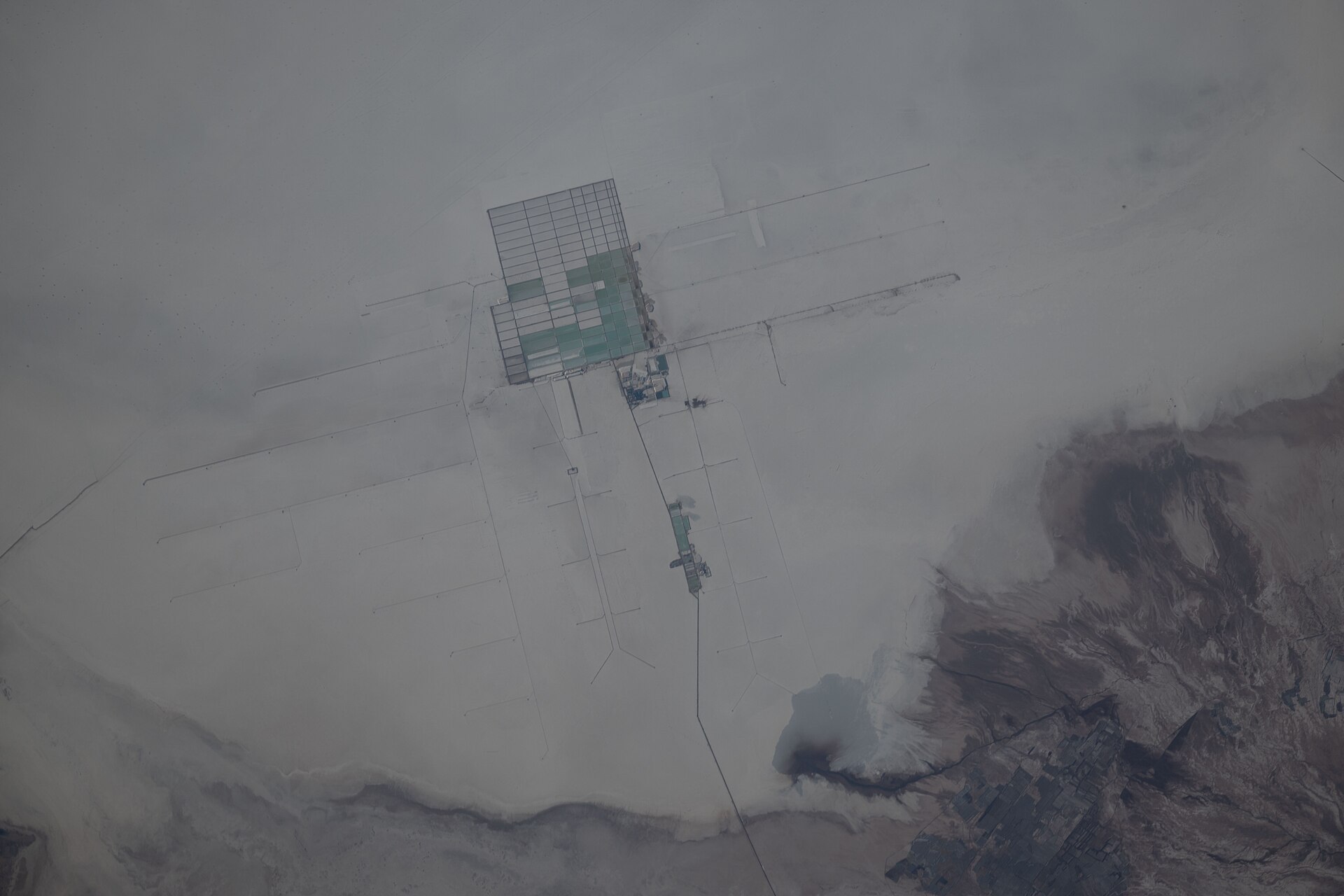
YLB’s president, Guillermo Trigo, said on 11 August 2026 that a new law will set the rules for lithium investment and “reshape” earlier deals. No law had passed by that date, and no timetable was given.
The contest therefore has a clear structure. China and Russia hold signed but unratified contracts, the United States holds a memorandum of intent, and Europe holds an offer of technical help.
In the same USGS table Argentina is listed with 28 million tonnes of identified resources and Chile with 13 million tonnes. Bolivia’s 23 million tonnes are a large pool, but the table gives no reserve figure for it.
The European Union and Germany
The EU describes itself as a long-standing donor to Bolivia, with grants flowing since 1995. Its Global Gateway programme aims to cut Bolivia’s dependence on hydrocarbons through renewable energy and lithium value chains.
The EU delegation says about six European companies have shown interest in lithium value chains in Bolivia. It calls that track risky and says it would probably not have been tried without Global Gateway support.
From 2 to 5 February 2026 an EU “Team Europe” mission visited with more than 70 institutional representatives and over 40 firms. It was led by officials of the European Commission and the EU diplomatic service.
The mission looked at critical raw materials, the energy transition and technical training, and planned a visit to the Llipi lithium plant. No signed agreements were reported at the time.
German Foreign Minister Johann Wadephul visited Bolivia on 10 November 2025 and cited the importance of lithium for Germany’s energy transition, Americas Quarterly wrote. Belgium, an EU member, took 4.1% of Bolivian exports in 2025.
Brazil, Argentina and the Mercosur Question
Brazil is Bolivia’s second-largest export market and its second-largest supplier. It took 12.8% of Bolivian exports in 2025, about US$1.24 billion, and supplied 14.2% of imports.
Argentina supplied 8.3% of Bolivia’s imports, Chile 7.7%, Peru 7.5% and Paraguay 5.1%. Peru and Colombia were also notable buyers, taking 6.0% and 5.9% of exports.
Mercosur is the South American customs union of Argentina, Brazil, Paraguay, Uruguay and Bolivia. Bolivia ratified its accession in July 2024 and has up to four years to adopt the common rules.
Paz said in October 2025 that he wanted to put Bolivia’s house in order before pressing on with Mercosur talks, Americas Quarterly reported. Paz also announced a US$3.1 billion loan from CAF, the regional lender, in early November 2025, the magazine noted.
Chile and the Sea Claim
Bolivia and Chile have had no ambassadors since 1978, after a brief restoration that began in 1975, Emol reports. Both keep consulates general in La Paz and Santiago.
Bolivia took Chile to the International Court of Justice in 2013. On 1 October 2018 the Court found that Chile had not undertaken a legal obligation to negotiate sovereign access to the Pacific.
On 16 October 2026 Presidents Paz and Kast issued a 21-point joint declaration in La Paz, published by Chile’s foreign ministry. It does not mention ambassadors or the sea claim, and it speaks only of respect for international law.
The declaration lists practical steps rather than concessions. Its main items are below.
- Terms of reference to modernise trade agreement ACE 22, the long-standing Bolivia-Chile economic complementation accord.
- A memorandum on mining cooperation and a joint declaration on energy integration, including an electrical interconnection.
- A memorandum on a fibre-optic corridor linking the Pacific and the Atlantic.
- Chile’s reaffirmed commitment to Bolivia’s free transit through Chilean territory and ports, and progress on reversing the Sica Sica to Arica oil pipeline.
Huanca wrote in September 2026 that Bolivia does not renounce its historical memory and maritime vocation. Kast invited Paz to visit Chile in 2027, and Paz accepted.
BRICS, Asia, the Gulf and Beyond
Bolivia became a partner country of BRICS, a bloc that began with Brazil, Russia, India and China, under the previous government. Partner status falls short of full membership.
Paz has called BRICS a good trade group. No decision to leave or to seek full membership had been announced by November 2025, Americas Quarterly noted.
India is Bolivia’s third-largest export market, taking 8.5% of goods in 2025, worth about US$823 million. No Indian lithium or energy contract with the Paz government has been confirmed.
Japan took 7.7% of Bolivian exports, South Korea 4.2% and Australia 3.6%. The United Arab Emirates took 3.7%, about US$352 million.
Saudi Arabia and Bolivia signed a memorandum on political consultations at the UN on 24 September 2024. No Gulf investment in Bolivian lithium or gas has been confirmed.
Turkey marked 75 years of diplomatic ties with Bolivia and eight other Latin American countries in a statement of 21 September 2025. It said its trade with the region had grown fifteenfold under its Latin America action plan, but gave no Bolivia-specific figure.
Israeli Foreign Minister Gideon Sa’ar thanked Bolivia on 2 December 2025 for granting visa-free entry to Israeli travellers. It is one more sign that La Paz has moved away from the foreign policy of the previous government.
As president-elect Paz held a video call with Venezuelan opposition leader María Corina Machado. The leaders of Venezuela and Cuba were not invited to his inauguration, Americas Quarterly reported.
Cuba is a minor trade partner. Bolivia’s exports to Cuba were under US$1 million from January to August 2025.
What It Means for US Readers
For investors, the IMF programme and the US minerals memorandum are early signals. Lithium contracts remain unratified, a new law is pending and court cases are open.
Bolivia is a small trading partner for America, at about US$415 million of Bolivian exports in 2025. Geopolitics here is about minerals, drugs and security rather than market share.
For travellers and expats, the State Department’s Level 2 advisory of 18 August 2026 cites crime, unrest and health risks. It also carries a Level 4 do-not-travel warning for Chapare Province.
What Is Not Known
It is not known whether Washington and La Paz will name ambassadors, or when. The legal framework for the DEA’s work in Bolivia was still under negotiation in February 2026.
It is not known whether the Assembly will ratify the CBC and Uranium One contracts, or whether the Constitutional Tribunal will rule first. Nor is it clear when the new lithium law will pass or what it will say.
Bolivia’s long-term choice on BRICS, and its timetable for adopting Mercosur rules, are undecided. No figure for US, European or Gulf investment in Bolivian lithium has been confirmed.
Connected Coverage
Frequently Asked Questions
Who is Bolivia’s most important foreign partner?
China is Bolivia’s largest trading partner, taking 19.2% of exports and supplying 24.0% of imports in 2025. Brazil is second, with 12.8% of exports and 14.2% of imports.
Has the United States restored ambassadors in Bolivia?
The United States said on 8 November 2025 that it would restore ambassador-level relations after 17 years. A US government directory updated on 4 August 2026 still listed a chargé d’affaires at Bolivia’s embassy in Washington.
What happened to the Chinese and Russian lithium contracts?
Two contracts with China’s CBC consortium and Russia’s Uranium One Group, valued at about US$2 billion by the research centre CEDIB, have not been ratified by the Assembly. Court challenges by Indigenous communities were under review by the Constitutional Tribunal in July 2026.
Is Bolivia a member of BRICS?
Bolivia is a BRICS partner country, a status it received under the previous government, not a full member. No change had been announced by November 2025.
Does Bolivia still claim access to the sea?
Yes. The International Court of Justice ruled on 1 October 2018 that Chile had no obligation to negotiate it, yet Foreign Minister Héctor Huanca wrote in September 2026 that Bolivia keeps its maritime vocation.
What is the IMF programme for Bolivia?
It is a 36-month Extended Fund Facility worth about US$1.9 billion, agreed at staff level on 29 July 2026. The IMF announced Executive Board approval on 2 October 2026, releasing about US$214 million at once.
Sources: IMF, press release 26/268, 29 July 2026; Banco Central de Bolivia, public external debt at 30 September 2026; IBCE, Comercio exterior de Bolivia 2025; IBCE, exportaciones por país de destino 2025; US Geological Survey, Mineral Commodity Summaries 2026, lithium; World Bank, population of Bolivia; US State Department, Bolivia travel advisory, 18 August 2026; CIA, World Leaders: Bolivia, updated 4 August 2026; Chile Foreign Ministry, joint declaration of 16 October 2026; International Court of Justice, case 153; EU delegation to Bolivia, Global Gateway; Mercosur, member countries; Bolivian Foreign Ministry, memorandum with Saudi Arabia, 24 September 2024; Turkish Foreign Ministry, statement No. 192, 21 September 2025. Also from Eju.tv (cabinet change, 3 August 2026; EU mission, February 2026; YLB, 11 August 2026), Última Hora (8 November 2025), Correo del Sur, Opinión (12 July 2026), Emol (18 September 2026), Nodal (28 April 2026), CEDIB (2025 lithium contracts), Swissinfo (June 2025), Americas Quarterly (11 November 2025), Jamestown Foundation (February 2026), Jewish News Syndicate (2 December 2025) and Al Jazeera (25 February 2026). All accessed 17 October 2026.
This article was produced by The Rio Times’ automated newsroom system. How we use AI · Report an error · Editorial responsibility: Matthias Camenzind, Editor-in-Chief
Expat Guide to Bolivia
What The Rio Times publishes for foreigners who live in or move to Bolivia.
Start here
- Best Places to Live in Bolivia for Expats in 2026
- Cost of Living La Paz 2026 — Budgets, Rent and Dollar Access
- Opening a Bank Account in Bolivia as a Foreigner
- Taxes in Bolivia for Expats: Territorial Income, Global Assets
Understand Bolivia