BOLIVIA · CULTURE
Key Facts
- —The country Bolivia counted 11,365,333 people in its 2024 census, and about 69% of them live in cities.
- —Heritage Nine Bolivian traditions sit on UNESCO’s heritage list, from the Oruro Carnival (2008) to the Virgen of Guadalupe festivity in Sucre (2025).
- —Film La hija cóndor was chosen on 7 September 2026 as Bolivia’s entry for the 2027 Oscars and Goya awards.
- —Music Quechua singer Luzmila Carpio is the 2026 WOMEX Professional Excellence Award recipient, and Los Kjarkas had Spanish concerts listed for October 2026.
- —Culture policy Bolivia has had no stand-alone culture ministry since 2025, and Decree 5675 of August 2026 moved culture into a vice-ministry at the Foreign Ministry.
- —Football Bolivia lost 2-1 to Iraq on 31 March 2026 in the World Cup playoff and missed the tournament.
- —Power Index Bolivia ranks 12th of 14 in The Rio Times Latin America Power Index, with 28.4 points (October 2026 edition).
Bolivia culture runs from a UNESCO-listed carnival in the Andes to a film chosen in September 2026 for the 2027 Oscars race. For US readers, this guide names the artists, writers, athletes and institutions behind the culture of 11.4 million Bolivians in October 2026.

Bolivia Culture in Numbers
Bolivia counted 11,365,333 people in its 2024 census, according to the final results the national statistics institute (INE) presented on 28 August 2025. About 69% of them, or 7.85 million, live in cities.
Much of Bolivia culture began in Andean villages and mining towns and now plays out in large cities. The Oruro Carnival and the Gran Poder parade in La Paz are two examples.
President Rodrigo Paz said on 7 October 2026 that he does not trust the 2024 census figures. He asked the statistics institute to review them and raised the possibility of a new census.
The Festivals That Set the Calendar
Bolivia has nine elements on UNESCO’s Representative List of the Intangible Cultural Heritage of Humanity. The newest, added in 2025, is the festivity of the Virgen of Guadalupe in Sucre.
The Carnival of Oruro, a mining city at 3,700 metres, was proclaimed by UNESCO in 2001 and listed in 2008. UNESCO says more than 28,000 dancers and 10,000 musicians in about 50 groups take part in its procession.
The carnival lasts ten days, and its main event is the entrada, a procession along a four-kilometre route. The diablada, or devil dance, once honoured the Uru god Tiw and is now its main dance.
The Gran Poder in La Paz is a procession of dance brotherhoods, called fraternities, that UNESCO listed in 2019. It was planned for May 2026 but was postponed at least twice because of road blockades, El Deber reported.
It was scheduled for Saturday 1 August 2026, with 74 fraternities on a route of about 8 kilometres. Columnist Lupe Cajías wrote in Correo del Sur on 9 October 2026 that the April to July blockade caused losses and postponed the festival.
The other listed traditions are the Alasita rituals in La Paz (2017), the Ch’utillos festival in Potosí (2023) and the Grand Festival of Tarija (2021). They also include Pujllay and Ayarichi (2014), the Ichapekene Piesta of San Ignacio de Moxos (2012) and the Andean worldview of the Kallawaya healers (2008).

Music From the Andes to Global Stages
Los Kjarkas are a folk group founded by the Hermosa brothers in Capinota, in the Cochabamba region. Promoters say they have more than 500 compositions and nearly 50 recordings.
A lambada-rhythm adaptation of their song “Llorando se fue” became a worldwide hit and carried Andean music to new audiences. The band had concerts listed in Bilbao on 9 October 2026 and at Madrid’s Palacio Vistalegre on 15 October 2026.
Luzmila Carpio is a Quechua singer from the Bolivian Altiplano who has performed and recorded for six decades. She has released more than 25 albums and worked with Miriam Makeba, Cesária Évora and Susana Baca.
WOMEX, the annual world-music showcase, named her the 2026 recipient of its Professional Excellence Award. The 2026 edition runs from 21 to 25 October in Las Palmas de Gran Canaria, Spain, according to Visión 360.
Writers and the Book Fair
The Feria Internacional del Libro de La Paz held its 30th edition from 29 July to 9 August 2026. The regional book chamber, the Cámara Departamental del Libro de La Paz, created the fair in 1996 and runs it, Los Tiempos reported.
The 2026 fair listed about 150 stands and about 400 activities, with Peru as guest country of honour. The 2025 edition drew 104,486 visitors.
More than 30 writers from 19 countries were announced as guests, including Mexican novelist Guillermo Arriaga. Three guests were listed from the United States: Gisela Heffes, Linda Farthing and Thomas Becker.
Eight Bolivian authors were on the guest list, according to eju.tv. They were Giovanna Rivero, Maximiliano Barrientos, Juan Claudio Lechín, Diego Mattos, Liliana Colanzi, Edmundo Paz Soldán, Valeria Sandi and Gabriel Casazola.
Paz Soldán and Arriaga were named the special guests of the fair. Both Bolivian and foreign writers took part in talks, workshops and conversations.
Film, Television and the Press
Utama, directed by Alejandro Loayza Grisi and spoken in Quechua and Spanish, won a jury prize at the 2022 Sundance Film Festival. It follows an elderly Quechua couple who refuse to leave their land during a severe drought.
Actress Luisa Quispe played the wife opposite her real-life husband José Calcina. She died in early July 2026, and Opinión reported that Loayza announced her death.
Kiro Russo, born in La Paz in 1984, won the Special Jury Prize in Venice’s Orizzonti section in September 2021 for El gran movimiento. That film and his first feature, Viejo calavera, have won more than 70 awards between them.
La hija cóndor, by Cochabamba director Álvaro Olmos Torrico, is Bolivia’s entry for the 99th Oscars and the 41st Goya awards. The Bolivian Filmmakers Association (Asocine) chose it on 7 September 2026, and nominees will be announced in January 2027.
Los Tiempos reported that the film had won 14 international awards by 31 March 2026, including best film at Kinolatino in Brussels. It opened in Bolivian cinemas on 7 May 2026.
The same paper placed it beside Bolivian landmarks such as La nación clandestina, El gran movimiento and Utama. The film is a co-production of Bolivia, Peru and Uruguay.
The Cinemateca Boliviana, the national film archive, marked its 50th anniversary at the 2026 book fair. The state film agency Adecine now answers to the Foreign Ministry under the August 2026 decree.
Bolivia ranked 91st of 180 countries in Reporters Without Borders’ 2026 press freedom index, up from 93rd in 2025. The group says the government controls many newspapers and private media ownership is highly concentrated.
It also notes that Supreme Decree 181 of 2009 lets the state withhold advertising from outlets it considers dishonest or offensive.
The papers El Deber, Los Tiempos, Opinión, Correo del Sur and La Razón carry much of the cultural coverage cited here. So do the television channel Red Uno and the state news agency ABI.
Visual Arts and the Cholet Boom
Freddy Mamani Silvestre is the architect behind the cholets, bright neo-Andean buildings that stand out across El Alto, the city above La Paz. The Fondation Cartier in Paris holds in its collection a ballroom he created for its 2018 show Southern Geometries.
A new version of the ballroom was shown in the Fondation Cartier’s Exposition Générale, which opened in Paris on 25 October 2025. That exhibition ran until 23 August 2026.
His El Alto facades combine large glass panels with stepped, geometric Andean patterns in strong colours. The cholets have become one of the best-known images of modern Aymara El Alto.

Sport Icons and the Cholita Spirit
Bolivia’s football team beat Brazil 1-0 in El Alto on 9 September 2025, thanks to a penalty from Miguel Terceros. The win put Bolivia seventh in South American qualifying and into the intercontinental playoff.
Bolivia then came from behind to beat Suriname 2-1 in Mexico on 26 March 2026. Terceros scored a penalty in the 79th minute.
Iraq won the final tie 2-1 on 31 March 2026 and took the last World Cup place. Bolivia’s goal came from Moisés Paniagua.
The Cholitas Escaladoras are Aymara women who climb in the traditional pollera skirt. Mountain guide Lita González founded the group, and in 2015 eleven women began climbing together at the foot of Huayna Potosí.
They have since climbed Sajama, Illimani, Parinacota and Aconcagua, and González spoke at UNESCO’s Paris headquarters in June 2025. Her line there was that climbing in a pollera “changed my life”.
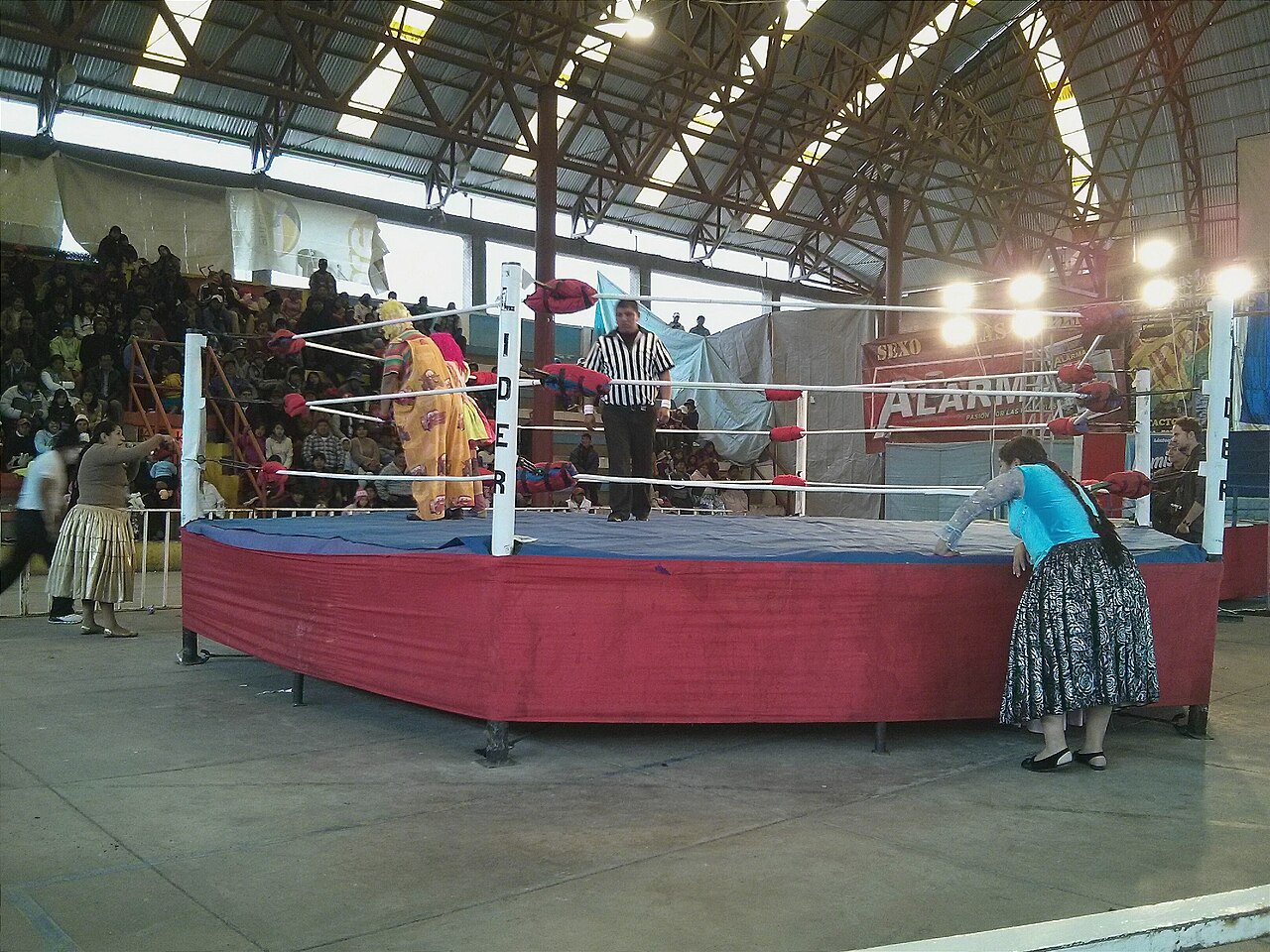
Cholita wrestling began in El Alto in the early 2000s, and Aymara women wrestle in wide skirts and shawls.
Los Andes reported weekend shows for local and foreign audiences at the Mamani Mamani Cultural Centre in La Paz. A troupe led by Veraluz Cortez, known in the ring as Yolanda La Amorosa, performs there.
Red Uno reported that La Paz wrestlers drew a full house at the Expocruz trade fair in Santa Cruz on 22 September 2026. Together with the climbers, they have turned the pollera into a stage and summit costume.
Who Funds and Governs Culture
Culture lost its own ministry in November 2025, when Decree 5488 merged it with tourism, gastronomy and folklore. Minister Cinthya Yáñez resigned on 8 July 2026.
Decree 5669 named Héctor Francisco Huanca interim minister on 3 August 2026, El País of Tarija reported.
On 3 August 2026 President Paz announced that the ministry would end and be replaced by a national agency. Decree 5675, reported by La Tercera on 14 August 2026, cut the cabinet from 14 ministries to 12.
The decree instead placed a Vice-Ministry of Sustainable Tourism and Cultures inside the Foreign Ministry. The National Symphony Orchestra, the Tiwanaku archaeological site and the film agency Adecine now fall under its oversight.
Vice-Minister Andrés Zaratti resigned, citing “irreparable damage” to cultural management, according to Cajías. Bolivia has never passed a framework culture law, and a 2015 draft never became law, El País reported.
Executed culture spending in 2025 was about 41% of the 2018 peak, according to the same report. In 2020, when an earlier government closed the ministry, the collective ARTErias Urbanas called it a heritage of all Bolivians.
What It Means for US Readers
Bolivia culture is easiest to reach from the United States through film and travel. La hija cóndor is in the 2027 Oscar race, and Los Tiempos reported premieres in New York and Los Angeles.
Travellers should know that road blockades from April to July 2026 postponed major festivals. Check the State Department’s current advisory and local news before booking trips around Oruro, La Paz or Sucre.
Three guests from the United States joined the 2026 La Paz book fair, according to eju.tv.
Readers who follow Latin American politics can pair this guide with our pillars on who holds power in Bolivia and who runs Bolivia’s economy.
Culture also sits inside Bolivia’s wider story, including the US visa sanctions on Bolivian judges. For the country overview, see the Rio Times Bolivia hub.
What Is Not Known
It is not clear whether the national agency that Paz announced on 3 August 2026 will exist. Cajías wrote on 9 October 2026 that it was unclear who runs culture day to day.
No one yet knows whether La hija cóndor will reach the Oscar shortlist, because nominees come in January 2027. It is also open whether the government will revise the 2024 census after Paz questioned it on 7 October 2026.
Bolivia’s statistics institute publishes no separate figure for artistic and cultural employment, according to El País.
Frequently Asked Questions
What is the most famous festival in Bolivia?
The Carnival of Oruro is the best known. UNESCO listed it in 2008 and says more than 28,000 dancers and 10,000 musicians join its procession.
How many Bolivian traditions are on the UNESCO heritage list?
Nine are on the Representative List of the Intangible Cultural Heritage of Humanity. The latest, added in 2025, is the Virgen of Guadalupe festivity in Sucre.
Which Bolivian film is in the 2027 Oscar race?
La hija cóndor, directed by Álvaro Olmos Torrico, was chosen on 7 September 2026 as Bolivia’s entry. Nominees will be announced in January 2027.
Who are Bolivia’s best-known musicians?
Los Kjarkas, a folk group from the Cochabamba region, and Quechua singer Luzmila Carpio are two leading names. Carpio is the recipient of WOMEX’s 2026 Professional Excellence Award.
Does Bolivia still have a culture ministry?
No stand-alone ministry exists since 2025, and Decree 5675 of August 2026 ended the merged ministry. Culture now sits in a Vice-Ministry of Sustainable Tourism and Cultures inside the Foreign Ministry.
What are cholets?
Cholets are bright neo-Andean buildings in El Alto, popularised by architect Freddy Mamani. Their facades use stepped, geometric Andean patterns in strong colours.
Did Bolivia qualify for the 2026 World Cup?
No. Bolivia beat Suriname 2-1 in the playoff, then lost 2-1 to Iraq on 31 March 2026.
Sources: UNESCO, Carnival of Oruro, 2008; UNESCO, Bolivia elements on the heritage lists, 2025; El Deber, Gran Poder 2026 entry order, 31 July 2026; Correo del Sur, La institucionalidad cultural, en el limbo, 9 October 2026; El País (Tarija), Los embates a la cultura en Bolivia, 9 August 2026; La Tercera, Bolivia decree eliminating ministries, 14 August 2026; Los Tiempos, La hija cóndor for Oscars and Goya 2027, 8 September 2026; Los Tiempos, La hija cóndor awards, 31 March 2026; Los Tiempos, 30 years of FIL La Paz, 26 July 2026; eju.tv, FIL La Paz guest writers, 9 July 2026; Opinión, death of actress Luisa Quispe, 3 July 2026; Infobae, Utama at Sundance, 29 January 2022; Prensa Libre, Kiro Russo, 28 November 2022; Visión 360, Luzmila Carpio WOMEX 26, 30 September 2026; Ocio Latino, Los Kjarkas in Madrid, October 2026; Kulturklik, Los Kjarkas in Bilbao, 9 October 2026; Reporters Without Borders, Bolivia, 2026; El Deber, Bolivia 2024 census final results, 28 August 2025; Red Uno, President Paz on the census, 7 October 2026; Caretas, Bolivia 1-0 Brazil, 10 September 2025; NTN24, Bolivia v Suriname playoff, 26 March 2026; El Mercurio, Bolivia v Iraq, 1 April 2026; UNESCO, Cholitas Escaladoras, 4 June 2025; Los Andes, cholita wrestling, 12 November 2025; Red Uno, Cholitas Luchadoras at Expocruz, 22 September 2026; Urgente.bo, Freddy Mamani Silvestre, 26 February 2026; Fondation Cartier, Freddy Mamani, 2025.
This article was produced by The Rio Times’ automated newsroom system. How we use AI · Report an error · Editorial responsibility: Matthias Camenzind, Editor-in-Chief
Expat Guide to Bolivia
What The Rio Times publishes for foreigners who live in or move to Bolivia.
Start here
- Best Places to Live in Bolivia for Expats in 2026
- Cost of Living La Paz 2026 — Budgets, Rent and Dollar Access
- Opening a Bank Account in Bolivia as a Foreigner
- Taxes in Bolivia for Expats: Territorial Income, Global Assets
Coming up in Bolivia
Understand Bolivia
Rotate for Best Experience
This report is optimized for landscape viewing. Rotate your phone for the full experience.
You've reached your free article limit
Subscribe to The Rio Times for unlimited access to our news, expat and nomad guides and market intelligence on Latin America and Africa.
Expat Guide to Bolivia
What The Rio Times publishes for foreigners who live in or move to Bolivia.
Start here
- Best Places to Live in Bolivia for Expats in 2026
- Cost of Living La Paz 2026 — Budgets, Rent and Dollar Access
- Opening a Bank Account in Bolivia as a Foreigner
- Taxes in Bolivia for Expats: Territorial Income, Global Assets
Coming up in Bolivia
Understand Bolivia