Argentina Religion Beliefs and Church Attendance Today

ARGENTINA · RELIGION
Key Facts
- —The basics Argentina is still a majority Catholic country. Only 62.9% of adults called themselves Catholic in the 2019 national survey of religious beliefs, down from 76.5% in 2008.
- —Why it matters Pope Leo XIV, the first pope from the United States, visits Argentina from Sunday, 8 November to Wednesday, 11 November 2026. His stops are Buenos Aires, Córdoba and Luján, in the homeland of the late Pope Francis.
- —The numbers As of October 2026, the latest national survey (2019) shows 18.9% of adults with no religion and 15.3% evangelical. Weekly attendance at religious services fell from 23.8% in 2008 to 17.4% in 2019.
- —Who is who Leo XIV, born in Chicago in 1955, leads the Catholic Church, and libertarian President Javier Milei decreed a holiday for his visit. The constitution obliges the federal government to support Catholic worship.
- —What to watch Monday, 9 November 2026 is a national holiday for the papal visit. Extra holidays fall on 10 November in Córdoba province and Buenos Aires city and on 11 November in Buenos Aires province.
- —Power Index Argentina ranks 4th of 14 in The Rio Times Latin America Power Index, with 61.2 points (October 2026 edition).
- —What it means for you US visitors meet a mostly secular daily life shaped by Catholic holidays. Banks and public offices close on Monday, 9 November 2026, and papal events will likely draw large crowds.
Argentina gave the world Pope Francis, yet fewer Argentines than ever go to Mass. The country now looks Catholic on paper and increasingly private, evangelical or secular in practice.
Argentina religion today is a story of a Catholic majority that is shrinking, believing and staying home. In the 2019 national survey of religious beliefs, 62.9% of adults said they were Catholic, down from 76.5% in 2008.
Evangelical churches and people with no religion are filling the gap, while weekly attendance at services keeps falling. That matters for US visitors now, because Pope Leo XIV, the first American pope, arrives on Sunday, 8 November 2026.
Argentina Religion in Numbers
The best data come from the 2019 Second National Survey on Religious Beliefs and Attitudes by CONICET, the state science agency. Its researchers interviewed 2,421 adults in towns of at least 5,000 people across the country.
Catholics made up 62.9% of the sample, evangelical Christians 15.3% and people without religion 18.9%. Jehovah’s Witnesses and Mormons together accounted for 1.4%, and other religions for 1.2%.
The trend is long. Census figures quoted by the same survey put the Catholic share at 93.6% in 1947 and 90.05% in 1960.
Geography matters too. The northwest is the most Catholic region, while Greater Buenos Aires and Patagonia have the most people with no religion.
In the Buenos Aires metropolitan area, about one adult in four says they have no religion. Evangelicals are strongest in Patagonia and in the northeast, the region bordering Paraguay and Brazil.
Education shapes belief as well. The share of people without religion rises with schooling, while evangelicals are more common among adults with little formal education.
How Many Argentines Go to Mass
Church attendance is the clearest sign of change. In 2019, 6.2% of adults attended a service daily or several times a week, and 11.2% went once a week.
Another 9.6% went once or twice a month, which brings regular monthly attendance to 27.0%. By contrast, 43.3% went only on special occasions such as weddings, baptisms and funerals, and 29.6% never went.
Weekly attendance or more fell from 23.8% in 2008 to 17.4% in 2019. Over the same years, the share who attend only on special occasions rose from 37.7% to 43.3%.
Catholics and evangelicals behave very differently. Among Catholics, 12.9% attend Mass at least weekly, while 53.9% go only on special occasions.
Among evangelicals, 53.1% attend services at least once a week. That gap explains why evangelical congregations often look full while many parish churches look half empty on a normal Sunday.
Belief has not fallen in the same way. In the 2019 survey, 82.5% of adults said they believe in Jesus Christ and 81.9% in God.
The researchers call this individuation: people prefer to relate to God on their own and pray privately. Belief in "energy" reached 76.0%, almost level with belief in the Holy Spirit at 75.9%.

The Catholic Church and the State
Argentina is not a secular state in the French or American sense. Article 2 of the national constitution says the federal government "sostiene", or supports, Roman Catholic worship.
At the same time, Article 14 guarantees every inhabitant the right to profess their religion freely. Non-Catholic groups worship openly, and Jewish and Muslim holy days are protected by law.
Public opinion has moved away from the official link. Most Argentines in the 2019 survey said the state should not fund religious groups and should not support the Catholic Church alone.
Most also rejected confessional religious teaching in state schools. Those findings put public opinion at odds with the constitutional link to the Church.
Between 2008 and 2019, the share who called abortion a woman’s right doubled. Catholics and the non-religious showed higher acceptance of diverse families and same-sex marriage.
Evangelicals are the main exception. They are the group most opposed to abortion and most attached to a traditional family model with fixed gender roles.
Evangelicals and the Rise of the Non-Religious
Evangelical Christianity is the fastest-growing faith in Argentina. Its share rose from 9.0% in 2008 to 15.3% in 2019, and Pentecostal churches alone accounted for 13% of adults.
Pentecostal congregations make up most of the evangelical total. Evangelicals are also the most committed churchgoers, with a majority attending services every week.
Young adults drive both trends. Older Argentines remain more Catholic, while evangelical and non-religious identities grow among younger generations.
The non-religious group is diverse. Of the 18.9% without religion, 9.7% said simply none, 6.0% called themselves atheists and 3.2% agnostics.
Many of them still hold spiritual beliefs. Among the non-religious, 71.6% said they believe in energy, 55.2% in luck and 36.8% in UFOs.
Folk Saints, the Virgin and Other Faiths
Popular religion fills the space between the Church and private belief. In 2019, 64.5% of adults said they believe in the Virgin Mary and 58.1% in the saints.
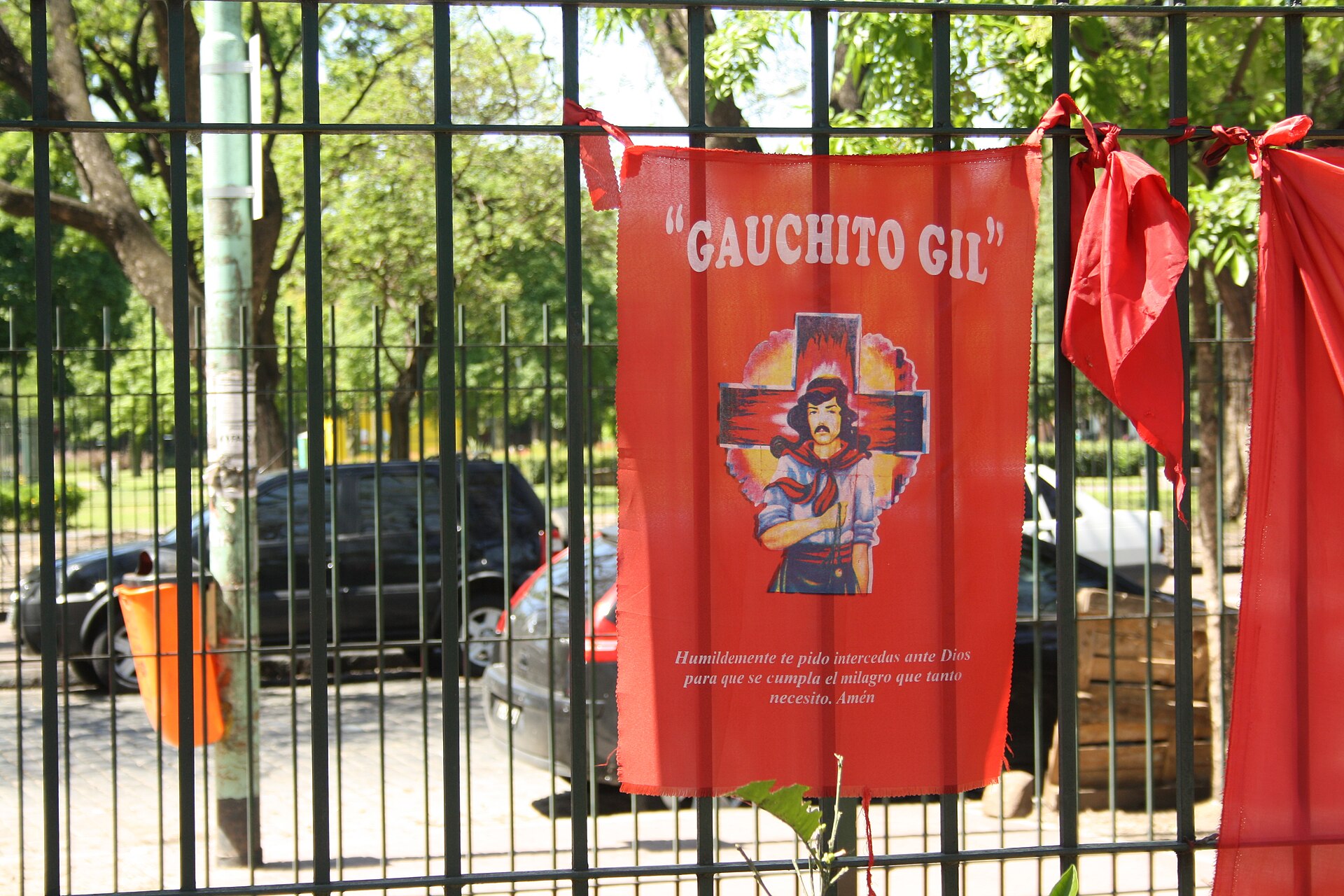
The best known folk saint is the Gauchito Gil, a rural figure honoured with red flags and roadside shrines. The Church does not recognise him as a saint, but many Argentines ask him for favours.
Argentina also has long-established Jewish and Muslim communities, concentrated in Buenos Aires. Law 27,399 makes Rosh Hashana, Yom Kippur and the first two and last two days of Passover non-working days for Jewish residents.
The same law gives Muslim residents the Islamic New Year, Eid al-Fitr and Eid al-Adha as non-working days. Workers who take those days off keep their full pay, which matters for foreign firms hiring locally.
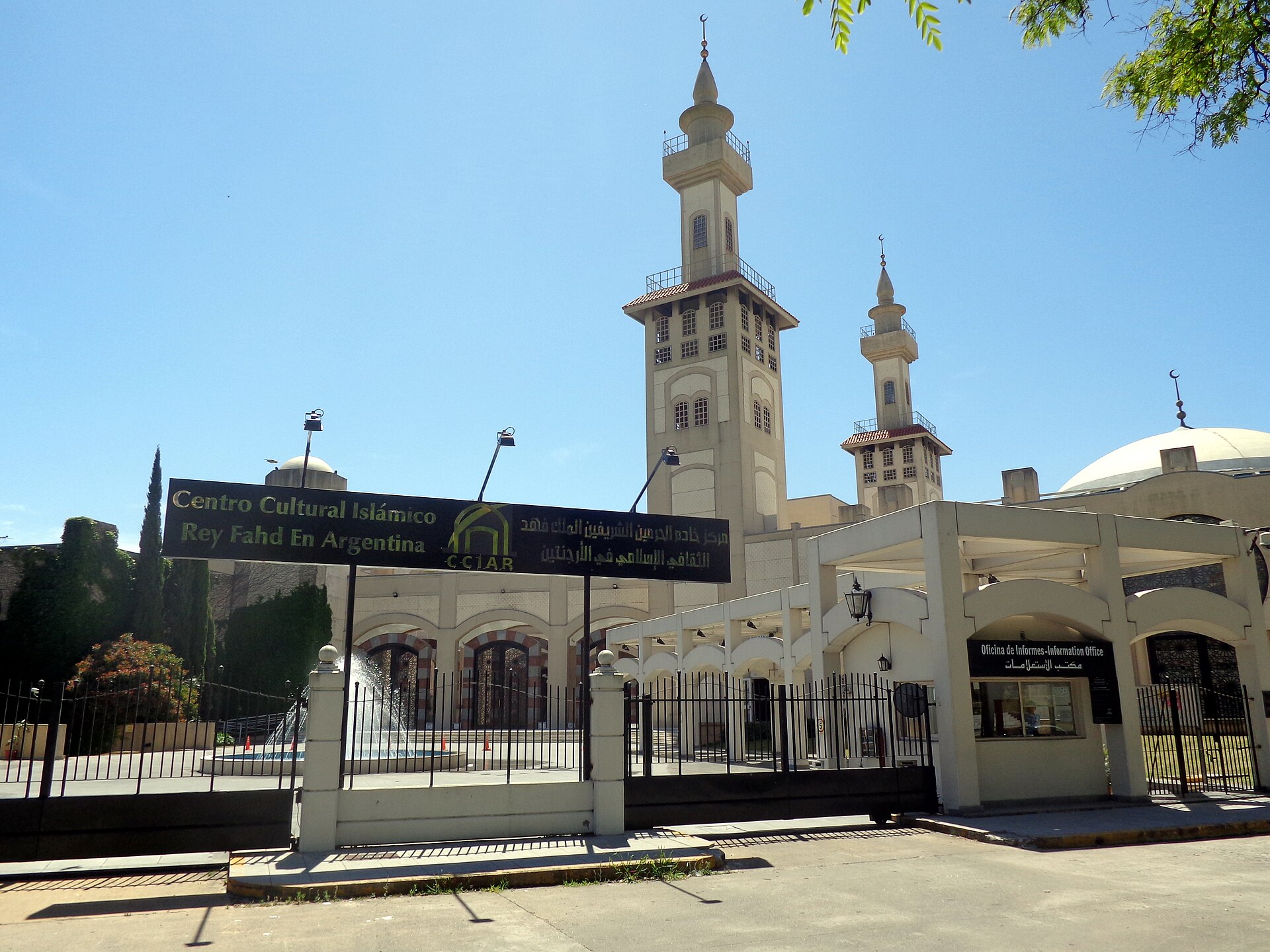
In the Palermo district, the King Fahd Islamic Cultural Centre houses a mosque with two minarets and a dome. Visitors should contact the centre before arriving with a group.
Faith, Holidays and the Papal Visit
The Catholic calendar still shapes the year. Law 27,399 lists Good Friday, the Immaculate Conception on 8 December and Christmas on 25 December as national holidays.
Holy Thursday is listed separately as a non-working day rather than a full holiday. Carnival Monday and Tuesday are also fixed national holidays, timed by the Christian calendar before Lent.
The papal visit adds new dates in 2026. Decree 1103/2026, published in the Boletín Oficial on Monday, 28 September, makes Monday, 9 November a national holiday.
Tuesday, 10 November is a holiday only in Córdoba province and the city of Buenos Aires. Wednesday, 11 November is a holiday only in Buenos Aires province.
The Holy See Press Office announced the trip on 5 August 2026. Leo XIV visits Uruguay from 6 to 8 November, Argentina from 8 to 11 November and Peru until 17 November.
The Argentine leg covers Buenos Aires, Córdoba and Luján, home of Our Lady of Luján, the national patroness. Pope Francis, born in Buenos Aires, never returned home during his twelve years as pope.
Francis did not transform religious life at home, according to the 2019 survey. Its authors found that the election of an Argentine pope did not significantly change practice, and that he divided opinion.
The decree also creates a temporary unit in the cabinet chief’s office to run the visit. It shows how much weight the state still gives the Church.
Visiting Churches in Buenos Aires
The Metropolitan Cathedral on Plaza de Mayo is the natural first stop for US visitors. It shares the square with the Casa Rosada, the presidential palace, and is the seat of the Archdiocese of Buenos Aires.
Luján lies west of Buenos Aires, within day-trip distance of the capital. Its neo-Gothic basilica houses the image of Our Lady of Luján, the national patroness.
Dress modestly, keep voices low and avoid flash photography during services. Mass is said in Spanish, and a short greeting with a nod is enough when you meet a priest or parish volunteer.
Evangelical services are generally open to visitors, and many feature live music. Synagogues and mosques are best visited by arrangement, so contact them before you go.
What It Means for US Readers
For travellers, the main point is timing. Banks and public offices close nationwide on Monday, 9 November 2026, and papal events will likely draw large crowds.
For investors and employers, religious holidays are fixed costs in planning. Jewish and Muslim staff are entitled by law to paid holy days, and Catholic holidays shape the national calendar.
For Catholics in the US, the trip is a chance to see the first American pope in Latin America. For everyone else, Argentina offers a lesson in how a Catholic country can turn quietly secular.
Read more on the country in the Argentina hub, Argentina’s history explained and the key figures of Argentine culture. Background on the population is in Argentina’s population and ethnic groups, and on the president in who Javier Milei is.
For the holiday decree, see Argentina’s holiday for the pope. Practical living tips are on the Buenos Aires city page.
What Is Not Known
The national census does not ask about religion, so the 2019 CONICET survey remains the latest nationwide benchmark. No newer survey of the same size was found as of October 2026.
It is not known how the death of Pope Francis in 2025 or the visit of Leo XIV will change attendance. Crowd sizes and the full list of road closures for November have not been confirmed.
Frequently Asked Questions
What is the main religion in Argentina?
Roman Catholicism is the main religion, with 62.9% of adults identifying as Catholic in the 2019 national survey. Evangelicals made up 15.3% and people with no religion 18.9%.
How many Argentines go to church every week?
In 2019, 17.4% of adults attended a religious service at least once a week, down from 23.8% in 2008. Among Catholics alone, weekly Mass attendance was 12.9%.
Is Argentina a secular state?
Not fully, because Article 2 of the constitution says the federal government supports Roman Catholic worship. Article 14 still guarantees every inhabitant freedom of religion.
When does Pope Leo XIV visit Argentina?
Pope Leo XIV visits Argentina from Sunday, 8 November to Wednesday, 11 November 2026. He will stop in Buenos Aires, Córdoba and Luján.
Which religious holidays close businesses in Argentina?
Good Friday, the Immaculate Conception on 8 December and Christmas are national holidays, while Holy Thursday is a non-working day. Monday, 9 November 2026 is also a national holiday for the papal visit.
Can tourists visit churches in Buenos Aires?
Yes, the Metropolitan Cathedral on Plaza de Mayo and most parish churches are open to visitors outside services. Dress modestly and avoid flash photography during Mass.
Sources: CEIL CONICET, Second National Survey on Religious Beliefs and Attitudes (2019); Constitution of Argentina, InfoLEG; Boletín Oficial, Decree 1103/2026; Holy See Press Office, 5 August 2026; Vatican, biography of Leo XIV; Vatican News; Law 27,399 on national holidays, InfoLEG (all accessed 14 October 2026).
This article was produced by The Rio Times’ automated newsroom system. How we use AI · Report an error · Editorial responsibility: Matthias Camenzind, Editor-in-Chief
Expat Guide to Argentina
What The Rio Times publishes for foreigners who live in or move to Argentina.
Start here
- Argentina Security and Crime Explained 2026
- Argentina Money Guide for US Travelers
- Best Places to Live in Argentina for Expats 2026
- How to Open a Bank Account in Argentina as a Foreigner in 2026: Tax ID, Dollars, Apps
City guides
Coming up in Argentina
- Los Pericos Gran Rex Concert Set for 22 October 2026 in Argentina 22 Oct
- Mendoza Things to Do, 9 to 31 October 2026 31 Oct
- Mar del Plata Film Festival 2026: 5 to 15 November 5 Nov
- Primavera Sound Buenos Aires 2026: Gorillaz, The Strokes to Headline 28 Nov
Understand Argentina