Tunisia Explained 2026: Saied’s Republic, the Economy, Migration Pressure and What to Watch

GUIDES · COUNTRY
Tunisia latest: Tunisia news — latest coverage · Tunisia Holds Rate at 7% as Energy Imports Jump 28%
Key Facts
- Capital Tunis. The four governorates of Greater Tunis hold about 2.9 million people, roughly a quarter of the population.
- Population 11.99 million on 1 January 2026, according to the National Institute of Statistics. Most people live along the eastern coast.
- Currency The Tunisian dinar. The central bank’s average interbank rate was 2.96 dinars to the US dollar on 24 September 2026.
- Languages Arabic is the official language, and Tunisian Arabic is spoken daily. French remains common in business, banking and higher education.
- Economy About US$57.5 billion in 2025. Growth was 2.3 percent in the second quarter of 2026. Almost three-quarters of exports go to the European Union.
- Government A presidential republic under the 2022 constitution. Kaïs Saïed has been president since October 2019 and was re-elected in October 2024.
Tunisia explained for newcomers: how the birthplace of the Arab Spring became a one-man presidential system. Also what keeps its economy going, and why Europe watches its coast.
Tunisia explained starts with a reversal. This small, well-educated Mediterranean country built North Africa’s only democracy after 2011.
After 2021 it handed almost all power to one president. Its economy is stable on paper and tight in daily life.
What kind of country is this?
Tunisia is the smallest country in the Maghreb, the region of north-west Africa that also includes Algeria and Morocco. It covers 163,610 square kilometres, slightly less than the US state of Florida.
It lies between Algeria and Libya, with a long Mediterranean coastline facing Sicily. The north is green, with wheat fields, olive groves and cork forests.
The centre is steppe. The south is the Sahara.
People and money are concentrated on the eastern coast, from Tunis through Sousse and Monastir to Sfax. The official population count is 11.99 million on 1 January 2026.
The governorate of Tunis alone holds 1.07 million, and Sfax almost as many. The interior regions near the Algerian border are poorer and emptier.
That gap between coast and interior has driven almost every uprising in modern Tunisian history. France ruled Tunisia as a protectorate from 1881 until independence on 20 March 1956.
Habib Bourguiba, the first president, built a secular state and gave women rights unusual in the Arab world at the time. Zine El Abidine Ben Ali took over in 1987 and ran a police state for 23 years.
In December 2010, a street vendor’s protest in the interior town of Sidi Bouzid set off a national revolt. Ben Ali fled on 14 January 2011.
The uprising inspired the wider Arab Spring. Tunisia then wrote a democratic constitution in 2014, and a group of its civil-society bodies won the 2015 Nobel Peace Prize.
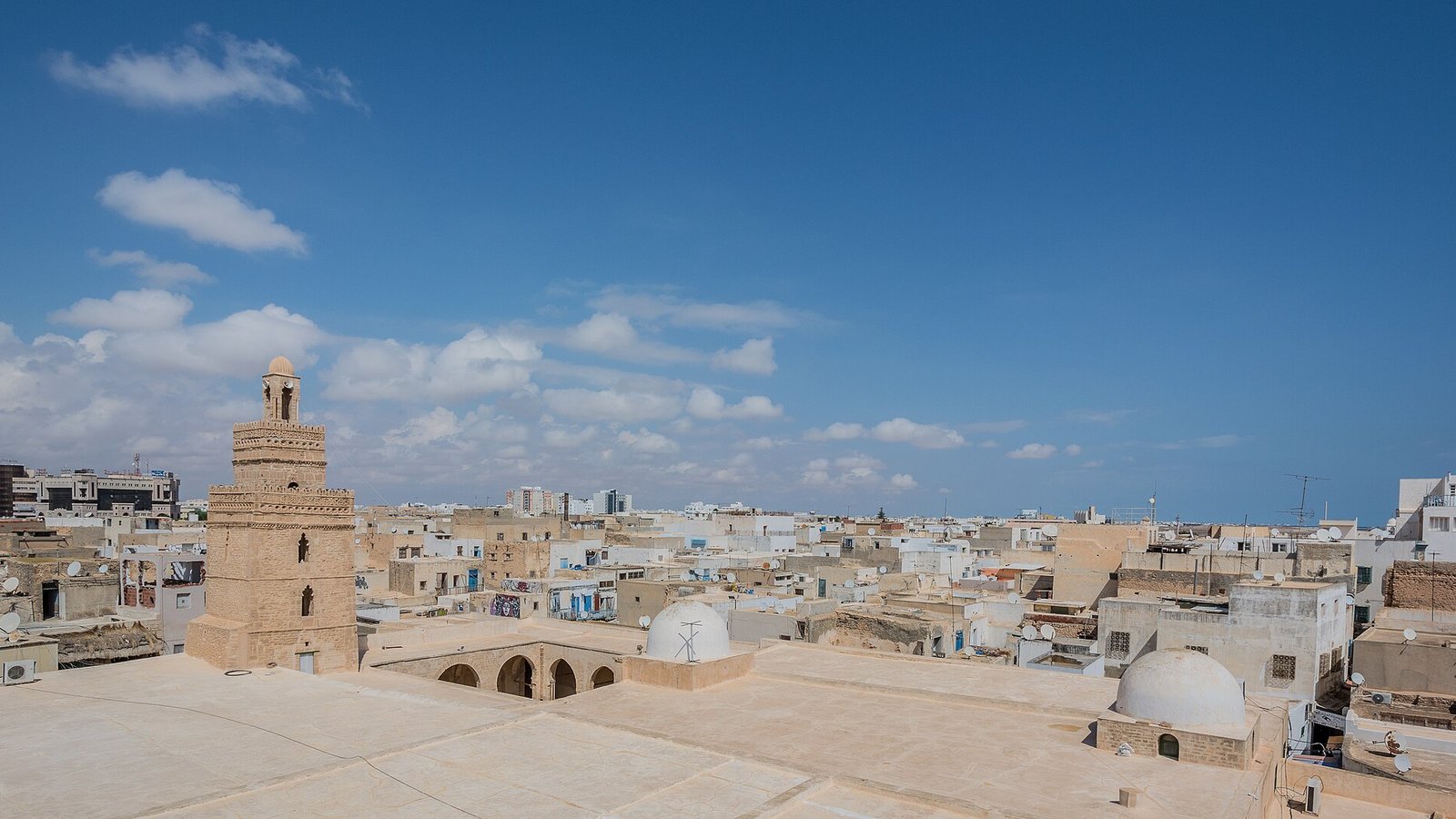
Who runs Tunisia and how
President Kaïs Saïed runs Tunisia. He is a former constitutional law professor with no party.
He was elected in 2019 with 72.7 percent in the run-off, on a promise to fight corruption and a discredited political class. On 25 July 2021 he suspended parliament and dismissed the prime minister, citing an emergency article of the 2014 constitution.
His critics called it a coup. His supporters saw an end to years of gridlock.
He dissolved parliament in March 2022 and ruled by decree.A new constitution followed, approved by referendum on 25 July 2022.
About 30.5 percent of registered voters took part. The text gives the president the power to appoint and dismiss the prime minister and ministers.
The government answers to him, not to parliament. Parliament now has two chambers.
The Assembly of the Representatives of the People has 161 members. They were elected in 2022 and 2023 as individuals, not on party lists.
Turnout was about 11 percent. A second chamber, the National Council of Regions and Districts, has 77 indirectly chosen members and first sat in 2024.
In the presidential election of 6 October 2024, Saïed won 90.7 percent on a turnout of 28.8 percent. Only two rivals were allowed on the ballot.
One of them, Ayachi Zammel, was jailed during the campaign. Saïed’s second five-year term runs to 2029.
The prime minister, formally the head of government, is Sarra Zaafrani Zenzri, appointed on 21 March 2025. She is the fourth head of government Saïed has named since 2021.
Ministers change often and rarely set policy on their own. Fethi Zouhair Nouri has governed the Central Bank of Tunisia (BCT) since early 2024.
The big opposition parties are sidelined. Rached Ghannouchi, leader of the Islamist-rooted Ennahda party, has been in prison since April 2023.
A 2022 decree on “false information” has been used to prosecute journalists, lawyers and critics over their words.
How the economy works
Tunisia produced about US$57.5 billion of goods and services in 2025, according to the World Bank. That is about US$4,660 per person, or roughly US$12.75 a day.
It is a lower-middle-income country, well educated but short of good jobs. The economy is tied to Europe.
In 2025, 73.2 percent of Tunisia’s exports went to the European Union, according to the European Commission. Machinery and electrical goods, such as wiring for European car factories, made up 44.5 percent of what the EU bought.
Clothing and textiles made up 18.9 percent. Olive oil, dates and phosphates are the other big earners.
Phosphate, mined around Gafsa in the interior, was once a pillar of exports. Output has been weak for years because of strikes, protests and under-investment.
Mining output fell 9.6 percent in the second quarter of 2026. Tourism and money sent home from abroad are the main sources of foreign currency after exports.
Tourism receipts rose 6.5 percent to 8.1 billion dinars (about US$2.7 billion) in 2025, central bank data show. Tunisians working abroad sent home slightly more: 8.8 billion dinars (about US$3.0 billion).
Growth is slow. The economy grew 2.3 percent in the second quarter of 2026, and 2.4 percent in the first half, the statistics institute says.
The International Monetary Fund (IMF) expects 2.1 percent for the full year. That is too slow to bring unemployment down quickly.
Unemployment was 14.9 percent in the second quarter of 2026, or about one in seven people in the labour force. Among young graduates it is far higher.
Many leave for Europe or the Gulf. Prices are rising again.
Inflation reached 5.4 percent in August 2026, up from 5.1 percent in July. Food prices rose 7.8 percent.
The central bank cut its key rate to 7 percent in January 2026 and has held it there since. The state borrows mostly at home.
Public debt was 82.2 percent of economic output in 2025, according to the World Bank. In 2022 Tunisia agreed a US$1.9 billion loan with IMF staff, but the IMF board never approved it.
Saïed rejected the conditions, including subsidy cuts, as foreign dictates. Without an IMF deal, international lenders stay cautious.
The state leans on local banks and the central bank instead. That crowds out private companies, which struggle to borrow.
The country still repays its foreign debts on time, including a €700 million (about US$796 million) bond that matured in July 2026. Energy is a weak point.
About 98 percent of Tunisia’s electricity is made from natural gas, much of it imported from Algeria. The state utility, STEG, had debts of 7.36 billion dinars (about US$2.5 billion) by June 2026.
Drought has also forced night-time water cuts in many areas since 2023.
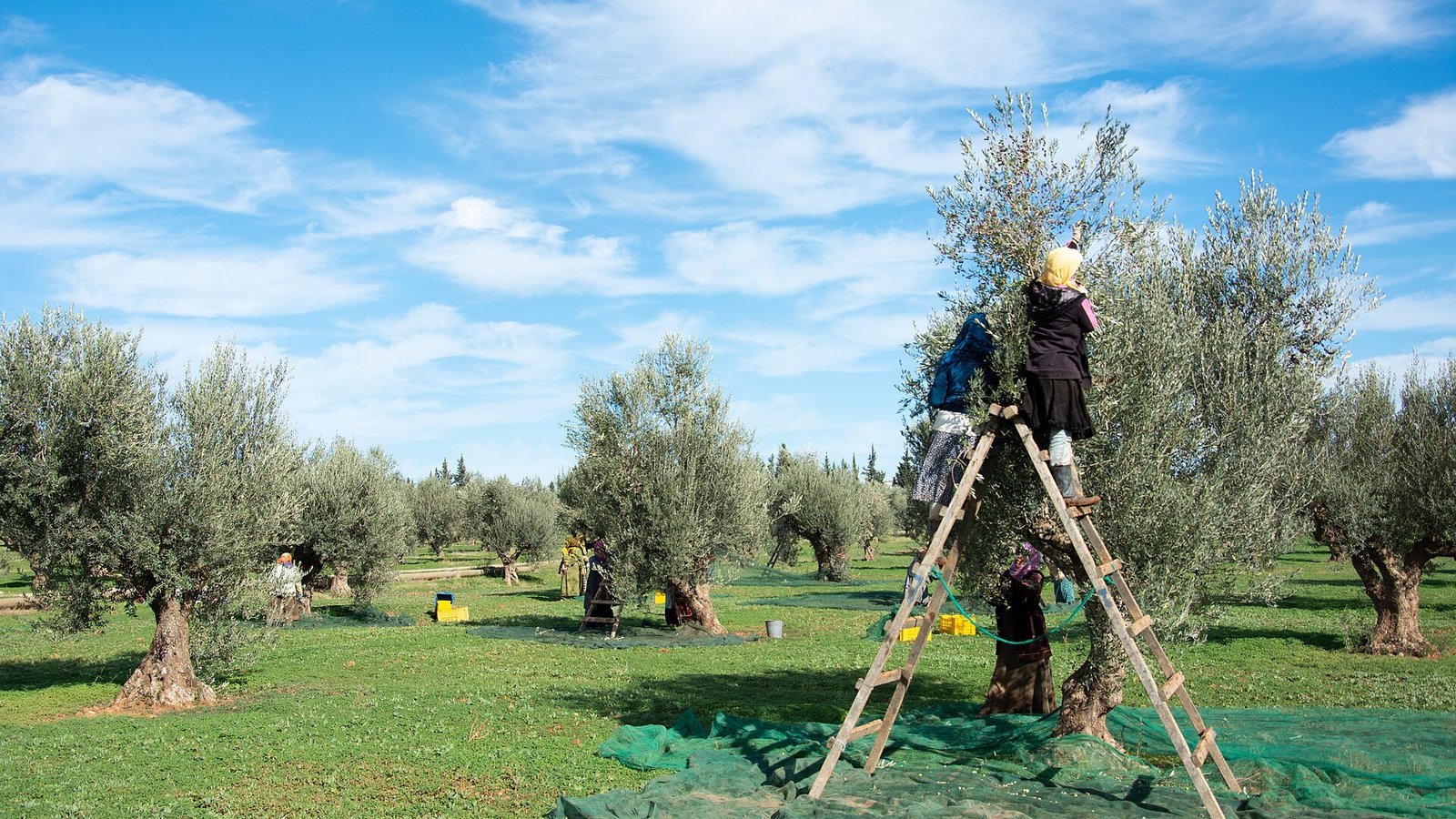
What is happening right now
As of September 2026, Tunisia is coming out of a hard summer. Temperatures neared 50 degrees Celsius, and electricity demand hit a record 6,000 megawatts on 21 July.
Rolling power and water cuts, some lasting more than ten hours, hit Greater Tunis, Sfax and the interior. Street protests in August demanded Saïed’s resignation.
On 26 August he told ministers the cuts were deliberate sabotage. He named no one, and no evidence has been published.
The courts have closed the largest political case of the Saïed era. On 3 September 2026 the Court of Cassation rejected all 46 appeals in the so-called conspiracy against state security case.
That made final the convictions of 34 politicians, lawyers and critics. The heaviest sentence, 45 years, went to businessman Kamel Ltaief.
Pressure on civil society is widening. On 2 September 2026 Human Rights Watch said at least 20 associations had been suspended.
It counted 47 people prosecuted over work with non-governmental groups. On 4 September police arrested Mohamed Yousfi, editor of the investigative outlet Al Qatiba.
Migration is the issue Europe cares about most. In 2023, 97,667 people reached Italy by sea from Tunisia, more than from any other country.
In July that year the EU and Tunisia signed a memorandum of understanding, a political agreement rather than a treaty. The EU pledged €105 million (about US$119 million) for border management and €150 million (about US$171 million) in budget support.
A further €900 million (about US$1.02 billion) in loans depended on an IMF deal and has not been paid. Crossings then fell sharply.
Arrivals in Italy from Tunisia dropped to 19,460 in 2024 and 4,841 in 2025, Italian interior ministry figures show. That does not mean fewer people are trying to reach Europe.
Arrivals in Italy from Libya rose to 58,408 in 2025. Rights groups accuse Tunisian forces of abuses against migrants, and Tunisia now calls the deal unbalanced.
The tone was set in February 2023, when Saïed described irregular migration from sub-Saharan Africa as a plot to change Tunisia’s make-up. Attacks and evictions targeting Black Africans followed.
What to watch
The 2027 budget. It must pass by the end of the year.
Watch how the state plans to cover its financing needs without the IMF, and whether energy and bread subsidies are cut. Inflation and the central bank.
If prices keep rising, the 7 percent key rate is unlikely to fall. That would keep credit expensive for small firms.
Next summer’s grid. Without new generation or cheaper gas, the power and water cuts of 2026 could return, along with the protests.
The migration bargain. Tunisia wants more money and investment for policing its coast.
The EU wants departures to stay low. Any breakdown would show up quickly in the arrival figures in Italy.
The political calendar. The current parliament was elected for five years, so the next legislative election is due in late 2027 or early 2028.
Several defendants in the conspiracy case have turned to the African Court on Human and Peoples’ Rights.
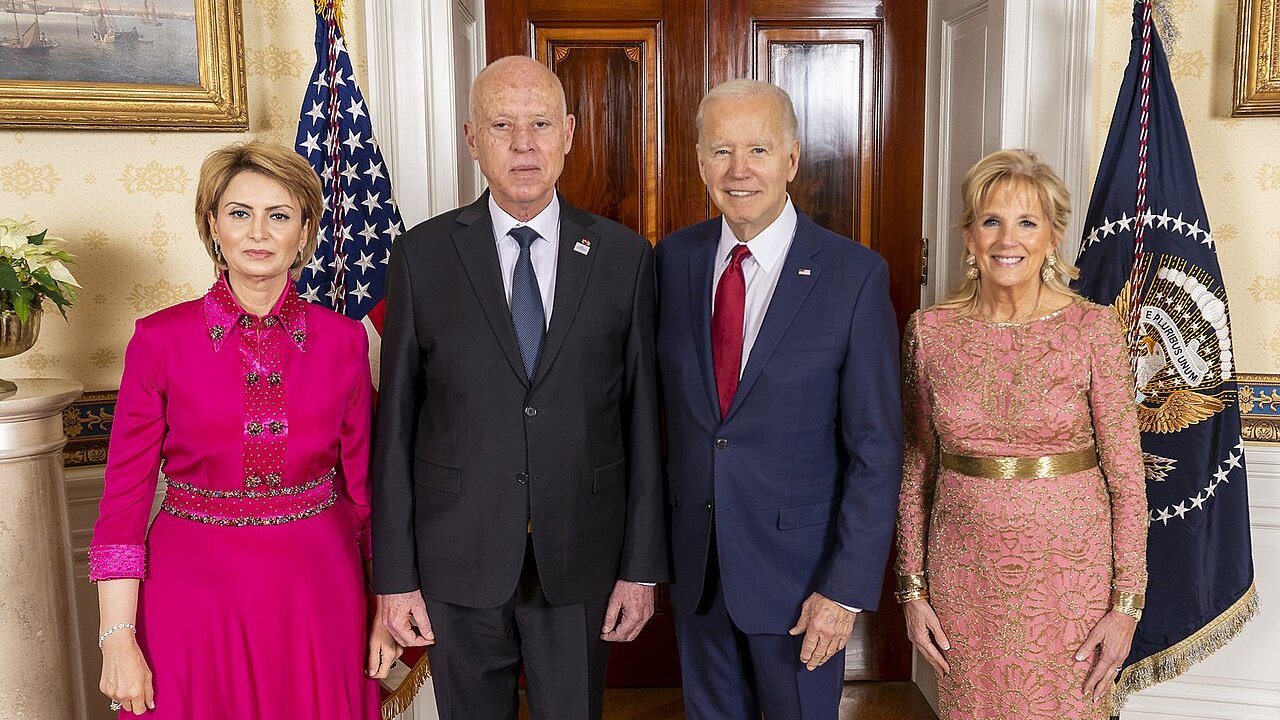
What this means for foreigners
Citizens of the United States and the United Kingdom can visit without a visa for up to 90 days. Longer stays need a residence permit from the local police.
Other nationalities should check with a Tunisian consulate before travel. The US State Department rates Tunisia at Level 2, “exercise increased caution”, in an advisory dated 21 May 2026.
It says do not travel within 16 kilometres of the Algerian and Libyan borders, with exceptions for Tabarka and Ain Draham. It also rules out the western mountains near Kasserine and Gafsa and the desert south of Remada.
The dinar is a closed currency. Taking dinars out of the country is generally prohibited.
Keep bank receipts if you want to change leftover dinars back, and declare foreign cash on arrival. Living costs look low in dollars.
A central one-bedroom flat in Tunis costs about 1,100 dinars (about US$370) a month, the Rio Times cost of living guide found. That is roughly the average local net salary, which shows how stretched Tunisian households are.
Plan for power and water interruptions in summer, especially outside the best hotels. French opens most doors in business and administration.
English is spreading among younger people but is not yet enough on its own. Be careful with public political comment, including on social media.
Prosecutions over speech are common, and the rules apply to anyone in Tunisia. Consensual same-sex relations are a crime, with prison terms of up to three years.
Connected Coverage
Cost of Living Tunis Tunisia 2026: Rent Above the Average Wage
Algeria Explained: Gas, Politics, the Economy and What to Watch
Morocco Explained: The Kingdom, Its Economy, the 2030 World Cup and What to Watch
Egypt Explained: The Country, Sisi’s Egypt and What to Watch
Sources: Population, growth, inflation and unemployment from Tunisia’s National Institute of Statistics; the exchange rate and policy rate from the Central Bank of Tunisia; output and public debt from the World Bank; trade from the European Commission; migration figures from Italy’s interior ministry; election results from the electoral authority, ISIE; travel rules from the US State Department and the UK Foreign Office. Euro conversions use market data for 28 September 2026. All accessed 28 September 2026.
- INS Tunisia — estimated population on 1 January 2026
- Central Bank of Tunisia — average interbank exchange rates
- World Bank — Tunisia GDP and income per person, 2025
- World Bank — Tunisia overview, public debt and deficit
- European Commission — EU trade relations with Tunisia
- INS second-quarter 2026 growth, as reported by EcomNews Med
- INS August 2026 inflation, as reported by Entreprises Magazine
- INS unemployment of 14.9 percent in the second quarter of 2026, as reported by Challenges
- ANSA — Italian interior ministry sea-arrival figures for 2025
- Human Rights Watch — Tunisia: civil society under siege, 2 September 2026
- US State Department — Tunisia travel advisory, 21 May 2026
- UK Foreign Office — Tunisia entry requirements
What Is Not Known
How long Tunisia can finance itself without the IMF. Debt is being rolled over at home for now, and foreign bonds have been repaid.
How long local banks can keep absorbing government paper is an open question. How popular Saïed really is.
Turnout has fallen below a third in every national vote since 2022. There is no reliable independent polling, and open criticism carries legal risk.
What happens after Saïed. The 2022 constitution hands interim power to the head of the Constitutional Court, a court that has never been set up. There is no vice-president and no organised movement behind him.
Whether the fall in sea crossings will last. The drop coincided with tougher policing and the EU deal, but routes shift quickly.
Arrival data measures departures, not the number of people waiting to leave. The true scale of the summer’s power losses.
No official account of hours lost, damage or the alleged sabotage has been published.
Frequently Asked Questions
Who is the president of Tunisia in 2026?
Kaïs Saïed, a former constitutional law professor, in office since October 2019. He was re-elected on 6 October 2024 with 90.7 percent on a turnout of 28.8 percent, and his second five-year term runs to 2029. The head of government is Sarra Zaafrani Zenzri.
Is Tunisia still a democracy?
Not in the sense it was between 2011 and 2021. Since Saïed suspended parliament in July 2021, a new constitution has concentrated power in the presidency. Elections still take place, but turnout is low, main opposition leaders are in prison and critics face prosecution.
Do Americans and Britons need a visa for Tunisia?
No. US and UK citizens can visit without a visa for up to 90 days. Longer stays require a residence permit from the local police, and overstays are fined. Travellers of other nationalities should check with a Tunisian consulate.
Is Tunisia safe for tourists?
The US State Department rates Tunisia at Level 2, “exercise increased caution”, as of May 2026. Tourist areas on the coast are generally calm. Travellers should avoid the Algerian and Libyan border zones, the western mountains and the desert south of Remada.
Can I take Tunisian dinars out of the country?
Generally no. The dinar is a closed currency and exporting it is prohibited. Visitors should keep bank exchange receipts to convert leftover dinars back before departure and declare foreign cash on arrival.
Why do so many migrants leave from Tunisia?
The Italian island of Lampedusa lies closer to Tunisia than to mainland Italy. Tunisians and sub-Saharan Africans have used the route for years. Arrivals in Italy from Tunisia fell from 97,667 in 2023 to 4,841 in 2025 after tighter policing backed by the EU.
This article was produced by The Rio Times’ automated AI newsroom. Editorial responsibility: Matthias Camenzind, Publisher and Editor-in-Chief. The Rio Times also runs Ask Rio Times, which answers from 100,000+ of our own articles, the daily Latin America Power Map, and prediction-market odds on elections and markets.. How we use AI · Report an error
Expat Guide to Tunisia
What The Rio Times publishes for foreigners who live in or move to Tunisia.
Start here
- Tunisia Cost of Living for Foreigners 2026
- Moving to Tunisia in 2026, Step by Step for Expats
- Cost of Living Tunis Tunisia 2026: Rent Above the Average Wage
City guides
Understand Tunisia