TUNISIA · NEIGHBOURHOOD
Key Facts
- —The country Tunisia is a North African country of about 12 million people. It borders Algeria to the west and Libya to the south-east, and faces Italy across the sea.
- —The neighbours Algeria is the biggest partner: gas, visitors and politics. Libya is the trade and jobs neighbour to the south-east. Morocco has been cool towards Tunis since 2022.
- —Why now Tunisia, Algeria and Libya began a three-way leaders’ format in 2024 that leaves out Morocco and Mauritania. Foreign ministers of Tunisia and Algeria met again in Algiers in July 2026.
- —Gas and power Algeria met nearly 58% of Tunisia’s natural gas needs through May 2025. Algeria and Libya together supplied about 11% of Tunisia’s electricity in the first half of 2025.
- —People Algerians and Libyans made up about 3.5 million and 2.25 million of Tunisia’s roughly 10.3 million visitors in 2024, according to tourism figures. About 45,000 Tunisians live in Libya.
- —What it means for you Most US exposure runs through Europe, but Algerian gas, Libyan instability and Mediterranean migration all touch Tunisia. The State Department rates Tunisia Level 2.
- —Still open Morocco’s ambassador dispute, the future of the three-way format and the Ras Jedir border crossing with Libya have no settled outcome.
The Tunisia neighbourhood matters to Americans because Algerian gas, Libyan instability and Mediterranean migration all pass through a small country of 12 million people. Tunisia sits between two bigger neighbours, Algeria and Libya, and across the sea from Italy.
This guide explains who Tunisia’s neighbours are, what ties them together, where they clash, and where Tunisia leads or follows.

The Tunisia Neighbourhood at a Glance
Tunisia has 11,992,843 people on 1 January 2026, according to its statistics office (INS). It has a land border with Algeria to the west and south-west and one with Libya to the south-east.
Five Tunisian regions touch Algeria, said Imed Derbali, who led Tunisia’s National Council of Regions and Districts, in Algiers on 1 April 2026. To the north and east lies the sea, with Sicily and Malta beyond it.
Tunisian politics is run by President Kais Saied and Prime Minister Sarra Zaafrani Zenzri, whose office was still chairing government meetings in October 2026. Foreign policy is run by Foreign Minister Mohamed Ali Nafti, who met Algeria’s president in Algiers on 8 July 2026.
Algeria, the Big Neighbour to the West
Algeria is the neighbour that matters most in the Tunisia neighbourhood. Its president, Abdelmadjid Tebboune, received Nafti in Algiers in July 2026 and stressed how closely his views match Saied’s.
The two governments run a formal joint commission, whose 23rd session and an economic forum took place in Tunis in December 2025. A follow-up meeting in Algiers in July 2026 adopted a roadmap with dates for the next talks.
Both sides say they want to sell into African markets together. They also named water, energy, food security and trade, plus the development of border regions, as shared priorities.
Gas, Power and the Transmed Pipeline
Algerian gas reaches Italy through the Transmed pipeline, which crosses about 400 kilometres of Tunisian territory. Tunisia collects a royalty of 5.25% on the gas, paid in dollars or in gas, according to Tunisian business outlet Managers.tn in 2023.
Through May 2025, nearly 58% of Tunisia’s natural gas needs were met by imports from Algeria, according to the US Commerce Department. Tunisia’s grid is also linked to Algeria and Libya, which together supplied about 11% of its electricity in the first half of 2025.
Visitors and Border Regions
Tunisia’s tourism ministry counted about 3.5 million Algerian visitors in 2024, out of roughly 10.26 million in total. From 1 January to 20 July 2025, Algerians numbered about 1.46 million and Libyans about 1.25 million.
At the Algiers talks in April 2026, Derbali said the border regions offer large chances for development and help keep both countries secure. In July 2026 the two foreign ministers again named border-region development as a shared goal.
Libya, the Trade and Jobs Neighbour
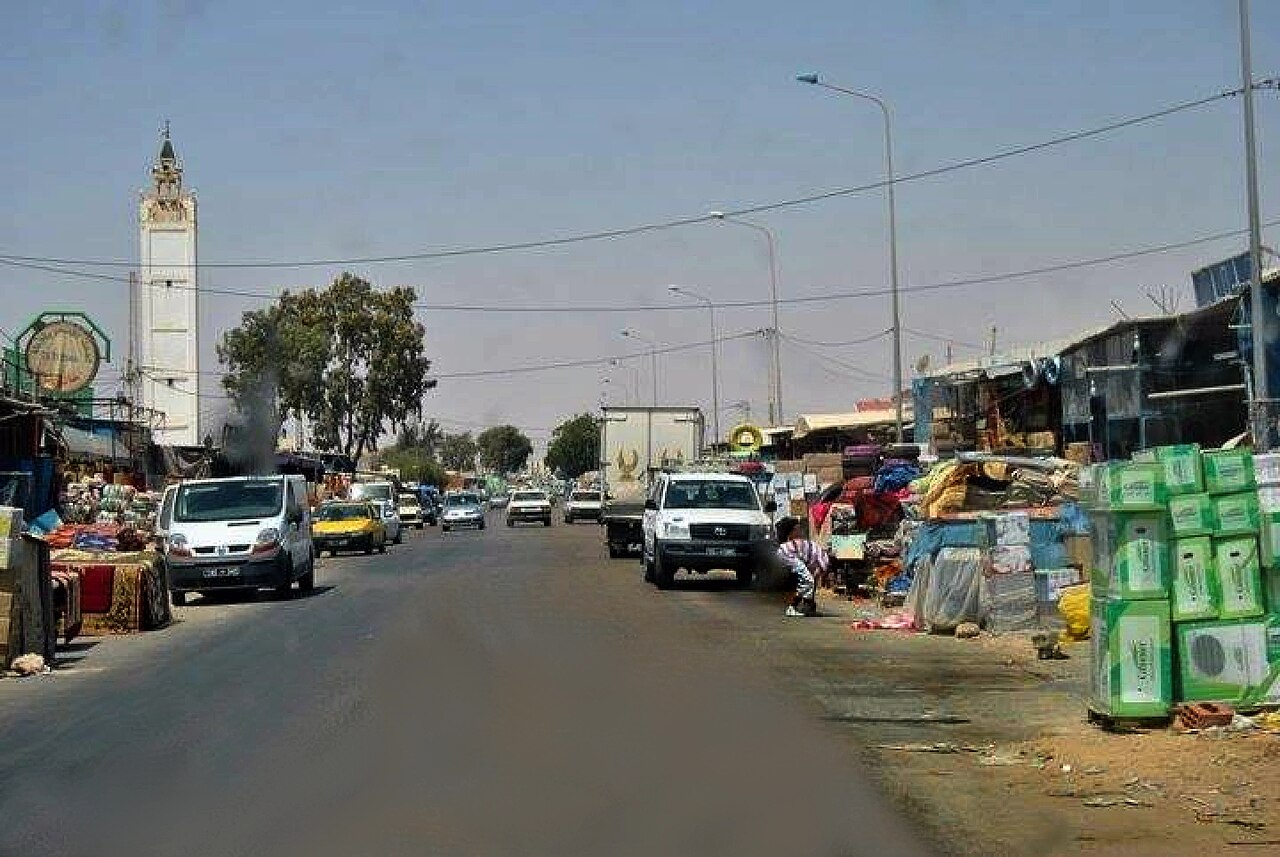
Libya is the other land neighbour in the Tunisia neighbourhood, linked by the Ras Jedir border crossing near Ben Guerdane. Tunisia’s embassy in Tripoli said on 14 April 2026 that about 45,000 Tunisians live in Libya, working in banking, engineering, insurance and oil services.
Libya sent about 2.25 million visitors to Tunisia in 2024, according to tourism ministry figures reported by La Presse. Tunisia’s foreign minister visited Tripoli on 10 and 11 April 2026 and met Prime Minister Abdelhamid Dbeibah and Foreign Minister Taher Al-Baour.
Dbeibah heads the Government of National Unity in Tripoli, according to Tunisia’s embassy. The Rio Times explains who holds power in Libya in its Libya guide.
Ras Jedir, the Crossing That Keeps Stalling
Ali Zghoudoud, who sits in parliament for Ben Guerdane, said in May 2026 that trade from Libya has been blocked since March 2024. Travellers and traders face queues of up to four days, he told Diwan FM.
He said the trade supports nearly 120,000 people in the Ben Guerdane area, and called for the Tunisian-Libyan joint commission to meet again. Tunisia’s embassy in Tripoli says a corridor project at Ras Jedir, linked to African trade deals, is expected around 2029.
Morocco and the Maghreb Union That Never Took Off
The Arab Maghreb Union was signed on 17 February 1989 in Marrakech by five countries, as the African Union records. Its treaty followed a first summit of the five leaders in Zeralda, Algeria, in June 1988.
Tunisia and Morocco share no border, yet their rift has marked the Tunisia neighbourhood since August 2022. Morocco recalled its ambassador after Saied received Brahim Ghali, who leads the Polisario Front, a movement seeking independence for Western Sahara.
Tunisia recalled its own envoy in response.
Morocco’s foreign minister at the time, Nasser Bourita, phoned Nafti on 27 August 2024, the day Nafti took office. A senior Tunisian official told Hespress in January 2025 that Tunis wants ambassadors restored in both capitals.
A Three-Way Format That Leaves Morocco Out
In 2024 the leaders of Algeria, Tunisia and Libya began meeting as a trio, with Morocco and Mauritania not invited. Their first meeting was in Algiers in February 2024, and the second was in Tunis on 22 April 2024.
The leaders agreed to meet every three months, and Algeria’s foreign minister announced a Tripoli summit in January 2025. The Rio Times covers the Moroccan-Algerian quarrel behind this split in its Algeria-Morocco rivalry guide.
Italy and Europe Across the Sea
Europe is the sea side of the Tunisia neighbourhood and its biggest trade partner. In the first nine months of 2025, the European Union took 70.3% of Tunisia’s exports and supplied 43.2% of imports, says INS data.
Italy, the closest part of Europe, traded with Tunisia to a value of €4.97 billion (about US$5.6 billion) in the first ten months of 2025. The figure comes from INS data reported by Italy’s foreign ministry news service.
Migration, the Memorandum and the Sea Route
The European Union and Tunisia signed a memorandum on 16 July 2023, creating a “strategic and comprehensive partnership” with five pillars. They are economic stability, trade, green energy, people-to-people contacts, and migration and mobility.
Italy’s interior ministry counted 4,841 sea arrivals from Tunisia in 2025, down 75.1% from 19,460 in 2024. Arrivals from Libya rose 38.1% to 58,408, so the main departure point moved east.
A Power Cable Under the Sea
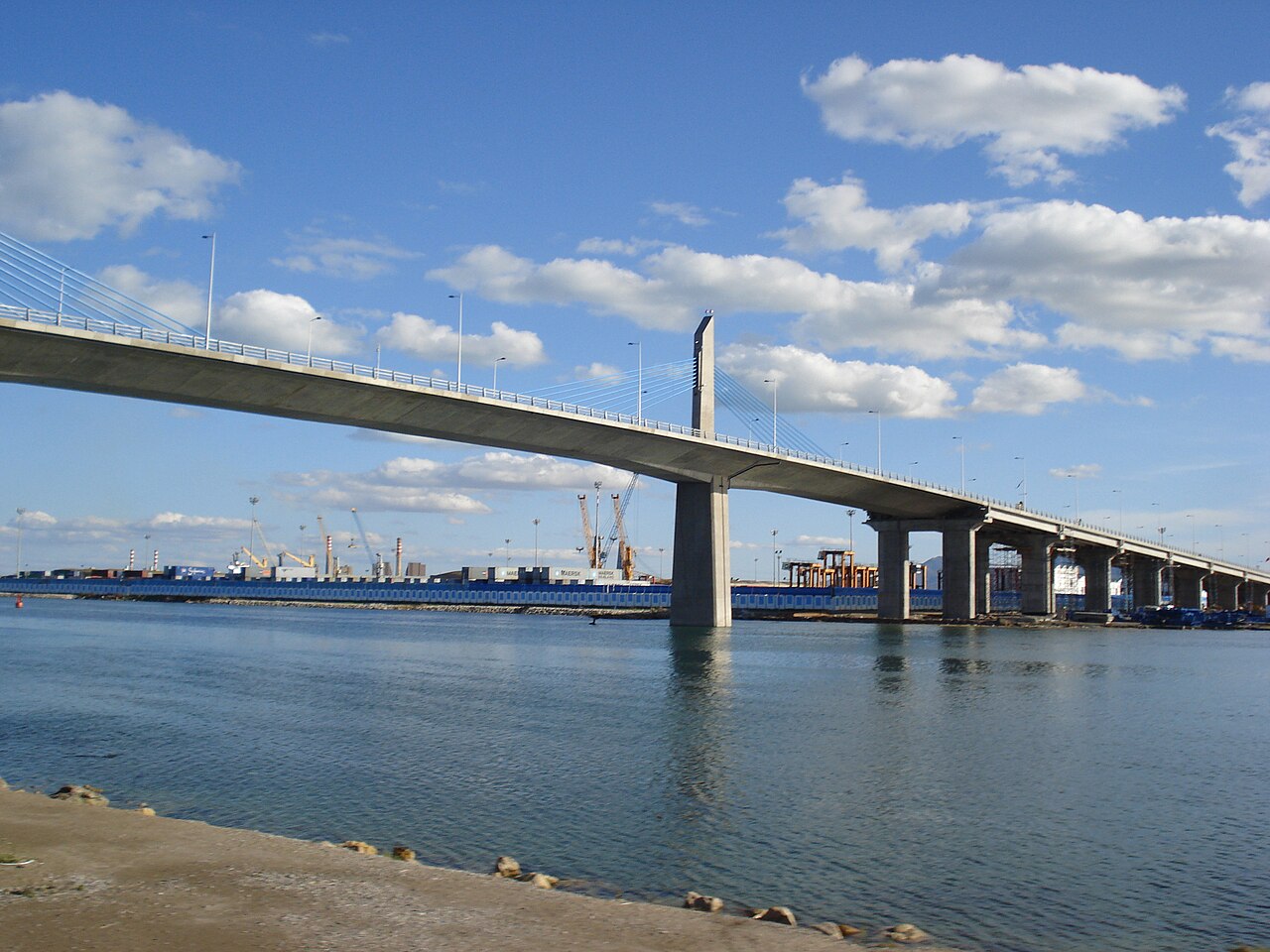
A planned 600-megawatt undersea cable called ELMED would link the Tunisian and Italian grids over about 124 miles (200 kilometres). The US Commerce Department says the project costs an estimated US$932 million, with completion projected for 2028.
The Rio Times covers Tunisia’s reserves and the dinar in its reserves report and the EU’s migration payments in its EU migration deals report.
Shared Water and Shared Rivers
Tunisia, Algeria and Libya share the North-Western Sahara Aquifer System, over 1 million square kilometres in size, says the Sahara and Sahel Observatory (OSS). About 700,000 square kilometres lie in Algeria, 250,000 in Libya and 80,000 in Tunisia.
The three countries formed a consultation mechanism in November 2007, and its secretariat sits at the observatory in Tunis. Withdrawals have risen from about 0.6 billion cubic metres a year in 1970 to 2.5 billion, the observatory says.
Algeria draws 1.50 billion cubic metres a year of that total, Tunisia 0.55 billion and Libya 0.45 billion. Tunisia’s northern rivers also cross the border.
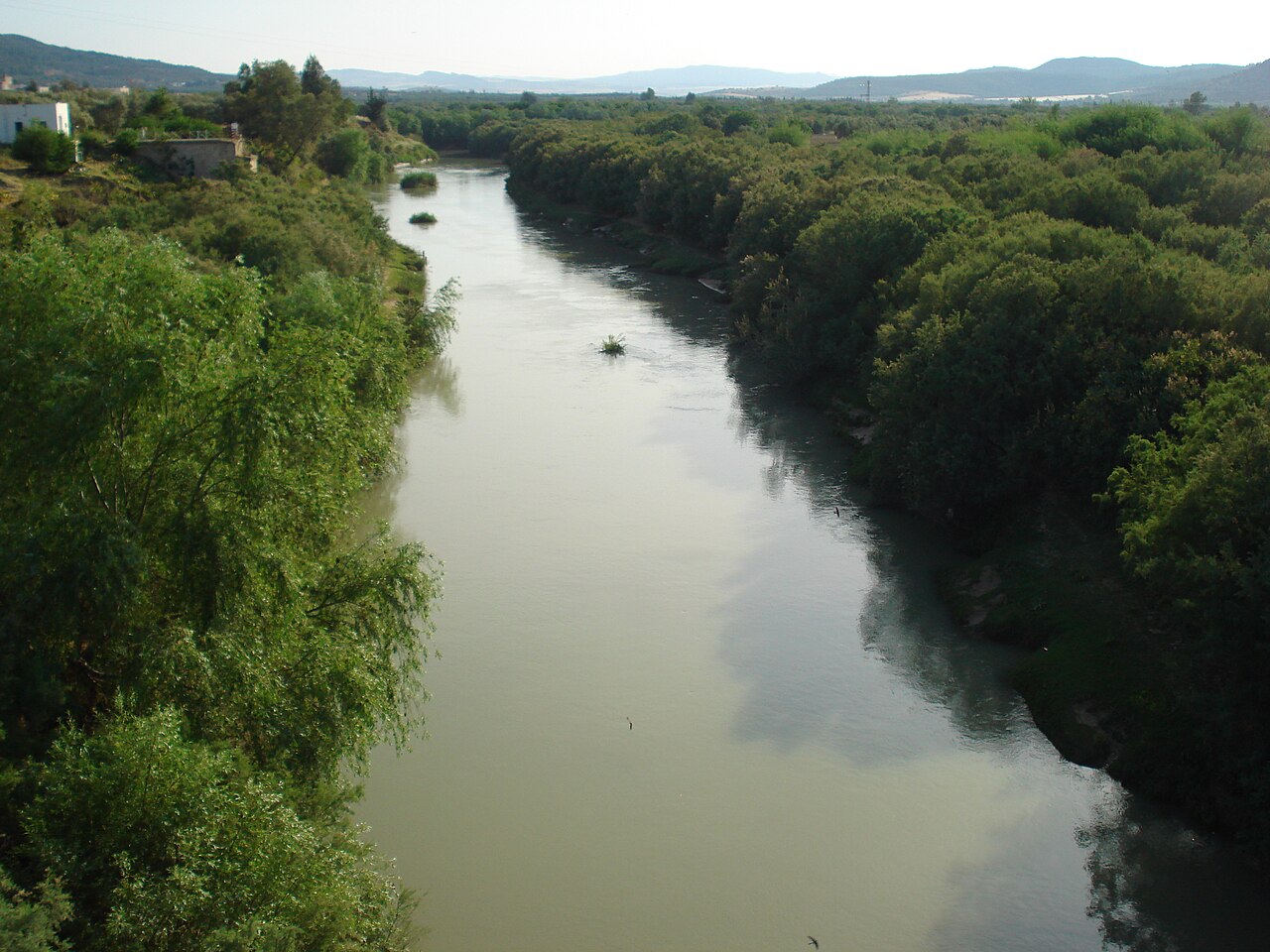
The Medjerda, Tunisia’s main freshwater river, rises in north-eastern Algeria and flows into the Gulf of Tunis, according to the conservation union IUCN. Its basin covers 23,700 square kilometres, 30% in Algeria and 70% in Tunisia, and the photo below shows the river near Slouguia.
Where Tunisia Leads and Where It Follows
Tunisia leads in a few quiet ways in the Tunisia neighbourhood. It hosts the Sahara and Sahel Observatory and the secretariat of the aquifer mechanism, and it hosted the Algeria-Tunisia joint commission in December 2025.
It also belongs to COMESA, the trade bloc of 21 African states that includes Libya and Egypt, according to the bloc’s member list.
Where It Follows
On the three-way format, Algeria set the pace, because it proposed the idea. On migration money, Europe sets the terms, and on gas, Algeria controls the supply.
Tunisia’s trade deficit reached 16.7 billion dinars (about US$5.6 billion) in the first nine months of 2025, up 24%. Trade with Libya, Algeria and Morocco strengthened in that period, according to INS data reported by Ecofin Agency.
This guide converts at about 3.0 dinars to the US dollar, the rate in October 2026.
What It Means for US Readers
American travellers should know that Tunisia’s land borders are not tourist routes. The State Department rates Tunisia Level 2 and advises avoiding some border zones with Algeria and Libya, Tunisian press reported in April 2026.
Investors and energy watchers should follow Algerian gas flows through Tunisia to Italy, and the ELMED cable. Both tie the Tunisia neighbourhood to European energy markets.
Readers in the US also watch Mediterranean migration, because departures from Libya carried most sea arrivals into Italy in 2025. The Rio Times explains the home politics behind the Tunisia neighbourhood in its Tunisia guide.
What Is Not Known
Several questions about the Tunisia neighbourhood remain open. Algiers announced a Tripoli summit of the three countries in January 2025, but no date is confirmed.
The future of the quarterly format is open, and officials have not given a figure for the value of trade across Ras Jedir. No public announcement confirms that Tunisia and Morocco have ambassadors back in post.
Frequently Asked Questions
Which countries border Tunisia?
The Tunisia neighbourhood has two land neighbours: Algeria to the west and Libya to the south-east. To the north and east it faces the Mediterranean, with Italy, Sicily and Malta across the water.
How does Tunisia depend on Algeria for gas?
Nearly 58% of Tunisia’s natural gas needs came from Algeria through May 2025, according to the US Commerce Department. Tunisia also earns a 5.25% royalty on Algerian gas crossing its territory to Italy.
What is the three-way meeting of Algeria, Tunisia and Libya?
It is a leaders’ format in the Tunisia neighbourhood, begun in 2024 by Algeria, Tunisia and Libya, without Morocco or Mauritania. Algeria proposed it, and Libya and Tunisia adopted it.
Why are Tunisia and Morocco on cool terms?
Morocco recalled its ambassador in August 2022 after Saied received Polisario leader Brahim Ghali. Their foreign ministers spoke by phone in August 2024, but ambassadors are not publicly confirmed back.
How does Tunisia relate to Europe on migration?
The EU and Tunisia signed a memorandum on 16 July 2023 with migration as one of five pillars. Sea arrivals in Italy from Tunisia fell to 4,841 in 2025, while Libya’s rose.
Is it safe for Americans to visit Tunisia’s borders?
The State Department rates Tunisia Level 2, exercise increased caution, and advises avoiding some border zones with Algeria and Libya and parts of the southern desert. Travellers should check the current advisory before planning.
Sources: Tunisia National Institute of Statistics (INS), population on 1 January 2026, January 2026; Presidency of the Government of Tunisia, news page, October 2026; US Commerce Department, Tunisia Country Commercial Guide, power systems, 2025; Sahara and Sahel Observatory (OSS), North-Western Sahara Aquifer System, 2022; African Union, Arab Maghreb Union page, 2026; COMESA, member states, 2026; European Union, EU-Tunisia relations page, 2026; Tunisie Numerique, Tunisia-Algeria talks in Algiers, 1 April 2026; AllAfrica (French), Tunisia-Algeria joint commission follow-up, 9 July 2026; AllAfrica (French), Ras Jedir corridor and Tunisia-Libya ties, 15 April 2026; La Presse de Tunisie, Ras Jedir crisis, 19 May 2026; La Presse de Tunisie, tourism revenue and arrivals, 25 December 2025; La Presse de Tunisie, Algerian and Libyan visitors in 2025, 1 August 2025; Managers.tn, Transmed royalties, 15 November 2023; Webdo, Libya-Algeria-Tunisia summit mechanism, 2 January 2025; Webdo, Morocco-Tunisia foreign ministers’ call, 28 August 2024; Hespress, Maghreb summit without Morocco and Mauritania, 21 April 2024; Hespress, Tunisia seeks to mend ties with Morocco, 19 January 2025; ANSA, Italian interior ministry sea arrivals in 2025, 31 December 2025; AGI, Tunisia-Italy trade (INS data), 17 November 2025; Ecofin Agency, Tunisia trade deficit (INS data), 14 October 2025; La Presse de Tunisie via AllAfrica, State Department rates Tunisia Level 2, 4 April 2026; IUCN, Medjerda river basin shared between Algeria and Tunisia, June 2023; Algeria Press Service, President Tebboune in office, 22 October 2026; La Presse de Tunisie, Foreign Minister Nafti on consular services, 3 September 2026.
This article was produced by The Rio Times’ automated newsroom system. How we use AI · Report an error · Editorial responsibility: Matthias Camenzind, Editor-in-Chief
Expat Guide to Tunisia
What The Rio Times publishes for foreigners who live in or move to Tunisia.
Start here
Coming up in Tunisia
Understand Tunisia
Rotate for Best Experience
This report is optimized for landscape viewing. Rotate your phone for the full experience.
You've reached your free article limit
Subscribe to The Rio Times for unlimited access to our reporting from across Africa.
Expat Guide to Tunisia
What The Rio Times publishes for foreigners who live in or move to Tunisia.
Start here
Coming up in Tunisia
Understand Tunisia