Tunisia Politics Explained, Who Holds Power in 2026
TUNISIA · POLITICS
Key Facts
- —The country Tunisia is a North African republic of 24 governorates, where President Kais Saied has held the dominant power since he took extraordinary executive powers on 25 July 2021.
- —Who holds power Saied appoints the prime minister, Sarra Zaafrani Zenzri, and the ministers, and the government answers to him under the 2022 constitution.
- —The vote Saied won a second term on 6 October 2024 with 90.69% of the vote on a turnout of 28.79%.
- —Parliament The Assembly of the People’s Representatives, led by Brahim Bouderbala, set the opening of its fifth session for 27 October 2026, with the 2027 finance bill in committee.
- —The opposition Leaders of the Free Destourian Party, Ennahda and the National Salvation Front have been sentenced, and the UGTT labour union helped call a march in Tunis on 17 October 2026.
- —Outside powers The IMF page describes no current programme, the EU migration memorandum dates from 16 July 2023, and the defence minister calls US military cooperation a pillar of ties.
- —What it means for you The US State Department advisory page lists Tunisia at Level 2, exercise increased caution, as read on 26 October 2026.

Tunisia politics in October 2026 runs through one office, the presidency of Kais Saied, who holds executive power and names the prime minister under the 2022 constitution. This guide names who holds each major office as of October 2026, from the cabinet and the two chambers to the opposition, the courts and the army, and flags what remains unknown.
Tunisia Politics at a Glance, One Man at the Top
Tunisia’s present order dates from 25 July 2021, when Saied took extraordinary executive powers, a step Human Rights Watch calls a seizure. A new constitution followed in a referendum on 25 July 2022, which won 94.6% yes votes on a turnout of 30.5%, according to the electoral commission ISIE.
Saied won a second term on 6 October 2024 with 90.69% of the vote, ahead of Ayachi Zammel with 7.35% and Zouhair Maghzaoui with 1.97%. ISIE put turnout at 28.79% of 9,753,217 registered voters, against 11.22% in the first round of the December 2022 legislative election.
Human Rights Watch says the authorities undermined the integrity of the 2024 vote by excluding or imprisoning prospective challengers and amending the electoral law days before polling. Article 90 of the constitution sets a five-year presidential term and limits a president to two complete terms, successive or separate.
Who Holds Each Office, as of October 2026
- President Kais Saied, re-elected on 6 October 2024
- Prime minister Sarra Zaafrani Zenzri, in office since 21 March 2025
- Assembly of the People’s Representatives Brahim Bouderbala, as of 16 October 2026
- National Council of Regions and Districts Imed Derbali, as of 8 October 2026
- Foreign affairs, migration and Tunisians abroad Mohamed Ali Nafti, since 25 August 2024
- National defence Khaled Sehili, since 25 August 2024
- Interior Khaled Nouri, since 25 May 2024
- Justice Leila Jaffel, since 11 October 2021
- Finance Michket Slama Khaldi, since 5 February 2025
- Electoral commission ISIE Chair Farouk Bouasker, as of 23 October 2026
- UGTT labour union Secretary General Slaheddine Selmi, as of 21 October 2026
President Saied and What the Constitution Gives Him
Article 87 says the president exercises executive power with the help of a government, and Article 101 lets him appoint the head of government and, on that person’s proposal, the other ministers. Article 105 has draft laws discussed in the Council of Ministers, and Article 106 lets him assign senior civil and military posts on the prime minister’s proposal.
Article 112 makes the government accountable to the president, and Article 94 names him supreme commander of the armed forces. He also chairs the National Security Council under Article 91 and may not combine the presidency with any party post under Article 92.
On 13 October 2026 Saied chaired a Council of Ministers at Carthage Palace on the 2027 finance bill and the economic balance, and on 26 August 2026 he said water and power cuts were planned sabotage. Human Rights Watch says the authorities gave no evidence of sabotage and cracked down on protesters instead.
The Prime Minister and the Cabinet
Sarra Zaafrani Zenzri has headed the government since 21 March 2025, and the prime minister’s portal lists her in office at its update of 26 October 2026. She is the fourth head of government since 11 October 2021, after Najla Bouden, Ahmed Hachani and Kamel Maddouri.
Mohamed Ali Nafti runs Foreign Affairs, Migration and Tunisians Abroad and Khaled Sehili runs National Defence, both since 25 August 2024, while Khaled Nouri has led the Interior Ministry since 25 May 2024. Leila Jaffel has held the Justice Ministry since 11 October 2021.
Michket Slama Khaldi has been finance minister since 5 February 2025, and Samir Abdelhafidh has led Economy and Planning since 24 January 2024. Salah Zouari, the equipment and housing minister, has also managed the Industry, Mines and Energy ministry since 27 April 2026.
In Plain English: Who Can Remove Whom
- The president can end the duties of the government or any minister on his own initiative, under Article 102.
- The Assembly and the National Council can force the government to resign only if half the members of each chamber sign a censure motion and two thirds of both chambers combined vote for it, under Article 115.
- After a second censure motion in the same term, the president may accept the government’s resignation or dissolve one or both chambers, under Article 116.
- The president has immunity for the length of his presidency, under Article 110.
The Assembly and the Council of Regions
Brahim Bouderbala presides over the Assembly of the People’s Representatives, the main chamber, whose current term is listed as 2023 to 2027 on its site. The Assembly closed its fourth ordinary session on 29 July 2026, and its bureau set the opening of the fifth session for Tuesday 27 October 2026.
Imed Derbali presides over the National Council of Regions and Districts, the second chamber, and met Saied and Bouderbala at Carthage Palace on 8 October 2026. Its 77 members were chosen in a 2024 vote of regional council and district council members, and ISIE declared the final results on 3 April 2024.
The bureau sent the 2027 finance bill to the Finance and Budget Committee on 16 October 2026, and La Presse, citing a Finance Ministry report, puts expected 2027 tax revenue at 49.6 billion dinars (US$16.6 billion). Conversions in this guide use the Central Bank of Tunisia interbank rate of 2.9911 dinars per US$ on 22 October 2026 and EUR 0.8925 per US$ on 23 October 2026.
Deputies sit in blocs of at least 15 members, and the Assembly’s site lists six, among them Voice of the Republic and the Sovereign National Line, plus deputies with no bloc. Under Article 62 of the constitution a deputy who leaves a bloc may not join another.
The rules and electoral laws committee met on 8 October 2026 on organic law proposal 27/2026, which would merge election and referendum rules into one code. Its sponsors suggest a deposit of 5,000 dinars (US$1,672) for legislative candidates, and most committee members voiced reservations.
The UGTT, the Bar and Civil Society
The UGTT, the General Tunisian Labour Union, is led by Secretary General Slaheddine Selmi, who succeeded Noureddine Taboubi after a congress in Monastir in late March 2026. Nawaat described his first remarks as timid and less combative than his predecessor’s.
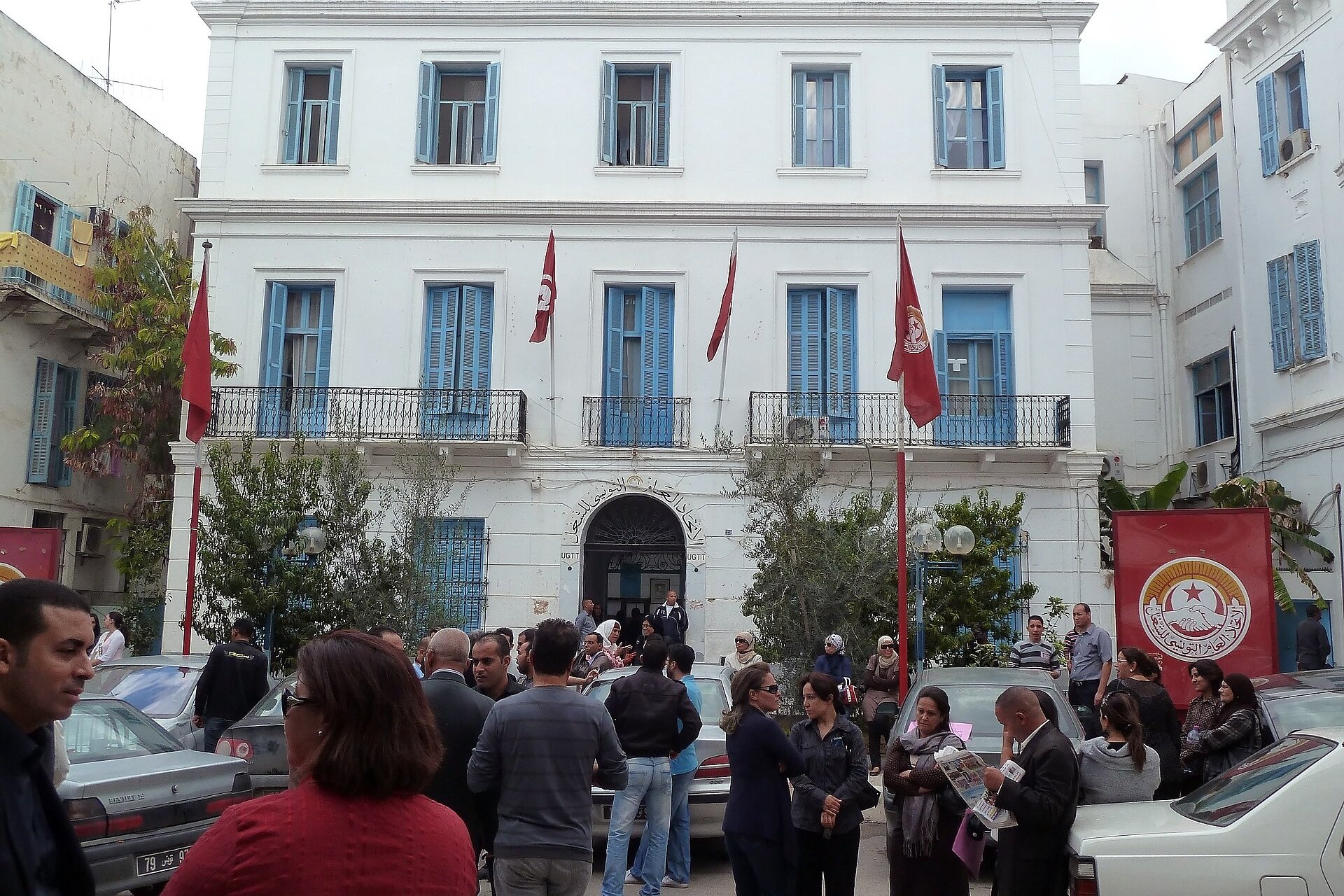
On 17 October 2026 thousands marched in Tunis at the call of a coordination framework of the UGTT, the Bar Association, the Tunisian Human Rights League and the journalists’ union, Nawaat reports. In a speech published by the union, Selmi said Tunisia’s crisis is above all one of an exclusive grip on all powers.
Selmi also cited the vacant High Judicial Council, the Justice Ministry taking over its tasks and the lack of a Constitutional Court. The authorities have suspended automatic payroll deductions of union dues, which Nawaat describes as a threat to the UGTT’s survival.
Human Rights Watch said in a 49-page report on 2 September 2026 that the authorities had prosecuted at least 47 people connected to NGOs and that at least 20 associations had been suspended. It says Saadia Mosbah of the anti-racism group Mnemty received eight years in March 2026 and Sihem Bensedrine, 75, former head of the Truth and Dignity Commission, which investigated decades of past abuses, 25 years on 26 June 2026.
Opposition Parties and the Prison Docket
Abir Moussi, who leads the Free Destourian Party and is described by Human Rights Watch as a prominent opponent of Saied, received ten years in total from a Tunis appeals chamber on 13 March 2026, Tunisie Numerique reports. The case grew from her visit to the presidency’s registry office on 3 October 2023, and a first-instance court had given her 12 years in December 2025, Le Courrier de l’Atlas reports.
Rached Ghannouchi, 85, the Ennahda party leader and a former speaker of parliament, was held in prison in August 2026, when Nawaat reported that he had been hospitalised and returned to his cell after false rumours of his death in the heat wave. Human Rights Watch says a Tunis court sentenced 21 people including Ennahda leaders to 12 to 35 years in July 2025, with Ghannouchi receiving 14 years in absentia.
Ahmed Nejib Chebbi, a veteran opposition figure in the National Salvation Front, the coalition formed in May 2022, was arrested in early December 2025 and sentenced to 12 years for conspiracy against state security, Nawaat reports. Human Rights Watch says 37 people were sentenced in the wider conspiracy case on 19 April 2025 after three sessions, and an appeals court confirmed 34 of the sentences on 27 November 2025.
Courts, the Electoral Commission and Local Councils
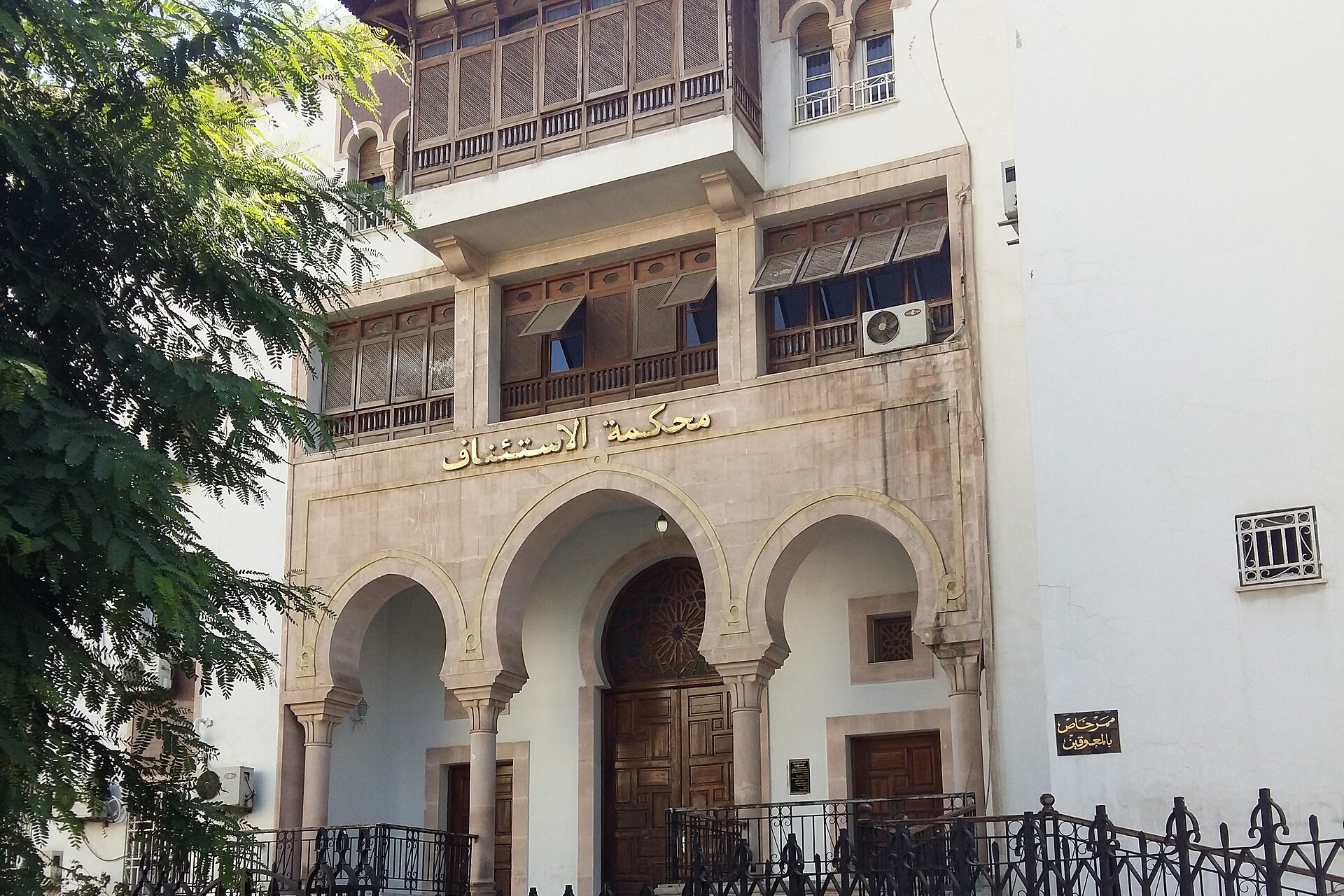
Article 119 divides the judiciary into ordinary, administrative and financial branches, and Article 120 says judges are appointed by presidential order on the nomination of the relevant high judicial council. Human Rights Watch says Saied dismantled the independent High Judicial Council in 2022, replaced it with a provisional body under executive control, and gave himself powers to dismiss judges through two decree-laws.
The Court of Cassation, the highest court, upheld the convictions of 34 people in the conspiracy case on 3 September 2026, Human Rights Watch says. A Human Rights Watch briefing lists a 2 April 2026 statement in which UN special rapporteurs voiced grave concern at the reported sentencing of Anas Hmedi, a judge and president of the judges’ association.
ISIE, the electoral commission, is chaired by Farouk Bouasker, who led its board meeting on 23 October 2026. Article 134 of the constitution gives it nine members on a single six-year term, with a third renewed every two years.
Decree-law 3 of 2026, signed by Saied on 30 September 2026, lets the president choose three members directly and appoint the chair from the board, while six seats come from shortlists of three proposed by judicial councils and state bodies. The sitting members, appointed under a 2022 decree-law, stay on until a new board takes office.
At the local level, first-round turnout in the 24 December 2023 council elections was 11.84%, ISIE data show. On 27 September 2026 voters in Tamghza, in Tozeur governorate, recalled a local councillor for the first time, with 52.43% voting yes, and ISIE set the by-election for 17 January 2027.
The Army, Security Forces and Outside Powers
Saied is supreme commander under Article 94, and Sehili has run the Defence Ministry since 25 August 2024. On 15 October 2026 Saied presided over the flag-raising on the new coastguard patrol vessel Kairouan at the Bizerte naval base, a ship of about 52 metres built with the naval construction company SCIN, the ministry says.
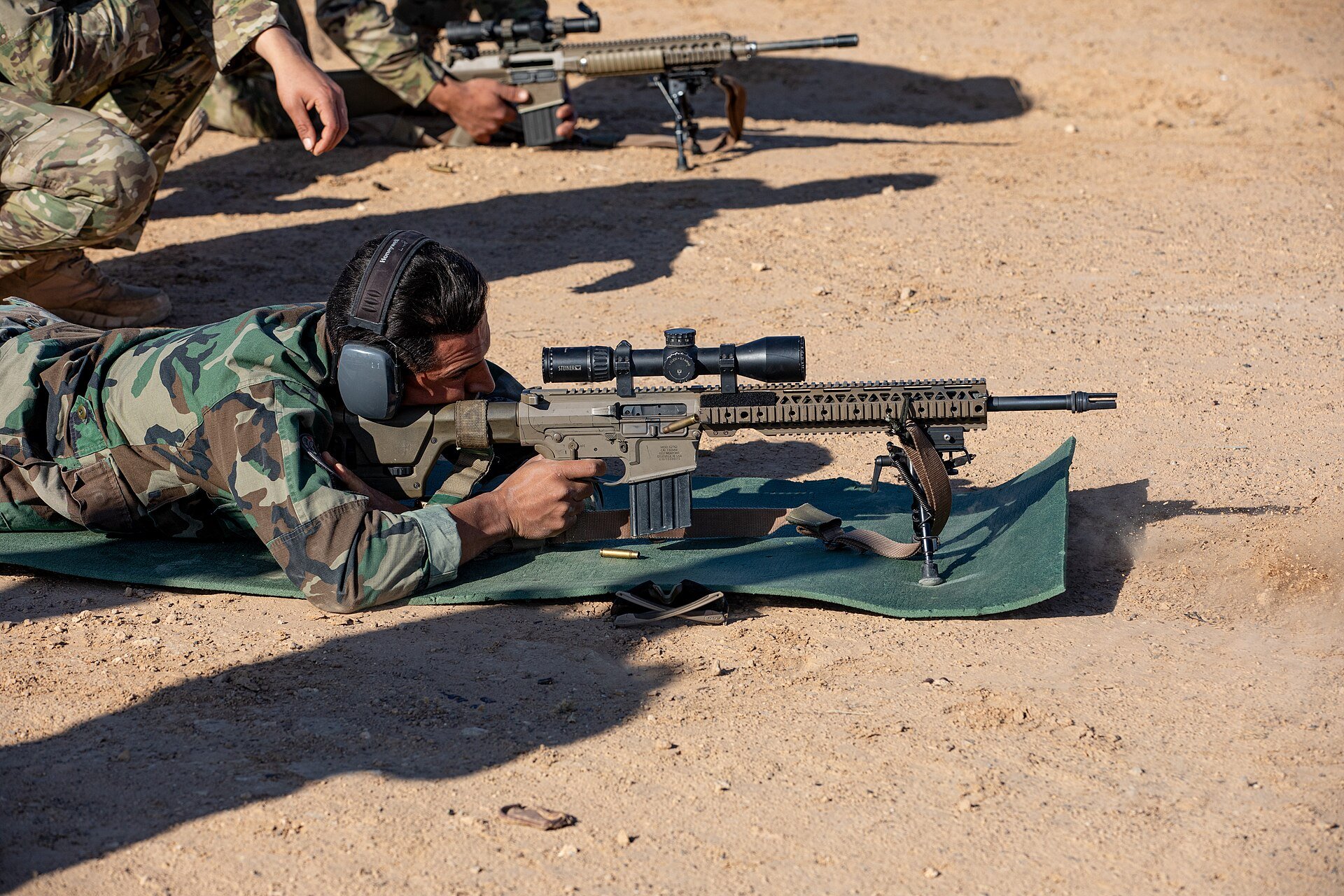
Khaled Nouri has led the Interior Ministry since 25 May 2024. Human Rights Watch says security forces have subjected migrants, asylum seekers and refugees to arbitrary arrests, collective expulsions and ill-treatment.
The EU signed a migration memorandum with Tunisia on 16 July 2023, and 46 groups said on 16 July 2026 that the EU and its member states have provided 105 million euros (US$117.6 million) for interceptions at sea and border control. The groups, in a statement published by Human Rights Watch, say the deal has fuelled and normalised serious violations.
The IMF’s Tunisia page lists 11 arrangements since membership and a last Article IV consultation on 17 February 2021, and it describes no current programme. Saied has presented the 2027 draft finance law as aimed at social justice and lighter tax pressure, the prime minister’s portal said on 14 October 2026.
On 22 October 2026 Sehili met Laura Gross of the US Defense Threat Reduction Agency, with US Ambassador Bill Bazzi present, and called US military cooperation one of the pillars of the bilateral partnership. The ministry says the talks covered border protection and counter-terrorism, and Sehili hopes to widen cooperation to border surveillance and counter-drone systems.
Connected Coverage
- Tunisia Explained 2026: Saied’s Republic, the Economy, Migration Pressure and What to Watch
- Who Runs Tunisia’s Economy, the Key Players in 2026
- Tunisia Geopolitics Explained 2026
- Tunisia and Its Neighbours in North Africa
- Tunisia’s Kais Saied Runs Low on Options as IMF Deal Stalls and Debt Tops 82 Percent
- More from our Tunisia coverage
What It Means for US Readers
The US State Department advisory page lists Tunisia at Level 2, exercise increased caution, as read on 26 October 2026, citing terrorism. It says not to travel within 16 km of the Algerian border, except in Tabarka and Ain Draham, and lists further restricted areas, including the military zone in the desert south of Remada.
For investors, decisions follow the presidency: Saied chaired the 13 October 2026 cabinet meeting on the 2027 finance bill, and the IMF page describes no programme in place. Rio Times guides to Tunisia’s economy and to its geopolitics cover trade, debt and outside partners in more detail.
For aid, visa and security policy, the main flashpoints are the EU-backed migration controls and US military cooperation, and Human Rights Watch urges donors to tie cooperation to compliance with human rights obligations. Readers can follow developments on the Rio Times Tunisia page, and the Tunisia explained guide sets out the wider picture.
What Is Not Known
The army chief of staff and the 24 governors are not named on the government portals consulted, so none is given here. No date has been announced for the next legislative election, and the electoral bill is still in committee.
Whether Tunis and the IMF are negotiating is unclear, since the fund’s page describes no current programme. The terms of any future deal have not been published.
Human Rights Watch says the authorities have not published transparent information on the impact of the summer 2026 power cuts, and cites a 22 July 2026 estimate by the Tunisian Young Doctors Association of 150 to 200 deaths. The Health Ministry reported 633 heat-related medical cases on 29 August 2026 without mentioning deaths.
Frequently Asked Questions
Who is the president of Tunisia in 2026?
Kais Saied is president, re-elected on 6 October 2024 with 90.69% of the vote on a 28.79% turnout, ISIE results show. Under the 2022 constitution he heads the executive and appoints the prime minister and ministers.
Who is the prime minister of Tunisia?
Sarra Zaafrani Zenzri has headed the government since 21 March 2025, the prime minister’s portal shows. She is the fourth head of government since 11 October 2021.
Who runs the parliament in Tunisia?
Brahim Bouderbala presides over the Assembly of the People’s Representatives, and Imed Derbali over the National Council of Regions and Districts. The Assembly’s bureau set the opening of its fifth session for 27 October 2026.
Who is the opposition leader in Tunisia?
Many opposition leaders have been convicted, among them Abir Moussi of the Free Destourian Party, Rached Ghannouchi of Ennahda and Ahmed Nejib Chebbi of the National Salvation Front. The UGTT, led by Slaheddine Selmi, helped call the 17 October 2026 march in Tunis.
How much power does the Tunisian parliament have?
Under the 2022 constitution it has two chambers, but the government answers to the president. A censure motion needs signatures from half of each chamber and a two-thirds vote of both chambers combined.
Is it safe for Americans to travel to Tunisia?
The US State Department advisory page lists Tunisia at Level 2, exercise increased caution, as read on 26 October 2026. It says not to travel within 16 km of the Algerian border, apart from Tabarka and Ain Draham, and lists other restricted areas.
Does Tunisia have an IMF programme?
The IMF’s Tunisia page describes no current programme and lists the last Article IV consultation on 17 February 2021. Separately, the EU and Tunisia signed a migration memorandum on 16 July 2023.
Sources: Presidency of the Government, members of the government, 2026-10-26; Presidency of the Government, former heads of government, 2026-10-26; Presidency of the Government, Council of Ministers chaired by Saied, 2026-10-14; Presidency of the Government, Saied on water and power cuts, 2026-08-27; Assembly of the People's Representatives, bureau meeting of 16 October, 2026-10-16; Assembly of the People's Representatives, Saied meets the two chamber presidents, 2026-10-09; Assembly of the People's Representatives, committee on bill 27/2026, 2026-10-08; Assembly of the People's Representatives, Finance Committee on the 2027 budget, 2026-10-21; Assembly of the People's Representatives, closing of the fourth ordinary session, 2026-07-29; Assembly of the People's Representatives, parliamentary blocs, 2026-10-26; Assembly of the People's Representatives, rules on blocs, 2026-10-26; ISIE, 2024 presidential election results, 2026-10-26; ISIE, 2022 referendum results, 2026-10-26; ISIE, 2022 legislative election results, 2026-10-26; ISIE, 2023 local council elections, 2026-10-26; ISIE, 2024 National Council of Regions and Districts election, 2026-10-26; ISIE, first successful recall vote in Tamghza, 2026-09-28; ISIE, board meeting and by-election calendar, 2026-10-23; Official Gazette, decree-law 3 of 2026 on ISIE, 2026-09-30; Constitute Project, Tunisia 2022 constitution (English), 2026-10-26; Ministry of National Defence, meeting with US threat reduction agency, 2026-10-22; Ministry of National Defence, patrol vessel Kairouan, 2026-10-20; UGTT, Selmi speech after the 17 October march, 2026-10-21; Central Bank of Tunisia, interbank exchange rates, 2026-10-22; Human Rights Watch, Tunisia country page, 2026-10-26; Human Rights Watch, power and water shortages, 2026-10-06; Human Rights Watch, civil society under siege, 2026-09-02; Human Rights Watch, Court of Cassation ruling, 2026-09-03; Human Rights Watch, updated briefing paper, 2026-09-04; Human Rights Watch, EU-Tunisia migration deal, 2026-07-16; Human Rights Watch, sentences for rights defenders, 2026-07-07; Human Rights Watch, World Report 2026 Tunisia, 2026-10-26; Nawaat, UGTT new leadership, 2026-05-07; Nawaat, Ahmed Nejib Chebbi, 2026-07-17; Nawaat, prisons in the heat wave, 2026-08-26; Nawaat, march of 17 October, 2026-10-17; Tunisie Numerique, Abir Moussi sentence, 2026-03-13; Le Courrier de l'Atlas, Abir Moussi appeal verdict, 2026-03-16; La Presse, 2027 budget tax revenue, 2026-10-25; IMF, Tunisia country page, 2026-10-26; US Department of State, Tunisia travel advisory, 2026-10-26.
This article was produced by The Rio Times’ automated newsroom system. How we use AI · Report an error · Editorial responsibility: Matthias Camenzind, Editor-in-Chief
Part of our ongoing coverage
Africa: The New Scramble — the great-power contest over the continent.
Expat Guide to Tunisia
What The Rio Times publishes for foreigners who live in or move to Tunisia.
Start here
Understand Tunisia