Algeria Explained 2026: Gas, Politics, the Economy and What to Watch
GUIDES · ALGERIA
Key Facts
- —Capital Algiers, the largest city and main port, on the Mediterranean. Its province elects 31 of the 407 national deputies, more than any other.
- —Population 47.4 million in 2025 on World Bank data, with about three in four living in towns and cities. The International Monetary Fund (IMF) projects 47.9 million for 2026.
- —Currency The Algerian dinar, written DA locally. The Bank of Algeria quoted 133.98 dinars to the US dollar on 24 September 2026, the rate used in this guide. The street rate was about 238 per dollar.
- —Language Arabic and Tamazight, the Berber language, which became official in 2016. French is still common in business, the press and universities.
- —GDP US$285.7 billion in 2025 and a projected US$317.2 billion in 2026, the fourth-largest economy in Africa on IMF figures. That is about US$6,600 per person, roughly one-fourteenth of the US level.
- —Government A presidential republic under the 2020 constitution, revised in March 2026. The president serves five-year terms, two at most, and appoints the prime minister.
Algeria explained from the ground up: who holds power in Africa’s largest country, how gas pays for the state, and which dates matter next.
Algeria explained properly starts with a pairing that shapes everything else: an elected president and an army command that has never left politics. Around them sits a state that lives on natural gas. Since the energy shock of 2026, Europe needs that gas more than it has in years.
What kind of country is this?
Algeria covers 2,381,740 square kilometres, according to the World Bank, making it Africa’s largest country. That is about a quarter of the United States, or more than three times Texas. Most of it is Sahara, and people cluster in the north near the Mediterranean coast.
France ruled Algeria from 1830 until independence on 5 July 1962, after a war that began in 1954. The National Liberation Front (FLN), which won that war, ran a one-party state until 1989. In January 1992 the army halted an election that the Islamic Salvation Front, an Islamist party, was set to win. Algerians call the violence that followed the “black decade”.
The current order dates from 2019. Weekly mass protests, the Hirak, began that February. In April they forced out Abdelaziz Bouteflika, president since 1999, after the army chief publicly turned against him. Abdelmadjid Tebboune won the election that followed in December 2019, on a turnout of 39.9 percent.
Algerians are of Arab and Amazigh, or Berber, heritage, and Islam is the state religion. The state classes the MAK, a separatist movement from the largely Amazigh Kabylie region east of Algiers, as a terrorist organisation. The country now has 69 provinces, called wilayas, up from 58.
Who runs Algeria and how
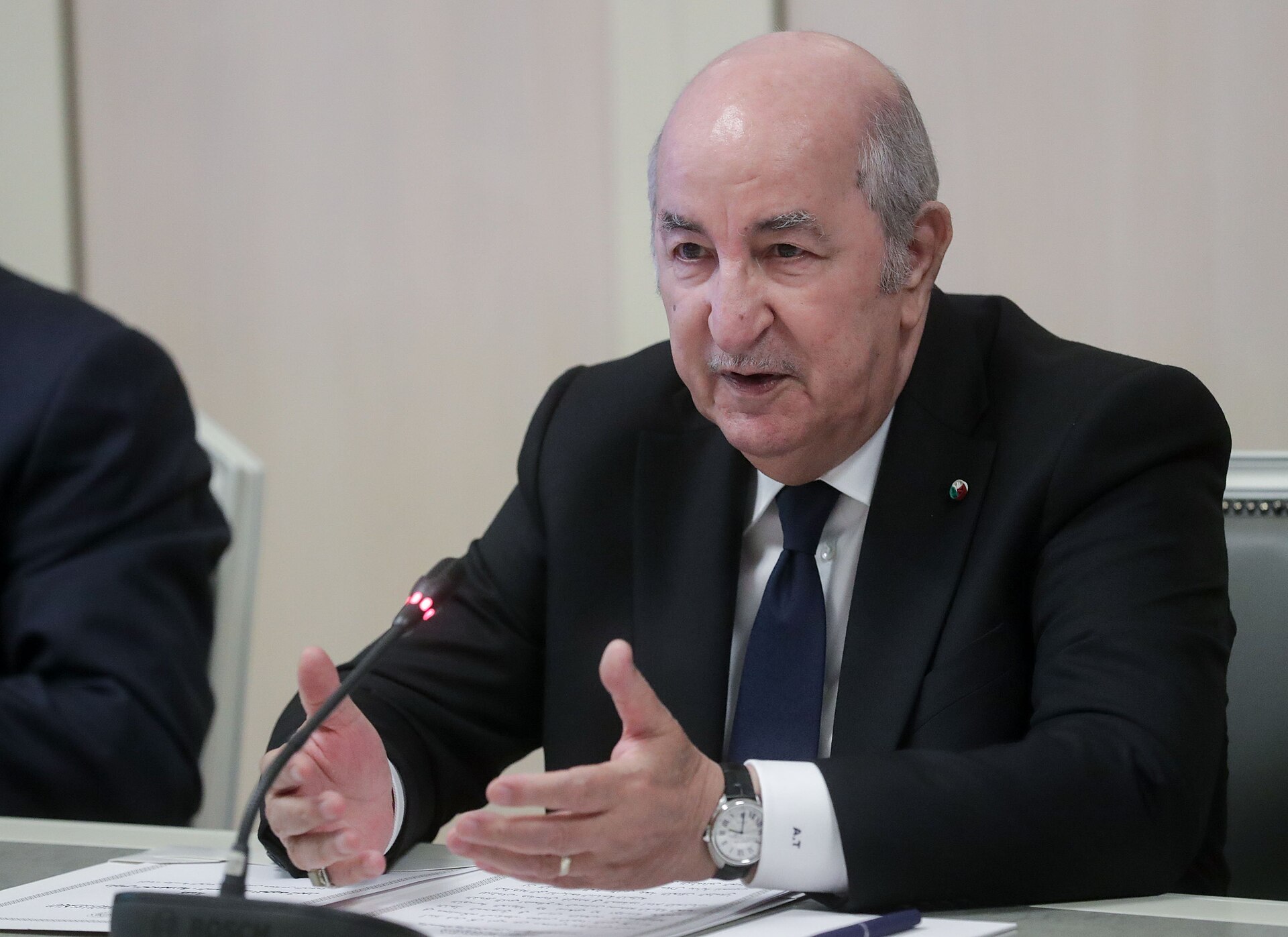
The president is head of state, supreme commander of the armed forces and, in Algeria, also minister of national defence. Abdelmadjid Tebboune, now 80, was re-elected on 7 September 2024. The Constitutional Court’s final count gave him 84.30 percent on a turnout of 46.10 percent. His challengers, the Islamist Abdelaali Hassani Cherif and the socialist Youcef Aouchiche, took 9.56 and 6.14 percent.
The court retabulated the count after all three campaigns, Tebboune’s included, questioned the provisional figures. The constitution allows two five-year terms, so Tebboune cannot stand in 2029. A “technical” revision adopted on 25 March 2026 kept those limits but added an education requirement for presidential candidates.
The People’s National Army is the second pillar, formally outside party politics yet present in the cabinet. General Saïd Chanegriha, army chief since December 2019, became Minister Delegate to the Minister of National Defence on 18 November 2024. How power is shared between the presidency, the army command and the intelligence services is not published.
SIPRI, the Stockholm International Peace Research Institute, puts Algeria’s 2025 military spending at US$25.4 billion, up 11 percent. That is about 44 percent of Africa’s total. It also equals a quarter of Algeria’s government spending, a share second only to Ukraine’s. The 2026 budget gives defence 3,205 billion dinars (about US$23.9 billion), 18 percent of all appropriations.
Sifi Ghrieb, a technocrat from the industry ministry, was confirmed as prime minister in September 2025 and runs day-to-day government. Tebboune kept him after the 2026 parliamentary election. A reshuffle on 1 September 2026 made Mohamed Lamine Lebbou, central bank governor since February, minister of finance.
At the election for the 407-seat lower house on 2 July 2026, three parties backing the president won 221 seats. The FLN took 91, the National Democratic Rally (RND) 74 and the Future Front 56. The Islamist Movement of Society for Peace (MSP), the largest opposition party, fell to 43. Turnout was a record low of 21.24 percent, after authorities barred about a third of would-be candidates, according to AFP.
How the economy works
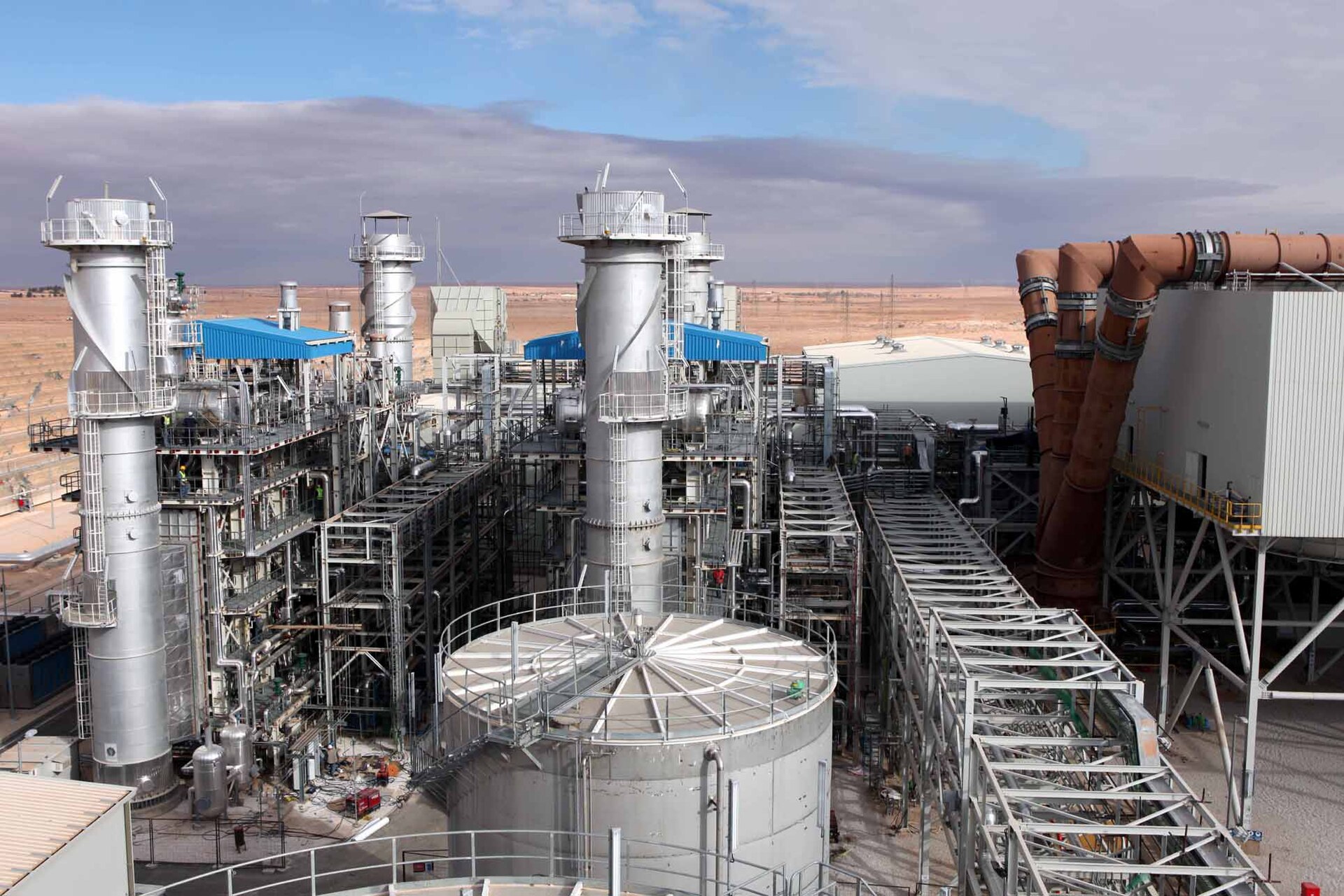
Algeria earns its foreign currency from oil and, above all, gas. Hydrocarbons were more than 90 percent of goods exports in 2023, according to the World Bank. Other exports, mostly fertiliser, steel and cement, totalled US$5.1 billion. The state company Sonatrach runs the sector, and Hassi R’Mel is Africa’s largest gas field.
Two pipelines carry gas to Europe. TransMed runs through Tunisia to Sicily and delivered about 21 billion cubic metres to Italy in 2024, about a third of Italian consumption. Medgaz runs under the sea to Almería in Spain, while a third line through Morocco has carried no Algerian gas since 1 November 2021.
Eurostat data make Algeria the European Union’s second-largest supplier of pipeline gas after Norway. Measured by value, its share was 17.4 percent in 2025 and 18.5 percent in the first quarter of 2026. Tankers also carry liquefied natural gas (LNG) from plants at Arzew and Skikda, and Italy was Algeria’s biggest customer overall in 2023.
The 2026 finance law authorises spending of 17,636.7 billion dinars (about US$132 billion) against revenue of 8,009 billion dinars (about US$60 billion). Hydrocarbon taxes provide a third of that revenue, 2,697.9 billion dinars (about US$20 billion), at a cautious oil price of US$60 a barrel. Ministries usually spend only about 70 percent of their allocations, which narrows the real gap.
The IMF board, in a review published on 21 September 2026, estimated growth at 3.9 percent in 2025 and 3.8 percent in 2026. It put the budget deficit at 10.5 percent of output in 2025 and 9.6 percent in 2026. On staff projections, public debt rises from 52.1 percent of output in 2025 to 79.0 percent by 2031. Foreign reserves are projected to fall from US$51.0 billion in 2025 to US$46.5 billion in 2026 and US$19.8 billion by 2031.
Part of the deficit is now covered by the central bank. The IMF says that financing reached 3.7 percent of output in 2025 and could reach 5.5 percent in 2026. Consumer price inflation moved from minus 2.0 percent in September 2025 to 5.2 percent in April 2026.
The dinar has two prices. The Bank of Algeria’s managed rate was 133.98 to the US dollar on 24 September 2026. On the Square Port-Saïd street market in Algiers it was 238 per dollar. That 78 percent premium reflects demand that regulated channels do not meet, and the IMF wants more exchange-rate flexibility to narrow it.
What is happening right now
As of 25 September 2026, three stories dominate, and the first is gas. The US-Israeli war on Iran from 28 February 2026 disrupted Hormuz shipping and cut most Qatari LNG exports. European gas prices rose 60 to 100 percent in the first month, according to Euronews.
Europe turned to its nearest pipeline supplier. Italy’s prime minister, Giorgia Meloni, and Spain’s foreign minister, José Manuel Albares, flew to Algiers within a day of each other. Tebboune visited Berlin on 16 July, when Sonatrach signed a contract with Germany’s VNG for deliveries from 2027. Spain’s prime minister, Pedro Sánchez, came to Algiers the same month.
The second story is public money. The IMF board welcomed robust growth but warned that “large fiscal deficits have eroded fiscal and external buffers”. It called the hydrocarbon windfall a chance to rebuild them. The 2027 budget framework sets authorised spending at 17,815.7 billion dinars (about US$133 billion).
The third is politics. Tebboune kept his government after the July vote and has called local elections for Saturday 28 November 2026. Relations with France have thawed since February, and the French ambassador returned on 8 May after more than a year away.
But French sports journalist Christophe Gleizes remains in an Algerian prison, serving seven years for “glorifying terrorism”. Paris has made his return central to the renewed dialogue.
Western Sahara remains the fault line with Morocco. Algeria cut diplomatic ties with Rabat on 24 August 2021, and the land border has been closed since 1994. Algeria backs the Polisario Front, which seeks self-determination for the territory.
In October 2025 the UN Security Council endorsed talks based on Morocco’s autonomy plan, and Algeria did not take part in the vote. It has since joined US-hosted talks with Morocco, Mauritania and the Polisario Front, in Madrid and Washington in February 2026.
What to watch
The first date is Saturday 31 October 2026, when the mandate of MINURSO, the UN mission in Western Sahara, expires. The Security Council must decide whether to renew or reshape it. The vote will show whether the US-led talks have produced anything that Algeria and the Polisario Front can accept.
Local elections follow on Saturday 28 November, the first local vote under the 69-province map. Turnout is the number to read: 21.24 percent in July, and 10.89 percent in the Algiers province. Parliament must also pass the 2027 budget by the end of the year. Watch its oil reference price, US$60 in the medium-term plan, and any sign of the energy-subsidy reform the IMF urged.
On energy, watch winter flows through TransMed and Medgaz and whether Qatar recovers. ICIS data cited by Reuters show 18 LNG cargoes left Qatar in the war’s first six months, against 509 a year earlier. German contract deliveries start in 2027, when the EU’s ban on long-term Russian LNG contracts also begins.
The street rate for the dinar, about 238 per dollar in late September, is the quickest public gauge of currency pressure. The longer horizon is 2029, when Tebboune cannot run again and no successor has emerged in public.
What this means for foreigners
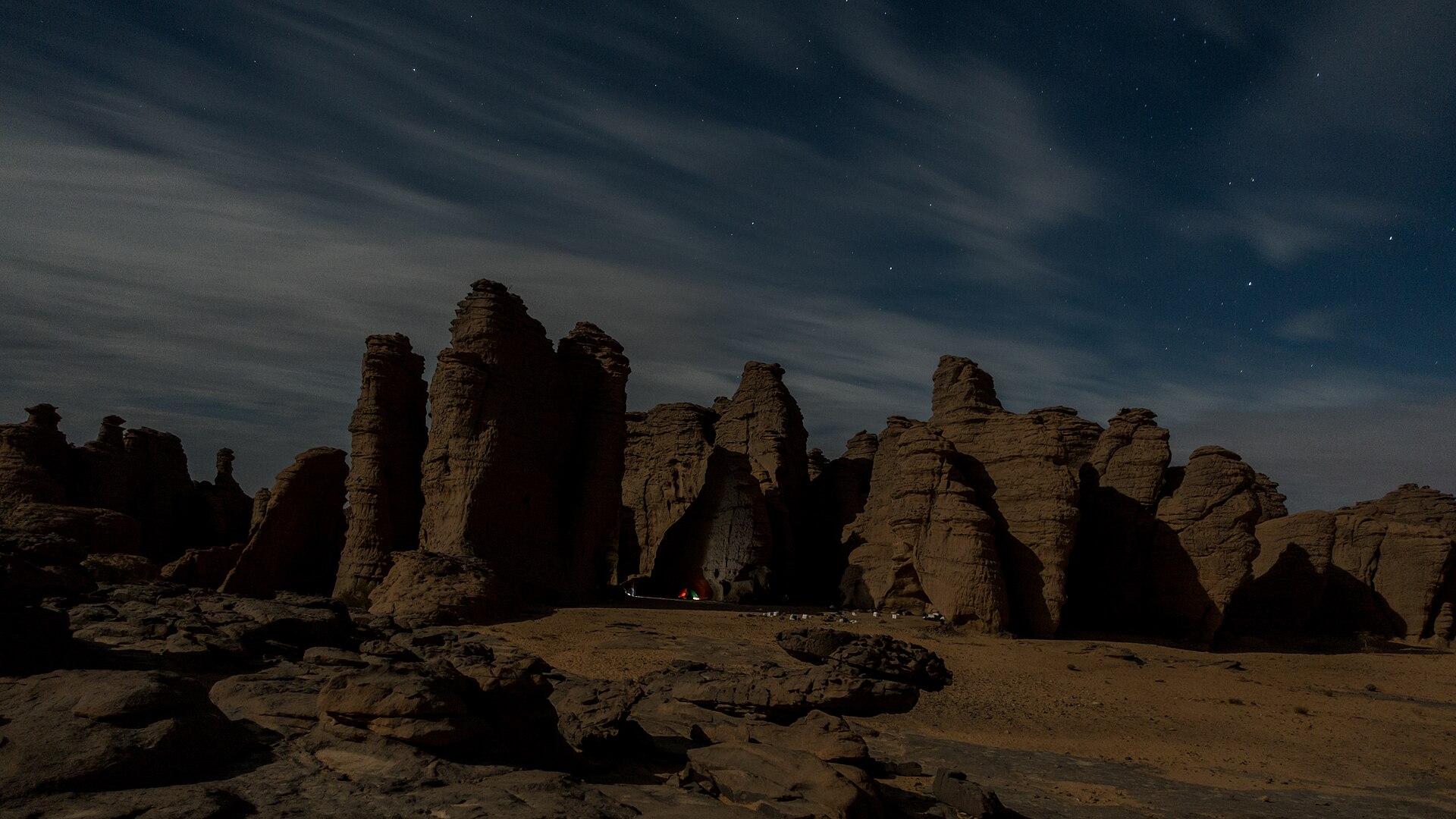
Most visitors from the United States, Canada, the United Kingdom and the European Union need a visa from an Algerian consulate before travel. Organised desert tourism is the exception. Since 2023, tourists booked with an accredited Algerian agency into southern provinces such as Djanet can get a visa on arrival, valid for up to 30 days.
The agency files the traveller’s details in advance and sends a QR-code document that airlines check at boarding; the fee is paid on arrival. The tourism ministry said in July 2026 that nearly 39,000 foreign tourists from 120 nationalities have used the scheme. Independent travellers, and trips confined to the north, still need a consular visa.
Banks use the official rate, while the street market pays roughly 78 percent more for dollars. Street trading sits outside the regulated system, and foreign-exchange offences are punishable under a 1996 ordinance.
The US State Department rates Algeria at Level 2, “exercise increased caution”, because of terrorism and kidnapping, in an advisory dated 25 August 2026. It advises Americans against travel near the eastern and southern borders and to several southern places, including Tamanrasset, In Salah and Tindouf. That sits awkwardly with the desert visa scheme, so check your own government’s advice too.
Reporters Without Borders ranked Algeria 145th of 180 countries for press freedom in 2026, down 19 places. The Gleizes case began with a reporting trip about a football club. In business the state dominates: public companies produce about a fifth of non-hydrocarbon value added, according to the World Bank.
Algeria explained in one line: a large, security-minded state where paperwork, patience and official channels matter more than speed.
Connected Coverage
Algeria’s Economy 2026: Gas Dependence, Deficits and the Slow Turn to Diversification
Algeria Gas Exports Jump as Europe Leans on Fiscally Stretched Algiers
Sources: Output, population, prices and public finances come from the IMF and World Bank. The budget comes from Algeria’s Official Journal and exchange rates from the Bank of Algeria. Gas trade is from Eurostat, military spending from SIPRI and Western Sahara from the UN Security Council. Entry rules come from Algerian diplomatic missions and travel advice from the US State Department, all accessed 25 September 2026.
What Is Not Known
Who follows Tebboune. The constitution rules out a third term in 2029, and no successor has emerged in public. How far the army command shapes that choice, as it did in 2019, cannot be seen from outside.
How much more gas Algeria can send. An energy expert told Euronews that extra Algerian supply in 2026 would likely be 4 to 8 billion cubic metres, less than the gap left by Qatar. Home demand, growing 3 to 4 percent a year on the same expert’s estimate, also competes with exports.
How long the Gulf disruption lasts. The price windfall flattering Algeria’s 2026 accounts depends on it, and no one can forecast it. The IMF lists a sharp fall in hydrocarbon prices as the first risk to its outlook.
Whether the windfall is saved. The IMF figures for debt and reserves out to 2031 are staff projections, not outcomes. The 2027 budget numbers are still a framework, and the final bill has yet to be adopted.
Where the Western Sahara talks lead, and whether Christophe Gleizes is pardoned. Neither has a timetable. The IMF has also asked Algeria to improve the coverage, timeliness and quality of its economic data, which limits what outsiders can check.
Frequently Asked Questions
Who is the president of Algeria in 2026?
Abdelmadjid Tebboune, first elected in December 2019. He was re-elected on 7 September 2024 with 84.30 percent of the vote on a turnout of 46.10 percent. He is also minister of national defence, and the constitution bars him from a third term in 2029.
Is Algeria the largest country in Africa?
Yes. It covers 2,381,740 square kilometres, according to the World Bank, about a quarter the size of the United States. Most of it is Sahara, and most of its 47.4 million people live in the north near the Mediterranean coast.
How much gas does Algeria supply to Europe?
Eurostat data make Algeria the EU’s second-largest pipeline gas supplier after Norway. Its share of pipeline imports by value was 17.4 percent in 2025 and 18.5 percent in the first quarter of 2026. Gas flows through TransMed to Italy and Medgaz to Spain, and as LNG by tanker.
Do Americans and Britons need a visa for Algeria?
Yes, in most cases, from an Algerian consulate before travel. Tourists on organised desert trips in the south, booked through an accredited Algerian agency, can get a visa on arrival for up to 30 days.
Why does the Algerian dinar have two exchange rates?
The Bank of Algeria manages an official rate, 133.98 dinars to the US dollar on 24 September 2026. Demand that regulated channels do not meet goes to the street market in Algiers. There the rate was about 238 per dollar, a premium of roughly 78 percent.
Why do Algeria and Morocco have no diplomatic relations?
Algeria cut ties on 24 August 2021, citing hostile actions by Morocco, and the land border has been closed since 1994. The deepest dispute is Western Sahara, where Algeria backs the Polisario Front and Morocco offers autonomy under its own sovereignty.
This article was produced by The Rio Times’ automated newsroom system. How we use AI · Report an error
Part of our ongoing coverage
Africa: The New Scramble — the great-power contest over the continent.
Read More from The Rio Times