Suriname Explained 2026: The Oil Hope, the Dutch Legacy, the Economy and What to Watch
GUIDES · SURINAME
Key Facts
- —Capital Paramaribo, on the Suriname River near the Atlantic coast. Roughly half the population lives in and around it. Its wooden colonial centre has been a UNESCO World Heritage Site since 2002.
- —Population About 640,000 in 2025, by World Bank count, close to the population of the US state of Vermont. It is South America’s smallest country by both people and land.
- —Currency The Surinamese dollar, written SRD, which floats. On 25 September 2026 the Central Bank of Suriname’s rates were 37.567 to buy and 37.846 to sell one US dollar.
- —Language Dutch is the language of government, courts and schools. Sranan Tongo, an English-based creole, is the everyday common tongue, and English is widely understood.
- —Economy About US$4.5 billion of output in 2025, or roughly US$7,070 a person. Gold is the main export, and the first offshore oil is due in 2028.
- —Government A republic whose 51-member National Assembly elects the president. Jennifer Geerlings-Simons has been president since 16 July 2025, and the next general election is due in 2030.
Suriname explained from the ground up: a Dutch-speaking country on South America’s north-east coast, and a gold economy waiting for oil.
Suriname explained in one line: a small, forested republic betting its future on an offshore oil field due to start in 2028. Until that oil flows, it lives on gold, borrowed money and a weak currency.
What kind of country is this?
Suriname sits on the north-east shoulder of South America. Guyana lies to the west, French Guiana to the east and Brazil to the south. The country covers about 164,000 square kilometres, a little smaller than Florida.
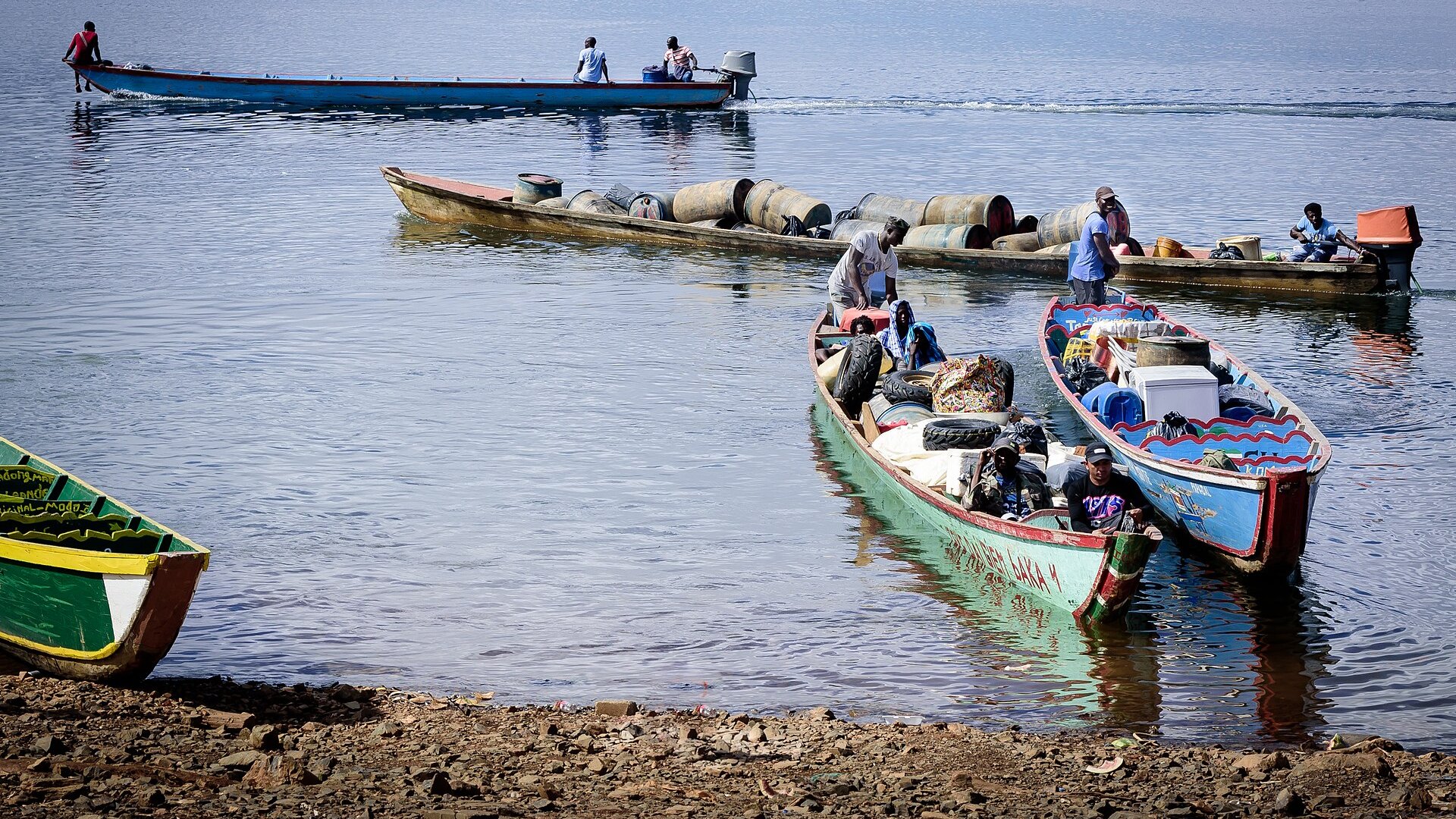
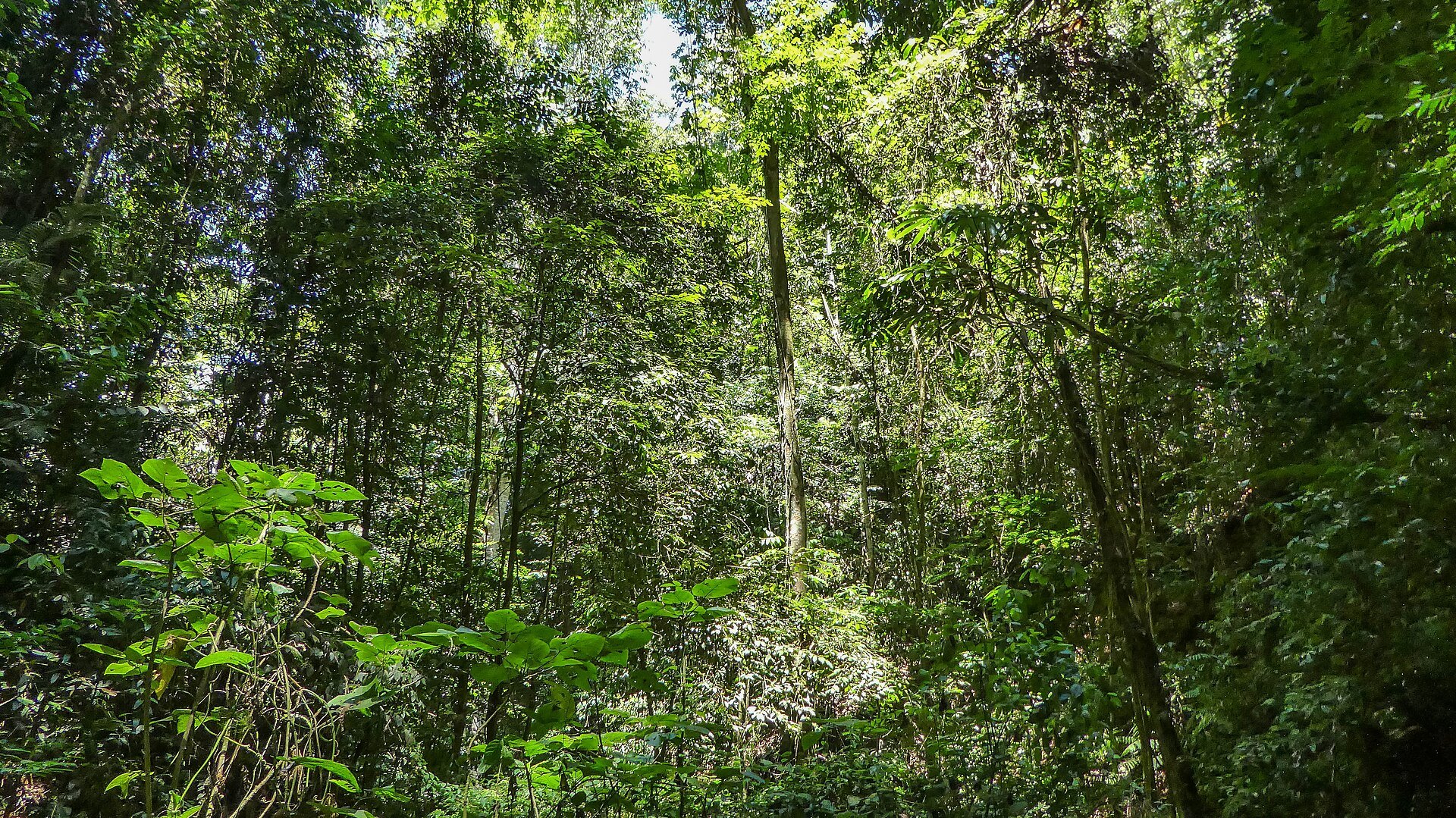
Most of that land is rainforest. World Bank data put forest cover at about 94 percent of land area in 2023, one of the highest shares on earth. Almost everyone lives on a narrow coastal strip. The interior is reached by river, small plane or a handful of long roads.
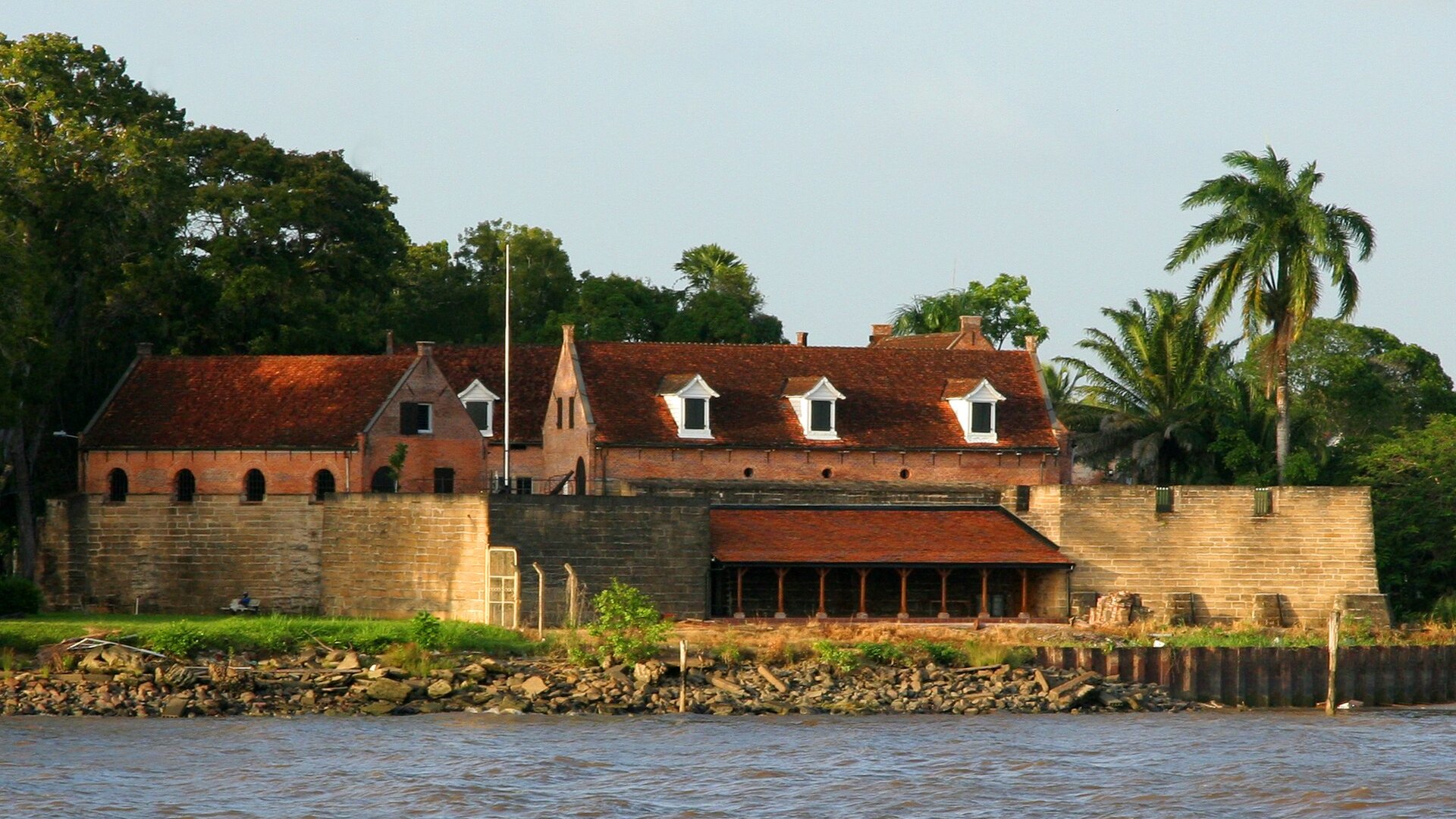
The Dutch took the colony in 1667. Under the Treaty of Breda, England kept New Amsterdam, later New York, and the Dutch kept Suriname. Sugar and coffee plantations ran on enslaved Africans. Many escaped into the forest and founded Maroon communities that still exist today.
Slavery ended on 1 July 1863, a date still marked as Keti Koti, meaning “broken chains”. Planters then brought contract workers from British India from 1873 and from Java from 1890. That history explains the population today.
No group forms a majority. The 2012 census counted Hindustanis, descendants of the Indian workers, at about 27 percent and Maroons at about 22 percent. Creoles, Javanese, Indigenous peoples, Chinese and people of mixed descent make up most of the rest.
Suriname became independent from the Netherlands on 25 November 1975. Nearly a third of the population moved to the Netherlands in the years before independence. The Dutch link remains strong: family ties, flights, pensions and news still run through Amsterdam.
Language follows that history. Suriname is the only independent country outside Europe where Dutch is the main language of government, business and schooling. Visitors usually get by in English, but forms, contracts and court papers come in Dutch.
Who runs Suriname and how
Suriname has one chamber of parliament, the National Assembly, known by its Dutch initials DNA. Its 51 members serve five-year terms. Since 2025 they are elected from nationwide party lists. The change followed a 2022 Constitutional Court ruling that the old district seats were badly unequal.
The assembly elects the president, who is both head of state and head of government. A candidate needs two-thirds of the seats, which means 34 votes. If no one reaches that mark, a wider United People’s Assembly of national, district and local representatives decides by simple majority.
There is no prime minister. The vice-president runs the day-to-day business of the Council of Ministers and answers to the president. In practice, the real contest is the coalition bargaining that produces the 34 votes.
The election of 25 May 2025 gave no party a majority. The National Democratic Party (NDP) won 18 seats. The Progressive Reform Party (VHP) of outgoing president Chan Santokhi won 17.
The NDP then built a six-party coalition with exactly 34 seats. Its partners are the ABOP, the National Party of Suriname (NPS), Pertjajah Luhur and Alternative 2020. The sixth is the Brotherhood and Unity in Politics party (BEP).
Jennifer Geerlings-Simons of the NDP was elected unopposed on 6 July 2025 and sworn in on 16 July. A physician and former speaker of the assembly, she is Suriname’s first woman president. Gregory Rusland of the NPS is vice-president. Both remain in office as of September 2026.
The NDP was founded by Dési Bouterse, who led a military coup in 1980. Fifteen prominent critics were killed at Fort Zeelandia in December 1982, an episode known as the December murders. Bouterse later won two elections as a civilian, in 2010 and 2015.
A Surinamese court convicted him in 2019 over the killings. After the sentence became final in December 2023 he went into hiding, and he died in December 2024. This history does not mean Suriname is under military rule today. Power has changed hands at the ballot box, most recently in 2020 and 2025.
How the economy works
The economy is small. The World Bank put output at about US$4.5 billion in 2025, roughly US$7,070 a person. That is well under a fifth of the figure for Britain, and it means one large project can change the national numbers.
Gold carries the economy today. Newmont runs the Merian mine and China’s Zijin Mining runs Rosebel. Thousands of small-scale miners also work the interior, often with mercury and often informally. Gold exports were worth US$558 million in the third quarter of 2025 alone, according to official figures reported locally.
Bauxite, the ore used to make aluminium, built modern Suriname for most of the twentieth century. That era ended when the US group Alcoa closed its Surinamese operations in the 2010s. Staatsolie, the state oil company, has produced oil onshore for decades and runs a refinery near Paramaribo.
The big change lies offshore. On 1 October 2024, TotalEnergies of France took the final investment decision on GranMorgu, in offshore Block 58. It develops the field with APA Corporation of the United States and Staatsolie. The company put the cost at about US$10.5 billion, more than twice the size of Suriname’s whole economy.
GranMorgu is designed to produce 220,000 barrels of oil a day from more than 750 million barrels of recoverable reserves. For scale, neighbouring Guyana pumps more than 900,000 barrels a day from the same geological basin. The state’s income will come through taxes, royalties and Staatsolie’s share.
Public finances have been fragile. Suriname stopped paying foreign bondholders in 2020 and then ran an International Monetary Fund (IMF) programme from 2021 to March 2025. In November 2023 it swapped its old bonds for new ones. They include an oil-linked instrument, which pays creditors more if oil revenue arrives.
The currency tells the same story. The Surinamese dollar traded at 7.52 to the US dollar before September 2020. The central bank moved to a floating rate in June 2021, and the rate now stands near 37.7. That means the SRD has lost about four-fifths of its value in six years.
Savers have responded by holding hard currency. Central bank data show 72.5 percent of bank deposits were in foreign currency in July 2026, mostly US dollars and euros. This does not make the US dollar legal tender. Daily prices are in SRD, while cars, rents and property are often quoted in dollars or euros.
What is happening right now
As of September 2026, the government is trying to hold the economy together until the oil money arrives. The pressure shows in debt, prices and public pay.
The IMF’s board reviewed Suriname on 28 January 2026. It estimated that gross public debt rose to about 106 percent of output in 2025, largely because of a debt-management operation. It put the 2025 budget deficit at about 10 percent of output and growth at about 1.5 percent.
Inflation has come down again after a spike. Annual inflation fell to 8.9 percent in July 2026, from 10.4 percent in June, according to the Suriname Economic Oversight Board. That is far below the crisis years of 2021 to 2023, when annual inflation ran above 50 percent. It is still well above the rates in most of the region.
The National Assembly passed the 2026 budget on 1 July by 31 votes to 16. Finance Minister Adelien Wijnerman promised tighter control of loss-making state companies. In September 2026 the government also froze a planned 15 percent pay rise for ministers and assembly members. It will be reviewed in October.
The oil project is on schedule, according to its partners. In September 2026, Staatsolie’s head Annand Jagesar said first oil remained on track for mid-2028. TotalEnergies chief Patrick Pouyanné said about half of the planned investment had been spent, and the total cost is now put at about US$12 billion.
Foreign policy has been active. In September 2026 Venezuela’s acting president Delcy Rodríguez visited Paramaribo. The two governments signed nine cooperation agreements and a joint declaration. President Geerlings-Simons also raised a Surinamese court seizure of Venezuelan state oil assets, linked to the old Petrocaribe oil-credit scheme.
The Canawaima ferry across the Corentyne River is the only official road link with Guyana. It was halted on 22 August 2026 over safety defects. It resumed on 28 August under a temporary permit. The long-planned bridge at the same crossing is estimated at about US$236 million and is not yet financed.
What to watch
First oil in 2028. The key milestone is the arrival and hook-up of the floating production vessel. Any slip moves Suriname’s revenue forecasts with it. TotalEnergies also plans four exploration wells in Block 58 in 2027, which could point to a second project. The IMF expects growth of around 30 percent in the first year of production.
Whether the fiscal rules hold. A law passed in December 2024 sends resource revenue to the Savings and Stabilization Fund Suriname (SSFS), once payments owed to bondholders under the 2023 deal are met. It also sets yearly limits on spending and a debt target over five years. The test is political: whether governments keep to the limits once money arrives.
The exchange rate and prices. The IMF has warned that the central bank has not done enough to slow the growth of money in circulation. A weaker SRD would push inflation back up and squeeze wages paid in local currency.
Clean-money ratings. The Caribbean Financial Action Task Force (CFATF), the regional anti-money-laundering watchdog, upgraded several of Suriname’s ratings in October 2025. Banks abroad watch these ratings when deciding whether to keep links with Surinamese banks.
Relations with neighbours. The Corentyne crossing with Guyana, the Venezuela agreements and the border questions in the far south all affect trade and movement. None is likely to be settled quickly.
The 2030 election. The coalition controls exactly two-thirds of the assembly. Losing a single partner would not topple the president, but it would make big decisions harder.
What this means for foreigners
Check entry rules before you book. Many nationalities need an e-visa or an entry fee, and longer stays need a residence permit. Our Suriname visa and residency guide sets out the routes, fees and timelines.
Bring more than one way to pay, and expect small fees. Hakrinbank, a major local bank, charges SRD 17.60 (about US$0.47) per withdrawal at other banks’ cash machines since 1 August 2026.
Do not carry large sums of cash. Taking US$10,000 or more in cash into or out of Suriname without permission is an economic offence. The Public Prosecutor’s Office repeated that warning in August 2025. Declaring the money on the arrival form does not make it legal.
Budget in hard currency, but spend in SRD. Rents, cars and property are often priced in US dollars or euros. Supermarkets, taxis and utility bills are paid in SRD. Our cost of living guide gives current price ranges.
Expect Dutch paperwork and plan health cover. Contracts, tax forms and hospital bills come in Dutch, so budget for a translator on anything important. Read our guides to healthcare, taxes and buying property before you commit money.
Treat the oil boom as a promise, not a fact. Jobs and contracts are growing around GranMorgu. The president campaigned on making companies work with Surinamese firms and buy local products. But the big revenue does not start before 2028.
Connected Coverage
Suriname Visa and Residency 2026: Entry Fees, Permits and Timelines
Cost of Living in Suriname 2026: What Expats Pay
Healthcare in Suriname for Expats: Paramaribo Hospitals, Insurance and the Dutch Link
Taxes in Suriname for Expats: Rates, Residency and the Guilder Question
Buying Property in Suriname as a Foreigner: Land Titles, Paramaribo Prices and the Rules
Sources: Population, output and forest cover from the World Bank; exchange rates and deposit data from the Centrale Bank van Suriname; debt and growth from the IMF; oil project data from TotalEnergies and Staatsolie; election results from the 2025 electoral record; anti-money-laundering ratings from the CFATF. All accessed 28 September 2026.
- Centrale Bank van Suriname — weighted average exchange rates, 25 September 2026
- Centrale Bank van Suriname — monetary statistics, dollarisation ratios (updated 7 September 2026)
- World Bank — population, GDP and forest-cover indicators for Suriname
- IMF — Press Release 26/025, 2025 Article IV consultation with Suriname
- IMF — Country Report 26/131, post-financing assessment, June 2026
- TotalEnergies — final investment decision on GranMorgu, 1 October 2024
- Reuters via Pipeline & Gas Journal — GranMorgu on track for mid-2028, September 2026
- CFATF — Suriname re-rating, 13 October 2025
- Suriname Herald — inflation at 8.9 percent in July 2026 (SEOB bulletin)
- Suriname Herald — Public Prosecutor on the US$10,000 cash limit, August 2025
- Hakrinbank — ATM transaction fees from 1 August 2026
- Suriname Times — 15 percent pay rise for government and assembly put on hold
- Jamaica Observer — IMF board findings on Suriname, 28 January 2026
- Guyana Chronicle — Canawaima ferry resumes, 29 August 2026
What Is Not Known
When the oil money really starts. Partners say mid-2028, and about half the investment has been spent. But offshore projects often slip, and the cost estimate has already moved from about US$10.5 billion to about US$12 billion.
How much the state will earn. That depends on the oil price, production speed and the contract terms. It also depends on how much flows out to bondholders through the oil-linked instrument agreed in 2023.
Where the Surinamese dollar goes next. The rate has been fairly stable near 37 to 38 in 2026, but the IMF has warned about loose money growth. A new slide cannot be ruled out.
Whether the Canawaima ferry keeps sailing. Its temporary permit ran to 28 September 2026, pending a new inspection. The vessel is also close to the end of its technical life.
How the Venezuela asset dispute ends. The court seizure linked to Petrocaribe is still before the courts, and no final ruling had been published by late September 2026.
Frequently Asked Questions
What language do people speak in Suriname?
Dutch is the official language of government, schools and courts. Sranan Tongo, an English-based creole, is the everyday common language, and Sarnami, a Hindustani language, Javanese and Maroon languages are also spoken. English is widely understood in Paramaribo.
Who is the president of Suriname in 2026?
Jennifer Geerlings-Simons of the National Democratic Party, in office since 16 July 2025. She is the country’s first woman president. Gregory Rusland of the National Party of Suriname is vice-president, and the next general election is due in 2030.
What currency does Suriname use?
The Surinamese dollar, written SRD, which floats against the US dollar. On 25 September 2026 the central bank’s weighted average rates were 37.567 to buy and 37.846 to sell one US dollar. Many larger items, such as rents and cars, are quoted in US dollars or euros.
When will Suriname start producing offshore oil?
The GranMorgu project in offshore Block 58 is due to start in mid-2028. TotalEnergies operates it with APA Corporation and the state oil company Staatsolie. It is designed to produce 220,000 barrels a day from more than 750 million barrels of reserves.
Is Suriname in South America or the Caribbean?
Geographically it is in South America, on the continent’s north-east coast between Guyana and French Guiana. Politically it also looks to the Caribbean. It is a member of the Caribbean Community, CARICOM, and of the Organization of American States.
This article was produced by The Rio Times’ automated newsroom system. How we use AI · Report an error
Read More from The Rio Times
Rotate for Best Experience
This report is optimized for landscape viewing. Rotate your phone for the full experience.
You've reached your free article limit
Subscribe to The Rio Times for unlimited access to expert analysis, market intelligence, and daily briefings on Latin America.