Taxes in Suriname for Expats 2026: Rates, Residency and the Guilder Question
GUIDES · SURINAME
Key Facts
- —What it is A plain guide to how Suriname taxes people and companies in 2026, from wage tax to the 10% VAT.
- —Who it’s for Foreign workers, remote earners, retirees and investors considering a move to Paramaribo.
- —The rules A monthly tax-free sum of SRD 9,000 (about US$238), then rates of 8% to 38%. Companies pay 36%.
- —Why it matters The 38% top rate starts at SRD 234,000 a year (about US$6,190), so almost any Western-level salary reaches it.
- —The catch Treaty relief is thin: the 1975 treaty with the Netherlands has a patchy record, and a 2024 treaty with Curaçao has no confirmed start date.
- —What is still open Proposals to raise the tax-free sum and to scrap dividend tax for individuals had not become law in the latest reports.
Suriname is a small, Dutch-speaking country on the north coast of South America, between Guyana and French Guiana. Its taxes are low at the bottom and steep at the top, and for anyone paid in dollars or euros the top rate arrives fast.
Taxes in Suriname rest on a wage and income tax with four brackets, a 36% company tax and a value-added tax that began on 1 January 2023. For a foreigner, the thresholds are the story: they are set in Surinamese dollars that have lost most of their value since 2020.
The exchange rate every figure depends on
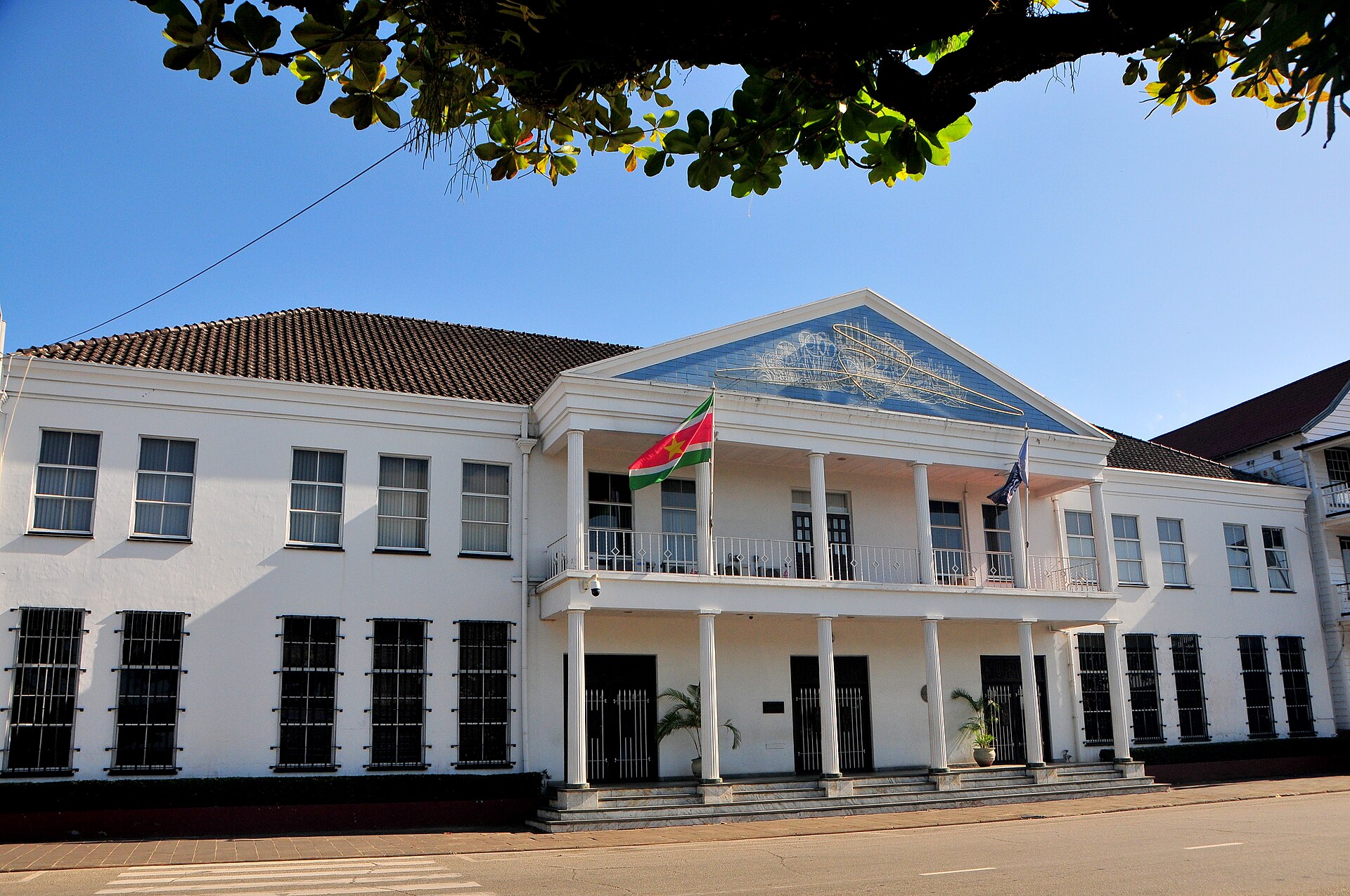
The Surinamese dollar, written SRD, floats against the US dollar. The Central Bank of Suriname (Centrale Bank van Suriname, CBvS) publishes weighted average exchange rates.
On 25 September 2026 the bank’s non-cash rate was 37.567 SRD to buy and 37.846 SRD to sell one US dollar. Open market data on 26 September 2026 showed about 37.9.
This guide converts at 37.8 SRD to the dollar. As a scale, SRD 1,000 is about US$26, and SRD 100,000 is about US$2,650.
The rate matters because the tax thresholds are fixed in SRD by law. In September 2020 the official rate was reset from 7.52 to about 14 SRD per dollar, so the same thresholds now buy far less.
Who counts as a tax resident in Suriname
Suriname’s income tax law dates from 1922 and has been amended many times. Its article 3 says residence is judged “by the circumstances”, not by a fixed day count.
In practice, that means the tax office, the Belastingdienst, looks at where your home, family, work and economic ties are. There is no simple 183-day rule written into that article.
Two special rules apply. Someone who leaves and returns to live in Suriname within a year, without living elsewhere meanwhile, is treated as resident for the whole absence.
Surinamese citizens working abroad for a Surinamese public body are also treated as resident, along with their spouse and minor children living with them.
Residents are taxed on their full annual income, after deductions. Non-residents are taxed only on income from Suriname, and the law gives them no tax-free sum.
A residence permit from immigration authorities is a separate matter. Holding one does not by itself settle your tax status, and lacking one does not exempt Surinamese income.
Wage tax and income tax: four brackets above a tax-free sum
Employees meet the wage tax, or loonbelasting, first. The employer calculates it, withholds it from gross pay and pays it to the Belastingdienst each month.
Wage tax is a prepayment on the annual income tax, the inkomstenbelasting. The self-employed and people with other income file income tax returns themselves.
Since 1 January 2024 the tax-free sum has been SRD 108,000 a year (about US$2,857), or SRD 9,000 (about US$238) a month. A state decree of 11 January 2024 set that figure.
Above the tax-free sum, the income tax law sets four bands. The next SRD 42,000 (about US$1,111) is taxed at 8%, and the following SRD 42,000 at 18%.
A third band of SRD 42,000 is taxed at 28%. Everything above SRD 234,000 a year (about US$6,190) is taxed at 38%.
Employees also get a fixed deduction for work expenses of SRD 4,800 a year (about US$127). Employers additionally withhold the premium for the state old-age pension, known as AOV.
What the brackets mean in US dollars
Take a salary of SRD 300,000 a year (about US$7,937). Before deductions, the tax comes to about SRD 47,760 (about US$1,263), an average rate near 16%.
Now take a foreign professional paid the SRD equivalent of US$5,000 a month, about SRD 2,268,000 a year. The same table gives tax of about SRD 795,600 (about US$21,048).
That is an average rate of about 35%, close to the 38% top rate. These are simple illustrations from the statutory table, not tax advice, and they ignore deductions and the AOV premium.
The lesson for foreigners is blunt. Taxes in Suriname feel light only on local wages; on a Western-level salary they approach rates seen in much of Europe.
VAT (BTW) since January 2023
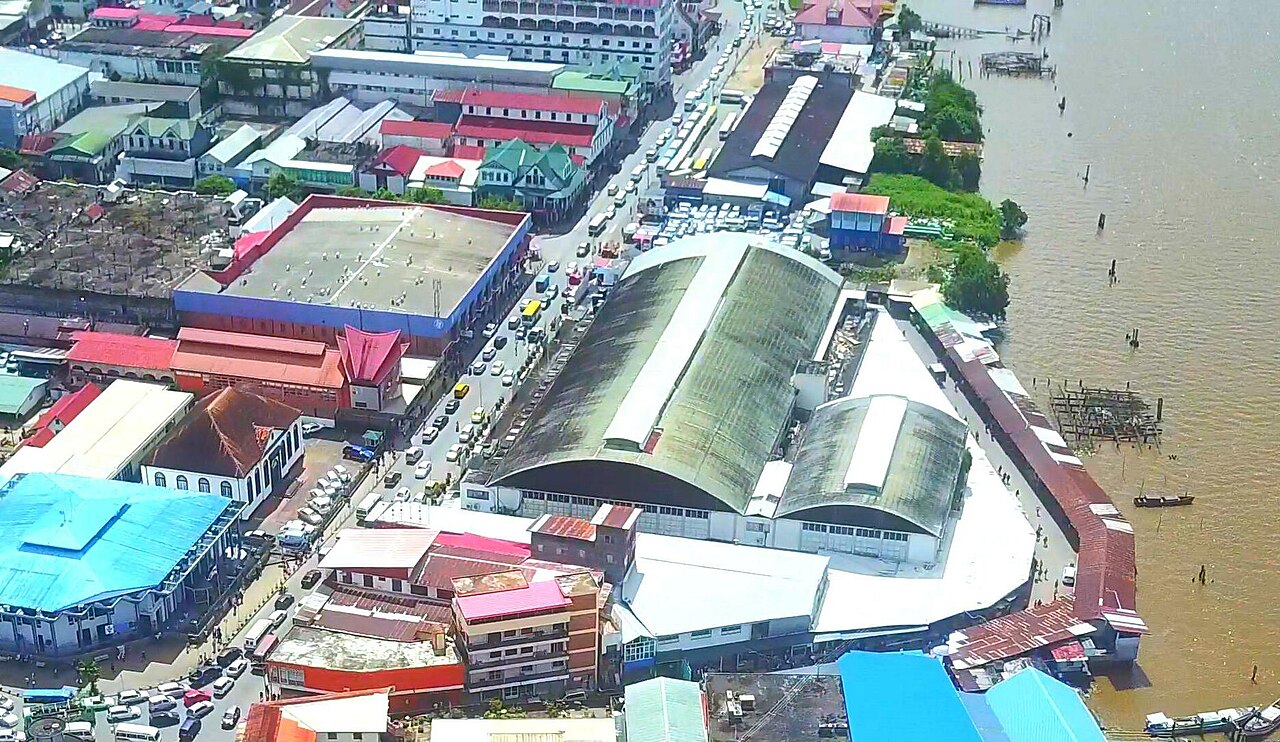
Suriname introduced a value-added tax on 1 January 2023. It is called BTW, short for belasting over de toegevoegde waarde. Businesses collect it, and consumers bear it.
The general rate is 10% on most goods and services. A 5% rate covers water, electricity, cooking gas and domestic freight transport, according to the Belastingdienst and the specialist site btw.sr.
A 25% rate applies to goods on a separate list in the law’s third annex, and exports carry 0%. Another annex lists supplies that are exempt altogether.
Businesses must register once taxable turnover exceeds SRD 1,000,000 in a calendar year (about US$26,455). Returns and payments are due monthly, between the 1st and the 15th, for the previous month.
The rollout was contested. After union protests in late 2023, the government suspended VAT on utilities and cooking gas for six months. An official committee reviewed the law in 2024.
Companies and dividends
Companies based in Suriname pay a flat 36% tax on profits, under article 36 of the income tax law. That includes the naamloze vennootschap (NV), the local public limited company.
Any company set up under Surinamese law is always treated as based in Suriname. Foreign companies pay only on profits from Suriname.
Dividends face a separate withholding tax of 25% under article 5 of the Dividend Tax Act of 1973. Asiskumar Gajadien, parliamentary leader of the VHP party, cited that rate in January 2023 and said it raised less than SRD 2 million a year (about US$52,910).
Gajadien has proposed scrapping dividend tax for residents who receive dividends from Surinamese companies. He described it as a pending initiative in September 2026.
Oil contractors under the Petroleum Act of 1990 and miners with state agreements are exempt from dividend tax, Gajadien noted. Their special terms are no guide for ordinary investors.
Treaties: the Netherlands link and its limits
The Netherlands, the former colonial power, is the treaty partner that matters most to many foreigners. The two countries signed a double taxation agreement on 25 November 1975.
The Dutch treaty database records the agreement as in force since 13 April 1977. It aims to stop the same income being taxed twice and to curb tax evasion.
Its record is patchy. In 2018 then finance minister Gillmore Hoefdraad said he wanted to reactivate it, and Waterkant reported that it had never really worked.
Suriname signed a separate treaty with Curaçao in 2024. The Dutch treaty database lists it, but it records no date of entry into force.
Before relying on any treaty, get a written view from a Surinamese tax adviser and from your home tax authority. Treaty relief usually needs paperwork, not just residence.
The Guilder Question
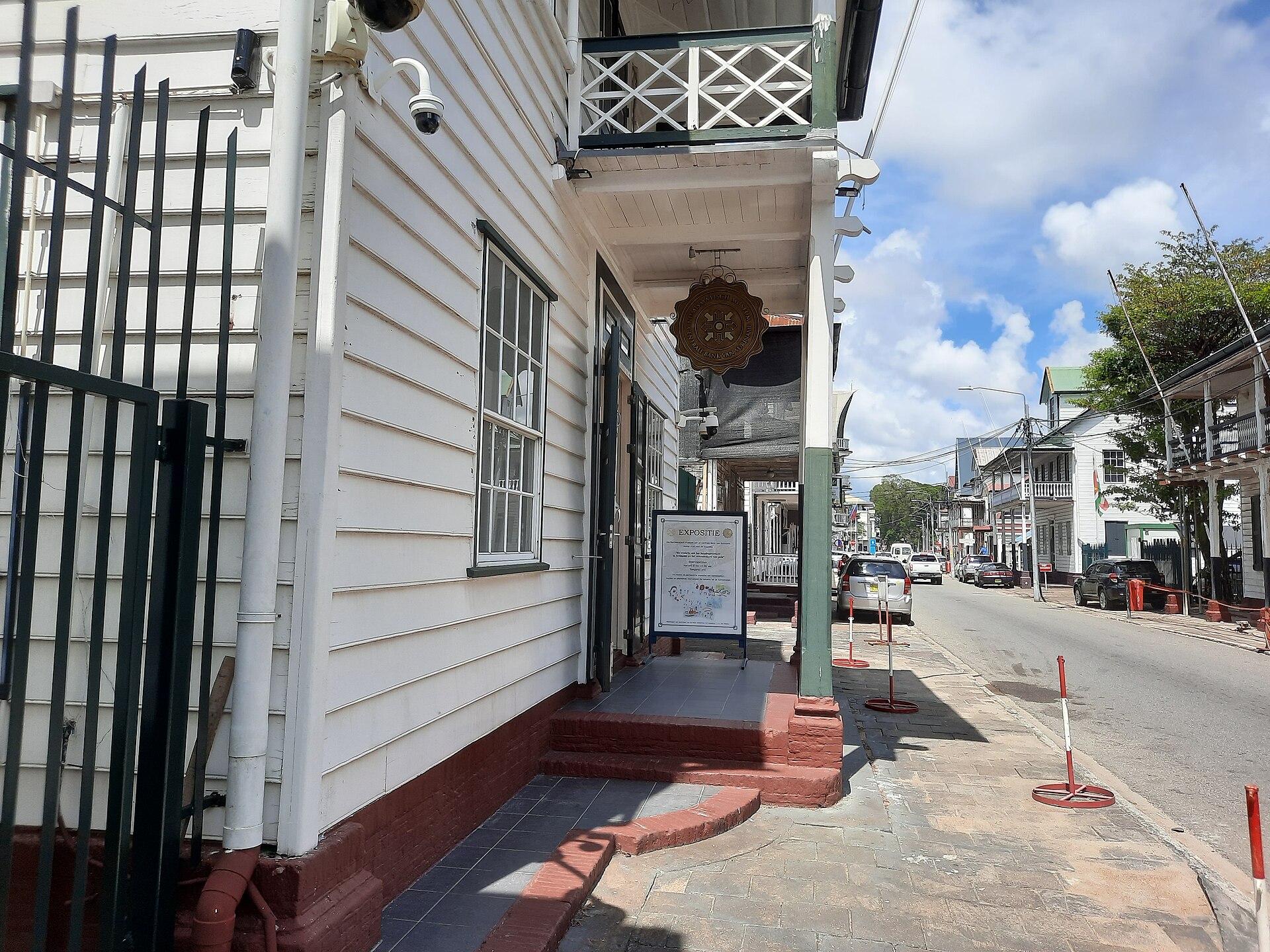
The Surinamese guilder was the national money until 1 January 2004. It was then replaced by the Surinamese dollar, with three zeros removed: 1,000 old guilders became SRD 1 (about US$0.03 today).
Existing coins and coin notes kept their face value in the new system. Any guilder amount in an old deed, lease or court record must be divided by 1,000.
The word still turns up in daily speech. In June 2026 a Paramaribo resident told Dagblad Suriname that cooking gas cost her “not even six guilders a day”, meaning SRD 5.60 (about US$0.15).
For a foreigner, that habit can confuse. A price quoted in “guilders” today may well mean Surinamese dollars, so ask which currency is meant before you sign.
Full dollarisation, meaning adopting the US dollar as legal money, was argued over in Surinamese media around 2016 and 2020. As of 26 September 2026, the SRD is still the official currency and floats.
The bigger practical risk is the SRD itself. It went from 7.52 to the US dollar before September 2020 to near 38 in 2026, eroding every threshold written in local money.
Filing, deadlines and the online portal
The Belastingdienst began digitising its processes in 2023. Employers file and pay wage tax and the AOV premium monthly, from the 26th until the 10th of the next month.
Income tax returns moved to the online portal from January 2025. The provisional return for 2025 had to be filed online, while returns for 2024 and earlier still used the old paper route.
Companies must file income tax returns digitally from tax year 2025. Registration in the portal runs through a tax identification number, known as the FIN.
A wider reform, a General Taxes Act covering returns, assessments, objections and penalties, was before parliament in August 2026. Its start date was still being debated.
Connected Coverage
Suriname Visa and Residency 2026 — Entry Fees, Permits and Timelines
Healthcare in Suriname for Expats: Paramaribo Hospitals, Insurance and the Dutch Link
Geerlings-Simons Takes Charge of Suriname Economy as TotalEnergies Prepares 2028 Oil
ExxonMobil Drives Guyana Oil Boom Past 900,000 Barrels Daily as Suriname Race Heats Up
Sources: Tax rules come from the Belastingdienst Suriname, the Income Tax Act 1922 and State Decree S.B. 2024 no. 2; rates from the Central Bank of Suriname; treaty data from the Dutch treaty database; plus Surinamese press. All accessed 26 September 2026.
- Belastingdienst Suriname, income tax page.
- Income Tax Act 1922, consolidated text.
- Belastingdienst Suriname, wage tax page.
- State Decree S.B. 2024 no. 2 on wage tax.
- Belastingdienst Suriname, VAT page.
- btw.sr, VAT rates.
- btw.sr, VAT news archive.
- Belastingdienst Suriname, news.
- Central Bank of Suriname, exchange rates.
- Open exchange-rate data, 26 September 2026.
- Dutch treaty database, Netherlands–Suriname 1975.
- Dutch treaty database, Curaçao–Suriname 2024.
- Waterkant, November 2018.
- Dagblad Suriname, January 2023.
- Dagblad Suriname, October 2023.
- Suriname Herald, September 2026.
- Dagblad Suriname, June 2026 (tax-free sum).
- Suriname Herald, August 2026.
- Dagblad Suriname, June 2026 (guilders).
- Wikipedia (Dutch), Surinamese dollar.
What Is Not Known
Whether the tax-free sum will rise is not known. In June 2026 MP Xiaobao Zheng proposed lifting it from SRD 9,000 to at least SRD 30,000 a month (about US$794). The outcome is not known.
The fate of the proposal to scrap dividend tax for resident individuals is open. So is the start date of the General Taxes Act, which MPs asked to phase in.
How the 1975 treaty with the Netherlands works in practice today is not clear from public sources. Whether the 2024 treaty with Curaçao is in force is also not confirmed.
Where the Surinamese dollar goes next cannot be known. Every threshold in this guide is fixed in SRD, so its dollar value moves with the exchange rate.
Frequently Asked Questions
What are the income tax rates in Suriname in 2026?
After a tax-free sum of SRD 108,000 a year, about US$2,857, income is taxed at 8%, 18% and 28% in three bands of SRD 42,000 each. Everything above SRD 234,000 a year, about US$6,190, is taxed at 38%.
Who is a tax resident in Suriname?
Suriname judges residence by the circumstances, such as where your home, family and work are, rather than by a fixed day count. Residents are taxed on their full annual income. Non-residents pay only on income from Suriname and get no tax-free sum.
What is the VAT rate in Suriname?
Suriname introduced VAT, called BTW, on 1 January 2023. The general rate is 10%, with 5% for water, electricity, cooking gas and domestic freight, 25% for goods on a special list and 0% for exports. Businesses register once taxable turnover exceeds SRD 1,000,000 a year, about US$26,455.
How much tax do companies pay in Suriname?
Companies based in Suriname pay a flat 36% on taxable profit under the Income Tax Act 1922. Dividends face a separate 25% withholding tax under the Dividend Tax Act of 1973.
Does Suriname still use the guilder?
No. The Surinamese dollar replaced the guilder on 1 January 2004, and 1,000 old guilders became SRD 1. The word guilder still turns up in daily speech for Surinamese dollars, so check the currency on any quote or contract.
Is there a tax treaty between Suriname and the Netherlands?
Yes. The two countries signed a double taxation agreement on 25 November 1975, in force since 13 April 1977 according to the Dutch treaty database. A 2018 Waterkant report said it had never really worked, so take advice before relying on it.
This article was produced by The Rio Times’ automated newsroom system. How we use AI · Report an error
Read More from The Rio Times