Who Dominates Suriname, Elites and Regions Explained
SURINAME · POWER
Key Facts
- —Who rules Six parties that backed President Simons hold 34 of the 51 seats in parliament as of October 2026.
- —Why 34 matters Electing a president takes two-thirds of all members, which is exactly 34 of 51 votes.
- —Opposition The VHP holds the other 17 seats and cannot block the six parties alone.
- —Groups No ethnic group is a majority; Hindustani 27.4%, Maroon 21.7%, Creole 15.7% (2012 census).
- —Money State oil company Staatsolie paid US$400 million to the state in 2025, about 30% of government revenue.
- —Left out Maroon land had no effective demarcation and titles on Maroon and indigenous land went to outsiders (2023 report).
Suriname power sits in the 51-seat National Assembly, which elects the president, and six parties together hold the two-thirds they need. This guide shows who dominates whom, from the coalition and ethnic groups to the army, oil money and people at the margins.
It matters to Americans because US companies hold stakes in Suriname’s gold and oil.

Suriname Power in Plain English
Suriname is a small country on the north coast of South America, with about 640,000 people and no ethnic majority. Because parliament, not voters, picks the president, every government is a deal between parties.
Our full country page on Suriname has the latest news. The guide below shows how Suriname power is shared among parties, groups and institutions.
- National Assembly: the 51-seat parliament that elects the president and the vice president.
- Hindustani: Surinamese of South Asian descent, 27.4% of people in the 2012 census, the largest group.
- Maroons: descendants of enslaved Africans who escaped into the rainforest and built their own communities, 21.7% in 2012.
- Creoles: Surinamese of mainly African descent with roots in the coastal towns, 15.7% in 2012.
- Javanese: descendants of workers brought from the Indonesian island of Java, 13.7% in 2012.
- Staatsolie: the state-owned oil company, a major source of public money.
How the Constitution Spreads Power
The 1987 constitution makes the president head of state, head of government, and chair of the State and Security Councils. The president answers to the National Assembly, which elects both the president and the vice president for five years.
Electing either office, or changing the constitution, takes two-thirds of all members of parliament, which means 34 of 51 votes. That rule forces broad deals, because no single party has come near that number.
Articles 94 and 95 bar the president and vice president from business posts, union posts and stakes in state contractors. The rules aim to keep money and office apart, though they say nothing about relatives or allies.
The Coalition That Holds Two-Thirds
After the 25 May 2025 election, six parties backed President Jennifer Geerlings-Simons, who comes from the NDP, the National Democratic Party. The Assembly elected her on 6 July 2025 and she was sworn in on 16 July 2025, according to the government.
The National Assembly’s own member list for 2025 to 2030 shows how the seats split as of October 2026. The six parties behind the president hold 34 seats and the VHP holds 17.
Our guide to Suriname politics names the ministers and the main parties. This guide looks at the deeper structure of Suriname power.
- NDP, 18 seats: the largest party; its member Ashwin Adhin chairs the Assembly and Rabindre Parmessar leads its group.
- ABOP, 6 seats: the General Liberation and Development Party; its leader Ronnie Brunswijk is the Assembly’s vice chair.
- NPS, 6 seats: the National Party of Suriname, led in parliament by Jerrel Pawiroredjo.
- PL, 2 seats: Pertjajah Luhur, led in parliament by Bronto Somohardjo.
- BEP and A20, 1 seat each: two small parties led by Ronny Asabina and Steven Reyme.
- VHP, 17 seats: the Progressive Reform Party, the only opposition group, led in parliament by Asiskumar Gajadien.
Ethnic Groups and Regions in Suriname Power
Ethnic groups have long shaped Suriname’s parties, and the 2012 census, the latest published, shows why no group can rule alone. Hindustani were 148,443 people, Maroons 117,567, Creoles 84,933 and Javanese 73,975 out of 541,638 residents.
Geography adds a second divide. Paramaribo and neighbouring Wanica held 66.3% of all residents in 2012, so the capital region weighs most in elections.
Our Suriname population guide gives the full headcount by group and district. The numbers show why Suriname power cannot rest on one community.
The Interior
Sipaliwini, the interior district, covers nearly 80% of the land but had only 37,065 residents in 2012, or 0.3 per square kilometre. Maroon and indigenous villages live there, far from the ministries and the main road network.
The US State Department’s 2023 human rights report says Maroons and indigenous people had limited access to education, jobs and health care. It also says titles were issued to third parties on indigenous land without consulting everyone concerned.
The Army, the Police and the Bouterse Legacy
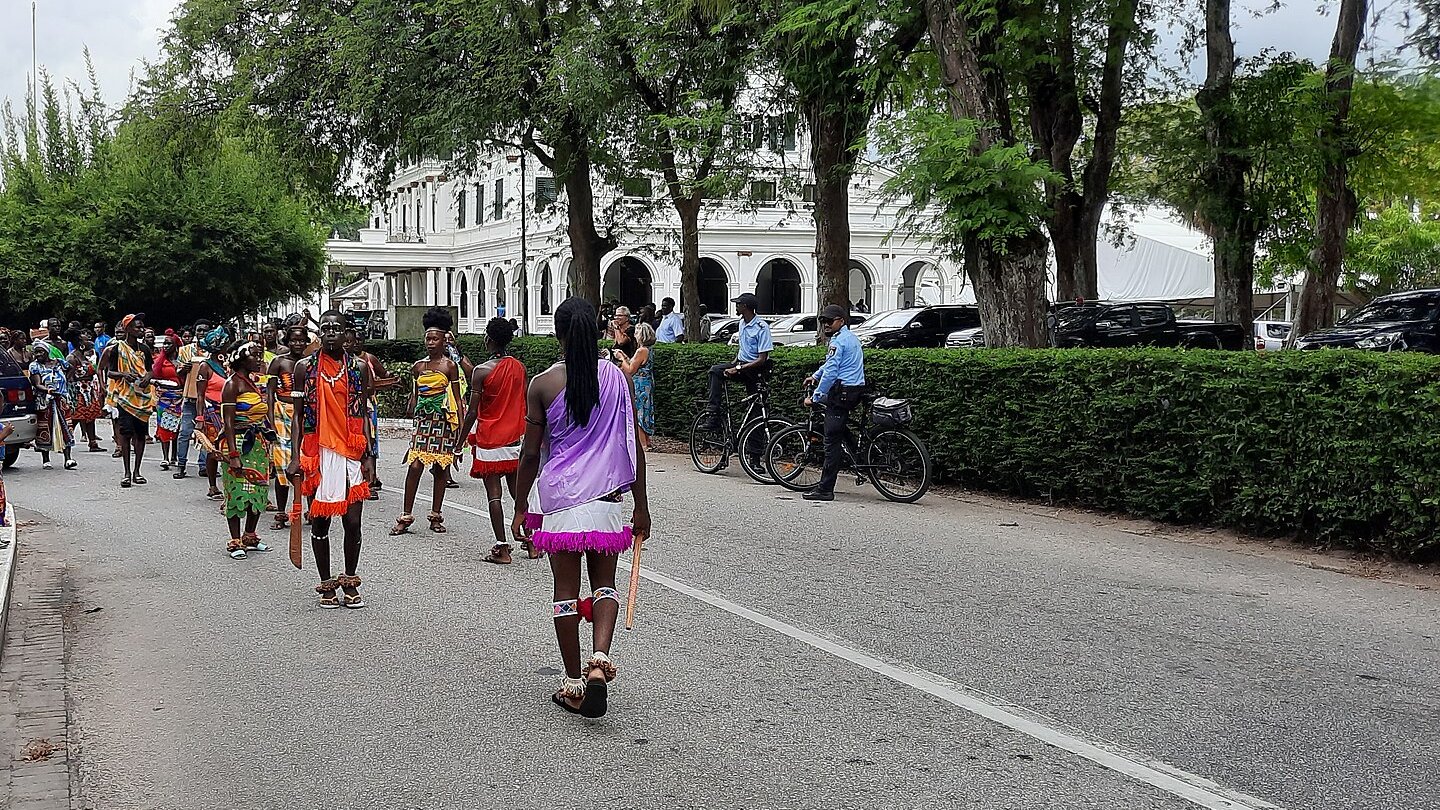
The constitution’s preamble refers to the military coup of 25 February 1980 and its consequences. Désiré Bouterse, a former president, was convicted over the extrajudicial killing of 15 political opponents in 1982.
The State Department reports that an appeals chamber upheld his 20-year sentence on 20 December 2023. The same ruling raised one co-defendant’s sentence from 10 to 15 years.
Who Controls the Forces Now
Under the constitution, the army acts under civilian authority, and defence policy rests with the government. The Security Council, led by the president, includes the vice president, justice and defence ministers, army commander and police chief.
The State Department says US help under the Caribbean Basin Security Initiative supports civilian authority over the military. It also says the aid backs work against narcotics trafficking and money laundering.
Money, Oil and Gold as Sources of Power
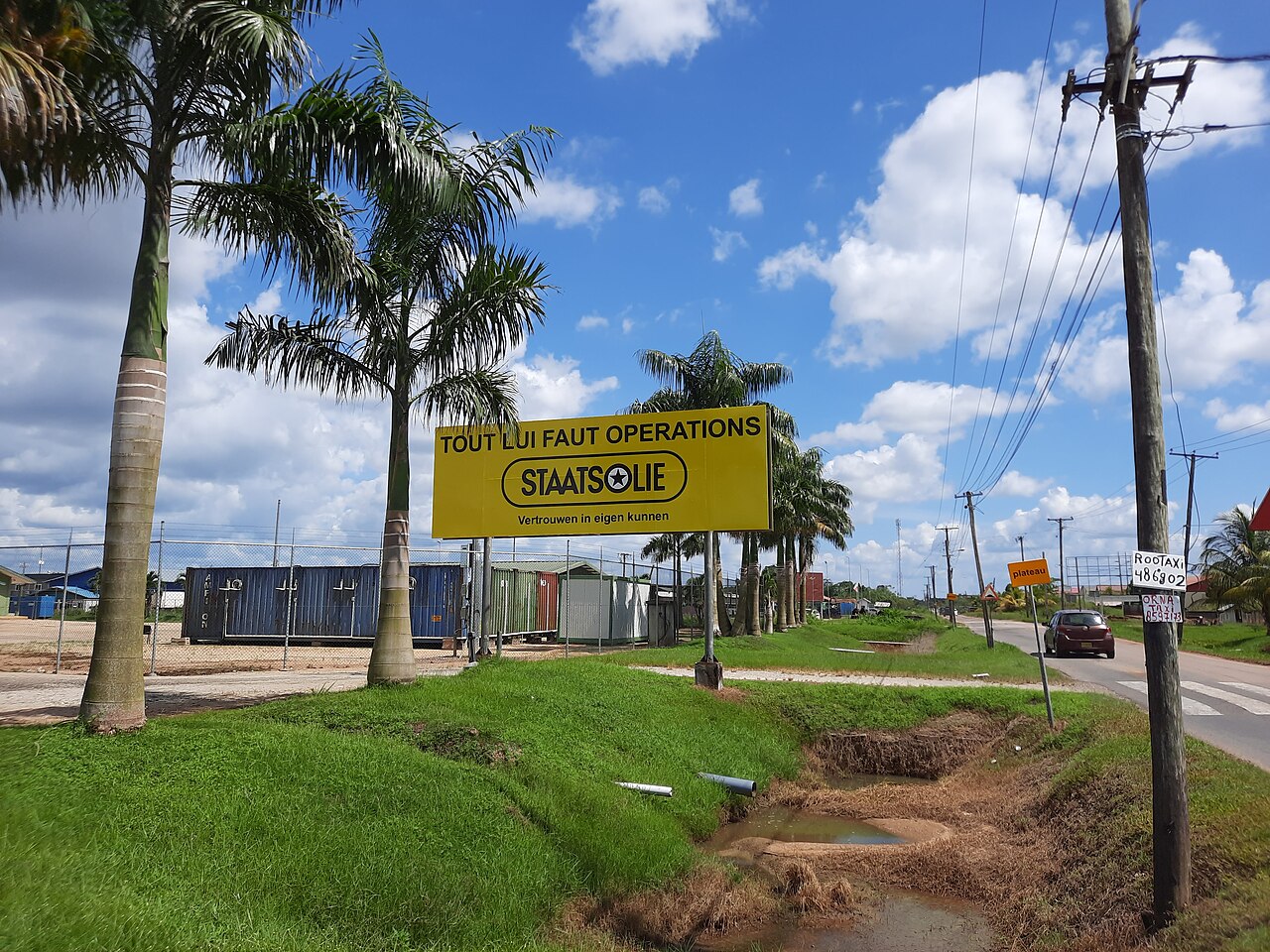
The state is the country’s strongest economic actor because it owns Staatsolie and collects most of the mining income. Staatsolie reported revenue of US$832 million for 2025 and paid US$400 million to the state in taxes, dividends and royalties.
The World Bank says mining supplies more than 80% of exports and nearly half of public revenue. Staatsolie says its US$400 million equals about 30% of government revenue.
Shareholders approved Staatsolie’s 2025 accounts on 15 May 2026, and managing director Annand Jagesar called it a strong year. President Jennifer Simons received its 2025 annual report from supervisory board chair Rudolf Elias.
Banks and Dirty Money
In March 2026 Dutch prosecutors settled with three Surinamese banks, Hakrinbank, Finabank and De Surinaamsche Bank, over negligent money laundering in 2018. Dutch investigators had seized EUR 19.5 million (about US$21.8 million) in cash at Schiphol airport that came from the three banks.
The prosecutors found no intent, and they said the banks had since tightened their controls. On 17 October 2026 President Simons told a banking summit that trust is the country’s strongest currency.
Oil Money and the Rules to Come
Offshore oil is due to start in 2028, when the World Bank projects growth of 21.5%, and Staatsolie holds 20% of the GranMorgu project. On 17 October 2026 the president said a savings and stabilisation fund is being made operational.
She also expects an investment law in 2027 and cited a presidential anti-money-laundering task force ahead of a 2027 review. Who controls the fund and the new law will decide who gains most.
Churches, Unions and Civil Society
Faith communities are large and organised, and they cross ethnic lines only partly. In 2012, 48.4% of residents were Christian, 22.3% Hindu and 13.9% Muslim.
Roman Catholics were 21.6% of all residents and the Moravian church, known as EBG, 11.2%. Winti, an Afro-Surinamese faith, counted 1.8%.
The State Department says the government, the largest employer, held labour laws binding only for private employees. That leaves civil servants, a large and politically important group, with weaker legal protection than workers in private firms.
Our Suriname economy guide lists the main companies. Their owners are part of Suriname power too.
Inequality and Who Is Left Out
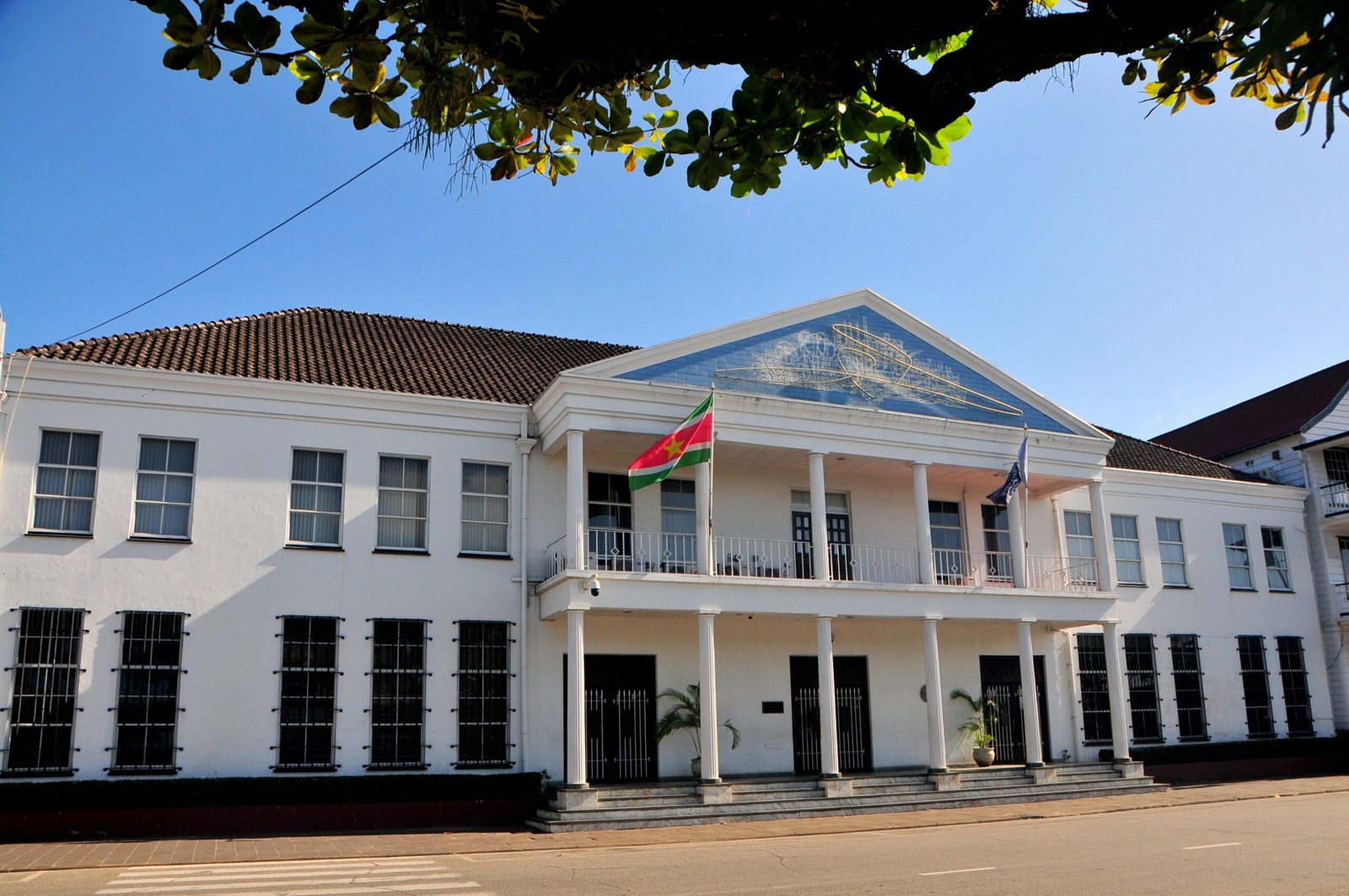
The World Bank estimates that 19.6% of people lived below the US$8.30-a-day line in 2025, and 46.5% faced multidimensional poverty in 2022. Poverty is not spread evenly, because the World Bank finds multidimensional poverty particularly high in the interior.
Maroons are about 22% of the people, and indigenous peoples are about 4%, according to the State Department. The report says Maroon lands had no effective demarcation, and authorities issued titles to outsiders on indigenous land.
What It Means for US Readers
American companies are exposed to Suriname power. The State Department says Newmont’s subsidiary Surgold opened a gold mine in 2016, and US firms have exploration agreements with Staatsolie.
A coalition that needs every vote can stall a mining law or an oil contract. Our guide to foreign powers and investors in Suriname covers the outside players.
Security cooperation with the United States runs through the Caribbean Basin Security Initiative. Foreign Minister Melvin Bouva held talks in Washington on 16 October 2026 with the secretary-general of the Organization of American States.
What Is Not Known
Results of a census counted from October 2024 were not on the statistics office website at the end of October 2026. Ethnic shares therefore rest on the 2012 count.
The wealth and holdings of the leading political families are not published in any official register. No official source shows how the coalition will hold together before the next election in 2030.
Whether the savings and stabilisation fund will be run at arm’s length from politics also remains open. Suriname power over the oil income is not yet settled.
Frequently Asked Questions
Who holds power in Suriname?
President Jennifer Geerlings-Simons is backed by six parties with 34 of 51 seats in parliament as of October 2026. The Assembly, not voters, elects the president.
Why does Suriname’s coalition need exactly 34 seats?
The constitution requires two-thirds of all 51 members to elect a president or change the constitution. Two-thirds of 51 is 34, which the coalition holds exactly.
Which ethnic group is the largest in Suriname?
Hindustani, at 27.4% of residents in the 2012 census, then Maroons at 21.7%. No group is a majority, so coalitions are the norm.
What role does the army play in Suriname’s power structure?
The constitution places the army under civilian authority and gives defence policy to the government. Former president Désiré Bouterse was convicted over killings in 1982.
Who controls Suriname’s oil and gold income?
The state, through Staatsolie, which paid US$400 million to the treasury in 2025. Staatsolie also holds 20% of the offshore GranMorgu project.
Who is left out of Suriname power?
The State Department’s 2023 report says Maroon lands had no effective demarcation. It also found limited access to schools, clinics and jobs in the interior.
Sources: National Assembly of Suriname, member list 2025-2030, 2026-10-31; National Assembly of Suriname, Constitution (S.B. 1987 no. 116, as amended 1992), 1992; Algemeen Bureau voor de Statistiek, Census 2012 Volume I, 2014; Government of Suriname, President Simons at the Banking and Finance Summit, 2026-10-17; Government of Suriname, Minister Bouva and the OAS Secretary-General, 2026-10-16; US State Department, 2023 Country Report on Human Rights Practices, Suriname, 2024; US State Department, US Relations With Suriname, undated; Staatsolie, 2025 financial statements approved, 2026-05-15; World Bank, Suriname overview, 2026-10-08; Dutch Public Prosecution Service, settlements with three Surinamese banks, 2026-03-17.
This article was produced by The Rio Times’ automated newsroom system. How we use AI · Report an error · Editorial responsibility: Matthias Camenzind, Editor-in-Chief
Expat Guide to Suriname
What The Rio Times publishes for foreigners who live in or move to Suriname.
Start here
- Suriname Bank Account for Foreigners 2026: Banks, Documents and Dollars
- Taxes in Suriname for Expats: Rates, Residency and the Guilder Question
- Healthcare in Suriname for Expats: Paramaribo Hospitals, Insurance and the Dutch Link
- Suriname Visa and Residency 2026, Fees, Permits, Timelines
Understand Suriname
Brazil runoff date: Sunday, October 25, poll closing times and when results start · Brazil runoff polls: Flávio 51%, Lula 49% · Kalshi and Polymarket odds
Rotate for Best Experience
This report is optimized for landscape viewing. Rotate your phone for the full experience.
You've reached your free article limit
Subscribe to The Rio Times for unlimited access to our news, expat and nomad guides and market intelligence on Latin America and Africa.
Keep reading for free
Your first article was on us. Register with your email address to read 6 free articles every month. You will also receive The LatAm Brief: what moved in Latin American markets, politics and expat life, every weekday morning.
Expat Guide to Suriname
What The Rio Times publishes for foreigners who live in or move to Suriname.
Start here
- Suriname Bank Account for Foreigners 2026: Banks, Documents and Dollars
- Taxes in Suriname for Expats: Rates, Residency and the Guilder Question
- Healthcare in Suriname for Expats: Paramaribo Hospitals, Insurance and the Dutch Link
- Suriname Visa and Residency 2026, Fees, Permits, Timelines
Understand Suriname