
GUIDES · SURINAME
Key Facts
- —The country A Dutch-speaking republic of about 640,000 people (World Bank, 2025) on South America’s north-east coast. Independent since 25 November 1975.
- —The neighbours Guyana lies to the west across the Corantijn River, French Guiana (part of France) to the east across the Marowijne, and Brazil to the south.
- —Open border questions Suriname claims the Tigri area, which Guyana calls the New River Triangle and regards as its own. With France, the southern stretch between the Litani and Marouini rivers is still under negotiation (October 2026).
- —Offshore oil The US$10.5 billion GranMorgu project in Block 58 was approved on 1 October 2024. First oil is due in 2028, at up to 220,000 barrels a day.
- —Regional role A CARICOM member since 4 July 1995. President Jennifer Geerlings-Simons chairs the bloc’s heads of government from 1 January to 30 June 2027.
- —Still open Whether parliament approves the 2021 river border protocol with France, who pays for a Corantijn bridge, and whether Tigri talks resume.
Suriname’s neighbourhood is three borders, two of them still partly unsettled, and an ocean where oil is about to flow. The small Dutch-speaking state sits between English-speaking Guyana, French Guiana and Brazil.
For US readers it matters because a Houston-based producer is a partner in its first offshore oil project, due in 2028.
Where Suriname Sits on the Map
Suriname covers 163,820 square kilometres on the Atlantic coast of north-eastern South America, CARICOM Secretariat data show. It is one of the three Guianas, where Britain, the Netherlands and France each held a colony.
The Dutch slice became independent on 25 November 1975. About 640,000 people lived there in 2025, according to the World Bank.
Paramaribo is the capital. Dutch is the official language, which sets Suriname apart from every neighbour.
Rivers draw almost all of its land borders. The Corantijn separates it from Guyana in the west.
The Marowijne, called the Maroni in French, separates it from French Guiana in the east. In the south, deep in the Amazon, Suriname borders the Brazilian states of Pará and Amapá.
The economy is small next to its western neighbour. World Bank figures put Suriname’s 2025 output at about US$4.5 billion, against about US$27.1 billion for oil-rich Guyana.
That gap explains much of the Suriname neighbourhood story: a country preparing for oil beside one already transformed by it.
Guyana and the Tigri Question
Guyana, the former British Guiana, is Suriname’s closest partner and its oldest quarrel. Both are members of CARICOM, the Caribbean Community, and both depend on the Corantijn for trade and travel.
Yet they disagree about a forested corner in the far south.
Suriname calls the area Tigri. Guyana calls it the New River Triangle and regards it as its own territory.
The issue flared again in June 2026. Guyana objected to a map shown at the Suriname Energy, Oil and Gas Summit that placed Tigri inside Suriname, Key News Suriname reported.
Guyana’s government said a formal protest would follow through diplomatic channels.
In Paramaribo, the government said it kept its long-standing position on the area but wanted good relations with Guyana. Ebu Jones is a lawmaker for the governing National Democratic Party (NDP) and a former ambassador to Guyana.
He told parliament that “Tigri belongs to Suriname and will continue to belong to Suriname”.
The two presidents have chosen talks over confrontation. Meeting in Nieuw Nickerie in September 2025, Jennifer Geerlings-Simons and Guyana’s Irfaan Ali recommitted to settling border issues peacefully under international law.
They agreed that the 7th meeting of the Suriname-Guyana Joint Border Commission should take place before the end of 2025.
The Corantijn: Ferry, Bridge and Sea Boundary
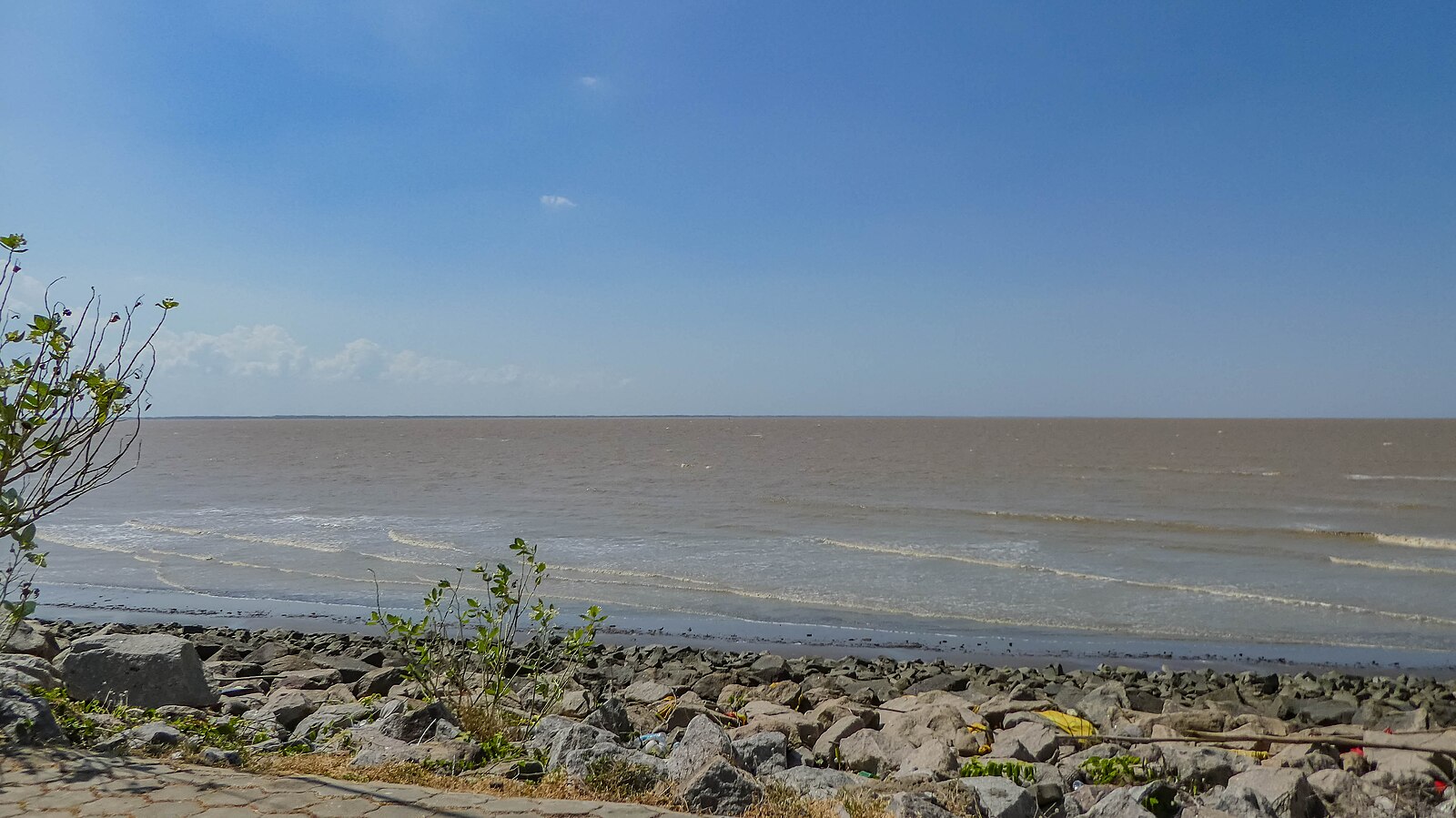
The MV Canawaima ferry is the everyday link across the Corantijn. The Maritime Authority of Suriname suspended it over safety concerns in August 2026.
Guyana’s government said it resumed on 28 August 2026 after inspections, with talks continuing on dry-docking and a replacement vessel.
A bridge over the Corantijn has been discussed for years. At Nieuw Nickerie in 2025 both leaders praised its “transformative potential for trade, tourism, connectivity, and people-to-people exchanges”.
In July 2026, however, President Ali said he had received nothing official on Suriname’s plan to finance the bridge alone.
Suriname’s foreign ministry replied that the plan had been conveyed to him, Kaieteur News reported on 5 July 2026. The ministry said the two sides had agreed to set up technical working groups on the financial, technical and operational sides.
At sea, the line is settled. On 17 September 2007 a tribunal under the UN Convention on the Law of the Sea fixed the maritime boundary.
The Permanent Court of Arbitration hosted the case. It also ruled that Surinamese naval action against a drilling rig in June 2000 was an unlawful threat of force, but denied Guyana compensation.
French Guiana and the Marowijne Border
To the east, Suriname’s neighbour is France. French Guiana is a French overseas territory, so the Marowijne is also Suriname’s border with the European Union.
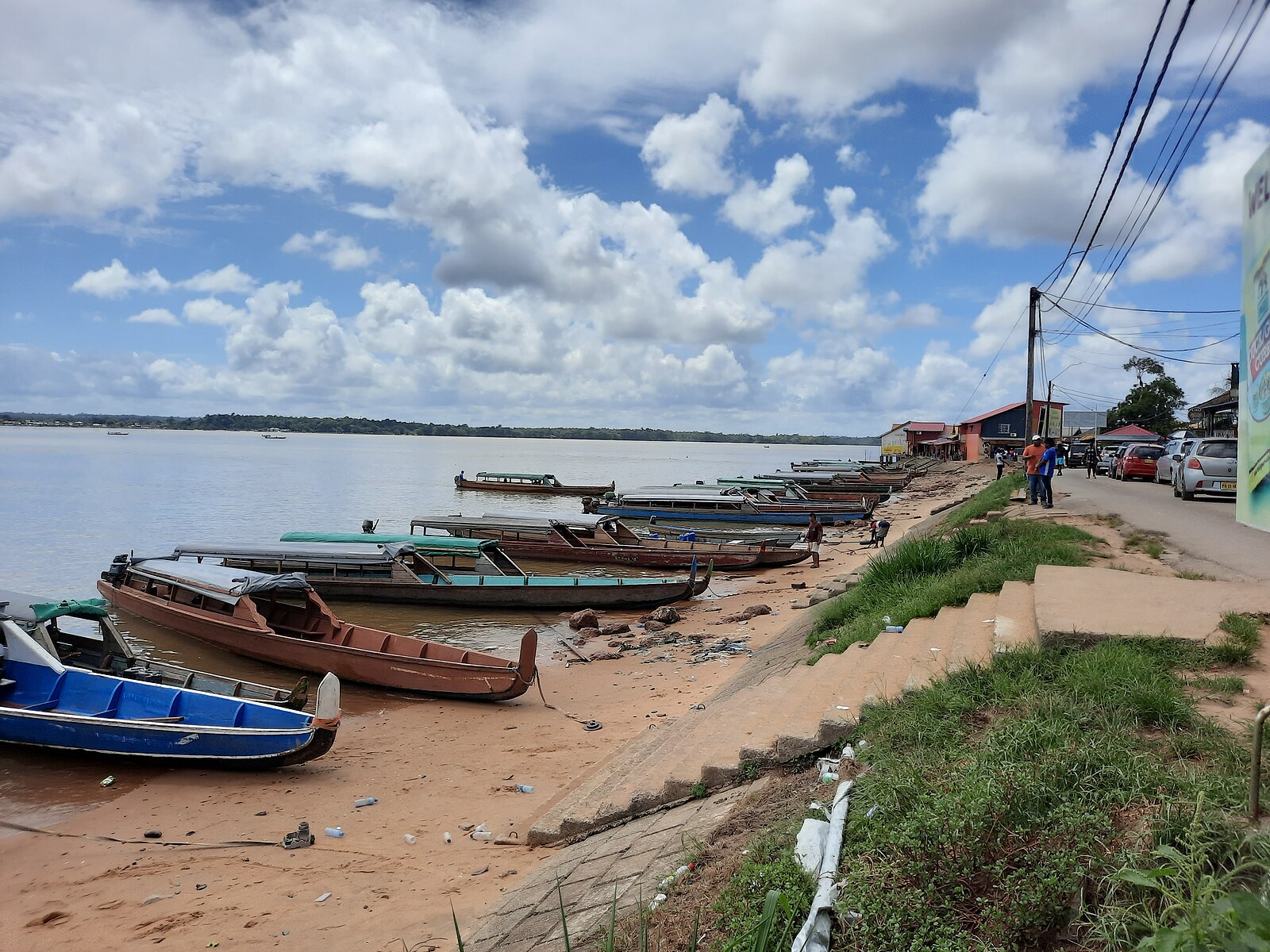
Saint-Laurent-du-Maroni on the French bank faces the Surinamese town of Albina.
A Paris convention of September 1915 set the river border and sovereignty over some 950 islands, from the mouth up to the village of Antécume-Pata. On 15 March 2021 the two countries signed a protocol in Paris that fixes the line precisely on the Marowijne and Lawa rivers.
France has ratified that protocol, a French Senate report of July 2023 says. Suriname has not yet.
Its National Assembly debated the approval bill in November 2025. In July 2026 Key News Suriname reported that the debate was postponed until after consultations with Maroon communities.
Those consultations, called krutu, involve the Paramaccan and Aukan communities, two Maroon peoples descended from Africans who escaped slavery. The Suriname Trade and Industry Association warned in August 2026 that the protocol must not become a “blank cheque”.
Further south, a larger gap remains open. France holds that the Litani river forms the upper border, while Suriname says it is the Marouini.
The area between them “still remains under negotiations”, according to a summary of the 2021 talks published by Bio-plateaux, a cross-border river data network.
The sea is again simpler. France and Suriname signed a maritime delimitation agreement in Paris on 8 November 2017, which entered into force on 1 December 2018, UN treaty records show.
Police cooperation under a 2006 agreement and the fight against illegal gold mining on the river are recurring themes, the 2023 French Senate report noted.
Brazil, the Neighbour to the South
Brazil, Latin America’s largest country, borders Suriname across a remote stretch of Amazon forest. The relationship runs mostly through diplomacy, security cooperation and air links.
Oil has added a new strand to it.
President Luiz Inácio Lula da Silva received Geerlings-Simons at the Planalto Palace in Brasília on 28 May 2026. The visit was set to produce up to 12 bilateral acts, Poder360 reported, with planned accords on police cooperation, military operations on the border, human trafficking, cybersecurity and forest fires.
Brazil wants to push a land corridor, the “Guianas route”, linking its north to the Caribbean through Guyana, Suriname and French Guiana. Both sides also discussed more flights between Paramaribo and Belém.
Organised crime and illegal gold mining in the shared Amazon are the security concerns that bind them.
Offshore Oil Next to Guyana’s Boom
Suriname’s biggest bet lies offshore, where neighbouring Guyana has already built an oil industry. TotalEnergies, the French energy group, took the final investment decision on GranMorgu, in Block 58, on 1 October 2024.
APA Corporation, a US producer based in Houston, is its partner.
According to the companies’ announcement, the project costs around US$10.5 billion and targets more than 750 million barrels in the Sapakara and Krabdagu fields. A floating production vessel with capacity for 220,000 barrels a day will sit about 150 kilometres off the coast.
Staatsolie, Suriname’s state oil company, holds a 20 percent interest. On 21 September 2026 it said first oil was still planned for 2028, after a site visit by TotalEnergies chief executive Patrick Pouyanné.
More than 100 Surinamese companies already supply the project, and a new exploration campaign in Block 58 is planned for 2027.
Oil also shapes regional diplomacy. Energy security is one of four priorities Suriname has set for its CARICOM chairmanship.
Geerlings-Simons and Ali also pledged in 2025 to explore joint ventures in oil and gas.
CARICOM, ACTO and Suriname’s Regional Role
Suriname joined CARICOM on 4 July 1995 and is one of its 15 member states. On 1 January 2027 Geerlings-Simons becomes chair of the Conference of Heads of Government until 30 June 2027.
The bloc’s 52nd regular meeting is set for Paramaribo from 16 to 19 February 2027.
Foreign Minister Melvin Bouva has named four priorities: food security, energy security, connectivity by air, water and land, and regional integration. His ministry says Suriname and Guyana could use their farmland to help feed the whole region.
Suriname also keeps CARICOM portfolios for gender, youth, culture, sport and industrial policy.
Suriname is one of eight members of the Amazon Cooperation Treaty Organization (ACTO), which links the Amazon countries. The treaty was signed on 3 July 1978, and the group’s permanent secretariat was set up in Brasília in December 2002.
In CARICOM Suriname is about to lead; in ACTO, hosted by Brazil, it is one voice among eight.
Venezuela, the Netherlands and Wider Ties
Suriname keeps friendly lines open to Venezuela, Guyana’s rival over the Essequibo region. On 1 October 2026 it handed over 55.45 tonnes of rice at the Venezuelan port of La Guaira, the foreign ministry said.
It was Suriname’s second aid shipment after two earthquakes struck Venezuela on 24 June 2026.
The tie to the Netherlands remains the deepest. Statistics Netherlands counted about 181,000 Suriname-born residents in September 2025, plus 189,000 people born in the Netherlands with at least one Suriname-born parent.
More than 250,000 people from Suriname have settled in the Netherlands since independence, CBS says.
King Willem-Alexander made a state visit to Suriname from 1 to 3 December 2025, at Geerlings-Simons’s invitation. Paramaribo is also widening its circle.
Its foreign ministry recorded talks with Mexico, Morocco, Cuba and the United Arab Emirates in September 2026 alone.
What It Means for US Readers
Investors. APA Corporation’s stake makes GranMorgu partly a US story, and Staatsolie’s 20 percent links Suriname’s budget to the 2028 start. Border friction with Guyana has so far stayed diplomatic, and the sea boundary was fixed by the 2007 award.
Travellers. The US State Department rates Suriname at Level 1, “exercise normal precautions”, in an advisory dated 8 September 2026. Overland trips to Guyana depend on the Canawaima ferry, which can stop at short notice.
Crossing the Marowijne to Saint-Laurent-du-Maroni means entering France.
Expats and businesses. Dutch is the language of law and government, and the Netherlands remains the main diaspora hub. Suriname chairs CARICOM in the first half of 2027, with connectivity and food security among its stated priorities.
Connected Coverage
Suriname Explained 2026: Oil, Politics and What to Watch
Guyana and Its Neighbours in the Guianas
Brazil and Its Neighbours in South America
Geerlings-Simons Takes Charge of Suriname Economy as TotalEnergies Prepares 2028 Oil
Suriname’s First Offshore Oil Project Moves From Plans to Steel
Delcy Rodríguez in Suriname: Oil, Agriculture and a PDVSA Seizure on the Table
What Is Not Known
It is not known when, or whether, Suriname’s National Assembly will approve the 2021 river border protocol with France. No date has been set for resolving the Litani and Marouini question further south.
Public sources reviewed do not confirm whether the 7th Joint Border Commission with Guyana met as planned before the end of 2025. Who will pay for a Corantijn bridge, and when building could start, also remains open.
First oil from GranMorgu is planned for 2028, but offshore projects can slip. The size of any second development in Block 58 depends on exploration that has not yet begun.
Frequently Asked Questions
Which countries border Suriname?
Guyana to the west across the Corantijn River, French Guiana, which is part of France, to the east across the Marowijne, and Brazil to the south. The Atlantic Ocean lies to the north.
What is the Tigri dispute?
Suriname claims a forested area in the far south that it calls Tigri and that Guyana holds as the New River Triangle. Both presidents agreed in September 2025 to settle border issues peacefully under international law.
Is the border between Suriname and French Guiana settled?
Only in part. A protocol signed on 15 March 2021 fixes the line on the Marowijne and Lawa rivers, but Suriname’s parliament has not yet approved it. The southern stretch between the Litani and Marouini rivers is still under negotiation.
When will Suriname produce offshore oil?
The GranMorgu project in Block 58, led by TotalEnergies with APA Corporation and Staatsolie as partners, plans first oil in 2028. It was approved on 1 October 2024 at a cost of around US$10.5 billion.
What role does Suriname play in CARICOM?
Suriname has been a member since 4 July 1995. President Jennifer Geerlings-Simons chairs the Conference of Heads of Government from 1 January to 30 June 2027, and Paramaribo hosts the 52nd regular meeting from 16 to 19 February 2027.
Is Suriname safe for US travellers?
The US State Department rates Suriname at Level 1, exercise normal precautions, in an advisory dated 8 September 2026. Overland travel to Guyana depends on the Canawaima ferry across the Corantijn, which can be suspended.
Sources: World Bank, population, GDP and surface area for Suriname and Guyana; Permanent Court of Arbitration, Guyana v. Suriname, award of 17 September 2007; Government of Guyana (DPI), MV Canawaima ferry service resumes, 28 August 2026; Kaieteur News, Suriname rebuts Guyana on Corentyne bridge, 5 July 2026; Caribbean Today, joint statement of Presidents Ali and Geerlings-Simons, 16 September 2025; Key News Suriname, Tigri debate in the National Assembly, 26 June 2026; Key News Suriname, border protocol coverage; Bio-plateaux, France-Suriname border protocol of 15 March 2021; French Senate, information report no. 846 (2022-2023); United Nations, France-Suriname maritime delimitation agreement, 8 November 2017; Poder360, Lula receives the president of Suriname, 28 May 2026; APA Corporation filing on the GranMorgu final investment decision, 1 October 2024; Staatsolie, GranMorgu progress during the TotalEnergies CEO visit, 21 September 2026; Government of Suriname, CARICOM chairmanship preparations, 8 October 2026; Government of Suriname, rice donation to Venezuela, 2 October 2026; CARICOM Secretariat, Suriname membership; ACTO, About us; Statistics Netherlands (CBS), Surinamese migration since independence, 20 November 2025; Royal House of the Netherlands, state visit to Suriname; US Department of State, Suriname travel advisory, 8 September 2026. All accessed 13 October 2026.
This article was produced by The Rio Times’ automated newsroom system. How we use AI · Report an error · Editorial responsibility: Matthias Camenzind, Editor-in-Chief
Expat Guide to Suriname
What The Rio Times publishes for foreigners who live in or move to Suriname.
Start here
- Suriname Bank Account for Foreigners 2026: Banks, Documents and Dollars
- Taxes in Suriname for Expats: Rates, Residency and the Guilder Question
- Healthcare in Suriname for Expats: Paramaribo Hospitals, Insurance and the Dutch Link
- Suriname Visa and Residency 2026, Fees, Permits, Timelines
Understand Suriname