ExxonMobil Drives Guyana Oil Boom Past 900,000 Barrels Daily as Suriname Race Heats Up
Economy · The Guyanas
—The stakes. Guyana is now the world’s fastest-growing oil frontier, with Stabroek production around 650,000 barrels per day and a fourth FPSO recently started.
—The date. ExxonMobil’s September 2025 guidance said output would exceed 900,000 barrels per day by the end of 2025, with first oil from Uaru expected in 2026.
—The money. Guyana’s economy expanded an estimated 19.3 percent in 2025, and its Natural Resource Fund is channelling oil earnings into public spending.
—The neighbour. Suriname’s US$10.5 billion GranMorgu project is advancing toward a 2028 first oil target, creating a second offshore hub on the same basin.
—The risk. Local-content rules and corruption concerns are rising as fast as production, testing both governments and foreign investors.
The Guyana-Suriname basin has become the most consequential new oil play for foreign capital outside the Middle East. Guyana is already producing at a pace that would have seemed impossible five years ago, while Suriname is moving from exploration promise to project execution.
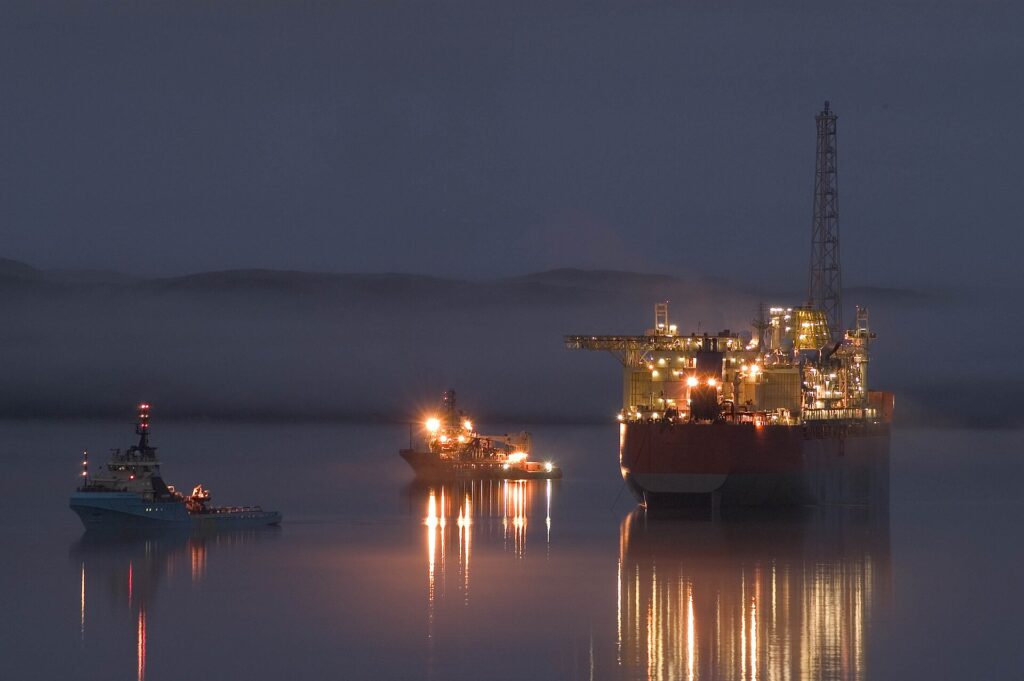
Stabroek’s Production Floor Is Now Around 650,000 Barrels Per Day
ExxonMobil says it is safely producing approximately 650,000 barrels of oil per day from the Stabroek block, according to its September 22, 2025 statement on the Hammerhead development.
That level became possible after the recent successful startup of a fourth floating production, storage and offloading vessel, the ONE GUYANA.
With that fourth FPSO ramping up, ExxonMobil anticipated growing production to more than 900,000 barrels per day by the end of 2025.
For investors, that means Guyana entered 2026 with installed capacity far above the roughly 550,000 barrels per day that three platforms had been expected to reach in 2024.
Production reached 143 million barrels in 2023, driving 45.9 percent growth in oil GDP that year, according to World Bank data.
The Next Wave Brings Uaru, Whiptail and Hammerhead
Uaru, ExxonMobil’s fifth Stabroek development, is expected to deliver first oil in 2026 with capacity of 250,000 barrels per day and FPSO storage of 2 million barrels.
Whiptail, the sixth development, mirrors the 250,000 bpd design and should start producing between late 2027 and early 2028.
Whiptail has an estimated recoverable resource of 850 million barrels of oil, development plans for 33 to 72 wells, and an estimated cost of US$12.7 billion.
Hammerhead, the seventh development, is smaller at about 150,000 bpd and carries an estimated cost of US$6.8 billion, with first oil expected in the second quarter of 2029.
Once Hammerhead is online, total installed capacity on Stabroek would reach 1.5 million barrels per day, while the joint venture targets 1.7 million barrels of oil equivalent per day by 2030.
Guyana’s GDP Growth Remains Extreme but Is Shifting Toward Non-Oil Activity
Guyana’s economy grew by 33.8 percent in real terms in 2023, according to World Bank figures.
The Guyanese economy is estimated to have expanded by 19.3 percent overall in 2025, with non-oil real GDP growing 14.3 percent, according to the 2026 Budget Speech delivered on January 26, 2026.
For 2026, the government projects overall growth of 16.2 percent and non-oil growth of 10.8 percent.
The non-oil expansion matters because it indicates oil revenue is beginning to circulate through construction, services and public spending.
Still, oil remains the main driver, with the IMF projecting new production from Yellowtail, Uaru and Whiptail will raise daily output to 1.2 million barrels by 2029.
The Natural Resource Fund Is Turning Oil Earnings Into Public Spending
Guyana channels petroleum earnings through the Natural Resource Fund, the sovereign wealth vehicle created to manage oil revenue.
The 2026 Budget Speech uses the fund as a key financing source for public investment, signalling that the government is now spending oil wealth at scale.
That shift creates opportunities for construction and services firms but also raises questions about absorption capacity and waste.
Investors should watch how quickly withdrawals from the fund translate into transport, housing and energy infrastructure.
The faster the spending grows, the greater the need for transparent project selection and procurement.
Suriname’s GranMorgu Is Moving From Blueprint to Buildout
Suriname has moved from offshore exploration success to project execution with GranMorgu, its first major oil development.
The project is advancing toward a 2028 first oil target, with a focus on the hull entering a new yard as part of FPSO construction.
GranMorgu is led by TotalEnergies and is designed to establish Suriname as a second oil producer on the same prolific basin.
The development is expected to cost around US$10.5 billion, making it one of the largest industrial investments in Suriname’s history.
For regional investors, GranMorgu creates a second procurement and logistics hub alongside Guyana, with similar vessel, personnel and services demand.
FPSO Capacity Is the Real Bottleneck in the Basin
ExxonMobil confirmed four FPSOs are online in Stabroek by late 2025, following the startup of ONE GUYANA.
The fifth FPSO for Uaru will add 250,000 bpd in 2026, while Whiptail will add another 250,000 bpd later.
Hammerhead’s FPSO has a smaller storage capacity of 1.4 million barrels and production capacity of about 150,000 bpd.
Each FPSO is a floating production, storage and offloading vessel that pumps crude from subsea wells and stores it before tankers lift the oil.
The pace of new vessel delivery, rather than reservoir potential, is what defines how fast Guyana and Suriname can grow.
Local-Content Rules Are Tightening for Foreign Operators
Both Guyana and Suriname are strengthening local-content requirements as production expands.
Governments want more jobs, supplier contracts and training opportunities for their citizens, which pressures operators to localise workforces and supply chains.
For foreign investors, compliance costs are rising, and the pool of qualified local suppliers remains uneven.
The risk is that overly aggressive local-content targets could slow project timelines if capable firms are not available.
Companies that build local partnerships early may gain licences and political goodwill, but those partnerships also carry reputational risk.
Corruption and Oversight Risks Are Rising With the Revenue
The speed of oil revenue growth in Guyana has outpaced institutional oversight capacity.
Public spending from the Natural Resource Fund is increasing, but procurement transparency and audit enforcement remain concerns for governance specialists.
In Suriname, the GranMorgu project arrives as the state is rebuilding fiscal credibility after years of economic stress.
Investors should treat anti-corruption due diligence as a core entry requirement, not a compliance afterthought.
The basin’s long-term appeal depends on whether both governments can demonstrate that oil money is not captured by narrow interests.
What the Guyana Oil Boom Means for Foreign Investors
The Guyana oil boom has created one of the few places in the world where a small economy can grow by double digits for multiple years.
Production around 650,000 bpd in late 2025, rising toward more than 900,000 bpd, gives oilfield services, logistics and construction companies a clear demand pipeline.
For bond and equity investors, Guyana’s 16.2 percent projected overall growth in 2026 and expanding non-oil activity suggest broadening opportunities beyond petroleum.
Suriname’s GranMorgu adds geographic diversification for suppliers who want exposure to the basin without depending on a single country.
The key is to price in construction delays, local-content obligations and governance risk rather than assuming every approved project reaches first oil on schedule.
The Regional Shift Is Only Beginning
Guyana is not only exporting crude; it is becoming a demand centre for housing, roads, power and port capacity.
Suriname will face similar pressure once GranMorgu moves into the installation phase before 2028 first oil.
The IMF expects daily Guyanese oil production to reach 1.2 million barrels by 2029, nearly double the 2024 level.
That scale would place Guyana among the world’s more significant offshore producers, even before the 1.7 million barrel oil equivalent target for 2030.
For Latin America and the Caribbean, the basin represents the biggest energy-driven economic transformation in decades.
Connected Coverage
Guyana Barima Ferry Inquiry Makes First Site Visit, Critics Seek Answers
Guyana’s Housing Foundation Aid Nears GY$1 Billion (US$4.8 Million)
The Big Picture
Latest developments
- French Guiana Fire Reaches School Fence — 7 October 2026
- Guyana Groups Urge Leave for Deputy Police Chief — 7 October 2026
- Suriname Bus Fare Could Rise 59% Without Aid — 7 October 2026
- French Guiana Charges Man in Camopi Murder — 7 October 2026
This article was produced by The Rio Times’ automated newsroom system. How we use AI · Report an error · Editorial responsibility: Matthias Camenzind, Editor-in-Chief
LatAm Markets: Live Signals → — real-time movers, turnover leaders and FX across Latin America.