Suriname Politics Explained, Who Holds Power in 2026
SURINAME · POLITICS
Key Facts
- —The country Suriname is a small country on the north coast of South America. It became independent on 25 November 1975 and has run under its current constitution since a 1987 referendum.
- —Head of state President Jennifer Geerlings-Simons is head of state and head of government. The National Assembly elected her on 6 July 2025, and she was sworn in on 16 July 2025.
- —Parliament The National Assembly has 51 seats, filled at the 25 May 2025 election. The NDP won 18 seats and the VHP 17, with 16 seats for five smaller parties.
- —Who governs Six parties share power in Suriname politics: NDP, ABOP, NPS, PL, BEP and A20. Together they hold 34 of 51 seats, exactly the two-thirds needed to elect a president.
- —The opposition The VHP, the party that led the previous government, holds all 17 opposition seats as of October 2026.
- —Still open A fight over who runs the telecoms regulator TAS reached the president’s office on 21 October 2026 and set coalition parties against each other.
Suriname politics matters to Americans because this small South American country is preparing for new oil and gas income that a six-party coalition will control.
President Jennifer Geerlings-Simons leads that coalition, which holds two-thirds of the 51-seat National Assembly as of October 2026. This guide explains who holds power, how the system works and where it could crack.

Suriname Politics Starts With the 1987 Constitution
Suriname’s constitution was adopted by referendum in 1987, after the military coup of 25 February 1980 and a period without any constitution. The preamble of the text published by the National Assembly names that coup.
A constitutional-law lecturer wrote in Starnieuws on 20 October 2026 that the 1987 text restored formal democracy.
The same text, as amended in 1992, calls the National Assembly the highest organ of the state. It also makes the president head of state, head of government and chair of two advisory bodies, the State Council and the Security Council.
The president answers to the Assembly, and both serve five-year terms. The next general election is therefore due in 2030, and Suriname politics will turn on it.
The result is a mixed system that students of Suriname politics still argue about. A Starnieuws column of 20 October 2026 says the label, parliamentary or presidential, matters less than whether the system has worked for the country.
The President and the Vice President
Jennifer Geerlings-Simons is Suriname’s first woman president. The Assembly elected her on 6 July 2025 with no rival candidate, according to International IDEA, an intergovernmental democracy institute.
She was sworn in on 16 July 2025, according to International IDEA.
She also chairs the NDP, the National Democratic Party, according to a Starnieuws column of 20 October 2026. Under the constitution she names and dismisses ministers, leads the armed forces as supreme commander and steers foreign policy.
Gregory Rusland, leader of the National Party of Suriname (NPS), is vice president. The constitution gives him daily charge of the Council of Ministers, the cabinet of all ministers, and makes him answerable to the president.
A Starnieuws column of 20 October 2026 says NDP vice chair Faizal Abdoelgafoer holds an influential post at the president’s cabinet. The column presents him as a possible future NDP leader.
The president’s office was also in the news in late October 2026. On 21 October, Simons said she had not let the head of the telecoms regulator TAS stay on after her term ended on 20 October.
She will sign a successor’s appointment only after an inquiry.
The National Assembly and the Seven Parties
The National Assembly has 51 members, elected for five years. Its member list for 2025 to 2030 names Michael (Ashwin) Adhin of the NDP as chair and Ronnie Brunswijk of the ABOP as vice chair.
The Assembly is in recess every September.
Seven parties hold seats, and the Assembly lists each as a faction with a leader. Seat numbers below come from the Assembly’s own list as of 22 October 2026.
- NDP, National Democratic Party: 18 seats. President Simons chairs the party, and Rabindre Parmessar leads its faction in the Assembly.
- VHP, Progressive Reform Party: 17 seats, all in opposition. It led the previous government, and Asiskumar Gajadien leads its faction.
- ABOP, General Liberation and Development Party: 6 seats. Ronnie Brunswijk is the Assembly’s vice chair, and Dinotha Vorswijk leads the faction.
- NPS, National Party of Suriname: 6 seats. Vice President Rusland chairs it, and Jerrel Pawiroredjo leads the faction.
- PL, Pertjajah Luhur: 2 seats, with Bronto Somohardjo as faction leader.
- BEP, Brotherhood and Unity in Politics: 1 seat, held by faction leader Ronny Asabina.
- A20, Alternative 2020: 1 seat, held by faction leader Steven Reyme.
How the Coalition Holds Together
The NDP, ABOP, NPS, PL, BEP and A20 hold 18, 6, 6, 2, 1 and 1 seats, a total of 34. That is exactly two-thirds of 51, the share the constitution requires to elect the president or vice president in the Assembly.
If no candidate reaches two-thirds after two rounds, the choice goes to the United People’s Assembly. It adds the district and local councils to the National Assembly and decides by simple majority.
The coalition has strains. On 20 October 2026 the ABOP faction walked out of an Assembly meeting in protest after a heated exchange over the TAS dispute, Starnieuws reported.
The ABOP also rejected the letter Minister Raymond Landveld sent to the TAS director, Starnieuws reported on 21 October 2026.
The Ministers Who Run the Government
Ministers sit in the Council of Ministers, which the constitution calls the highest executive body of the government. Each name below appears as the sitting minister in a government or Starnieuws item dated September or October 2026.
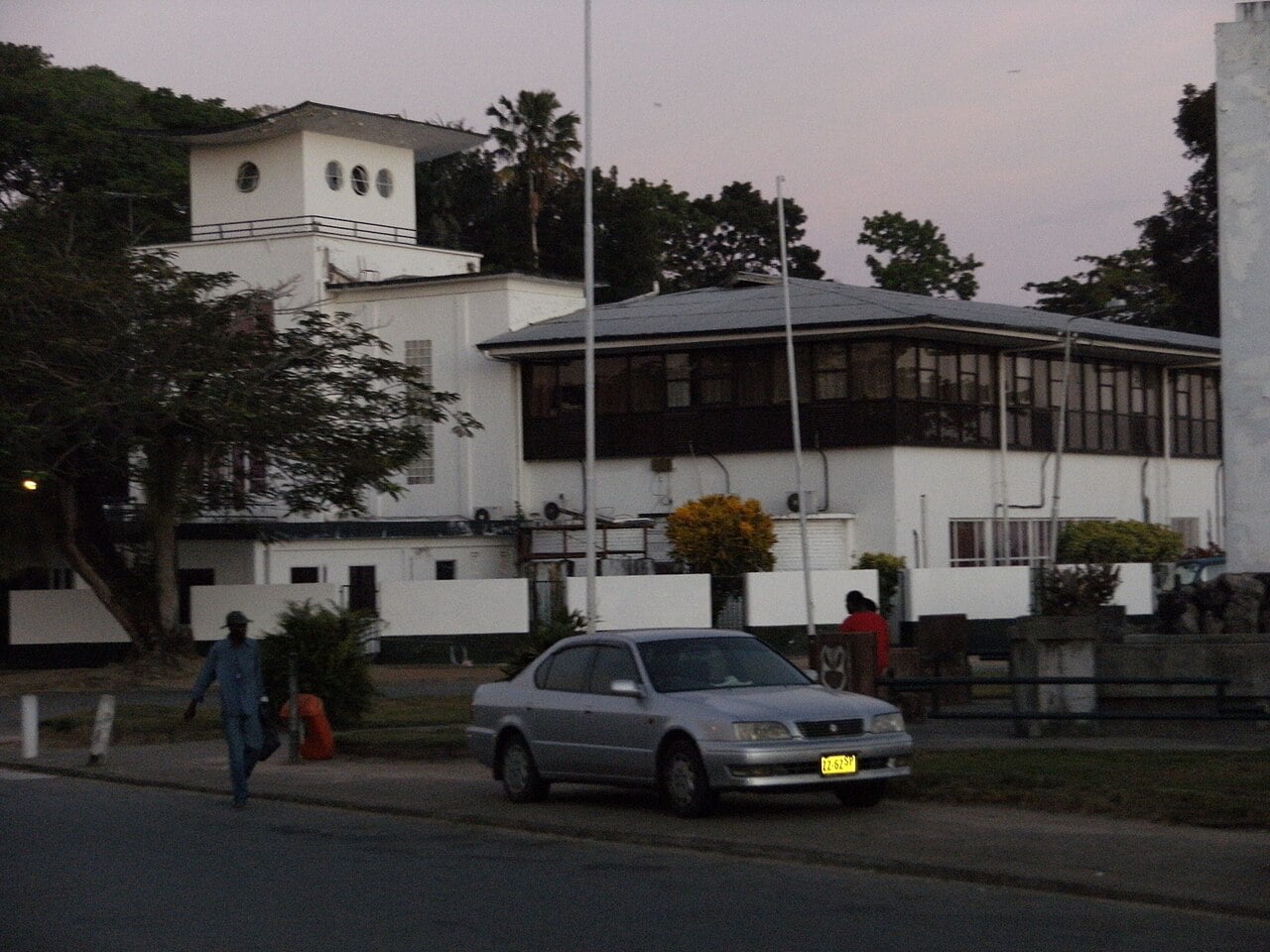
The Central Bank of Suriname, shown here on the Waterkant in Paramaribo, is separate from the cabinet, but the finance minister works closely with it.
- Finance and Planning: Adelien Wijnerman, who met the French ambassador on 25 September 2026.
- Justice and Security: Harish Monorath, who answers for the police and ordered an inquiry on 21 October 2026 into officers who appeared at the TAS building.
- Defence: Uraiqit Ramsaran, whose ministry reached a new health-insurance agreement with the state health fund on 16 October 2026.
- Interior: Marinus Bee, who received a delegation from the foundation Kids van Amsterdam on 12 October 2026.
- Foreign Affairs, International Business and Cooperation: Melvin Bouva, who met Albert Ramdin, secretary-general of the Organization of American States, in Washington on 20 October 2026.
- Transport, Communication and Tourism: Raymond Landveld, who ordered the TAS director on 20 October 2026 to hand over her duties.
- Regional Development: Miquella Huur, who said on 10 October 2026 she wants a land-rights conference in 2027.
- Natural Resources: David Abiamofo, elected an alternate board member of the Extractive Industries Transparency Initiative on 12 October 2026.
Security Forces, Courts and Prosecutors
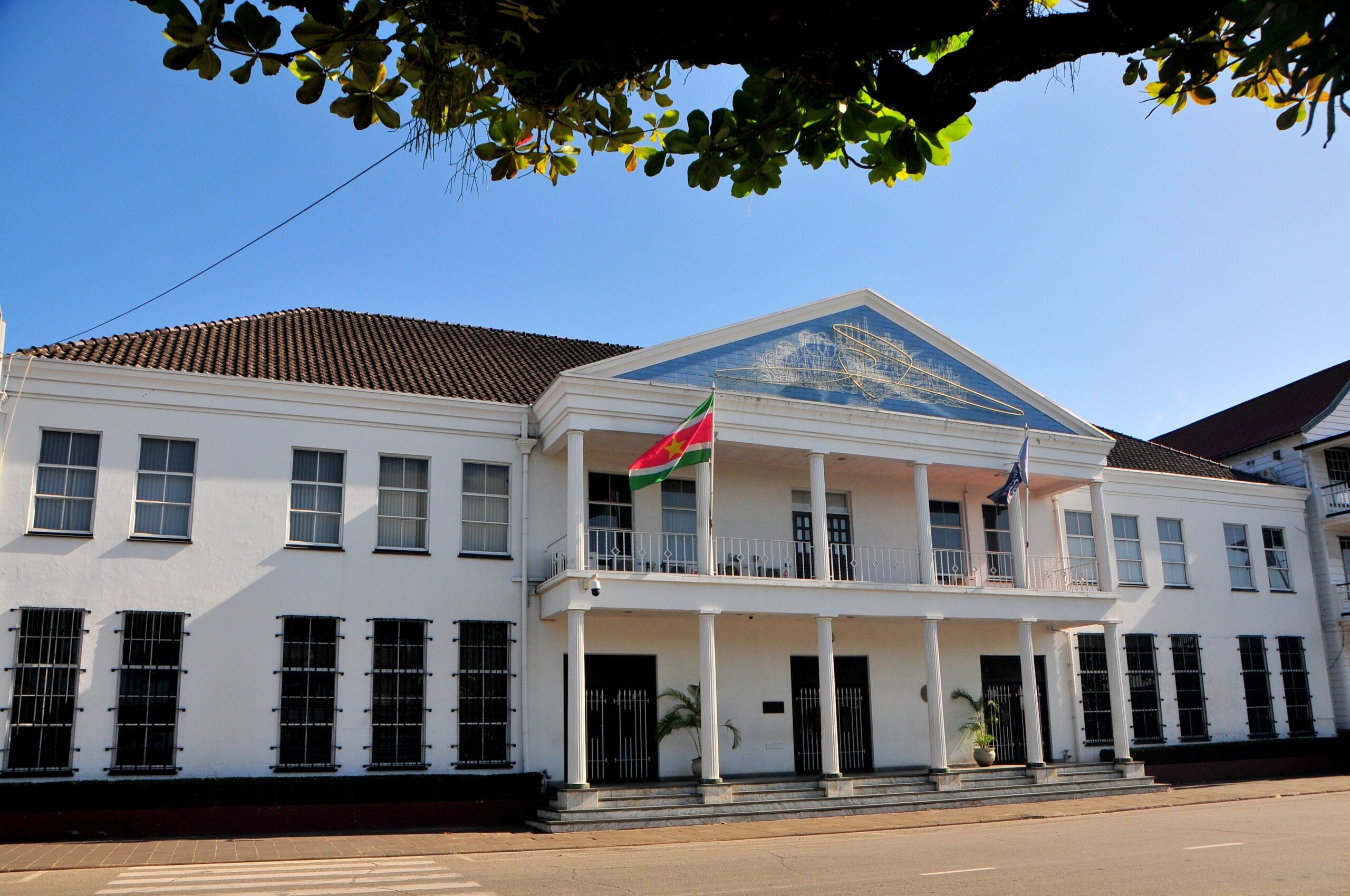
The president is supreme commander of the armed forces under Article 100. The Defence Ministry runs the National Army, and the Justice Ministry oversees the Suriname Police Corps.
In October 2026 the two work side by side in the interior. The police corps told everyone staying without permission at Masonia, in the Sipaliwini district, to leave by 8 am on Friday 23 October 2026.
The army may help if they do not.
The courts sit under the Court of Justice, the highest court. The government appoints judges and the Attorney General after the Court’s advice.
Under Article 141, appointments to the Court of Justice and the Attorney General’s post are for life.
Attorney General García Paragsingh, named by Starnieuws on 21 October 2026, leads the public prosecution service. Politicians accused of crimes in office are tried by the Court of Justice after the Assembly impeaches them.
A separate Constitutional Court checks laws against the constitution. Its chair, vice chair and three members serve five-year terms and are appointed by the president from names the Assembly puts forward.
The prosecution service is under political scrutiny in Suriname politics. On 21 October 2026 Bronto Somohardjo of the PL asked the Attorney General for figures on whether suspects of every ethnic background are prosecuted equally.
Districts, Local Councils and the Interior
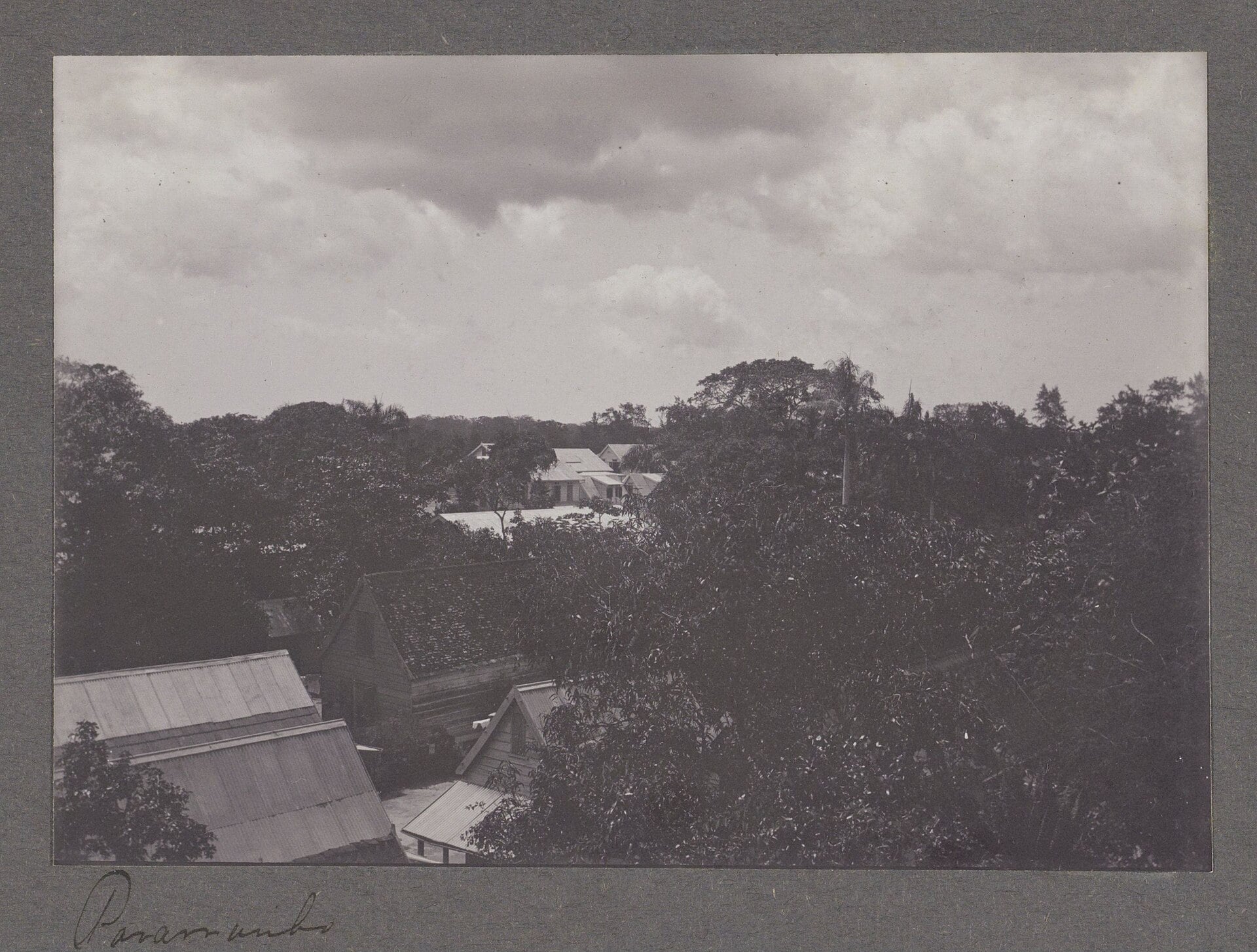
Suriname is divided into districts, and the districts into smaller units called resorts. Each has an elected council, and together the district and resort councils join the National Assembly in the United People’s Assembly.
The interior is where Suriname politics meets resources. Braganza Marketing Group, a farm company, was waiting in October 2026 for permission to start large farms with Mennonite settlers, Starnieuws reported.
Rising Figures and the Next Contests
Party leadership races in Suriname politics have begun, according to a Starnieuws column by Nita Ramcharan on 20 October 2026. The VHP holds a board election in May 2027.
Former minister Armand Achaibersing has put himself forward for the chair, and vice chair Asis Gajadien is also preparing.
In the NDP, leadership elections are not expected until 2029, but talk of a successor to Simons has started. The column names Faizal Abdoelgafoer and Ashwin Adhin as people with ambitions.
Rusland, the NPS chair, has said he remains available if the party wants him.
Constitutional change may shape Suriname politics next. The 1987 constitution turns 40 on 30 September 2027.
A constitutional-law lecturer wrote in Starnieuws on 20 October 2026 that the anniversary is the time for a national review.
Any change to the constitution needs two-thirds of the Assembly, a share the coalition holds exactly. That gives each small coalition party an effective veto.
What It Means for US Readers
Deals in Suriname run through the Council of Ministers, and international agreements need the Assembly’s approval under Article 103. A contract signed by one ministry is therefore not final until the wider government agrees.
The coalition’s two-thirds margin is thin, so in Suriname politics a split among its smaller parties could stall big decisions. The ABOP, with six seats, showed on 20 October 2026 how one partner can strain the coalition.
Foreign Minister Melvin Bouva was in Washington in October 2026 for the US–Caribbean Dialogue and met Albert Ramdin, the OAS secretary-general. Bouva said Suriname wants an assertive diplomacy that attracts lasting investment, Starnieuws reported on 21 October 2026.
For more on the economy and foreign policy, see our guides to who runs Suriname’s economy, Suriname geopolitics and Suriname in South America.
The oil shock and inflation story covers prices, and the full country page is on the Suriname hub.
What Is Not Known
The outcome of the TAS dispute, a test of Suriname politics, is open. The board has gone to court for a quick ruling, and no court decision had been reported by 22 October 2026.
The military‘s current commander and the heads of the Court of Justice and Constitutional Court are not named in this guide. Neither is the current VHP chair.
Party platforms are also left out, because the sources used here describe leaders and seats rather than programmes. How long the six-party coalition lasts until the 2030 election is not known.
Frequently Asked Questions
Who is the president of Suriname in 2026?
In Suriname politics the president is Jennifer Geerlings-Simons, who chairs the NDP. The National Assembly elected her on 6 July 2025, and she was sworn in on 16 July 2025.
How is the president of Suriname chosen?
The National Assembly elects the president, and the vote needs two-thirds of its 51 members, which is 34. If no one reaches that after two rounds, the United People’s Assembly decides by simple majority.
Which parties are in the Suriname coalition?
Suriname politics is run by six parties: the NDP, ABOP, NPS, PL, BEP and A20. Together they hold 34 of the 51 seats in the National Assembly as of October 2026.
Who leads the Suriname opposition?
In Suriname politics the VHP is the only opposition party, with 17 seats. Asiskumar Gajadien leads its faction in the Assembly.
Who is the vice president of Suriname?
Gregory Rusland, who chairs the NPS. He runs the Council of Ministers day to day and answers to the president.
When is the next general election in Suriname?
In Suriname politics Assembly members serve five-year terms from the 25 May 2025 election, so the next vote is due in 2030. The constitution allows an extension only in war or other extraordinary circumstances.
Sources: National Assembly of Suriname, member list 2025-2030 and factions, 2026-10-22; National Assembly of Suriname, Constitution (S.B. 1987 no. 116, as amended 1992), 2026-10-22; International IDEA, Democracy Tracker, Suriname, July 2025, 2025-07; International IDEA, Democracy Tracker, Suriname, May 2025, 2025-05; Suriname Herald, president and vice president to be elected on 6 July, 2025-06-30; Government of Suriname, Ministry of Defence news, 2026-10-16; Government of Suriname, Ministry of Foreign Affairs news, 2026-10-20; Government of Suriname, Ministry of Finance and Planning news, 2026-09-28; Government of Suriname, Ministry of Regional Development news, 2026-10-10; Government of Suriname, Ministry of Natural Resources news, 2026-10-12; Government of Suriname, Ministry of Interior news, 2026-10-13; Starnieuws, president Simons on TAS director, 2026-10-21; Starnieuws, Minister Landveld orders TAS director to hand over, 2026-10-20; Starnieuws, ABOP and the TAS letter, Monorath on police, 2026-10-21; Starnieuws, inquiry into police at TAS, Attorney General Paragsingh, 2026-10-21; Starnieuws, Somohardjo asks prosecutor about equal treatment, 2026-10-21; Starnieuws, police ultimatum for Masonia, 2026-10-19; Starnieuws, Braganza waits for permission, 2026-10-21; Starnieuws, Suriname and OAS discuss technical support, 2026-10-21; Starnieuws, column on party structures (Nita Ramcharan), 2026-10-20; Starnieuws, opinion on 40 years of the Constitution (Viren Ajodhia), 2026-10-20.
This article was produced by The Rio Times’ automated newsroom system. How we use AI · Report an error · Editorial responsibility: Matthias Camenzind, Editor-in-Chief
Expat Guide to Suriname
What The Rio Times publishes for foreigners who live in or move to Suriname.
Start here
- Suriname Bank Account for Foreigners 2026: Banks, Documents and Dollars
- Taxes in Suriname for Expats: Rates, Residency and the Guilder Question
- Healthcare in Suriname for Expats: Paramaribo Hospitals, Insurance and the Dutch Link
- Suriname Visa and Residency 2026, Fees, Permits, Timelines
Understand Suriname
Rotate for Best Experience
This report is optimized for landscape viewing. Rotate your phone for the full experience.
You've reached your free article limit
Subscribe to The Rio Times for unlimited access to our news, expat and nomad guides and market intelligence on Latin America and Africa.
Expat Guide to Suriname
What The Rio Times publishes for foreigners who live in or move to Suriname.
Start here
- Suriname Bank Account for Foreigners 2026: Banks, Documents and Dollars
- Taxes in Suriname for Expats: Rates, Residency and the Guilder Question
- Healthcare in Suriname for Expats: Paramaribo Hospitals, Insurance and the Dutch Link
- Suriname Visa and Residency 2026, Fees, Permits, Timelines
Understand Suriname