Buying Property in Suriname as a Foreigner 2026: Land Titles, Paramaribo Prices and the Rules
GUIDES · SURINAME
Key Facts
- —The country Suriname is a small, Dutch-speaking state of about 640,000 people between Guyana and French Guiana. Offshore oil is due from 2028.
- —The core rule Land comes in two main forms: eigendom, full private ownership, and grondhuur, a time-limited lease of state land.
- —What foreigners can buy Existing freehold property, in their own name. State land leases go to resident Surinamese, to local companies, or by cabinet exception.
- —What it costs Agents in September 2026 asked from under US$50,000 for small houses outside the capital to about US$390,000 or more in north Paramaribo. Closing costs add roughly 8%.
- —Why it matters now The oil project is drawing foreign workers and investors, while the government is rewriting land-allocation rules.
- —The catch Many plots are leases, not ownership. A scheme to convert leases into freehold has been frozen since August 2025.
Buying property in Suriname is open to foreigners. The title on the land decides what you own, who must approve it and how long it lasts.
Buying property in Suriname as a foreigner is legal. The hard part is the land title. Much of the country is state land that can only be leased.
This guide explains the two main kinds of title and what a non-Surinamese buyer may acquire. It also covers the notary process and its costs. It also sets out what agents in Paramaribo were asking in September 2026, and where the real risks lie.
Eigendom, grondhuur and erfpacht: what you are really buying
Suriname’s land law rests on Decree L-1 of 1982, the Principles of Land Policy. Its first article says that all land to which no one can prove ownership belongs to the state. That state land is called domeingrond, or domain land.
Eigendom is full private ownership, the equivalent of freehold. The owner can sell, mortgage and leave the land to heirs. Since 1982 the state has issued new domain land as leases, apart from exceptions such as a 2023 scheme, described below, that let lease holders buy their plots. Freehold plots on the market are mostly older titles.
Grondhuur is a lease of state land. The government calls it a “limited real right”. You may use the plot for the purpose the state set, but the state owns the ground. Official norms published in 2022 say leases run for 15 to 40 years, with the option to reapply when they end.
Erfpacht is an older long-lease title that still appears on some parcels. Like grondhuur, it is not ownership, and transferring it needs government approval.
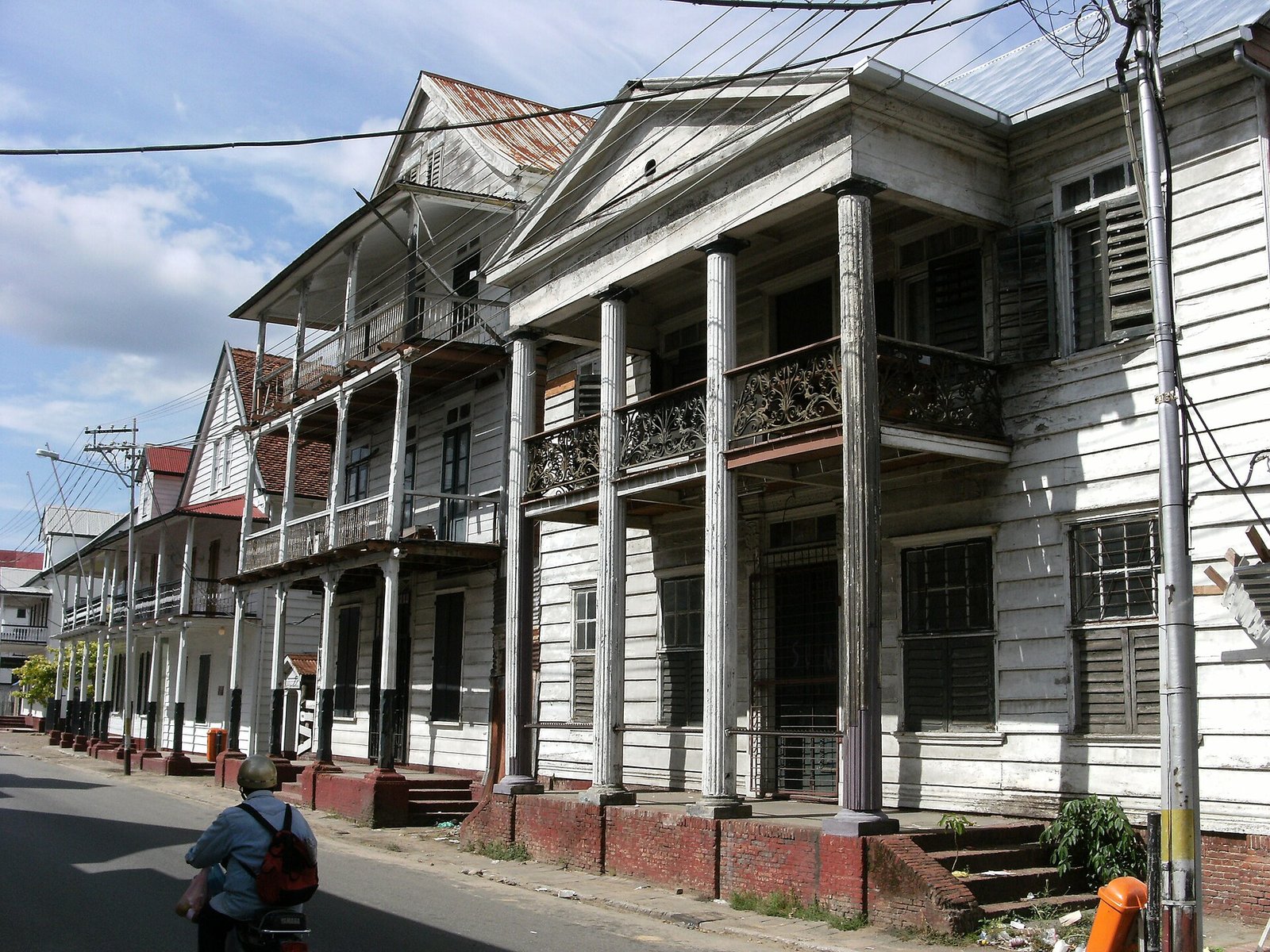
This is the single most important check. A house can stand on leased land, and owning the building does not mean owning the ground under it. A lease also does not turn into freehold because you pay the rent or build on it.
What foreigners may and may not buy
A foreigner may buy an existing freehold plot or house in their own name. Ondernemershuis, the government-backed business-support office, says so plainly. Someone of Dutch or any other nationality may buy an eigendom parcel.
State land leases are different. Decree L-2 governs the issue of domain land. Its article 2 reserves it for Surinamese nationals living in Suriname, and for companies and foundations based there. Article 3 allows others to receive it only with the consent of the Council of Ministers, the cabinet.
A foreigner granted state land this way loses the right on moving away from Suriname for good. The usual workaround is a company. A naamloze vennootschap (NV, a public limited company) or a foundation under Surinamese law can hold a lease. The directors’ nationality plays no role. The US State Department’s 2025 investment climate report confirms that non-residents can request a state lease through a local company. It warns the process is lengthy.
What this does not mean: buying a house gives you no right to live in Suriname. Residence is a separate permit with its own office and fees, explained in our Suriname visa and residency guide.
How buying property in Suriname works, step by step
Every transfer of land goes through a civil-law notary, the notaris. The notary is not just a witness. He or she checks the seller’s title, drafts the deed, collects the taxes and registers the transfer.
Registration happens at MI-GLIS, the Management Institute for Land Registration and Land Information System. It merged the old land registry and mortgage office. Anyone can order a hypothecair uittreksel, an extract showing the owner and any mortgages, online for SRD 30 (about US$0.80).
A typical sequence runs like this:
- Agree the price and conditions, and ask whether the plot is eigendom, grondhuur or erfpacht.
- Hand the notary your passport, the seller’s title deed or lease decision (beschikking) and the parcel map.
- Let the notary check the title and registry for mortgages, seizures and inheritance disputes.
- If you live abroad, obtain permission from the Foreign Exchange Commission (Deviezencommissie), which Ondernemershuis has advised non-resident buyers of freehold need. The cabinet replaced the commission’s members on 1 January 2026, so ask your notary about current practice.
- For leased land, obtain government approval for the transfer.
- Pay the price and costs, sign the deed before the notary, and wait for registration at MI-GLIS.
A clean freehold sale can close in weeks. A lease transfer that needs ministry approval can take many months.
Transfer tax and closing costs
Suriname’s transfer tax is a stamp duty, or zegelrecht, under a law dating from 1872. An amendment published as S.B. 2022 no. 119 cut the rate on property transfers from 7% to 4% of the property’s value. It took effect in October 2022.
Many agent and even registry websites still quote 7%, so ask your notary for a written cost statement. Transfers between close relatives, up to the second degree, pay only 0.5%.
| Cost | Rate | On a €150,000 (about US$171,000) home |
|---|---|---|
| Stamp duty (zegelrecht) | 4% of value | €6,000 (about US$6,840) |
| MI-GLIS registration fee | about 0.6% | €900 (about US$1,030) |
| Notary fee | up to about 3% | up to €4,500 (about US$5,130) |
| Estate agent | by agreement | not part of the legal buyer costs |
As a yardstick, budget roughly 8% on top of the price, before any agent’s commission. The duty is charged on the property’s value, which can be assessed above the price you agreed.
Paramaribo prices: what agents were asking in September 2026
Suriname has no official house-price index. The figures below are asking prices from the listings of RE/MAX Suriname, viewed on 27 September 2026. They are not sale prices, and most sellers quote in euros.
| Listing | Asking price |
|---|---|
| 3-bedroom house, south Paramaribo, 175 m² | €90,000 (about US$103,000) |
| 3-bedroom house, south Paramaribo, 250 m² | €120,000 (about US$137,000) |
| 4-bedroom house, south Paramaribo, 220 m² | €220,000 (about US$251,000) |
| 5-bedroom house, north Paramaribo, 315 m² | €345,000 (about US$393,000) |
| 3-bedroom house, north Paramaribo, 217 m² | US$370,000 |
| 2-bedroom house, Wanica district, 85 m² | €85,000 (about US$97,000) |
| Building plot, north Paramaribo, 689 m² | €40,000 (about US$46,000) |
| Building plot, central Paramaribo, 425 m² | €110,000 (about US$125,000) |
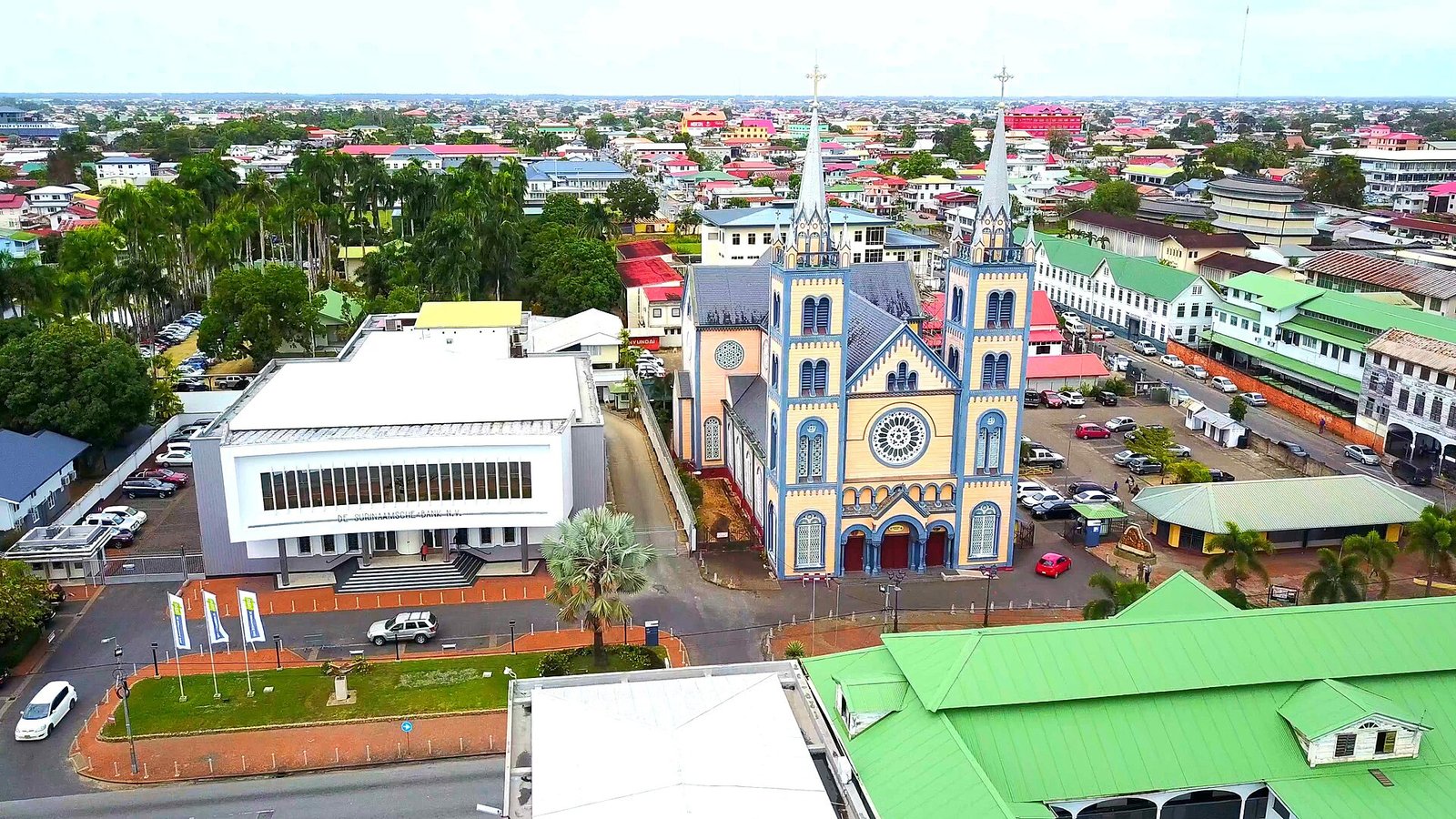
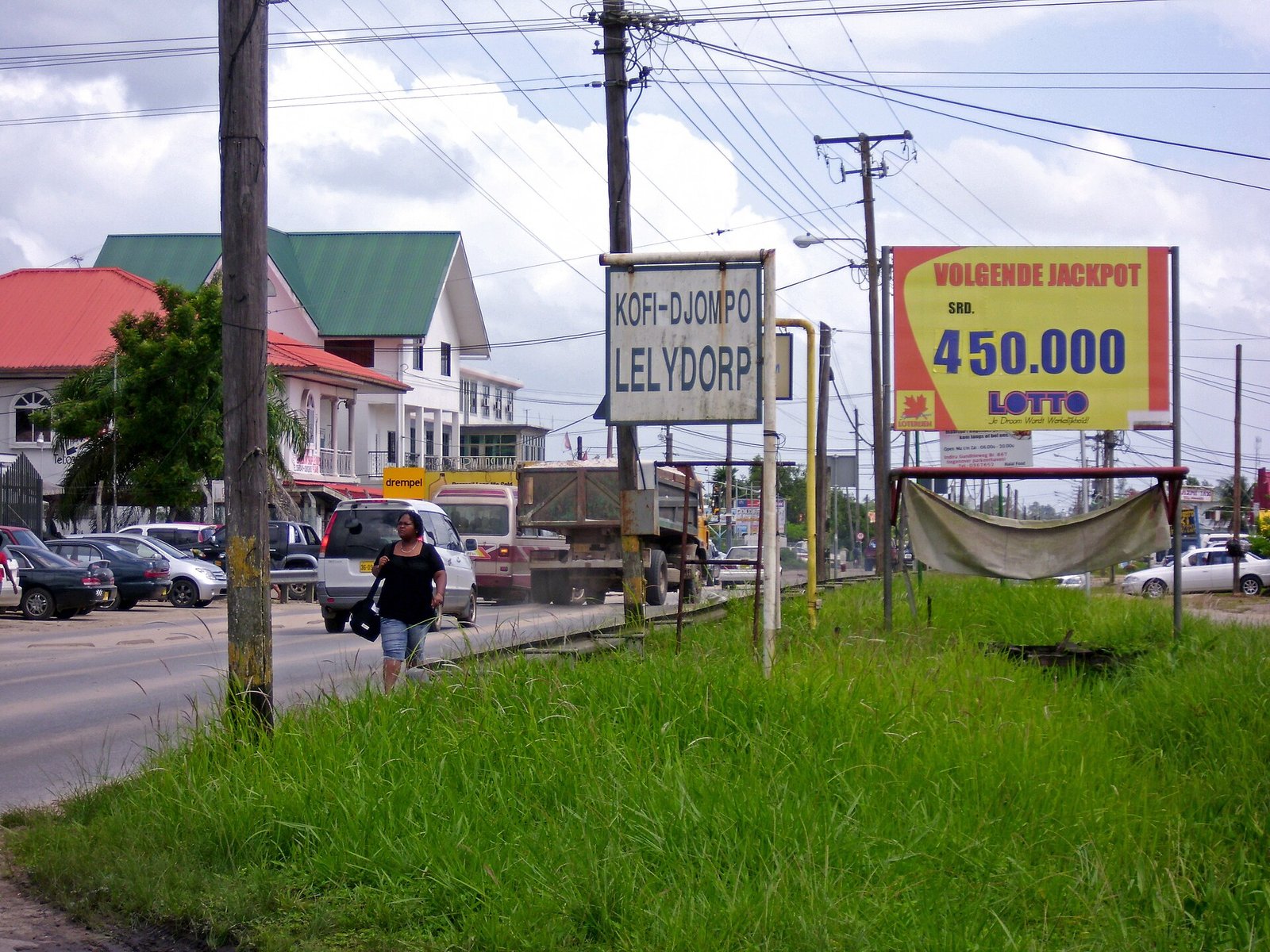
The cheapest houses on the same site sat in Wanica, the district south-west of the capital, including a two-bedroom house near Lelydorp at €42,500 (about US$48,000). Plots in Wanica ran from €32,000 (about US$36,000) for 495 m². A development at Tout Lui Faut advertised plots from €45 (about US$51) per square metre.
A second agency, Surgoed, showed a similar spread on the same day. Of its 48 houses for sale, 25 were priced below €150,000 (about US$171,000). Only nine sat between €250,000 and €500,000 (about US$285,000 to US$570,000).
Many listings do not state the title on the card. Two houses at the same price can differ hugely in value. One may be freehold, the other a lease with a few years left.
Euros, dollars and the Surinamese dollar
The local currency is the Surinamese dollar, written SRD, which floats. Market data put it at about 37.4 SRD to the US dollar on 25 September 2026. The euro stood at about US$1.14 on 26 September. This guide converts at those rates.
The SRD traded at 7.52 to the dollar before September 2020, so it has lost about four-fifths of its value since. That is why sellers price in euros or US dollars, and why buyers earning in hard currency hold the stronger hand.
Old deeds may state amounts in guilders, the currency replaced in 2004 at 1,000 guilders to one SRD. Our guide to taxes in Suriname explains that conversion and the tax you will pay on any rental income.
Mortgages: possible, but on tighter terms
Local banks do lend to non-residents, but less. Hakrinbank, one of the main commercial banks, lends residents up to 90% of the price of a plot or existing home. Non-residents can borrow at most 65% for a purchase and 75% for construction.
The same bank does not finance notary costs and caps repayments at about 35% of net income. The maximum term is 20 years. Loans must be repaid before the borrower turns 60, so most foreign buyers pay largely in cash.
The risks: leases, frozen conversions and land claims
Lease expiry. A lease that ends is not renewed automatically; the holder must reapply. On 10 July 2026 President Jennifer Simons said leases on built-up plots would no longer be allowed to lapse after 40 years. That was an announcement, not yet a law.
The conversion freeze. A 2023 decree, S.B. 2023 no. 159, let lease holders buy plots of up to 2,500 m² as freehold. The initial price was SRD 25 (about US$0.67) per square metre. By 9 July 2025 it had approved 15,794 applications and raised SRD 659.5 million (about US$17.6 million). The Simons government halted it on 9 August 2025, and in late August 2026 applicants were still waiting.
Indigenous and Maroon land. Suriname still has no law recognising the collective land rights of Indigenous and Maroon peoples. The Inter-American Court of Human Rights ordered such recognition in rulings in 2007 and 2015. Land in or near traditional territories carries extra legal risk, as the dispute over Mennonite settlers in the interior shows.
Administrative errors. A September 2026 commentary in a Paramaribo daily cited leaked documents suggesting one plot had again been issued to two people in July. Registry extracts, a surveyor and a notary you choose yourself are your best defences.
What this means for you
To own land outright, look only at freehold (eigendom) plots. Ask for the title deed before you negotiate. If a lease is on offer, find out how many years remain and whether transfer approval is realistic for you.
Choose your own notary, get a written cost statement based on the 4% duty, and order a registry extract yourself. If you live abroad, allow time for the Foreign Exchange Commission.
Buying property in Suriname rewards patience more than speed. For a regional comparison, see our guide to buying property in Trinidad and Tobago, where foreigners need a licence.
Connected Coverage
Suriname Visa and Residency 2026 — Entry Fees, Permits and Timelines
Taxes in Suriname for Expats: Rates, Residency and the Guilder Question
Healthcare in Suriname for Expats: Paramaribo Hospitals, Insurance and the Dutch Link
Cost of Living in Suriname 2026: Life After 60% Inflation — What Expats Pay
Geerlings-Simons Takes Charge of Suriname Economy as TotalEnergies Prepares 2028 Oil
Sources: Land law comes from Surinamese decrees and government publications, tax rates from the Staatsblad, and prices from agents’ listings viewed on 27 September 2026.
- faolex.fao.org (Decree L-1)
- ondernemershuis.sr (archived)
- sris.sr (Decree L-2)
- sris.sr (S.B. 2023 no. 159)
- gov.sr (Normenboek 2022)
- dna.sr (S.B. 2022 no. 119)
- miglis.sr
- state.gov
- hakrinbank.com
- gov.sr (land policy reform)
- srherald.com
- waterkant.net
- iwgia.org
- dagbladdewest.com
- remax.sr
- surgoed.com
What Is Not Known
Whether the conversion of leases into freehold will restart is not known. The scheme has been under evaluation since August 2025, and the government has said new land legislation is being prepared. Nothing public sets a date.
The end of automatic 40-year lease expiry on built-up plots was announced in July 2026. No law or decree putting it into effect had been published by late September 2026.
What homes actually sell for is not published. Suriname has no official price index. Asking prices from agents are the best available guide, and they may sit well above final deals.
How long a Council of Ministers exception or a company lease application takes is not recorded anywhere. The State Department calls the process lengthy but gives no figure.
When Suriname will pass a law on Indigenous and Maroon land rights is not known. Until it does, the legal status of land in traditional territories stays open.
Frequently Asked Questions
Can a foreigner buy property in Suriname?
Yes. A foreigner can buy an existing freehold (eigendom) plot or house in their own name. State land leases (grondhuur) go only to resident Surinamese nationals, to companies set up under Surinamese law, or to foreigners the Council of Ministers approves.
What is the difference between eigendom and grondhuur?
Eigendom is full private ownership of the land. Grondhuur is a lease of state land for 15 to 40 years, and the state keeps ownership. A lease does not turn into freehold because you build on it or pay the rent.
How much is the transfer tax in Suriname?
The stamp duty on property transfers is 4% of the value, since an amendment published as S.B. 2022 no. 119. Registration at MI-GLIS adds about 0.6% and the notary up to about 3%. Many websites still show the old 7% rate.
How much does a house cost in Paramaribo?
Agents in September 2026 asked about €90,000 to €120,000 (about US$103,000 to US$137,000) for three-bedroom houses in south Paramaribo. Larger homes in the north were listed at around €345,000 (about US$393,000). These are asking prices, not sale prices.
Does buying a house in Suriname give me residency?
No. Owning property does not give you the right to live in Suriname. Residence is a separate permit with its own application, office and fees.
Can foreigners get a mortgage in Suriname?
Some banks lend to non-residents on tighter terms. Hakrinbank lends non-residents up to 65% of the purchase price, against up to 90% for residents. It does not finance notary costs, and loans must be repaid before age 60.
This article was produced by The Rio Times’ automated newsroom system. How we use AI · Report an error
Read More from The Rio Times