Suriname Culture, the Key Figures to Know in 2026

SURINAME · CULTURE
Key Facts
- —What is happening Suriname culture is reaching abroad in October 2026, with kaseko music heading for a UNESCO application due by 31 March 2027 and eleven documentaries bound for the Netherlands.
- —Why it matters A country of about 640,000 people blends Creole, Maroon, Hindustani, Javanese, Chinese, Jewish and Amerindian traditions, and UNESCO put Paramaribo’s wooden inner city on its danger list on 23 July 2026.
- —The numbers Anthony Nesty won Olympic gold in 1988 and bronze in 1992, and Letitia Vriesde took world 800 metres medals in 1995 and 2001, which are the best-known Surinamese sporting results.
- —Who is who Key names are flautist Ronald Snijders, novelist Cynthia McLeod, poet Dobru, painter Soeki Irodikromo, sculptor Marcel Pinas, kaseko champion Rosita Leeflang and filmmaker Giorgio de la Fuente.
- —What to watch Watch the UNESCO kaseko dossier due 31 March 2027, the Makandra Film Festival from 9 to 13 November 2026, and the football team’s next campaign under coach Henk Fraser.
- —What it means for you US readers already meet Suriname through Marcel Pinas, shown in Washington in 2011, and swimmer Anthony Nesty of the University of Florida, and can visit UNESCO-listed Paramaribo.
From kaseko drums to Maroon art and an Olympic butterfly gold, these are the people and traditions that define Suriname. Here is who to know in October 2026.
Suriname culture is a meeting of Creole, Maroon, Hindustani, Javanese, Chinese, Jewish and Amerindian traditions. The country had 639,850 people in 2025, according to World Bank data updated on 8 October 2026.
It has produced an Olympic champion, a Dutch-language literature laureate and a music, kaseko, now heading for UNESCO. This guide names the key figures and says what could not be confirmed.
Conversions use the open.er-api.com rate of 23 October 2026, which is 0.8915 euros per US$1. Facts come from cultural foundations, museums, Olympic records and the Suriname Herald, a Paramaribo news site.
Suriname Culture in One Page
Suriname became independent from the Netherlands in 1975, and Dutch is still spoken beside Sranan Tongo. Sranan Tongo is the Creole language of many songs and poems.
Slavery ended on 1 July 1863, and contract workers followed, Hindustanis from 1873 to 1917 and Javanese from the 1890s. Maroons, whose ancestors escaped plantations in the 1700s, and Amerindians complete the picture, according to a 1978 Smithsonian Folkways album note.
Paramaribo’s historic inner city, built mostly of wood in the 17th and 18th centuries, joined UNESCO’s World Heritage list in 2002. UNESCO calls it a fusion of European building techniques with local South American materials.
UNESCO placed the inner city on its List of World Heritage in Danger on Thursday, 23 July 2026, NOS reported. Fire risk and two disputed building projects were the main reasons, and the listing is a warning, not a loss of status.
The Keizerstraat Mosque and the Neveh Shalom Synagogue stand side by side in the centre, as the cover photograph shows. For wider context, read Suriname in Latin America and the Suriname hub.

Music, From Kaseko to Suripop
Kaseko is the Creole dance music of Suriname, with deep roots in coastal villages such as Coronie. A 1971 to 1972 field recording there, released by Smithsonian Folkways, includes a track titled Kaseko Poku.
The Foundation K.A.S.E.K.O., chaired by Rosita Leeflang, is preparing a nomination to UNESCO’s list of intangible cultural heritage. The dossier is due by 31 March 2027, and the review could take about a year.
A meeting in Coronie on 19 September 2026 added a slower form called Opo Poku to the research. Leeflang said the process forced her to revise earlier views on how kaseko is made up and has developed.
Leeflang, whom the Suriname Herald calls the queen of kaseko, also made Langabere, a documentary on kaseko and its instruments. It was selected for the Curaçao International Film Festival and shown twice there.
Sabakoe, a nine-piece Surinamese-Dutch kaseko band, was announced for its North Sea Jazz Festival debut on Sunday, 9 July 2023. Its hits include Postbode, Mooi Misi and Pinda Pinda, and singer Steven Maayen leads it.
Flautist Ronald Snijders, born in Paramaribo in 1951, is among the best-known Surinamese musicians. He earned a doctorate on kaseko, released over 50 CDs and was knighted by Suriname and the Netherlands.
His father Eddy Snijders, a military bandmaster, made the arrangement of the national anthem, according to the Geelvinck museum. The family shows how classical, jazz and Creole music meet in one household.
Pop has its own contest, and Rodney Deekman won Suripop 2026 with Konsensi, a song about mental health. He also took the Best Performance and Best Video prizes, the Suriname Herald reported on 2 August 2026.
Kraka Poku Tori, an industry event on talent and business, scheduled its second edition for 16 and 17 October 2026. The Suriname Jazz Festival foundation, founded in 2002, got a young board in November 2022.
Writers and Poets Who Shaped the Language
Robin Raveles, known as Dobru, is described by the Suriname Herald as perhaps the country’s best-known poet. His poem Wan Bon, from the 1965 collection Matapi, is easy to memorise and was translated into many languages.
Dobru sat in parliament for the PNR party and served briefly as deputy culture minister after 1980. Anton de Kom University announced a posthumous honorary doctorate for him, to be awarded on 1 November 2013.
H.F. de Ziel (1916 to 1975) wrote poetry in Sranan Tongo under the name Trefossa. The Dutch literature library DBNL lists a 1957 first edition of his poems and a 1977 edition titled Ala poewema foe Trefossa.
Novelist Cynthia McLeod, born in Paramaribo in 1936, wrote Hoe duur was de suiker? (The Cost of Sugar), set in 18th-century Suriname.
The Dutch Letterenfonds calls it an unprecedented best seller in Suriname. She followed it with Ma Rochelle passée and a study of Elisabeth Samson.
Writer Astrid Roemer debuted in 1970 with the poetry collection Sasa, under the pen name Zamani. Her trilogy Gewaagd leven, Lijken op liefde and Was getekend appeared from 1996 to 1998.
Roemer won the P.C. Hooft Prize in 2016. In 2021 she became the first Surinamese winner of the Prize of Dutch Letters, worth 40,000 euros (about US$44,900).
The Dutch Language Union later cancelled the royal award ceremony over her remarks on the 1982 December killings. She kept the prize and stood by her statements, NOS reported in August 2021.
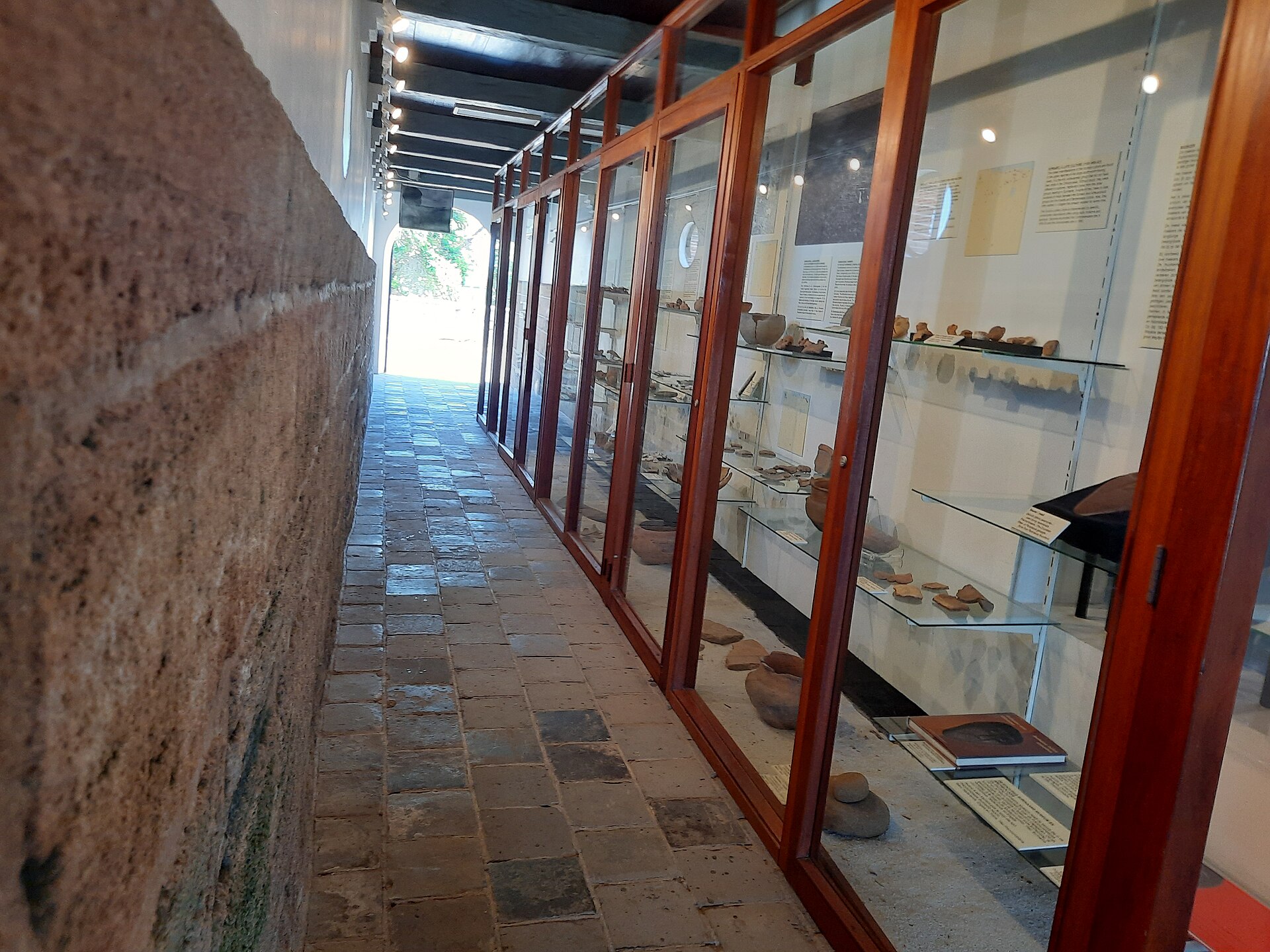
Painters and Sculptors
Soeki Irodikromo died on 18 August 2020, aged 75. The Suriname Herald called him the first Surinamese-Javanese artist to merge tradition and modernity, and he introduced batik painting to Suriname.
The Soeki Irodikromo People’s Academy at the Sana Budaya site still offers art and craft lessons. In July 2021 the Stedelijk Museum Amsterdam bought his 1971 oil painting of Bhima, a hero of the Indian epic Mahabharata.
The purchase followed the museum’s Surinamese School exhibition, which also featured Ron Flu, Rihana Jamaludin and Quintus Jan Telting. It placed Surinamese painters inside a Dutch collection that had rarely held them.
Marcel Pinas comes from the Ndjuka Maroon people and studied at the Edna Manley College in Jamaica. His installation Kibi Wi Koni, bottles wrapped in pangi cloth, was shown in Washington in 2011.
In Moengo, 60 miles (97 kilometres) east of Paramaribo, Pinas set up the Tembe Art Studio. Caribbean Beat reported in 2013 that it includes an art school, a sculpture park and a residency programme.
His canvases carry Afaka script, a 56-character syllabary invented in 1910 by Afaka Atumisi to write the Ndjuka language. Such details show how Maroon heritage feeds contemporary Surinamese art.
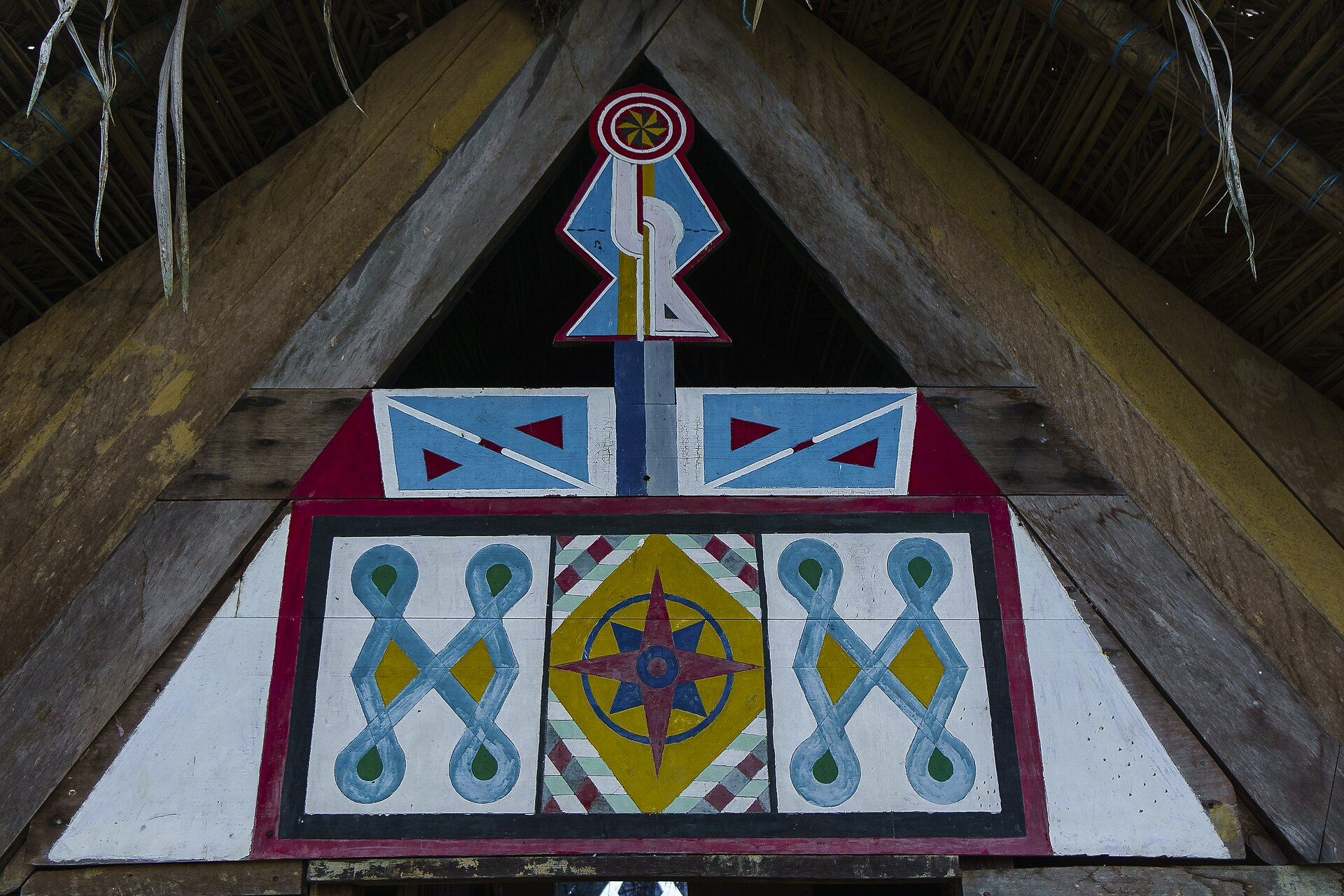
Film, Television and the Press
Pim de la Parra, a Surinamese-Dutch filmmaker who lived from 1940 to 2024, made Wan Pipel in 1976. The Eye Filmmuseum database calls it the first feature shot in newly independent Suriname.
The film cost more than planned and audiences stayed away. Eye reports that his company Scorpio Films went bankrupt that year.
Money is the main problem, filmmaker Giorgio de la Fuente told the Suriname Herald on 12 October 2026. His film Fort Buku tells of Boni, an Aluku leader who built a swamp fort against colonial rule.
Eleven documentaries from the DocuLab 10 voor 50 programme screen at the Makandra Film Festival from 9 to 13 November 2026. The festival runs at Pathé ArenA in Amsterdam, and the films show Suriname fifty years after independence.
Langabere is among them. Fesi fu Srefi by Claudio Draibas was selected for a French Guiana festival in September 2026.
STVS, the Surinamese Television Foundation, calls itself the country’s first television station, founded in 1965 by then prime minister Johan Adolf Pengel. News and culture coverage also comes from Starnieuws, De Ware Tijd and the Suriname Herald.
Sport Icons
Anthony Nesty won the 1988 Olympic 100 metres butterfly by one hundredth of a second, ahead of American Matt Biondi. He added bronze in 1992, and Olympedia credits him with both Surinamese Olympic medals through 2024.
Born in Trinidad and Tobago in 1967, Nesty moved to Suriname as a baby and trained in Florida. He is an International Swimming Hall of Fame honoree, and the Gators list him as head swimming coach for 2025-26.
Letitia Vriesde, born in Paramaribo in 1964, won world 800 metres silver in 1995 and bronze in 2001. She competed at five Olympics from 1988 to 2004 and carried the flag in 2000 and 2004.
The national team, Natio, lost 2-1 to Bolivia in the World Cup play-off on Thursday, 26 March 2026. Henk Fraser, named on 29 July 2026, succeeded Henk ten Cate as coach.
Dutch internationals Denzel Dumfries and Noa Lang, who have Surinamese roots, visited Suriname on 6 July 2026. The embassy in Brasília presented Nesty to schoolchildren as a national sports hero on 25 September 2026.
Festivals and the Cultural Calendar
Keti Koti, meaning broken chains, marks the end of slavery on 1 July 1863. The 2026 national commemoration took place on 1 July, with political parties issuing statements the same day.
On Sunday, 9 August 2026, Suriname marked the Day of the Indigenous Peoples and 136 years of Javanese immigration. A 2022 statement by the SHI group, printed by the Suriname Herald, says it has been an official day off since 2006.
The embassy’s school film in Brasília also showed Phagwa, Marrondag, Chinese Immigration Day and Idul Fitr. Kaseko bands like Sabakoe tour Suriname at Christmas and Owru Yari, the old year.
Festivals beyond Paramaribo are often small and run by local groups. Check dates with local organisers before travelling.
What It Means for US Readers
Washington’s cultural ties are real but quiet, led by Pinas’s 2011 show in Washington and Nesty’s decades in Florida. Surinamese culture also reaches Americans through the Dutch diaspora and festivals such as North Sea Jazz.
Travellers can walk Paramaribo’s UNESCO-listed core, visit the Surinaams Museum in Fort Zeelandia and time a trip around Keti Koti or Phagwa. Check the US State Department advice and local dates first.
Investors and philanthropists should note that film and music run on small budgets. De la Fuente says talent exists but funding is the main obstacle, and the UNESCO bid offers rare global visibility.
For the politics and money behind this scene, see Suriname Politics Explained, Who Runs Suriname’s Economy and Suriname Geopolitics Explained 2026. Those pillars explain who holds power and who pays.
What Is Not Known
The ninth census, counted in autumn 2024, has no published results on the pages opened for this guide. Ethnic and language shares are therefore not quoted here.
It is unknown whether UNESCO will accept the kaseko dossier, which is not yet filed, or when it would be decided. The foundation says the vote could come in 2028 if all goes to plan.
Nesty’s 2026-27 coaching role could not be confirmed, nor could film budgets, audience numbers or the culture ministry’s spending. The official day off since 2006 for the Day of the Indigenous Peoples rests on one 2022 group statement.
Several famous Surinamese-Dutch footballers and pop stars are left out because no primary or regional source was checked for them. The list covers people whose facts could be verified, not every notable figure.
Frequently Asked Questions
What is Suriname known for culturally?
Suriname is known for kaseko music, Maroon and Javanese art, Dutch-language literature and a mix of religions. Paramaribo’s wooden inner city has been a UNESCO World Heritage site since 2002, and joined the danger list in July 2026.
What is kaseko?
Kaseko is Surinamese Creole dance music with roots in coastal villages such as Coronie. A foundation is preparing a UNESCO nomination, with the dossier due by 31 March 2027.
Who are Suriname’s most famous writers?
Dobru, Trefossa, Cynthia McLeod and Astrid Roemer are leading names. Roemer was the first Surinamese winner of the Prize of Dutch Letters, in 2021.
Who is Suriname’s most famous athlete?
Swimmer Anthony Nesty won 100 metres butterfly gold in 1988 and bronze in 1992. Runner Letitia Vriesde won world 800 metres medals in 1995 and 2001.
What languages are spoken in Suriname?
Dutch is still spoken, and Sranan Tongo appears in many songs, poems and documentaries. This guide does not quote language shares because no recent census results were confirmed.
When are the main cultural holidays?
Keti Koti falls on 1 July and the Day of the Indigenous Peoples and Javanese immigration on 9 August. Phagwa, Idul Fitr and Owru Yari are also widely marked.
Sources: UNESCO World Heritage Centre (Paramaribo); World Bank (population); Olympedia (Suriname); Olympedia (Anthony Nesty); International Swimming Hall of Fame; Dutch Foundation for Literature; VRT NWS (20 March 2021); NOS (10 August 2021); Museum Geelvinck (Snijders); Smithsonian Folkways (FE 4233); DBNL (H.F. de Ziel); Stedelijk Museum (21 July 2021); Caribbean Beat (2013); Eye Filmmuseum; STVS; Suriname General Bureau of Statistics; Suriname Herald (2 October 2026); Suriname Herald (2 August 2026); Suriname Herald (12 October 2026); Suriname Herald (27 September 2026); Suriname Herald (9 May 2026); Suriname Herald (26 September 2026); Concacaf (Bolivia match, 26 March 2026); NOS (29 July 2026); NOS (23 July 2026, Paramaribo danger list); Makandra Film Festival; Florida Gators (Nesty); Suriname Herald (9 September 2026); Suriname Herald (13 October 2026); Suriname Herald (8 July 2026); Suriname Herald (9 August 2022); Suriname Herald (23 September 2026); Suriname Herald (19 August 2020); Suriname Herald (30 October 2013); Suriname Herald (5 July 2023); Suriname Herald (9 August 2026); Suriname Herald (1 July 2026); open.er-api.com (exchange rate) (all accessed 23 October 2026).
This article was produced by The Rio Times’ automated newsroom system. How we use AI · Report an error · Editorial responsibility: Matthias Camenzind, Editor-in-Chief
Expat Guide to Suriname
What The Rio Times publishes for foreigners who live in or move to Suriname.
Start here
- Suriname Bank Account for Foreigners 2026: Banks, Documents and Dollars
- Taxes in Suriname for Expats: Rates, Residency and the Guilder Question
- Healthcare in Suriname for Expats: Paramaribo Hospitals, Insurance and the Dutch Link
- Suriname Visa and Residency 2026, Fees, Permits, Timelines
Understand Suriname