Pillar: Paraguay
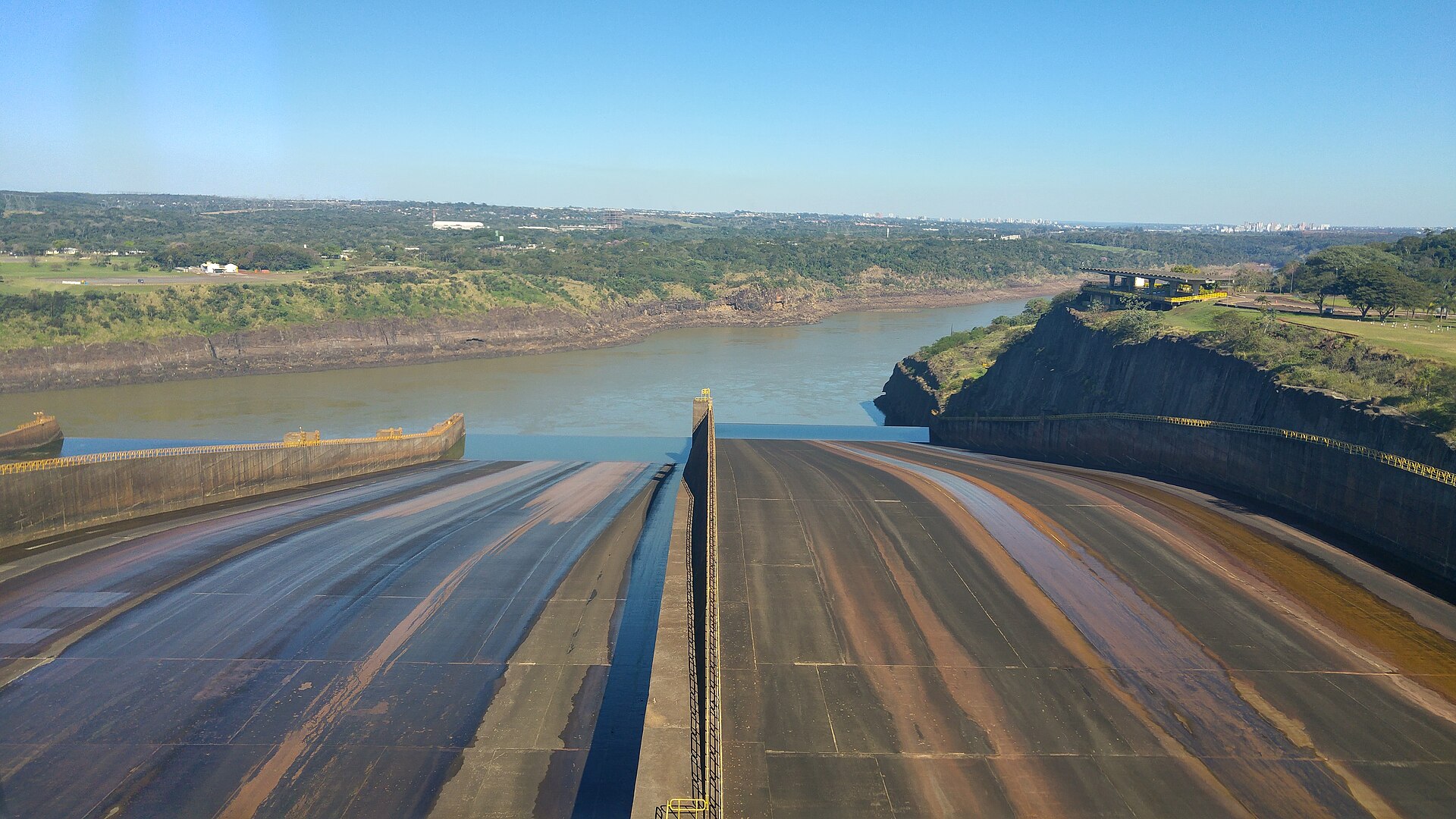
Paraguay turns water into money, and the dam at Itaipu is the clearest example. Itaipu, which Paraguay shares equally with Brazil, produced 72,879 gigawatt-hours (GWh, a unit of energy) in 2025, and Paraguay drew 25,768 GWh of it, or 87.6% of its own electricity demand, according to Itaipu’s 2025 annual report.
For readers in the United States, the story matters in two places. Paraguay reopened the American market to its beef in 2023, and the price of its shared hydropower under Annex C (the treaty’s financial rules) is being renegotiated with Brazil.
Key Facts
- Power Index. Paraguay ranks 10th of 14 in The Rio Times Latin America Power Index, with 35.0 points (November 2026 edition).
- Power. Itaipu and Yacyretá, two river dams shared with Brazil and Argentina, supply Paraguay’s electricity.
- Meat. Meat exports earned US$2.69 billion in 2025, and Chile bought the most tonnes.
- Tariff. The Itaipu power price, set in Annex C (the treaty’s finance rules), covers 2024 to 2026.
- Minerals. No lithium or rare earth reserve is certified; officials cite only early indications.
Paraguay has no oil and no coast, but it has a river system, a dam shared with Brazil and the grass and soil that feed its export trade.
The Big Picture: A Small Economy Built on Water and Grass
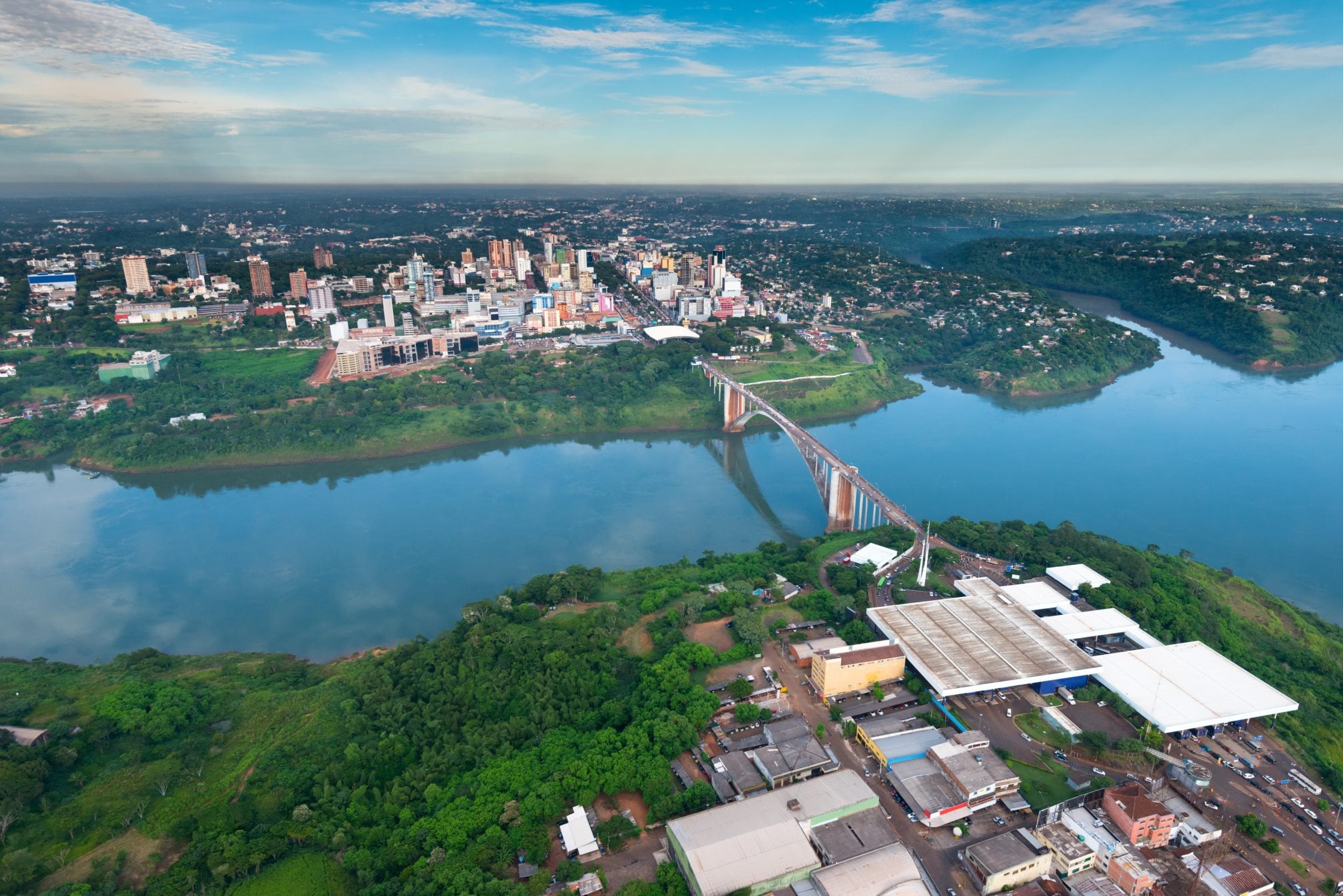
The foundation is a 1973 deal. Brazil and Paraguay signed the Itaipu treaty on 26 April 1973, according to the plant’s operator, and each country holds half of the output.
Paraguay cannot use all of its half, so it sells the surplus to Brazil. Enio Verri, the Brazilian director of Itaipu, said in April 2026 that the Annex C talks could end this year and that the 2027 tariff would be lower, which would lower the Itaipu tariff.
Paraguay’s economy grew 6.6% in 2025, according to the Central Bank of Paraguay (BCP, the national monetary authority). Total exports reached US$16.72 billion, up 5.8% on 2024.
Because Paraguay uses most of its own half of Itaipu and sells the rest to Brazil, the price of that surplus sets how much income the dam brings. Meat is the farm export for which we have confirmed figures.
Itaipu: The Dam Paraguay Shares With Brazil
Itaipu has 20 generating units of 700 megawatts (MW) each, or 14,000 MW in total, according to the operator. The plant reached its full 20 units in 2007, according to the operator, and before the treaty the two countries had signed the Act of Iguaçú, a joint plan to use the Paraná River for hydropower.
Itaipu’s 2025 report shows Paraguay drew 25,768 GWh, 26.4% more than in 2024. The rest of the output went to Brazil, which holds the other half of the plant.
Under Annex C, the financial part of the treaty, a new tariff was announced in May 2024. It is US$19.28 per kilowatt-month (the price of one kilowatt of capacity for a month) and runs for three years.
Annex C: What Is Settled and What Is Not
The three-year tariff period ends on 31 December 2026. As of mid-November 2026 we found no published Annex C agreement, no agreed figure and no tariff for 2027.
Our earlier coverage covers the state power company and the tariff in Paraguay’s power company and the Itaipu tariff, and the dam’s history in Itaipu Dam explained. The checkpoint to watch is 31 December 2026, when the current tariff period ends.
Yacyretá and the State Power Company
Yacyretá is the second big dam, on the Paraná River shared with Argentina. We have no confirmed 2026 figure for the energy that Paraguay cedes to Argentina or for any payments for it.
The state power company ANDE (Administración Nacional de Electricidad) reported demand of 29,419 GWh in 2025, up 12.5%. For comparison, Paraguay drew 25,768 GWh from Itaipu alone in 2025.
Soy and Beef: The Farm Engine
Soy is a major field crop in the eastern farmland of Paraguay, and cattle ranching is its main livestock business, with ranches spread from the east to the Chaco, the dry western plain. We could not confirm a 2025/26 soy harvest figure or a 2025 soy export value from a primary source, so we state none.
Meat is the better documented story. Paraguay’s meat exports totalled 688,330 tonnes worth US$2.69 billion in 2025, according to SENACSA.
Chile took about 104,000 tonnes and the United States about 49,000 tonnes worth US$302 million (reported, not confirmed). The US market reopened to Paraguayan beef, according to the announcement of 9 November 2023.
Our wider look at trade is in Paraguay’s 2026 trade balance. The next published trade data will show whether meat sales keep their pace in 2026.
Water and the Chaco: Rivers and Forest
Paraguay has no sea coast, so most bulk exports leave by barge on the Paraguay and Paraná rivers, and river levels decide freight costs. We have no current river-level reading from an official source, so we give none.
The Chaco is Paraguay’s dry western region. The US space agency NASA reports, citing a 2017 study, that 27% of the Paraguayan Chaco forest was lost between 1987 and 2012, mostly for cattle pasture.
We could not confirm a current annual deforestation figure for the Paraguayan Chaco from a primary source, so we leave it out. For the geography behind these regions see Paraguay’s regions.
Lithium and Rare Earths: Claims, Not Reserves
The Vice Minister of Mines and Energy, Mauricio Bejarano, said in 2026 that there are indications of rare earths in Paraguay. He added that the country is still far from certifying reserves.
We found no certified reserve and no confirmed mining concession for lithium in the Chaco. Until a survey is published, lithium and rare earths should be treated as exploration targets, not as an industry.
What It Means for US Readers
The Itaipu tariff decides how much income Paraguay earns from its dam. A lower price, as the Brazilian side has signalled, would reduce what Paraguay earns from selling surplus power to Brazil.
Paraguayan beef reaches American buyers through the market that reopened in 2023. We could not confirm the tariff rate that applies to Paraguayan goods entering the United States today.
What Is Not Known
No signed 2027 tariff exists, the Yacyretá payment balance for 2026 is unconfirmed, and no lithium or rare earth reserve has been certified. We also have no confirmed 2025 soy export value and no current Chaco deforestation rate.
Brazil’s final position on the 2027 tariff has also not been made public. We will update this page when a signed text appears.
In Plain English
- Itaipu: the 14,000 MW dam on the Paraná River, owned half and half by Paraguay and Brazil.
- Annex C: the part of the 1973 treaty that sets the financial terms of the dam.
- Kilowatt-month: the price of one kilowatt of capacity for one month.
- SENACSA: Paraguay’s national animal health service, which tracks meat exports.
- GWh: a gigawatt-hour, one million kilowatt-hours of electricity.
- Chaco: the dry western region of Paraguay, mostly cattle country and forest.
- ANDE: Paraguay’s state electricity company.
Frequently Asked Questions
What are Paraguay’s main natural resources?
Water for hydropower, farmland for soy, and pasture for cattle. No mineral reserve has been certified.
Who owns the Itaipu dam?
Brazil and Paraguay own it in equal parts under a treaty signed on 26 April 1973. Each country is entitled to half of the output and must offer any unused share to the other.
What is Annex C of the Itaipu treaty?
Annex C sets the financial terms of the plant. Brazil and Paraguay are renegotiating it, and a tariff of US$19.28 per kilowatt-month was announced for three years from 2024.
Does Paraguay export beef to the United States?
Yes, the US reopened its market to Paraguayan beef after an announcement on 9 November 2023, according to Paraguayan officials at the time. Volumes sold there in 2025 are given in the beef section above.
Does Paraguay have lithium or rare earths?
Not proven. The Vice Minister of Mines and Energy, Mauricio Bejarano, said in 2026 that there are indications of rare earths but that Paraguay is still far from certifying any reserve.
Why does the Paraguay River matter to farmers?
Most bulk exports travel by barge down the Paraguay and Paraná rivers. When the water is low, barges carry lighter loads and freight costs rise.
Sources: Itaipu Binacional (itaipu.energy); Paraguay Ministry of Industry and Commerce (Itaipu tariff agreement); NASA Earth Observatory (Gran Chaco deforestation); Central Bank of Paraguay, SENACSA, ANDE, Brazilian Itaipu management. More: Paraguay news.
This article was produced by The Rio Times’ automated AI newsroom. Editorial responsibility: Matthias Camenzind, Publisher and Editor-in-Chief. The Rio Times also runs Ask Rio Times, which answers from 100,000+ of our own articles, the daily Latin America Power Map, and prediction-market odds on elections and markets.. How we use AI · Report an error
Expat Guide to Paraguay
What The Rio Times publishes for foreigners who live in or move to Paraguay.
Start here
- Asunción Rents by Neighborhood in 2026
- Best Places to Live in Paraguay for Expats 2026, Ranked
- Investing in Paraguay as a Foreigner 2026 — Taxes and Property
- Uruguay vs Paraguay for Expats in 2026: Cheap Living or a Tax Holiday
City guides
Coming up in Paraguay
- What to Do in Asunción in November 2026 26 Nov
- Ed Sheeran in Asunción, Paraguay: First-Ever Show in the Country at La Nueva Olla on November 26, 2026 — FINNEAS Opens 26 Nov
- Gorillaz Asunción Paraguay Concert: Date and Tickets 1 Dec
Understand Paraguay