Paraguay History Explained, From Origins to 2026
PARAGUAY · HISTORY
Key Facts
- Power Index Paraguay ranks 10th of 14 in The Rio Times Latin America Power Index, with 36.0 points (October 2026 edition).
- What it is A landlocked nation founded around Asunción in 1537, home to 6,109,903 people in the 2022 census.
- Turning points A war from 1864 to 1870, the Chaco War, and the Stroessner dictatorship from 1954 to 1989.
- The toll of the dictatorship The official truth commission counted 20,090 direct victims of the Stroessner years in its 2008 report.
- Who governs Santiago Peña, of the conservative Colorado Party, president since 15 August 2023; his term ends in August 2028.
- The money Moody’s, a US credit-rating agency, confirmed Paraguay’s Baa3 investment-grade rating with a stable outlook on 17 July 2026.
Paraguay history runs from Guaraní homelands and the founding of Asunción on 15 August 1537 to a stable, investment-grade democracy in 2026. In between lie a war that crushed the country, a 35-year dictatorship and one of the world’s biggest dams.
For US readers, the past explains why Paraguay is small, landlocked and still ruled mostly by one party. It also explains why its energy talks with Brazil and its memory of dictatorship still shape the news.

Paraguay History at a Glance
Paraguay sits in the heart of South America, between Brazil, Argentina and Bolivia, with no coastline. Its history is short to tell but heavy, because a war, a dictatorship and a dam changed everything.
Spanish settlers founded Asunción in 1537, and Paraguay broke from Spain in May 1811. The war against Brazil, Argentina and Uruguay lasted from 1864 to 1870.
The Chaco War against Bolivia ran from 1932 to 1935, and General Alfredo Stroessner ruled from 1954 to 1989. Paraguay and Brazil signed the Itaipú dam treaty on 26 April 1973.
A new constitution followed on 20 June 1992, and Santiago Peña became president on 15 August 2023. The sections below walk through each step in order.
Guaraní Homelands and Spanish Asunción
Long before Europeans arrived, the Guaraní people lived in the river lands that are now Paraguay. Their language survives today, and the 1992 constitution makes Guaraní an official language alongside Spanish.
Spanish settlers founded Asunción on 15 August 1537, and the city is still the capital almost five centuries later. From there the Spanish ran a colony far from the sea and far from the main centres of Spanish power.
Jesuit priests, members of a Catholic religious order, built mission towns called reductions for the Guaraní. UNESCO, the United Nations cultural agency, lists two as World Heritage sites, La Santísima Trinidad de Paraná (1706) and Jesús de Tavarangue (1685).
Both belong to a chain of 30 Jesuit missions across the Río de la Plata basin. The Spanish crown expelled the Jesuits in 1767, and the missions fell into decline.
Independence and the Early Dictators
Paraguay ended Spanish rule in an uprising on 14 and 15 May 1811, and the country still marks those days as its national holiday. The new state was poor, isolated and surrounded by larger neighbours.
José Gaspar Rodríguez de Francia ruled as dictator from 1814 until his death on 20 September 1840. Carlos Antonio López then held power as president from 1844 to 1862.
His son Francisco Solano López followed him and inherited an army, a railway and a state steered from the top. That habit of one-man rule returns later in the story.
The War of the Triple Alliance, 1864 to 1870
The war began in late 1864 after a dispute with Brazil. Brazil, Argentina and Uruguay signed the Treaty of the Triple Alliance on 1 May 1865, and Paraguay fought all three for more than five years.
It ended on 1 March 1870, when Francisco Solano López was killed at Cerro Corá. Paraguay was occupied, and its allies were slow to leave.
Paraguay lost border lands to Brazil and Argentina in treaties signed in 1872 and 1876. US President Rutherford B. Hayes then arbitrated the Chaco border claim with Argentina in 1878.
A department and a town in Paraguay still carry Hayes’s name, Presidente Hayes and Villa Hayes. Historians disagree about how many Paraguayans died, and no exact figure exists.
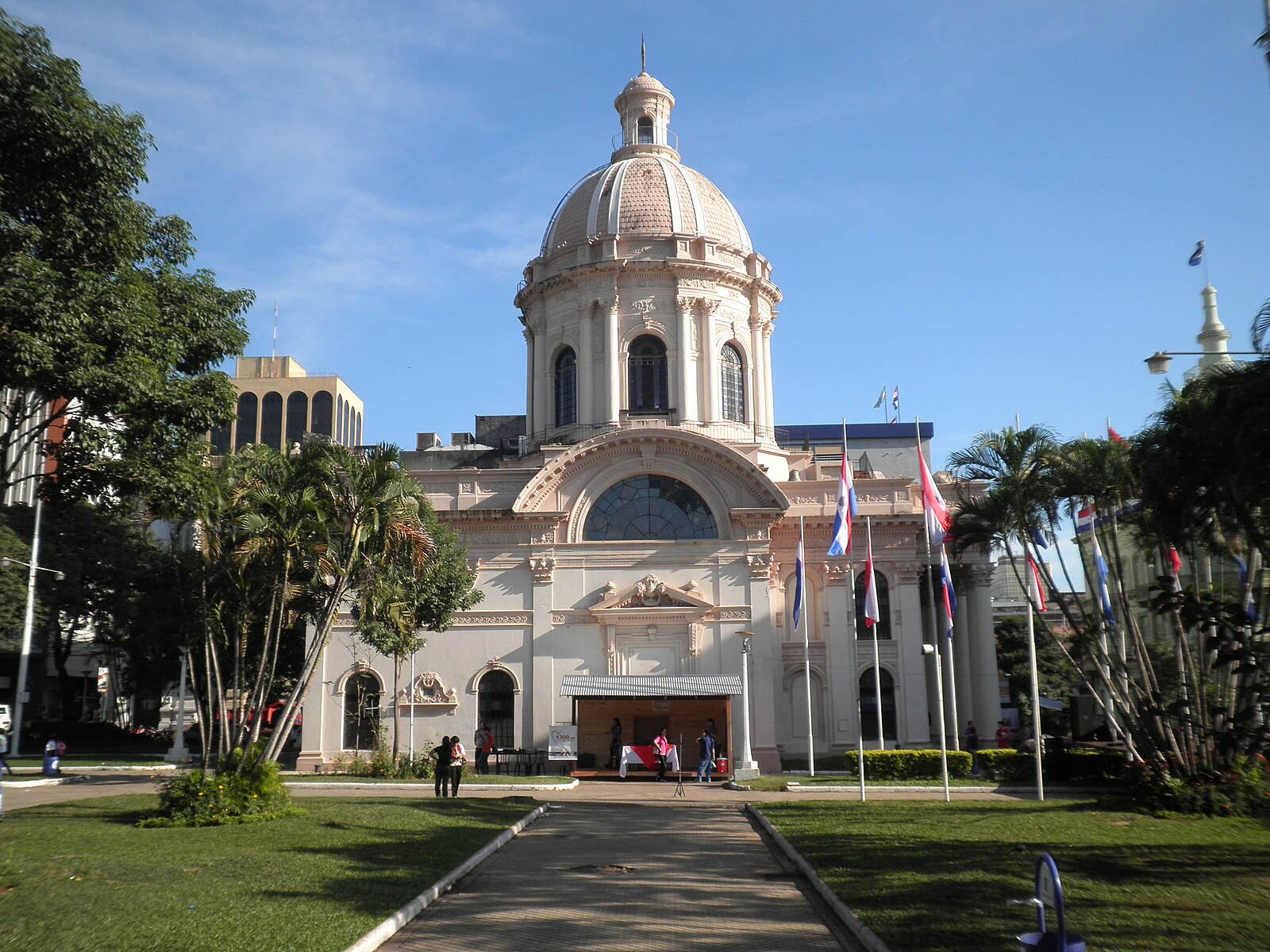
The Chaco War and the Stroessner Years
Paraguay fought Bolivia over the dry Chaco region from 1932 to 1935, and a ceasefire took hold on 12 June 1935. Paraguay won the war and kept most of the territory in a peace treaty in 1938.
General Alfredo Stroessner took power in a coup on 4 May 1954. He ruled for 35 years with the support of the army and the Colorado Party, known formally as the Asociación Nacional Republicana (ANR).
General Andrés Rodríguez overthrew him on 2 and 3 February 1989, and Stroessner went into exile in Brazil. He died there on 16 August 2006.
Counting the Dictatorship’s Victims
Paraguay set up a Truth and Justice Commission (CVJ) by Law 2225 of 2003, and it worked from October 2004 to August 2008. Its final report, Anive haguã oiko (Guaraní for so it does not happen again), went to the state on 28 August 2008.
The commission estimated 20,090 direct victims of the dictatorship, including 18,772 people tortured, 3,470 exiled, 336 disappeared and 59 executed outside the law. It warned that the real numbers are higher because many victims never came forward.
After the dictatorship fell, the police archive of the regime came to light and went to the judiciary. People call it the Archive of Terror, and the commission used it as evidence.
Democracy Since 1989
The 1992 constitution, signed on 20 June 1992, limits the president to a single five-year term that starts on 15 August. It cannot be extended, and a president may never be re-elected.
Congress has two chambers, with at least 80 deputies and 45 senators, and the Supreme Court has nine members. The Colorado Party won every presidential election until Fernando Lugo, a former bishop, won in 2008.
Colorado candidates won again in 2013, 2018 and 2023. Santiago Peña took office on 15 August 2023, and his term ends in August 2028.
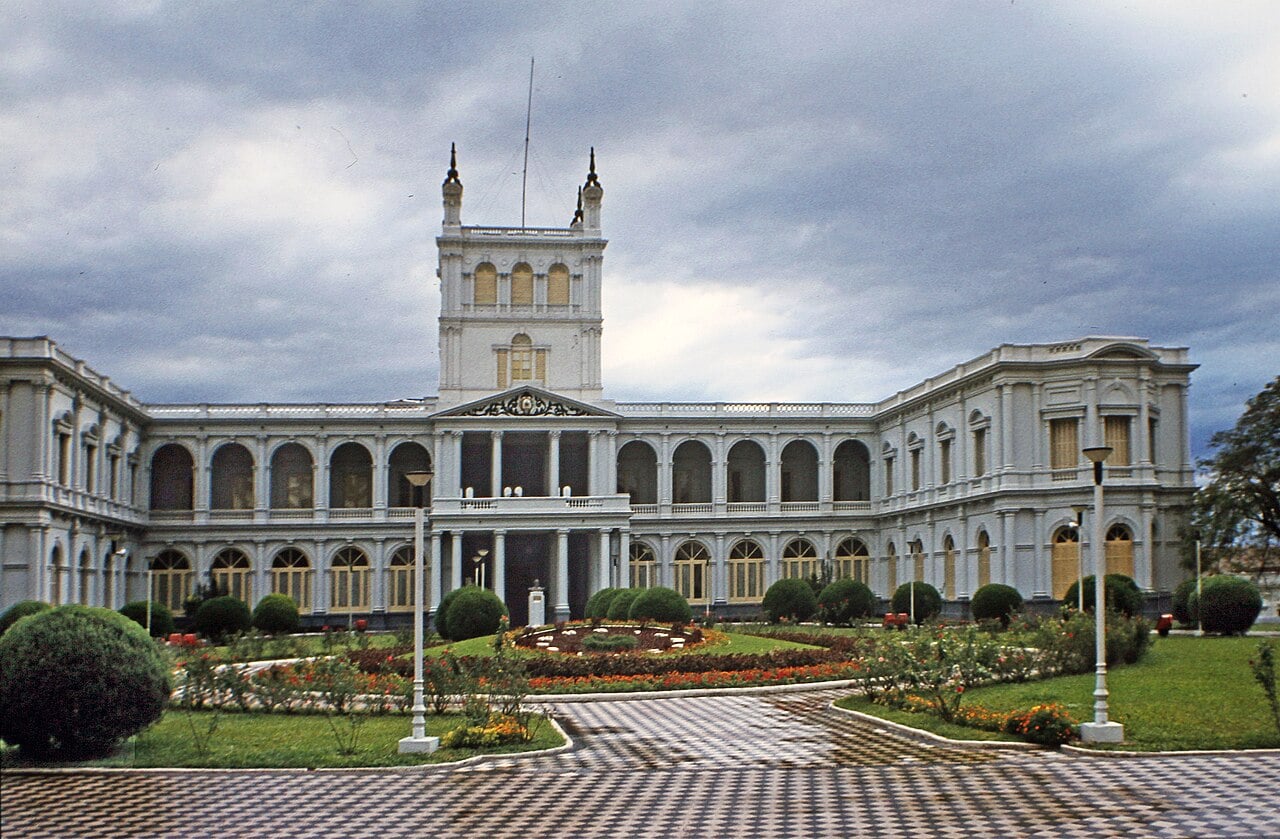
Itaipú, the Dam That Shaped Modern Paraguay
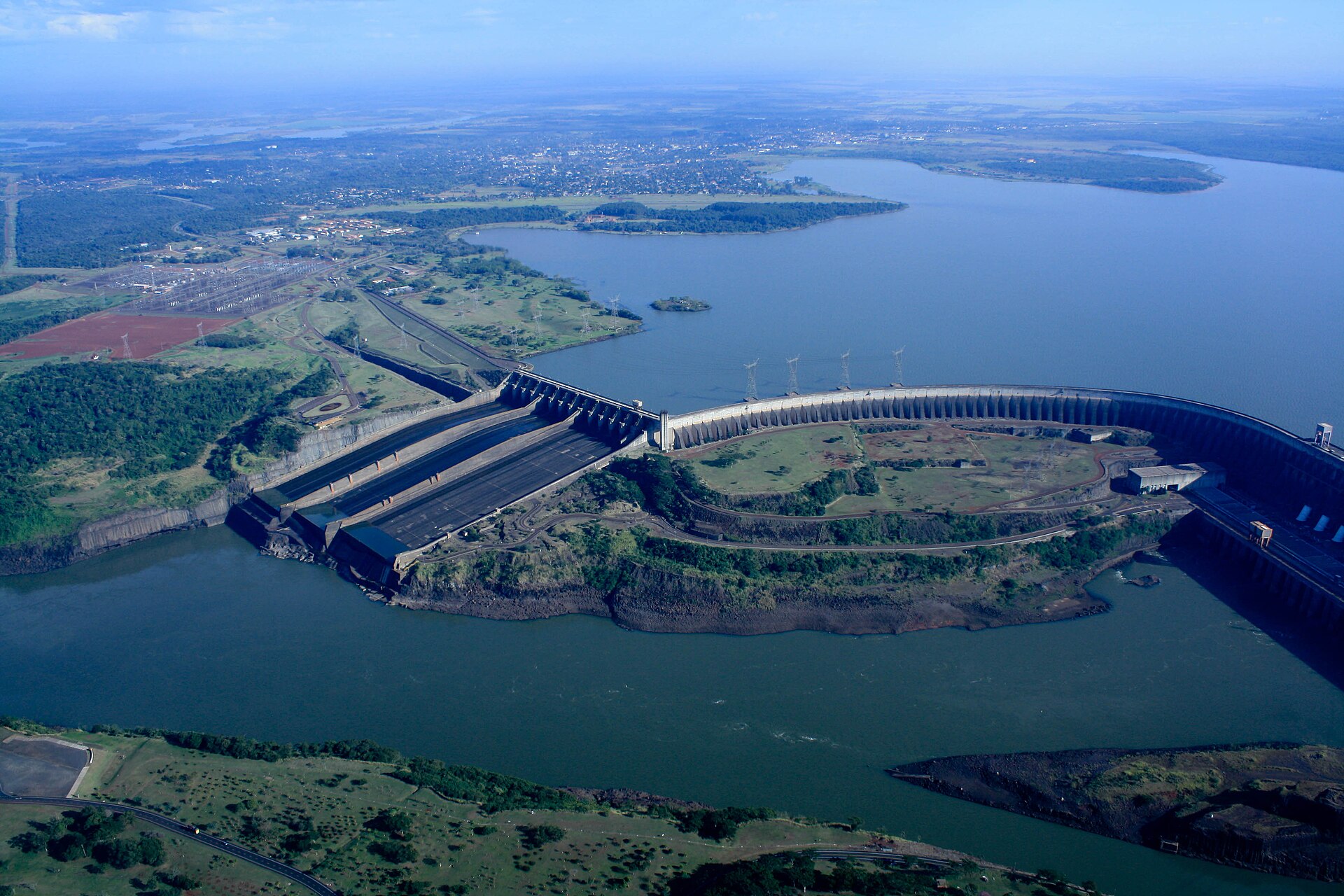
Paraguay and Brazil signed the Itaipú treaty on 26 April 1973, under Stroessner and Brazil’s military ruler, General Emílio Garrastazu Médici. It created a company owned in equal parts by ANDE, Paraguay’s state power utility, and Eletrobras, Brazil’s state power group.
The treaty splits the electricity in equal parts, and each country may buy the other’s unused share. Its Annex C sets the financial terms and the price of the power.
The first turbine began to turn in May 1984, and Itaipú now supplies a large share of Paraguay’s electricity. The treaty turned 50 in 2023, and the two governments have discussed a review of Annex C since then.
Paraguay in 2026: Economy and Elections
Paraguay’s statistics institute, INE, counted 6,109,903 people in the 2022 census and published the final results in August 2024. That is fewer than earlier official projections had suggested.
Moody’s confirmed Paraguay’s Baa3 rating with a stable outlook on 17 July 2026, and it expects the economy to grow 4.5% in 2026. Paraguay first won investment-grade status in July 2024.
The central bank kept its policy interest rate at 5.50% in July 2026 and forecasts inflation of 3.3% for the year. Both numbers matter to US investors who follow the country’s bonds.
On Sunday 4 October 2026 Paraguayans voted in municipal elections for 263 mayors. The preliminary count gave the Colorado Party 187 mayoralties, up from 162 in 2021.
The opposition won two major cities. Soledad Núñez, of an alliance of opposition parties, took Asunción with 47.78%, and Daniel Pereira Mujica won Ciudad del Este with 72.83%.
What It Means for You
Investors: the investment-grade rating, low inflation and steady growth make Paraguay a stable, small market, while one party’s long dominance is the main political risk. Read our guide to the Paraguay power structure and The Rio Times Latin America Power Index.
Visitors: the Jesuit ruins near Encarnación, in the south-east, link you to the colonial past, and Asunción tells the national story. Our Asunción city guide covers the capital, and the Paraguay hub has the latest news.
Anyone following the news: energy talks with Brazil, the memory of the dictatorship and the 2028 race all trace back to this history. Related reading: Paraguay’s population by ethnic group, the farm exporters hit by the stronger guaraní and the truckers’ protest over diesel costs.
Entry rules for foreigners are set by Paraguay’s foreign ministry and migration office. Check them before you book a trip.
What Is Not Known
The war’s true death toll is not known, and historians still argue about it. The truth commission’s own victim counts are minimums, because many victims never testified.
The final terms of any Annex C revision for Itaipú are not yet known. The municipal figures above come from the preliminary count and may change in the official tally.
More: Paraguay news in English, every day from The Rio Times.
Frequently Asked Questions
When was Asunción founded?
Spanish settlers founded Asunción on 15 August 1537. It is still the capital of Paraguay, almost five centuries later.
What was the War of the Triple Alliance?
It was a war between Paraguay and Brazil, Argentina and Uruguay that ended on 1 March 1870. Paraguay lost border lands, and historians still disagree about how many people died.
Who was Alfredo Stroessner?
Stroessner was the general who ruled Paraguay from his coup on 4 May 1954 until he was overthrown on 3 February 1989. He died in exile in Brazil on 16 August 2006.
Who governs Paraguay in 2026?
Santiago Peña of the Colorado Party has been president since 15 August 2023. The constitution allows one five-year term, so his term ends in August 2028.
Why does the Itaipú dam matter?
The 1973 treaty with Brazil created Itaipú, which supplies much of Paraguay’s electricity. Its Annex C sets the financial terms, and both governments have discussed a review since 2023.
Sources: Truth and Justice Commission of Paraguay, Final Report, Conclusions and Recommendations (Anive haguã oiko), 28 August 2008; Treaty between Paraguay and Brazil on the Itaipú hydroelectric project, 26 April 1973; Constitution of Paraguay (20 June 1992), Articles 140, 187 and 229, 20 June 1992; Tribunal Superior de Justicia Electoral, municipal elections 2026 portal, 4 October 2026; Instituto Nacional de Estadística, 2022 Census final results, August 2024.
This article was produced by The Rio Times’ automated newsroom system. How we use AI · Report an error · Editorial responsibility: Matthias Camenzind, Editor-in-Chief
Expat Guide to Paraguay
What The Rio Times publishes for foreigners who live in or move to Paraguay.
Start here
- Best Places to Live in Paraguay for Expats 2026, Ranked
- Investing in Paraguay as a Foreigner 2026 — Taxes and Property
- Uruguay vs Paraguay for Expats in 2026: Cheap Living or a Tax Holiday
- Moving to Paraguay in 2026 — Rents, Heat and the First Year
City guides
Coming up in Paraguay
- What to Do in Asunción in November 2026 26 Nov
- Ed Sheeran in Asunción, Paraguay: First-Ever Show in the Country at La Nueva Olla on November 26, 2026 — FINNEAS Opens 26 Nov
- Gorillaz Asunción Paraguay Concert: Date and Tickets 1 Dec
Understand Paraguay