Paraguay Neighbours Explained, a Southern Cone Guide

PARAGUAY · SOUTHERN CONE
Key Facts
- —What it is Paraguay is one of only two landlocked countries in South America, with Bolivia, bordering Argentina, Brazil and Bolivia.
- —Why it matters Paraguay depends on its neighbours for river access to the Atlantic, electricity exports and most of its foreign trade.
- —The numbers In the first half of 2026, Argentina took 42.3% of Paraguayan exports, worth US$2.7708 billion, according to the Central Bank of Paraguay.
- —The catch Re-exports linked to border commerce made up 27.4% of total exports in 2025, showing how much trade depends on cross-border flows rather than domestic production alone.
- —What it means for you A foreigner doing business in Paraguay is really doing business with Brazil and Argentina, because ports, power lines and supply chains cross those borders every day.
Paraguay neighbours Argentina, Brazil and Bolivia, and those three frontiers define its economy, energy and daily life. Understanding Paraguay means understanding how a landlocked country turns its geography into leverage.
Paraguay sits in the centre of South America, far from any ocean but close to two of the continent’s largest economies. This guide explains how its borders work, who its neighbours are, and what those relationships mean for trade, migration, energy and regional politics.
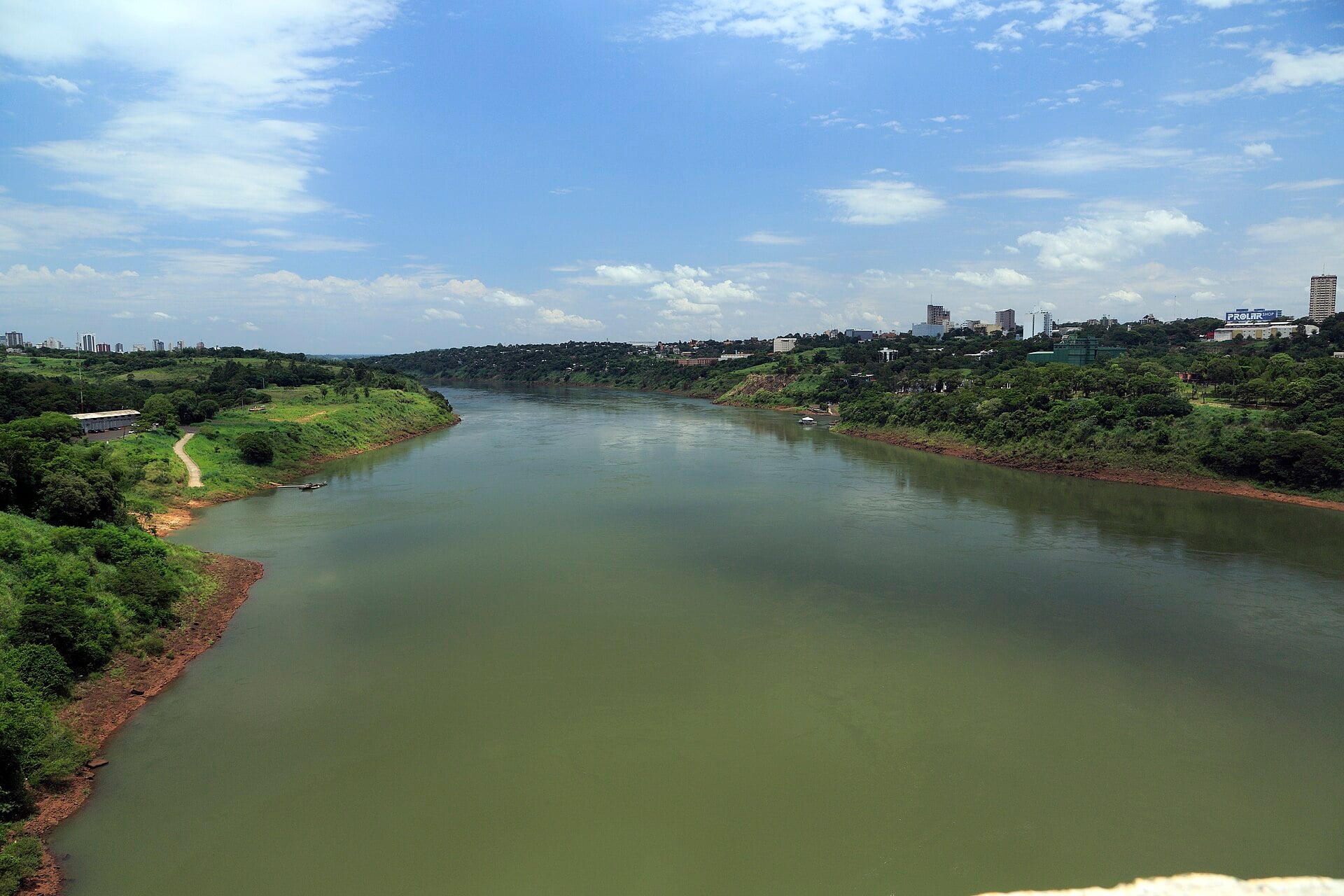
The three neighbours and the borders that bind them
Paraguay shares frontiers with Argentina to the south and southwest, Brazil to the east and northeast, and Bolivia to the north and northwest.
Each border has a distinct character. The eastern frontier with Brazil is the most commercially intense, anchored by the Ciudad del Este–Foz do Iguaçu crossing and the Pedro Juan Caballero–Ponta Porã urban pair. The southern border with Argentina is defined by the Paraguay and Paraná rivers and by the movement of bulk agricultural goods toward Atlantic ports. The northern border with Bolivia crosses the Chaco, a vast and thinly populated region with strategic potential but far less daily traffic.
For a landlocked country, borders are not just lines on a map. They are corridors, bottlenecks, markets and political relationships all at once. Paraguay’s Foreign Ministry describes the country as situated in the centre of South America and connected through its borders to Brazil, Bolivia and Argentina.
Brazil: the heavyweight partner
Brazil is Paraguay’s most consequential neighbour. The two countries share a long eastern border and are linked by major crossings at Ciudad del Este–Foz do Iguaçu and Pedro Juan Caballero–Ponta Porã. Brazilian companies are significant investors in Paraguayan industry, logistics, retail, agribusiness and financial services.
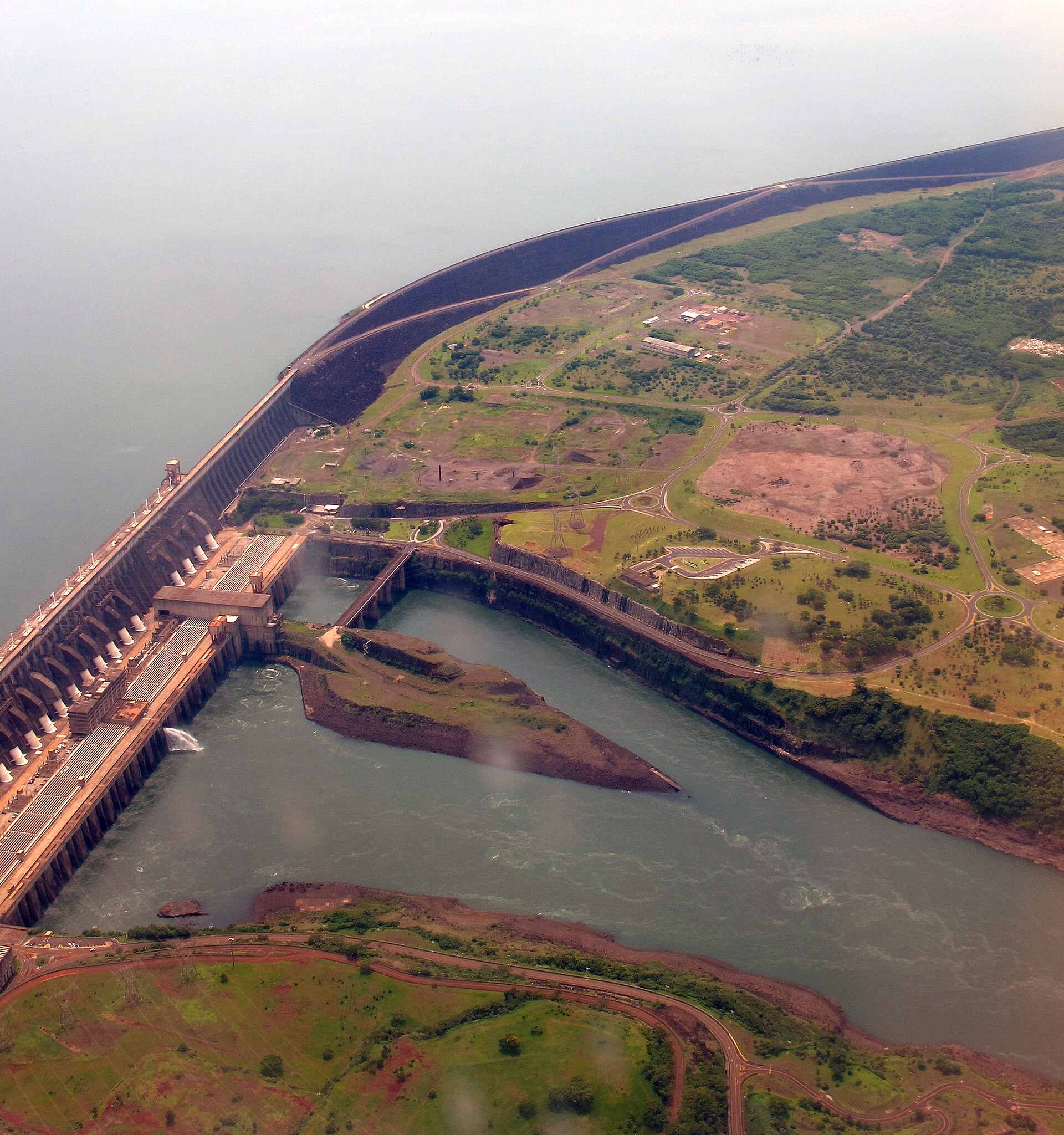
The relationship rests on energy above all. Paraguay and Brazil jointly own Itaipú Binacional, one of the world’s largest hydroelectric facilities. Itaipú has historically supplied a large share of Paraguay’s electricity and remains central to bilateral negotiations over pricing, transmission and the use of Paraguay’s generation share.
Trade is equally important. Brazil is among Paraguay’s principal export destinations and import origins. Paraguayan exports to Brazil include electricity, agricultural products, manufactured goods and maquila output. In the first half of 2026, Brazil supplied US$1.979 billion in imports to Paraguay, according to the Central Bank’s foreign-trade report.
Border integration is advancing. The Friendship Bridge remains one of the busiest commercial and tourist crossings in the region. A second bridge, the Puente de la Integración, links Presidente Franco with Foz do Iguaçu over the Paraná River. It opened in December 2025 in a limited pilot phase, initially for empty trucks only, according to Paraguay’s Migration Directorate.
The relationship is cooperative but asymmetrical. Paraguay needs Brazilian infrastructure and market access, while Brazil has greater economic and negotiating weight. Questions involving Itaipú, border security, contraband, customs controls and informal trade can quickly become bilateral political issues.
Argentina: the river, the ports and the people
Argentina is Paraguay’s principal southern neighbour and its most important outlet to the Atlantic through the Paraguay–Paraná waterway. The relationship combines dense social ties with recurring disputes over transport, energy and border administration.
Navigation is the core issue. Paraguayan exports depend heavily on river transport through Argentine territory and terminals. Any restriction, delay, fee dispute or drought-related reduction in navigability affects Paraguayan exporters and importers. For bulk agricultural goods such as soybeans and cereals, the river route is not optional.
Energy is the second pillar. Paraguay and Argentina jointly operate the Yacyretá hydroelectric project on the Paraná River. As with Itaipú, the plant has financial, operational and political significance beyond electricity generation.
Trade has surged. Argentina became Paraguay’s leading export destination during the first half of 2026. Paraguay’s exports to Argentina reached US$2.7708 billion, representing 42.3% of total exports, and increased 52.5% year-on-year, according to the Central Bank of Paraguay’s June 2026 foreign-trade report.
Migration and family ties run deep. Argentina has historically been one of the largest destinations for Paraguayan migrants. Cross-border family, labour and commercial networks are particularly strong in Misiones, Formosa, Chaco and Corrientes. The San Roque González de Santa Cruz bridge links Encarnación with Posadas, making it one of the most important Paraguay–Argentina crossings.
Bolivia: the quiet northern frontier
Bolivia is Paraguay’s northern and northwestern neighbour. The border is less economically active than those with Brazil and Argentina, but it has strategic relevance because it links Paraguay to the Andean region and to the Chaco.
The relationship is shaped by the Chaco border, historically associated with the Chaco War and the 1938 peace settlement. Road and logistics potential exists, particularly through the Trans-Chaco route and connections toward Bolivia. Energy and hydrocarbons offer the possibility of greater regional gas and fuel integration.
Bolivia also matters because it provides the northern end of a potential connection between Paraguay’s river system, western South America and Pacific-facing markets. In practice, however, the corridor remains less developed and less commercially significant than Paraguay’s eastern and southern links.
Trade: how the neighbourhood shows up in the numbers
Paraguay’s foreign trade expanded in 2025 but remained structurally dependent on agricultural commodities, re-exports and regional markets. Total exports reached US$16.7203 billion, up 5.8% from 2024. Total imports reached US$18.1111 billion, up 10.6%. The trade balance registered a US$1.3907 billion deficit.
The composition matters. Registered exports accounted for US$11.0821 billion, while re-exports reached US$4.5847 billion. Re-exports, many of them linked to border commerce, represented 27.4% of total exports in 2025. That figure shows why Paraguay’s regional position cannot be assessed through agricultural exports alone.
| Period | Exports | Imports | Balance |
|---|---|---|---|
| 2025 full year | US$16.7203 billion | US$18.1111 billion | US$1.3907 billion deficit |
| First half 2026 (January–June) | US$10.1628 billion | US$9.4162 billion | US$746.6 million surplus |
During the first half of 2026, the trade position improved substantially. Paraguay recorded a US$746.6 million trade surplus, while exports rose 23.6% year on year to US$10.1628 billion, according to the Central Bank’s June 2026 foreign-trade report. Imports reached US$9.4162 billion. Argentina was the leading export destination, followed by Brazil and Chile.
In the same half-year, soybean exports reached US$2.273 billion, up 50.9%, and re-exports made up 25.6% of the total. The data illustrate a dual reality: Paraguay is diversifying production and expanding manufactured exports, but its export performance remains highly sensitive to commodity cycles, harvest conditions, river levels and demand in neighbouring countries.
Shared rivers: the geography of dependence
The Paraguay and Paraná rivers are the country’s principal external infrastructure. The Paraguay River runs through the country from north to south and supports agricultural exports, fuel imports, industrial inputs and containerized cargo. It connects Paraguay’s inland ports with Argentina and the Atlantic.
The Paraná River forms sections of Paraguay’s eastern and southern borders and hosts both Itaipú and Yacyretá. It is also essential to bridge connections with Brazil and Argentina.
This dependence creates recurring pressure points: drought and low water levels, dredging and maintenance, port access, navigation rules, transit charges, and coordination among Paraguay, Argentina, Brazil and Bolivia. Paraguay’s lack of a maritime coast means that river navigation is not simply a transport preference; it is a national economic necessity.
Infrastructure: bridges, corridors and power lines
Bridges
The Puente de la Integración is intended to reduce pressure on the Friendship Bridge and separate heavy freight traffic from urban and tourist flows. Its operational impact will depend on customs facilities, access roads and coordinated procedures on both sides of the border. The San Roque González de Santa Cruz bridge links Encarnación and Posadas, making it one of the most important Paraguay–Argentina crossings.
Bioceanic corridor
The Bioceanic Corridor seeks to connect Brazil’s Atlantic-facing agricultural and industrial zones with northern Chilean ports through Paraguay and Argentina. For Paraguay, the corridor offers the possibility of diversifying access to export markets, reducing dependence on the Paraguay–Paraná waterway, connecting the Chaco to new logistics and industrial activity, and attracting warehousing, processing and transport investment.
Its main constraints are distance, incomplete infrastructure, border procedures, road quality and the economic viability of Pacific routes compared with established Atlantic corridors.
Energy infrastructure
Paraguay’s energy position is unusual. It is a major hydroelectric producer but has historically struggled to monetize the full value of its electricity. Itaipú and Yacyretá give Paraguay energy influence, yet transmission capacity, domestic industrial demand and bilateral pricing arrangements determine how much value remains in the country.
Regional bodies: MERCOSUR and the diplomatic game
Paraguay’s main regional framework is MERCOSUR, founded by Argentina, Brazil, Paraguay and Uruguay. Bolivia has since joined the bloc, while other South American countries participate as associated or broader regional partners. Paraguay’s Foreign Ministry identifies the founding four countries as the core of the customs union and lists Bolivia among the bloc’s members in its trade materials.
MERCOSUR gives Paraguay preferential access to major neighbouring markets, a platform for negotiating external trade agreements, rules for customs and origin, and political influence disproportionate to its size because major decisions require consensus among member states.
For a small, landlocked economy, the bloc is both a shield and a constraint. It protects Paraguayan access to Brazilian and Argentine markets, but it also ties Paraguay’s trade policy to decisions made in Brasília and Buenos Aires. The challenge for Paraguayan diplomacy is to keep the bloc useful without letting it limit the country’s options.
Migration and border society
Paraguay’s neighbourhood is also a social space. Paraguayans have long migrated to Argentina and Brazil for work, education and family reunification. Brazilian migrants and investors have established major communities in eastern Paraguay, especially in agricultural areas. Border cities function as integrated commercial zones rather than isolated national markets.
Ciudad del Este is economically linked to Foz do Iguaçu and the wider Brazilian market. Pedro Juan Caballero and Ponta Porã form another cross-border urban system. Along the Argentine frontier, Encarnación is closely connected to Posadas through the San Roque González de Santa Cruz bridge.
These links create opportunities for tourism, retail, logistics and services, but they also complicate customs enforcement and contribute to persistent debates over smuggling, tax evasion, contraband and informal commerce. For a foreigner, the border zones feel less like separate countries and more like single economic regions with a line running through them.
What this means for foreigners, investors and expats
If you are considering Paraguay as a place to live, invest or do business, the neighbourhood is part of the package. A company exporting from Paraguay is likely to move goods through Argentine river ports or across Brazilian bridges. An investor in Paraguayan agriculture is exposed to Brazilian and Argentine demand, currency movements and logistics costs.
The border cities offer lower costs and access to multiple markets, but they also carry compliance risks. Customs enforcement, informal trade and contraband are persistent issues. Anyone operating in Ciudad del Este, Pedro Juan Caballero or Encarnación should understand the cross-border rules before signing contracts or moving goods.
Energy is another factor. Paraguay’s hydroelectric capacity is a long-term asset, but the value of that electricity depends on bilateral agreements with Brazil and Argentina. Investors in energy-intensive industries should study the Itaipú and Yacyretá arrangements carefully.
What to watch
Several issues will shape Paraguay’s relationship with its neighbours in the coming years. The operational rollout of the Puente de la Integración will test whether new infrastructure can reduce border congestion and improve freight flows. The Bioceanic Corridor will depend on investment decisions in Brazil, Paraguay, Argentina and Chile.
River levels on the Paraguay and Paraná will remain a recurring concern. Drought cycles have disrupted navigation in the past, and any prolonged low-water period affects Paraguayan exporters directly. Dredging and maintenance agreements with Argentina will stay on the bilateral agenda.
Energy negotiations over Itaipú and Yacyretá will continue to matter. Paraguay’s ability to use its electricity share for domestic industrial development depends on transmission capacity and pricing agreements with Brazil and Argentina.
Finally, MERCOSUR’s evolution will set the broader framework. Whether the bloc deepens integration or loosens its rules will affect Paraguayan exporters, importers and investors. For a country whose economy is so tightly bound to its neighbours, regional politics is never a side issue.
Related reading: Paraguay news hub, Paraguay Explained, Itaipú Dam Explained, the Paraguay Mercosur quota row and Paraguay’s export boom and the guaraní.
Frequently Asked Questions
Which countries border Paraguay?
Paraguay shares borders with Argentina to the south and southwest, Brazil to the east and northeast, and Bolivia to the north and northwest.
Is Paraguay landlocked?
Yes. Paraguay is one of only two landlocked countries in South America, with Bolivia. It depends on the Paraguay and Paraná rivers, and on its neighbours’ ports, for access to the Atlantic.
Who is Paraguay’s biggest trading partner?
Argentina became Paraguay’s leading export destination during the first half of 2026, taking 42.3% of total exports worth US$2.7708 billion, according to the Central Bank of Paraguay. Brazil is also a major trading partner, especially for imports.
What is Itaipú?
Itaipú is a binational hydroelectric facility jointly owned by Paraguay and Brazil. It is one of the world’s largest hydroelectric plants and remains central to bilateral negotiations over energy pricing and transmission.
What is the Bioceanic Corridor?
The Bioceanic Corridor is a planned route connecting Brazil’s Atlantic-facing zones with northern Chilean ports through Paraguay and Argentina. It aims to diversify Paraguay’s export access and reduce dependence on the Paraguay–Paraná waterway.
Why do re-exports matter for Paraguay?
Re-exports, many linked to border commerce, represented 27.4% of total exports in 2025. They show how much of Paraguay’s trade depends on cross-border flows rather than domestic production alone.
What is MERCOSUR?
MERCOSUR is a South American customs union founded by Argentina, Brazil, Paraguay and Uruguay. Bolivia has since joined the bloc. It gives Paraguay preferential access to neighbouring markets and a platform for external trade negotiations.
Sources: Central Bank of Paraguay, June 2026 foreign-trade report, Paraguay Foreign Ministry border commission, Paraguay Migration Directorate, Ministry of Economy, December 2025 trade report, aduananews.com, lanacion.com.py, mre.gov.py. Retrieved 3 October 2026.
This article was produced by The Rio Times’ automated newsroom system. How we use AI · Report an error · Editorial responsibility: Matthias Camenzind, Editor-in-Chief