Paraguay Explained 2026: The Country, Its Politics, Its Economy and What to Watch
GUIDES · PARAGUAY
Key Facts
- —Capital Asunción, founded on 15 August 1537 on the Paraguay River. The city proper has about 461,000 people on official 2026 projections; its metropolitan area is far larger.
- —Population About 6.46 million in 2026, the national statistics institute projects. The country is slightly smaller than California, so there are only about 16 people per square kilometre.
- —Currency The guaraní (₲, often written Gs.). The central bank’s reference rate was 5,900 guaraníes to the US dollar on 24 September 2026. It was 6,628 on 2 January.
- —Language Spanish and Guaraní, both official. In 2025, 38.7 percent of people aged five and over spoke both at home, and 27.9 percent spoke only Guaraní.
- —GDP About US$49 billion in 2025 on International Monetary Fund (IMF) estimates, similar to Latvia’s economy. Per person that is roughly US$7,700, against about US$90,000 in the United States.
- —Government A presidential republic under the 1992 constitution. The president serves one five-year term with no re-election; Congress has a 45-seat Senate and an 80-seat Chamber of Deputies.
Paraguay explained from the ground up: who runs it, how its dams, soy and beef pay the bills, and which dates matter over the next year.
Paraguay explained starts with one fact: apart from 2008 to 2013, the Colorado Party has held the presidency since the late 1940s. It ruled through a 35-year dictatorship and has kept winning elections since. That continuity shapes almost everything, from the low taxes to the loyalty to Taiwan and the slow bargaining over the dams.
What kind of country is this?
Paraguay is landlocked, wedged between Brazil, Argentina and Bolivia, and slightly smaller than California. East of the Paraguay River lie the capital, the farm belt and most of the people. West of it lies the Chaco, a vast, dry plain of cattle ranches.
In the War of the Triple Alliance, from 1864 to 1870, Paraguay fought Argentina, Brazil and Uruguay at once. It lost a quarter of its territory, and more than half of its population died.
The Chaco War with Bolivia, from 1932 to 1935, secured territory in the west. General Alfredo Stroessner then ruled from 1954 to 1989 as a military dictator backed by the Colorado Party. The present constitution, adopted in 1992, is the settlement that followed his fall.
Guaraní, the Indigenous language, is not a minority tongue here. In 2025, 38.7 percent of people aged five and over used both Guaraní and Spanish at home, and 27.9 percent only Guaraní. Another 30.9 percent spoke Spanish, the national statistics institute (INE) found.
Living standards have risen from a low base. Monetary poverty fell from 24.5 percent in 2022 to 16.0 percent in 2025, according to INE. In rural areas it was still 22.1 percent.
The urban poverty line is 933,108 guaraníes (about US$158) per person a month. The survey behind these figures leaves out Indigenous communities and two thinly populated Chaco departments.
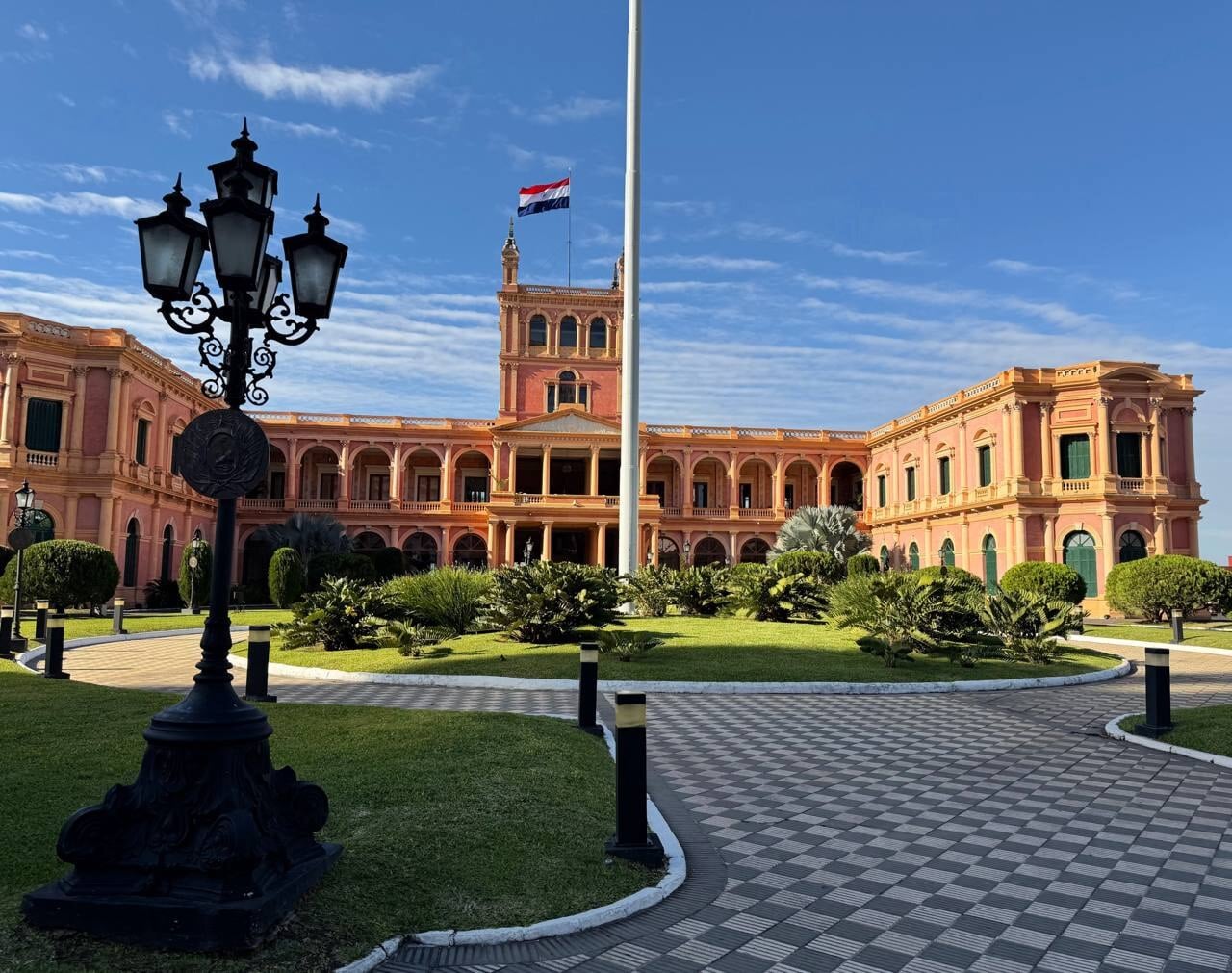
Who runs Paraguay and how
The president is head of state and government. The winner needs only a plurality in a single round, with no runoff. The term is five years, and a president cannot stand again.
Congress has two chambers, elected on the same day as the president and the governors of the 17 departments. The 45 senators come from a single national list, and the 80 deputies are elected by department. Voting is compulsory for citizens aged 18 to 75.
The dominant force is the Colorado Party, formally the National Republican Association (ANR). It was the civilian pillar of the Stroessner regime and has won every presidential election since 1989 except 2008. That year Fernando Lugo won; Congress removed him by impeachment in 2012, and a Liberal vice-president finished the term.
Santiago Peña, an economist formerly at the central bank and the IMF, won in April 2023 with 42.7 percent. A former finance minister, he beat the centre-left Efraín Alegre by more than 15 points and took office on 15 August 2023. His party also won 23 of 45 Senate seats, 48 of 80 deputies and 15 of 17 governorships.
Power inside the party runs through factions. Peña belongs to Honor Colorado, led by former president Horacio Cartes, who governed from 2013 to 2018 and now chairs the party.
Washington labelled Cartes “significantly corrupt” in 2022 and sanctioned him in 2023, allegations he denied. The US Treasury lifted those sanctions on 6 October 2025, and he regained a US visa in 2026.
The opposition is fragmented. The Liberal Party (PLRA) is the historic rival, but in 2023 the anti-Colorado vote split. Alegre’s alliance took about 27 percent, and the populist Paraguayo Cubas more than a fifth.
Foreign policy has one fixed point. Paraguay has recognised Taiwan since July 1957 and is the only South American country to do so, one of 12 worldwide. Peña made a state visit to Taipei in May 2026, where President Lai Ching-te opened Taiwan’s market to Paraguayan poultry.
Beijing publicly urged Asunción to switch during that visit. Some Paraguayan politicians and business leaders argue that ties with China would pay more, Reuters has reported. Peña’s answer, repeated at the United Nations on 23 September 2026, was that Paraguay “is with Taiwan”.
How the economy works
Paraguay lives off its land and rivers, and soy, beef and electricity are its three big earners. In 2025 the soy complex of beans, meal and oil earned US$3.57 billion, central bank data show. Beef brought in US$2.10 billion and electricity US$1.22 billion.
Beef sales rose 21.9 percent in 2025, while the soy complex fell 14.4 percent as bean shipments dropped. The Mercosur trade bloc, led by Brazil and Argentina, took 62.4 percent of registered exports. The United States took 5.3 percent and Taiwan 3.1 percent.
Registered exports, including electricity, totalled US$11.1 billion in 2025. Adding re-exports of imported goods and other items, the central bank puts total exports at US$16.7 billion. A maquila regime, which lets firms assemble goods for export under special tax rules, shipped US$1.24 billion, most of it to Brazil.
Gross domestic product (GDP) rose 6.6 percent in 2025, says the Banco Central del Paraguay (BCP), which expects 4.5 percent in 2026. Inflation was 1.5 percent in the year to August 2026. That sits at the bottom edge of the bank’s target of 3.5 percent, plus or minus two points.
Moody’s raised Paraguay to investment grade, a judgment of low default risk, in July 2024, and S&P Global followed in December 2025. S&P expected net government debt of about 23 percent of GDP at the end of 2025.
Taxes are low: the value added tax (VAT), a sales tax, is 10 percent. Business income tax is also 10 percent, and personal income tax tops out at 10 percent. Paraguay taxes only income earned inside the country, a system called territorial taxation.
The currency has been unusually strong. The dollar bought 6,628 guaraníes on 2 January 2026 and 5,900 on 24 September, BCP reference rates show. Guaraní figures here use that 5,900 rate; open.er-api.com showed about 5,930 on 25 September.
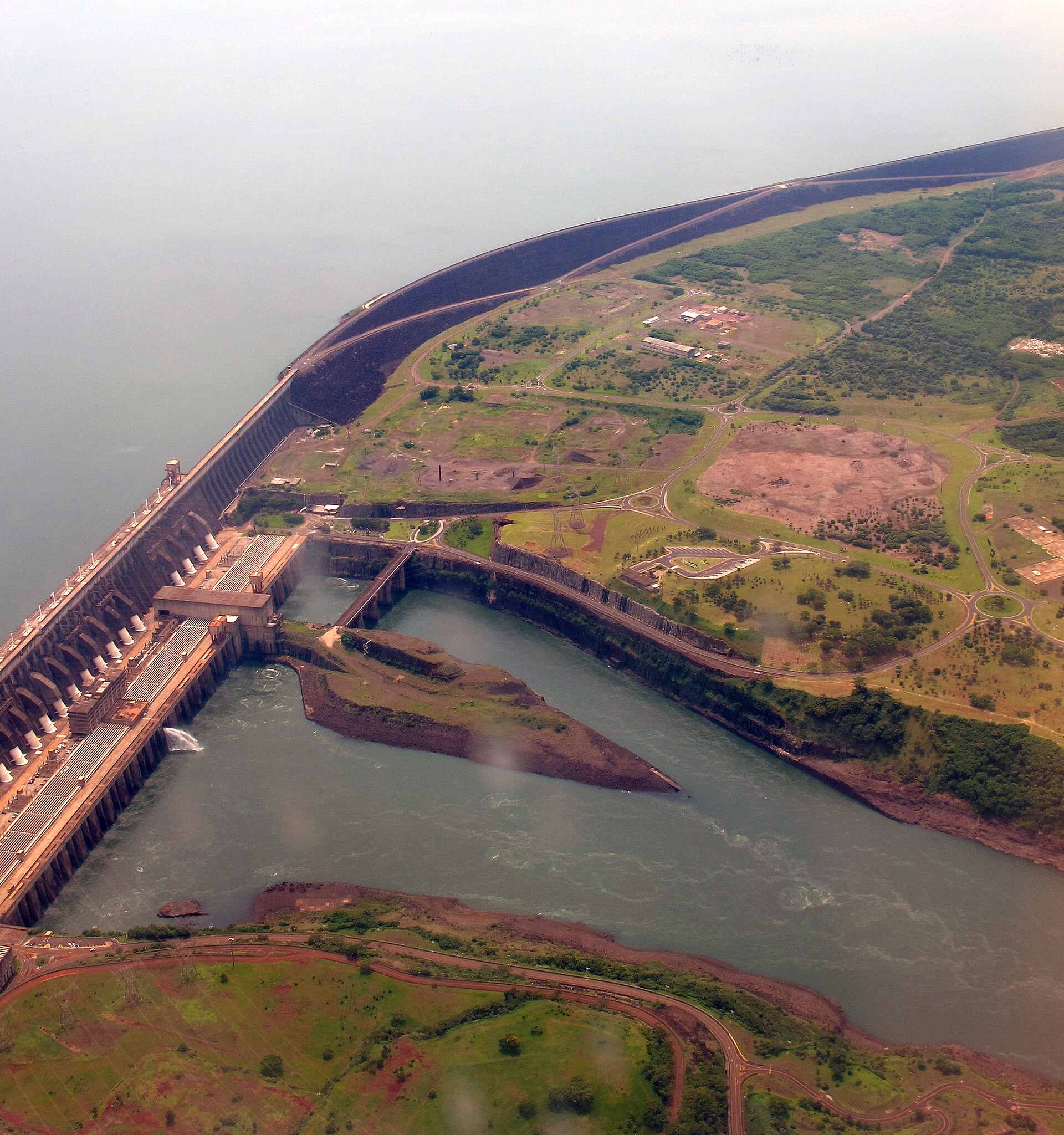
Electricity is the other pillar. Itaipú, on the Paraná River border with Brazil, has 20 turbines of 700 megawatts each, 14,000 megawatts in all. Ten run at 50 hertz for Paraguay’s grid and ten at 60 hertz for Brazil’s.
The two countries own it equally under a treaty signed on 26 April 1973. Its construction debt was paid off in February 2023. Brazil’s foreign ministry said then that it had met about 90 percent of Paraguay’s electricity consumption over the previous decade.
Paraguay cannot use all of its half; in August 2026 it used 70 percent and ceded the rest to Brazil for compensation. From January to August 2026 Itaipú transferred US$309.9 million to the Paraguayan state. That included US$175.5 million in royalties and US$88.8 million for ceded energy.
Yacyretá, shared with Argentina under a treaty signed on 3 December 1973, has about 3,100 megawatts installed. A 2025 deal set a single provisional price of US$28 per megawatt-hour for both countries. Argentina has confirmed that price for 2026.
What is happening right now
As of 25 September 2026, Paraguay is nine days from municipal elections. On Sunday 4 October voters in all 263 districts choose mayors and councils for 2026 to 2031. In 2021 the Colorado Party won 163 of 261 mayoralties; the Liberals won 62 on their own ticket.
The capital is the headline race. Two polls published in mid-September put Colorado candidate Camilo Pérez well ahead of Soledad Núñez of the Unidos por Asunción opposition alliance. Ati Snead had Pérez on 52.8 percent to 34.3, and Grau & Asociados had him on 50.8 to 27.0.
The second story is Itaipú. Its tariff, a monthly charge per kilowatt of contracted capacity, is US$19.28 for 2024 to 2026 and expires on 31 December. In a 2024 understanding, both governments committed to a tariff reflecting only the plant’s strict operating cost after 2026.
The review of the treaty’s financial annex, Annex C, was due after 50 years and is still not concluded. Paraguay wants a tariff high enough to keep funding infrastructure and social programmes, its Itaipú director, Justo Zacarías Irún, has said.
In early September he said talks would resume after Brazil’s elections, with a definition hoped for by the end of November. He also said Brazil had made no official proposal to cut the tariff to US$15, as Brazilian press reports suggested.
At the UN General Assembly on 23 September, Peña backed Taiwan again and called for Venezuela’s return to Mercosur. Days earlier he had met Venezuela’s acting president, Delcy Rodríguez, in Caracas.
On the economy, the central bank held its policy rate at 5.50 percent on 21 September. Activity grew 5.6 percent from January to July compared with a year earlier, by the bank’s monthly index.
What to watch
Sunday 4 October 2026 is the first date. Paraguay votes for mayors and councils on the same day Brazil holds the first round of its general election. Official counts and proclamations run from 5 to 23 October, and new mayors take office on Tuesday 3 November.
Brazil’s possible presidential runoff falls on Sunday 25 October. Paraguayan officials have tied the Itaipú talks to Brazil’s electoral calendar, so that result matters in Asunción. The end of November is the target Paraguay’s Itaipú director has set for a tariff decision.
The central bank’s next rate decision is due on Friday 23 October. Economists it surveyed in September expected the rate to stay at 5.50 percent through 2026. They also saw the dollar at about 6,100 guaraníes by December; both are forecasts, not commitments.
Thursday 31 December 2026 is the hard deadline. The 2024–2026 Itaipú tariff lapses that day, and no successor had been published by 25 September. Yacyretá’s US$28 price is confirmed in Argentina’s official gazette only for calendar 2026.
Further out, Peña’s term ends on 15 August 2028. He cannot run again, so the Colorado Party’s choice of successor will shape the 2028 general election.
What this means for foreigners
Citizens of the United States, Canada, Australia and New Zealand need no tourist visa for stays of up to 90 days. That exemption comes from a temporary 2021 law, extended in 2024 until 13 August 2027. European Union and British passport holders are also visa-free for short visits.
Residency is the main draw. Under the 2022 migration law, a foreigner first gets temporary residency for up to two years, extendable, before applying for permanent residency. The temporary permit fee is listed at 2,926,925 guaraníes (about US$496).
The migration directorate made the permanent step stricter for applications filed from 6 July 2026. Its Resolution 407/2026 demands verifiable proof of real income in one of 12 categories, from remote workers to retirees and property owners. The tax advisers RSM note that it sets no minimum income figure.
Personal income tax applies only to Paraguayan-source income. The rate is 8 percent up to 50 million guaraníes (about US$8,500) and 9 percent up to 150 million guaraníes (about US$25,400). Above that it is 10 percent.
Income from personal services below 80 million guaraníes (about US$13,600) a year owes no personal income tax. Under that territorial rule, pensions and other income earned abroad generally fall outside the Paraguayan tax net. Americans, however, remain liable to US tax wherever they live.
The honest summary for a newcomer is that Paraguay rewards paperwork. Residency files need apostilled birth and police records plus an Interpol certificate. Paraguay explained in one line: a stable, low-tax country dominated by one party, whose biggest bargains are struck over two dams.

Connected Coverage
Investing in Paraguay as a Foreigner 2026 — Taxes and Property
Uruguay vs Paraguay for Expats in 2026: Cheap Living or a Tax Holiday
Paraguay Residency Visa: The Permanent Permit’s Income Test Changed on 6 July 2026
Moving to Paraguay in 2026 — Rents, Heat and the First Year
Retire in Paraguay 2026: Residency Steps, Tax Rules and the Real Timeline
Paraguay Taxes Only Local Income as Expats Face 0% Rate on Foreign Pensions
Paraguay Banks Accept Foreigners with a Cédula as Tourist Accounts Stay Rejected
Paraguay Expats Rely on Private Hospitals as IPS Health Stays Tied to Employment
Foreigners Keep Full Freehold Rights Buying Property Paraguay Notary Process
Paraguay Economy Expands 6.6% in 2025 as Itaipu Revenue and Soy Exports Lift Investor Appeal
Sources: Population, language and poverty from the Instituto Nacional de Estadística. Output, prices, trade and exchange rates from the Banco Central del Paraguay. Residency rules from the Dirección Nacional de Migraciones and the electoral calendar from the Tribunal Superior de Justicia Electoral. Treaty texts from Itaipu Binacional. All accessed 25 September 2026.
- Instituto Nacional de Estadística — district population projections 2000–2035, revision 2025
- Instituto Nacional de Estadística — languages spoken at home, EPHC 2025
- Instituto Nacional de Estadística — monetary poverty 2025
- Banco Central del Paraguay — quarterly national accounts, Q4 2025
- Banco Central del Paraguay — daily reference exchange rates, 2026
- Ministerio de Economía y Finanzas — foreign trade report, December 2025 (BCP data)
- S&P Global Ratings — Paraguay upgraded to BBB-, 17 December 2025
- International Monetary Fund — World Economic Outlook DataMapper, GDP in US dollars
- Tribunal Superior de Justicia Electoral — Municipal Elections 2026
- Itaipu Binacional — Annex C to the Itaipú Treaty
- Dirección Nacional de Migraciones — Resolution 407/2026 on proof of income
- PwC Worldwide Tax Summaries — Paraguay individual income tax
What Is Not Known
The Itaipú price from 1 January 2027. Paraguay and Brazil have not published a new Annex C or a tariff, and their stated aims differ. Brazil holds a 2024 commitment to a cost-only tariff; Paraguay says it wants room to keep funding social and infrastructure programmes.
Whether Paraguay can sell its surplus electricity directly into Brazil’s free market. Officials have sought this since at least March 2026, and a decision was still pending in mid-September.
How long the power surplus lasts. Paraguay used 70 percent of its Itaipú share in August 2026. The chief negotiator, Javier Giménez, has said abundance could end in about eight years, depending on demand.
The municipal result beyond Asunción. Published polling covers mainly the capital, so the national balance across 263 districts will be clear only from the official count.
Taiwan’s staying power, with China courting Paraguayan lawmakers and some exporters wanting direct access to Chinese buyers. The artificial-intelligence computing project signed in Taipei in May began as a memorandum of understanding. No cost or timetable had been published by mid-2026.
Frequently Asked Questions
What language do people speak in Paraguay?
Spanish and Guaraní, which are both official. In 2025, 38.7 percent of people aged five and over spoke both at home and 27.9 percent only Guaraní. Another 30.9 percent spoke Spanish, the national statistics institute says.
Who is the president of Paraguay in 2026?
Santiago Peña of the Colorado Party, an economist who took office on 15 August 2023 after winning 42.7 percent of the vote. The term is five years and cannot be renewed, so it ends on 15 August 2028.
Why does Paraguay recognise Taiwan and not China?
Paraguay has recognised Taiwan since July 1957 and is the only South American country to do so, one of 12 worldwide. President Peña cites shared democratic values. Some politicians and business leaders argue that ties with Beijing would pay more, but the government has not changed course.
What is Itaipú Annex C and why does it matter?
Annex C is the financial annex of the 1973 Itaipú treaty with Brazil, and it sets how the dam’s power is priced. It was due for review after 50 years. The current tariff of US$19.28 per kilowatt-month expires on 31 December 2026, with no new deal announced as of 25 September 2026.
Does Paraguay tax foreign income?
No. Paraguay taxes on a territorial basis, so personal income tax of 8 to 10 percent applies only to Paraguayan-source income. Value added tax and business income tax are both 10 percent, and US citizens remain liable to US tax wherever they live.
Do Americans need a visa for Paraguay?
No. Citizens of the United States, Canada, Australia, New Zealand, Britain and the European Union can visit visa-free for up to 90 days. Anyone planning to live there needs temporary residency first, granted for up to two years.
This article was produced by The Rio Times’ automated newsroom system. How we use AI · Report an error
Read More from The Rio Times