Who Is Santiago Peña? Paraguay’s President, the Cartes Factor and What Comes Next
PROFILE · PARAGUAY
Key Facts
- —Who he is Santiago Peña, 47, is an economist and former IMF staffer who has led Paraguay since August 2023.
- —Power base The Colorado Party, in power since the late 1940s except 2008 to 2013, led by ex-president Horacio Cartes.
- —Record Investment-grade ratings from Moody’s and S&P, 6.6% growth in 2025 and a hard line on prison gangs.
- —Controversies Critics accuse him of serving Cartes and of conflicts of interest; he denies wrongdoing and no court has found any.
- —Outlook He may serve one five-year term only, ending 15 August 2028, and Itaipú talks with Brazil are his biggest test.
Santiago Peña is a Columbia-trained economist under whom Paraguay won investment-grade ratings and became a loyal ally of Washington and Taipei. His critics see him as the polished face of Horacio Cartes, the tobacco magnate who runs the ruling Colorado Party.
Paraguay is a landlocked country of about 6.4 million people between Brazil, Argentina and Bolivia, and it rarely makes global headlines. This profile explains who Santiago Peña is, how he holds power, what he has done since August 2023 and what comes next.
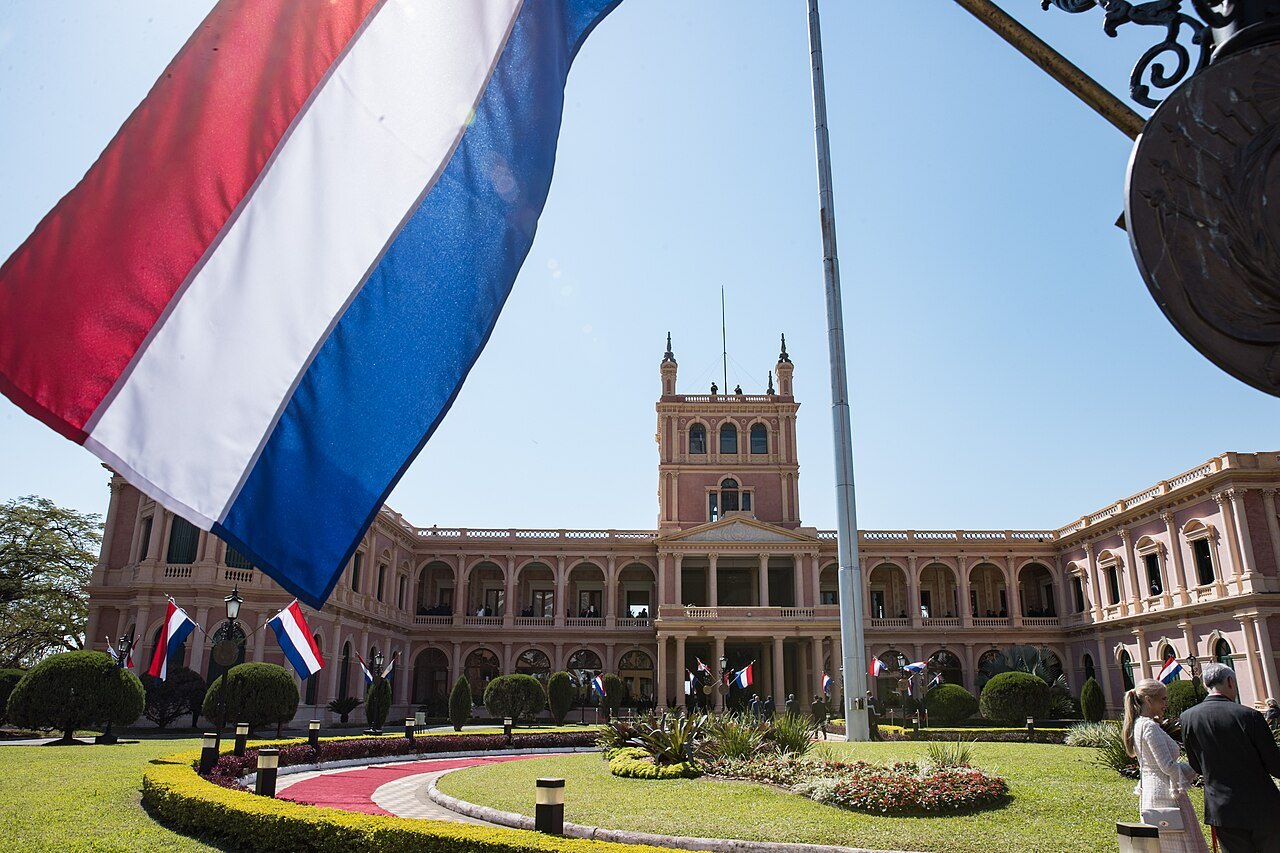
From Central Banker to President
Peña was born in Asunción, the capital, on 16 November 1978, to a Paraguayan father and an Argentine mother. He studied economics at the Catholic University of Asunción and took a master’s degree at Columbia University in 2003.
Columbia says he worked at Paraguay’s central bank, then at the International Monetary Fund (IMF), before joining the central bank’s board. That technocratic path set him apart from his two predecessors, the businessman Cartes and the former senator Mario Abdo Benítez.
Finance minister under Cartes
President Horacio Cartes, a businessman whose group spans tobacco, banking, drinks and meat, made Peña finance minister in 2015. Peña held the post until 2017 and later joined the board of Banco Amambay, a bank in the Cartes group.
Peña had started out in the Liberal Party, the Colorados’ historic rival, and switched to the Colorado Party in 2016. Al Jazeera reported that he lost the party’s 2017 presidential primary to Mario Abdo Benítez, the man he would later succeed.
How He Won Power
In December 2022 Peña won the Colorado primary as the candidate of the Cartes faction. On 30 April 2023 he took about 43% of the vote, well ahead of Liberal leader Efraín Alegre on roughly 27.5%.
Paraguay elects its president by simple plurality, so there is no runoff. The anti-system candidate Paraguayo “Payo” Cubas came third, and the Colorados also won majorities in both houses of Congress.
Peña took office on 15 August 2023 at the age of 44, the youngest president since democracy returned in 1989. The Constitution limits presidents to one five-year term, so his mandate ends on 15 August 2028 with no chance of re-election.
The Colorado Party has held the presidency since the late 1940s, except between 2008 and 2013. That record includes the 35-year dictatorship of General Alfredo Stroessner, which ended in 1989 and still shapes political debate.
The Cartes Factor
Peña’s main power base is the Colorado Party, and its president is Horacio Cartes, who governed Paraguay from 2013 to 2018. During the 2023 campaign Alegre called Peña Cartes’s “servant”, according to Al Jazeera.
In January 2023 the US Treasury sanctioned Cartes under the Global Magnitsky Act, a law targeting corruption and human rights abuses abroad. Treasury alleged that he paid legislators monthly bribes of US$5,000 to US$50,000 each.
On 6 October 2025 the Treasury removed Cartes and several of his companies from its sanctions list, WorldECR reported. Cartes thanked the Trump administration for its “objectivity and sense of justice”, Bloomberg Línea reported.
No court has convicted Cartes over the conduct Washington alleged. Hugo Velázquez, vice-president under Abdo Benítez and sanctioned the same day in 2023, was not removed.
The relationship between the two men is not frictionless. In September 2026 an Última Hora columnist described Cartes-aligned senators pressing the central bank over a bank tied to Peña’s past investments.
The Economic Record
Economics is where Peña’s supporters see his clearest wins. Moody’s raised Paraguay to Baa3, its lowest investment grade, in July 2024, citing “robust and sustained economic growth”.
S&P Global followed with a BBB- rating on 17 December 2025, according to the Central Bank of Paraguay (BCP). The agency praised fiscal discipline, a credible central bank and a stronger tax administration.
The BCP reported in March 2026 that the economy grew 6.6% in 2025, with services, farming, energy and manufacturing all contributing. In December 2025 the central bank projected 4.2% growth for 2026, with inflation near its 3.5% target.
Paraguay’s currency is the guaraní, and it has strengthened sharply against the dollar during 2026. On 25 September 2026 the BCP reference rate was about 5,875 guaraníes per US dollar, against 6,628 on 2 January.
Taxes, pensions and Itaipú
Peña has kept Paraguay’s low and simple tax model of roughly 10% on corporate profits, consumption and personal income. In August 2023 he created a Ministry of Economy and Finance, run by economist Carlos Fernández Valdovinos.
His hardest domestic fight was over the Caja Fiscal, the pension fund for teachers, police and other state workers. Peña signed the reform on 18 March 2026, and teacher unions threatened to sue over contributions rising from 16% to 19%.
In May 2024 he struck a deal with Brazil on Itaipú, the giant hydropower dam the two countries share. The Foreign Ministry said the tariff of US$19.28 per kilowatt-month would bring Paraguay about US$1.25 billion a year until 2026.
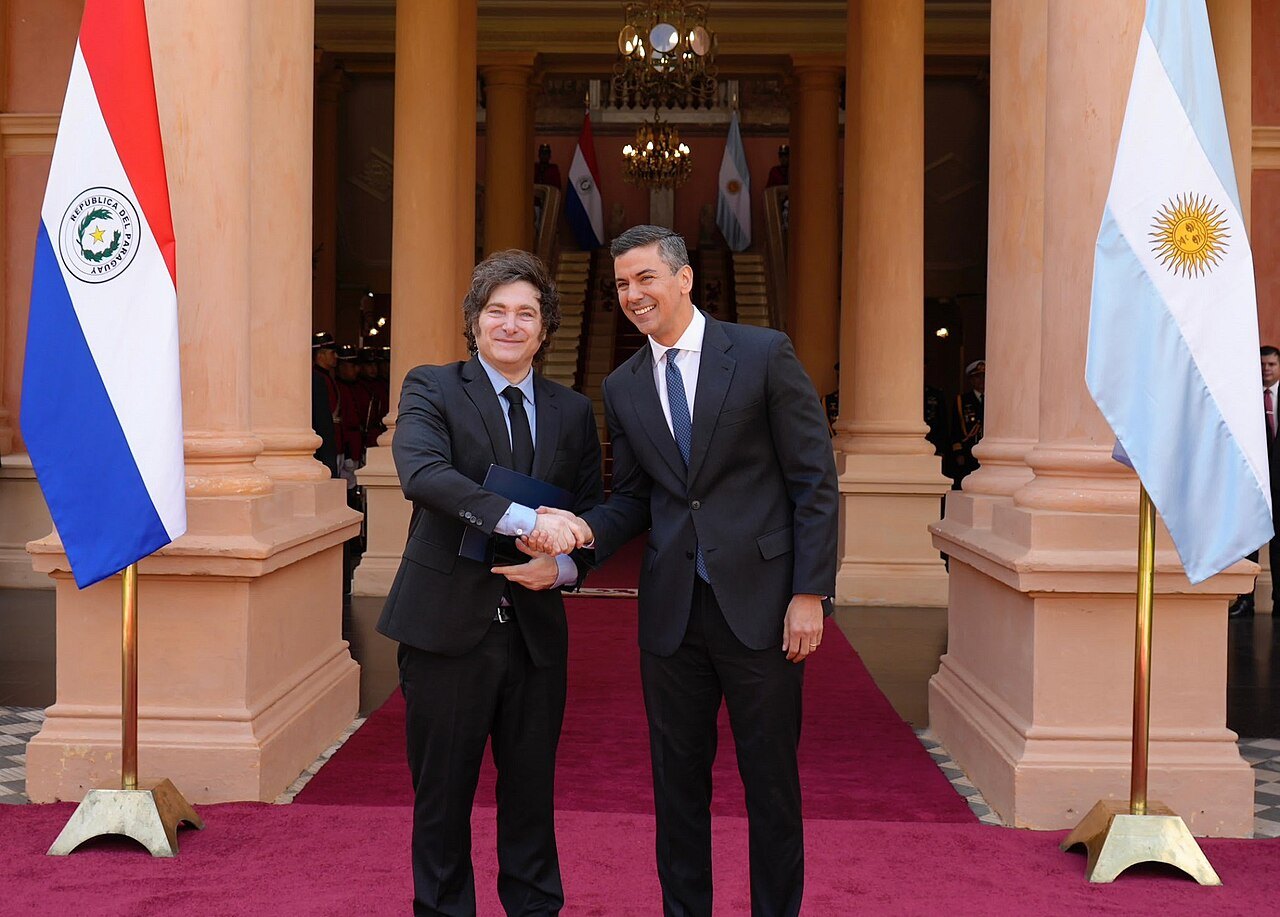
Security, Prisons and the Street
On 18 December 2023 police and soldiers retook Tacumbú, the country’s largest prison, from a gang known as the Clan Rotela. La Nación quoted Peña saying that “Paraguay said enough”, and one police officer died in the operation.
In August 2024 Peña promised to invest US$500 million in security and defence during his term. He called the sum “historic” and praised the armed forces, which ended the Stroessner dictatorship in 1989.
On 28 September 2025 young protesters calling themselves Generation Z Paraguay marched in Asunción against corruption and nepotism. MercoPress reported at least 31 arrests, and Deputy Raúl Benítez accused police of acting “as in the dictatorship”.
People’s Dispatch, a left-leaning outlet, reported that protesters demanded an end to nepotism and to the advance of “narco-politics”. Within a week the government reversed a contested move of the indigenous affairs agency to a military base and replaced its head.
Controversies and Allegations
In 2025 the daily ABC Color reported that Peña held shares in Ueno Holding, part of a group with state business. Hoy quoted Peña saying his stake was “a little more than 1%”, far below the 10% threshold for control under the law.
In April 2025 he said he had sold the stake in late March and accused ABC Color of “manipulation”. Última Hora later reported that he then bought shares in Banco Continental, and a lawyer urged a blind trust.
The state comptroller’s office maintains that holdings below 10% create no legal conflict. As of September 2026 no court or prosecutor has charged Peña with any offence linked to his investments.
A second dispute concerns Kattya González, an opposition senator who won more than 100,000 votes in 2023. The Senate expelled her on 14 February 2024 with 23 of 45 votes, which ABC Color said was below the required 30.
In June 2026 the Supreme Court upheld the expulsion by six votes to three, Última Hora reported. González called it an “infamous sentence”, and in August the rights group Codehupy took her case to the UN Human Rights Committee.
A Foreign Policy Bet on Washington, Taipei and Jerusalem
Peña has aligned Paraguay closely with the United States under Donald Trump. In August 2025 the two governments signed a safe third country deal, letting Washington send some asylum seekers to Paraguay, Newsweek reported.
US Secretary of State Marco Rubio said the deal would help both nations “share the burden of managing illegal immigration”. When Washington lifted its sanctions on Cartes in October 2025, Bloomberg Línea linked the move to Paraguay’s alignment with Trump.
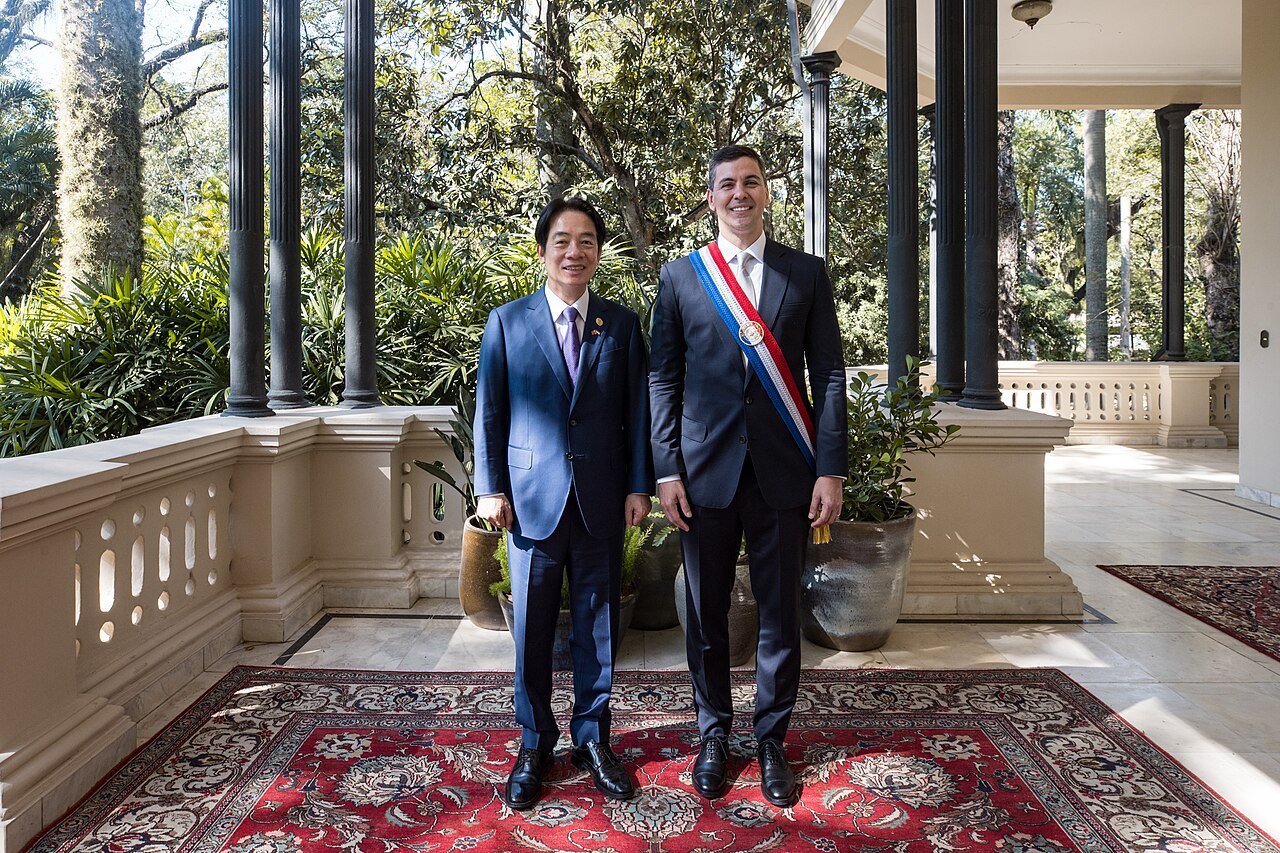
Paraguay is the only South American country that still recognises Taiwan rather than the People’s Republic of China. On a state visit in May 2026, Peña promised that Paraguay “will remain Taiwan’s staunchest ally”, Taiwan’s presidential office said.
The trip produced a jointly owned AI computing hub plan, powered by Paraguayan hydropower. Soybean exporters, however, still press for access to the Chinese market.
Peña also reopened Paraguay’s embassy in Israel in Jerusalem in December 2024. His government voted against UN General Assembly resolutions calling for a ceasefire in Gaza in October and December 2023.
With Brazil, relations soured in 2025 after reports that Brazil’s intelligence agency, ABIN, had hacked Paraguayan officials during the Itaipú talks. Peña suspended talks on 1 April 2025, and Infobae reported that he and Brazil’s Lula relaunched them in March 2026.
What It Means for Foreigners and Investors
For investors, Peña offers low taxes, a credible central bank, cheap hydropower and two investment-grade ratings. The Rio Times guide to Peña’s economic policy for investors sets out the tax and fiscal rules in more detail.
The risks lie in weak institutions, the influence of organised crime and the concentration of power in one party. Judicial independence matters for any foreign company that may one day need to enforce a contract in a Paraguayan court.
For expats and visitors, the strong guaraní has made Paraguay more expensive in dollar terms during 2026. Our country guide, Paraguay explained, covers geography, language and costs for newcomers.
Washington’s backing gives Peña’s government unusual weight for a country of its size. A change of tone in the White House or in Brasília could quickly alter that position.
What to Watch
Municipal elections on 4 October 2026 are the first big test of Peña’s popularity since 2023. He told his party he would not watch the vote “from the stands” and wants Colorado mayors in all 263 districts.
The second test is Itaipú, because the tariff deal expires on 31 December 2026 and the treaty’s financial annex remains open. Any new agreement will shape Paraguay’s public finances and Brazilian electricity bills for years.
The third question is succession, because the Colorado Party must choose a candidate for the 2028 presidential election. How far Cartes controls that choice will show whether Peña built his own base or simply governed on loan.
Unknowns remain on several fronts, including Peña’s investments and the González case before the UN. As of September 2026 none of the allegations against Peña has produced charges, and he remains entitled to the presumption of innocence.
Frequently Asked Questions
Who is Santiago Peña?
Santiago Peña is the president of Paraguay, in office since 15 August 2023. He is an economist who worked at Paraguay’s central bank and the IMF before serving as finance minister from 2015 to 2017.
Which party does Santiago Peña belong to?
He belongs to the Colorado Party, officially the National Republican Association. The party is led by former president Horacio Cartes and has governed Paraguay for most of the time since the late 1940s.
Can Santiago Peña run for re-election?
No, the Paraguayan Constitution limits presidents to a single five-year term. His mandate ends on 15 August 2028, and his successor will be elected earlier that year.
What is Peña’s relationship with Horacio Cartes?
Peña served as finance minister under Cartes and won the presidency as the candidate of his faction. Opposition leader Efraín Alegre called him Cartes’s servant in 2023, and the relationship remains the central question of his presidency.
Why does Paraguay recognise Taiwan?
Paraguay has recognised the Republic of China on Taiwan since 1957 and is its only ally in South America. Peña has kept the relationship despite pressure from farm exporters who want access to mainland China.
This article was produced by The Rio Times’ automated newsroom system. How we use AI · Report an error
Read More from The Rio Times