Paraguay Economy Expands 6.6% in 2025 as Itaipu Revenue and Soy Exports Lift Investor Appeal
Economy · Paraguay
—The stakes. Paraguay recorded its fastest growth in 12 years, making it one of Latin America’s standout performers for foreign investors.
—The date. The IMF completed its 2026 Article IV consultation on July 30, 2026, confirming strong macroeconomic performance.
—The number. Real GDP grew 6.6% in 2025 and is projected to reach 4.4% in 2026.
—The driver. Services, manufacturing, agriculture, construction, and energy distribution powered first-quarter growth of 5.8% year-on-year.
—The watchpoint. Headline inflation hit 2.1% in June 2026 and is projected to converge to the central bank’s 3.5% target by year-end.
Paraguay is closing 2026 as one of South America’s most consistent growth stories, outpacing regional peers even as the pace moderates from an exceptional 2025. For foreigners and investors, the country is once again pairing macro stability with low-tax appeal and strategic Mercosur positioning.
Growth: Fastest Pace in 12 Years
The International Monetary Fund confirmed that Paraguay recorded strong macroeconomic performance in 2025 and 2026.
Real GDP expanded 6.6 percent in 2025, the fastest pace in 12 years.
Analysts had forecast growth of 5.8 percent for that year, according to Bloomberg.
In the first quarter of 2026, real GDP grew 5.8 percent year-on-year.
The IMF attributed this to services, manufacturing, agriculture, construction, and energy distribution.
For the full year 2026, the IMF projects growth of 4.4 percent.
Growth is then expected to moderate to a potential rate of about 3.8 percent over the medium term.
The World Bank also projects 4.4 percent growth in 2026, supported by services and strong agricultural exports.
Paraguay’s Ministry of Economy and Finance earlier cited a Central Bank of Paraguay projection of 4.2 percent for 2026.
The ministry linked that outlook to expansion in construction, energy production, and water production.
Inflation and the Stronger Guaraní
Headline inflation has been below the central bank’s target since the end of 2025.
In June 2026, headline inflation reached 2.1 percent year-on-year.
The IMF said transport fuel prices rose 12.4 percent year-on-year in that reading.
Beef and other food segments increased 5.9 percent and 10.1 percent year-on-year.
Those pressures were partly offset by cheaper imported durables due to a stronger guaraní.
The guaraní is Paraguay’s local currency.
The World Bank reported an appreciation of the guaraní against the US dollar, which helped lower inflation in late 2025.
Headline and core inflation reached 3.1 percent and 2.3 percent respectively in December 2025.
The IMF projects inflation will reach the Central Bank of Paraguay’s target of 3.5 percent by end-2026.
The central bank’s policy rate was cut to 5.5 percent in June 2026 from 8.5 percent in July 2023.
Itaipú Dam: Energy Exports and Public Revenue
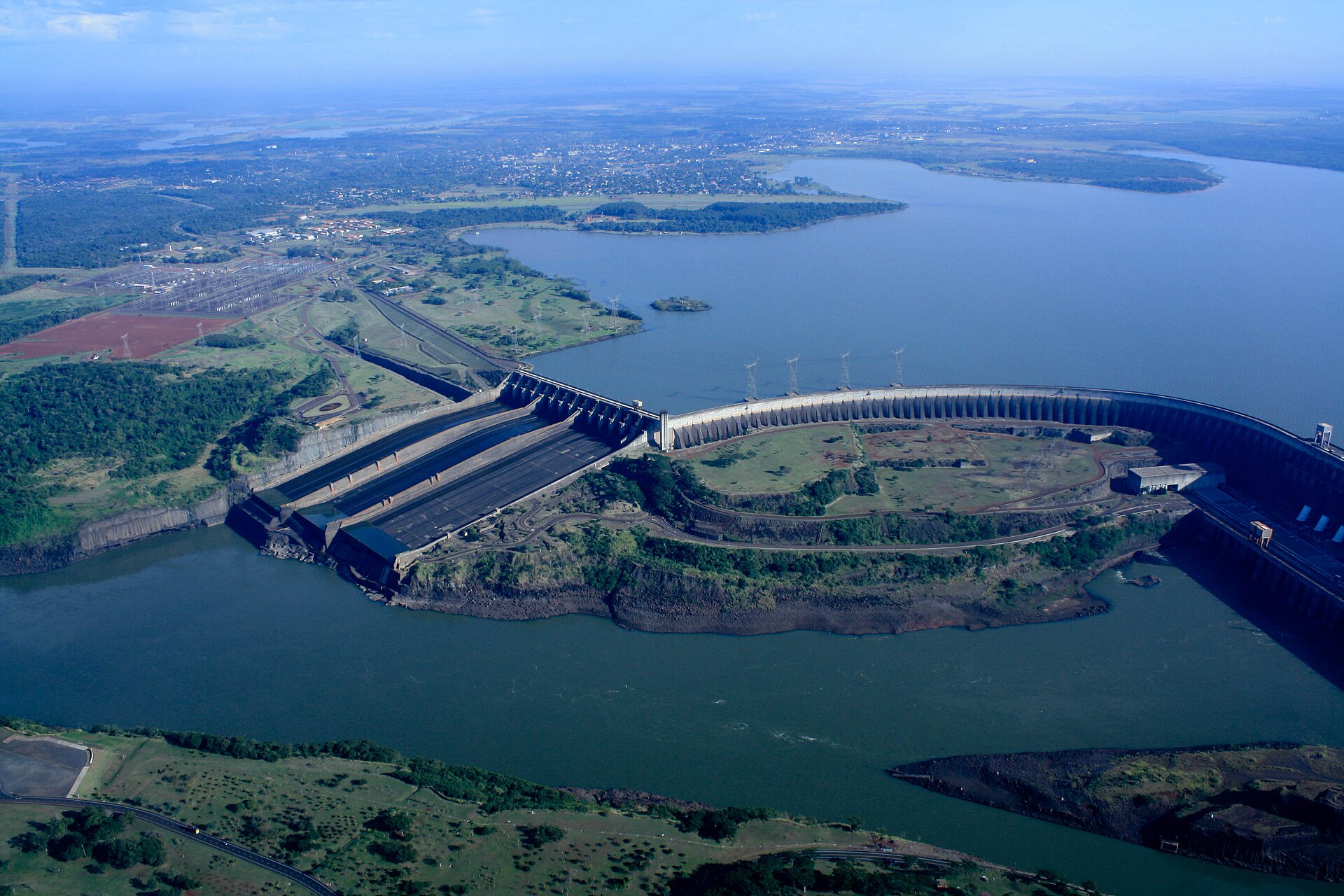
Itaipú is a binational hydroelectric dam shared by Paraguay and Brazil on the Paraná River.
It is administered by Itaipú Binacional under the 1973 Itaipú Treaty.
Paraguay has historically used only a fraction of its allocated share of Itaipú’s power.
Most of Paraguay’s share is exported to Brazil under long-term contracts.
Those exports generate foreign-currency revenue that is a major component of public finances.
The same energy arrangement is one reason for Paraguay’s cheap industrial electricity.
Energy distribution was among the sectors driving first-quarter 2026 growth.
The IMF explicitly listed energy distribution as a contributor to the 5.8 percent year-on-year expansion.
Itaipú revenue and energy exports remain central to Paraguay’s fiscal and external accounts in 2026.
The ministry’s growth outlook also cited energy production as a key driver for the year.
Soy and Beef Trade
Agriculture is one of the main engines of Paraguay’s 2026 growth.
The World Bank said strong agricultural exports will support the 4.4 percent expansion projected for 2026.
Soy is a core Paraguayan export, though detailed 2026 shipment values were not available in the research.
Beef prices rose 5.9 percent year-on-year in the June 2026 inflation reading.
That price movement signals continued demand and pass-through in the domestic meat segment.
Other food segments recorded a 10.1 percent year-on-year increase.
Private consumption, equal to 65 percent of GDP in 2025, drives much of Paraguay’s demand.
Strong private consumption and investment were key reasons for the 6.6 percent growth in 2025.
Agricultural export strength helps keep the trade account resilient even as global demand shifts.
Investors track soy and beef because they anchor rural income and foreign-currency inflows.
Mercosur Role and the EU Deal
Paraguay is a full member of Mercosur, the South American trade bloc.
Membership gives Paraguay preferential access to Brazil, Argentina, and Uruguay.
Paraguay’s Itaipú power exports to Brazil are a defining feature of that bilateral relationship.
The country’s Mercosur role positions it within ongoing negotiations with the European Union.
A completed EU-Mercosur deal would open new agricultural export opportunities for Paraguay.
Soy and beef exporters would be among the largest potential beneficiaries of improved EU access.
Paraguay’s low-cost energy base may also attract manufacturers seeking to export under bloc rules.
The research did not provide a final date for EU deal ratification or implementation.
Still, Paraguay’s macro stability strengthens its negotiating and investor profile inside Mercosur.
Foreign investors view Mercosur access and EU trade potential as part of Paraguay’s medium-term appeal.
Low-Tax Appeal for Foreign Investors and Residents
Paraguay has long marketed itself as a low-tax jurisdiction for foreign investors and residents.
The IMF’s 2026 review did not announce any major tax rate increases.
Cheap industrial electricity reinforces the country’s manufacturing and processing appeal.
A stronger guaraní has reduced the local-currency cost of imported capital goods.
Policy rate cuts to 5.5 percent lower financing costs for businesses operating in Paraguay.
The World Bank highlighted strong private investment as a driver of 2025 growth.
Coface noted that Paraguay’s growth remains faster than regional peers despite moderating in 2026.
Household consumption equal to 65 percent of GDP creates a stable domestic market.
Residency and tax incentives continue to draw foreigners, especially from neighbouring countries.
Investors should still verify Paraguay’s current tax treatment with local advisors before committing capital.
Fiscal Position and IMF Assessment
The IMF completed its 2026 Article IV consultation on July 30, 2026.
The fund said risks around the outlook are balanced.
The Rio Times reported that the IMF review noted growth strength alongside a higher deficit due to arrears.
The research did not provide the exact 2026 fiscal deficit figure.
Inflation convergence to 3.5 percent supports monetary and fiscal credibility.
The central bank has kept headline inflation below target since late 2025.
Continued energy exports and agricultural revenue help stabilise public finances.
The IMF expects growth to settle near 3.8 percent over the medium term.
That potential rate remains attractive when compared with slower regional neighbours.
Credible policies under the IMF’s coordination framework help anchor investor expectations.
Growth Drivers by Sector
First-quarter 2026 growth came from five broad sectors.
Services and manufacturing reflected strong domestic demand and investment.
Agriculture benefited from export demand and improved weather conditions.
Construction expanded as private and public projects moved forward.
Energy distribution grew on the back of Itaipú output and domestic electricity use.
The Ministry of Economy and Finance cited construction, energy production, and water production for its 2026 outlook.
The World Bank projects continued strength in services through 2026.
Strong agricultural exports are expected to support the external sector.
Manufacturing gains suggest that Paraguay is moving beyond purely commodity-driven growth.
Diversification across sectors reduces vulnerability to any single export shock.
Regional Comparison and Investor Read
Paraguay’s 6.6 percent growth in 2025 was nearly triple the regional average, according to one report.
Even the projected 4.4 percent for 2026 keeps Paraguay ahead of most South American peers.
A 5.5 percent policy rate is relatively low for the region.
Inflation below 3 percent in early 2026 gave the central bank room to cut rates.
The stronger guaraní improved imported goods affordability for households and firms.
Coface said growth moderates in 2026 due to a strong comparison base.
Yet the outlook remains positive because consumption and investment stay firm.
Energy costs are among the lowest in Latin America, supporting industrial competitiveness.
Foreigners weighing Mercosur entry often treat Paraguay as a low-cost production platform.
Political and fiscal stability over 2025-2026 has reinforced that perception.
Risks and Medium-Term Outlook
The IMF said risks around Paraguay’s outlook are balanced.
Transport fuel prices rose 12.4 percent year-on-year in June 2026.
That could push inflation toward or above target if global energy prices climb.
Food price increases in beef and other segments create household cost pressures.
The medium-term growth potential is estimated at about 3.8 percent.
The World Bank expects growth around 4.1 percent in 2027 and 2028.
Inflation is projected to remain close to the 3.5 percent target over that period.
A global slowdown would weigh on soy, beef, and energy export earnings.
However, Paraguay’s export mix and low-cost energy base provide important buffers.
Net, the country enters 2027 with momentum, though at a more sustainable pace.
What to Watch in 2026 and Beyond
Watch whether first-quarter growth of 5.8 percent holds up through the second half.
Inflation near 2 percent gives the central bank room to keep policy supportive.
Energy export revenue from Itaipú remains a budget anchor to monitor.
Progress on the EU-Mercosur agreement would reshape Paraguay’s trade outlook.
Soy and beef prices will determine rural income and foreign-currency inflows.
A stronger guaraní may continue to lower imported goods inflation.
Foreign residents and investors should track Paraguay’s low-tax framework for any legal changes.
The next IMF reviews will show whether arrears and the deficit stay contained.
For now, Paraguay offers a rare mix of growth, low inflation, and cheap energy in Latin America.
That combination is why the country keeps attracting attention from foreigners and long-term capital.
Connected Coverage
Paraguay Doctors Hand In Mass Resignations as Pay Talks Collapse
Paraguay IMF Review: Growth Holds at 4.4%, Deficit Widens
Paraguay Beef Eyes a Bigger US Quota as the IMF Praises the Economy
The Big Picture
Latest developments
- Slash Brazil Concerts 2027 Guide — 8 October 2026
- Interpol, Queens of the Stone Age Mexico City — 8 October 2026
- Argentine League Final 2026 in La Plata — 8 October 2026
- Brazil Serie A 2026 Title Race Guide — 8 October 2026
This article was produced by The Rio Times’ automated newsroom system. How we use AI · Report an error · Editorial responsibility: Matthias Camenzind, Editor-in-Chief
LatAm Markets: Live Signals → — real-time movers, turnover leaders and FX across Latin America.
Expat Guide to Paraguay
What The Rio Times publishes for foreigners who live in or move to Paraguay.
Start here
- Best Places to Live in Paraguay for Expats 2026, Ranked
- Investing in Paraguay as a Foreigner 2026 — Taxes and Property
- Uruguay vs Paraguay for Expats in 2026: Cheap Living or a Tax Holiday
- Moving to Paraguay in 2026 — Rents, Heat and the First Year
City guides
Coming up in Paraguay
- Los Iracundos Ciudad del Este, Paraguay: Lago Shopping Show on 25 October 25 Oct
- Marco Antonio Solís in Asunción, Paraguay: Gratitud Tour Plays the Jockey Club on 31 October 31 Oct
- Ed Sheeran in Asunción, Paraguay: First-Ever Show in the Country at La Nueva Olla on November 26, 2026 — FINNEAS Opens 26 Nov
Understand Paraguay