Moving to Paraguay in 2026 — Rents, Heat and the First Year
PARAGUAY · EXPAT LIFE
Moving to Paraguay starts at a migration counter. It continues with a rent, a second language and a February above forty degrees.
Key facts
What happened — Foreigners are settling in Paraguay in growing numbers, led by Brazilians, Argentines and Germans.
Where they go — Most choose Asunción, the capital, border-trading Ciudad del Este or riverside Encarnación in the south.
What it costs — A central Asunción one-bedroom flat rented for about 3.3 million guaraníes a month in 2026, roughly US$553.
Why it matters to you — Summer in Asunción passes forty degrees, and air conditioning is the biggest swing in a household bill.
The catch — Guaraní, Paraguay’s second official language, runs daily life outside the capital, and Spanish alone will not cover it.
What comes next — International school fees are set in US dollars and start near US$7,750 a year in the capital.
The paperwork ends at a counter in Asunción. Moving to Paraguay begins the next morning, with rent to pay, a language to learn and a summer that reaches forty degrees.
Three Cities, and a Long Way Between Them
Paraguay holds 6,109,903 people, and foreign arrivals concentrate in three places. The 2022 census by the INE, the national statistics institute, counted them.
Asunción, the capital, has 462,241 residents inside the city limits. The department of Central wraps around it, and together they hold roughly 2.3 million people.
Ciudad del Este sits on the Brazilian border with 325,819. It is a trading city, and its working rhythm is set by the bridge to Brazil.
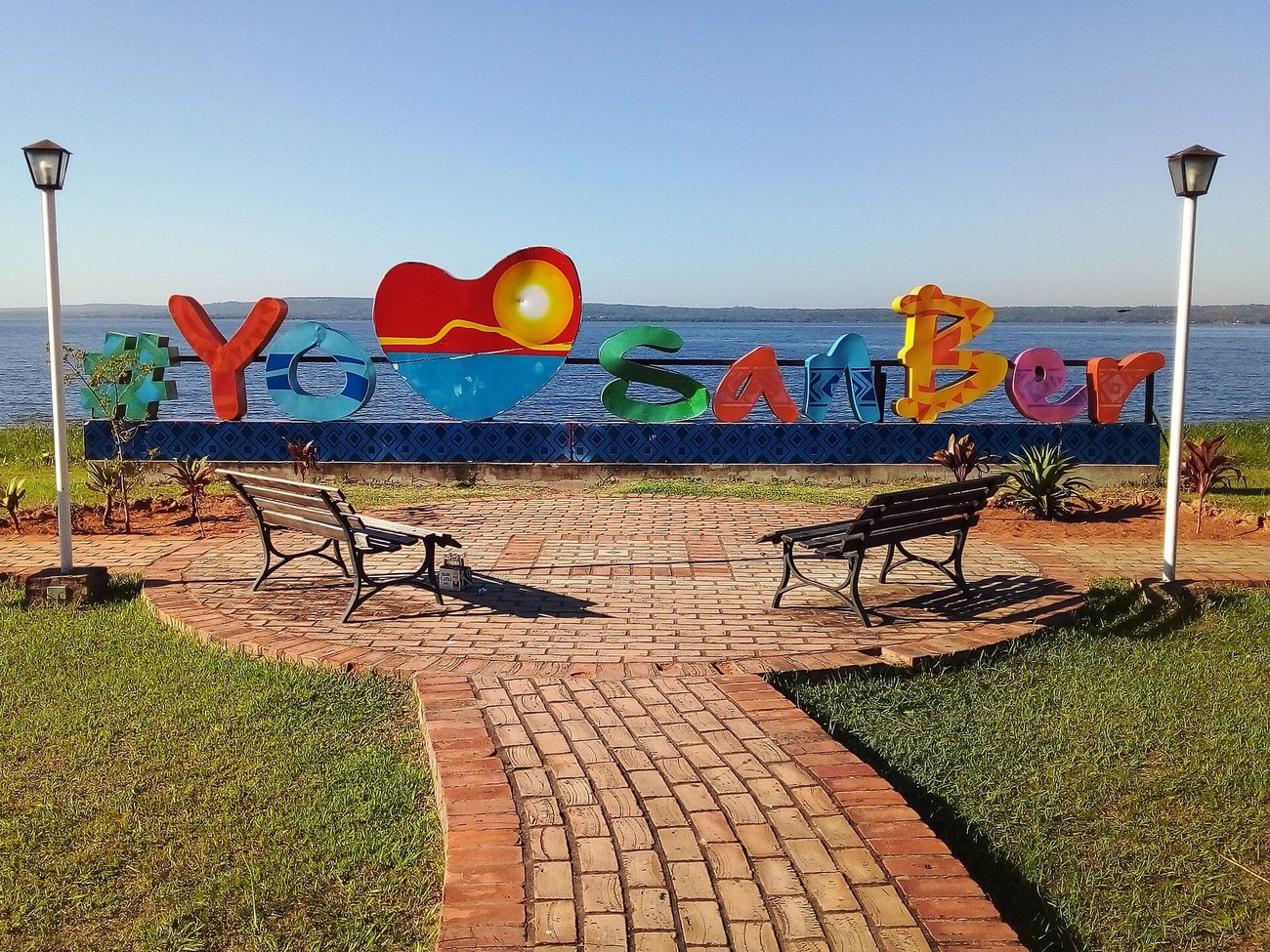
Encarnación, on the Argentine border in the south, counted 106,842. It is the smallest of the three, and it has a river beach the others do not.
Brazilians lead the arrivals by a wide margin. The state agency IP reported on 30 July 2026 that 22,628 residences granted in the first half went to Brazilians.
Argentines followed with 2,210 and Germans with 1,132. Spain, Venezuela, the United States, the Netherlands, France, Bolivia and Russia filled out the top ten.
What a Month of Rent Buys in Asunción
Rent is the first number a newcomer meets. Numbeo, the crowd-sourced cost database, refreshed its Asunción page on 13 September 2026.
A one-bedroom flat in the centre averaged 3,180,000 to 3,450,000 guaraníes a month (about US$533 to US$578). Away from the centre the same flat costs less.
A three-bedroom flat in the centre ran 5,440,000 to 5,700,000 guaraníes (about US$911 to US$955). Outside the centre the average fell to 3,727,500 guaraníes (about US$624).
Real listings track the database more often than not. HolaCasa, a Paraguayan property portal, advertised a one-bedroom flat in central Asunción at 3,300,000 guaraníes (about US$553) in July 2026.
Encarnación and Ciudad del Este have no comparable series. Numbeo runs no city pages for either, so asking prices on local portals are the only guide.
That absence carries its own lesson. A market too small to be indexed is a market where one landlord sets the price of the street.
The Heat Writes the Timetable
Asunción’s summer is the part of Paraguay that surprises people. ABC Color reported that the capital reached 41.5 degrees Celsius on 19 February 2026.
The paper called it a record for the date, past 39.6 degrees set in 2006. La Nación put the same day at 42.5 degrees across Asunción and Central.
January is only slightly gentler. ABC Color recorded 36.4 degrees in the capital on 26 January 2026, and 42.4 in the Chaco town of Mariscal Estigarribia.
Daily life adapts rather than resists. Offices and shops thin out in the early afternoon, work resumes late, and the evening is when the city is actually used.
Heat shows up on the electricity bill rather than the calendar. A household running air conditioning from November to March pays for five months of it.
The southern winter is short and mild, and it still catches people out. Houses are built to shed heat, not to hold it, and few of them have heating.
Power Is Cheap, and the Bill Still Climbs
Paraguay produces far more electricity than it consumes, from two dams shared with its neighbours. América Economía reported in March 2025 that Itaipú supplied 20.4 million megawatt hours and Yacyretá 5.1 million.
ANDE, the state utility, charges in brackets rather than at a flat rate. Its published schedule starts at 311.55 guaraníes per kilowatt hour (about US$0.05) for the smallest users.
Heavier users pay more per unit, not less. The brackets climb to 435.51 guaraníes (about US$0.07) above a thousand kilowatt hours a month.
Numbeo put basic utilities for an 85-square-metre flat in Asunción at 290,982 guaraníes a month (about US$49) on 13 September 2026. That average hides the February peak.
Fibre internet covers the three main cities and thins quickly beyond them. Tigo, Personal and the state operator Copaco all sell residential connections in the capital.
Plan prices move with promotions rather than with a tariff sheet. What a household pays depends in part on the month it signs.
Two Languages, and the Second One Decides
Spanish gets a foreigner through an office. Guaraní gets them through a conversation.
Paraguay’s 1992 constitution makes both official and calls the country bilingual and pluricultural. The wording is not decorative here.
The state agency IP reported in August 2022, citing the INE, that 33.4 percent of people speak only Guaraní at home. Another 34.7 percent speak both languages there.
Spanish alone accounted for 29.6 percent. La Nación, working from the 2022 household survey, put Guaraní-only at 32.6 percent and Spanish-only at 30.4.
Children pick the language up in school and on the street. Their parents rarely keep pace, and the gap becomes visible within a year.
A newcomer can live in Asunción on Spanish alone. Outside the capital that becomes a choice, and its consequences are social rather than administrative.
School Fees Quoted in Dollars
Private international schooling is where a Paraguayan budget meets an international price. El Nacional published the fee tables of Asunción’s main schools on 1 March 2026.
The American School of Asunción charged US$7,750 a year from kindergarten to fifth grade. Sixth to eighth grade cost US$8,500, and ninth to twelfth US$9,500.
St Anne’s School listed an admission fee of about US$4,000 plus an enrolment charge of US$800. Monthly tuition ran from 4,072,000 to 4,260,000 guaraníes (about US$682 to US$713).
The Lycée Marcel Pagnol, the French school, asked US$2,500 to enter. Its monthly fees vary by level.
Paraguayan state schooling is free and carries most of the country. The distance between the two systems is why school fees decide where many families live.
Health Care Runs on Two Tracks
Paraguay has a public system, a social-insurance system and a private market. Most newcomers meet the third one first.
IPS, the social insurance institute, is tied to formal employment and its contributions. A foreigner on a Paraguayan payroll joins it, and a remote worker paid from abroad does not.
That leaves private prepaid plans, sold by local providers and by the clinics themselves. Guides published in mid-2026 place individual adult cover between US$75 and US$150 a month.
Prices rise steeply with age and with the size of the hospital network. A plan bought at thirty is not the plan on offer at sixty.
The Ministry of Health runs the public hospitals, and they carry the interior of the country. Their capacity is what sends those who can pay toward private clinics.
The Identity Card Opens the Bank
A Paraguayan bank account is not difficult. It is simply closed until the identity card exists.
Banks ask for the cédula, a Paraguayan address and evidence of where the money comes from. A passport and a tourist stamp do not substitute.
Some banks accept the two-year card issued with temporary residence, and others prefer the permanent one. No published banking rule settles it, so the answer arrives at the counter.
The permits, papers and fees behind that card have their own arithmetic. They are set out in our guide to Paraguayan residency and the 2026 income test.
Until the card arrives, daily life runs on cash. Landlords, movers and used-car sellers all take it, and many of them prefer it.
Cars, Containers and the Six-Month Window
Paraguay imports nearly all of its vehicles, and it limits how old they may be. Relocation firms describe a ten-year ceiling on combustion cars, measured at the bill of lading.
That rule pushes most newcomers toward buying locally. Ciudad del Este, the border trading city, is where a large share of the used stock is sold.
Household goods run on a separate clock. Movers advertise a six-month window from the date a residency card is issued to bring used personal effects in without duty.
Customs has not published that window where a newcomer will easily find it. The firms that handle the shipping treat it as firm and plan the container around it.
A container that lands before the card does has nowhere to clear. Sequencing the two is the quiet work of the first six months.
What the First Year Actually Costs
Paraguay’s attraction is arithmetic rather than scenery. Prices are low, the currency has been steady, and borrowing costs sit in a narrow band.
The Banco Central del Paraguay held its policy rate at 5.50 percent on 26 August 2026. It has projected inflation of about 3.5 percent for the year.
That steadiness is what most newcomers underestimate. It rests on soy, beef and hydroelectric exports, and each of those runs on its own cycle.
Currency matters here in a particular way. Rent and power are paid in guaraníes, while school fees and many private health plans are priced in US dollars.
Every conversion above rests on one day, 16 September 2026, at 5,972 guaraníes to the US dollar. Paraguay’s own referential rate sat close to 6,000 that week.
The heat, the language and the distances do not move with the exchange rate. Whichever of the three a newcomer plans for tends to decide how the first year goes.
More: Paraguay news in English
Sources: INE (Paraguay national statistics institute), Agencia IP, Numbeo, ABC Color, La Nación, El Nacional, ANDE, Banco Central del Paraguay, América Economía. https://www.ine.gov.py/censo2022/ and https://www.ip.gov.py/ip/2026/07/30/paraguayan-directorate-of-migration-granted-nearly-30000-residencies-to-foreign-nationals-in-the-first-half-of-2026/ and https://www.numbeo.com/cost-of-living/in/Asuncion and https://www.abc.com.py/nacionales/2026/02/20/nueve-ciudades-alcanzaron-records-de-temperatura-maxima-diaria-sepa-cuales-son/ and https://www.lanacion.com.py/pais/2026/02/19/anuncian-que-el-intenso-calor-se-extenderia-hasta-abril/ and https://www.ip.gov.py/ip/2022/08/25/un-334-de-la-poblacion-habla-guarani-en-el-hogar-destaca-informe-del-ine/ and https://elnacional.com.py/economia/cuotas-colegios-top-promedian-g-5-millones-n101756 and https://www.abc.com.py/economia/2026/08/26/bcp-mantiene-su-tasa-referencial-en-550-en-medio-de-nuevas-presiones-externas/
This article was produced by The Rio Times’ automated newsroom system. How we use AI · Report an error
Read More from The Rio Times