Who Runs Paraguay’s Economy, the Key Players in 2026

GUIDES · PARAGUAY
Key Facts
- —The economy The Paraguay economy produced US$49.3 billion in 2025 and grew 6.6%. About 7.01 million people live there, so output per person is near US$7,000.
- —What it sells Registered exports of US$11.1 billion in 2025 rested on soy (US$3.6 billion), beef (US$2.1 billion) and electricity (US$1.2 billion). Re-exports added US$4.6 billion.
- —State owners Two state bodies, ANDE for electricity and Petropar for fuel, anchor the public side. Paraguay also shares Itaipu, a 14 GW dam, equally with Brazil.
- —Credit rating S&P raised Paraguay to investment grade, BBB-, on 17 December 2025. Moody’s rated it Baa3, also investment grade, in August 2025.
- —Central bank The policy rate stood at 5.50% after the September 2026 meeting. The bank expects 5% growth and 3% inflation for 2026.
- —Power Index Paraguay ranks 10th of 14 in The Rio Times Latin America Power Index, with 36.0 points (October 2026 edition).
Paraguay earns its living from shared hydropower, soybeans and beef. This guide names the state companies, traders, meatpackers, banks and regulators that control them, as of October 2026.
The Paraguay economy is run by state companies, large grain and meat exporters and a central bank, and it grew 6.6% in 2025. For US readers the essentials are an investment-grade rating, a beef and soy supply chain, and a dam shared with Brazil.
The Paraguay Economy at a Glance
The Paraguay economy produced US$49.3 billion of goods and services in 2025, the World Bank’s data show. Real growth was 6.6%, and output per person reached about US$7,000.
Agriculture made up 11.6% of value added in 2025, industry 32.3% and services 48.1%, the World Bank’s figures show. Even so, exports of goods and services equalled 37.2% of GDP, so farm and energy sales set the pace.
Poverty stood at 16.0% in 2025 and extreme poverty at 2.4%, the national statistics institute INE said on 27 March 2026. In rural areas the poverty rate was 22.1%, against 13.6% in towns and cities.
S&P Global Ratings raised Paraguay to BBB-, the lowest investment-grade rung, on 17 December 2025, with a stable outlook. It cited a record of macroeconomic stability, conservative deficit targets and growing central bank credibility.
Moody’s rated Paraguay Baa3, also the lowest investment-grade level, with a stable outlook, in an affirmation the finance ministry announced on 19 August 2025. S&P still flags a large informal economy and a heavy reliance on agriculture and hydroelectric energy.
Itaipu, ANDE and Petropar, the State as Owner
Itaipu Binacional, the dam on the Paraná River that Paraguay shares with Brazil, is central to the country’s exports and power supply. Its own website says it has 20 generating units of 700 MW each, or 14 GW of installed capacity.
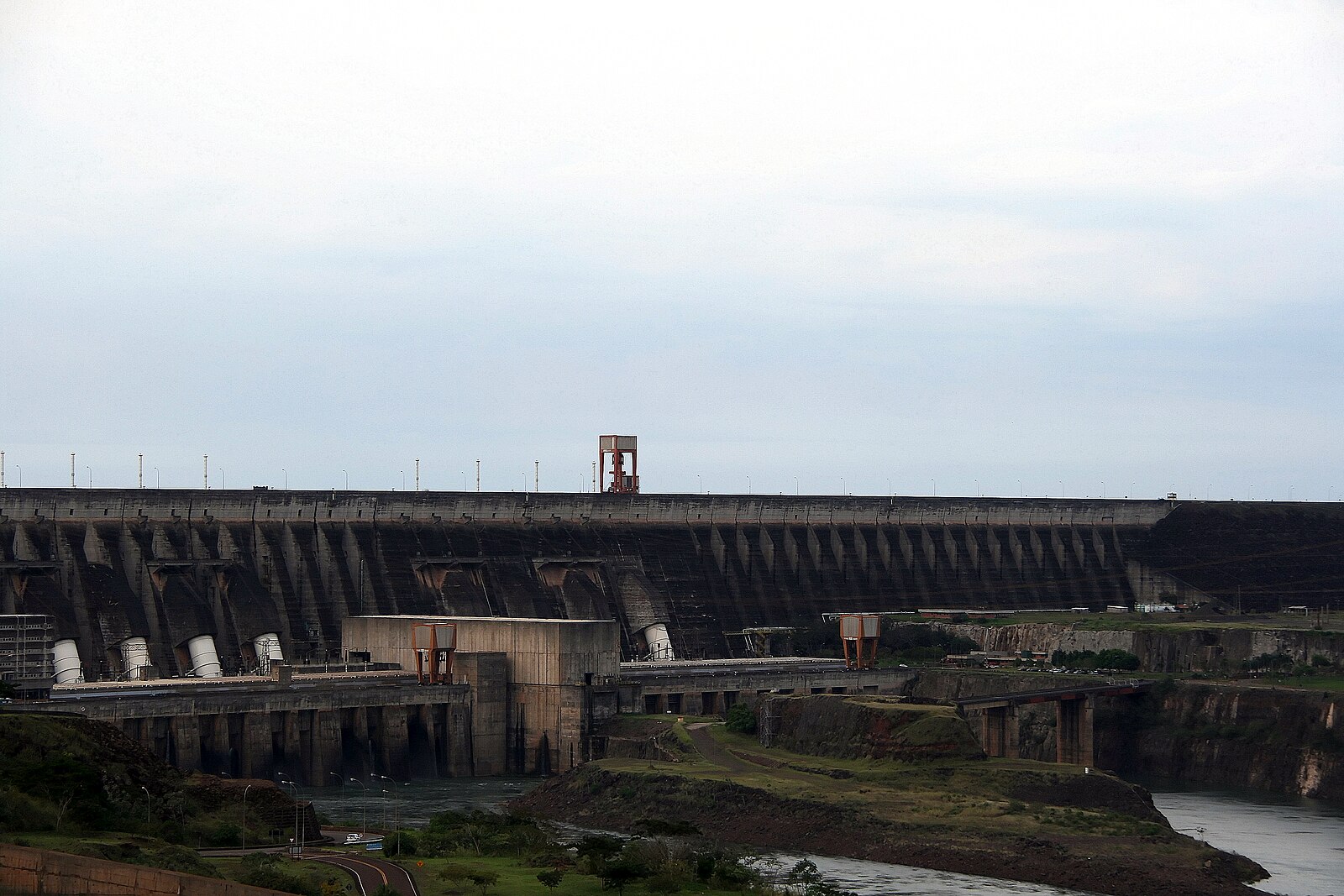
Under the 1973 treaty and its Annex C, the plant’s power is divided equally between Paraguay’s national electricity administration, ANDE, and a Brazilian entity that Annex C names as Eletrobras. A side that leaves part of its share unused can cede it to the other, and Annex C pays the ceding country US$300 per gigawatt-hour.
Annex C also sets royalties at US$650 per gigawatt-hour, paid in equal halves to the two governments. Itaipu says about US$11 billion in royalties went to Brazil and Paraguay between 1985 and 2018.
Itaipu’s website gives, without a date, 86.3% of Paraguay’s electricity consumption and 8.6% of Brazil’s. Electricity exports earned US$1.2 billion in 2025, up 2.8%, or 11.0% of all registered exports, the trade ministry’s report shows.
Brazil’s state holding company ENBPar says it shares control of Itaipu with ANDE. Itaipu says each country names six directors and six councillors, with five-year and four-year terms.
Annex C says its terms are to be revised after fifty years from the treaty’s entry into force, weighing debt repayment and each side’s contracted power. The outcome of that revision is not confirmed in the sources reviewed.
Petropar, the national fuel company, was created in 1981 as a mixed company with 60% state ownership. In 1985 the government bought out the private shareholder, and a December 1985 law made Petropar a state entity with its own assets.
Petropar’s website lists Hernandarias and Calera Cué under its infrastructure, without giving capacity. Petroleum oils were the largest import line in 2025, at US$1.91 billion.
Soy, Grains and the Traders Behind Them
The soy complex of beans, oil and meal earned US$3.6 billion in 2025, down 14.4% on 2024, the trade ministry’s report shows. Raw beans fell 25.7% to US$2.35 billion, while soy oil rose 49.6% to US$613 million.
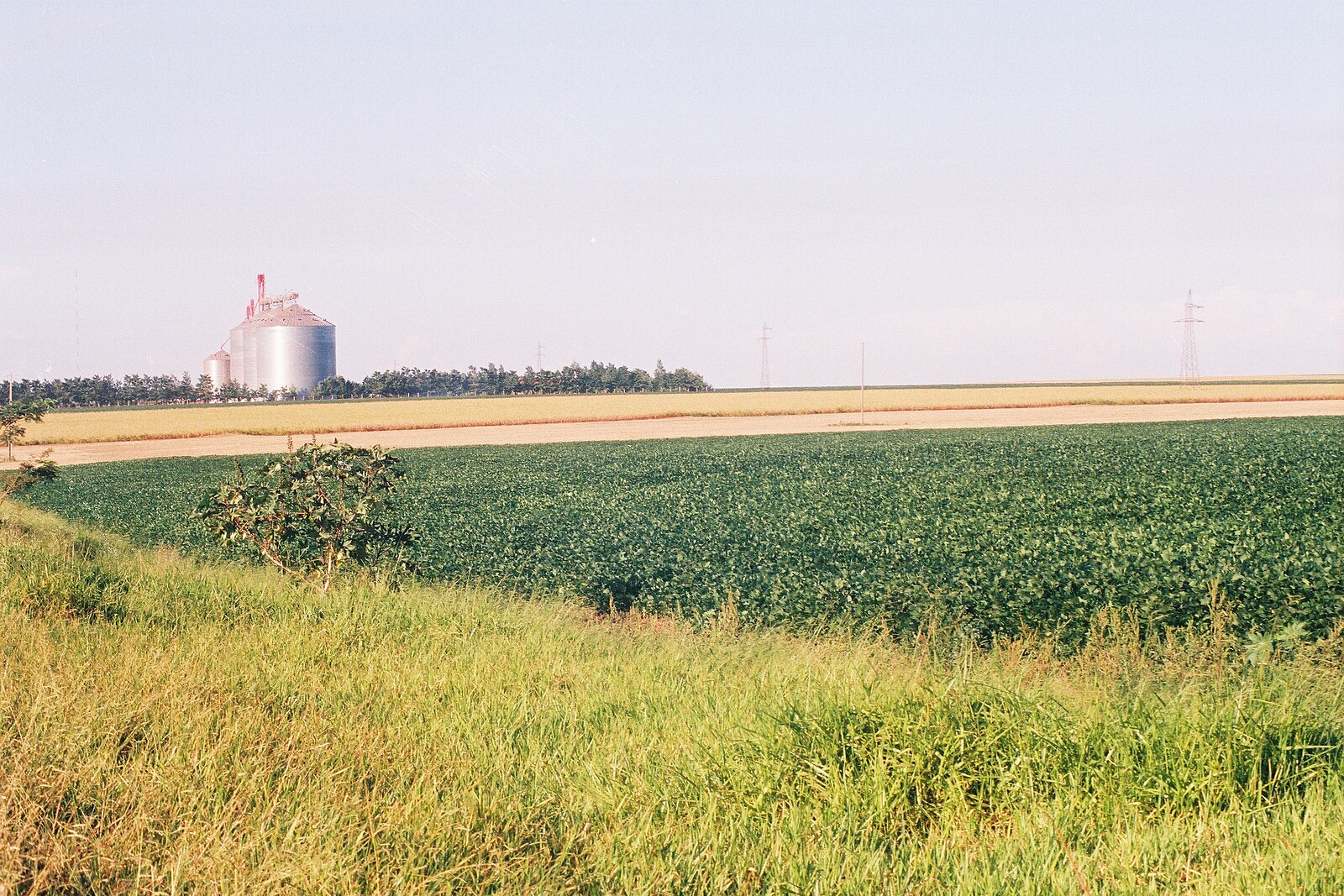
S&P says nearly one quarter of Paraguay’s exports are linked to the soy chain, which leaves the current account exposed to prices and weather. Bean exports still reached US$3.11 billion in the first nine months of 2026, La Nación reported on 13 October.
Soy oil added US$592 million and soy meal US$565 million in those nine months, the central bank’s data show. Together with beans, that is about US$4.26 billion.
Cereals added US$1.08 billion in 2025, up 21.5%, led by maize, whose export value rose 85.1%. Rice and wheat fell in value, by 17.3% and 5.2%.
Cargill, the US agribusiness group, says it has operated in Paraguay since 1978, handling grain, protein meals and vegetable oils, with its own barges and tugboats on the Paraguay-Paraná waterway. The grain exporters’ association CAPECO, founded on 20 February 1980, represents cooperatives, domestic and multinational exporters and processors.
CAPECO’s public page names no members, so the full roster of grain traders is not confirmed here. The river carried 45.5% of registered exports in 2025 and roads 42.0%, with 11.0% leaving as electricity on transmission lines.
Beef, Ranchers and Meatpackers
Beef earned US$2.1 billion in 2025, up 21.9% on 2024, the trade ministry’s report shows. Frozen beef brought in US$1.28 billion and chilled beef US$816 million.
Five markets took 75.2% of the beef: Chile with 30.8%, the United States with 14.5%, Taiwan with 13.0%, Israel with 10.9% and Brazil with 6.0%. The first three alone bought more than half, and the US share equals about US$304 million.
The picture softened in 2026, as beef and offal exports fell 5.3% to US$1.54 billion in the first nine months, the central bank’s data show. The bank projects the livestock sector to shrink 4.5% in 2026, according to press accounts of its September policy report.
Minerva Foods, the Brazilian meatpacker, lists Paraguay among the five countries where it runs 28 units. Its public page does not name Paraguayan plants or capacity, so the rest of the packing industry is not mapped here.
Maquila, Re-Exports and Imports
Re-exports, goods bought abroad and resold, earned US$4.58 billion in 2025, or 27.4% of total goods exports of US$16.72 billion, the central bank’s data show. Registered exports of Paraguayan goods and electricity made up US$11.08 billion.
Paraguay ran a goods trade deficit of US$1.39 billion in 2025, against US$573 million in 2024. In the first nine months of 2026 the balance turned to a surplus of US$712 million.
China supplied US$6.66 billion of registered imports in 2025, or 34.8%, ahead of Brazil with 22.9%. Petroleum oils were the largest import line at US$1.91 billion, followed by telephone equipment at US$1.80 billion.
Under the maquila regime, plants import inputs, process them in Paraguay and export the result. Maquila exports reached US$1.15 billion in the first nine months of 2026, up 29%, the central bank’s data show.
Industrial exports rose 6.7% in 2025, led by electrical wiring for vehicles, pharmaceuticals, biodiesel and aluminium and copper products. Wire and cable exports for car parts alone earned US$405 million.
Telecoms and the 5G Tender
Tigo (Telefónica Celular del Paraguay) and Personal (Núcleo) applied on 10 July 2026 for 5G spectrum in a second tender run by the regulator Conatel. Base prices were US$1 million for a 100 MHz block at 3,700 MHz and US$1.6 million at 2,300 MHz, ABC Color reported.
The first 5G award, held by Nubicom Paraguay, is under special review by the state comptroller. The result of the second tender is not confirmed in the sources reviewed.
Banks, the Central Bank and the Ueno Dispute
The Banco Central del Paraguay (BCP) sets monetary policy and supervises the banks. Its board is led by president Carlos Carvallo Spalding, and Holger Insfrán is superintendent of banks.
The four other directors are Carmen Marín Rodríguez, Liana Caballero Krause, Miguel Ángel Mora and Marco Aurelio González Maldonado. The bank’s authorities page lists all five board members.
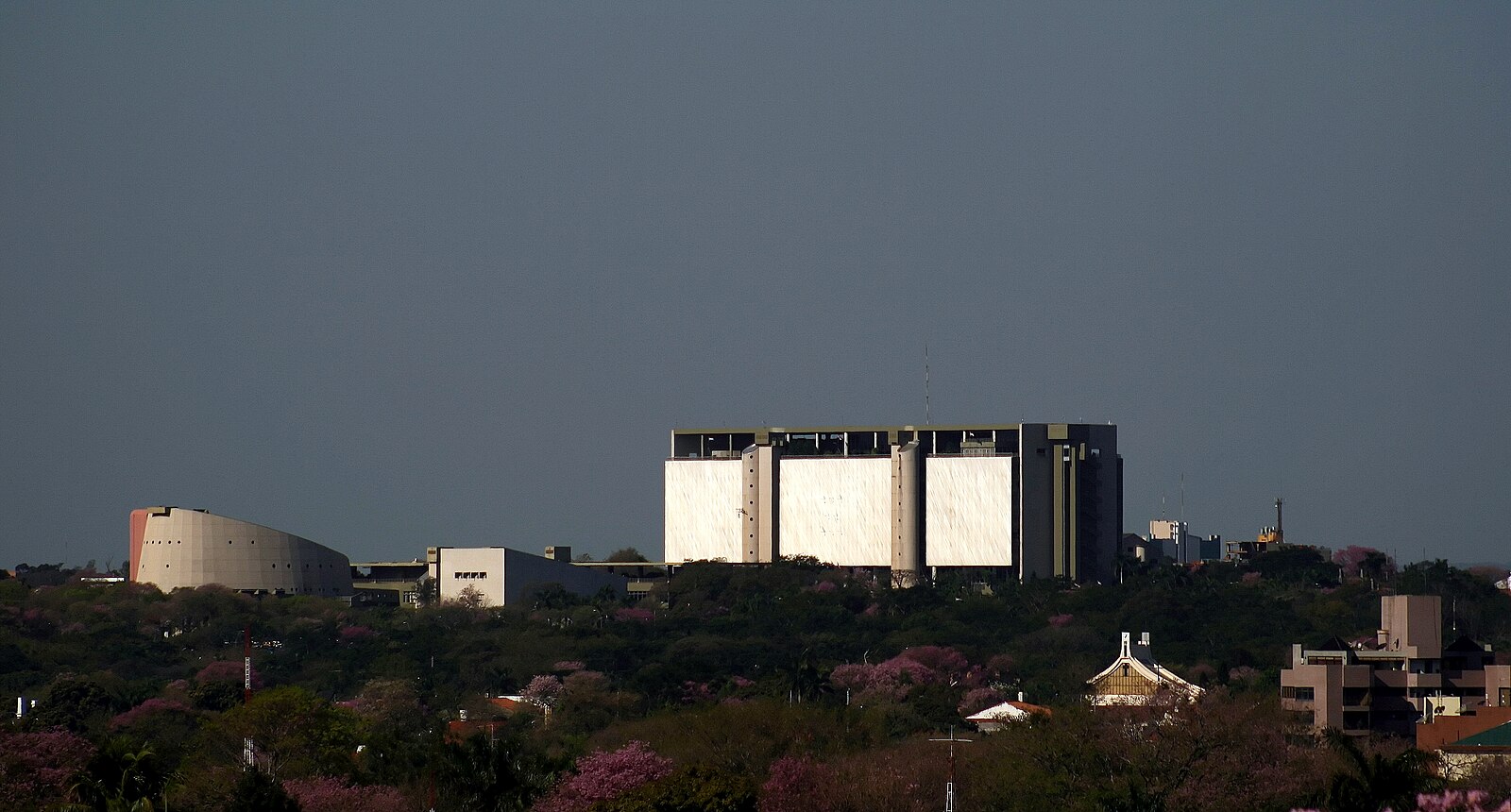
The policy rate stood at 5.50% after the monetary policy committee held it in July, August and September 2026, press accounts of the bank’s September report show. The bank expects 5% growth and 3% year-end inflation for 2026, against a 3.5% target, and it put consumer price inflation at 1.7% in September.
On 14 October 2026 Senator Gustavo Leite of the Colorado Party asked President Santiago Peña to replace the whole board and the superintendent. He called the bank’s report to the Senate incomplete, ABC Color reported.
A day earlier, on 13 October, the Chamber of Deputies rejected a motion urging the removal of the bank’s president. ABC Color’s linked reports tie the dispute to the bank’s handling of ueno bank, a private lender, and the sources reviewed report no intervention, sanction or charge against it.
Families, Informality and Who Pays Tax
No official ranking of Paraguay’s wealthiest families was available from a primary source. Names are therefore given only where a company or an official body states them.
Foreign groups are visible in company pages, such as Cargill since 1978, Minerva Foods in beef and the mobile operators Tigo and Personal. Local owners behind the banks, ranches and farms are not mapped here, because no primary source was opened for them.
S&P notes that tax collection was 10% of GDP in 2023 and that steps to improve compliance have nearly doubled the number of taxpayers. It expects the ratio to rise to 11.8% within two years as the economy formalises.
The World Bank puts Paraguay’s Gini index of income inequality at 44.2 for 2024. More than 80% of the government’s debt is in US dollars, S&P says, while the guaraní floats and the central bank occasionally steps in to calm volatility.
What It Means for US Readers
For investors, the Paraguay economy offers a BBB- sovereign from S&P, growth the central bank puts at 5% in 2026, and 1.7% inflation in September. The risks are concentration in soy, beef and one shared dam, plus a central bank board under political pressure.
The United States took US$589 million of Paraguay’s registered exports in 2025, or 5.3% of the total, and supplied US$1.19 billion of its imports. The US share of beef exports equals about US$304 million.
Expats and travellers paid in dollars should note that the guaraní floats against the dollar. S&P says growth forecasts remain subject to weather conditions and swings in commodity prices.
Connected Coverage
- Paraguay: South America’s Quiet Economic Miracle, Explained
- Paraguay Explained: The Country, Its Politics, Its Economy and What to Watch
- Paraguay Geopolitics Explained 2026
- Paraguay Neighbours Explained, a Southern Cone Guide
- Paraguay Central Bank Board Crisis: What Is at Stake
- Paraguay Economy Grows 4% in Q2 as Investment Drops
- Asunción city page for expats
- More Paraguay coverage from The Rio Times
What Is Not Known
It is not known what new financial terms, if any, Brazil and Paraguay will set for Itaipu after the fifty-year review of Annex C. The outcome of the central bank board dispute is also open in the latest reports reviewed, which date from 14 October 2026.
The ownership of Paraguay’s largest private groups, the size of its informal economy and the origin of its re-exports are not published in the primary sources reviewed. The result of the second 5G tender is also not confirmed.
Frequently Asked Questions
How big is the Paraguay economy?
It produced US$49.3 billion in 2025 and grew 6.6%, the World Bank’s data show. Output per person was about US$7,000.
What does Paraguay export most?
Soy beans, oil and meal earned US$3.6 billion in 2025, ahead of beef at US$2.1 billion and electricity at US$1.2 billion. Registered exports totalled US$11.1 billion.
Who controls Itaipu?
Itaipu is run jointly by Paraguay and Brazil under a 1973 treaty, and its power is divided equally between ANDE and a Brazilian entity. Its 20 units give it 14 GW of capacity.
Is Paraguay investment grade?
S&P raised Paraguay to BBB-, the lowest investment-grade rung, on 17 December 2025, and Moody’s rated it Baa3 in August 2025. Both outlooks were stable at those reviews.
Who leads the central bank?
Carlos Carvallo Spalding is president of the Banco Central del Paraguay, with four other board members, as listed on the bank’s website. On 14 October 2026 Senator Gustavo Leite asked President Santiago Peña to replace the whole board.
Who buys Paraguay’s goods and who sells to it?
Brazil took 31.0% of registered exports in 2025 and Argentina 29.6%. China was the main source of imports, at 34.8%.
Sources: World Bank, Paraguay indicators; Ministerio de Economía y Finanzas, Reporte de Comercio Exterior, December 2025; ABC Color, 2025 trade balance, 14 January 2026; La Nación, BCP exports to September, 13 October 2026; S&P Global Ratings, Paraguay upgrade, 17 December 2025; Ministerio de Economía y Finanzas, Moody’s affirmation, 19 August 2025; INE, poverty 2025, 27 March 2026; Itaipu Binacional, frequently asked questions; Itaipu Treaty, Annex C; Petropar, creation and charter law; Banco Central del Paraguay, authorities; Prensa Mercosur, BCP monetary policy report, 17 October 2026; ABC Color, Senate demand on the BCP board, 14 October 2026; Agencia IP, exports January to April 2026; ABC Color, second 5G tender, 10 July 2026; Cargill Paraguay; CAPECO; Minerva Foods, investor relations. All accessed 19 October 2026.
This article was produced by The Rio Times’ automated newsroom system. How we use AI · Report an error · Editorial responsibility: Matthias Camenzind, Editor-in-Chief
Expat Guide to Paraguay
What The Rio Times publishes for foreigners who live in or move to Paraguay.
Start here
- Investing in Paraguay as a Foreigner 2026 — Taxes and Property
- Uruguay vs Paraguay for Expats in 2026: Cheap Living or a Tax Holiday
- Moving to Paraguay in 2026 — Rents, Heat and the First Year
- Retire in Paraguay 2026: Residency Steps, Tax Rules and the Real Timeline
City guides
Coming up in Paraguay
- Los Iracundos Ciudad del Este, Paraguay: Lago Shopping Show on 25 October 25 Oct
- Marco Antonio Solís in Asunción, Paraguay: Gratitud Tour Plays the Jockey Club on 31 October 31 Oct
- Ed Sheeran in Asunción, Paraguay: First-Ever Show in the Country at La Nueva Olla on November 26, 2026 — FINNEAS Opens 26 Nov
Understand Paraguay
Read More from The Rio Times