
MEXICO · UNITED STATES
Key Facts
- —What is happening US$871.6 billion of yearly goods trade between the United States and Mexico now faces new US tariffs, after Washington declined on 1 July 2026 to extend the United States-Mexico-Canada Agreement (USMCA).
- —Why it matters In 2025 the United States traded more goods with Mexico than with Canada (US$715.5 billion) or China (US$414.6 billion), so US tariff choices reach many American businesses and shoppers.
- —The numbers US goods imports from Mexico were US$534.3 billion in 2025, and the US goods deficit with Mexico reached US$155.9 billion in January to August 2026, up 21% from a year earlier.
- —Who is who President Claudia Sheinbaum leads Mexico, Roberto Velasco Álvarez is foreign minister, Jamieson Greer is the US Trade Representative, and Ronald D. Johnson is US ambassador in Mexico City.
- —What to watch Watch the yearly USMCA reviews, the 12 January 2027 deadline for US public comments, the steel, aluminium and auto tariff rules, and US labour cases against Mexican factories.
- —Prediction markets Polymarket, a real-money betting platform: 3.5% chance that President Sheinbaum is out by 31 December 2026 (27 October, 9:41 a.m. ET).
- —Power Index Mexico ranks 2nd of 14 in The Rio Times Latin America Power Index, with 71.4 points (October 2026 edition).
- —What it means for you American importers and carmakers pay tariffs on Mexican steel and cars, travellers face a US Level 2 travel advisory, and senders of cash remittances pay a 1% US tax.
Mexico sells the United States more goods than Canada or China, and in October 2026 Washington is changing the terms. Here is what each side wants, in plain English.
Mexico US relations in October 2026 rest on one fact: the two countries traded US$871.6 billion of goods in 2025. That bond now sits under new US tariffs, a trade pact under annual review, and a security agenda built around cartels.
This guide covers trade, tariffs, security, migration, money flows and what current US policy changes for American travellers and investors. More coverage sits on the Rio Times Mexico page, and the Mexico geopolitics guide covers China and Europe.
Mexico US Relations at a Glance
The list below gives each strand of the relationship in one line, with the date of the latest official step. Details follow in the sections after it.
- Trade: US$871.6 billion of goods in 2025, with a US deficit of US$197.0 billion, counted by the US Census Bureau, the US statistics agency.
- Tariffs: a 10% tariff under Section 301, a US trade law, since 24 July 2026, plus Section 232 national-security duties on metals and cars.
- Trade pact: the USMCA was not extended on 1 July 2026 and is now reviewed every year.
- Security: six Mexican cartels have been US-designated terrorist organisations since 20 February 2025.
- Migration and money: a 1% US tax on cash remittances applies to transfers after 31 December 2025.
- Workers: the United States keeps opening USMCA labour cases against Mexican factories and mines.
Who Is Who in the Relationship
Claudia Sheinbaum has been president of Mexico since 1 October 2024 and sets the line on trade, security and sovereignty. For the person behind the office, read the Rio Times profile of President Sheinbaum.
Roberto Velasco Álvarez, Mexico’s foreign minister, addressed the UN General Assembly on Friday, 25 September 2026. The UN record lists him in that office, and he spoke for the Mexican government.
Donald Trump has been US president since January 2025 and sets US tariff policy by proclamation. Jamieson Greer, the US Trade Representative, runs the trade negotiations and the USMCA review.
Ronald D. Johnson, a former US Army officer, has been US ambassador to Mexico since his Senate confirmation on 9 April 2025. The US embassy site lists him in post on 27 October 2026.
For the wider cast, see the Mexico politics key players guide. Every figure in this guide carries its date, and US dollars come first.
Trade: A US$871.6 Billion Goods Relationship
The US Census Bureau counts goods exports to Mexico of US$337.3 billion in 2025 and imports of US$534.3 billion. Total goods trade was US$871.6 billion, and the US deficit was US$197.0 billion.
Canada’s two-way goods trade with the United States was US$715.5 billion in 2025, and China’s was US$414.6 billion. Mexico’s total was larger than both.
In 2024 the totals were US$334.5 billion of exports and US$503.1 billion of imports, a deficit of US$168.6 billion. The deficit widened by about US$28 billion in a year.
The first eight months of 2026 show faster growth. US exports to Mexico reached US$263.5 billion and imports US$419.3 billion between January and August.
That leaves a US deficit of US$155.9 billion, up about 21% from US$128.6 billion in January to August 2025. Imports from Mexico rose 18% in that comparison, and exports to Mexico rose 17%.

These figures count goods only, not services such as tourism, finance and software. The Census Bureau publishes them monthly, and the latest month available is August 2026.
Tariffs: What Mexican Goods Pay in October 2026
Three US legal tools shape what Mexican goods pay, and the Supreme Court has struck down one of them. The other two carry their own rates and exemptions.
The first tool is IEEPA, the 1977 International Emergency Economic Powers Act, and the Supreme Court rejected it for tariffs. On Friday, 20 February 2026 it held, in a challenge by US businesses, that IEEPA does not authorise tariffs.
The case concerned tariffs tied to drug trafficking from Canada, Mexico and China, and to trade deficits. The ruling removed the legal base of the drug-trafficking tariff the President had imposed on most Mexican imports.
The second tool is Section 301, a 1974 trade law. The US Trade Representative found that Mexico failed to enforce a ban on forced-labour imports.
It found the same for Canada, Ecuador, the European Union, Indonesia and Pakistan. A 10% tariff therefore applies to Mexican products entered from 12:01 a.m. Eastern time on Friday, 24 July 2026.
Goods entered duty free under the USMCA are exempt. Annexes to the notice list more exemptions; the Federal Register, the US official gazette, published it on 28 July 2026.
The third tool is Section 232, a 1962 law that allows tariffs for national security. Under Proclamation 11021, a presidential order, steel, aluminium, most copper and some derivative goods have paid 50% since Monday, 6 April 2026.
That clause lists lower rates for United Kingdom goods and for goods made from US-smelted metal, and it names no Mexico-specific cut. A later proclamation set 25% on a list of aluminium and steel goods from 8 June 2026 to the end of 2027.
For USMCA goods from Mexico and Canada on that list, the 25% applies only to non-US content, with a 15% floor. The US Commerce Department issued guidance on measuring US content on Wednesday, 14 October 2026.
Cars carry a separate 25% Section 232 tariff, set by Proclamation 10908 on 26 March 2025, on vehicles and many parts. Vehicles from Mexico that qualify under the USMCA pay it only on the value of non-US content.
Commerce amended the paperwork importers use to prove US content on Wednesday, 19 August 2026. Importers who overstate US content face retroactive 25% duties on the full value of the model line.
The USMCA Review: The Pact That Was Not Extended
The USMCA, the United States-Mexico-Canada Agreement, replaced the older NAFTA deal and entered into force on 1 July 2020. It lets goods that meet rules of origin cross the borders without tariffs.
The three countries met in a joint review on Wednesday, 1 July 2026, as the pact requires after six years. The US Federal Register notice says the United States did not agree to a new 16-year term.
As a result the three parties must meet every year until all three confirm an extension. Without one, the agreement expires on 1 July 2036.
On Friday, 2 October 2026 the US Trade Representative opened public consultation for the 2027 annual review. Written comments are due by 11:59 p.m. Eastern time on Tuesday, 12 January 2027.
Washington also uses the pact’s Rapid Response Labor Mechanism, which targets single factories where workers may be denied the right to organise. On Tuesday, 13 October 2026 it asked Mexico to review Carolina Performance Fabrics, a car-textile plant in Guanajuato.
The United States suspended customs settlement for that plant’s goods while Mexico decides. Mexico has 10 days to agree to a review and 45 days from 13 October to finish it.
On Friday, 23 October 2026 both governments announced a remediation plan at Minera Peñasquito, a mining firm in the state of Zacatecas. The plan must be completed by Wednesday, 28 October 2026 and offers two workers reinstatement with back pay, or severance.
Earlier cases include Akwel Juárez, resolved on 28 September 2026, and Corporación de Occidente, with a remediation course announced on 2 October. Reviews were also sought at GLM Components Mexico on 8 October and Yokohama Tire Manufacturing Mexico on 25 September.
Security: Cartels, Banks and Cooperation
The US State Department’s designation of eight groups as Foreign Terrorist Organizations took effect on Thursday, 20 February 2025. Six are Mexican: the Sinaloa, Jalisco New Generation, Northeast and Gulf cartels, Carteles Unidos and La Nueva Familia Michoacana.
The other two are Tren de Aragua and MS-13. The designation rests on section 219 of the US Immigration and Nationality Act, which raises legal risk for anyone dealing with them.
The US Treasury used a related tool in June 2025, through its financial crimes unit, FinCEN. FinCEN ordered a ban on certain fund transfers with three Mexican firms: CIBanco, Intercam Banco and Vector Casa de Bolsa.
FinCEN cited primary money-laundering concern tied to illicit opioid trafficking, and the ban took effect on 20 October 2025. On 16 April 2026 it allowed transfers that Mexico’s government needs to wind down CIBanco.
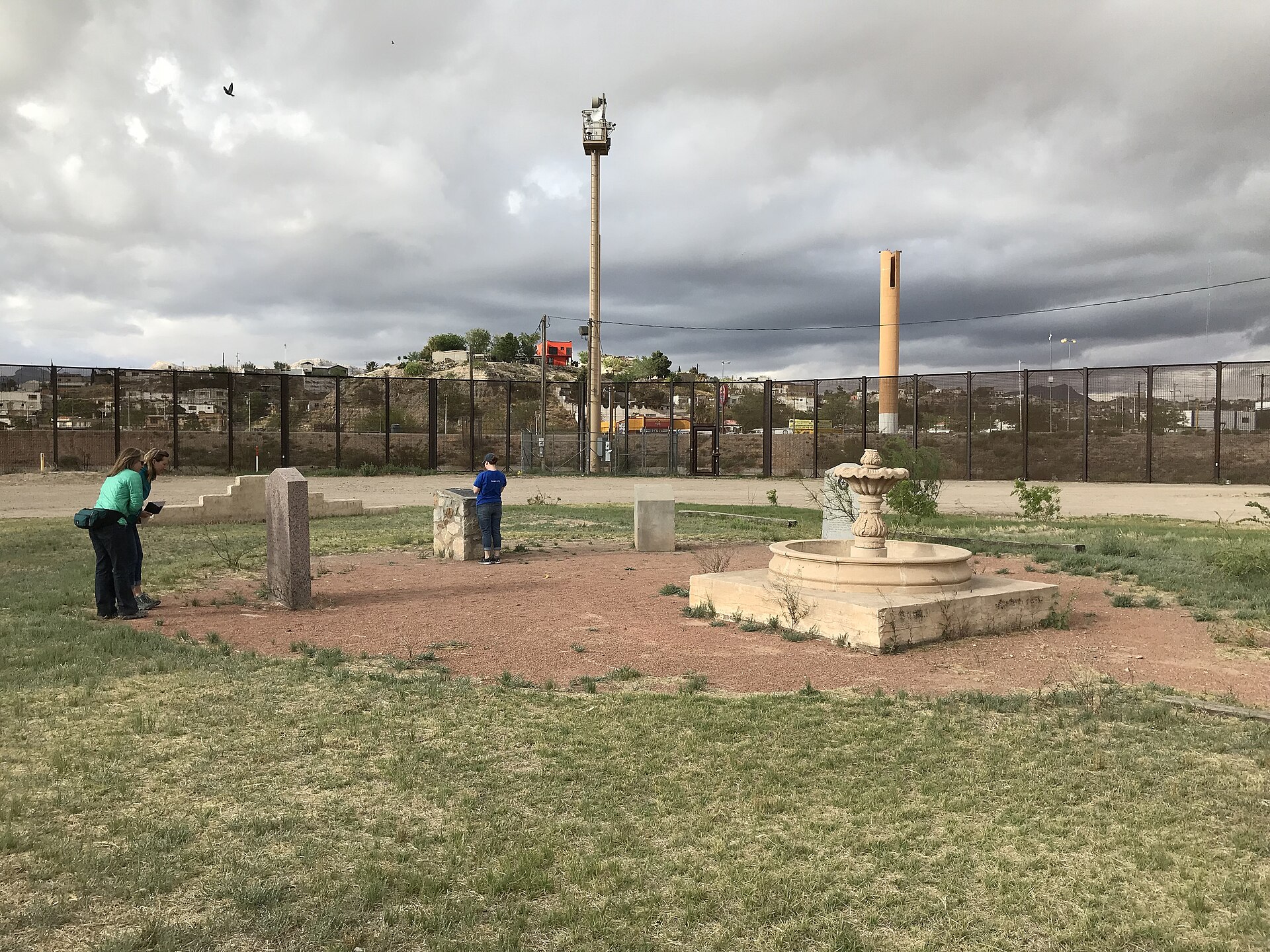
The US embassy showed a Level 2 travel advisory on 27 October 2026: exercise increased caution because of terrorism, crime and kidnapping. Some areas carry more risk, so travellers should read the full advisory.
Mexico’s foreign minister told the UN on 25 September 2026 that Mexico’s security strategy is strengthened by international cooperation. He said it does not rely on a logic of war or on renouncing human rights.
Migration, Remittances and the Mexican Diaspora
Many people of Mexican origin live in the United States, and family ties run in both directions. A current official headcount could not be confirmed for this edition, so no total is given.
Money is easier to measure, and the World Bank, a global development lender, counts remittances to Mexico of US$65.1 billion in 2025. That is down 4.2% from 2024 and equal to 3.6% of GDP.
A US tax now sits on part of that flow. Section 4475 of the US tax code sets a 1% excise tax on taxable remittance transfers made after 31 December 2025.
The US Treasury published proposed rules on Monday, 13 April 2026 that define which transfers count. They single out transfers funded with cash, money orders or cashier’s checks, so bank-account transfers are treated differently.
Deportations and visas are the other pillar of the relationship. Official 2026 counts could not be confirmed from primary sources, so none is shown and the gap is listed below.
US Companies, Investors and Workers in Mexico
Companies build cars, textiles and tyres in Mexico for the US market, and the USMCA rules of origin decide who pays tariffs. The US labour cases above show Washington ties that access to worker rights.
For investors, the main exposure is US tariff policy and the 2027 review. A company that qualifies under the USMCA pays less on steel-heavy goods and on cars than one that does not.

The peso exchange rate also matters for US firms and tourists. It moves daily, so no rate is quoted in this guide.
For the Mexican side, see the Mexico in North America guide, the Mexico explained guide and the Mexico City expat page. Power data come from The Rio Times Latin America Power Index, the paper’s own index.
What It Means for US Readers
Importers and businesses pay these tariffs first. Steel and aluminium goods pay duties that importers may pass on to buyers.
Carmakers and parts firms should track the 25% car tariff and the non-US-content rule. Records that prove US content can lower the bill, and false claims bring penalties.
Travellers should read the State Department advisory for each state they visit, since the embassy banner shows only the overall Level 2. Families who send cash to Mexico now pay a 1% US tax.
Investors should follow the USMCA review closely. The comment deadline is 12 January 2027, and the first annual review after 1 July 2026 is due in 2027.
What Prediction Markets Say
Polymarket, where users bet real money, asks whether Claudia Sheinbaum will be out as president of Mexico by 31 December 2026. The contract showed 3.5% on 27 October at 9:41 a.m. ET.
About US$41,000 has traded on that contract, and the whole event has seen about US$294,000. Earlier contracts for 31 January, 30 June and 31 July have ended with Sheinbaum still in office.
Why we show this: prediction markets turn real-money bets into a live probability that moves within minutes of the news, which is why investors, campaigns and newsrooms in the United States now follow them closely. We show them next to polls and official results, never instead of them.
What Is Not Known
Whether the United States and Mexico will agree lower Section 232 rates on steel, aluminium and cars is not known. No official text of such a deal was found as of 27 October 2026.
An official 2026 count of Mexicans deported from the United States could not be confirmed, nor the size of the Mexican-origin population. Current US aid to Mexico and a current total of US investment were not confirmed either.
The Section 301 notice lists product exemptions in annexes that were not read item by item. Mexico’s official remittance total for 2026 was also not confirmed, so none is given.
The state-by-state advisory levels were not confirmed, because the State Department page could not be opened. It is also not known when the 2027 USMCA hearing will take place.
Frequently Asked Questions
Who is the president of Mexico in 2026?
Claudia Sheinbaum has been president since 1 October 2024. Roberto Velasco Álvarez spoke as foreign minister at the UN on 25 September 2026.
Is the USMCA still in force?
Yes, it remains in force. The United States declined on 1 July 2026 to extend it, so yearly reviews follow and it ends in 2036 unless renewed.
What tariff do Mexican goods face in the United States?
A 10% Section 301 tariff has applied since 24 July 2026, except for goods entered duty free under the USMCA. Steel and aluminium pay 50%, and cars pay 25%, with USMCA relief on US content.
Did the Supreme Court end the tariffs on Mexico?
It ended one legal base. On 20 February 2026 the Court held that IEEPA allows no tariffs, but Section 232 and 301 tariffs rest on other laws.
Are Mexican cartels terrorist organisations under US law?
Six Mexican groups became Foreign Terrorist Organizations under US law on 20 February 2025. They are the Sinaloa, Jalisco New Generation, Carteles Unidos, Northeast and Gulf cartels and La Nueva Familia Michoacana.
Do Americans pay a tax on money sent to Mexico?
Senders of taxable remittance transfers pay 1% under section 4475 of the US tax code for transfers after 31 December 2025. The Treasury proposed detailed rules on 13 April 2026.
Is it safe for Americans to travel to Mexico?
The US embassy showed a Level 2 advisory, exercise increased caution, on 27 October 2026. Some areas carry more risk, so check the State Department advisory for each state.
Sources: US Census Bureau, trade in goods with Mexico; US Census Bureau, trade with Canada; US Census Bureau, trade with China; US Supreme Court, Learning Resources v. Trump (20 February 2026); Federal Register, USTR Section 301 notice (28 July 2026); Federal Register, Proclamation 11021 (9 April 2026); Federal Register, Proclamation 11032 (4 June 2026); Federal Register, Commerce auto USMCA procedures (19 August 2026); Federal Register, Commerce US content guidance (14 October 2026); Federal Register, USTR USMCA joint review notice (5 October 2026); USTR, 2027 USMCA review (2 October 2026); USTR, Carolina Performance Fabrics (13 October 2026); USTR, Minera Peñasquito (23 October 2026); USTR press releases (accessed 27 October 2026); Federal Register, State Department terrorist designations (20 February 2025); Federal Register, FinCEN order on CIBanco (30 June 2025); Federal Register, FinCEN extension of effective date (22 August 2025); Federal Register, FinCEN CIBanco amendment (16 April 2026); Federal Register, Treasury remittance excise tax (13 April 2026); United Nations, General Debate statement of Mexico (25 September 2026); US Embassy and Consulates in Mexico (27 October 2026); World Bank, Mexico data (remittances, 2025); Polymarket, Sheinbaum out as president market (27 October 2026) (all accessed 27 October 2026).
This article was produced by The Rio Times’ automated newsroom system. How we use AI · Report an error · Editorial responsibility: Matthias Camenzind, Editor-in-Chief
Expat Guide to Mexico
What The Rio Times publishes for foreigners who live in or move to Mexico.
Start here
- Mexican Peso Falls Past 18.40 on Central Bank Minutes
- Crocodiles in Puerto Vallarta Safety Guide
- Mexico Security and Crime Explained 2026
- Mexico Visa Options 2026 Explained
City guides
Mexico City, Playa del Carmen, Tulum, Puerto Vallarta, Mérida, Oaxaca, San Miguel de Allende, Guadalajara, Monterrey, Cancún
Coming up in Mexico
- Xcaret Festival Opens in Playa del Carmen on 30 October 30 Oct
- Mexico City Grand Prix 2026: Schedule, Tickets and TV 30 Oct
- Day of the Dead 2026 in Mexico City: Dates and Parade 31 Oct
- When Is Day of the Dead 2026? 1 and 2 November 2 Nov
Understand Mexico