
MEXICO · CULTURE
Key Facts
- —The country Mexico, where families welcome their dead home at altars and graves.
- —The dates Sunday, 1 November, for children; Monday, 2 November, for adults.
- —What happened Mexico City’s guide sets the main parade for Saturday, 31 October.
- —What closes Banks close Monday, 2 November; it is not a statutory rest day.
- —What it means for you Parades are free; ask before photographing graves and never step on them.
- —Safety US State Department: Mexico City Level 2, Michoacán “do not travel”.
The exact dates, what each day means, Mexico City’s 2026 parade calendar and the etiquette US visitors need at altars and graves.
When is the Day of the Dead in 2026? In Mexico it falls on Sunday, 1 November, and Monday, 2 November, the Catholic feasts of All Saints and All Souls.
For US visitors, those dates shape flights, bank errands and how to behave at cemetery vigils.
Mexico City’s season starts earlier, with free street events from 17 October. Its Great Day of the Dead Parade is listed for Saturday, 31 October, the same day as Halloween in the United States.
When Is the Day of the Dead in 2026, Day by Day
The heart of the festivity is 1 and 2 November. UNESCO, the UN cultural agency, describes a wider season running from the end of October to the beginning of November.
It notes that the dead are grouped by categories such as age and cause of death. Each group is remembered on its own day.
The business magazine Expansión, citing the Mexican government, set out the common calendar in October 2025. Applied to 2026, it runs like this:
- Tuesday, 27 October: pets, a newer family custom that Expansión lists apart from the government dates.
- Wednesday, 28 October: people who died in accidents or by violence.
- Friday, 30 October, and Saturday, 31 October: children who died before baptism.
- Sunday, 1 November: All Saints’ Day, devoted to children, often called angelitos, or little angels.
- Monday, 2 November: All Souls’ Day, devoted to adults, when families gather at graves.
Practice varies from town to town. San Andrés Mixquic, a village in Mexico City’s Tláhuac borough, follows its own timetable.
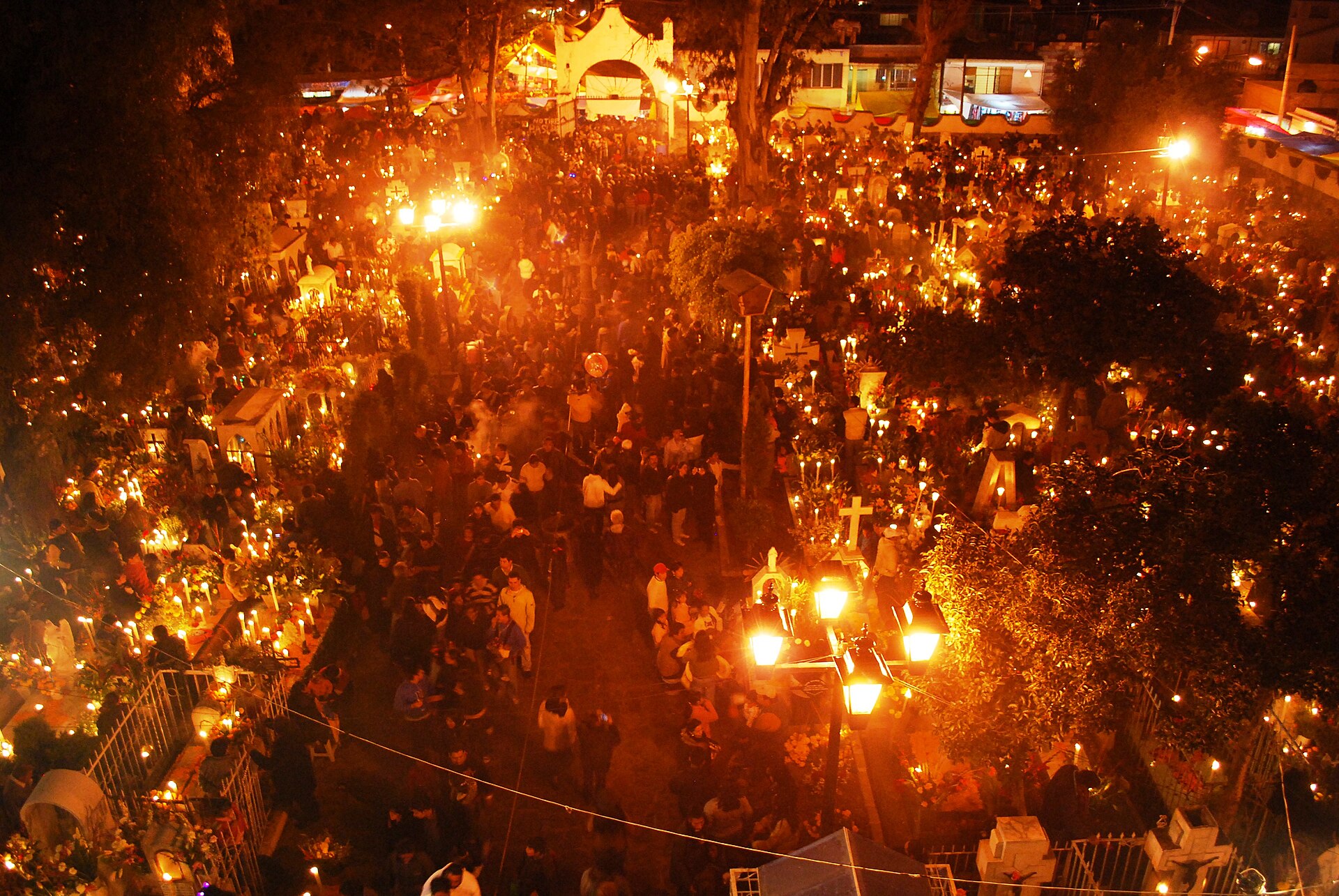
There, the city’s official guide says, children’s souls arrive on 31 October and adults on 1 November. The cycle ends on the night of 2 November with La Alumbrada, the Illumination.
That night, thousands of candles are lit on the graves to guide the souls back.
How Mexicans Honour Children and Adults
The central idea is a visit, not a haunting. UNESCO describes the festivity as the temporary return of dead relatives, welcomed by families who prepare for them with care.
Families lay flower petals, candles and offerings along the path from the cemetery to the house, UNESCO says. The dead person’s favourite dishes go on the home altar and the tomb, with flowers and paper cut-outs.
The home altar is the ofrenda, or offering. Its usual elements, as listed by the Mexican news channel ADN40, are these:
- personal objects that belonged to the dead;
- candles and water;
- food the person liked, and fruit;
- pan de muerto, a sweet bread made for the season;
- cempasúchil, the orange Mexican marigold, and papel picado, cut-paper banners.
Children and adults are welcomed differently. In Mixquic, children’s souls are greeted with white petals and sweets, the city guide says.
Adults are guided home by their favourite dishes and by marigold petals.
The belief carries weight: UNESCO notes the dead are thought able to bring prosperity, such as a good maize harvest, or misfortune. Much depends on how carefully families carry out the rituals.
That is why it is not “Mexican Halloween”. UNESCO describes a fusion of pre-Hispanic rites and Catholic feasts, and the season coincides with the end of the maize-growing cycle.

Mexico City’s 2026 Parades and Public Events
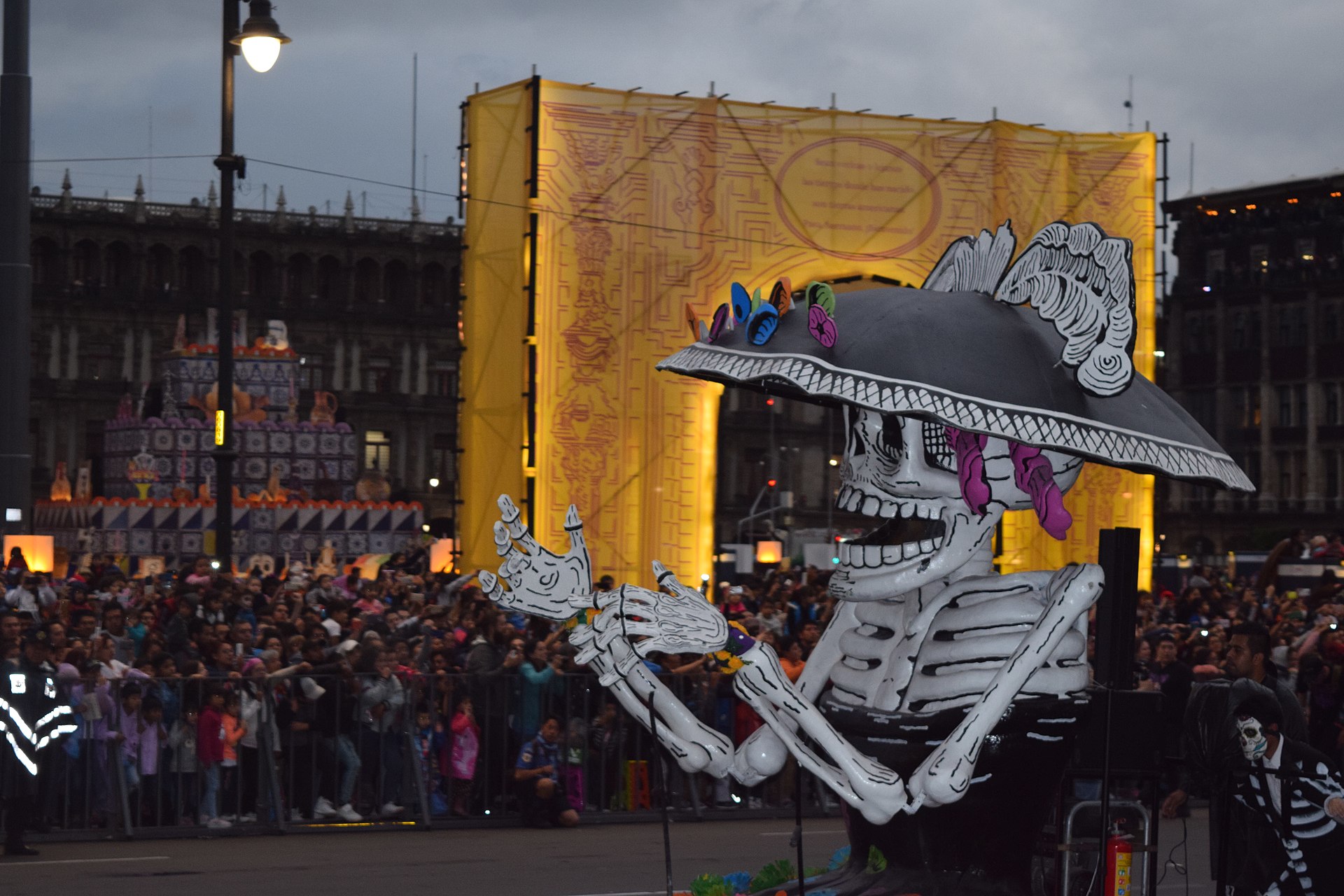
Mexico City’s government publishes the programme on its official tourism portal. It lists the Great Day of the Dead Parade for Saturday, 31 October, at 2 p.m. local time, or 4 p.m. ET.
The route runs along Paseo de la Reforma from the Diana Cazadora fountain to the Zócalo, the main square. Two Mexican outlets, ADN40 and UnoTV, reported the same date and time in late September and early October.
Planned floats honour Juan Gabriel, the singer-songwriter who died in 2016. Others honour film director Emilio “El Indio” Fernández and the Red Queen of Palenque, an ancient Maya noblewoman.
The rest of the city’s 2026 calendar, as published in its guide, is busy:
- Saturday, 17 October: the 18th Monumental Alebrije Parade of giant papier-mâché fantasy creatures, run by the Museum of Popular Art, from the Zócalo to Reforma.
- 18 October to 1 November: a marigold festival on Reforma with 140 flower growers and farmers from Tláhuac, Milpa Alta and Xochimilco.
- 23 October to 8 November: “The Path”, a light installation on Reforma.
- Saturday, 24 October, 7 to 11 p.m.: a 19-kilometre night bike ride along Reforma and Avenida Juárez.
- Sunday, 25 October: the Mega Procession of the Catrinas, a citizen-organised march in skeleton costume.
- 29 October to 2 November: the Monumental Ofrenda in the Zócalo, plus community altars at 12 sites.
- 29 October to 4 November: a Day of the Dead festival in Chapultepec Park’s second section.
- 31 October to 2 November: the cemetery celebrations in Mixquic.
This year the Zócalo altar honours La Catrina, the elegant skeleton created by the printmaker José Guadalupe Posada. Its centrepiece is a 32-metre papier-mâché sculpture, the guide says.
The parades are free to watch from the street. A separate guide covers the 31 October parade and where to stand.
Music runs alongside. Oaxaca-born singer Lila Downs plays the Auditorio Nacional on Sunday, 1 November, UnoTV reported, as covered in this concert preview.
Mixquic and the Cemetery Vigils
For a quieter, older version, the city guide points to Mixquic, on the south-eastern edge of the capital. It calls the village’s festival the most traditional in Mexico City.
Families there begin on 29 September with the Call to the Souls, when they clean the tombs. The guide highlights local dishes such as mixmole, romeritos and calabaza en tacha, a candied pumpkin.
The guide’s advice for visitors: arrive hours early because of traffic and ask before taking photographs. Keep a respectful silence during La Alumbrada, and never sit or step on the tombs.
Outside the capital, check the US government’s rating before booking a rural celebration. The State Department’s advisory, reissued in late May 2026, says “do not travel” to Michoacán, its highest level.
It rates Oaxaca at Level 2, with no restrictions for Oaxaca City, Monte Albán, Puerto Escondido or Huatulco. Yucatán, home to Mérida, sits at Level 1, the lowest.
Etiquette for US Visitors at Altars and Graves
Most rules follow from one fact: cemeteries are family spaces, not stage sets. The city guide calls the tombs sacred family spaces.
- Ask first. Request permission before photographing people, graves or a family’s altar.
- Keep off the graves. Do not sit, stand or step on tombs, even when paths are crowded.
- Lower your voice. Stay quiet during candle vigils such as La Alumbrada.
- Look, do not touch. Food and objects on an ofrenda are offerings to the dead, not snacks or souvenirs.
- Save the costume for the street. Face paint suits parades and the Catrina procession; at a vigil, dress as for a memorial.
- Mind the words. Calling it “Mexican Halloween” misreads a religious and family occasion.
- Travel smart. The State Department tells US officials to use regulated taxi stands or apps such as Uber or Cabify, not street-hailed cabs.
The advisory also bars US government staff from travelling between cities after dark and urges US citizens to follow the same rules. Plan any late cemetery visit around a ride back you have booked in advance.
Is the Day of the Dead a Public Holiday in Mexico?
Not in labour law. Article 74 of Mexico’s Federal Labour Law lists the mandatory rest days, and neither 1 nor 2 November is among them.
The next statutory holiday is Monday, 16 November, the third Monday of the month, which marks the 1910 Revolution. Banks follow their own calendar, set by the CNBV, the national banking and securities regulator.
Its rules, published in the Official Gazette on 10 December 2025, close banks and other supervised firms on Monday, 2 November 2026. Currency exchange houses may open on every day of the year.
Detail on shops, offices and services is in the guide to Mexico holiday closures on 2 and 16 November.
Street food stays cheap through the season. ANPEC, a small-shopkeepers’ alliance, put the average tamal at 25 pesos (about US$1.39) in January 2026, Publimetro reported.
A stew taco averaged 16 pesos (about US$0.89) in the same figures. Conversions use Banco de México’s FIX rate of 6 October 2026, 17.97 pesos per US dollar.
What It Means for US Readers
The calendar is friendly for a long weekend. The big parade falls on Saturday, 31 October, and the two main days on Sunday and Monday.
Mexico City keeps standard time all year. It is two hours behind New York until US clocks go back on 1 November, then one hour behind.
Bring cash before the weekend, because banks shut on Monday, 2 November. Exchange houses may stay open, but rates and hours vary by branch.
Overall, the State Department rates Mexico at Level 2, “exercise increased caution”, citing terrorism, crime and kidnapping. Mexico City carries the same Level 2 rating.
For broader timing, see the region-by-region guide to the best time to visit Mexico. An expat guide to 1 and 2 November in Mexico City adds neighbourhood tips.
More practical coverage sits on the Rio Times Mexico page.
What Is Not Known
Road closures, transit changes and viewing areas for the 31 October parade were not in the city’s guide on 7 October. Float line-ups and timings can still change.
No official 2026 price survey for pan de muerto or marigold bunches could be confirmed for this guide. Whether federal and state offices give staff 2 November off was also not confirmed.
The Lila Downs concert date rests on UnoTV’s report. The venue’s own listing could not be checked.
Local customs differ widely. The dates above describe the common pattern, and individual villages may honour children and adults on different days.
Frequently Asked Questions
When is the Day of the Dead in 2026?
The main days are Sunday, 1 November, for children and Monday, 2 November, for adults. Some families begin remembrances in late October.
What day is the Mexico City Day of the Dead parade in 2026?
The city’s official guide lists the Great Day of the Dead Parade for 2 p.m. on Saturday, 31 October. It runs along Paseo de la Reforma to the Zócalo.
Is the Day of the Dead the same as Halloween?
No. UNESCO describes a fusion of Indigenous rites and Catholic feasts in which families welcome the souls of their dead relatives home.
Is the Day of the Dead a public holiday in Mexico?
It is not a mandatory rest day under the Federal Labour Law. Banks must close on Monday, 2 November 2026, under rules from the banking regulator.
Why is 1 November for children and 2 November for adults?
The days follow the Catholic feasts of All Saints and All Souls. UNESCO notes that Indigenous practice assigns each dead person a day by age and cause of death.
Can tourists visit cemeteries during the Day of the Dead?
Yes, in places such as Mixquic, but behave as a guest at a memorial. Ask before taking photos, keep quiet during vigils and never sit or step on graves.
Is it safe to travel to Mexico for the Day of the Dead?
The US State Department rates Mexico and Mexico City at Level 2, exercise increased caution. It says do not travel to Michoacán.
Sources: Primary: Mexico City government tourism portal, Day of the Dead 2026 in Mexico City; UNESCO, Indigenous festivity dedicated to the dead (2008); Diario Oficial de la Federación, CNBV closing days for 2026, 10 December 2025; Federal Labour Law, Article 74; Law on Time Zones in Mexico; US Department of State, Mexico Travel Advisory (May 2026); Banco de México, FIX exchange rate, 6 October 2026. Regional: ADN40, 26 September 2026; UnoTV, 2 October 2026; Expansión, October 2025; ADN40, 27 October 2025; Publimetro, 18 January 2026 (ANPEC prices) (all accessed 7 October 2026).
This article was produced by The Rio Times’ automated newsroom system. How we use AI · Report an error · Editorial responsibility: Matthias Camenzind, Editor-in-Chief