Mexico Continent Role, Weight and Alliances in Latin America

MEXICO · REGIONAL POWER
Key Facts
- —What it is Mexico is Latin America’s second-largest country by population and economy.
- —Why it matters Mexico’s proximity to the United States and its manufacturing integration through the USMCA give it influence in Latin America that exceeds its formal institutional memberships.
- —The numbers Real GDP grew 1.9% year on year in Q2 2026, according to INEGI.
- —The catch Mexico is not a member of Mercosur, the Andean Community, SICA or CARICOM, so its regional role runs through CELAC, the OAS and the Pacific Alliance instead.
- —What it means for you For investors and expats, Mexico offers a large domestic market and North American supply-chain access, but its regional alliances are more diplomatic than commercially binding.
Mexico is a continental heavyweight that sits outside most South American blocs. Its power comes from scale, location and trade, not from formal membership in regional clubs.
Mexico is Latin America’s second-largest country by population and economy, a North American manufacturing power whose regional influence exceeds its participation in South American institutions. This guide explains how Mexico fits into the wider Latin America context, where it cooperates, where it competes, and what that means for foreigners watching the region.
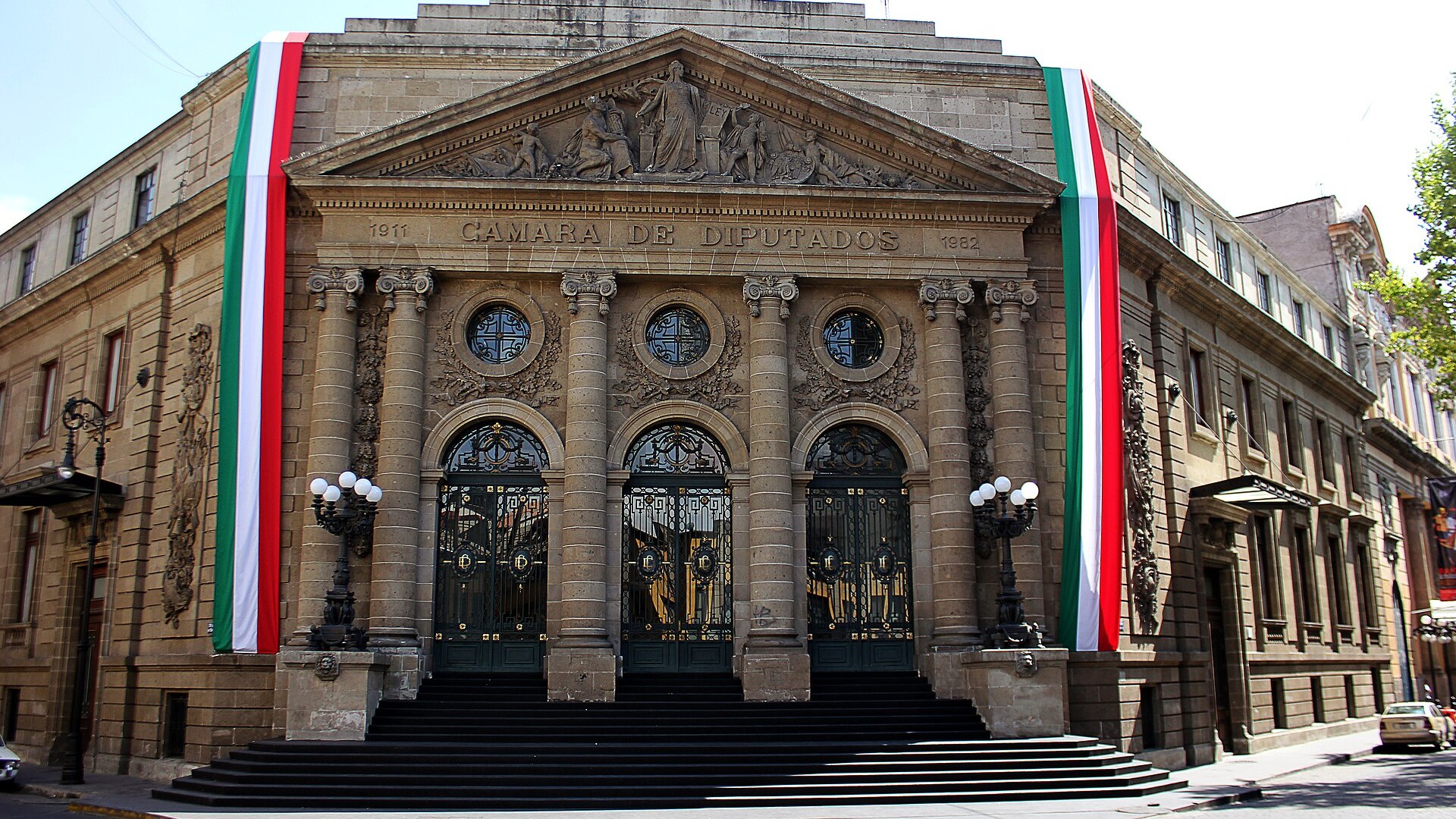
Mexico’s Weight in Latin America: Population and Economy
That makes Mexico the region’s second-most populous country after Brazil and one of the world’s largest Spanish-speaking populations.
This demographic scale is central to Mexico’s political weight. It has a domestic market larger than that of any Latin American country except Brazil. Its proximity to the United States gives its population and labour force an importance that exceeds the size of its internal market alone.
Mexico’s nominal GDP reached MXN 37.530 trillion (about US$2.07 trillion at 18.2 pesos per US$) in the second quarter of 2026, an annual increase of 6.3% in current pesos, according to INEGI. Real GDP increased 1.9% year over year in the quarter. The economy grew 1.2% in the first half of 2026 compared with the same period of 2025.
Growth was uneven. In the second quarter of 2026, agriculture expanded 4.8% year over year, services 2.3%, and industry 0.9%. Mexico is generally Latin America’s second-largest economy after Brazil when measured at market exchange rates.
How Mexico Compares with Brazil
Mexico and Brazil are the region’s two giants, but their economic profiles differ sharply. Mexico is more integrated with North American supply chains, especially in automotive, electronics, aerospace, machinery, medical devices and electrical equipment. Brazil has a larger domestic market, greater agricultural and mineral weight, and a more diversified global trade network.
Mexico’s principal strategic advantage is its location beside the United States and its participation in the United States–Mexico–Canada Agreement (USMCA). Brazil’s principal strategic advantage is scale within South America and its leadership role in BRICS and South American diplomacy.
Mexico’s growth remains sensitive to US trade policy, migration negotiations, border security and the future of the USMCA. That dependence creates both leverage and vulnerability. Mexico is indispensable to North American manufacturing, but its largest export market and most important source of external economic pressure are the United States.

Political Leadership and Foreign-Policy Orientation
Claudia Sheinbaum Pardo has been President of Mexico since 1 October 2024. She succeeded Andrés Manuel López Obrador and has broadly maintained his emphasis on sovereignty, social programmes, state leadership in strategic sectors and opposition to foreign intervention.
In dealings with Washington, Sheinbaum has adopted what Mexican and international reporting describes as a strategy of firm rhetoric combined with operational pragmatism. She has rejected unilateral US intervention and insisted on Mexican sovereignty while cooperating on migration, security and trade issues.
As of October 2026, the US president is Donald J. Trump, who returned to office on 20 January 2025. His administration has placed sustained pressure on Mexico over fentanyl, organised crime, migration and trade. The relationship is therefore the central external constraint on Mexican foreign policy.
Mexico’s foreign-policy principles remain formally anchored in non-intervention, self-determination of peoples, peaceful settlement of disputes, legal equality of states, and opposition to unilateral coercive measures. In practice, Sheinbaum has maintained greater distance from some conservative Latin American governments while avoiding direct ideological confrontations.
Key Officeholders in 2026
The central-bank governor is Victoria Rodríguez Ceja, whose six-year term runs from 1 January 2022 through 31 December 2027. The Secretary of Finance and Public Credit is Édgar Abraham Amador Zamora, in office by 25 March 2026 and still identified in Banco de México’s August 2026 minutes. The Attorney General of the Republic is Ernestina Godoy Ramos, in office by September 2026.
The President of the Supreme Court of Justice of the Nation is Hugo Aguilar Ortiz, in office by September 2026. The Secretary of National Defense is Ricardo Trevilla Trejo, and the Secretary of the Navy is Raymundo Pedro Morales Ángeles, both in office by September 2026.
Mexico and CELAC: The Main Regional Forum
The Community of Latin American and Caribbean States (CELAC) is Mexico’s most important regional political forum because it excludes the United States and Canada and includes all 33 Latin American and Caribbean countries. It is where Mexico can speak to the region without Washington in the room.
At the Ninth CELAC Summit, held in Tegucigalpa, Honduras, in April 2025, President Sheinbaum proposed a regional summit focused on the economic well-being of Latin America and the Caribbean. She argued for greater economic integration based on shared prosperity and respect for national sovereignty.
The summit brought together the region’s 33 states and transferred the pro tempore presidency from Honduras to Colombia. Mexico’s CELAC role reflects three objectives: strengthen Latin American autonomy without formally breaking with Washington, promote regional economic integration and supply-chain cooperation, and preserve a diplomatic platform where Mexico can work with governments across the ideological spectrum.
Mexico does not dominate CELAC in the way Brazil often seeks to dominate South American diplomacy. However, its combination of population, economic size, diplomatic network and proximity to the United States gives it unusual convening power. The main limitation is that CELAC operates by consensus and has weak enforcement mechanisms. It is useful for political coordination, declarations and summit diplomacy, but less effective as an instrument for binding economic integration.
Mexico and the Organization of American States
Mexico is a founding member of the Organization of American States (OAS) and remains one of its most influential Latin American members. The OAS includes the United States and Canada, making it fundamentally different from CELAC. It is the hemispheric body where Washington has a seat at the table.
Mexico’s relationship with the OAS has historically been ambivalent. It uses the organisation for electoral observation, human-rights discussions and hemispheric diplomacy. But it criticises what it sees as excessive political intervention by the OAS secretary general and other member states. It prefers consensus and non-intervention when dealing with governments such as Cuba, Nicaragua and Venezuela, and it has resisted treating the OAS as an instrument for regime change.
In 2026, Mexico and Brazil were reported to have reservations about elements of an OAS resolution concerning Nicaragua, including provisions related to foreign military and economic ties, transnational crime and political conditions.
The episode illustrates a recurring division within the hemisphere. The United States and several governments favour stronger institutional pressure on governments accused of authoritarianism. Mexico and Brazil tend to emphasise sovereignty, dialogue and opposition to external intervention. Caribbean and Central American governments often balance normative concerns against security, migration and economic interests. Mexico’s OAS posture therefore gives it influence as a bridge, or a brake, between Washington and governments that resist US pressure.
Mercosur, the Andean Community and South America
Mexico is not a member of Mercosur, the South American Common Market. Mexico has maintained commercial and diplomatic relations with Mercosur countries but has not joined the bloc.
This reflects geography and strategy. Mexico’s trade system is built primarily around North America and a network of bilateral agreements, while Mercosur is centred on South American customs-union integration. Mexico has not shown an immediate intention to seek Mercosur membership. Its existing USMCA commitments, manufacturing model and trade-agreement architecture would make full accession complicated.
Mexico’s most important Mercosur relationship is with Brazil, Latin America’s largest economy. Sheinbaum has sought closer ties with President Luiz Inácio Lula da Silva, including political support and efforts to expand commercial relations. A stronger Mexico–Brazil relationship could produce greater coordination in CELAC, more trade and investment between Latin America’s two largest economies, cooperation on food security, energy, pharmaceuticals, aerospace and industrial policy, and a counterweight to excessive dependence on the United States and China.
However, the relationship has structural limits. Mexico and Brazil compete in automobiles, agriculture, manufactured goods and the attraction of foreign investment. Their economies are also oriented toward different markets: Mexico toward the United States, Brazil toward China, Europe and South America.
The Andean Community and the Pacific Alliance
Mexico is not a member of the Andean Community. It maintains separate diplomatic and trade relations with the bloc’s countries. Mexico’s links with the Andean region are strongest with Colombia, an important political and commercial partner and the country that assumed CELAC’s pro tempore presidency after Honduras, and with Peru, with which Mexico has deep Pacific and commercial ties despite periodic political tensions.
Mexico’s participation in the Pacific Alliance, alongside Chile, Colombia and Peru, has been more relevant economically than any relationship with the Andean Community itself. The alliance links four Pacific-facing economies with a common interest in trade, investment and Asia-Pacific integration, although political changes have periodically slowed its momentum.
Relations with Ecuador deteriorated sharply after Ecuadorian police entered Mexico’s embassy in Quito in April 2024 to arrest former vice president Jorge Glas, who had received asylum there. Mexico broke diplomatic relations with Ecuador after the embassy raid and brought the matter before international legal institutions. The dispute concerns the inviolability of diplomatic premises and Mexico’s right to grant diplomatic asylum.
Central America, SICA and the Caribbean
Mexico is not a full member of the Central American Integration System (SICA), but it is a major neighbouring power and an important partner for the region. Mexico’s Central American role is driven by migration toward the United States, border security, energy and infrastructure, development financing, trade and remittances, and the movement of goods through southern Mexico.
Mexico has promoted development programmes in southern Mexico and Central America as part of an effort to address the structural causes of migration. These initiatives seek to reduce irregular migration by supporting employment, agriculture and social programmes in countries such as Guatemala, Honduras and El Salvador.
The strategy is politically significant but economically limited compared with Mexico’s relationship with the United States. Washington remains the dominant funder and security actor in Central America, while Mexico’s influence is strongest in immediate border countries.
Mexico is not a member of CARICOM, the Caribbean Community, but it maintains diplomatic relations with Caribbean governments and participates in wider CELAC diplomacy. Mexico’s Caribbean agenda includes disaster response and humanitarian assistance, energy and food security, migration, health cooperation, tourism and air connectivity, and coordination on climate change and small-island vulnerabilities. Mexico’s Caribbean influence is smaller than Brazil’s regional economic weight and smaller than the United States’ security and financial role. Its comparative advantage is diplomatic: Mexico is often acceptable to Caribbean governments as a non-hegemonic Latin American interlocutor, particularly in multilateral settings.
The Decisive Alliance: United States and Canada
The USMCA is Mexico’s most consequential international arrangement. It anchors the country’s industrial model and connects Mexico to the North American production system. Mexico’s economic relationship with the United States is characterised by extensive manufacturing integration, large bilateral goods trade, cross-border energy and investment links, migration and remittances, cooperation and conflict over security, and disputes over automobiles, energy policy, agriculture and rules of origin.
This is an alliance of structural interdependence rather than political harmony. Mexico needs the US market, while US manufacturers depend on Mexican production capacity and geographic proximity. The United States–Mexico–Canada Agreement joint review took place on 1 July 2026, when the United States declined to extend the agreement in its current form, which triggers annual reviews until the treaty expires on 1 July 2036 unless the three parties agree an extension. Any deterioration could affect investment decisions, supply-chain relocation and the peso, while a stable agreement would reinforce Mexico’s nearshoring advantage.
What Mexico’s Role Means for Foreigners and Investors
For a foreigner watching Latin America, Mexico is best understood as a North American economy with a Latin American diplomatic identity. Its trade, investment and manufacturing are anchored in the United States and Canada. Its political alliances and regional diplomacy run through CELAC, the OAS and the Pacific Alliance.
Mexico’s labour market illustrates the scale of its domestic economy. The economically active population was 61.1 million people in Q1 2026, with a 58.7% participation rate among people aged 15 and over, according to INEGI’s National Survey of Occupation and Employment. Labour informality stood at 54.8%, equal to 32.6 million people.
These figures matter for investors because they show both opportunity and constraint. Mexico has a large, young workforce integrated into North American supply chains. But high informality and subemployment mean that a significant share of the population operates outside formal contracts, social security and predictable regulation.
For expats and businesses, Mexico’s regional alliances are less commercially binding than its North American integration. CELAC summits and OAS resolutions rarely change trade rules or investment conditions. The USMCA review, by contrast, can move markets, supply chains and the peso. Anyone assessing Mexico should watch Washington first, then Brasília, then the regional forums.
What to Watch
The most important date on Mexico’s external agenda was the United States–Mexico–Canada Agreement joint review on 1 July 2026, when the United States declined to extend the agreement in its current form, which triggers annual reviews until the treaty expires on 1 July 2036 unless the three parties agree an extension. Its outcome will shape investment decisions, nearshoring momentum and the peso’s trajectory. A stable agreement would reinforce Mexico’s position as North America’s manufacturing platform. A contentious review could slow investment and push some supply chains elsewhere.
The second thing to watch is the Mexico–Brazil relationship. Sheinbaum’s outreach to Lula suggests a deliberate effort to diversify Mexico’s diplomatic options while managing US uncertainty. Whether this produces concrete trade and investment results, or remains mostly political coordination in CELAC, will be a key test.
The third thing to watch is Mexico’s posture in the OAS and CELAC on contested governments such as Nicaragua and Venezuela. Mexico’s preference for sovereignty and dialogue over institutional pressure will continue to shape hemispheric divisions. It may also affect Mexico’s standing with Washington, which favours stronger action.
Finally, watch Mexico’s domestic economic indicators. Real GDP growth of 1.9% year on year in Q2 2026, with industry growing only 0.9%, suggests an economy expanding modestly but unevenly. Monetary policy remains cautious. These conditions will influence how much room Mexico has to pursue an ambitious regional agenda.
Related reading: Mexico Neighbours Explained for US, Canada and Beyond; Chabelo Explained, Mexico's Eternal Child TV Icon; President of Mexico in 2026, Government Explained; more from Mexico.
Frequently Asked Questions
Is Mexico part of Latin America or North America?
Mexico is geographically part of North America but culturally and politically part of Latin America. It participates in Latin American forums such as CELAC and the OAS while its economy is anchored in the USMCA with the United States and Canada.
Is Mexico a member of Mercosur?
No. Mexico is not a member of Mercosur. Mexico maintains commercial and diplomatic relations with Mercosur countries but has not joined the bloc.
How large is Mexico’s economy compared with Brazil’s?
Mexico is generally Latin America’s second-largest economy after Brazil when measured at market exchange rates. Mexico’s growth is more tied to US manufacturing supply chains than Brazil’s.
What is Mexico’s most important regional alliance?
Mexico’s most consequential international arrangement is the USMCA with the United States and Canada. Within Latin America, CELAC is its most important political forum because it includes all 33 Latin American and Caribbean countries but excludes Washington.
Who is Mexico’s president in 2026?
Claudia Sheinbaum Pardo has been President of Mexico since 1 October 2024. She succeeded Andrés Manuel López Obrador and has broadly maintained his emphasis on sovereignty, social programmes and opposition to foreign intervention.
Why is Mexico not in the Andean Community or SICA?
Mexico is not a member of the Andean Community or SICA because its trade system is built primarily around North America and bilateral agreements. It maintains separate diplomatic and trade relations with those blocs’ countries, and its Pacific Alliance membership with Chile, Colombia and Peru is more relevant economically.
Sources: inegi.org.mx, inegi.org.mx, efe.com, inegi.org.mx, eluniversal.com.mx, en.inegi.org.mx. Retrieved 5 October 2026.
This article was produced by The Rio Times’ automated newsroom system. How we use AI · Report an error · Editorial responsibility: Matthias Camenzind, Editor-in-Chief