
MEXICO · HISTORY
Key Facts
- —The country Mexico had 130.9 million residents in 2025, INEGI’s survey found.
- —The conquest Spanish forces and Indigenous allies took Tenochtitlan on 13 August 1521.
- —Independence Hidalgo’s revolt began on 16 September 1810; Spanish rule ended in 1821.
- —The Revolution The 1910 uprising produced the 1917 Constitution, still in force.
- —What happened The ruling party lost the presidency in 2000, after 71 years.
- —Today Claudia Sheinbaum, the first woman president, took office on 1 October 2024.
From Olmec stone heads to the first woman president, these are the turning points every newcomer to Mexico should know.
Mexico history stretches back more than 3,000 years, from Olmec towns on the Gulf coast to today’s republic of 130.9 million. Conquest in 1521, independence in 1821, a lost war with the United States and the 1910 Revolution all left marks still visible.
This guide takes them in order and shows how they shape the Mexico covered daily in the Rio Times Mexico section.
Mexico History Before the Spanish Arrived
Mexico’s story starts with maize. Genetic studies indicate it was domesticated from a wild grass, teosinte, 9,000 to 10,000 years ago.
Anthropologist Jorge Ezra Cruz Palma, who earned his doctorate at UNAM, the national university, places that process in the Balsas river region.
Some of the first cities belonged to the Olmecs on the Gulf coast. San Lorenzo, in today’s Veracruz, held about 13,000 people before 900 BC, according to INAH, the national anthropology and history institute.
Its sculptors carved colossal heads from huge stone blocks brought from the Tuxtlas mountains. La Venta, in Tabasco, flourished from 1200 to 400 BC, with sculptures weighing up to 35 tonnes.
Monte Albán, the Zapotec capital in Oaxaca, was occupied from 500 BC to AD 900, the longest span in Mesoamerica, INAH says. Between 200 BC and AD 200 it grew to about 35,000 people.
Teotihuacan, near today’s Mexico City, was the largest city of ancient Mexico. INAH estimates about 100,000 people lived there at its peak, between AD 350 and 450.
Its Pyramid of the Sun rises 65 metres, about 213 feet, and nobody knows what its builders called the city. The name Teotihuacan, place of the gods, came from later Nahuatl-speaking arrivals.
The Maya built their own cities in the south and east during the Classic period, from AD 250 to 900. Palenque, in Chiapas, peaked between 615 and 783 under a dynasty that included King Pakal.
Chichén Itzá in Yucatán later held about 50,000 people at its height. The Toltec capital of Tula peaked between 900 and 1000.
The Mexica, popularly called Aztecs, founded Tenochtitlan on Lake Texcoco in 1325, the year most scholars accept, INAH says. Official events for its 700th anniversary were set for July 2025.
Its founding emblem, an eagle perched on a cactus, is now Mexico’s coat of arms. Images of the lake city survive in colonial-era manuscripts such as the Azcatitlan Codex.
The Mexica ruled a tribute empire, but conquered towns ran their own affairs. That loose control was a weakness the Spanish would exploit, the Library of Congress country study notes.
Conquest and Three Centuries of New Spain
Hernán Cortés, a Spanish adventurer sailing from Cuba, landed on the Gulf coast in April 1519. On 22 April he founded Villa Rica de la Veracruz, the first Spanish town council in what is now Mexico.
The Mexica ruler Moctezuma II welcomed the Spaniards into Tenochtitlan in November 1519, then became their prisoner. A smallpox epidemic swept the city while Cortés regrouped with Indigenous allies who resented Mexica rule.
Tenochtitlan fell on 13 August 1521 after a siege of about three months, according to Mexico’s Supreme Court. The Spanish built their capital, renamed Mexico, directly on its ruins.
The last Mexica ruler, Cuauhtémoc, was captured and later killed. In the 19th century he was revived as Mexico’s first national hero.
Spain created the Viceroyalty of New Spain in 1535, with Antonio de Mendoza as its first viceroy. Conquerors received encomiendas, grants of Indigenous labour and tribute, which a royal decree abolished in 1717.
Disease and hardship devastated the Indigenous population, and enslaved Africans were shipped in to work. Estimates of how many people died vary widely.
Silver became the colony’s lifeblood. Mines at Zacatecas, Pachuca and Guanajuato were discovered between 1546 and 1552; by the late 1500s silver was 80% of exports.
Society was ranked by birth. Spanish-born peninsulares held the top offices, American-born criollos resented them, and mestizos and Indigenous people sat below.
That criollo resentment would feed the independence movement.

Independence and a Turbulent First Century
On 16 September 1810, Miguel Hidalgo, the parish priest of Dolores in Guanajuato, rang his church bell and called people to revolt. Mexican presidents have re-enacted that call, known as the Grito, since 1827.
Hidalgo was captured in March 1811 and shot in Chihuahua on 30 July 1811. José María Morelos, another priest, carried on until his execution on 22 December 1815.
Independence finally came through an alliance of rebels and royal officers. Agustín de Iturbide, a former royalist commander, joined rebel leader Vicente Guerrero under the Plan of Iguala on 24 February 1821.
Spain’s top official, Juan O’Donojú, signed the Treaty of Córdoba on 24 August 1821. Iturbide’s Army of the Three Guarantees entered Mexico City on 27 September, and the Act of Independence followed a day later.
Iturbide became Emperor Agustín I, but his empire fell in 1823 and Central America broke away. A federal constitution adopted in October 1824 created 19 states, five territories and a federal district.
Decades of revolts followed, and Spain and France invaded in 1829 and 1838. Antonio López de Santa Anna, an army officer, held the presidency several times between 1833 and 1855.
War With the United States and the Reform Era
Texas won independence from Mexico in 1836 and joined the United States in December 1845. The United States declared war on Mexico on 13 May 1846.
The Treaty of Guadalupe Hidalgo, signed on 2 February 1848, ended the war. Mexico ceded 55 percent of its territory, some 525,000 square miles, for US$15 million, US records show.
The land became California, Nevada, Utah and New Mexico, most of Arizona and Colorado, and parts of Oklahoma, Kansas and Wyoming. Under the 1853 Gadsden Purchase, ratified in 1854, Mexico sold 29,670 more square miles for US$10 million.
By 1855 Mexico was less than half the size it had been in 1821, the Library of Congress notes. Liberals then set out to remake the state.
Benito Juárez, a lawyer who spoke mostly Zapotec until his teens, later governed Oaxaca. He wrote a law ending special legal privileges for the clergy and the army.
The liberal Constitution of 1857, approved on 5 February that year, led to the War of the Reform between liberals and conservatives. Juárez led the liberals back to power by the end of 1860.
France invaded in 1862. Mexican forces under General Ignacio Zaragoza beat the French at Puebla on 5 May 1862, the battle Cinco de Mayo recalls.
French troops later installed the Austrian archduke Maximilian of Habsburg as emperor, but Juárez outlasted him. Maximilian was executed by firing squad at Querétaro in 1867.
Juárez was re-elected in 1867 and 1871 and died in office on 18 July 1872.
The Porfiriato and the Revolution of 1910
Porfirio Díaz, a general who had fought the French, took power through a revolt in 1876. He ruled from 1876 to 1880 and again from 1884 to 1911, a period called the Porfiriato.
Foreign investment built railways, and by 1910 Mexico had 10,000 miles of track. In a 1908 interview with journalist James Creelman, Díaz said Mexico was ready for democracy.
He was declared the winner again in 1910 amid accusations of fraud. Francisco Madero, his jailed rival, called an uprising for 20 November 1910 in a plan issued from San Antonio, Texas.
Díaz’s representatives signed the Treaty of Ciudad Juárez on 21 May 1911, and he left power. Madero became president, but the revolution soon turned on itself.
General Victoriano Huerta overthrew Madero, who was shot dead with his vice-president on 22 February 1913. Emiliano Zapata was already leading villagers in Morelos in a revolt for land and water.
Venustiano Carranza, governor of Coahuila, led the fight against Huerta, joined by Pancho Villa’s northern army and Zapata. His own army was commanded by Álvaro Obregón.
The United States intervened twice. US forces occupied Veracruz on 21 April 1914.
Villa raided Columbus, New Mexico, on 9 March 1916, and eight US soldiers and 10 civilians were killed. General John J. Pershing then led a fruitless hunt for him inside Mexico.
Carranza’s camp wrote the Constitution of 1917, promulgated on 5 February and still in force. It gave the nation ownership of the subsoil, promised land reform, protected labour and curbed the Catholic Church.
The killing did not stop at once. Zapata was ambushed and killed on 10 April 1919, Carranza was murdered in May 1920, and Obregón won the presidency that year.
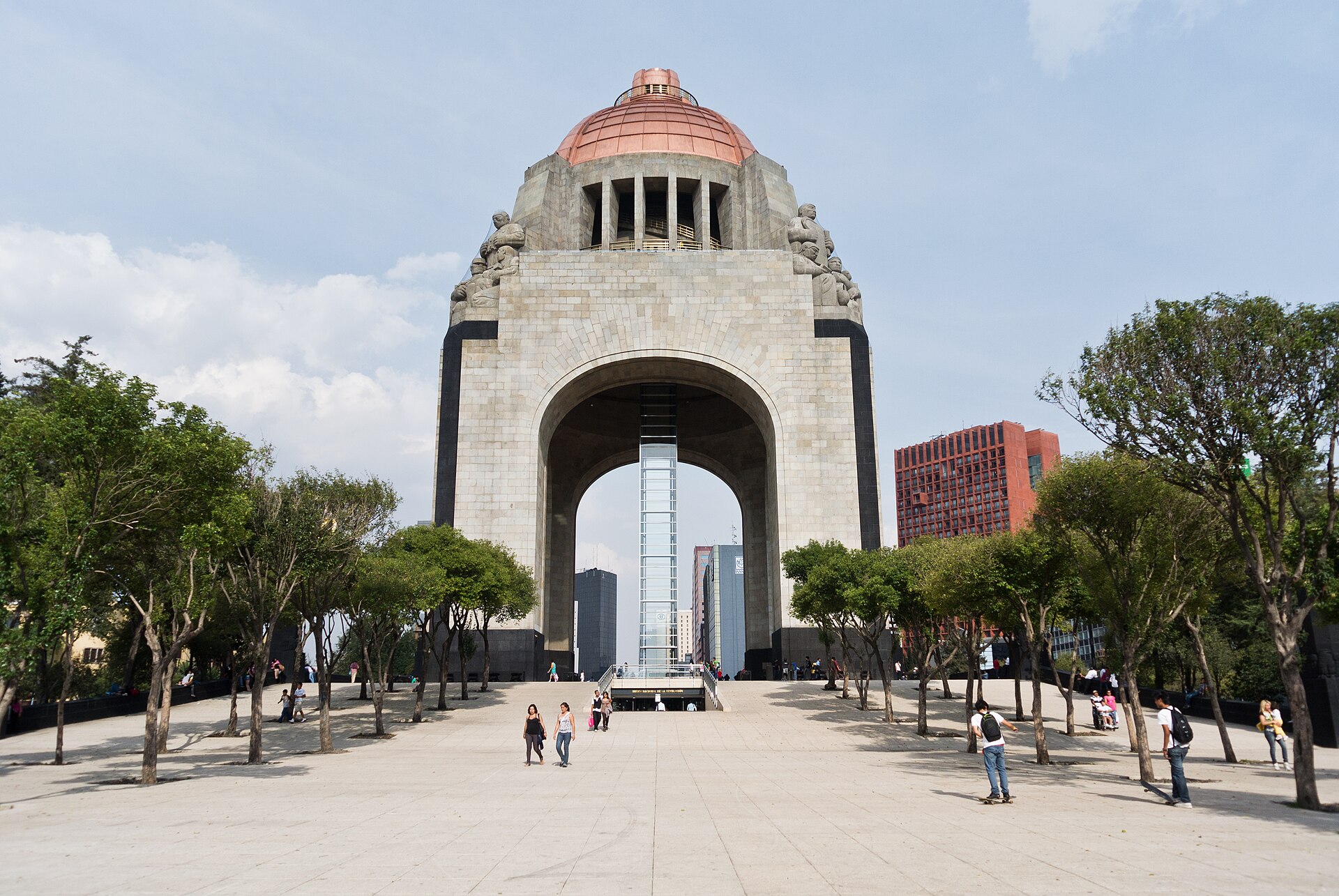
One-Party Rule, Oil and Crisis
Obregón won a second term in 1928 but was assassinated on 17 July, before taking office. Plutarco Elías Calles, the outgoing president who had backed Obregón, then founded a permanent ruling party in 1929, the National Revolutionary Party.
The same years saw the Cristero War, a Catholic rebellion against anti-clerical laws, which was largely contained by 1929. In a disputed 1929 election marred by ballot stuffing, the party’s candidate, Pascual Ortiz Rubio, was declared the winner.
Renamed twice, it became the Institutional Revolutionary Party (PRI) in the 1940s. It brought unions, peasant groups and the middle class into one machine and held the presidency until 2000.
Lázaro Cárdenas, president from 1934 to 1940, redistributed land on a large scale. On 18 March 1938 he expropriated the foreign oil companies, most of them US-owned.
A decree published on 7 June 1938 created Pemex, the state oil company. Mexico and the United States settled the dispute in November 1941.
During the Second World War the two countries launched the bracero programme, bringing Mexican farmworkers north from 1942 into the 1960s. Mexican women first voted for president in 1958.
The economy industrialised, but protest met force. On 2 October 1968 President Gustavo Díaz Ordaz’s government violently repressed a student rally in Tlatelolco’s Plaza de las Tres Culturas.
The anniversary is still marked by marches in Mexico City, as it was again in October 2026.
Oil wealth and heavy borrowing ended in a 1982 crisis, when the government declared a moratorium on debt payments. The 1985 Mexico City earthquake left hundreds of thousands homeless and exposed a slow official response.
On 1 January 1994 the North American Free Trade Agreement (NAFTA) took effect. That same day the Zapatista Army of National Liberation, a mostly Indigenous rebel group, briefly seized several towns in Chiapas.
In March 1994 the ruling party’s candidate, Luis Donaldo Colosio, was assassinated at a rally in Tijuana. A peso devaluation in late December set off a financial crisis, and the US Treasury made US$20 billion available in early 1995.
Democracy, Cartels and the Road to 2026
In the 2000 election Vicente Fox, of the conservative National Action Party (PAN), won the presidency with 42.5 percent. His victory ended 71 years of rule by the party founded in 1929.
Drug-cartel violence has shaped the decades since. INEGI, the national statistics office, recorded 27,989 presumed homicides in 2025, about 77 a day, or 21.4 per 100,000 people.
That preliminary rate was down from 25.8 per 100,000 in 2024.
Andrés Manuel López Obrador, a left-wing veteran and former leader of the Morena party, won on 1 July 2018 with 53.2 percent. The Electoral Tribunal certified the result on 8 August 2018.
His successor, Claudia Sheinbaum, won on Sunday, 2 June 2024 with 35,924,519 votes, or 59.8 percent, according to INE, the electoral authority. She took office on Tuesday, 1 October 2024, the first woman to lead Mexico.
The Constitution limits her to one six-year term, ending on 30 September 2030, and bars any re-election. That principle is one of the Revolution’s main legacies, the Library of Congress country study notes.
A judicial overhaul published on 15 September 2024 put federal judges up for popular election. Voters chose a new nine-member Supreme Court on Sunday, 1 June 2025, and its members were sworn in on 1 September.
The remaining federal judgeships go to the polls in June 2028, the Constitution now states. Further amendments were published on 2 June 2026, and the debate over the courts continues.
The USMCA trade pact replaced NAFTA on 1 July 2020. On Friday, 2 October 2026 the US Trade Representative opened public comments ahead of a 2027 joint review.
The stakes of that review are set out in the Mexico geopolitics guide.
How the Past Shapes Mexico Today
Much of today’s politics echoes this history. The ban on re-election, national ownership of the subsoil and the 1917 Constitution itself all come from the Revolution and its aftermath.
Cárdenas saw the 1938 oil expropriation as a natural result of that subsoil clause. The same clause still frames debates over private and foreign investment in energy.
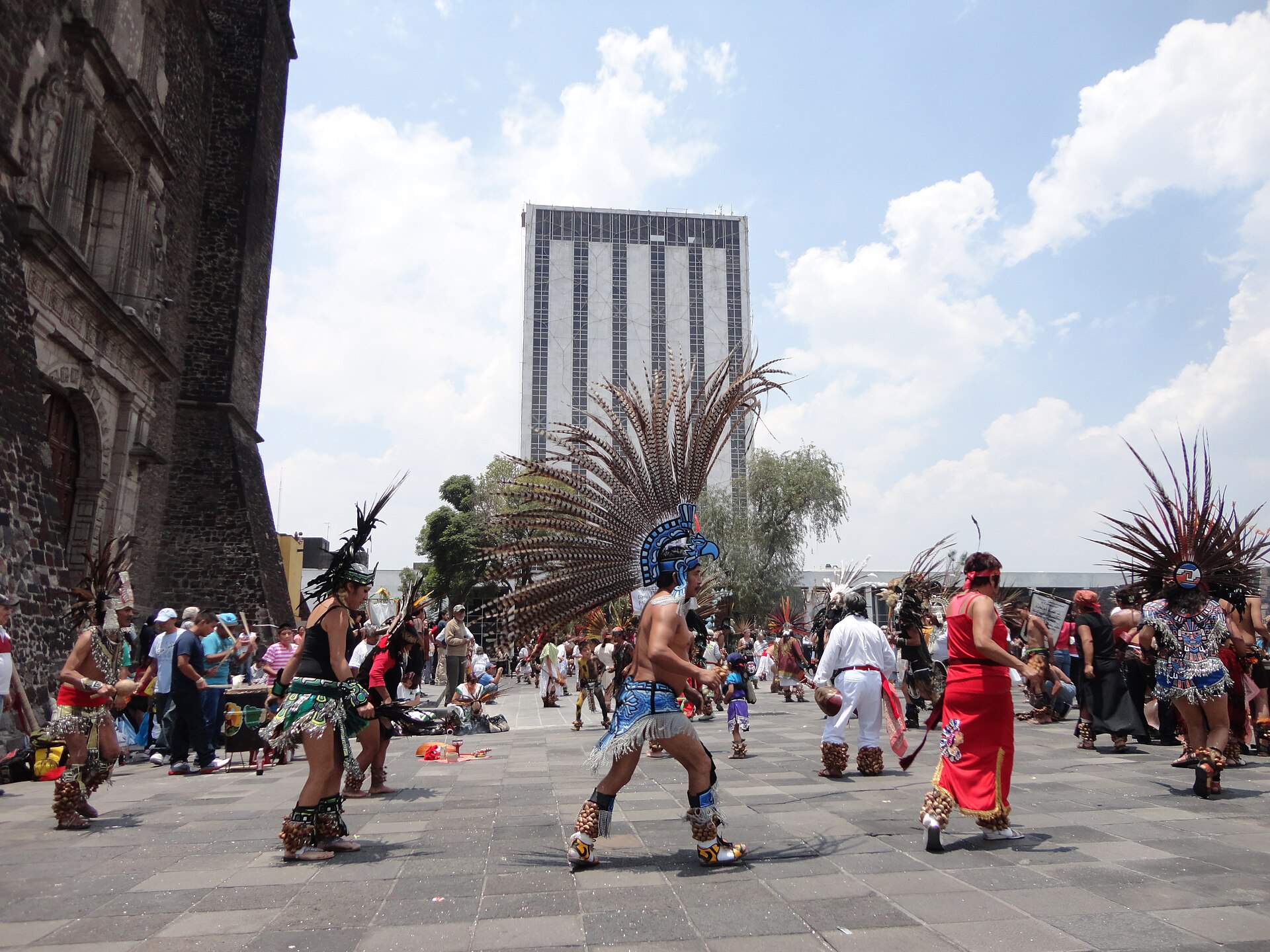
Indigenous identity is also central. In INEGI’s 2025 survey, 24.2 million people (18.6%) identified as Indigenous; 7.4 million aged three or older spoke an Indigenous language.
Who those Mexicans are, and where they live, is set out in the Mexico population guide. Writers, painters and musicians who draw on this past appear in the Mexico culture guide.
For the political system those events produced, see the Mexico politics guide and the broader Mexico explainer.
What It Means for US Readers
History explains much of the modern partnership. Mexico was the largest US goods trading partner in 2024, with US$839.9 billion in two-way trade, Census Bureau data show.
That was 15.8 percent of all US goods trade, ahead of Canada and China. The USMCA review, with hearing requests due by 12 January 2027, matters to investors on both sides.
The two countries are also bound by people. About 10.7 million Mexican-born people lived in the United States in 2022, 23.1 percent of all foreign-born residents, the Census Bureau reports.
Security ties have tightened. On 20 February 2025 the State Department designated six Mexican cartels, including Sinaloa and Jalisco Nueva Generación, as terrorist organisations.
It added two more criminal groups, the Juárez Cartel and Los Viagras, on 16 July 2026. The memory of 1848, 1914 and 1916 helps explain why Mexican leaders guard sovereignty closely in such talks.
For travellers, the dates matter too. Independence Day is 16 September, Cinco de Mayo marks the 1862 Battle of Puebla, and 2 October brings marches in the capital.
What Is Not Known
Historians still debate how many people lived in Mexico in 1519 and how many died in the epidemics after the conquest. No official figure exists.
The original name of Teotihuacan is unknown, INAH says. Tenochtitlan’s exact founding day is disputed, though 26 July 1325 is the most accepted.
No definitive death toll for Tlatelolco on 2 October 1968 has been established. INEGI’s 2025 homicide count is preliminary, and final figures may differ.
It is not known whether the 2027 review will extend the USMCA or how the 2028 judicial vote will reshape the courts.
Frequently Asked Questions
When did Mexico become independent from Spain?
The independence war began on 16 September 1810, when Miguel Hidalgo called for revolt in Dolores. It ended when the Army of the Three Guarantees entered Mexico City on 27 September 1821.
Is Cinco de Mayo Mexico’s independence day?
Cinco de Mayo recalls the Mexican victory over French troops at Puebla on 5 May 1862. Mexico’s Independence Day is 16 September.
Who were the Aztecs?
The Mexica, popularly called Aztecs, founded Tenochtitlan on Lake Texcoco in 1325 and ruled a tribute empire from it. Spanish forces and Indigenous allies captured the city on 13 August 1521.
How much land did Mexico lose to the United States?
Under the 1848 Treaty of Guadalupe Hidalgo, Mexico ceded 55 percent of its territory for US$15 million. The 1853 Gadsden Purchase, ratified in 1854, took a further 29,670 square miles for US$10 million.
Why did one party rule Mexico for 71 years?
The party founded in 1929, later called the PRI, absorbed unions and peasant groups and relied on patronage and electoral fraud. It held the presidency until Vicente Fox of the PAN won in 2000.
Who governs Mexico in 2026?
Claudia Sheinbaum has been president since 1 October 2024, the first woman in the post. The Constitution limits her to one six-year term, ending on 30 September 2030.
Sources: INAH site records for San Lorenzo, La Venta, Monte Albán, Teotihuacan, Palenque, Chichén Itzá, Tula and Templo Mayor; INAH bulletin 316 (30 June 2025); Supreme Court of Mexico (SCJN) historical calendars nos. 4, 10, 14, 16, 21, 27, 29, 33, 35, 36, 43; Constitution of Mexico, Chamber of Deputies text (last reform DOF 2 June 2026); Library of Congress, The Mexican Revolution and the United States and Mexico: A Country Study (1997); US National Archives, Treaty of Guadalupe Hidalgo; US State Department Office of the Historian on Texas annexation and the war and the Gadsden Purchase; INEGI, Intercensal Survey 2025; INEGI, homicides 2025, release 42/26; INE, 2024 official count; Electoral Tribunal (TEPJF), ruling SUP-EEP-1/2018; Georgetown University Political Database of the Americas, 2000 results; White House statement, 1 October 2024 (American Presidency Project); USTR, USMCA and USTR release of 2 October 2026; US Census Bureau, top trading partners 2024; US Census Bureau, ACSBR-019; US State Department, Foreign Terrorist Organizations; Universidad Veracruzana, maize lecture (all accessed 8 October 2026).
This article was produced by The Rio Times’ automated newsroom system. How we use AI · Report an error · Editorial responsibility: Matthias Camenzind, Editor-in-Chief