Lula and Trump at the UN: Back-to-Back Speeches 12 Days Before Brazil Votes
Brazil · United States · Diplomacy
Key Facts
- —What happens Lula opens the UN General Assembly’s general debate on Tuesday 22 September 2026; Trump is listed to speak straight after him.
- —The timing The session opens at 9 a.m. New York time, 10 a.m. Brasília time; Lula speaks after the opening remarks.
- —Why it matters Lula has said he will tell Trump not to interfere in Brazil’s 4 October election, where polls show a tight race.
- —The trade fight New US duties since July hit about 23% of Brazil’s exports to the US, Brazil’s trade ministry says, most at 37.5%.
- —The catch No Lula–Trump bilateral meeting is scheduled, Brazil’s Foreign Ministry says; a brief informal encounter remains possible.
- —Also on the list Peru’s Keiko Fujimori and Chile’s José Antonio Kast speak in the same morning session, eighth and ninth.
Brazil’s president opens the world’s biggest diplomatic stage, and the American president follows him to the lectern. For Lula and Trump at the UN, the subtext is Brazil’s election, now 12 days away.
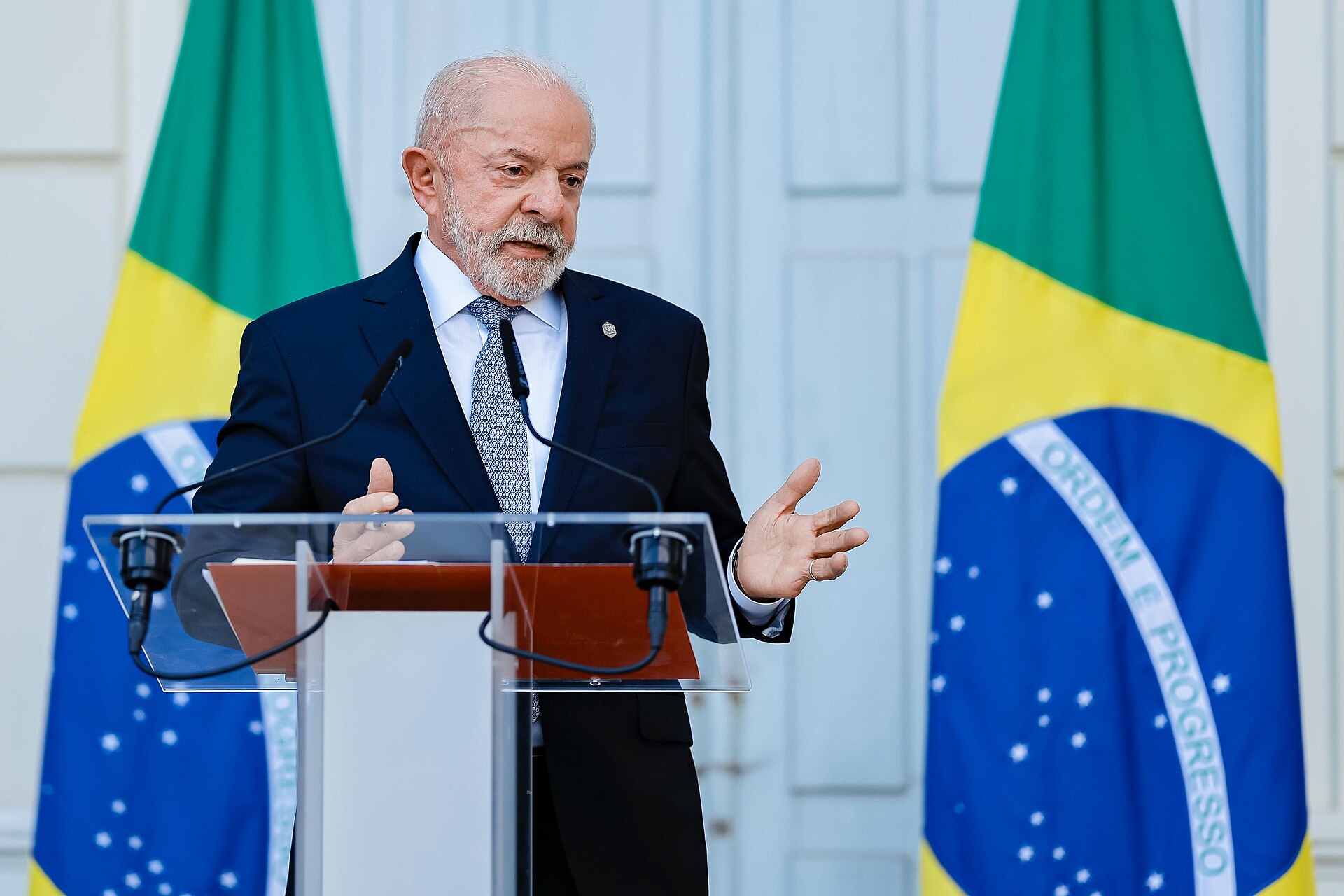
Lula and Trump at the UN will share a stage on Tuesday 22 September 2026, one after the other. Brazil’s president opens the General Assembly’s annual general debate, and the United States speaks second.
The pairing is protocol, not choice. Brazil has spoken first by tradition since 1955, noted Poder360, a Brasília political news site, and the host country follows.
What makes this year different is the mood between the two leaders. Brazil votes for president on 4 October, and Lula has said this month that he will warn Washington to stay out.
The running order
The United Nations’ own list of speakers puts Luiz Inácio Lula da Silva in slot one and Donald Trump in slot two. The morning session is scheduled to start at 9 a.m. New York time, 10 a.m. Brasília time.
First come opening remarks by Secretary-General António Guterres, who presents his annual report, and by the Assembly’s president. Only then do the heads of state begin.
After Trump come Jordan’s King Abdullah II, Türkiye’s Recep Tayyip Erdoğan, Kyrgyzstan’s Sadyr Zhaparov, Qatar’s emir and Lithuania’s Gitanas Nausėda. Two South American leaders follow.
Peru’s President Keiko Fujimori is eighth and Chile’s President José Antonio Kast ninth, ahead of France’s Emmanuel Macron. The debate runs until Saturday 26 September and ends on Monday 28 September.
What Lula has promised to say
Lula previewed his message at a campaign rally in Porto Alegre on Friday 11 September. “Nenhum presidente de outro país vai meter o bedelho nas nossas eleições,” he said: no foreign president will meddle in our elections.
He also sketched the scene in the hall. “Depois que eu falo, fala o Trump,” he said: after I speak, Trump speaks, the left-leaning Brasil de Fato reported.
In an interview with CNN International reported by Reuters on Monday 21 September, Lula went further on trade. “I think those tariffs were based on lies,” he said, in Reuters’ English rendering.
Brazilian diplomats expect a defence of multilateralism, non-interference and reform of the UN Security Council. Carlos Márcio Cozendey, the Foreign Ministry’s secretary for multilateral political affairs, briefed reporters on 16 September.
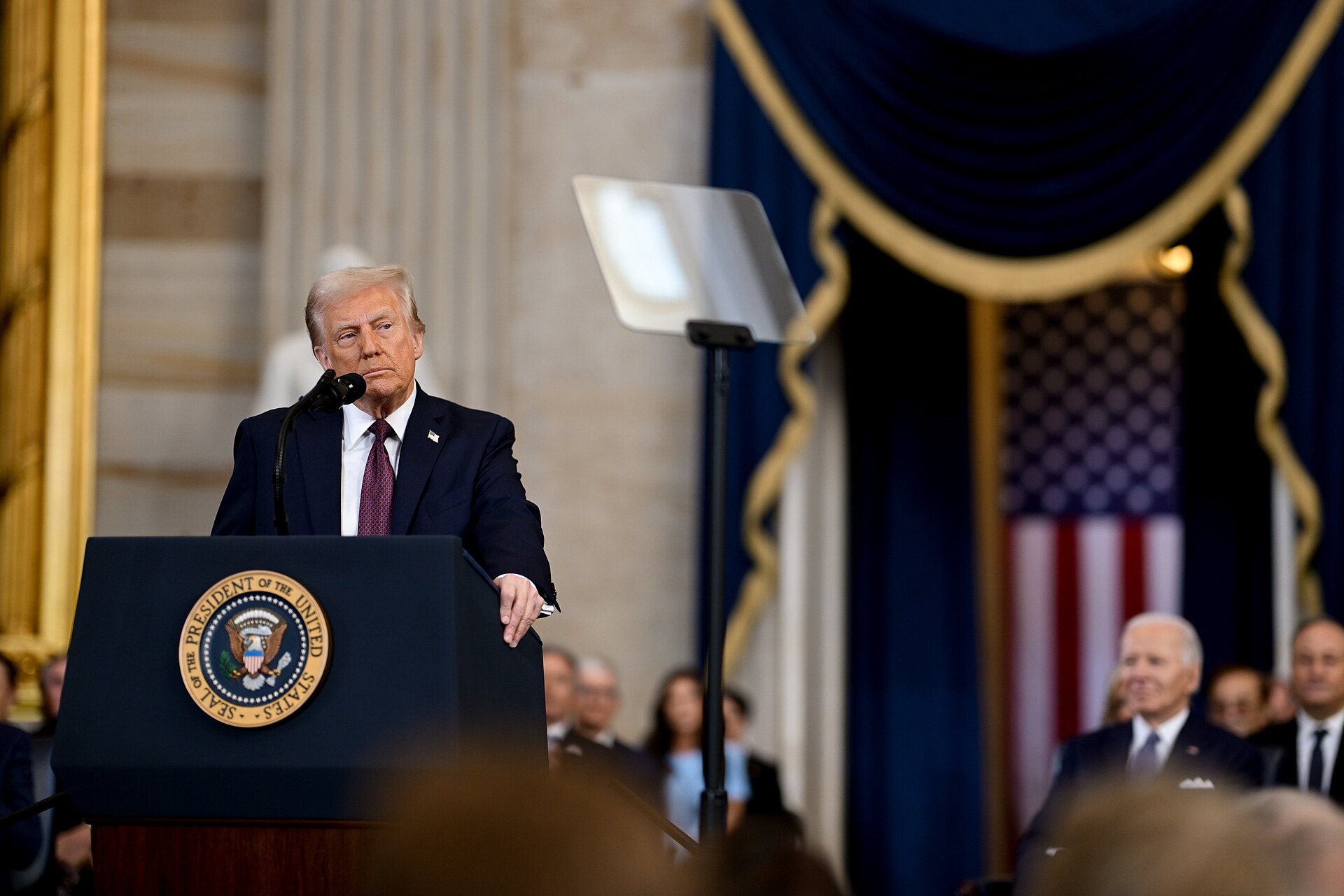
Lula and Trump at the UN, with no meeting set
Cozendey said there was no plan for a specific bilateral meeting with Trump, the Brasília daily Correio Braziliense reported. Poder360 reported that neither side had asked for one.
When both men attended in September 2025, they hugged and spoke for about a minute in an anteroom. CNN Brasil reported that Brazilian diplomats had worked to make that happen.
Government sources told CNN Brasil a repeat depends on the moment. Lula spent Monday on other meetings.
Reuters reported that he hosted New York’s mayor, Zohran Mamdani, at the Brazilian UN mission’s residence to discuss living costs.
Why the two governments are at odds
Trade is the sharpest strand. The Office of the US Trade Representative announced a 25% tariff on certain Brazilian goods on 15 July 2026.
It took effect on 22 July under Section 301 of the 1974 Trade Act, with exemptions. A separate 12.5% forced-labour duty on Brazil and dozens of other economies followed on 24 July.
Brazil’s trade ministry, known as MDIC, says coffee, beef, orange juice and aircraft are spared. It calculates that 23.1% of exports to the US face the new duties.
Most of that, 16.5% of exports, pays both duties, or 37.5% in total. Only 1.9% pays the 25% alone, the ministry said on 24 July.
They follow the 2025 emergency tariffs, which reached 50% on many Brazilian goods. Those ended after the US Supreme Court ruled on 20 February 2026 that the emergency law used did not allow tariffs.
Lula told CNN that Brazil will hold off on its reciprocity law, which allows retaliation, while talks continue. “While we’re still around the negotiation table, I don’t have to apply the reciprocity law,” he said.
The second strand is the election. Senator Flávio Bolsonaro, son of former president Jair Bolsonaro, is Lula’s main challenger; Reuters describes him as a Trump ally.
A Datafolha poll published on 17 September put Lula on 39% and Flávio Bolsonaro on 36% in the first round. Datafolha, one of Brazil’s main pollsters, calls that a technical tie within its two-point margin of error.
Lula told CNN that Brazilian intelligence had flagged suspected interference, including use of artificial intelligence, the Minas Gerais daily O Tempo reported.
O Tempo said a report by Abin, the intelligence agency, to the government and electoral court rated the risk critical. Lula added there was “nada concreto”, nothing concrete, so far.
The Venezuela thread
Trump hosts a leaders’ reception on Tuesday. Mike Waltz, the US ambassador to the UN, said Trump would hold a pull-aside there with Venezuela’s acting president, Delcy Rodríguez.
A pull-aside is an informal conversation, not a formal bilateral. Rodríguez took over after US forces captured Nicolás Maduro in Caracas on 3 January 2026.
What it means for foreigners in Brazil
A speech changes no rule by itself. The practical items to watch are the tariff talks and the election result.
Brazilian ministers hope to meet US Trade Representative Jamieson Greer in person at a G20 gathering in the United States. That gathering runs on 30 September and 1 October, O Tempo reported.
Then comes the vote. The first round is on Sunday 4 October, with a runoff on 25 October if nobody wins a majority of valid votes.
More: Brazil coverage, every day from The Rio Times.
Frequently Asked Questions
Why does Brazil always speak first at the UN General Assembly?
It is a custom dating from 1955, according to Brazilian reporting on this year’s session. The United States, as host country, speaks second. This year the UN list places Lula in slot one and Trump in slot two on the morning of 22 September 2026.
Will Lula and Trump meet in New York?
No bilateral meeting is scheduled. Carlos Márcio Cozendey, a senior Brazilian diplomat, said on 16 September 2026 that no specific bilateral was planned, and Poder360 reported that neither side had asked for one. A short informal encounter between Lula and Trump at the UN, like the one in September 2025, remains possible.
What US tariffs apply to Brazilian goods now?
Since 22 July 2026 certain Brazilian goods pay an extra 25% under Section 301 of the US Trade Act, with exemptions such as aircraft, coffee, beef and orange juice. A separate 12.5% forced-labour duty has applied to Brazil and dozens of other economies since 24 July. Brazil’s trade ministry says 23.1% of exports to the US face the new duties, mostly both together, for 37.5%. The 2025 emergency tariffs were ended after the US Supreme Court ruled against them in February 2026.
When is Brazil’s presidential election?
The first round is on Sunday 4 October 2026. If no candidate wins an absolute majority of valid votes, the two leading candidates meet in a runoff on Sunday 25 October, under dates set by the 1988 Constitution.
Sources: United Nations e-Speakers list for the 81st session general debate, UN Web TV on the first day of the general debate, Poder360 on the speaking order and the absence of a meeting request, Correio Braziliense on the Foreign Ministry briefing, Brasil de Fato on the Porto Alegre rally, Reuters, via Devdiscourse, on Lula’s CNN interview, Reuters, via Antena 1, on the Mamdani meeting, USTR on the Section 301 action against Brazil, Federal Register notice on the 25% tariff, Global Trade Alert on the forced-labour tariffs, Canal Rural on the trade ministry’s tariff breakdown, O Tempo on Lula’s CNN interview and the Abin report, CNN Brasil on the 2025 encounter, White & Case on the end of the 2025 emergency tariffs, Breitbart, citing Reuters, on the Rodríguez pull-aside, AP on the Rodríguez meeting announcement, Gazeta do Povo on the 17 September Datafolha poll, São Paulo electoral court on the election dates
This article was produced by The Rio Times’ automated newsroom system. How we use AI · Report an error
In depth
Read More from The Rio Times