Brazil Election 2026 Candidates, Polls and Results

Brazil · Elections
Updated 5 times · Latest: 4 October 2026
Brazil votes today, Sunday 4 October 2026. Polling stations are open from 7:00 to 16:00 Eastern Time (12:00 to 21:00 in Lisbon, 8:00 to 17:00 in Brasília), and results start at 16:00 ET on our live results page. If no candidate wins more than half of the valid votes, the top two meet in a runoff on 25 October.
Voters choose a president, 513 federal deputies, 54 of the 81 senators and 27 governors. President Luiz Inácio Lula da Silva, 80, seeks a fourth term against Senator Flávio Bolsonaro, whose father is serving a 27-year sentence for a coup plot. The two final polls, published on Saturday, put Lula one to three points ahead in the first round and leave the runoff a statistical tie.
The vote matters in the United States too. Washington has charged an extra 25% tariff on a wide range of Brazilian goods since 22 July 2026, and Brazilian stocks, the real and US-listed Brazilian companies react to every poll. This guide covers the rules, the candidates, the polls and the races beyond the presidency.
The vote: Sunday 4 October 2026, 8:00 to 17:00 Brasília time (7:00 to 16:00 ET). A runoff, if needed, is on Sunday 25 October.
The electorate: About 158.7 million registered voters choose a president, 513 deputies, 54 senators and 27 governors.
The race: Lula (PT) against Flávio Bolsonaro (PL) among 12 candidates. Datafolha on 3 October: Lula 42%, Flávio 40% of all voters (45% to 42% of valid votes); runoff 47% to 46%. Quaest: 46% to 45% of valid votes.
The threshold: A candidate needs more than 50% of valid votes, which exclude blank and null ballots. The closest reading so far is 47.8% for Lula (CNT/MDA).
The unknown: 19% of Datafolha respondents said on 1 October that they could still change their vote. The final polls were published on Saturday.
When and how Brazil votes
Polls open and close at the same moment across the country, on Brasília time. The Superior Electoral Court (TSE) starts publishing results at 17:00 BRT, as ballot-box reports arrive from the electronic machines.
States on Amazon time vote from 7:00 to 16:00 local time, and Acre from 6:00 to 15:00. On 25 October Portugal’s clocks go back, so the runoff closes at 20:00 in Lisbon and 16:00 in New York, which is still on summer time.
Voting is compulsory for Brazilians aged 18 to 69 and optional for 16- and 17-year-olds and for those over 70. Voters without a valid excuse pay a small fine. Brazilians abroad vote only for president.
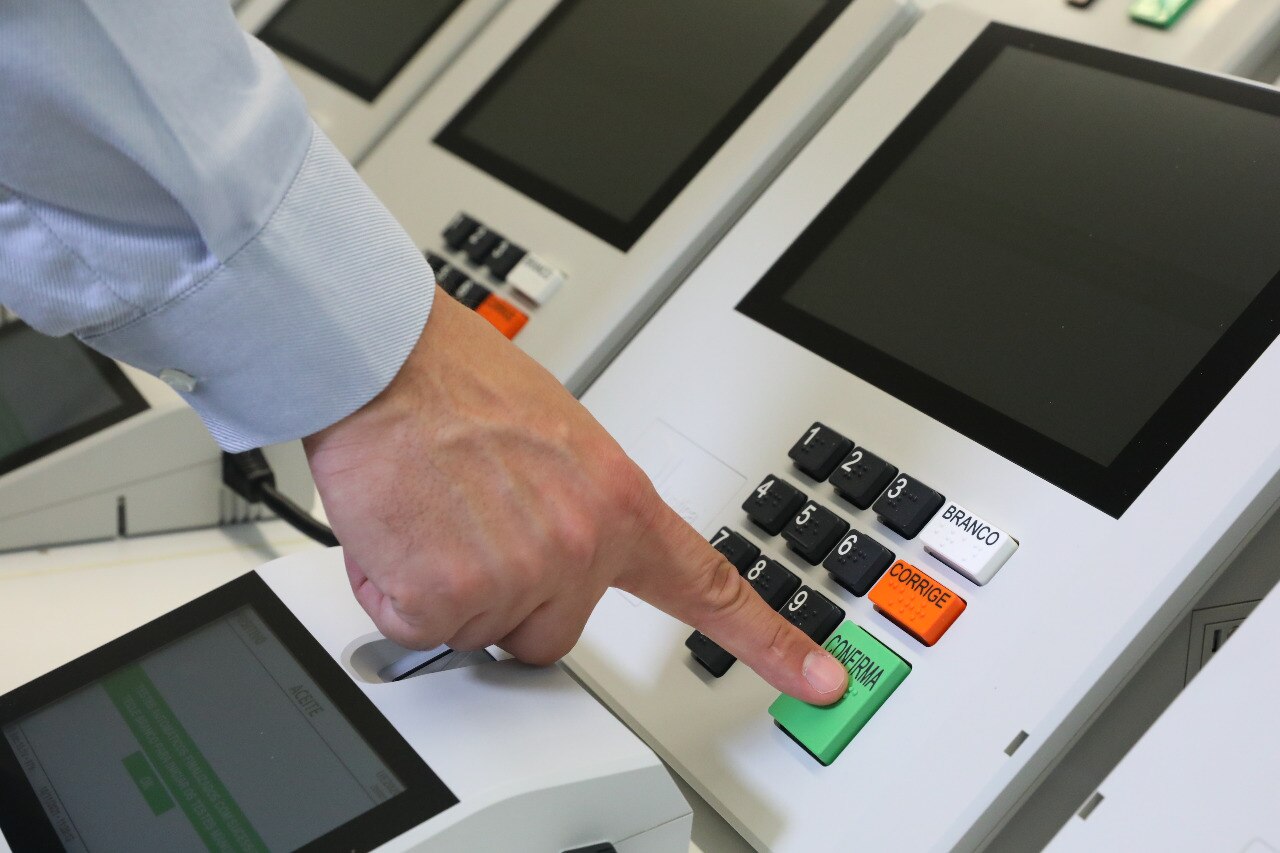
The key dates are short. The campaign opened on 16 August, the first round is on 4 October and the runoff on 25 October. The winner takes office on 1 January 2027. Our runoff explainer walks through the second round, and our election-day guide for expats and visitors covers opening hours and local rules.
The candidates
Twelve candidates are registered with the TSE. Leonardo Avalanche (PRTB) withdrew on 30 September, and the court had earlier rejected the registration of Pablo Marçal. Only two candidates poll above 4% in Datafolha.
Lula, the incumbent
Lula won the 2022 runoff by 1.8 points over Jair Bolsonaro. A fourth term would be unprecedented in Brazil’s democratic era. Datafolha finds that 48% approve of his government and 49% disapprove. Read more in our Lula profile.

Flávio Bolsonaro, the challenger
Jair Bolsonaro endorsed his eldest son in December 2025. São Paulo governor Tarcísio de Freitas chose to seek re-election instead of running for president, which cleared the right’s field. Flávio promises amnesty for those convicted over the 8 January 2023 riots. Datafolha finds that 45% of voters would never vote for him, the same share as for Lula. See our Flávio Bolsonaro profile.

The third tier and the absent father
Cury, Caiado, Santos and Zema together hold about 11% in Datafolha. AtlasIntel gives Santos 5.3% of valid votes, the best result for any candidate outside the top two. Jair Bolsonaro is not running: he is serving a 27-year, 3-month sentence for the coup plot, under house arrest on health grounds since March 2026.
The latest polls
The table shows seven national polls published since 28 September. Lula leads the first round in all seven, though some other institutes show a closer race. The table lists newest first, and our poll tracker carries every survey.
“All answers” counts every respondent, including blank, null and undecided. “Valid votes” removes them, which is how the TSE counts the real result. On that basis the 3 October Datafolha has Lula at 45% and Flávio at 42%, Quaest has 46% to 45%, and CNT/MDA has 47.8% to 42.1%.
No institute shows a first-round winner. The closest reading to the 50% threshold is CNT/MDA’s 47.8% of valid votes for Lula. In its 1 October poll, Datafolha found 78% of voters fully decided and 19% who could still change their mind.
The runoff is a different story. In the final Saturday polls, Datafolha has Lula ahead 47% to 46% and Quaest has Flávio ahead 44% to 42%, both inside the margin of error. Real Time Big Data has Flávio one point ahead, AtlasIntel a dead heat and CNT/MDA Lula four points ahead. Our poll tracker has the full list.
Senate and governors
Two-thirds of the Senate is up this year: 54 of 81 seats, two per state and two for the Federal District. Each voter casts two Senate votes for different candidates, so the shares below are of combined votes. A governor wins in the first round only with more than 50% of valid votes; otherwise the top two meet in a runoff on 25 October.
São Paulo is a four-way tie for the Senate, and Minas Gerais is tight too. Pernambuco’s governor race is the closest of the five. Celina Leão is the only leader above 50% of valid votes. Our Datafolha Senate roundup has the detail.
Regions to watch
Brazil has no electoral college, so every valid vote counts nationally. Regions still matter, because they show where each candidate must win votes. Datafolha polled five large electorates between 28 September and 1 October.
- São Paulo (34.1 million voters, 21.4% of the total): Flávio 39%, Lula 38%, a tie within the ±2 margin.
- Minas Gerais (16.3 million): Lula 42%, Flávio 36%. The state is a national bellwether, and Lula won it by a hair in 2022.
- Rio de Janeiro (12.8 million): Flávio 45%, Lula 38%.
- Pernambuco, in the Northeast: Lula 61%, Flávio 25%. The Northeast is Lula’s strongest region.
- Federal District: Flávio 44%, Lula 35%.
The South is conservative ground: Jair Bolsonaro won Paraná, Santa Catarina and Rio Grande do Sul in 2022. For a regional view of the polls, see our Southeast poll report.
The issues shaping the vote
Economy and interest rates
The central bank cut its Selic benchmark rate to 13.75% on 16 September, from 14.00%. Borrowing costs are still high, and the economy is the main test of Lula’s record. Our Brazil economic outlook has the numbers.
Banco Master
The Federal Police are examining the collapse of Banco Master and its dealings with the Brasília state bank BRB. The scandal has become a campaign issue. Our Banco Master scandal file follows each step.
Security and the institutions
Violent crime remains a top concern, and the October 2025 police raid in Rio that killed more than 120 people still shapes the debate. The Supreme Court is also a campaign target. TV Globo cancelled its final debate on 1 October after Lula said he would not attend and Flávio withdrew once a TSE minister barred an empty lectern.
Trade, minerals and the United States
A 25% Section 301 tariff on a long list of Brazilian goods has applied since 22 July, with exemptions for some products. Brazil’s lithium, rare earths and niobium also draw US and Chinese interest. Our critical minerals report explains the race for access.
What happens after 4 October
If one candidate takes more than 50% of valid votes, the race ends on Sunday. Every presidential election since 2002 has needed a second round, and the polls point that way again. A runoff on 25 October would pit the top two, with the same hours and the same TSE count.
The new president takes office on 1 January 2027, and the new Congress in February. Brazilian markets reopen on Monday 5 October, the same day the central bank publishes its weekly Focus survey. September inflation (IPCA) follows on Friday 9 October at 8:00 ET.
We do not yet know the turnout or how many undecided voters will still switch. Follow the count on our results page, and see the poll tracker for the final surveys.
Frequently Asked Questions
When is Brazil’s 2026 election and what time do polls open?
The first round is on Sunday 4 October 2026. Polls open at 8:00 and close at 17:00 Brasília time, which is 7:00 to 16:00 Eastern Time. A runoff, if needed, is on Sunday 25 October.
How can I follow the results?
The TSE starts publishing results at 17:00 Brasília time, which is 16:00 Eastern Time. The Rio Times follows the count live on its Brazil election results page from that moment.
Who is leading the polls?
Lula leads the first round in all seven national polls listed in this guide. Datafolha on 3 October has Lula at 42% and Flávio Bolsonaro at 40% of all voters (45% to 42% of valid votes), with the runoff at 47% to 46%. Quaest has 46% to 45% of valid votes. The runoff is close to a tie across institutes.
Can Jair Bolsonaro run?
No. Jair Bolsonaro is serving a 27-year, 3-month sentence for a coup plot, under house arrest on health grounds since March 2026. His son Flávio Bolsonaro is the PL candidate.
What happens if nobody wins more than 50%?
The top two candidates go to a runoff on Sunday 25 October. Blank and null votes do not count towards the 50% threshold. The winner takes office on 1 January 2027.
Is voting compulsory in Brazil?
Yes, for Brazilians aged 18 to 69. It is optional for 16- and 17-year-olds and for people over 70. Voters without a valid excuse pay a small fine.
What else is on the ballot?
Voters also elect 513 federal deputies, 54 of the 81 senators and 27 governors, plus state legislators. Each voter casts two Senate votes for different candidates. Governors need more than 50% of valid votes to win in the first round.
Why does the election matter to US readers?
The United States has charged an extra 25% tariff on a wide range of Brazilian goods since 22 July 2026. Brazilian stocks, the real and US-listed Brazilian companies react to the polls. Brazilian markets reopen on Monday 5 October.
Sources: TSE (hours, results schedule, electorate); Datafolha national and state polls of 1–2 October (registration BR-08039/2026), via g1 and Folha; CNT/MDA of 3 October, via Exame; Real Time Big Data of 1 October, via Metrópoles; AtlasIntel of 29 September (BR-04391/2026), via Gazeta do Povo; Quaest of 3 October (BR-02197/2026) and 28 September; Datafolha of 3 October (BR-01708/2026), via Folha and O Povo; Banco Central do Brasil (Copom, 16 September); EODHD calendar (Focus and IPCA dates); Agência Brasil, O Povo and Metrópoles for campaign events. Figures checked on 4 October 2026.
More on Brazil’s election
- Brazil election explained before Sunday’s vote: candidates, polls, the map and what is at stake for the US
- Brazil election results 2026: live updates and vote count
- Brazil’s final polls show Lula 45%, Flávio 42%
- What Brazil’s election means for US investors
- Brazil election polls 2026: all surveys, all candidates
- Brazil election 2026 runoff: how 25 October works
- Brazil votes on Sunday: hours, alcohol rules and what expats need to know
- Final AtlasIntel poll: Lula leads first round, runoff a dead heat
- Datafolha: tight Senate races across the key states
- Globo cancels final debate after Lula boycott
- Police arrest 22 in Roraima vote-buying ring
More coverage: the Brazil Elections 2026 section and our Banco Master scandal file.
This article was produced by The Rio Times’ automated newsroom system. How we use AI · Report an error · Editorial responsibility: Matthias Camenzind, Editor-in-Chief
Fresh reporting on this topic, refreshed automatically as new stories are published.
- Oct 5Brazil Runoff Set; Ibovespa Entered Vote at 192,115
- Oct 5Peru Likely Heads to 14 Regional Runoffs on 29 November
- Oct 5What Brazil’s 25 October Runoff Means for Expats
- Oct 5LatAm Expat & Nomad Daily Guide for Monday, October 5, 2026
- Oct 4Flávio Led 15 States, Lula 12 in Brazil’s First Round
- Oct 4Brazil Abstention 21.08%, First-Round High Since 1998
- Oct 4PL Leads for 19 of 54 Brazil Senate Seats
- Oct 4Tarcísio 62.7% in São Paulo, Rio Likely Runoff